分类: politics

  • Maduro remembers  pepple’s victory in 2023 Consultative Referendum

    Maduro remembers pepple’s victory in 2023 Consultative Referendum

    President Nicolás Maduro has commemorated the two-year milestone of Venezuela’s landmark consultative referendum on the disputed Essequibo territory, hailing the 2021 vote as an unprecedented democratic exercise in the nation’s 150-year territorial struggle. Through his Telegram account, Maduro characterized the electoral process as a transformative campaign that revitalized national consciousness through inclusive public engagement and civic education.

    The Venezuelan leader emphasized the government’s political courage in submitting such complex geopolitical matters to popular consultation, noting that citizens demonstrated remarkable awareness and preparedness in their response. Maduro declared the Venezuelan people—without partisan distinction—the ultimate victors in the ongoing territorial claim, framing the referendum as a constitutional mechanism that enabled citizens to reclaim the legacy of their liberators.

    Concurrently, Foreign Minister Yvan Gil utilized social media platforms to reinforce the administration’s position, describing the referendum’s second anniversary as marking a “resounding victory” that strengthened Venezuela’s historical claims to the oil-rich Essequibo region. Both officials portrayed the popular consultation as providing critical momentum for Venezuela’s renewed constitutional efforts to assert sovereignty over the 160,000-square-kilometer territory currently administered by Guyana.

    The commemorations occur amid ongoing diplomatic tensions between Venezuela and Guyana regarding the border dispute, with Caracas continuing to leverage the 2021 referendum results as democratic justification for its territorial claims in international forums.

  • Final count confirms Prospere as Dennery South MP

    Final count confirms Prospere as Dennery South MP

    The electoral contest in Saint Lucia’s Dennery South constituency has concluded with a definitive victory for incumbent candidate Alfred Prospere following an official recount. The final tally, conducted in accordance with Section 65 of the Elections Act (1979), revealed Prospere secured 1,566 votes against United Workers Party candidate Benson Emile’s 1,507 votes, establishing a winning margin of 59 votes.

    This outcome represents the slimmest electoral margin in an election otherwise dominated by the Saint Lucia Labour Party’s (SLP) overwhelming parliamentary majority. The constituency demonstrated exceptional voter engagement, recording a 56% turnout rate—the second highest nationally, surpassed only by Soufrière’s 61% participation.

    The recount process commenced at 8:30 a.m. on Tuesday, December 2, with the returning officer supervising the review of ballot boxes in the presence of candidate agents. This procedural verification included re-examination of previously rejected ballots before final confirmation of results.

    Prospere, who currently serves as Minister for Agriculture pending new cabinet appointments, previously unseated UWP incumbent Edmund Estephane in the 2021 elections with a more substantial margin of 1,548 to 1,364 votes. His re-election marks at least the third consecutive instance of a two-term parliamentary representative for the Dennery South constituency.

    The electoral writ of declaration must be formally delivered to the Chief Electoral Officer by Friday, December 5, barring any formal objections to the confirmed results.

  • President Simons en koning Willem-Alexander benadrukken gelijkwaardige toekomstrelatie

    President Simons en koning Willem-Alexander benadrukken gelijkwaardige toekomstrelatie

    In a significant diplomatic engagement held in Fredriksdorp, Commewijne, Dutch King Willem-Alexander and Surinamese President Jennifer Simons outlined a transformative vision for bilateral relations between their nations. The high-level discussion, which occurred during the King’s state visit, addressed critical issues including visa liberalization, educational cooperation, and historical reconciliation.

    The pressing matter of visa acquisition difficulties for Surinamese citizens seeking to visit Netherlands received prominent attention. King Willem-Alexander acknowledged the persistent challenges, revealing that Suriname could formally request visa liberalization from the European Commission—a process where Netherlands has committed to providing support in Brussels. Meanwhile, the monarch emphasized the need for more humane processing of visa applications, recognizing the suboptimal conditions and extended waiting periods currently experienced by applicants.

    Educational and cultural exchange emerged as another cornerstone of the renewed partnership. The King highlighted existing cooperation at university and higher vocational levels while announcing new exchange programs for vocational education. “I’ve truly witnessed the profound connection between our nations,” the monarch stated, indicating this perspective would inform future Dutch policy approaches.

    Regarding the complex historical legacy between the former colony and colonizer, President Simons characterized the reconciliation process as a mutual learning journey. While acknowledging that reparations discussions could occur within established CARICOM frameworks, she firmly asserted Suriname’s independent development path: “We will not wait for reparations to develop our country.”

    Both leaders struck a forward-looking tone in their closing remarks. King Willem-Alexander thanked Suriname for the warm reception and open dialogue, envisioning a future relationship built on friendship and shared history. President Simons described the visit as positively transformative, having “unpacked a package” of opportunities for collaboration on equal footing, signaling a definitive shift from post-colonial dynamics to genuine partnership.

  • U.S. Requests Venezuelan Migrant Repatriation Flights Amid Political Tensions

    U.S. Requests Venezuelan Migrant Repatriation Flights Amid Political Tensions

    Despite rapidly deteriorating diplomatic relations, the United States and Venezuelan governments have established an operational channel for migrant repatriation flights. Venezuela’s Transport Ministry officially confirmed receiving and approving a U.S. request to authorize Eastern Airlines to continue operating repatriation flights between Phoenix, Arizona, and Maiquetía International Airport.

    These regularly scheduled Wednesday and Friday flights operate under Venezuela’s ‘Plan Vuelta a la Patria’ (Return to the Homeland Program), which facilitates the voluntary return and family reunification of Venezuelan citizens abroad. The program represents a rare point of cooperation between the two nations currently experiencing significant geopolitical friction.

    The coordination occurs against a backdrop of intensified hostilities. Recent weeks have seen U.S. President Donald Trump escalate military operations in Caribbean and Pacific waters, with reports indicating at least 21 vessels struck since September. Simultaneously, Trump has designated Venezuelan President Nicolás Maduro a ‘narco-terrorist’ and announced the closure of Venezuelan airspace to U.S. flights—measures Caracas has condemned as ‘colonialist threats’ and violations of international law.

    This creates a complex diplomatic paradox: operational cooperation on humanitarian migration matters persists even as both governments exchange increasingly confrontational rhetoric and military posturing.

  • OPINION: Resilience Must Anchor Budget 2026 as Antigua and Barbuda Confronts Defining Challenges

    OPINION: Resilience Must Anchor Budget 2026 as Antigua and Barbuda Confronts Defining Challenges

    As Antigua and Barbuda approaches its pivotal 2026 budget presentation on December 4th, the nation stands at a critical juncture in its development trajectory. Professor C. Justin Robinson, Principal of The UWI Five Islands Campus, articulates a compelling vision for national resilience that transcends conventional economic planning.

    This generation’s challenge mirrors the historical struggles against slavery and colonialism that defined previous eras. While the battles have evolved from physical liberation to structural fortification, the stakes remain equally consequential. The contemporary test involves constructing a nation capable of withstanding intensifying climate disruptions, volatile economic shifts, and external pressures on development programs.

    The budgetary framework presents an unprecedented opportunity to institutionalize resilience as the organizing principle of national policy. This requires moving beyond rhetorical commitments to implement concrete measures across economic, climatic, and institutional domains. More significantly, it demands reconceptualizing resilience as collective endeavor rather than individual preservation—a philosophy captured by the adage that rising tides must lift all boats to prevent universal inundation.

    Antigua and Barbuda’s fiscal foundation demonstrates remarkable transformation. Public debt has plummeted from 131% of GDP in 2004 to 67% today, representing one of the Caribbean’s most successful fiscal turnarounds. Economic performance has been equally impressive, with positive GDP growth in nine of ten pre-pandemic years and robust recovery post-COVID: 8.2% (2021), 9.5% (2022), 8.1% (2023), and 4.3% (2024). The nation now operates with a 3.5% primary surplus, exceeding pre-pandemic output levels.

    The Citizenship by Investment Programme (CIP) warrants strategic consideration, contributing over 70% of non-tax revenue without burdening residents. Recent external pressures—including potential U.S. visa restrictions and EU scrutiny—highlight the necessity of diversifying revenue streams through enhanced tax compliance and broadened domestic tax bases rather than abandoning successful programs.

    Tourism remains the economic bedrock at 60% of GDP, with the 2024 season achieving record arrivals and over $1 billion in planned investments. The challenge involves maximizing sectoral linkages by developing complementary industries: agriculture supplying hotels, creative sectors enhancing visitor experiences, and services expanding to meet evolving demands.

    Climate vulnerability presents existential threats, underscored by Hurricane Irma’s 2017 devastation of Barbuda and Hurricane Melissa’s recent Category-5 destruction in Jamaica. These events confirm scientific consensus about intensifying storm severity due to human-driven warming, necessitating infrastructure investments that transition from adaptation rhetoric to concrete reinforcement.

    The November 2026 Commonwealth Heads of Government Meeting, themed ‘Accelerating Partnerships and Investment for a Prosperous Commonwealth,’ provides providential timing for demonstrating resilience leadership. A comprehensive resilience budget would include: contingency planning for CIP volatility; climate-resilient infrastructure; human capital development exemplified by the $80 million UWI Five Islands Campus expansion; and deepened economic linkages ensuring macroeconomic gains translate into shared prosperity.

    Ultimately, national purpose must transcend individual ambition, measuring success by household security rather than elite fortunes. This ethos echoes ancestral wisdom where communities collectively raised children, rebuilt after storms, and supported vulnerable members. For small island states, this represents not sentimental idealism but survival strategy.

    Budget 2026 constitutes a moral document that can honor the legacy of ancestors who fought for freedom by ensuring future generations remain free from vulnerability. By building structural resilience and social solidarity, Antigua and Barbuda can demonstrate to the world—and itself—what truly transformative governance accomplishes.

  • Climate justice clash

    Climate justice clash

    A significant political divergence emerged in Jamaica’s House of Representatives on Tuesday as Prime Minister Andrew Holness and Opposition Leader Mark Golding presented contrasting visions for addressing climate-induced disasters. The debate centered on Jamaica’s recovery strategy following Hurricane Melissa, exposing fundamental differences in approaching climate injustice and economic sovereignty.

    Opposition Leader Golding launched a forceful critique against global climate inequality, characterizing Jamaica as an innocent victim suffering from ecological crises it didn’t create. He emphasized that wealthy, high-emission nations bear historical responsibility for climate disruptions that disproportionately affect small island developing states. Golding warned that Jamaica faces ‘a massive amount of additional debt’ to recover from disasters, creating an unfair burden that should be shouldered by major polluting nations.

    Prime Minister Holness acknowledged the validity of climate injustice arguments but articulated a philosophy of pragmatic self-reliance. While reaffirming his longstanding advocacy for climate justice on international platforms, including his role as co-chair of the Global Committee for Climate Financing, Holness insisted Jamaica cannot depend on external goodwill. He maintained that the nation must ‘stand on its own two feet’ while pursuing international compensation claims.

    The Prime Minister highlighted Jamaica’s transformed fiscal credibility, noting that the country now qualifies for concessional financing from international financial institutions—a scenario he described as ‘unthinkable two decades ago.’ Holness pointed to Jamaica’s dramatically improved debt-to-GDP ratio over the past decade as evidence of strengthened economic management that commands global confidence.

    Crucially, Holness emphasized that borrowing terms matter more than borrowing itself. He detailed how current recovery financing offers more structured, concessionary, and predictable terms than previous arrangements. The Prime Minister stressed that wise deployment of reconstruction funds could expand GDP and facilitate debt repayment, urging parliamentary discipline and long-term strategic thinking as recovery programs accelerate.

    Golding later clarified that he wasn’t advocating for handouts but highlighting the structural injustice that forces vulnerable nations into debt for survival. Both leaders agreed on the reality of climate inequality but diverged significantly on how Jamaica should navigate its consequences while maintaining economic stability and sovereignty.

  • Tobago decides

    Tobago decides

    The Tobago House of Assembly (THA) election campaign has commenced with profound implications that extend far beyond the island’s shores, marking significant shifts in Tobago’s political landscape. TPP leader Farley Augustine officially launched his campaign on December 1st amid extraordinary circumstances that have elevated foreign policy matters to unprecedented prominence in a local election.

    The upcoming vote, scheduled for January 12th, will serve as the first electoral test of the controversial decision to permit the United States to install military-grade radar systems at the ANR Robinson International Airport. This development has effectively transformed the local election into a de facto referendum on both Mr. Augustine’s leadership and Prime Minister Kamla Persad-Bissessar’s administration.

    Recent diplomatic efforts have eased initial tensions between Tobago and the central government regarding the radar installation. Following Mr. Augustine’s initial claims of being uninformed about the project details and the Prime Minister’s assertion that he didn’t require full disclosure, Attorney General John Jeremie and Defence Minister Wayne Sturge were dispatched to thoroughly brief the Tobago People’s Party leader.

    The TPP leadership has subsequently embraced the radar project, with former THA councillor Certica Williams-Orr characterizing it as a ‘Christmas gift’ and Tobago East MP David Thomas affirming its necessity. Mr. Augustine now expresses confidence that the equipment won’t be used for offensive operations, while acknowledging Trinidad and Tobago’s limited influence over US foreign policy decisions.

    This election represents the TPP’s first THA contest since its formation in 2023 when Mr. Augustine separated from Watson Duke’s Progressive Democratic Patriots. The party enters the race strengthened by its sweeping victory in both Tobago seats during the April 28th general election, potentially signaling the decline of Mr. Duke’s political influence.

    The opposition PNM faces its own challenges, attempting to recover from significant losses in both the 2021 and recent April elections. The defection of Keigon Denoon, the popular Tobago West constituency chairman, to the TPP further complicates the PNM’s path to recovery.

    Meanwhile, Prime Minister Persad-Bissessar has maintained strong ties with Mr. Augustine, even adopting the TPP’s ‘anchor’ motto during her November visit to Tobago. While hoteliers express concerns about potential negative impacts on tourism revenue from the radar installation, the Prime Minister’s administration has facilitated substantial economic benefits through licensing agreements that have generated billions in aggregate revenues.

    Tobagonians will ultimately deliver their verdict on these complex matters when they cast their ballots in January, determining both the island’s political direction and the broader implications of enhanced surveillance capabilities at Crown Point.

  • PSA President’s response to CPO offer: We want the cash

    PSA President’s response to CPO offer: We want the cash

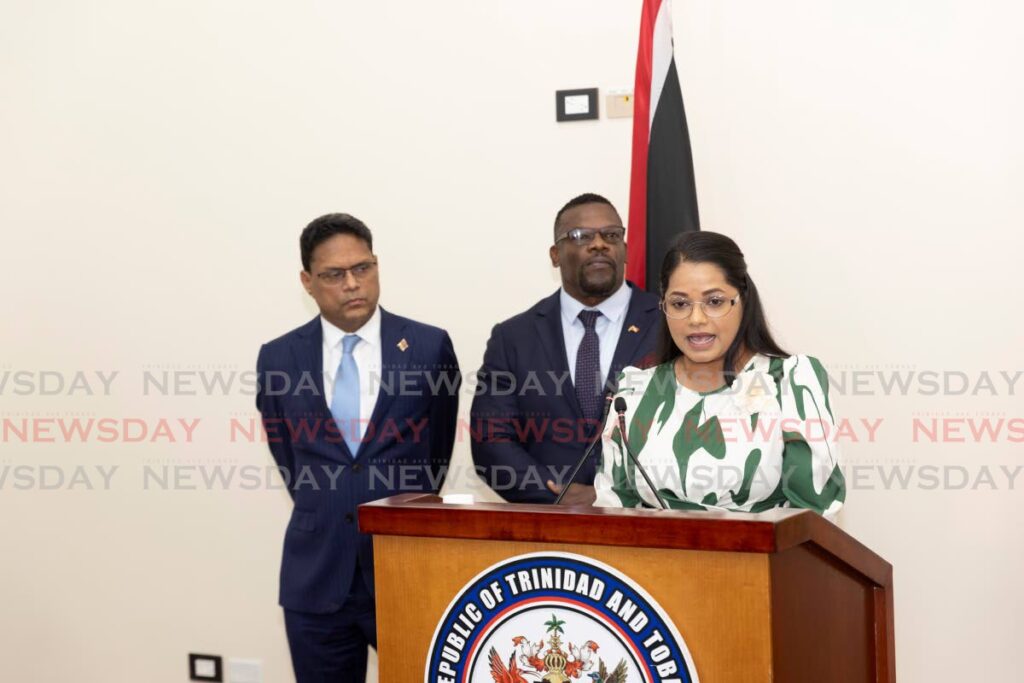
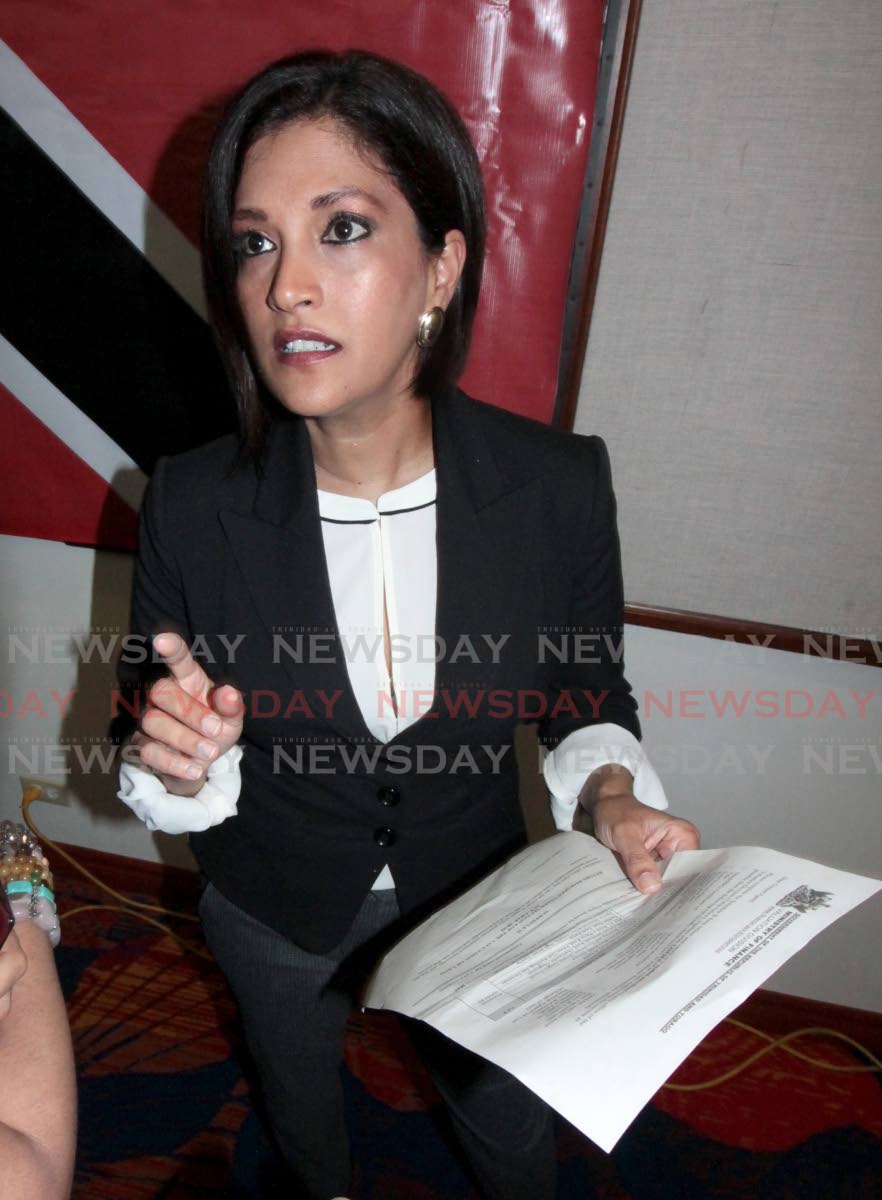
    A significant dispute has emerged between Trinidad and Tobago’s Public Services Association (PSA) and the Chief Personnel Officer (CPO) regarding the payment structure of a $3.8 billion backpay settlement for public service workers.

    PSA President Felisha Thomas has taken an unequivocal stance against the government’s proposal to distribute the substantial backpay amount through a combination of cash and non-cash benefits. Thomas maintains that her mandate from union members requires full cash payment without alternative compensation mechanisms.

    The conflict intensified following December 2 statements from CPO Daryl Dindial, who outlined the government’s position that the massive payout needed careful financial management. Dindial explained that while a $500 million ‘advance on arrears’ would be distributed before December 23, the complete $3.8 billion settlement remains subject to ongoing negotiations regarding disbursement methods and timing.

    Dindial emphasized fiscal responsibility, stating: “We need to ensure the public doesn’t perceive government borrowing $3.8 billion as reckless. The government operates responsibly and has provided the CPO with broad negotiation guidelines.” He further noted that Finance Minister allocations hadn’t specifically provided for these arrears, requiring the ministry to identify appropriate funding sources.

    Thomas vehemently rejected these explanations, citing contradictory statements from Finance Minister Davendranath Tancoo, who told reporters on November 26 that the government indeed possessed sufficient funds for the payment. This contradiction prompted Thomas to question: “Is the CPO lying, or is he calling the finance minister a liar?”

    Despite the payment method disagreement, both parties confirmed that negotiations continue productively. The PSA and CPO have already reached agreement on multiple components including a ten percent wage increase for 2014-2019 periods, cost of living adjustments, new salary structures effective January 2014, and various allowance enhancements covering meals, housing, transportation, and vehicle provisions.

    Thomas affirmed that negotiation processes remain uninterrupted, noting: “I see nothing affecting negotiations. Both parties have their positions and we engage in discussion.” Further negotiations regarding the complete arrears payment are scheduled to resume in January.

  • Urgency to stop aggression against Venezuela, call highlights

    Urgency to stop aggression against Venezuela, call highlights

    A pressing alert has been issued to the American public regarding potential military aggression against Venezuela, framed as a response to drug trafficking concerns that lack international credibility. Authored by prominent journalist and international analyst Luis Manuel Arce, the analysis presents a stark warning against what it describes as Washington’s underlying motives to control the South American nation’s extensive oil reserves.

    The report draws historical parallels to the 1846 Mexican-American War, when U.S. expansionist policies resulted in the annexation of significant Mexican territory. However, Arce contends that modern geopolitics cannot accommodate a repetition of such 19th-century imperialism, particularly not 179 years later under the potential leadership of Donald Trump.

    According to the analysis, the strategic objective extends beyond resource acquisition to establishing Venezuela as a military stronghold for continental dominance. The alleged plan would position the nation as a protective barrier against global competitors including European powers, Russia, and China, fundamentally altering the Western Hemisphere’s balance of power.

    The examination further characterizes Trump’s political ambitions as seeking to extend presidential authority beyond constitutional limits, effectively establishing an authoritarian regime. This agenda purportedly involves cultivating alliances with far-right elements across the Americas to support absolute dominance over Latin America and the Caribbean.

    In his direct address to U.S. citizens, Arce invokes historical precedent, recalling the 1973 coup against Chilean President Salvador Allende. The analysis concludes with Venezuelan President Nicolás Maduro’s declaration that the Venezuelan people remain prepared to defend their convictions and patriotic sovereignty at all costs, suggesting potential armed resistance to any foreign intervention.

  • Energy Minister Announces 5kW Cap on Household Solar Systems

    Energy Minister Announces 5kW Cap on Household Solar Systems

    The Antiguan government has unveiled plans to implement a regulatory cap on residential solar energy installations, aiming to balance renewable energy expansion with the financial stability of the national power grid. Energy Minister Melford Nicholas announced that a 5-kilowatt limit will be imposed on household solar systems during an initial phase of development.

    Speaking prior to the Renewable Energy Symposium, Minister Nicholas emphasized that while homeowners remain encouraged to adopt solar technology, the government must prevent substantial revenue losses for the state-owned utility provider. “We intend to collaborate with citizens investing in private solar installations,” Nicholas stated, “but necessary limitations will be established to avoid jeopardizing our economic stability.”

    The government’s strategy includes complementary large-scale renewable initiatives, with comprehensive details scheduled for disclosure at the upcoming symposium. Importantly, the regulation does not restrict homeowners from utilizing battery storage systems and inverters, enabling continued energy self-sufficiency and consumption management.

    This phased approach reflects the administration’s commitment to responsible renewable energy integration while maintaining the operational viability of the national electricity infrastructure.