分类: politics

  • Paliza: government moves to protect cost of living and economy

    Paliza: government moves to protect cost of living and economy

    Amid escalating geopolitical tensions between the United States, Israel, and Iran that have sent ripples through global markets, the Dominican Republic has rolled out a coordinated national strategy to buffer its economy from potential fallout, according to José Ignacio Paliza, the nation’s Minister of the Presidency. The policy framework, finalized after a recent gathering of the Council of Ministers, is built around three core priorities that target both household financial stability and long-term economic resilience.

    The first pillar centers on shielding household cost of living through targeted social support programs, while the second focuses on shoring up domestic production sectors to keep economic activity growing at a steady pace. The third pillar involves a systematic restructuring of public expenditure to guarantee the government has the fiscal capacity to sustain these protective measures over the long term.

    Following the cabinet meeting, Paliza emphasized the critical role of cross-party dialogue and national unity during a discussion hosted by the Fundación Global Democracia y Desarrollo (Funglode) that included former Dominican president Leonel Fernández and senior members of the opposition People’s Force party. Fernández aligned with the government’s position, stressing that protecting democratic governance and maintaining internal social cohesion requires broad consensus across the political spectrum.

    Officials have expressed confidence in the country’s ability to absorb external economic shocks, pointing to a robust set of macroeconomic fundamentals that have been built up in recent years. As of the latest updates, the nation holds nearly US$16 billion in international reserves, maintains healthy liquidity across its financial system, and retains reliable access to global financing markets. The government also proactively locked in long-term energy supply contracts before the Middle East crisis escalated, and successfully issued 2026 public debt instruments at favorable borrowing terms ahead of the recent market volatility.

    To directly ease pressure on ordinary citizens, Dominican authorities have already allocated more than 8 billion Dominican pesos (RD$) to fuel subsidies over a five-week period. This intervention has capped domestic fuel prices, limiting the domestic impact of skyrocketing global crude oil costs triggered by the regional conflict. In a separate move to support the agricultural sector, the government has rolled out a RD$1 billion subsidy for fertilizer inputs, which has offset rising production costs for farmers and prevented sharp spikes in prices for staple food goods across the country.

  • Doorbraak in gronddossier Mariënburg: uitvoering eindelijk in zicht

    Doorbraak in gronddossier Mariënburg: uitvoering eindelijk in zicht

    A new round of high-level talks has been launched in Suriname to finally deliver a structural, long-term solution to the long-running land rights crisis that has left hundreds of Mariënburg residents without formal legal ownership of their properties for decades.
    The meeting, held April 15, brought together Stanley Soeropawiro, Minister of Land and Forest Management, his senior staff, Bronto Somohardjo, chair of the Permanent Committee on Land Affairs of the National Assembly, and Carlo Jadnanansing, liquidator of Surinaamse Cultuur Maatschappij B.V. and a former notary. The core focus of the discussion was crafting a tangible resolution for local residents who have never held official land titles for their plots, a gap that has left them without basic legal security for their homes and property.
    Under the newly proposed roadmap, the first phase of the resolution process will see eligible residents issued a statement of willingness (bereidverklaring, BV), which will be followed by formal land lease allocation. Officials say this step-by-step process is designed to eventually deliver full, legally binding land rights security for affected residents.
    Talks are set to resume next week, with full implementation of the plan scheduled to begin by the end of May, following Jadnanansing’s return from travel.
    Somohardjo emphasized that the Mariënburg land crisis has dragged on for years, with residents repeatedly forced to advocate for action from authorities. As recently as April 2025, residents publicly raised alarms over their ongoing lack of legal land security, prompting officials to promise a new round of solutions. Just one month later, in May 2025, authorities announced the problem had been resolved and distributed documents to residents claiming to resolve the issue.
    “But let’s be honest: to this day, nothing has been solved. People were once again fooled with a worthless piece of paper,” Somohardjo said in blunt remarks following the new talks. He acknowledged that years of broken promises have eroded public trust, saying “I completely understand the frustration of the people. For many, faith that a real solution will ever come has all but disappeared. That is exactly why we want to show that things can be different: no more empty promises, no more meaningless paperwork, just a permanent, lasting solution that actually works.”

  • ABLP Leader Browne Urges Support for Kiz Johnson during energetic campaign BLITZ

    ABLP Leader Browne Urges Support for Kiz Johnson during energetic campaign BLITZ

    Against a backdrop of thumping dancehall rhythms, soaring chants, and a flood of red campaign flags, a boisterous crowd packed a campaign rally in Antigua and Barbuda’s St. Philip’s South constituency, where Prime Minister Gaston Browne took the stage to galvanize support for Antigua and Barbuda Labour Party (ABLP) candidate Kiz Johnson ahead of the April 30 general election.\n\nThousands of enthusiastic supporters filled the venue, waving party banners in unison, holding up coordinated hand signals, and chanting Johnson’s name in a rhythmic call-and-response that merged political party slogans with local musical energy. The charged atmosphere set the stage for Browne’s core framing of the upcoming vote as a critical step to cement the country’s ongoing national transformation.\n\nBrowne positioned the 2024 general election as an opportunity to continue what he has called Antigua and Barbuda’s national “renaissance” — an era of expanded public investment and inclusive progress across core sectors that touch everyday residents. “This is the renaissance, a new era of progress and development,” he told the fired-up crowd, pointing to transformative policy gains his administration has delivered in education, public healthcare, and affordable housing over its term.\n\nHe spotlighted expanded access to tertiary education as one of the sitting government’s landmark achievements, announcing that for the first time, Antiguans and Barbudans will be able to complete law degrees entirely within the country starting this September. Previously, aspiring legal professionals were forced to travel abroad to Europe and other international destinations, paying tens of thousands of dollars in tuition and living costs to earn their credentials. That barrier will be removed when the program launches at the Five Islands campus, he confirmed.\n\nBeyond education, Browne touted the ABLP administration’s widespread housing construction and social support initiatives, emphasizing that no previous governing body in the country’s history has delivered more tangible gains to boost working- and middle-class living standards. “We will improve your living standards,” he reiterated, emphasizing the government’s continued commitment to expanding these programs if re-elected.\n\nTurning to the party’s candidate, Browne made boosting female representation in parliament a core appeal of Johnson’s campaign, arguing that the national legislature needs more diverse, female leadership to properly represent all constituents. “Let’s send another competent female to Parliament, who can represent you, who can defend you,” he urged the crowd, framing Johnson’s candidacy as a step forward for inclusive governance.\n\nBrowne described Johnson as a deeply connected local leader, calling her a product of the St. Philip’s South community that she is seeking to represent. “She is someone you nurtured, someone who is dedicated to your empowerment,” he said, highlighting her grassroots roots as a key strength that sets her apart from other candidates.\n\nWhen Johnson took the stage to address supporters, she matched the crowd’s high energy, delivering a focused promise of responsive, effective governance if elected on April 30. “I am ready to serve the people — effective representation, proper representation,” she declared, as the crowd erupted in cheers and chants of victory ahead of polling day.\n\nClosing out the rally, Browne extended an appeal to voters across all partisan lines, emphasizing the ABLP’s commitment to inclusive governance and urging every resident of the constituency to throw their support behind Johnson regardless of their past political affiliation. “It doesn’t matter your political persuasion, I am calling on each of you to support Kiz Johnson,” he said.\n\nThe high-energy rally marks a key stop in the ABLP’s island-wide campaign to consolidate voter support ahead of the upcoming general election, with St. Philip’s South widely identified as a competitive key battleground constituency that will play a major role in determining the outcome of the national vote.

  • Remand population on decline announces Blackmoore, as gov’t focuses on rehabilitation with new prison facility

    Remand population on decline announces Blackmoore, as gov’t focuses on rehabilitation with new prison facility

    Dominica’s national security landscape has marked a notable milestone in correctional reform, with National Security Minister Rayburn Blackmoore announcing a substantial reduction in the remand population at the Dominica State Prison during an official tour of the territory’s newly constructed remand facility.

    As the minister confirmed during his visit, the number of people held on remand ahead of trial has fallen sharply from 143 to just 83 in recent months. This decline aligns with a broader downward trend in overall incarceration rates across the country. Blackmoore noted that the total current prison population stands at 191, a figure far lower than the incarceration levels recorded throughout the 1990s. He emphasized that the long-term policy goal of the current Labour Party administration is to drive the number of incarcerated Dominicans down to the lowest possible level.

    Moving beyond mere population reduction, Blackmoore stressed that rehabilitation is a core pillar of the administration’s correctional strategy moving forward. The government is currently expanding access to a range of rehabilitation programming, with a particular focus on offenders incarcerated for non-violent offenses. The ultimate aim of these initiatives, the minister explained, is to equip incarcerated people with the skills and support needed to reintegrate successfully as productive, positive members of Dominican society upon their release.

    Blackmoore also underlined the government’s commitment to upholding the basic human rights of all people held in correctional facilities, whether they are awaiting trial or serving completed sentences. He noted that this commitment is reflected in the design and amenities of the new remand center.

    Jeffrey Edmond, Superintendent of the Dominica State Prison, provided additional details about the new facility during the tour. He explained that the project was first conceptualized by his predecessor, Kenrick Jean Jacques, to address chronic overcrowding in the original remand housing unit. As remand numbers grew in past years, the need for an alternative, purpose-built facility became urgent, leading to the construction of the new center.

    The completed facility features 11 individual cells, each equipped with three bunks to hold up to three detainees per cell, as well as private en-suite washroom facilities. Edmond confirmed that the center is not yet fully operational due to a small number of outstanding logistical challenges, but the facility will be officially commissioned and open for full use in the near future.

  • Belize Bus Association Threatens Shutdown

    Belize Bus Association Threatens Shutdown

    A major crisis is unfolding in Belize’s public transportation sector, as the nation’s leading bus industry body has threatened a full nationwide shutdown starting next week if the government fails to address crippling rising fuel costs that have pushed operators to the edge of financial collapse.

    The Belize Bus Association (BBA), which represents the bulk of the country’s public bus service providers, issued an urgent warning this week that continuous skyrocketing fuel prices have made daily operations financially unsustainable, and that targeted government intervention is the only way to avoid a total halt to services that thousands of Belizeans rely on for daily commutes, work, school and essential travel.

    Back on March 30, the BBA formally submitted a policy proposal to Belize’s Minister of Transport Dr. Louis Zabaneh, outlining three potential solutions to ease the industry’s financial strain: a full goods and services tax (GST) exemption for bus fuel and vehicle replacement parts, direct targeted government subsidies for operating costs, or permission for operators to implement regulated passenger fare adjustments to offset increased fuel expenses. To date, none of these proposals have been accepted by the administration.

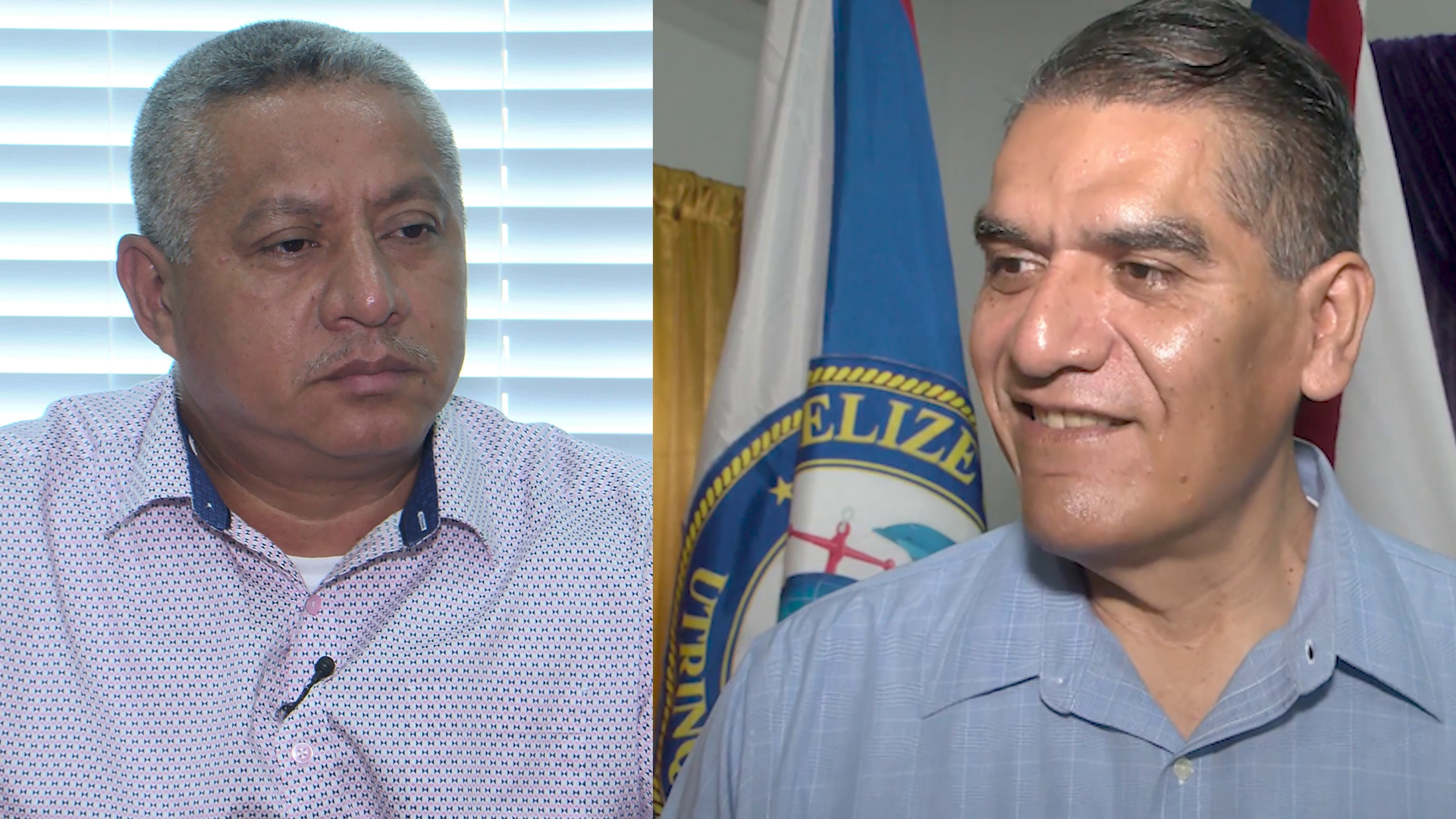
    In an interview held this Tuesday, Dr. Zabaneh reaffirmed the Briceño government’s current stance that none of the BBA’s requested measures will be implemented at this time. The minister argued that decisions on tax exemptions and subsidies fall outside the jurisdiction of his ministry, and pushed back against the BBA’s demands by noting that the association previously chose to remain independent from government-led frameworks.

    Dr. Zabaneh explained that as part of the National Bus Company initiative, the government offered BBA members a complimentary operational audit to help identify cost-saving opportunities, but association leaders declined the offer. “This is not a forced nationalization, and if you say you can stand on your own, then we respect that very position that they said they will be standing on their own,” he stated Tuesday.

    For its part, the BBA says the crisis has already reached a breaking point. Unless urgent action is taken to address the fuel cost burden before next Monday, April 20, 2026, BBA members will have no alternative but to suspend all bus services indefinitely. The association is now calling for direct high-level negotiations with Belizean Prime Minister John Briceño to break the current deadlock and avoid a disruptive shutdown that would impact communities across the country.

  • Grenada commemorates 47th anniversary of diplomatic relations with Cuba

    Grenada commemorates 47th anniversary of diplomatic relations with Cuba

    Forty-seven years after formalizing diplomatic relations, Grenada has offered warm fraternal greetings and sincere congratulations to Cuba’s government and people, marking the milestone anniversary through a statement released by Grenada’s embassy in Havana.

    Diplomatic ties between the two Caribbean nations were first established in 1979, and over the nearly five decades that followed, their partnership has evolved into a durable bond rooted in shared values of friendship, collective solidarity, and reciprocal benefit. The relationship has long been anchored in unwavering mutual respect for each nation’s sovereignty and inherent right to self-determination — principles that remain the guiding framework for all bilateral collaboration to this day.

    This year’s anniversary observance arrives against a uniquely challenging backdrop: as global geopolitical rifts deepen, Cuba continues to navigate severe economic strain caused by a decades-long, increasingly tight international blockade. In this context, Grenada has re-stated its unshakable solidarity with the Cuban people, and extended deep gratitude for Cuba’s consistent humanitarian ethos, selfless commitment to global cooperation, and long-standing tradition of internationalism.

    Grenada has itself reaped tangible, lasting benefits from the bilateral partnership over the past 47 years, with high-impact Cuban development assistance shaping key sectors of the Grenadian economy and public services. Most notably, Cuba supported the construction of Grenada’s Maurice Bishop International Airport, a critical infrastructure hub that remains central to the country’s tourism-driven economy, and also led construction of a new national hospital that expanded access to care for thousands of Grenadians. Beyond infrastructure, Cuba has trained roughly 500 Grenadian professionals across critical fields including medicine, engineering, economics, and agricultural sciences, while Cuban medical specialists have made vital, sustained contributions to strengthening Grenada’s domestic healthcare system.

    In return, Grenada has maintained consistent, unwavering support for Cuba across multilateral global institutions. Most prominently, Grenada has repeatedly joined calls for the full lifting of economic sanctions imposed on Cuba and for a permanent end to the decades-long blockade that has weighed on the Cuban people.

    As both countries commemorate this 47-year milestone, Grenada says it is eager to continue deepening collaborative ties and building on the historic friendship that connects the two nations’ populations for decades to come.

    Disclaimer: This article is based on an official statement from the Embassy of Grenada in Cuba. NOW Grenada does not take responsibility for opinions or content shared by contributing parties. To report potential abuse of content policies, follow the platform’s official reporting channel.

  • PM to undertake economic development working visit in Africa

    PM to undertake economic development working visit in Africa

    Grenada’s Office of the Prime Minister has officially announced that Prime Minister Hon. Dickon Mitchell will embark on a five-day working visit focused on advancing economic cooperation to two West African nations starting April 15, 2026. The itinerary will first take Mitchell to Taraba State, Nigeria, before the delegation moves onward to Accra, Ghana’s capital, for the continuation of the scheduled engagements.

    The core objective of this regional diplomatic trip is to deepen and expand bilateral ties between Grenada and each of the two host countries. Across a packed schedule of high-level government and business meetings, discussion priorities will center on four key mutually beneficial sectors: human capital development, agricultural innovation and trade, public health system collaboration, and sustainable tourism development. These areas were selected to align with Grenada’s ongoing growth priorities and the shared development goals of all three nations.

    Mitchell will be joined on the visit by two senior Grenadian officials: Trevor St Bernard, who holds dual roles as Chairman of the Grenada Solid Waste Management Authority and Deputy Chairman of the Grenada Development Bank, and Teddy St Louis, the Prime Minister’s Chief of Staff. The full delegation is scheduled to complete its trip and return to Grenada on April 20, 2026.

    To ensure continuous governance during the Prime Minister’s travel outside the country, Hon. Dennis Cornwall has been appointed to serve as Acting Prime Minister for the duration of Mitchell’s absence. This arrangement guarantees that all routine government functions and decision-making processes will proceed without interruption while the Prime Minister advances Grenada’s international economic and diplomatic agenda abroad.

    This announcement was released via the Office of the Prime Minister of Grenada, and distributed through NOW Grenada media platform.

  • “My Client Was Genuinely Ill,” Says Immigration Officer’s Attorney

    “My Client Was Genuinely Ill,” Says Immigration Officer’s Attorney

    A growing legal conflict has emerged following the placement of multiple western border immigration officers on administrative leave in late March 2026, centered on allegations of a coordinated work stoppage disguised as legitimate sick leave ahead of the Easter long weekend. At the heart of the dispute is Ann Marie Smith, one of the officers placed on leave, who is being represented by defense attorney Norman Rodriguez. Rodriguez has launched a scathing critique of the Ministry of Immigration’s handling of the case, accusing the agency of violating basic procedural fairness by imposing disciplinary action before completing a formal investigation.

    After Smith and her colleagues submitted official medical certificates to justify their absences, the Ministry moved to place them on administrative leave under Section 144 of the country’s Public Service Regulations. In official notice letters sent to Smith, the agency cited professional misconduct, claiming she failed to uphold the high standards of personal integrity required of her role as an immigration officer. The Ministry has publicly stated that the synchronized timing of the absences – all officers requesting leave for roughly the same window and all scheduling the same return date – during a peak Easter travel period at one of the country’s busiest border crossings is far too unusual to be coincidental. Officials allege the sick leave was a deliberate coordinated action intended to sabotage border operations.

    Prime Minister John Briceño publicly backed the Ministry’s position last Friday, calling the mass absence “illegal.” Briceño argued that the odds of multiple officers falling ill and returning to work on the exact same timeline are statistically implausible, insisting there must be an organized motive behind the work stoppage.

    But Rodriguez has pushed back aggressively against every element of the government’s narrative. He emphasized that Smith’s leave was explicitly ordered by her treating physician, and that her patient records confirm she has pre-existing documented health conditions that required the time off, including a prior hospitalization for related issues. He stressed that the Ministry has not produced any concrete evidence to support its misconduct allegations, despite its repeated claims of a coordinated “sick-out.”

    Rodriguez outlined that basic principles of natural justice require agencies to formally bring allegations against public employees, grant them an opportunity to respond to the claims, and conduct a full, impartial investigation before imposing punitive action such as administrative leave. He said the Ministry completely skipped this critical step, choosing to penalize the officers first and investigate second – a process failure he says is unacceptable. He also rejected the Ministry’s framing of administrative leave as a routine procedural step, noting that even routine processes are required to uphold fair process for public servants. Dismissing claims that the sick leave was a cover for coordinated strike action as baseless, Rodriguez reiterated that his client’s illness is completely genuine and fully documented.

    For its part, the Ministry of Immigration has stood by its actions, confirming that the officers remain under active investigation as it continues to probe the highly abnormal pattern of sick leave requests during the busy peak travel period. The ongoing legal row has drawn attention to procedural standards for public sector discipline and the handling of alleged organized work actions among border security staff.

  • GOB Wants Your Say on ‘National ID’ Plan

    GOB Wants Your Say on ‘National ID’ Plan

    In a move to co-design a critical national digital infrastructure project, the Government of Belize has opened the floor for public input on its upcoming unified National ID system, with formal public consultation sessions set to kick off next month. Scheduled to be held in two major population centers, the first session will take place in Orange Walk on April 23, followed by a second gathering in Belize City the next day, April 24.

    Tremett Perriott, Change Management Manager at Belize’s Ministry of E-Governance, emphasized that the success of the initiative depends on active participation from ordinary Belizeans. He noted that government teams do not claim to have all the solutions for building a functional, accessible national identification framework, and that external perspectives from community members can uncover gaps that planners have not yet considered. “We don’t have all the answers, and our hopes are that people will give us something other than what we are thinking, they can help us make the system better,” Perriott stated in an address outlining the consultation goals.

    The core purpose of the new National ID is to replace Belize’s current fragmented identification ecosystem, where multiple separate government agencies operate disconnected ID systems that rely heavily on manual, paper-based record-keeping. Instead of eliminating existing official records, the unified system will consolidate all a citizen’s official verification credentials into a single, interoperable document. Perriott clarified that while physical copies of existing ID cards may no longer be required for everyday use, the underlying official records will still be maintained in relevant government digital systems.

    Since the proposal was made public, the plan has drawn mixed responses from the Belizean public, with a significant number of residents voicing concerns over potential privacy risks and unregulated use of personal biometric and identification data collected under the program. Perriott confirmed that these public worries are the central focus of the upcoming consultation process, and has encouraged all residents with questions or criticisms to attend the sessions to share their views. “Come out and ask those hard questions. We need it,” he added, framing public scrutiny as a key step to refining the plan before it is rolled out to the general public.

  • Rusland belooft verdere olievoorzieningen aan Cuba na eerste levering

    Rusland belooft verdere olievoorzieningen aan Cuba na eerste levering

    Two weeks after dispatching a 700,000-barrel crude oil tanker to the Caribbean island nation, Russian Foreign Minister Sergey Lavrov has publicly reaffirmed Moscow’s long-term commitment to delivering critical energy support to Cuba, a longstanding ally. The announcement, made Wednesday at the conclusion of Lavrov’s two-day visit to China, comes as Cuba grapples with a severe energy crisis triggered by shifts in regional oil supply chains and escalating U.S. pressure.

    The crisis unfolded in early January, when U.S. authorities arrested Venezuelan President Nicolás Maduro during an international visit, prompting Washington to cut off all oil exports from Venezuela – Cuba’s most important traditional energy supplier. With domestic production covering less than one-third of the island’s 11 million residents’ energy needs, Cuba immediately plunged into acute fuel shortages that threatened critical public services and daily life.

    The Trump administration has ramped up pressure on third-party countries to halt oil shipments to Cuba, threatening steep punitive tariffs on any nation that defies U.S. sanctions. Earlier this year, the U.S. granted a one-off exemption for Russian oil deliveries to Cuba on humanitarian grounds, but even that limited exception pushed other major suppliers to cut ties: Mexico, once a key oil provider to the island, has already suspended all shipments to avoid U.S. retaliation.

    Lavrov confirmed that the first Russian tanker, carrying 100,000 metric tons of crude oil equal to approximately 700,000 barrels, has already arrived at Cuba’s Matanzas Bay, with cargo volumes projected to meet Cuba’s energy needs for roughly two months. “I have no doubt that we will continue this assistance, and I also expect China will maintain its participation in this cooperation,” Lavrov told reporters, declining to comment on whether the U.S. would approve future Russian shipments on a case-by-case basis, as the Trump administration has announced it will do.

    In a sharp rebuke of Washington’s regional policy, Lavrov also expressed hope that the U.S. would abandon its current hardline approach in the Caribbean, which he compared to the era of historical colonial intervention. “We hope the U.S. will not return to the times of colonial wars,” he said, highlighting growing pushback against unilateral U.S. sanctions among Russia and other global powers that maintain ties with Havana.