分类: politics

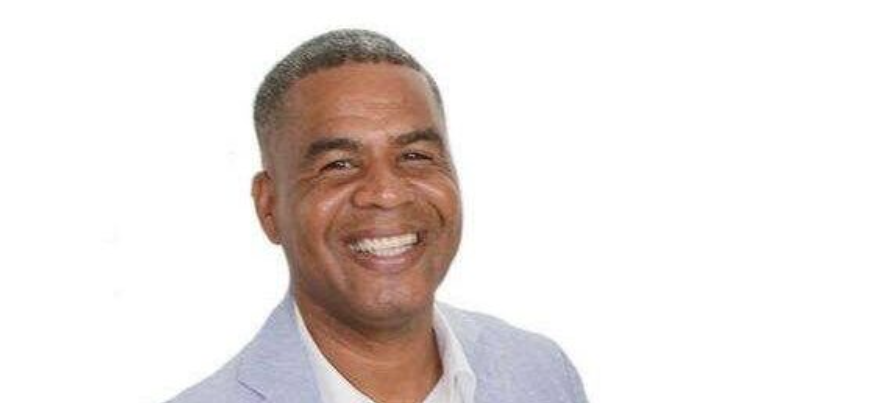
  • “I Owe This Community Everything”: Michael Joseph Sets Out Bold Plan to Transform St. John’s Rural West

    “I Owe This Community Everything”: Michael Joseph Sets Out Bold Plan to Transform St. John’s Rural West

    A local political figure named Michael Joseph has recently announced a bold, ambitious initiative aimed at driving comprehensive transformation across the St. John’s Rural West region. In public comments shared around the plan, Joseph emphasized his deep personal connection to the area, stating openly that he owes all of his growth and opportunities to the local community. The transformative blueprint he has laid out is framed as a reciprocal effort to lift up the district that shaped him, though full details of the plan’s specific priorities, funding mechanisms and implementation timelines have not yet been outlined in the available information.

  • ‘I Was Born and Raised Here’: Newton Makes Personal Case for All Saints East Seat

    ‘I Was Born and Raised Here’: Newton Makes Personal Case for All Saints East Seat

    Weeks ahead of the upcoming general election in Antigua and Barbuda, Antigua and Barbuda Labour Party (ABLP) candidate Lamin Newton has laid out a sweeping policy platform targeting long-standing unmet needs in the competitive constituency of All Saints East and St Luke, positioning himself as a community-rooted candidate focused on tangible delivery over empty campaign rhetoric.

    Appearing on ABS Television’s voter education series “Know Your Candidates”, Newton framed his candidacy around deep personal ties to the district he hopes to represent. “This is a very dear part of my life,” he shared during the interview. “I was born and raised in All Saints… I feel that sense of responsibility that I have to play my part.”

    Infrastructure improvement emerges as the central pillar of Newton’s campaign, with the candidate arguing that the constituency has suffered from more than two decades of systemic neglect that has left roads crumbling and persistent flooding plaguing communities from All Saints through the southern corridor to Old Road.

    As evidence of his ability to deliver ahead of the election, Newton pointed to completed improvement works in the Follies community, where severe flooding once left residents trapped during heavy rain events. After the team he leads redesigned local drainage systems and upgraded adjacent roads, the community no longer faces regular flood disruption. “I gave them my commitment… and today, Follies no longer has the issue of flooding,” he noted, adding that the pre-election work is not a last-minute campaign gimmick, but the first phase of a structured, priority-driven improvement plan.

    Under Newton’s framework, flood-prone areas will be addressed first, followed by upgrades to secondary local roads. He also defended the decision to use concrete for roads in high-risk flood zones, arguing that the material offers far greater long-term resilience than traditional asphalt, delivering better value for public funds over time.

    If elected, Newton has committed to a clear 100-day action plan focused on three core priorities. First, he will immediately advance ongoing road improvement projects across the constituency. Second, he will complete long-awaited upgrades to the John Hughes clinic within three months, and install long-requested air conditioning at the Sweets healthcare facility to improve conditions for both patients and staff. Third, he will launch rehabilitation for neglected sporting and recreational spaces, creating accessible outdoor areas for both youth engagement and senior community gatherings. “People need recreation… people need to be able to have that recreational time,” he explained.

    Beyond early-term infrastructure priorities, Newton has put forward a major affordable housing initiative designed to expand land ownership opportunities for young constituents. Under the plan, 50 acres of existing government-owned land will be subdivided into individual plots and sold at heavily subsidized rates, with a fixed price of $18,000 per plot to ensure accessibility for low and middle-income buyers. The development will be administered through the Central Housing and Planning Authority, with constituency residents given priority access, though plots will also be open to buyers from other districts. The national government will cover the cost of installing core infrastructure — including access roads, electricity connections, and running water — to support the new development.

    Healthcare access is another key cornerstone of Newton’s campaign platform, shaped directly by feedback he gathered during months of door-to-door canvassing, where elderly constituents repeatedly raised concerns about inadequate local care. He has made a “solemn promise” to build a completely new clinic in Old Road within his first year in office, with preliminary design work already completed and funding secured through a mix of public budget allocations and private donor contributions. He also pledged to secure a dedicated ambulance for the All Saints area, noting that international donors have already committed to covering the cost of the vehicle.

    Addressing constituent complaints about inconsistent local water supply, Newton explained that the ongoing disruptions do not stem from insufficient water production, but from challenges related to the national project to replace century-old ageing distribution pipes. He urged residents to remain patient as the upgrade work progresses, noting that the completed project will resolve decades of supply irregularities.

    Newton also highlighted his long-standing personal commitment to education in the constituency, a cause he calls a personal passion. Currently, he funds annual scholarships for 40 students from Irene B. Williams School and All Saints Secondary School, covering the cost of extra tutoring to prepare students for the Caribbean Secondary Education Certificate (CSEC) exams. The initiative was launched in response to declining math scores and widespread demand for more personalized academic support for struggling students.

    Looking beyond social services, Newton emphasized that All Saints East and St Luke plays a critical role in advancing Antigua and Barbuda’s national food security goals, thanks to its expansive agricultural belt and active fishing community based in Old Road. If elected, he plans to boost local food production by supporting smallholder farmers with land clearing, new and expanded water retention infrastructure including dams and ponds, and subsidized fertilizer. He also called for stronger safety regulations for local fishermen, following recent high-profile incidents of missing seafarers in the region.

    Newton is challenging incumbent Jamale Pringle, who won the seat for the opposition in the last general election, making the constituency one of the key competitive races to watch on election day. When asked how he plans to unseat the incumbent, Newton pointed to his grassroots, door-to-door campaign strategy, centered on building direct trust with voters. “It’s all about building relationships with the people… you have to go and knock on every door,” he said. He stressed that his campaign differs from empty traditional campaigns because it is built on results he has already delivered, not just unfulfilled promises. “We’re not here just to talk… we are here to deliver.”

    Newton’s campaign aligns with the ABLP’s broader national election narrative, which focuses on visible local development and targeted constituency-level projects. His message blends a “son of the soil” personal identity with a practical, problem-solving focus on improving core infrastructure, expanding affordable housing, and upgrading public services. Whether this community-focused, delivery-driven approach will resonate enough with voters to flip the seat will be decided when voters head to the polls in the coming weeks, but Newton has made his commitment clear: “These aren’t just election promises. These are promises that we will deliver.”

  • Governor General travels to Martinique for medical care

    Governor General travels to Martinique for medical care

    In an official statement released Wednesday, the Office of the Governor General of Saint Lucia has confirmed that the nation’s current Governor General, Sir Cyril E. M. Charles, has traveled to the Caribbean island of Martinique to seek specialized medical treatment.

    In line with the constitutional provisions laid out in Section 22(1)(c) of Saint Lucia’s founding Constitution, Felix Finisterre has been formally appointed to serve as acting deputy during Sir Cyril’s medical leave. Throughout the Governor General’s absence, Finisterre will assume all required responsibilities and carry out the core duties of the Office of the Governor General to uphold the normal operations of the institution.

    Senior government officials have emphasized that all necessary administrative and procedural arrangements have already been finalized to guarantee full continuity of the Governor General’s statutory and ceremonial duties. These pre-planned steps are designed to ensure all official government business proceeds without disruption or delay across all areas of the office’s mandate.

    Sir Cyril is accompanied on his trip by his spouse, Lady Anicia Charles. On behalf of the entire Charles family, a public request has been made for the prayers and supportive well-wishes of Saint Lucian citizens across the country as Sir Cyril undergoes his medical care.

  • Baltimore Urges Early Voting, Warns Against UPP Return at St. Philip’s North Campaign Blitz

    Baltimore Urges Early Voting, Warns Against UPP Return at St. Philip’s North Campaign Blitz

    With critical elections looming for Antigua and Barbuda, Antigua and Barbuda Labour Party (ABLP) candidate Randy Baltimore has ramped up his on-the-ground campaigning, using a recent stop in the St. Philip’s North constituency to urge loyal supporters to cast their ballots early and sharpen his criticism of the rival United Progressive Party (UPP).

    Speaking to packed crowds of voters in Newfield and nearby surrounding communities, Baltimore framed the upcoming election as a defining fork in the road for the twin-island nation. On one side, he argued, sits the path of sustained progress and inclusive growth under the incumbent ABLP; on the other, he claimed, is a return to the economic hardship and instability that marked the UPP’s previous tenure in government.

    “To lock in this progress, we cannot take turnout for granted – every single voter needs to head to the polls as early as possible on election day,” Baltimore told the gathered crowd. He went on to outline concrete steps voters can take to ensure a strong showing for the ABLP, reminding constituents to retrieve their official voter identification cards ahead of time and organize carpooling or other support to help neighbors with limited mobility reach their polling stations.

    Baltimore devoted a large portion of his remarks to touting the sitting government’s track record across key sectors, calling out tangible gains in tourism – the nation’s largest economic driver – as well as expanded educational access and sweeping infrastructure upgrades across the country. “The ABLP has always stood for development, for progress, for national unity, and for building a brighter future for the next generation of Antigua and Barbuda,” he said.

    Turning his attention to the opposition, Baltimore issued a stark warning against returning the UPP to power. Pointing to the party’s previous term in office, he asked assembled voters whether they were willing to roll back the gains the ABLP has delivered over recent years. “We cannot afford to go back to the UPP,” he emphasized.

    Digging into policy differences, Baltimore zeroed in on a high-profile UPP campaign proposal: the elimination of import duties and taxes on incoming vehicles. He challenged the opposition to explain how the policy would be funded, arguing that the lost government revenue would almost certainly force the UPP to bring back the unpopular income tax that was eliminated during the ABLP’s tenure. “When they scrap all those duties and taxes, where will they get the money to keep basic government services running?” he asked.

    Throughout the event, Baltimore repeatedly anchored his campaign to the leadership of incumbent Prime Minister Gaston Browne, arguing that the Browne-led administration has delivered consistent, stable growth across the economy and deserves a new mandate from voters to continue its work. Closing out his remarks, Baltimore extended his appeal beyond St. Philip’s North, urging voters across the entire nation to back the ABLP. He declared that the incumbent party is “stronger than ever” and fully prepared to lead Antigua and Barbuda into a new era of shared national development.

  • Marigot MP voices support for continued mining at Deux Branche

    Marigot MP voices support for continued mining at Deux Branche

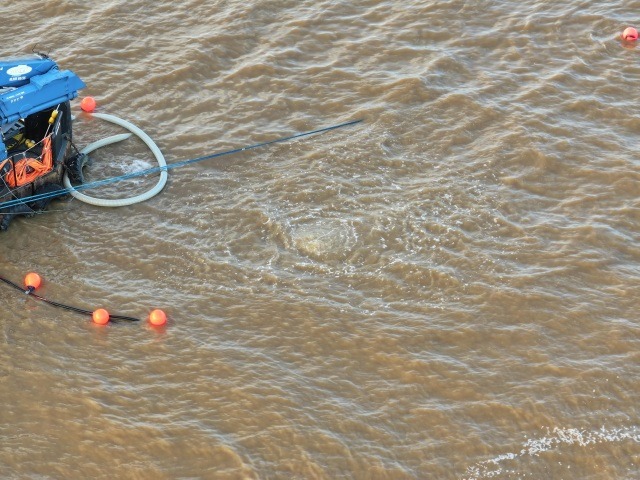
    As the elected parliamentary representative for Marigot, Anthony Charles has publicly solidified his stance on one of the region’s most contentious development issues: throwing his full support behind continued mining operations at the Deux Branches site. In a detailed written statement addressing public and stakeholder concerns, Charles framed the project as an essential driver of national progress that upholds both community land rights and responsible environmental stewardship.

    Charles emphasized that Marigot constituents have a long-standing commitment to balanced, inclusive progress that never sacrifices citizen rights for economic growth. He pointed to the constituency’s earlier approval of mining operations at Crapaud Hall (also referenced as Craupo Haul in the full statement) as a clear example of this balanced approach. That earlier project, he noted, moved forward only after securing full consent from local landowners, who received fair compensation for the use of their property. The successful completion of aggregate extraction at Crapaud Hall, he explained, has cleared the way for the next critical phase of the nation’s flagship infrastructure project: sourcing the large volume of stone needed to build the country’s new international airport.

    Acknowledging widespread public concern over the potential environmental impact of expanding mining to Deux Branches, Charles stressed that robust mitigation strategies are already baked into the project’s official plan. He said these targeted measures are designed to minimize any negative ecological effects of the extraction work, aligning the project with commitments to sustainable resource management.

    In a firm, clear assertion of his position as the community’s elected official, Charles stated: “Let me be clear on my position as the elected representative for Marigot: I will stand with the decision of the landowners at Crapaud Hall and Deux Branches. With fair compensation and these safeguards in place, then we must proceed.”

    Charles rejected framing the project as a simple resource extraction effort, instead positioning it as a catalyst for transformative national benefit. Once completed, the new international airport is projected to stimulate broad economic growth, generate new local jobs, and unlock long-term opportunity for both Marigot and the entire country. “The stone extracted is critical to completing the international airport, a project that will strengthen our economy, create jobs, and position Marigot and the wider nation for growth in the years ahead,” he added.

    For Charles, the core of the debate boils down to three non-negotiable priorities: upholding binding agreements with local landowners, protecting natural resources that the entire community depends on, and keeping the nation on a path toward inclusive sustainable development. “This is about building our future while honoring the agreements made with our people and protecting the natural resources we all depend on. We move forward together, with respect for land rights, environmental stewardship, and commitment to national development,” he concluded.

  • Latest Voter ID Replacement Update

    Latest Voter ID Replacement Update

    The Electoral Commission of Antigua & Barbuda has released its latest official progress update for April 2026, confirming that more than half of all eligible voters across the country have successfully finished replacing their outdated voter identification cards. The ongoing national card replacement initiative, a key preparatory step for upcoming electoral processes, shows uneven but broadly steady progress across the country’s 17 parliamentary constituencies, with completion rates ranging from just over the 50% threshold to a high of 87% in the northern parish of St Peter.

    To date, the commission has processed a cumulative total of 29,427 replacement applications, with 6,076 of those requests completed in the month of April alone. Breaking down weekly activity for the period 12 to 18 April, the body recorded 2,105 finalized replacement applications, with most of the week’s work concentrated in the first three working days. Daily data shows that April 13 saw the highest volume of processed applications, at 793, followed by 605 completed requests on April 14 and 501 on April 15. No application processing activity was documented from April 16 through 18, consistent with standard public service operational schedules in the country. Alongside the replacement of existing voter cards, the commission also accepted and processed 257 applications from first-time eligible voters seeking to register on the national electoral roll during that same seven-day window.

    Beyond the parish-level standings, the weekly data reveals particularly strong engagement across both urban and rural constituencies located within the St John’s electoral district. Two constituencies in the area, St John’s Rural West and All Saints West, posted some of the highest weekly application processing totals nationwide, outperforming many other regions. At the lower end of the completion spectrum, two constituencies — St Mary’s North and St John’s Rural West — sit just above the 50% mark, with 54% and 55% of eligible voters having completed the replacement process respectively. After St Peter’s leading 87% completion rate, the island of Barbuda ranks second at 76%, followed closely by St Philip North at 75%. Most constituencies have now crossed the 55% completion threshold, marking consistent forward momentum for the national initiative.

    Electoral officials have not yet announced a formal final deadline for the card replacement process, but they continue to actively urge all eligible voters to complete their applications as soon as possible. The program is gradually moving toward full national coverage, with officials working to expand outreach and processing capacity to bring remaining unregistered eligible voters into the system ahead of any upcoming electoral events.

  • OP-ED: CARICOM and the new normal in international politics

    OP-ED: CARICOM and the new normal in international politics

    As the Caribbean Community (CARICOM) marks its 50th Conference of Heads of Government, the 56-year-old regional bloc finds itself facing the most severe test of its unity in modern history, pushed to breaking point by shifting great power dynamics that have reopened deep foreign policy divides among member states. The moment of crisis comes as St. Kitts and Nevis Prime Minister Terrance Drew stepped into the six-month rotating CARICOM chairmanship in January 2026, tasked with bridging growing fractures that have undermined the bloc’s longstanding diplomatic cohesion at a time of unprecedented global upheaval.

    The core source of tension stems from competing responses to the so-called “Trump Corollary” to the Monroe Doctrine, a policy framework that has reignited great power competition in the Caribbean and split the 14 sovereign member bloc into two opposing camps. For most small CARICOM states, the doctrine, which has been implemented through heavy-handed U.S. security and foreign policy actions, raises deep alarms: it contradicts the bloc’s foundational commitment to the UN Charter, multilateral cooperation, and sovereign equality, principles that are the primary protection for small states in an anarchic international system.

    But a small subset of members has broken ranks to align fully with Washington. Trinidad and Tobago, under Prime Minister Kamla Persad-Bissessar, has openly backed U.S. policy across multiple flashpoints: it supported the U.S.-Israeli military campaign against Iran (now paused by a fragile ceasefire), endorsed U.S. anti-narcotics military operations in the Caribbean that targeted the Venezuelan Maduro regime, and welcomed Maduro’s capture by U.S. forces. In return, Washington has deepened bilateral security cooperation with Port-of-Spain and admitted it into the high-profile Shield of the Americas initiative, joining only Guyana as the second CARICOM member in the bloc. This split has eroded mutual trust across the regional grouping, opening a diplomatic rift that has persisted for months.

    When Drew assumed the chairmanship, he prioritized mending these divides to ensure a successful 50th Heads of Government Conference, held in February 2026. To lay the groundwork, he launched a series of one-on-one high-level engagements with regional leaders, aiming to rebuild goodwill and create space for productive dialogue. Drew’s efforts achieved a partial victory: all 14 heads of government attended the summit, though three departed early before the closed-door leadership retreat, a key session focused on geopolitical reform.

    Despite the divisions, CARICOM members were able to close ranks on limited issues, including longstanding policy toward Cuba. On the sidelines of the summit, U.S. Secretary of State Marco Rubio held talks with CARICOM leaders, resulting in an agreement to develop a new bilateral cooperation framework, which was formalized in a joint statement on regional engagement. The summit also reaffirmed a core principle of CARICOM: as Jamaica Prime Minister Andrew Holness emphasized in opening remarks, citing the 2013 Rose Hall Declaration, CARICOM is a community of sovereign states bound by shared purpose rather than forced uniformity, a pragmatic approach shaped by historical skepticism of ceding authority to supranational institutions.

    Holness acknowledged the growing gap between the accelerating pace of global change and the bloc’s ability to coordinate regional responses, a challenge that has defined the current moment. Even so, the summit was widely framed as a limited success for chair Drew and the bloc – until a new controversy erupted over the reappointment of incumbent CARICOM Secretary-General Carla Barnett to a second term starting August 2026.

    Drew first announced Barnett’s reappointment on March 25, 2026, triggering a public dispute that has deepened existing divides. The impasse extends far beyond procedural questions, opening up broader debate about CARICOM’s governance structures. As of mid-April 2026, neither side has backed down: public diplomatic correspondence from Trinidad and Tobago Foreign Minister Sean Sobers (dated April 9) and Drew (dated April 11) show positions have hardened, with many remaining members forced to navigate a diplomatic tightrope between the two camps. High-level mediation efforts are ongoing, but no immediate resolution is in sight.

    For regional analysts, the current crisis is not an isolated incident, but part of a longer pattern of tension sparked by great power interference in the Caribbean. A key historical parallel is the 1983 U.S. invasion of Grenada, which created lasting rifts within the bloc. Today, the resurgence of sphere-of-influence politics directly undermines the post-WWII international order’s cornerstone of multilateral cooperation, presenting an existential challenge to small Caribbean states that rely on the UN Charter to defend their sovereignty.

    While the 50th summit delivered much-needed discussion of geopolitical challenges and the bloc’s core identity, CARICOM now faces an urgent imperative: to work through its deepening divides and adapt to the new normal of 21st century great power competition. For small Caribbean nations, the stakes could not be higher: failure to navigate this moment could permanently erode the regional unity that has served the bloc for more than five decades.

    *This analysis reflects the personal views of Nand C. Bardouille, Ph.D., manager of The Diplomatic Academy of the Caribbean at The University of the West Indies St. Augustine Campus, and was originally published by the Jamaica Gleaner on April 16, 2026.*

  • ‘Disgraceful silence’ from foreign ministers

    ‘Disgraceful silence’ from foreign ministers

    A deepening transparency crisis has rocked the Caribbean Community (Caricom), as Trinidad and Tobago Prime Minister Kamla Persad-Bissessar has leveled explosive allegations of corrupt backroom dealing against the regional bloc’s leadership, centered on the controversial reappointment of Secretary-General Dr. Carla Barnett.

    At the heart of the controversy is a bombshell revelation from Persad-Bissessar: the official April 11 statement defending Barnett’s reappointment, published publicly under the name of Caricom Chairman and St. Kitts and Nevis Prime Minister Dr. Terrance Drew, was actually written by Barnett herself. Document metadata shared by the prime minister confirms Barnett as the statement’s original author, a revelation Persad-Bissessar argues exposes the fundamental conflict of interest plaguing the bloc’s decision-making process.

    The dispute stretches back to the February 2026 Caricom Heads of Government Conference held in St. Kitts and Nevis. Persad-Bissessar attended the opening sessions and departed on February 25, leaving Foreign Minister Sean Sobers to lead the Trinidad and Tobago delegation. On the morning of the scheduled closed-door Nevis retreat on February 26, a WhatsApp message sent by Barnett to the Caricom Council for Foreign and Community Relations (COFCOR) chat group – which all regional foreign ministers, including Sobers, are members of – clearly stated that Chairman Drew had ordered the retreat to be restricted to heads of government only, barring all ministers from attending. This directly contradicts Drew’s later claim that Sobers was invited to the retreat and declined to attend due to seasickness, a claim Sobers formally refuted in an April 9 letter.

    Persad-Bissessar has lambasted the entire Caricom foreign minister corps for what she calls their “deliberate and disgraceful silence” in the wake of this exposed contradiction. All COFCOR members have access to the unaltered February 26 WhatsApp message confirming the disinvitation, yet none have stepped forward to confirm Sobers’ account. This collective silence, the prime minister says, amounts to active complicity in smearing the foreign minister’s reputation to cover up procedural misconduct.

    Trinidad and Tobago’s core objections stretch beyond the conflicting narratives about the disinvitation. The reappointment was never listed on the official public agenda for the conference, and no reference to the decision appeared in the March 1 joint communiqué or the March 2 official summary of Caricom decisions published after the meeting. It was not until March 25 that Drew formally announced Barnett’s second five-year term, set to begin when her current term expires in August 2026, following a vote by a majority of heads of government held during the closed-door retreat.

    Persad-Bissessar has drawn sweeping conclusions about the state of Caricom’s leadership, describing the bloc’s secretariat as “dysfunctional, dishonest and incompetent.” She argues that the opaque process is the inevitable outcome of a system where political allies, party loyalists, and relatives of regional politicians are appointed to top management roles to preserve a decades-old “old boys club” status quo that benefits regional business and political elites, rather than appointing independent, competent technocrats. What Caricom frames as core ideals of regional integration, integrity, and inclusion, she says, is just a “smoke screen” for behind-the-scenes deals that prioritize keeping aligned political parties in power across the region and exclude unaligned groups from the entrenched political establishment.

    In a statement to local media, Foreign Minister Sobers backed the prime minister’s campaign, calling the situation “intolerable” and a “profoundly sad moment for the Caribbean people.” He emphasized that no amount of public relations spin can distract from the core facts: Trinidad and Tobago was deliberately excluded from the retreat, the reappointment was never added to the official agenda, and the entire process violated the procedural requirements laid out in the Revised Treaty of Chaguaramas, Caricom’s founding legal document.

    Despite the scathing criticism, Persad-Bissessar has repeatedly emphasized that Trinidad and Tobago has no plans to leave the regional bloc, which it helped found 52 years ago and has heavily invested in over decades. “We helped build this organisation and will be a part of fixing it to benefit all the people of Caricom,” she said, adding that the country’s economic, security, and development future is deeply tied to the bloc’s success.

    The prime minister has vowed to continue escalating the matter publicly and aggressively until two demands are met: full accountability for all actors involved in the opaque reappointment process, and sweeping institutional reforms to guarantee future fairness, transparency, accountability, and non-interference in the domestic politics of member states. She has noted that even small local bodies like village councils and sports clubs keep formal, timestamped meeting minutes and performance records, and Caricom, as a 52-year-old regional institution, has no excuse for failing to produce the documentation she has requested about the reappointment process, which includes communications, meeting minutes, and performance appraisals for Barnett.

    A full timeline of the unfolding controversy tracks a steady escalation of tensions over two months: the initial exclusion at the February retreat, the first public announcement of the reappointment in late March, repeated formal requests for documentation from Trinidad and Tobago that went unanswered, an emergency Caricom virtual meeting that Trinidad and Tobago boycotted over the lack of transparency, and the most recent bombshell revelation that Barnett authored her own defense statement released under the chairman’s name.

  • Marvin mum on reports John-Bates helped key witness

    Marvin mum on reports John-Bates helped key witness

    Trinidad and Tobago’s governing People’s National Movement (PNM) has announced it will withhold public comment on growing allegations that opposition Senator Janelle John-Bates improperly provided assistance to a star witness during closed proceedings of the country’s Public Accounts and Administration Committee (PAAC).

    The witness at the center of the controversy is former health minister Terrence Deyalsingh, who is a key figure in the PAAC’s ongoing inquiry into state-run pharmaceutical procurement, covering the full process of importing and approving medical drugs for public use. Unconfirmed claims state that John-Bates helped draft Deyalsingh’s formal statement ahead of his submission to the oversight committee. Following the emergence of these allegations, the PAAC took the step of adjourning its scheduled Monday meeting to reset the course of the ongoing inquiry.

    Opposition Chief Whip Marvin Gonzales laid out the PNM’s official stance on the developing situation during a press briefing hosted Tuesday at the Office of the Leader of the Opposition in Port of Spain’s Charles Street. Gonzales, who also serves as the Member of Parliament for the Arouca/Lopinot constituency, was joined at the briefing by two fellow PNM parliamentarians: Symon de Nobriga, representative for Diego Martin Central, and Stuart Young, who holds the Port of Spain North/St Ann’s West seat.

    Gonzales explained that the PAAC operates as a permanent joint select committee tasked with scrutinizing governance practices within Trinidad and Tobago’s pharmaceutical sector. He emphasized that as a matter of parliamentary protocol, neither party representatives nor the general public are permitted to publicly discuss active matters under review by the committee, particularly proceedings that are held in private, or in camera.

    Noting he is not a sitting member of the PAAC, Gonzales stressed that he has no access to the closed committee proceedings, and his only awareness of the allegations comes from local daily newspaper reporting. He added that parliamentarians bound to the joint select committee are explicitly barred from commenting on active in camera matters under the Parliament’s Standing Orders.

    “Based on what has been reported in the media, this alleged incident is understood to have taken place just one or two days ago, and we do not currently have access to a full, verified set of facts related to this case,” Gonzales said. “We must exercise extreme caution to avoid violating the Standing Orders of Parliament and facing contempt sanctions. Once all relevant information is obtained through official, proper channels, the PNM will move forward with whatever action is deemed appropriate for the circumstances.”

  • Ralph, Camillo, ‘ULP bigwigs’ lack ‘moral authority’ on constitutional issues

    Ralph, Camillo, ‘ULP bigwigs’ lack ‘moral authority’ on constitutional issues

    A longstanding political and legal figure in St. Vincent and the Grenadines has delivered a blistering rebuke to top leaders of the opposition Unity Labour Party (ULP), arguing they have forfeited any moral standing to condemn the current government’s planned constitutional amendments over ongoing election legal challenges.

    Jomo Thomas, a former Speaker of the House of Assembly, practicing lawyer, journalist, and one-time New Democratic Party (NDP) electoral candidate, laid out his case in an interview with iWitness News on Wednesday, calling out ULP Opposition Leader Ralph Gonsalves, his son and former ULP Finance Minister Camillo Gonsalves, and other senior ULP figures for their recent sanctimonious rhetoric about constitutional respect.

    The current dispute traces back to last November’s general election, when after two decades in power under Ralph Gonsalves, the ULP was decisively voted out of office by the electorate. The ruling NDP, now led by Prime Minister Godwin Friday, took office, but the ULP has since filed two high-stakes election petitions challenging the legitimacy of Friday’s win in Northern Grenadines and Finance Minister Dwight Fitzgerald Bramble’s victory in East Kingstown. The ULP argues the pair were ineligible to run for office because they hold Canadian citizenship, a fact that has been public since before they first stood for election.

    In response to the pending challenge, scheduled for trial in June, the NDP government has proposed a constitutional amendment to clarify the legal definition of “foreign power” to resolve eligibility questions. The ULP has decried this move as an unconstitutional power grab to protect the sitting government, framing the change as a threat to St. Vincent and the Grenadines’ founding governing document. Thomas, however, says this outrage rings hollow given the ULP’s own long history of disregarding constitutional norms when it held power.

    Thomas points to a 2015 parallel that exposes the ULP leadership’s hypocrisy. After that year’s election, the NDP filed its own election petitions challenging ULP seat wins, and when the courts agreed to hear the case, Ralph Gonsalves, who was still prime minister at the time, publicly dismissed the court’s role in determining election outcomes. In 2017 comments that still stand on record, Gonsalves argued that only voters, not judges, get to decide who represents the public, saying “The courthouse doesn’t determine who represents you… Judges do not decide who are your representatives.” Now, Thomas notes, Gonsalves is insisting the court must be the final arbiter a direct contradiction of his own previous stance.

    Beyond this flip-flop, Thomas details a series of past actions by the Gonsalves-led ULP administration that he says amount to direct assaults on the constitution. He cites the Public Administration Act, which Ralph Gonsalves championed and Camillo Gonsalves supported, a law that Thomas argues improperly stripped the independent Public Service Commission of its constitutional authority over public sector hiring. Thomas’s own legal chambers have won multiple court rulings that found the ULP administration violated the constitution during its time in office. He also points to violations of the Finance Act related to unregulated special warrants, documented in a 2020 article he wrote, as well as the ULP’s maneuvering to block an NDP no-confidence motion when the party held a narrow 8-7 parliamentary majority.

    Thomas acknowledges that he, as speaker at the time, allowed the ULP’s procedural gambit to block the no-confidence debate, but says he was pressured into the decision by Camillo Gonsalves, who argued that standing orders allowed the amendment to kill the motion. Thomas now says that was a mistake: standing orders are subsidiary legislation that cannot override the constitutional requirement to hold votes on no-confidence motions, a fact the ULP leadership knew full well when they pushed the maneuver through to protect their government.

    While Thomas rejects the ULP’s moral authority to comment on constitutional respect, he does not fully back the NDP’s planned amendment either. He agrees with the ULP’s top leadership’s prediction that the court will throw out their election petitions, and says the NDP’s push to amend the constitution ahead of the June trial signals unnecessary insecurity about the legal case. Thomas confirms that the government only needs a two-thirds parliamentary majority to pass the amendment, but argues that moving forward with the change is unnecessary, even as it remains within the government’s power to do so.