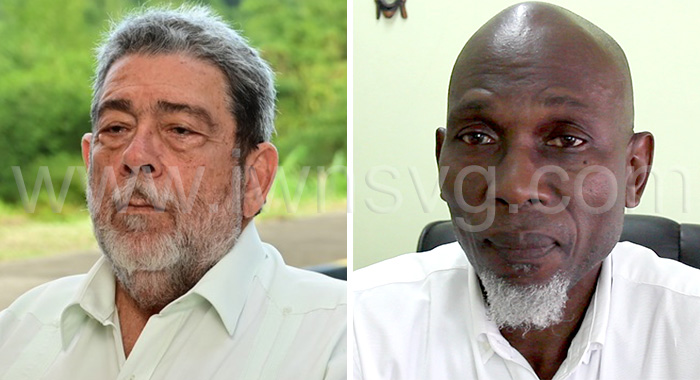
A longstanding political and legal figure in St. Vincent and the Grenadines has delivered a blistering rebuke to top leaders of the opposition Unity Labour Party (ULP), arguing they have forfeited any moral standing to condemn the current government’s planned constitutional amendments over ongoing election legal challenges.
Jomo Thomas, a former Speaker of the House of Assembly, practicing lawyer, journalist, and one-time New Democratic Party (NDP) electoral candidate, laid out his case in an interview with iWitness News on Wednesday, calling out ULP Opposition Leader Ralph Gonsalves, his son and former ULP Finance Minister Camillo Gonsalves, and other senior ULP figures for their recent sanctimonious rhetoric about constitutional respect.
The current dispute traces back to last November’s general election, when after two decades in power under Ralph Gonsalves, the ULP was decisively voted out of office by the electorate. The ruling NDP, now led by Prime Minister Godwin Friday, took office, but the ULP has since filed two high-stakes election petitions challenging the legitimacy of Friday’s win in Northern Grenadines and Finance Minister Dwight Fitzgerald Bramble’s victory in East Kingstown. The ULP argues the pair were ineligible to run for office because they hold Canadian citizenship, a fact that has been public since before they first stood for election.
In response to the pending challenge, scheduled for trial in June, the NDP government has proposed a constitutional amendment to clarify the legal definition of “foreign power” to resolve eligibility questions. The ULP has decried this move as an unconstitutional power grab to protect the sitting government, framing the change as a threat to St. Vincent and the Grenadines’ founding governing document. Thomas, however, says this outrage rings hollow given the ULP’s own long history of disregarding constitutional norms when it held power.
Thomas points to a 2015 parallel that exposes the ULP leadership’s hypocrisy. After that year’s election, the NDP filed its own election petitions challenging ULP seat wins, and when the courts agreed to hear the case, Ralph Gonsalves, who was still prime minister at the time, publicly dismissed the court’s role in determining election outcomes. In 2017 comments that still stand on record, Gonsalves argued that only voters, not judges, get to decide who represents the public, saying “The courthouse doesn’t determine who represents you… Judges do not decide who are your representatives.” Now, Thomas notes, Gonsalves is insisting the court must be the final arbiter a direct contradiction of his own previous stance.
Beyond this flip-flop, Thomas details a series of past actions by the Gonsalves-led ULP administration that he says amount to direct assaults on the constitution. He cites the Public Administration Act, which Ralph Gonsalves championed and Camillo Gonsalves supported, a law that Thomas argues improperly stripped the independent Public Service Commission of its constitutional authority over public sector hiring. Thomas’s own legal chambers have won multiple court rulings that found the ULP administration violated the constitution during its time in office. He also points to violations of the Finance Act related to unregulated special warrants, documented in a 2020 article he wrote, as well as the ULP’s maneuvering to block an NDP no-confidence motion when the party held a narrow 8-7 parliamentary majority.
Thomas acknowledges that he, as speaker at the time, allowed the ULP’s procedural gambit to block the no-confidence debate, but says he was pressured into the decision by Camillo Gonsalves, who argued that standing orders allowed the amendment to kill the motion. Thomas now says that was a mistake: standing orders are subsidiary legislation that cannot override the constitutional requirement to hold votes on no-confidence motions, a fact the ULP leadership knew full well when they pushed the maneuver through to protect their government.
While Thomas rejects the ULP’s moral authority to comment on constitutional respect, he does not fully back the NDP’s planned amendment either. He agrees with the ULP’s top leadership’s prediction that the court will throw out their election petitions, and says the NDP’s push to amend the constitution ahead of the June trial signals unnecessary insecurity about the legal case. Thomas confirms that the government only needs a two-thirds parliamentary majority to pass the amendment, but argues that moving forward with the change is unnecessary, even as it remains within the government’s power to do so.