分类: politics

  • APNU pickets Irfaan Ali’s office for cash grant

    APNU pickets Irfaan Ali’s office for cash grant

    A modest gathering of fewer than one hundred demonstrators assembled outside the Office of the President in Guyana on Monday, responding to a mobilization call by the opposition coalition A Partnership for National Unity (APNU). The protest targeted President Irfaan Ali’s unfulfilled campaign pledge to distribute a Christmas cash grant to citizens grappling with escalating living costs.

    Protesters brandished placards with messages including “The money belongs to the people of Guyana. Pay it now” and “We can’t eat beauty. Fancy don’t pay bills. We need the cash grant for Christmas.” The assembly featured chants and visual demands emphasizing the urgent need for financial relief during the holiday season.

    APNU parliamentarian Dr. Dexter Todd, speaking from the picket line, articulated the coalition’s demand for a minimum payment of GY$150,000 for every Guyanese citizen aged 18 and above. Dr. Todd emphasized the people’s rightful claim to national resources, stating, “This money belongs to the people of Guyana and because it belongs to the people of Guyana, we are very serious in relation to how they must be treated.”

    The protest gained additional participation from civil society groups including the Assembly for Liberty and Prosperity and the Vigilant Political Action Committee. Demonstrators marched from the Square of the Revolution to the eastern perimeter of the presidential compound.

    APNU parliamentary leader Dr. Terrence Campbell criticized President Ali’s recent remarks at a campaign meeting in Eccles, where he suggested citizens would receive “a beautiful Christmas if you behave yourself.” Dr. Campbell countered this position firmly: “The money is the people’s money; they don’t have to behave themselves to get it.”

    The demonstration highlighted growing concerns over economic distress, with Dr. Todd referencing “alarming” unemployment rates and citing numerous instances of citizens in “desperate need” of financial assistance. The opposition coalition announced intentions to pursue legislative measures that would establish specific timelines for cash transfer disbursements, moving away from reliance on political discretion.

    President Ali, who strongly hinted at holiday cash grants during the final weeks of the 2025 general and regional election campaign, has yet to announce a concrete timeline for distribution.

  • FLASH : International Conference of GSF Contributing Countries

    FLASH : International Conference of GSF Contributing Countries

    Haitian Prime Minister Alix Didier Fils-Aimé embarked on a crucial diplomatic mission to New York on December 8, 2025, to spearhead international efforts addressing Haiti’s severe security crisis. The centerpiece of his visit is the International Conference of GSF Contributing Countries, convened on December 9 to finalize preparations for the imminent deployment of the multinational Gang Suppression Force (GSF).

    The strategic gathering represents a watershed moment in Haiti’s ongoing battle against rampant gang violence that has paralyzed the nation. Prime Minister Fils-Aimé’s personal participation underscores the Haitian government’s determination to mobilize global support and demonstrates high-level commitment to restoring security and stability.

    The conference brings together key international stakeholders, including Canada’s Permanent UN Representative David Lametti, U.S. Deputy Secretary of State Chris Landau, U.S. Ambassador Wooster, and representatives from Kenya and Guatemala. These nations form the core coalition supporting the GSF initiative, which is projected to reach full strength of 5,500 police and military personnel.

    Ambassador Wooster emphasized the United States’ commitment via social media, stating: ‘Rallying the international community, especially regional partners, in support of Haiti remains a top priority. We must work together to combat criminal gangs terrorizing Haitians and destroying the country.’

    The Prime Minister is scheduled to address the plenary session regarding contribution announcements before returning to Haiti on December 10, marking a critical step in operationalizing the security force intended to combat Haiti’s escalating gang violence.

  • U.S. Embassy Weighs In Amid Mai Controversy

    U.S. Embassy Weighs In Amid Mai Controversy

    The United States Embassy has formally addressed the political controversy surrounding former Belizean minister Abelardo Mai’s resignation, breaking its official silence on the matter. U.S. Chargé d’Affaires Katharine Beamer spoke with journalists regarding her diplomatic engagements with Belizean leadership, though she carefully avoided direct commentary on Mai’s departure.

    Mai resigned from his ministerial position in mid-November under circumstances that continue to generate political speculation. While Prime Minister John Briceño maintains the resignation resulted solely from health concerns related to a horseback riding injury, persistent rumors suggest potential pressure from both domestic and international sources.

    During the press engagement, Beamer emphasized the robust partnership between the United States and Belize, specifically highlighting counter-narcotics operations as a principal bilateral priority. When questioned about Belize’s role in regional drug trafficking, the diplomat acknowledged the country’s position on major narcotics transportation routes, characterizing it as a transit zone for illicit substances moving from South American production centers to U.S. markets.

    ‘The United States and Belize enjoy a really robust partnership,’ Beamer stated. ‘Certainly, countering narcotics trafficking and improving the relationship between Belize and the United States is among my foremost priorities.’

    The former minister’s exit followed October social media allegations connecting him to criminal activities, which Mai vehemently denied as ‘fabricated and defamatory.’ His official removal from government was finalized on November 18, though political repercussions continue to resonate throughout Belize’s government circles.

  • Government clarifies arrival of U.S. military planes falls under bilateral cooperation agreement

    Government clarifies arrival of U.S. military planes falls under bilateral cooperation agreement

    SANTO DOMINGO – Dominican President Luis Abinader has publicly addressed and demystified the arrival of substantial U.S. military aircraft at national airports, framing the operations as standard procedure under a standing bilateral accord. The clarification came during the President’s weekly press briefing in response to public scrutiny and media inquiries regarding unusual aerial activity detected over the weekend.

    President Abinader specified that the landings of a massive C-5M Super Galaxy and a C-17 Globemaster III transport aircraft at the San Isidro Air Base and Las Américas International Airport were conducted under a pre-established cooperation agreement with the United States. He elaborated that the pact permits the limited, authorized use of specific Dominican infrastructure for defined purposes.

    Emphatically distancing the operations from the contentious issue of migration, the head of state outlined that the missions were strictly focused on joint logistical coordination and enhancing security collaboration between the two nations. The President’s statements aimed to quell speculation and reassure the citizenry that the military movements were neither extraordinary nor a cause for national concern, but rather a reflection of ongoing diplomatic and defense relations.

  • U.S. Chargé d’Affaires: ‘Not Comfortable Speaking About Any Specifics’

    U.S. Chargé d’Affaires: ‘Not Comfortable Speaking About Any Specifics’

    Amid ongoing political turbulence following the resignation of Agriculture Minister Abelardo Mai, U.S. Chargé d’Affaires Katharine Beamer found herself at the center of speculation during recent press engagements. While journalists deliberately avoided direct inquiries about Mai’s departure, they pressed Beamer regarding her October 30th meeting with Prime Minister John Briceño.

    Beamer strategically deflected requests for specific details about the diplomatic discussion. ‘I maintain excellent relationships with all Belizean counterparts,’ she stated. ‘Our conversation covered numerous subjects, though I prefer not to discuss particular details. The United States and Belize share a strong partnership, with counter-narcotics operations and bilateral relationship enhancement ranking among my primary objectives.’

    The ministerial crisis began in mid-November when Mai unexpectedly resigned from his position. Multiple reports suggest the resignation resulted from pressure exerted by Prime Minister Briceño, who allegedly faced his own diplomatic pressures from United States officials. The administration officially attributed Mai’s departure to health concerns, specifically referencing a horseback riding injury from approximately one year ago that necessitated lower back surgery.

    This political drama follows a significant October controversy where Mai vehemently denied viral social media allegations connecting him to criminal enterprises. The minister denounced these claims as completely fabricated and legally defamatory at the time.

    The formal revocation of Mai’s ministerial appointment occurred on November 18, 2025, when Governor-General Dame Froyla Tzalam executed the constitutional procedure under Section 40 advice from Prime Minister Briceño. Mai’s cabinet tenure, which began March 17, 2025, thus concluded abruptly after just eight months.

  • Pringle says UPP would remove all import taxes on electric and renewable-energy vehicles

    Pringle says UPP would remove all import taxes on electric and renewable-energy vehicles

    In a significant policy announcement during the 2026 National Budget debate, United Progressive Party (UPP) Leader Jamale Pringle declared that an opposition-led government would completely eliminate all taxation on new electric and renewable-energy vehicles. Pringle positioned this initiative as a central component of the party’s comprehensive clean-energy strategy, directly challenging the current administration’s environmental policy implementation.

    The opposition leader argued that excessive import duties and multiple layers of government-imposed costs are substantially hindering the nation’s transition to sustainable transportation. He noted that while many citizens are eager to adopt electric mobility solutions due to escalating fuel prices and growing environmental consciousness, financial barriers created by existing tax structures make such conversions prohibitively expensive for ordinary families.

    Pringle characterized the current taxation approach as fundamentally contradictory to the government’s publicly stated commitments on climate resilience and renewable energy adoption. He emphasized that the UPP’s proposed tax elimination would extend beyond symbolic gesture to deliver tangible benefits: dramatically reducing ownership barriers, stimulating competitive pricing among automotive dealerships, and positioning the nation to capitalize on global advancements in sustainable transport technology.

    The policy proposal was framed as particularly vital for a small island nation facing disproportionate vulnerability to climate change impacts while maintaining heavy dependence on imported fossil fuels. Pringle described electric vehicle incentivization as ‘common sense’ policy that would simultaneously address environmental concerns and reduce household energy expenditures.

    This automotive initiative forms part of a broader UPP renewable energy platform that includes removing restrictions on residential solar power systems and creating more favorable investment conditions for clean technology ventures. Pringle concluded that meaningful climate action must originate with practical, affordable pathways for citizens rather than international rhetoric unmatched by domestic policy implementation.

  • Minister Maria Browne Rebukes presentation from Opposition leader Jamale Pringle

    Minister Maria Browne Rebukes presentation from Opposition leader Jamale Pringle

    A significant political confrontation unfolded in Antigua and Barbuda’s Parliament as Minister Maria Browne delivered a stern reprimand to Opposition Leader Jamale Pringle regarding his conduct during legislative proceedings. The exchange, characterized by its intensity, highlighted the deepening political divisions within the nation’s governance framework.

    Minister Browne, representing the ruling administration, articulated strong objections to what she characterized as ‘unsubstantiated allegations and inflammatory rhetoric’ presented by the opposition leader. Her rebuke focused particularly on the manner of presentation rather than merely its content, suggesting Pringle’s approach undermined parliamentary decorum and the seriousness of the legislative process.

    The opposition leader’s presentation, which preceded Browne’s response, reportedly contained criticisms of current government policies and their implementation. While the specific policy domains under discussion remain unspecified in initial reports, the confrontation appears to reflect broader tensions between the governing and opposition parties regarding national direction and governance standards.

    Political analysts observe that such public confrontations between high-ranking government officials and opposition leadership typically indicate heightened political tensions that may influence upcoming legislative debates and potentially affect bipartisan cooperation on critical national issues. The incident marks another chapter in the ongoing political dialogue between Antigua and Barbuda’s major political factions.

  • Experts Warn Trump Strikes Could Trigger New Venezuelan Migration Wave

    Experts Warn Trump Strikes Could Trigger New Venezuelan Migration Wave

    Political analysts are raising alarms that potential U.S. military actions against Venezuela could unleash a catastrophic migration crisis across South America. The warnings come amid heightened tensions between the Trump administration and the government of Nicolás Maduro, with the former accusing Venezuela of facilitating drug trafficking and exporting migration problems.

    Despite President Trump’s assertions that Venezuela has ‘dumped hundreds of thousands of people from prisons’ into the United States, CNN reports no evidence exists to support claims that Venezuelan migrants disproportionately served prison sentences. The administration has maintained an aggressive posture, conducting maritime strikes against suspected drug vessels since September and openly threatening imminent attacks on cartel operations within Venezuelan territory.

    Immigration policy expert Gil Guerra of the Niskanen Center cautioned that even limited military engagement could spark widespread panic. ‘Any kind of military strike would cause panic and disrupt supply chains,’ Guerra explained, ‘and it would be very easy for rumors to spread and push people to flee.’

    Research from the Niskanen Center projects devastating human consequences: brief internal conflict could displace 1.7 to 3 million Venezuelans within years, while prolonged combat might force over 4 million to flee—numbers that would overwhelm neighboring Colombia and Brazil, still recovering from the 2017 migration crisis.

    Contrasting this assessment, former U.S. Ambassador to Venezuela James Story expressed skepticism about limited strikes causing significant displacement. ‘If the US took kinetic action, it would pale in comparison to the millions who’ve already fled,’ Story told CNN, adding that only ‘widespread, sustained military combat’ would likely create a new humanitarian crisis.

    The divergent expert opinions highlight the unpredictable nature of military intervention and its potential to exacerbate what is already one of Western Hemisphere’s most severe migration emergencies.

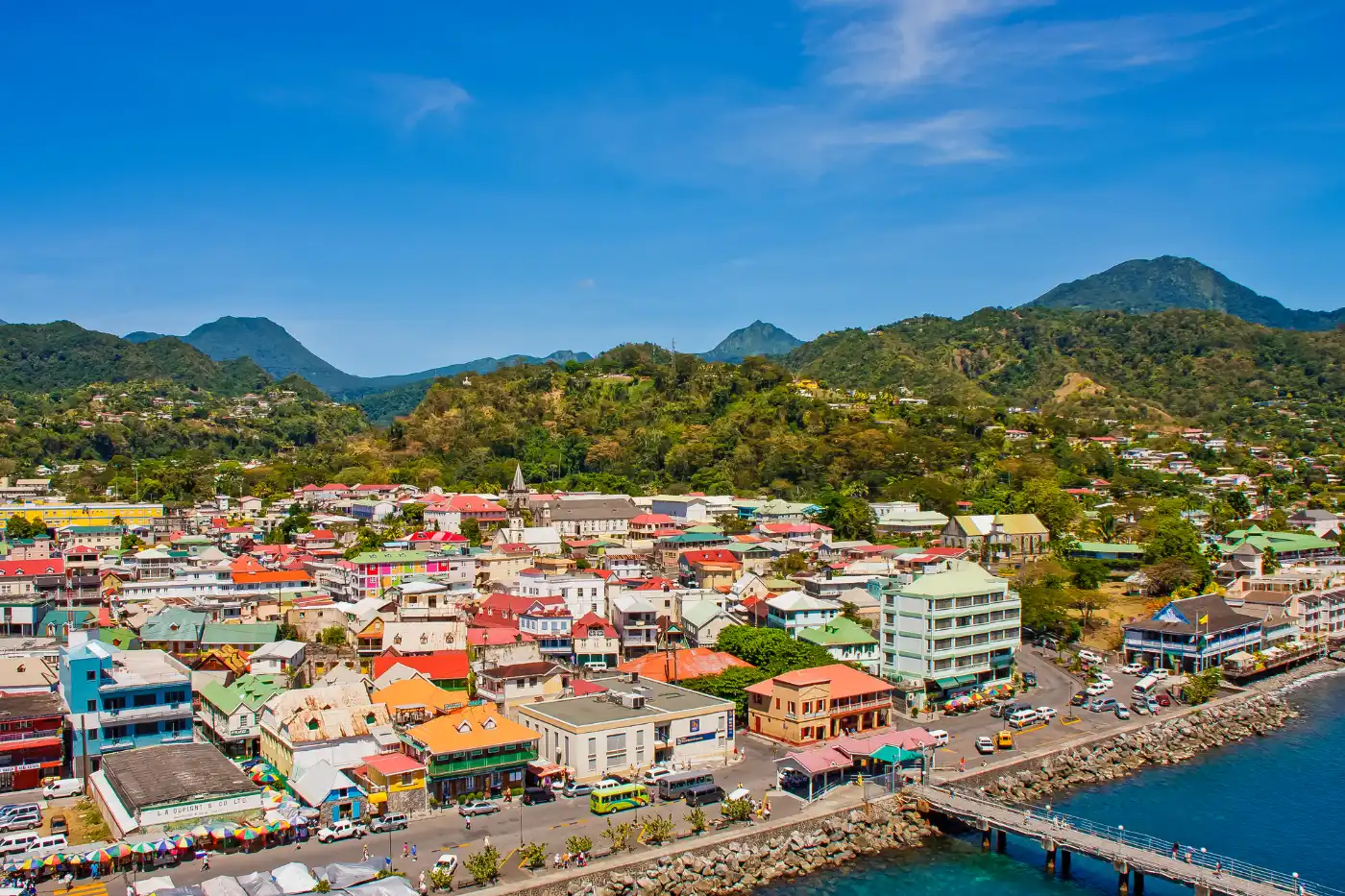
  • The Electoral Office of Dominica reports high level of trust in voter verification accuracy

    The Electoral Office of Dominica reports high level of trust in voter verification accuracy

    The Commonwealth of Dominica’s Electoral Office has implemented a sophisticated, multi-tiered verification system to ensure the integrity of its ongoing Voter Confirmation process, according to Chief Elections Officer Anthea Joseph. In an official audio statement, Joseph detailed the comprehensive security measures designed to guarantee both the accuracy and legitimacy of voter records.

    The verification process employs a structured three-phase approach: initial automated software screening, detailed review by designated editing officers, and final authorization by chief registering officers. This sequential framework creates multiple checkpoints to safeguard against inaccuracies and fraudulent entries.

    The system’s automated features provide enhanced security by flagging potential discrepancies such as duplicate entries with identical names. When duplicates are detected, verifiers receive alerts enabling comprehensive side-by-side data comparison. Advanced authentication tools including facial recognition technology, ID image comparison, and signature verification allow officials to thoroughly scrutinize flagged cases.

    Notably, the system demonstrates remarkable sensitivity in distinguishing between individuals with similar facial features, reportedly capable of differentiating even identical twins through subtle facial characteristic analysis. This technological capability ensures maintenance of procedural integrity in challenging verification scenarios.

    The Electoral Office reminds applicants to arrive ‘camera ready’ for their identification photographs, which will serve dual purposes for security verification and eventual Voter ID cards. The Voter Confirmation process enables electors previously listed on the revised May 2025 registry to transfer to the new voters list, a mandatory requirement for participation in upcoming national and local government elections.

  • Pringle accuses PM of ‘double standards’ in handling ministerial misconduct

    Pringle accuses PM of ‘double standards’ in handling ministerial misconduct

    Opposition Leader Jamale Pringle has leveled serious allegations against Prime Minister Gaston Browne, accusing him of employing “double standards” in addressing ministerial misconduct within the administration. The accusations emerged during Monday’s parliamentary budget debate, where Pringle drew sharp contrasts between Browne’s historical handling of ministerial dismissals and his current approach to the ongoing vehicle-procurement controversy.

    Pringle presented a detailed comparative analysis of previous ministerial terminations, highlighting three specific cases. He referenced the 2020 dismissal of former Education Minister Michael Browne, who was removed following police charges despite subsequent acquittal. The opposition leader also cited the termination of Dean Jonas, who was reportedly fired due to what the prime minister characterized as “toxic relationships” with staff members. Additionally, Pringle noted the 2018 removal of Asot Michael after British investigators questioned him, though no formal charges were ever filed.

    These historical precedents stood in stark contrast to the current administration’s response to the vehicle-procurement allegations, according to Pringle. He asserted that the prime minister’s public statements indicate a marked reluctance to implement similar consequences when “the matter involves someone close to home.”

    The opposition leader’s critique extends beyond individual cases to broader governance concerns. Pringle emphasized that the inconsistent application of accountability measures raises fundamental questions about governmental consistency and integrity. He maintained that the public cannot reasonably be expected to accept variable enforcement standards based on personal relationships within the administration.

    Pringle’s allegations form part of a comprehensive criticism of the government’s procurement and oversight mechanisms. He has formally called for an independent investigation into the vehicle procurement matter, dismissing the prime minister’s proposed internal review as fundamentally inadequate to address the seriousness of the allegations.