分类: politics

  • New Chapter for UDP As Taegar‑Panton Unveils Reform Agenda

    New Chapter for UDP As Taegar‑Panton Unveils Reform Agenda

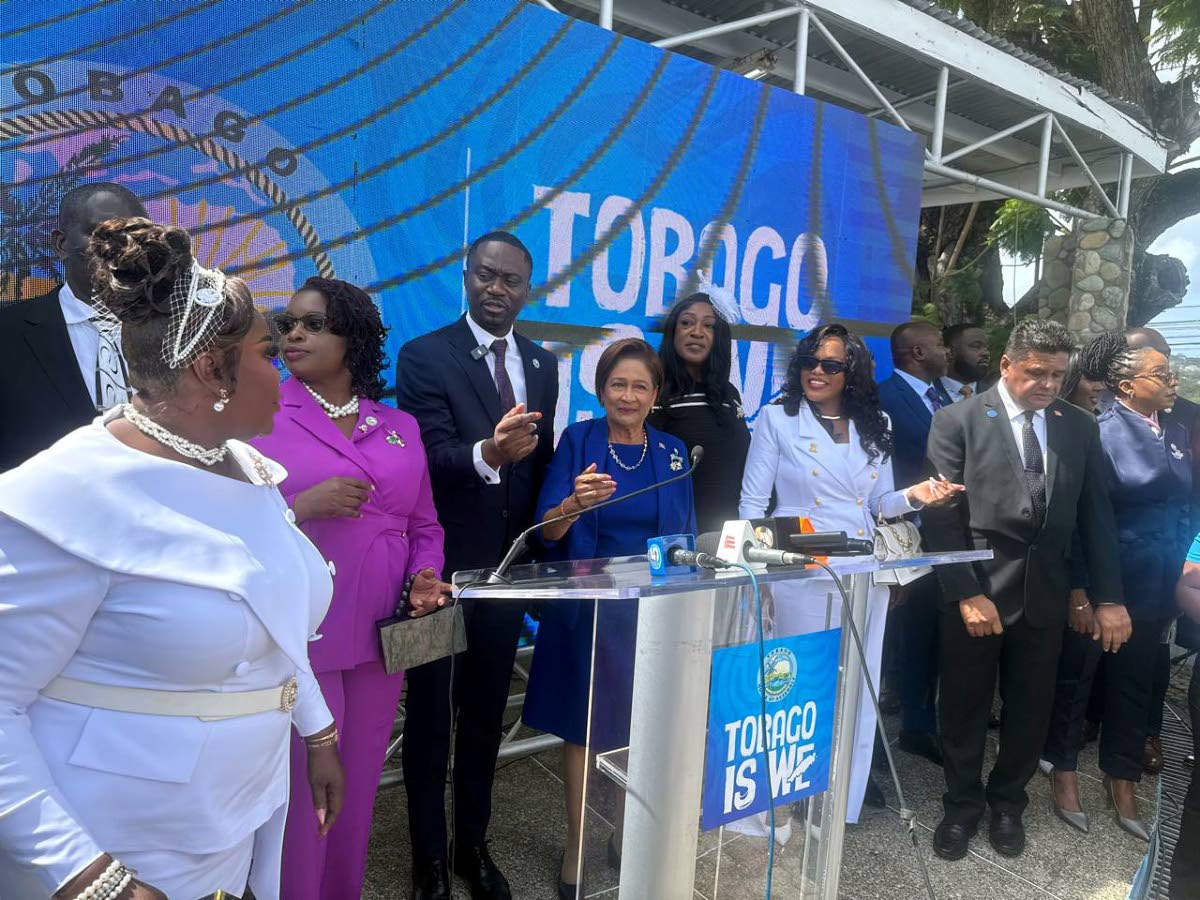
    In a significant political development, the United Democratic Party (UDP) has embarked on a transformative journey under its newly elected leadership. Tracy Taegar-Panton, recently appointed as party leader, marked this new chapter by convening the UDP’s first press conference at their official headquarters on Youth for the Future Drive—a symbolic departure from their previous temporary premises on Euphrates Avenue.

    The event, held on December 9, 2025, signaled a deliberate shift from recent internal turbulence as Panton unveiled an ambitious reform agenda designed to revitalize the party’s structure and public standing. Addressing supporters and media representatives, the UDP leader emphasized that the reform initiative represents not merely a response to past difficulties but rather a strategic blueprint for future growth and effectiveness.

    Panton identified several critical areas requiring immediate attention, including constitutional ambiguities, inadequate committee operational standards, and public disputes that have compromised the party’s credibility. She acknowledged the existence of a ‘democratic deficit’ within the organization where members frequently felt marginalized in decision-making processes.

    The newly announced reform program aims to establish transparent procedures, standardized operating rules for all committees, and mechanisms to ensure broader member participation. Panton extended an open invitation to all Belizeans to participate in what she characterized as a national movement toward renewed political engagement, emphasizing that the future of both the UDP and Belize itself depends on collective effort and shared commitment.

  • Panton’s Appeal Sparks Support to Fix UDP Headquarters

    Panton’s Appeal Sparks Support to Fix UDP Headquarters

    BELIZE CITY – United Democratic Party leader Tracy Taegar-Panton has initiated a remarkable grassroots fundraising campaign to address the party’s severe financial challenges and physical infrastructure needs. In a public appeal made on December 9, 2025, Panton revealed the UDP is essentially rebuilding from “ground zero” following significant setbacks.

    The campaign has generated an unexpected groundswell of support from Belizean citizens across economic spectrums. Contributions have ranged from modest $50 donations intended for worker lunches to more substantial sums of $170 or more earmarked for essential cleaning supplies, paint, and critical hardware including toilets and basins. Beyond financial contributions, Panton emphasized the value of “sweat equity” from volunteers, particularly noting the involvement of young engineers committed to democratic participation.

    Panton acknowledged the party’s comprehensive assessment process currently underway to evaluate both physical infrastructure requirements and outstanding financial liabilities. The UDP leader framed the reconstruction effort as symbolic of the party’s broader reform agenda, stating the organization would “rise from the ashes” to establish a solid foundation for effective opposition governance.

    Addressing potential critics, Panton invoked the party’s history of successful fundraising events like barbecues, indicating willingness to employ similar strategies if necessary. She emphasized there was “no shame” in collective rebuilding efforts aimed at creating both financial stability and operational capacity to implement the party’s reform initiatives.

  • Senator Taveras launches bold bid to shield Dominican politics from criminal infiltration

    Senator Taveras launches bold bid to shield Dominican politics from criminal infiltration

    SANTO DOMINGO – In a bold legislative initiative, Senator Antonio Taveras Guzmán has put forward two groundbreaking bills designed to fortify the Dominican Republic’s political system against infiltration by organized crime elements. The senator expressed grave concerns about individuals implicated in drug trafficking, money laundering, and criminal associations increasingly penetrating political circles, a phenomenon he characterizes as transforming politics into a ‘criminal marketplace.’

    The first legislative proposal would reclassify all political parties, movements, and groups officially recognized by the Central Electoral Board (JCE) as non-financial reporting entities. This reclassification would subject them to stringent anti-money laundering and counter-terrorism financing protocols as stipulated in Law 155-17. The complementary bill seeks to establish criminal liability for political organizations under the nation’s penal code (Law 74-25), making parties directly accountable for accepting illicit funding.

    This legislative approach fundamentally elevates legal accountability for political institutions. Organizations that fail to prevent or report illegal financial contributions would face comprehensive investigations, substantial financial penalties, and potential criminal prosecutions—effectively eliminating traditional immunity for political entities.

    Senator Taveras emphasizes that this initiative centers on preserving electoral integrity, stating, ‘The infiltration of illicit funds into politics constitutes nothing less than the prostitution of democracy.’ He contends that without these crucial legal protections, political parties risk becoming ‘conduits for criminal activity’ rather than vehicles for public service.

    Should these measures become law, they would revolutionize political financing practices. Political organizations would be mandated to implement sophisticated compliance mechanisms, undergo regular financial audits, and maintain absolute transparency in campaign financing. Even the most prominent political campaigns would be subject to exhaustive forensic examination.

    Beyond technical reforms, Taveras highlights the profound societal implications of this legislation. By explicitly criminalizing financial corruption within political structures, the Dominican Republic would demonstrate both domestic and international commitment to excluding criminal influence from democratic institutions. ‘This transcends mere punishment—it’s about revitalizing public trust in our democratic system,’ the senator concluded.

  • Panton Pushes Enforcement, Rejects Costly Motorcycling Course

    Panton Pushes Enforcement, Rejects Costly Motorcycling Course

    United Democratic Party Leader Tracy Panton has launched a vehement critique against the Ministry of Transport’s proposed mandatory motorcycling course, characterizing the initiative as nothing short of “a hustle” designed to impose additional financial burdens on working-class citizens. The political leader articulated her position during a recently convened press conference, originally scheduled the previous week but postponed due to parliamentary committee obligations.

    Panton emphasized her party’s firm opposition to any legislative measures that would exacerbate the economic strain on ordinary citizens through new taxes and fees. Instead of implementing costly training requirements, Panton advocates for enhanced enforcement mechanisms as the most viable pathway to improving road safety.

    The UDP leader revealed that multiple significant bills—including occupational safety legislation, the NHI Bill, BELCOGEN Bill, Motorcycle Bill, Domestic Violence Bill, and Tobacco Bill—have encountered procedural delays within the government’s legislative agenda. According to Panton, these delays stem from disagreements among government backbenchers from both northern and southern constituencies who lack cabinet-level insight but recognize the potential negative impact on their constituents.

    Panton challenged the fundamental efficacy of the proposed motorcycle course, questioning whether it would genuinely contribute to safer highways while simultaneously imposing financial hardships. She called for more critical examination of policy initiatives that disproportionately affect those already struggling with rising living costs, positioning her party as defenders of economic fairness for Belize’s working population.

  • A Kenny Rogers song for Comrade Ralph

    A Kenny Rogers song for Comrade Ralph

    In a notable shift of tone, a recent commentary acknowledges former Prime Minister Ralph Gonsalves as a significant Caribbean intellectual force while subtly suggesting his political era should conclude. The analysis recognizes Gonsalves’ strategic political maneuvering that brought together the Movement for National Unity and St. Vincent Labour Party, effectively ending his political exile and positioning him as champion for Vincentians disillusioned with previous leadership under Sir James and the New Democratic Party.

    The piece credits Gonsalves’ early administration with substantial achievements, including the ambitious ‘university graduate in every household’ initiative and the tangible fulfillment of ‘no child left behind’ promises. His tenure witnessed remarkable infrastructure development with expanded road networks, bridges, and the notable completion of Argyle International Airport, establishing his reputation as a visionary leader during his political prime.

    However, the commentary introduces a critical转折, noting that despite these accomplishments, many citizens eventually perceived a disconnect between Gonsalves’ public persona and political actions. The analysis invokes the adage that ‘power corrupts,’ suggesting the leader’s later tenure failed to maintain initial public trust.

    While acknowledging Gonsalves’ permanent mark on Caribbean political civilization, the commentary frames his failure to secure a sixth term as potentially fortunate. It concludes with diplomatic yet firm advice borrowed from Kenny Rogers’ lyrical wisdom about knowing ‘when to fold ’em’ and ‘when to walk away,’ emphasizing that St. Vincent and the Grenadines will continue building upon foundations laid by previous leaders including Gonsalves.

  • UDP Criticizes Government Vetting Amid Rocha Cantu Fallout

    UDP Criticizes Government Vetting Amid Rocha Cantu Fallout

    A significant political confrontation has emerged in Belize following revelations about Mexican billionaire Raul Rocha Cantu’s involvement in the country’s investment sector. The United Democratic Party (UDP) has launched severe criticism against the current administration for its alleged failure to conduct proper due diligence on foreign investors.

    Rocha Cantu, currently under investigation by Mexican specialized prosecutors for serious criminal activities including fuel and arms trafficking, drug smuggling, and connections to organized crime, had reportedly secured a strategic position in Belize’s Dangriga Port Project. In May 2025, his Mexico-based Legacy Group announced its formal engagement to lead the conceptual and technical oversight of the new state-of-the-art port facility.

    This development followed a meeting between Belize’s Prime Minister and Rocha Cantu to discuss trade and investment opportunities. However, Southern Deep Port Development Limited has since distanced itself from the Mexican investor, claiming that while discussions occurred, no formal partnership was established and that Legacy Holdings’ website contained unauthorized information.

    Godwin Haylock, Area Representative for Queen Square, delivered a scathing assessment: “The reality is that this government is in a feeding frenzy to eat up every business opportunity for themselves.” He highlighted Rocha Cantu’s alleged connections to the tragic Casino Royal attack in Monterey that claimed fifty-two lives, questioning why any responsible government would engage with an individual sought by Mexican authorities.

    The opposition argues that the government’s desperation for foreign investment has compromised national security protocols, with no concerning information reportedly emerging from the Financial Intelligence Unit or Special Branch investigations.

  • Expert warns of constitutional challenges following hasty rollout of new Penal Procedure Code

    Expert warns of constitutional challenges following hasty rollout of new Penal Procedure Code

    SANTO DOMINGO – Prominent legal expert Francisco Álvarez Martínez has issued a stark warning regarding the Dominican Republic’s hastily implemented Criminal Procedure Code (CPP), asserting that its accelerated adoption threatens to unleash a flood of constitutional challenges. The distinguished jurist contends that the legislative process suffered from inadequate debate, inconsistent amendments between parliamentary chambers, and a complete absence of the customary transitional period (vacatio legis), fundamentally compromising the law’s legitimacy.

    During an appearance on CDN’s analytical program ’55 Minutos,’ Álvarez revealed that despite years of deferred discussions on judicial reform, the final legislation was pushed through with exceptional speed. This accelerated timeline prevented thorough technical evaluation and marginalized crucial contributions from civil society organizations. The expert noted that the continuous textual modifications during inter-chamber negotiations have not only diminished public trust in legislative integrity but also implanted fundamental structural deficiencies within the legal framework.

    Álvarez cautioned that these inherent vulnerabilities may collapse under judicial examination. The immediate implementation has compelled legal practitioners and judiciary members to apply intricate, untested statutes without adequate printed guidelines or professional training initiatives. This situation generates substantial legal unpredictability and imposes exceptional strain on both legal professionals and defendants within the justice system.

    The scholar highlighted that ongoing court proceedings—including significant corruption prosecutions—now demand nuanced interpretation. Judicial authorities must simultaneously evaluate both previous and updated procedural regulations to identify which framework offers stronger protections for defendant rights, consequently escalating judicial workloads and potentially prolonging litigation timelines.

    While acknowledging certain progressive elements such as expanded victim protections, Álvarez emphasized that the failure to harmonize the Penal Code with the new CPP represents a squandered opportunity that might provoke enduring legal conflicts. The constitutional expert concluded that judicial review appears inevitable unless legislators undertake substantive revisions to ensure alignment with established legal doctrines and precedent.

  • Prime ministerial SUVs to be given new plates, reassigned — Leacock

    Prime ministerial SUVs to be given new plates, reassigned — Leacock

    The St. Vincent and the Grenadines government has initiated the process of reassigning three Toyota Prado SUVs previously used by former Prime Minister Ralph Gonsalves. According to Minister of National Security St. Clair Leacock, these vehicles will receive new registration numbers and be redistributed to various government departments, including the police force and Ministry of Foreign Affairs.

    The decision comes amid public speculation about vehicles spotted with registration numbers that some interpret as referencing the November 27 general election results, where the New Democratic Party secured 14 seats against the Unity Labour Party’s single seat. Photographs circulating on social media showed vehicles bearing plates G141, G114, and G411—numerical combinations that some citizens believe symbolically represent the election outcome.

    Minister Leacock, speaking on Boom FM, clarified that current Prime Minister Godwin Friday is currently utilizing rented vehicles while awaiting new official transportation. The minister emphasized that the vehicles from the previous administration will undergo complete reprocessing, including repainting and plate changes, to eliminate any association with the former government.

    While not confirming whether the specifically numbered vehicles were intended for the new prime minister, Leacock noted that such vehicles don’t appear spontaneously, suggesting they were likely ordered by the previous administration before the election. The minister distanced himself from vehicle selection decisions, describing them as prime ministerial privileges beyond his security portfolio responsibilities.

    The government’s approach appears to address both practical and symbolic concerns, ensuring the new leadership operates without connections to the previous administration while maintaining proper protocol for ministerial transportation.

  • Dominican Senate reviews police reform to end institutional assignments

    Dominican Senate reviews police reform to end institutional assignments

    SANTO DOMINGO – The Dominican Republic is undertaking a comprehensive overhaul of its national police force through groundbreaking legislation currently advancing through the Senate. The proposed reform represents the most significant restructuring of police operations in decades, fundamentally altering officer deployment protocols and accountability measures.

    The cornerstone of the legislation eliminates the long-standing practice of assigning police officers to guard government offices, state agencies, and private enterprises. Under the new framework, such assignments would be permitted only in exceptional circumstances where a genuine security threat has been formally identified and explicitly approved by the Interior Ministry.

    The reform package specifically addresses the private sector’s use of police personnel, prohibiting businesses from hiring officers as security staff unless the arrangement serves a demonstrable public interest. Even when authorized, companies would be required to fully subsidize all associated costs and annually disclose these agreements through public transparency mechanisms.

    Beyond deployment restructuring, the legislation establishes rigorous protocols governing the use of force by law enforcement. Officers would be mandated to operate under strict principles of legality, necessity, and proportionality, with any intervention resulting in injury requiring immediate reporting to the Public Prosecutor’s Office for independent review.

    The bill further proposes institutional innovations including the establishment of a National Standards Center to supervise police performance metrics and professional certification. A revamped promotion system would prioritize advanced training and competency evaluations, while the Internal Affairs division would be transferred to the Interior Ministry to enhance investigative independence and eliminate conflicts of interest.

    Although the current legislative session is concluding, congressional leadership has identified the police reform initiative as a top priority for the upcoming term, with committee deliberations expected to precede full chamber consideration.

  • Justice : The fight against corruption, faced the regime of impunity

    Justice : The fight against corruption, faced the regime of impunity

    At a solemn gathering marking International Anti-Corruption Day, Haiti’s transitional leadership delivered a stark assessment of the nation’s justice system while reaffirming commitment to governance reforms. Interim President Laurent Saint-Cyr addressed dignitaries at Port-au-Prince’s Karibe Hotel on December 9, emphasizing transparency as the cornerstone of public trust during ceremonies organized by the Anti-Corruption Unit (ULCC).

    The high-profile event assembled key stakeholders including Canadian Ambassador André François Giroux, United Nations representatives, finance ministry officials, and diplomatic corps members alongside student delegations and youth activists. Saint-Cyr particularly highlighted the vital role of younger generations as both participants and beneficiaries in the anti-corruption movement, identifying education as the fundamental mechanism for fostering integrity and societal resistance to corruption.

    The transitional leader outlined institutional priorities, stressing the necessity of unimpeded oversight operations and inter-agency cooperation to prevent misuse of public resources and strengthen constitutional order. He formally recognized ULCC personnel as ‘Guardians of Transparency, Integrity, and Good Governance’ while referencing the April 2025 decree establishing specialized judicial hubs for processing complex financial crimes.

    Despite these declarations, official statistics reveal a disheartening enforcement gap. Historical data indicates that since ULCC’s establishment in 2004, the agency has submitted 94 investigative reports to judicial authorities resulting in merely two convictions—one in 2015 and another in 2024. Under current director Hans-Jacques Ludwig Joseph, 68 cases have been referred for prosecution with minimal judicial action, exposing systemic deficiencies in Haiti’s legal apparatus.
    This disparity between investigative efforts and judicial outcomes underscores what analysts describe as an entrenched regime of impunity, particularly regarding corruption cases involving powerful interests. The transitional administration now faces dual challenges of implementing structural reforms while overcoming institutional inertia within the justice sector.