分类: politics

  • READ NOW: ABLP Manifesto 2026

    READ NOW: ABLP Manifesto 2026

    The Antigua Labour Party (ABLP), one of the major political parties in Antigua and Barbuda, has officially launched its 2026 general election manifesto, making the full policy document available for public download. This move marks a key milestone in the lead-up to the upcoming national vote, allowing voters, political analysts, and civil society groups to examine the party’s policy priorities ahead of casting their ballots.

    The release of the manifesto comes as political campaigning gains momentum across the twin-island nation, with parties beginning to outline their visions for the next five-year governing term. By making the document available for digital download, the ABLP has sought to improve accessibility, enabling constituents across both urban and rural areas, as well as voters living overseas, to review the party’s plans at their convenience.

    Political observers note that the early release of the manifesto gives the ABLP additional time to campaign on its policy proposals, engage in public debates with opposing parties, and address voter questions about its plans for economic growth, social development, infrastructure investment, and climate resilience – issues that top the agenda for many constituents in Antigua and Barbuda. The public availability of the full document also aligns with growing demands for greater transparency in political campaigning across the Caribbean region.

  • Young Leaders Must Help Shape Future, Says St. John’s Rural West Candidate Michael Joseph

    Young Leaders Must Help Shape Future, Says St. John’s Rural West Candidate Michael Joseph

    At the official launch of the Antigua and Barbuda Labour Party (ABLP)’s flagship “Renaissance” policy manifesto, held at the American University of Antigua Conference Centre, St. John’s Rural West candidate and sitting Minister of State in the Ministry of Health, Wellness and the Environment Michael Joseph delivered a keynote address centered on three core pillars of the administration’s agenda: intergenerational governance renewal, transformative healthcare reform, and urgent climate action.

    Opening his remarks to a crowd of party supporters, Joseph pushed back against implicit questions over his appointment to public office as a young leader, framing his inclusion in the cabinet as a deliberate, values-driven choice by the ABLP administration. “Why Michael Joseph? Why a young minister? The answer is simple — because our government understands something fundamental: the future cannot be built without the youth of this nation at the table,” he stated. Positioning his tenure as an example of the party’s commitment to balanced leadership, Joseph noted that the ABLP’s approach intentionally blends decades of institutional experience with fresh perspectives and innovative thinking from emerging generations. “We believe in leadership that reflects the people… leadership that combines experience with innovation and tradition with transformation,” he explained. “I stand here as part of a generation that is not waiting for change — we are participating in it.”

    Turning to his portfolio priorities, Joseph outlined a fundamental shift in the island nation’s healthcare strategy, moving beyond a system focused solely on treating existing illness to one that prioritizes preventive care, universal access, and systemic resilience. The administration, he said, is actively strengthening primary care infrastructure to eliminate gaps in access that leave rural and low-income residents behind. “In health, we are not simply managing illness — we are transforming it,” Joseph said. “We are strengthening primary healthcare so that no citizen is left behind because of geography or circumstance.”

    He added that ongoing upgrades to hospital and clinic services are designed to equip the system to handle both routine patient needs and unexpected public health crises, while expanding focus on long-unaddressed priorities including non-communicable disease management and mental health support. Rejecting the framing of healthcare as a limited privilege, Joseph emphasized that the ABLP enshrines universal access to care as a non-negotiable fundamental right for all Antigua and Barbuda citizens. “A healthy nation is not built on hospitals alone. It is built in our homes, in our schools and in our communities,” he said. “This government believes that healthcare is not a privilege for a few, but a right for every citizen.”

    Addressing environmental policy, Joseph framed climate change as an immediate, lived reality for the small island nation, rather than an abstract debate. Antigua and Barbuda already faces growing threats from rising sea levels, shifting rainfall patterns, and increased frequency of extreme weather events that disproportionately endanger low-lying coastal communities. Unlike many global powers that delay action, Joseph said, the ABLP administration has moved forward with a practical, action-oriented climate agenda focused on boosting national climate resilience, protecting the island’s critical marine ecosystems — a core pillar of its tourism and fishing economies — and upgrading national waste management infrastructure. “We do not debate whether climate change is real. We live its reality,” he said. “We are building not just infrastructure, but resilient infrastructure… not just policies, but sustainable progress.” Even as a small island developing state, Joseph emphasized, Antigua and Barbuda is not waiting for global powers to act: the nation is taking proactive steps to cut its own emissions and build resilience, and is leading by example in regional climate advocacy. “We are not waiting on the world — we are doing our part and we are leading where we can,” he said.

    Wrapping up his address, Joseph tied these three policy priorities — youth empowerment, healthcare transformation, and climate action — together into the ABLP’s overarching “Renaissance” vision for sustained national progress. He argued that the three pillars are interconnected: investing in public health reflects a commitment to valuing every citizen’s life, protecting the environment demonstrates responsibility to coming generations, and elevating young leaders ensures long-term continuity, stability, and adaptive renewal for the nation. Joseph urged party supporters to take pride in the progress the country has made under the ABLP, while remaining focused on the work ahead to deliver shared prosperity. Positioning the newly launched manifesto as a clear roadmap for the next term of government, Joseph called on all citizens to move beyond passive observation and play an active role in building the nation’s future. “Do not underestimate what a united people, guided by purpose and driven by vision, can achieve,” he said. “Dreams are not fulfilled by spectators — they are fulfilled by believers, by builders, by those willing to serve. The path forward leads to a new era of progress and prosperity for all Antigua and Barbuda.”

  • U.S. Military Seizes Iranian Ship

    U.S. Military Seizes Iranian Ship

    On a Sunday morning in the Gulf of Oman, a tense six-hour standoff between U.S. naval forces and the crew of an Iranian cargo ship ended with the vessel being seized by U.S. Marines after Navy gunfire disabled its propulsion system, according to statements from U.S. military and political leaders. The incident, which unfolded on April 20, 2026, has already drawn fierce condemnation from Iran, which has pledged immediate retaliation and accused the United States of violating an existing ceasefire and committing open piracy in one of the world’s busiest commercial waterways.

    The operation was carried out by the guided-missile destroyer USS Spruance, operating under the command of U.S. Central Command (CENTCOM). Per CENTCOM’s official account of the incident, the Touska – the 500-foot cargo vessel targeted in the raid – repeatedly ignored multiple radio and visual warnings over six hours to turn back from a U.S.-imposed naval blockade on commercial traffic bound for Iranian ports. After the vessel continued its course toward Iranian territorial waters, military commanders ordered the Touska’s crew to evacuate the engine room before Navy personnel fired several warning rounds into the ship’s engine compartment, disabling all propulsion and steering capabilities. Once the vessel was dead in the water, a team of U.S. Marines boarded the ship and took full control of the vessel and its crew without further resistance.

    Shortly after the seizure was completed, former U.S. President Donald Trump confirmed the operation in a post on his Truth Social platform, framing the action as a decisive enforcement of U.S. sanctions policy. “The Navy stopped them right in their tracks by blowing a hole in the engine room,” Trump wrote in the post, adding that U.S. boarding parties were currently conducting a search of the vessel’s cargo holds to document what the ship was carrying. He further noted that the Touska and its operators were already subject to U.S. Treasury Department sanctions over a documented history of violating international trade restrictions on Iranian goods, justifying the use of force to intercept the vessel.

    Iran’s leadership has rejected the U.S. justification for the raid and issued a harsh formal warning of impending retaliation. In an official statement carried by state-run Islamic Republic of Iran Broadcasting (IRIB), Iran’s military command denounced the operation as “maritime highway robbery” that violates the terms of a recent ceasefire agreement between the two nations. The Iranian statement confirmed the seizure, adding that U.S. forces also damaged critical navigational equipment on the Touska during the forced boarding, endangering the crew and the vessel.

    “We warn that the Armed Forces of the Islamic Republic of Iran will soon respond to and retaliate against this U.S. armed piracy,” the statement concluded, leaving open the scope and timing of any Iranian counteraction.

    The interception of the Touska is not an isolated incident, CENTCOM confirmed in its briefing on the operation. Since the U.S. naval blockade on traffic bound for Iranian ports was implemented, U.S. forces have successfully turned away 25 other commercial vessels that attempted to break through the restriction to reach Iranian ports, marking the first time that U.S. forces have actually seized a vessel rather than forcing it to turn around. The escalation comes at a moment of already heightened tension between Washington and Tehran, raising fears of further escalation in the Persian Gulf region, a critical chokepoint for 20% of the world’s daily oil supplies.

  • First Drawdown of $100M Road Loan Expected Within Weeks, Browne Says at Manifesto Launch

    First Drawdown of $100M Road Loan Expected Within Weeks, Browne Says at Manifesto Launch

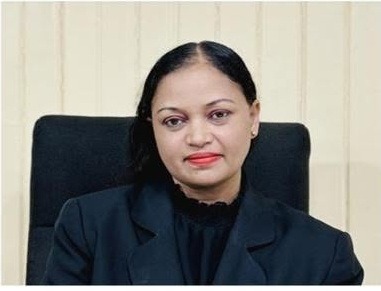
    Antigua and Barbuda is set to access the first installment of a $100 million infrastructure loan dedicated to national road rehabilitation projects within the next several weeks, Works and Housing Minister Maria Browne confirmed in a recent public announcement. The funding will accelerate the government’s long-running push to modernize the country’s aging transportation network, she confirmed.

    Browne made the announcement during the official launch of the Antigua and Barbuda Labour Party (ABLP)’s election manifesto, held at the American University of Antigua Conference Centre. She outlined that the secured financing will not only continue the long-delayed redevelopment of All Saints Road, one of the country’s high-priority infrastructure projects, but also support a broad range of drainage and road improvement works across both main islands of the nation.

    “ A $100 million loan is already finalized to keep moving forward with All Saints Road’s redevelopment and rehabilitate roads and drainage systems across the country, and we will access the first drawdown within a matter of weeks,” Browne told assembled party supporters. She positioned the multi-million dollar infrastructure investment as a core component of the ABLP’s sweeping national “Renaissance” agenda, emphasizing that upgraded transportation infrastructure is an indispensable foundation for broad-based economic growth and long-term national development.

    Browne went on to highlight the progress the current administration has already made in upgrading the country’s roads, noting that visible construction work is already ongoing across multiple districts. She listed a host of major thoroughfares that have already received upgrades through prior government investment, including Sir George Walter Highway, Friars Hill Road, Anchorage Road, Valley Road, and Factory Road. To date, she said, the ongoing infrastructure program has reached communities across the country, delivering tangible improvements to both road safety and overall mobility for residents and commercial operators.

    “Our extensive road works program has already reached communities across this nation, bringing relief to drivers who have navigated poorly maintained roads for years, improving safety for all travelers, and restoring pride in our public infrastructure,” Browne said.

    While acknowledging the gains the government has already delivered, the minister stressed that considerable work remains to bring the entire road network up to modern standards. The newly secured $100 million financing, she explained, will allow the government to expand both the pace and the geographic scope of repair and upgrade works across the country.

    “We know much has been achieved, but we are mindful that much is to be done,” she said.

    Browne also linked strategic infrastructure investment to the everyday economic experiences of Antigua and Barbuda’s residents, explaining that reliable, well-maintained roads are critical to reducing transportation costs for households and businesses, while opening new economic opportunities for communities across the country. She added that the current government’s approach prioritizes proven, results-driven infrastructure investment rather than untested policy experimentation, noting that the ongoing road program has already demonstrated clear success.

    “We’re not experimenting, we are expanding a system that is already working. The proof is in the pudding,” she said.

    The national road rehabilitation program stands as one of the central pillars of the ABLP’s re-election platform, alongside other key policy pledges focused on expanding affordable housing access and advancing community development initiatives across the country.

  • Candidates defend net worth increase

    Candidates defend net worth increase

    Multiple political candidates from the Bahamas’ ruling Progressive Liberal Party (PLP) have pushed back against growing scrutiny over sharp jumps in their declared net worth this week, offering a range of explanations tied to personal finance, business gains, and life events even as several others declined to address questions about their wealth increases.

    The debate over candidate financial disclosures emerged after new filings revealed substantial growth in the net assets of dozens of PLP candidates since the last disclosure round in 2021, with some seeing their total net worth multiply by as much as three or five times over the three-year period.

    Leslia Miller-Brice, the PLP’s candidate for the Seabreeze constituency, told reporters her current $8.7 million net worth – up from $3.1 million in 2021 – reflects jointly held assets with her husband, accumulated through the couple’s shared private business ventures. Her disclosure filings show the vast majority of her assets are tied up in residential and commercial real estate and market securities, with no reported outstanding liabilities, $81,000 in savings, and $187,000 held in a checking account.

    Keith Bell, the party’s candidate for Carmichael, saw his net worth jump from just over $1 million in 2021 to $3.9 million in the latest filing. Bell attributed the sharp gain to proceeds from a life insurance policy held by his late wife, who passed away recently, as well as natural appreciation in the value of long-held family real estate holdings. He noted that his experience underscores the critical role of long-term financial planning and life insurance in protecting family financial stability during unplanned life events.

    For Kirk Cornish, the PLP’s North Abaco candidate, net worth grew from just under $145,000 in 2021 to more than $819,000 this year. Cornish forcefully rejected any insinuations that his wealth increase was obtained through improper or unethical means tied to his public office, explaining that the 2021 disclosure reflected an artificially low net worth after he was forced to draw down his savings when placed on unpaid leave by the Water and Sewerage Corporation board that year.

    Since his election to Parliament, Cornish said, he retired from the Water and Sewerage Corporation and received his full retirement payout, which he saved in full. He added that he has continued to save a portion of his parliamentary salary and has built up additional value through personal real estate investments. “I worked for that,” Cornish said. “I didn’t steal it. It didn’t come about suddenly. I earned that.”

    Other candidates saw equally large jumps that have not been explained publicly. Clay Sweeting, candidate for Central and South Eleuthera, saw his net worth rise from $1.5 million in 2021 to $4.5 million, but declined to comment on the gain when reached by reporters. Two other PLP candidates, Leon Lundy of Central and South Andros and Leonardo Lightbourne of North Andros, also reported double-digit percentage increases in their net worth but had not responded to requests for comment as of press time.

    Deputy Prime Minister Chester Cooper recorded the largest overall increase among PLP candidates, with his net worth doubling from $14.8 million in 2021 to $28 million in the latest filing. Cooper also declined to comment on the growth of his assets. Dozens of other sitting PLP officials and candidates, including Myles Laroda, Pia Glover-Rolle, Glenys Hanna-Martin, McKell Bonaby, Wayne Munroe, and Jobeth Coleby-Davis, also reported higher net worth in their latest disclosures.

    The sudden, unexplained jumps in candidate wealth have prompted renewed calls for stronger regulation and oversight of public official financial disclosures from governance advocacy groups. Matt Aubry, executive director of the Organisation for Responsible Governance, said the current disclosure framework fails to deliver the transparency that Bahamian voters deserve, and candidates running for public office must be held accountable for their financial interests to prevent conflicts of interest and misuse of public contracts and funds.

    Aubry explained that advocacy groups have long pushed for revisions to the existing public disclosure law to expand public oversight, mandate regular, detailed reporting, and add clear context to asset declarations. The current law, he argued, relies on an overly opaque process for collecting information, with minimal public access to full details, no requirement to reconcile changes in net worth over time, and no meaningful penalties for non-compliance or inaccurate reporting.

    Without clear, verifiable information about candidates’ financial interests, Aubry warned, the public risks losing trust in elected institutions and civic engagement in the democratic process will erode over time.

  • Island grid pulls out of $130m power grid contract

    Island grid pulls out of $130m power grid contract

    The future of New Providence’s $130 million electricity transmission and distribution (T&D) overhaul has been thrown into uncertainty after the project’s lead management firm, Island Grid, formally exited its contract two years into what was originally planned as a 25-year partnership. The sudden departure has prompted Opposition Leader Michael Pintard to call on the Davis administration to deliver immediate clarity and full transparency to the Bahamian public over the project’s trajectory.

    Island Grid, an infrastructure firm founded by principal Eric Pike to pursue utility projects across small island nations, confirmed its withdrawal from the management agreement with Bahamas Grid Company (BGC) — the special purpose vehicle created to own and upgrade New Providence’s energy grid — took effect yesterday. Alongside the firm’s exit, Pike and fellow Island Grid executive Mei Shibata stepped down from their BGC board positions. Anthony Ferguson, chief executive of Bahamas-based investment firm CFAL, has been named BGC’s new chairman, replacing Pike.

    BGC is structured as a public-private partnership, with Bahamas Power & Light (BPL) holding a 40% minority stake and a consortium of private investors controlling the remaining 60% stake. The firm announced the appointment of two new Bahamian senior leaders alongside the leadership transition: Dareo McKenzie, a 30-year energy sector veteran with stints at GE Vernova and Consolidated Edison of New York, as chief executive, and Gladys Fernander, a former Commonwealth Bank CFO and certified public accountant with 20-plus years of regulated finance experience, as chief financial officer.

    In a statement responding to media inquiries, the Bahamian government sought to reassure the public that Island Grid’s exit would not disrupt ongoing infrastructure work. “The management agreement has come to an end. The investment is ongoing and continues to progress as planned,” said Latrae Rahming, communications director for Prime Minister Philip Davis. “The company is now Bahamian-led, and we have full faith and confidence in its leadership, capacity and ability to deliver on its commitments.”

    Ferguson echoed that sentiment in BGC’s official release, framing the transition as a milestone shift to a fully independent, all-Bahamian-led operating model. “Together, Dareo and Gladys bring the operational and financial leadership required to grow a resilient, high-performing utility,” Ferguson said. “Just as importantly, this transition reflects the strength and capability of Bahamian leadership at every level of the organisation. On behalf of the Board, I want to thank Eric, Mei and the entire Island Grid Solutions team for their leadership and expertise in building Bahamas Grid Company into a fully operational utility and strengthening New Providence’s transmission and distribution system. We now move forward as a fully Bahamian-led organisation, focused on delivering long-term performance for our country.”

    Pike also released a brief statement praising the project’s progress to date. “We are honoured to have had the opportunity to set up Bahamas Grid Company and conduct the biggest grid upgrade project for New Providence over the past two years,” he said. “I would like to recognise the dedicated employees of Island Grid, Pike and Bahamas Grid Company, whose hard work and commitment were instrumental to this achievement, and extend our best wishes for Bahamas Grid Company’ continued success.”

    However, the sudden exit of Island Grid, which was contracted to manage the project for an initial 25-year term with an option to extend for an additional 10 years, has left dozens of unanswered questions that remained unaddressed as of press time. Multiple industry observers and political leaders have raised pointed concerns over the implications of the exit for the project, for energy consumers, and for the government’s broader clean energy goals.

    Tribune Business had reported unconfirmed rumors of growing tensions and potential withdrawal for several weeks prior to yesterday’s announcement. Officials emphasized that Island Grid’s exit is unconnected to last month’s fatal shooting of a Pike Electrical employee, for which a senior Bahamian police superintendent has been charged. Roughly 40 Pike workers left the Bahamas immediately after the shooting to attend the deceased worker’s funeral and support his family, but roughly the same number are expected to return to complete existing contract obligations, meaning Pike Electrical’s on-the-ground work may continue despite Island Grid’s exit. There has been unconfirmed speculation that TPG and La Caisse, the private equity consortium that acquired a majority stake in Pike Electrical in November 2025, may step into Island Grid’s role, but no confirmation of that arrangement has been made public.

    For decades, Pike Electrical — a family-founded firm established in 1945 — has supplied the labor, equipment, technical expertise, and training for the $130m upgrade that has been underway for two years. Original project documents confirm that BGC was structured to rely heavily on Island Grid’s technical and operational capacity: the 2024 Heads of Agreement between the government, BGC, and Island Grid granted Island Grid exclusive rights to develop and manage the entire project, and tasked the firm with assembling a team of global and local experts to oversee all implementation. Financial documents for the project’s $30m equity raise and $111m debt financing show Island Grid was contracted to earn $4.359m in annual management fees for the first five years of the project, with fees sliding gradually as T&D revenues grew.

    One anonymous financial industry insider questioned the logic of Island Grid’s early exit, noting that the entire project was built around a decades-long investment horizon. “To get a return on investment, you aren’t taking over the entire grid for a short period of time. Your investment horizon is decades. They cannot claim this is all done and planned. This wasn’t for the short-term,” the source said. The insider added that BGC will be unlikely to replicate the preferential pricing and supply chain access Island Grid secured through its ties to the Pike network, particularly for large grid equipment that requires months-long lead times. “They [BGC] cannot replicate the Pike partnership. They do not have the reach and expertise, and level of people to pull from,” the source said. The insider also argued that Island Grid’s exit undermines BGC’s core purpose as a special purpose vehicle, noting that the entity already adds an extra layer of costs for taxpayers and energy consumers that could be eliminated by folding BGC’s functions back into BPL.

    The exit also raises concerns for BGC’s investors, who were sold $111m in bonds based on offering materials that promised long-term Island Grid involvement. Bondholders are owed regular interest payments and the eventual return of their principal, and the unplanned transition has created new uncertainty over their returns.

    Opposition Leader Pintard emphasized that the government’s entire energy strategy, including plans to bring 172 megawatts of new utility-scale solar power online via independent power producers (IPPs), hinges on the successful completion of the T&D grid overhaul. Without a fully upgraded grid, IPPs cannot safely connect and deliver their power to New Providence’s 100,000-plus BPL customers, which include both households and businesses.

    “Much of what the Government has forecast depends on the grid,” Pintard told Tribune Business. “If we are talking about solar deals being signed on New Providence, has the grid upgrade work been completed to the extent it can receive power from IPPs? If the T&D system has not been dealt with, how does that impact all the IPPs relying on a stable grid that has the capacity to receive power from them? Everything hinges on this. It’s a fundamental issue.”

    Pintard called on Prime Minister Davis and Energy Minister Jobeth Coleby-Davis to immediately open the process to public scrutiny, noting that Coleby-Davis claimed shortly after the shooting that the project remained on track, a statement that is contradicted by Island Grid’s exit. “Their overall strategic plan relies substantially on what happens with the transmission and distribution system,” Pintard said. “The Government has an obligation to clarify for the public whether or not the grid agreement they put in place, which was supposed to fix deteriorating T&D infrastructure, whether or not they have completed that. If they have not completed that, at what stage are they at in this process, and under what circumstances have Pike and the others transitioned from previous positions they held, and where does that leave Bahamas Grid and the grid contract the Government entered into with them?”

    Pintard added that he had spoken with a senior BPL union leader who confirmed widespread uncertainty among the utility’s 123 T&D staff, the vast majority of whom already opposed plans to transfer or second them to BGC.

    Island Grid’s exit also comes as BGC had previously stated it planned to complete the initial $130m upgrade by late April 2026, reporting that outage frequency had dropped 45% and outage duration had fallen 35% in 2025 compared to 2024. It remains unclear whether the new leadership will be able to hit that completion target.

    The original Heads of Agreement also includes provisions that require parties to negotiate a buyout if the management agreement is terminated early, including granting the Bahamian government a right of first refusal to acquire 100% of BGC’s shares if a termination occurs. As of press time, no requests for comment from Pike, Ferguson, or Coleby-Davis had been returned.

  • Lost records derail JACRA’s first audit

    Lost records derail JACRA’s first audit

    Jamaica’s flagship agricultural sector reform initiative, the Jamaica Agricultural Commodities Regulatory Authority (JACRA), has hit a major early hurdle after independent auditors were unable to sign off on the agency’s first full year of financial statements, citing irreconcilable gaps in inherited financial documentation.

    Established on January 1, 2018, JACRA was designed as the centerpiece of a government-led overhaul to unify oversight of the island’s most valuable agricultural commodities under a single, streamlined regulator. The agency merged the regulatory functions of four legacy entities: the Coffee Industry Board, the Cocoa Industry Board, the Coconut Industry Board, and the Export Division of the then Ministry of Industry, Commerce, Agriculture and Fisheries. The reform, nearly a decade in development and public consultation, aimed to separate commercial activities from regulatory oversight, modernize sector governance, and standardize processes for licensing, certification, industry development and quality assurance.

    But the newly launched regulator inherited deep-seated financial management flaws from the merged entities, according to official findings published in a Ministry Paper tabled in Jamaica’s Parliament last Tuesday, and detailed further in JACRA’s 2018/2019 inaugural annual report. Global audit firm KPMG, which conducted the independent audit, confirmed it could not secure sufficient appropriate evidence to support an audit opinion on JACRA’s opening year financials.

    The core of the problem lies in missing records from the legacy commodity boards. No audited financial statements exist for the former Coffee Industry Board across the four-year period from 2013/2014 to 2016/2017, while the Cocoa Industry Board also lacks complete audited records for the 2015/2016 and 2016/2017 financial cycles. Compounding these pre-existing gaps, a September 2016 flood destroyed a large volume of remaining critical financial documentation, erasing key paper trails needed to verify opening balances and inherited assets and liabilities carried over to JACRA.

    Without these verifiable records, the agency launched operations without a complete, auditable financial baseline for the assets and obligations it absorbed from the predecessor organizations. The destroyed records also undermined the integrity of the audit trail required to substantiate all opening transactional balances rolled into JACRA’s new accounts.

    To address accountability requirements, JACRA is structured with a multi-stakeholder board of directors featuring representatives from both the government and participating commodity sectors. The board holds responsibility for overseeing operational performance, setting strategic direction, and ensuring proper stewardship of public funds. It is supported by specialized subcommittees covering finance, audit, insurance, governance, production, research and marketing, all designed to embed checks and balances into the agency’s decision-making and financial management processes.

  • Envelope with bullet casing resealed, witness contends, in cops’ murder trial

    Envelope with bullet casing resealed, witness contends, in cops’ murder trial

    A high-stakes murder trial involving six current and former members of Jamaica’s national police force has hit critical evidentiary hurdles, after a retired investigating detective offered conflicting and uncertain testimony during his remote court appearance on Monday.

    The former detective constable, who resigned from the Jamaica Constabulary Force (JCF) and now resides and works overseas, testified via pre-approved video link after the court granted his special measures request, which cited work commitments that prevent an in-person appearance.

    The six officers on trial at Kingston’s Home Circuit Court stand accused of involvement in the January 2013 fatal shooting of three men — Matthew Lee, Mark Allen, and Ucliffe Dyer — on Acadia Drive in St Andrew. One of the accused, Corporal Donovan Fullerton, faces an additional charge of submitting a false statement to the Independent Commission of Investigations, Jamaica’s independent police oversight body. The other five accused are Sergeant Simroy Mott, and constables Andrew Smith, Sheldon Richards, Orandy Rose, and Richard Lynch.

    During Monday’s proceedings, the seven-member jury watched as prosecutors unsealed a series of evidence envelopes the former detective submitted to forensics following the 2013 shooting. The witness confirmed that the handwriting on the first envelope matched his own, and confirmed he labelled the packet as part of the official investigation. However, he told the court he observed clear signs the envelope had been opened and resealed after it reached the government forensic laboratory. When the prosecution pulled a spent bullet casing from the envelope and displayed it to the witness, he could not confirm it was the same casing he recovered from the crime scene, packaged, and sent for testing.

    A second envelope labelled by the witness was then unsealed; after examining its contents, the witness stated the fragment inside resembled a piece of lead. Prosecutors next moved to present a series of DVDs the former detective testified he created with his own crime scene photos and evidence documentation. When prosecutor Kathy-Ann Pyke requested the DVD be loaded into the court’s computer to display its contents to the witness, the defense team immediately raised a series of objections.

    Hugh Wildman, the lead defense attorney representing four of the six accused officers, argued that the witness is no longer a serving JCF member, is not a recognized forensic or digital evidence expert, and therefore is not qualified to provide formal identification or testimony related to the DVD’s contents. The full defense team, which also includes attorneys John Jacobs and Althea Grant-Coppin, further raised disputes over what type of software should be used to access and display the image files stored on the disk.

    Later in the proceedings, the defense raised another objection when the witness referenced his 2013 written investigative statement to answer questions about his actions on the day of the shooting. Defense attorneys argued the witness should testify from his own memory, not from his contemporaneous notes. In response, the former detective pushed back, noting that the shooting occurred more than a decade prior, and that written statements are specifically created to preserve investigative memory. He told the court, “I cannot remember what I did 13 years ago. I can only reference my statement which I wrote. I made notes at the scene. We preserve memory by writing statements and that is why I refer to my statement and not memory. This statement refreshes my memory on what I wrote but not what I did on that particular day.”

    The former detective also confirmed that he collected multiple pieces of evidence from the shooting scene, including spent bullet casings, blood reference samples, a peak cap, a lighter, and a fragment that appeared to be part of a belt. All collected evidence was transported first to his local office before being sent to the government forensic lab for analysis, he said.

    Following Monday’s contentious proceedings, the trial is scheduled to resume on Tuesday.

  • Paulwell demands answers on Petrojam price cap

    Paulwell demands answers on Petrojam price cap

    KINGSTON, Jamaica — In a pointed address during the 2026/27 Sectoral Debate in Jamaica’s House of Representatives on Tuesday, opposition energy spokesperson Phillip Paulwell has publicly challenged the ruling government to deliver clear, time-bound details about the fuel price cap imposed on state-owned oil refinery Petrojam, a policy Paulwell argues has accelerated the facility’s financial decline and fostered unaccountable government interference.

    Paulwell, drawing attention to the refinery’s once-solid track record of consistent annual profits, noted that Petrojam is now staring down its third straight year of steep financial contraction, a downturn that has coincided with the implementation of the controversial price cap. Energy Minister Daryl Vaz first confirmed the policy’s existence in an April 14 post-Cabinet media briefing, where he disclosed that a $4.50 per unit cap has been placed on fuel sold by Petrojam. The measure was introduced to shield Jamaican consumers from the full brunt of global oil price spikes triggered by heightened Middle East conflict that broke out on February 28, preventing the entire cost increase from being passed on to everyday motorists and households.

    However, Vaz has already acknowledged that the cap is financially unsustainable. He warned that if the policy remains in place through the end of June, Petrojam will accumulate a staggering $11.8 billion in losses. For Paulwell, the sudden disclosure of the cap after years of declining profits raises urgent unanswered questions: When exactly was the price cap formally implemented? How does the policy align with the previously transparent weekly petroleum pricing framework that once governed the sector?

    The opposition spokesperson argued that arbitrary tampering with Petrojam’s pricing mechanism has deepened public distrust over disproportionate government meddling in the state-owned refinery’s core operations. Rather than forcing the facility to absorb unplanned cost hikes to protect consumers, Paulwell said the government should instead adjust its tax rates on fuel — a policy change that would relieve consumer pressure without putting Petrojam’s long-term solvency at risk.

    Paulwell also pushed for full parliamentary disclosure of Petrojam’s current operational standing, demanding Minister Vaz present a detailed, credible, costed strategy to return the 40-year-old refinery to sustained profitability. The facility, which has already lost billions of dollars over the past three financial years, relies on outdated technology that drags down operational efficiency and pushes up running costs. Paulwell emphasized that the previous administration had already mapped out a clear path forward, including a targeted expansion and modernization program that has since been sidelined. He rejected calls for new consultant-led assessments of alternative operating models, arguing that solutions have already been identified.

    Without full transparency and a clear recovery plan, Paulwell warned, Jamaican taxpayers will continue to be on the hook for mounting losses at a failing enterprise with no clear path to recovery. He compared the current approach of forcing Petrojam to operate under the unsustainable price cap to “carrying water in a basket” — a futile exercise that will only deliver years of continued red ink and public financial burden.

  • Paulwell wants consumers to be compensated for dropped calls and data failure

    Paulwell wants consumers to be compensated for dropped calls and data failure

    KINGSTON, Jamaica — During his Tuesday address to the House of Representatives contributing to the 2026/27 Sectoral Debate, opposition telecommunications spokesperson Phillip Paulwell has thrown down the gauntlet to Jamaica’s telecom regulators, demanding an immediate investigation into widespread consumer complaints of constant dropped calls and chronic data service disruptions plaguing mobile users across the island. Paulwell characterized the daily service failures that Jamaican consumers contend with as a damning indictment of the country’s flawed telecom regulatory framework, labeling the ongoing crisis an unacceptable breakdown of oversight that has left paying customers shortchanged. The opposition spokesman emphasized that telecommunications users across the country are being charged premium, market-rate prices for services that consistently fail to meet the minimum quality standards outlined in formal service contracts. In a formal call to action directed at the Office of Utilities Regulation (OUR), Paulwell pushed the independent regulator to treat the issue as a top priority, publicly disclose what remedial steps the agency plans to roll out to fix service quality, and explore the feasibility of implementing a formal consumer compensation scheme. This framework would provide financial restitution to customers who have lost paid service credits as a direct result of ongoing network outages and service failures, he said. Beyond the immediate service quality crisis, Paulwell also pressed the government for a full, transparent update on a long-promised new entrant to Jamaica’s competitive cellular market. Four years ago, current Telecommunications Minister Daryl Vaz publicly announced that a new provider had already secured all necessary telecommunications operating licenses and spectrum allocations to launch operations. But four years on, the new provider has yet to enter the market, leaving Jamaican consumers waiting for the promised benefits of increased competition that would lower prices and improve service quality. Paulwell demanded that Parliament receive a clear public update, pressing for answers on where the new provider stands in its launch timeline, and when consumers will finally see the tangible benefits of expanded market competition. The opposition spokesman also called for formal confirmation that the country’s legislated telecommunications infrastructure sharing policy is actually being implemented in practice, rather than just existing as a written policy. Parliament previously mandated a comprehensive national co-location framework designed to make it easier for new providers to access existing network infrastructure, lowering the barrier to entry for new market players. Paulwell stressed that this policy framework must be genuinely accessible to incoming competitors, not just a written commitment that never translates to real-world change for consumers and new entrants.