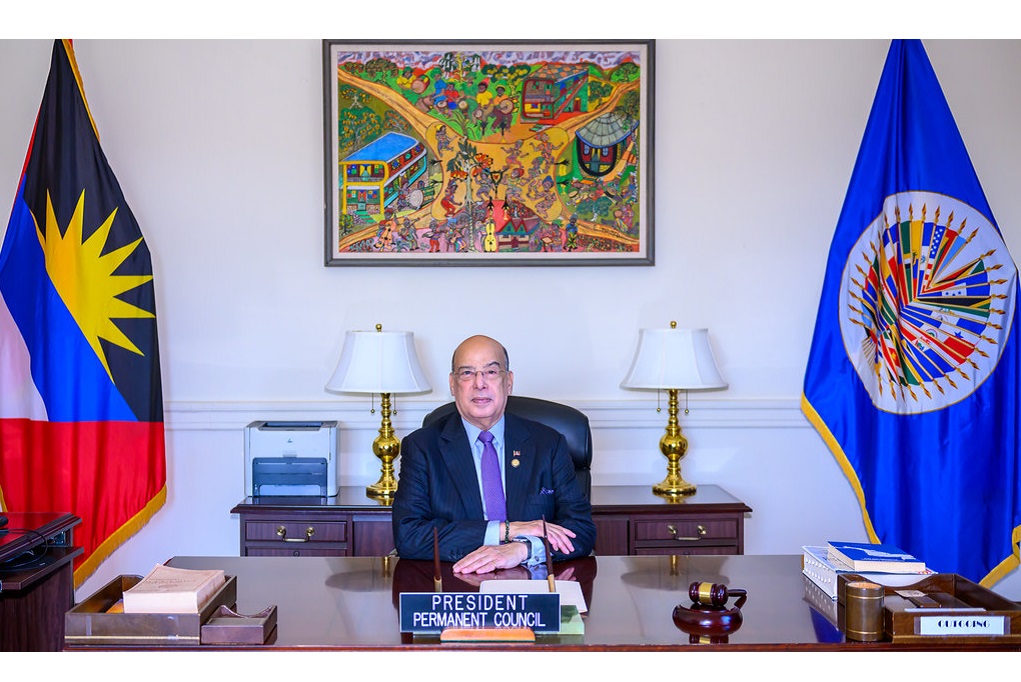
An informal gathering of member states of the Inter-American Council for Integral Development (CIDI) has set the stage for a renewed push to position comprehensive development at the heart of the Organization of American States (OAS)’s mission, under the leadership of incoming Chair Ambassador Sir Ronald Sanders of Antigua and Barbuda.
The meeting, which brought together member state representatives alongside the OAS Executive Secretariat for Integral Development (SEDI), generated a lively, transparent and outcome-focused dialogue centered on upgrading cross-border practical collaboration to drive inclusive economic and social progress across the entire Americas region. Ambassador Sanders opened the post-meeting remarks by praising the high level of engagement from all participating delegations, noting that the constructive tone and shared purpose on display gave him significant confidence in the council’s work ahead.
“I was greatly encouraged by the enthusiasm, thoughtfulness and practical spirit that characterised the discussion,” Sanders stated. “Delegations brought forward constructive ideas and demonstrated a shared commitment to strengthening CIDI as the OAS forum for advancing integral development through cooperation and partnership.”
Across the session, attendees aligned around a shared vision for a pragmatic, results-driven operating model for CIDI. Key priorities that earned broad backing included deepening cross-organizational partnerships, streamlining institutional coordination mechanisms, expanding access to technical cooperation resources, and building greater procedural continuity between successive CIDI chairmanships. Participants also unanimously reaffirmed a core guiding principle: that development stands as an equally essential pillar of the OAS, alongside the organization’s longstanding core priorities of democracy, human rights and regional security. Together, these four pillars work in tandem to expand stability, economic opportunity and shared prosperity for all populations across the Western Hemisphere.
Ambassador Sanders specifically highlighted the productive collaboration with SEDI and its executive head, Ambassador Isabelle Valois, noting that secretariat staff had systematically documented every observation and recommendation put forward by member states during the discussion. “The discussion provided valuable guidance not only for my Chairmanship but also for the continuing work of SEDI in supporting Member States,” he explained. “The active engagement of both delegations and the Secretariat gives me great confidence in our ability to move from discussion to practical results.”
To address the longstanding challenge of institutional discontinuity between leadership terms, Sanders announced a new procedural reform during his tenure: every meeting held under his chairmanship will produce a public Chair’s Summary and Follow-up document. These documents will codify the key themes emerging from discussions, outline clear next steps for action, and serve as a durable reference for member states, future CIDI chairs and OAS secretariat staff.
The full Chair’s Work Plan laid out by Sanders centers on creating an enabling environment for sustainable business growth across the Americas. Core objectives include reducing regulatory uncertainty, building stronger institutional capacity across member states, and expanding equitable access to investment and financing for underserved communities and sectors. Ultimately, the plan aims to solidify CIDI’s role as the OAS’s lead forum for advancing integral development through practical cooperation that delivers measurable, tangible improvements to the lives of people across the region.