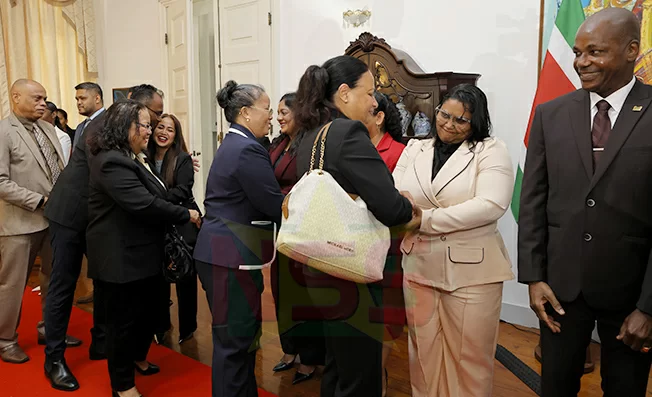
On September 29, the Court of Justice of Suriname welcomed 15 newly trained judges in a formal swearing-in ceremony led by President Jennifer Simons, marking one of the largest single expansions of the country’s judicial bench in recent history. Court President Iwan Rasoelbaks described the addition as a landmark step to strengthen the nation’s judiciary, bringing the total number of sitting judges at the court to 45. The new appointees will be formally installed as substitute members on October 23, and will begin handling civil and criminal cases from the courtroom bench as scheduled starting in the new judicial term that opens on October 1.
分类: politics
-
PM Friday to testify in court Tuesday; Canadian citizenship trial continues (+video)
A landmark constitutional trial over parliamentary eligibility for dual citizens in Saint Vincent and the Grenadines (SVG) reached a key milestone on September 28, with Prime Minister Godwin Friday poised to take the witness stand the following morning to present his testimony and respond to cross-examination from the petitioners’ legal team.
The day’s proceedings at the Kingstown High Court brought a critical virtual appearance from 40-year-veteran Canadian legal expert Joel Goberman, who joined the hearing from Italy to walk the court through the legal framework, procedural requirements, and core meaning of the Canadian citizenship oath. The consolidated high-stakes trial revolves around Section 26(1)(a) of SVG’s constitution, which addresses how dual nationality impacts a lawmaker’s eligibility to hold parliamentary office. The entire day of argument unfolded as a backdrop to a personal milestone for the prime minister, who turned 67 inside the Kingstown courtroom.
At the heart of the legal dispute is a core question: does holding dual citizenship count as an acknowledgement of allegiance to a foreign power, a status that would disqualify an individual from serving in SVG’s parliament? Goberman’s expert testimony, which came after extensive questioning over the detailed report he submitted to the court, covered everything from the administrative steps for naturalization to the legal standing of the oath of allegiance required for new Canadian citizens.
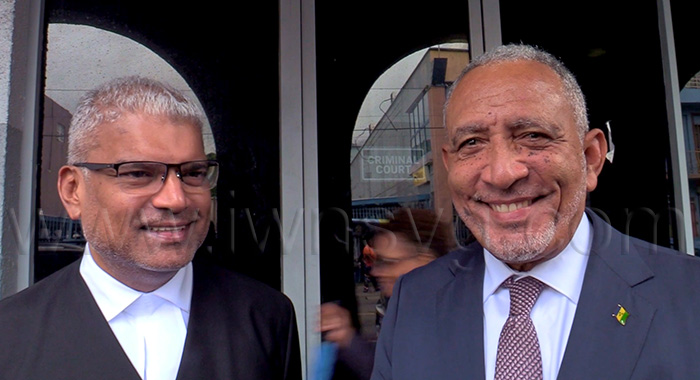
Speaking to local outlet iWitness News after the court adjourned for the afternoon, lead defense counsel Anand Ramlogan — a former Attorney General of Trinidad and Tobago — outlined why Goberman’s testimony carries major weight for the defense. Under SVG’s election rules, candidates must hold Commonwealth citizenship to qualify for office, and Canada is a full member of the Commonwealth bloc. Ramlogan emphasized that Goberman’s evidence confirms the Canadian citizenship oath is a symbolic commitment to a system of government that aligns closely with SVG’s own constitutional framework and shared values across the Commonwealth Caribbean.
Ramlogan also pushed back on the timing of the challenge, noting that Prime Minister Friday has never hidden his dual citizenship status throughout his decades-long career as a sitting member of parliament. The eligibility objection was never raised in prior elections, he pointed out, even as Friday served multiple terms in office. It only emerged after Friday led his party to an overwhelming electoral victory that elevated him to the prime ministership. Ramlogan argued the challenge is a politically motivated push led by the opposition, framed as a legal objection, calling the timing surprising after years of public knowledge about Friday’s dual citizenship.
The defense lead also marked the occasion of Friday’s birthday, publicly extending well wishes and praising the prime minister for choosing to spend the day observing court proceedings rather than celebrating, a move Ramlogan called the ultimate demonstration of commitment to SVG’s constitution and the rule of law.
For his part, Prime Minister Friday told reporters that while the constitutional challenge has dragged on longer than many expected, his legal team has remained fully prepared. He noted proceedings wrapped up earlier than forecast on September 28, leaving him a small window of time to mark his birthday, and pushed back on claims from the petitioners’ side that the defense was growing anxious as cross-examination intensified.
“We are confident about our case, we have been from the very start, and this trial is proceeding exactly as we expected it would,” Friday said, adding that his team respects the court’s process and any final ruling the court may issue.
The legal challenge itself dates back to SVG’s November 2020 general election, where defeated candidates from the incumbent Unity Labour Party (ULP) filed election petitions challenging the victory of New Democratic Party (NDP) candidates in two constituencies: East Kingstown and the Northern Grenadines. The petitions ask the court to remove the elected NDP lawmakers from office entirely on the grounds of their dual citizenship status.
The legal teams on both sides bring together senior regional and local counsel: Stuart Young, SC, leads the legal team for petitioners Carlos Williams and Luke Browne, alongside local attorney Kay Bacchus-Baptiste. For the defense, Anand Ramlogan, SC, leads the team representing Prime Minister Friday and MP Fitzgerald Bramble, with support from local attorneys Shirlan “Zita” Barnwell, Zhinga Horne-Edwards, Samantha Robertson, and Gabrielle Myers.
When the trial resumes on the morning of September 29, Friday will take the stand to open the defense’s full case, and will face cross-examination from the petitioners’ legal team. Another expert witness is also scheduled to appear on the same day, and the landmark constitutional trial is set to continue.
-
Teen granted bail after constitutional challenge to Bail Act
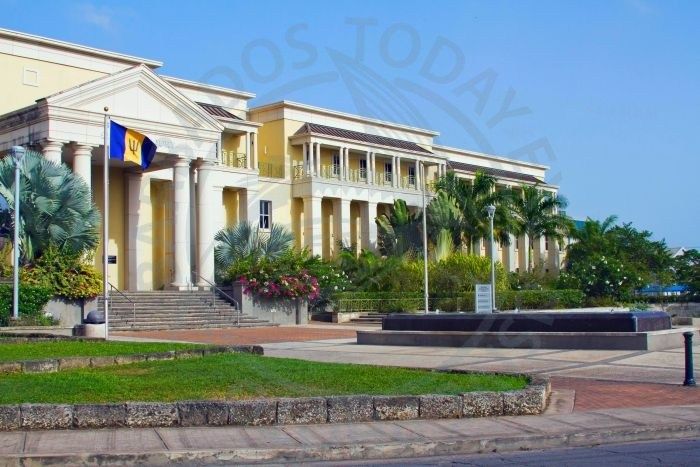
In a landmark ruling that questions a key provision of Barbados’ newly amended Bail Act, the High Court has ordered the immediate release on bail of a 16-year-old boy who had been held in adult remand prison at Dodds on firearm charges since December 2024. The case, centered on a constitutional challenge to the law’s vague “exceptional circumstances” requirement for bail in gun-related cases, has reignited debates over the balance between public safety and fundamental constitutional rights for accused persons.
Within minutes of Justice Bryan Weekes delivering his bail ruling on Monday, the minor was reunited with his waiting parents, who were present throughout the court proceedings. Speaking with local outlet Barbados TODAY, the teenager’s mother offered a brief but emotional reaction to the long-awaited release: “I feel great and elated about everything. I feel good; that is all.”
Through his legal representation led by attorney Lalu Hanuman, the 16-year-old — who has formally pleaded not guilty to the firearm charges against him — argues that the Bail Act’s requirement for “exceptional circumstances” before bail can be granted in gun offences is unconstitutional. The law, Hanuman stresses, fails to provide any clear definition of what qualifies as “exceptional circumstances”, effectively creating an insurmountable barrier that leaves accused people in pre-trial detention indefinitely, even before they have been proven guilty of any crime.
Hanuman explained that five separate bail hearings had already been held for his client, presided over by Justice Laurie Ann Smith-Bovell. In each instance, the court was bound by Section 6(10) of the amended Bail Act, which mandates that “exceptional circumstances” must be demonstrated to grant bail to anyone charged with a firearms offence. “The new act does not define what constitutes exceptional circumstances, leaving persons on remand, in effect, permanently deprived of their liberty even though they haven’t been found guilty,” Hanuman told the court.
Justice Weekes, who described the case as highly unusual, granted bail set at $75,000 with two sureties, and ordered that the teenager be released into the direct custody of his parents. The government, represented by Deputy Solicitor-General Marsha Lougheed, had already agreed to the bail amount, though it initially requested only one surety. The judge accepted all additional bail conditions proposed by the State, which include: requiring the minor to reside at an approved location; imposing a daily 6 a.m. to 6 p.m. curfew; requiring him to surrender all valid travel documents; and mandating that he check in at the District ‘B’ Police Station three times a week between 9 a.m. and 10 a.m. In approving the conditions, Justice Weekes emphasized that the teen must always be accompanied by one of his parents, given that he is still a minor. Hanuman confirmed he had no objections to any of the court’s imposed conditions.
Early in the proceedings, Justice Weekes raised significant concerns about the fact that the minor was being held in an adult remand facility rather than the Government Industrial School, the designated youth detention center located just hundreds of meters from the Dodds Prison complex. Responding to this criticism, Lougheed explained that the youth facility lacks the capacity and specialized infrastructure to hold the boy. She added that the teen is housed in a dedicated single cell at Dodds Prison, with no cellmate, and maintained that the State’s repeated refusal to grant bail prior to the constitutional challenge was rooted in concerns for the minor’s own safety.
The judge also voiced sharp criticism of the delayed disclosure of evidence in the case, noting that nearly a year has passed since the teen was first taken into remand, yet his legal team still has not been formally informed of the full nature of the evidence against their client. Justice Weekes called this delay “unacceptable”, and confirmed that no trial date has yet been set for the teenager.
Beyond the immediate bail application, the 16-year-old has launched a formal constitutional challenge against the legislation, naming the Attorney General of Barbados as the sole defendant. In his statement of claim, he alleges that the State has violated his right to personal liberty enshrined in Section 13 of the Barbados Constitution’s Bill of Rights. He notes that he has provided a formal alibi for the allegations against him, but still remained behind bars after five bail attempts solely due to the new law’s undefined requirement.
The claim argues that the lack of a clear definition for “exceptional circumstances” creates what it terms an effective “glass barrier” to bail for anyone charged with a firearms offense. The claimant’s legal team stresses that any denial of bail is not the fault of sitting judges, who have made good-faith efforts to interpret both the letter and spirit of the new law, but that the undefined prerequisite itself violates Sections 13(2) and 13(3) of the national constitution.
In his argument to the court, Hanuman pointed to alternative approaches used in other jurisdictions to address public safety concerns around bail for serious offenses. Many regions, he noted, have implemented electronic ankle monitoring to track the movements of accused persons granted bail, a system that was successfully deployed in Barbados itself to manage international visitors during the COVID-19 pandemic. The teen’s legal team is asking the court to formally rule that the undefined “exceptional circumstances” requirement in the 2024 Bail Act violates Section 13 of the constitution, and to award vindicatory damages for the violation of his fundamental rights.
Section 13 of the Barbados Constitution’s Bill of Rights, which forms part of the country’s supreme law, enshrines core protections for anyone arrested or detained. The clause requires that detained people must be promptly informed of the reason for their detention in a language they can understand, must be granted immediate access to a private consultation with a legal representative of their choice at their own expense, and must be allowed reasonable opportunity to communicate with a parent or guardian if they are under the age of 16. It also mandates that anyone detained on suspicion of a criminal offense who is not released must be brought before a court as quickly as is reasonably practical, and that if a trial does not proceed within a reasonable timeframe, the accused must be released either unconditionally or on reasonable bail conditions that guarantee their appearance at a future trial, without prejudicing ongoing proceedings.
The case has been adjourned, with a new court date to be scheduled in the coming weeks. Lougheed continues to represent the Attorney General as the case proceeds.
-
Deadly Warning at Western Border; Customs Officer Threatened
A brazen death threat targeting a senior Belizean customs official has triggered an urgent cross-agency criminal investigation at one of the country’s most high-traffic western border crossings, with authorities ramping up security amid ongoing uncertainty over who is behind the intimidation attempt.
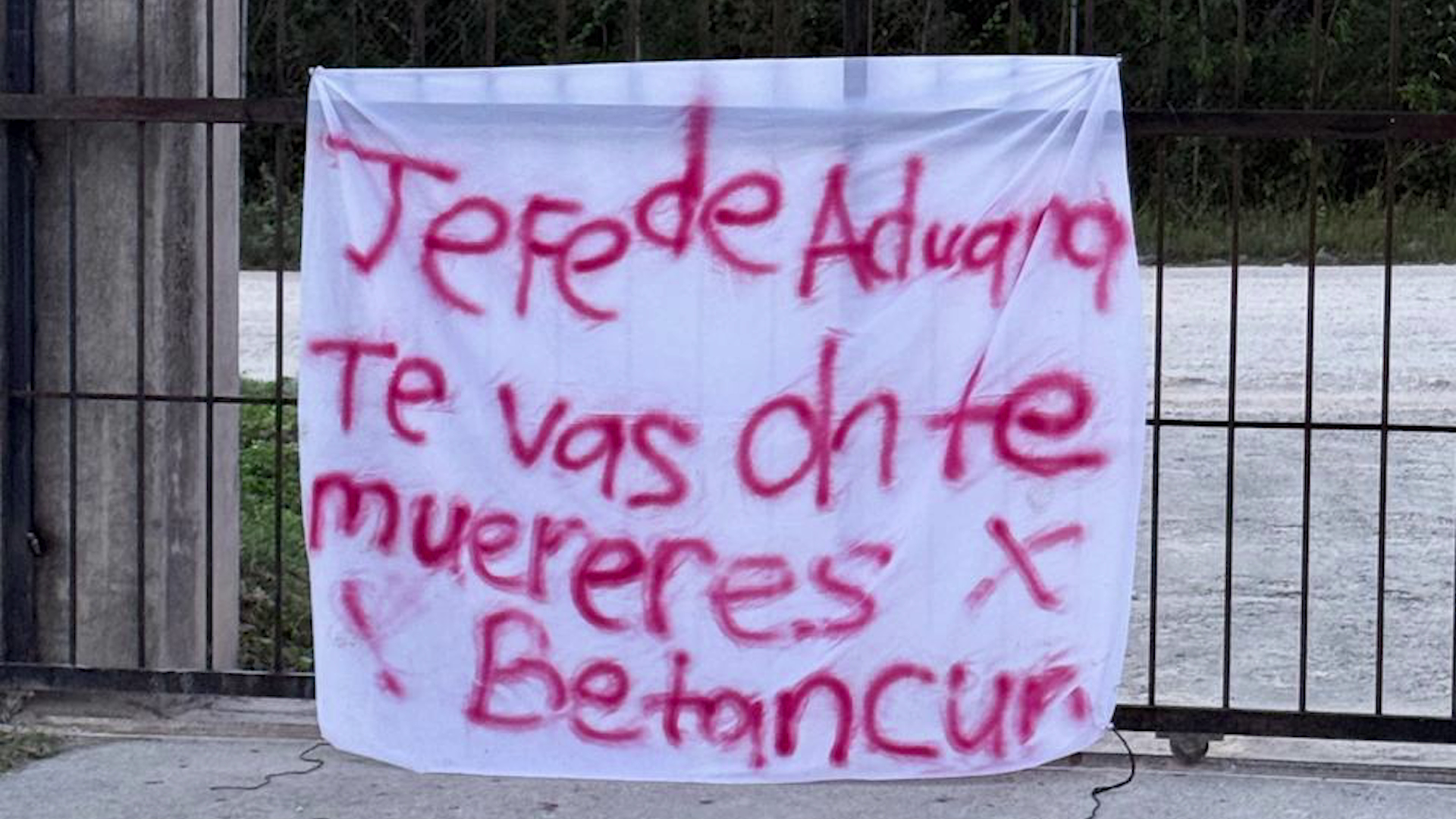
When staff reported for duty at the border checkpoint on the morning of September 28, 2026, they discovered a handwritten chilling message pinned at the entry point. The warning, written in Spanish, was explicitly addressed to veteran customs officer Luis Betancourt, who only weeks earlier assumed leadership of operations at the strategic crossing. The note read simply: “You leave or you die.”
The western border between Belize and Guatemala has long been a hotspot for rampant smuggling operations and other cross-border illicit activity, a reality that has put enforcement officers posted to the region at heightened risk of retaliation from criminal networks. Investigators have not yet confirmed whether the threat originated on the Belizean side of the boundary or from Guatemalan territory, but law enforcement officials have classified the incident as a severe security risk that requires full investigative resources.
In comments to reporters, Assistant Commissioner of Police Hilberto Romero, who leads the National Crimes Investigation Branch, outlined the early steps of the probe. “This morning, police responded to the call at the customs cargo area, where they found a threatening message scrawled on a piece of cloth placed at the gate,” Romero explained. “Forensic teams have already processed the scene for evidence, and we are now working through surveillance footage to identify who left the material.” When asked if monitoring systems covered the location where the threat was found, Romero confirmed that cameras are active in the area, and all footage is currently under review by investigative teams.
Rear Admiral Elton Bennett, CEO of Belize’s Ministry of Home Affairs, noted that the investigation remains in its early stages, with dozens of open questions remaining about the origin and motivation for the threat. “At this point, there is still a great deal of uncertainty,” Bennett stated. “The Belize Police Department is collaborating closely with customs authorities and other partner agencies to canvass the area, collect witness statements, and pull intelligence from both surveillance footage and on-the-ground interviews.”
When pressed about whether the threat likely originated from criminal groups operating across the Guatemalan border, Bennett declined to speculate, saying it would be premature to draw conclusions before evidence is reviewed. “Regardless of where the threat came from, this incident has prompted a significant boost in security vigilance across the entire border region,” Bennett added. “When incidents of this nature occur in such a sensitive, high-stakes location, we coordinate closely with all relevant stakeholders and share information as it develops to protect our personnel and secure the border.”
As the investigation progresses, Betancourt has not yet issued a public statement on the threat. Local security observers note that the intimidation attempt comes amid a renewed crackdown on smuggling at the crossing that Betancourt was brought in to lead, raising unconfirmed speculation that the threat may be retaliation for the officer’s enforcement work, a theory investigators are expected to explore as part of their ongoing inquiry.
-
Broaster Takes Evidence Before Integrity Commission
Belize’s high-profile Ministry of Defense procurement corruption scandal is now advancing on two parallel investigative tracks, as a key opposition figure has appeared before the country’s Integrity Commission to give formal testimony.
The inquiry centers on long-simmering corruption allegations leveled against Oscar Mira, and as the Office of the Auditor General prepares to deliver its initial preliminary report in the coming days, the Integrity Commission has continued to move forward with its own probe into the claims.
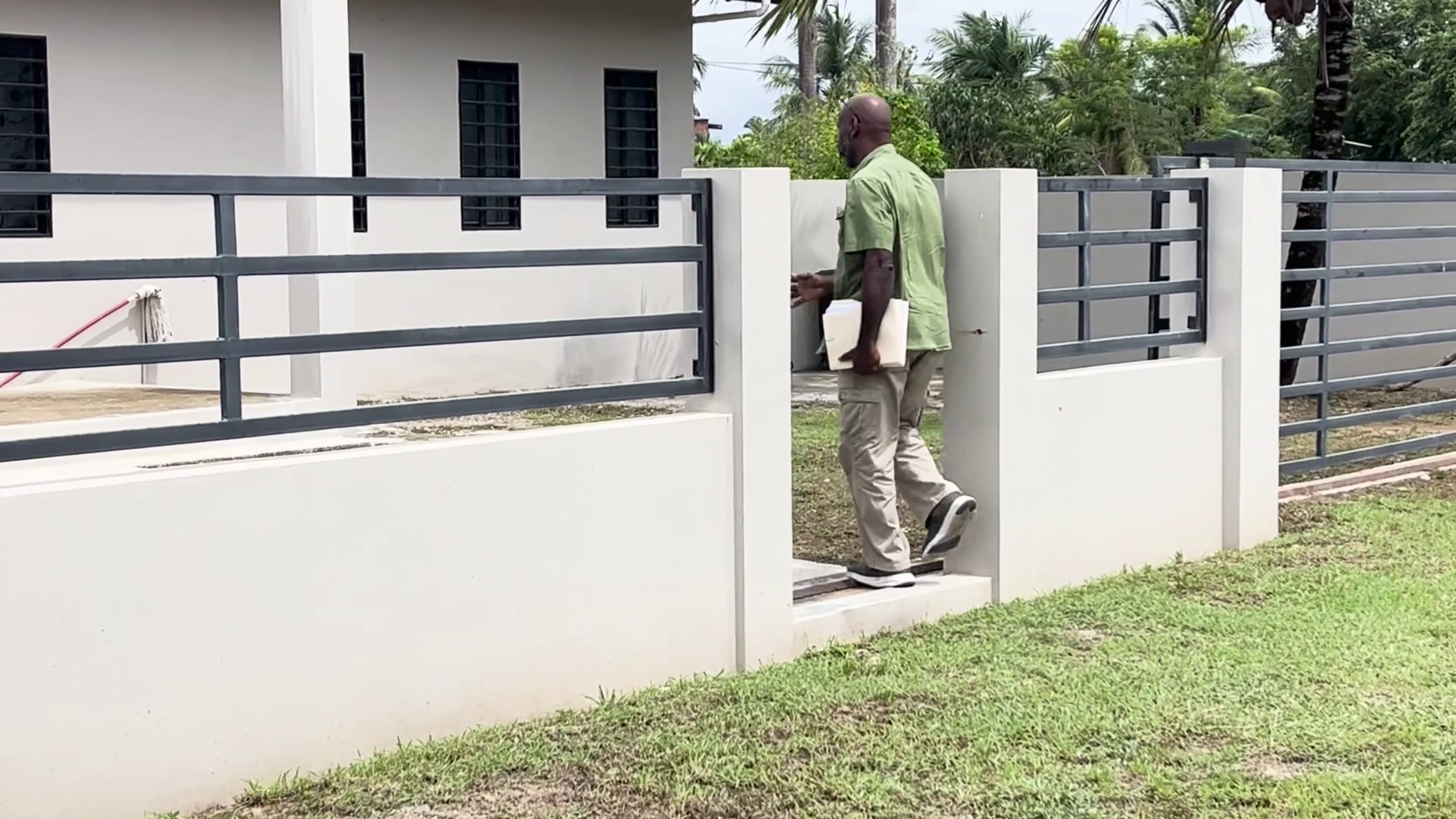
News Five has confirmed that Edward Broaster, the United Democratic Party (UDP) caretaker representative for the Belize Rural Central constituency, gave sworn evidence to the anti-corruption body on September 28, 2026. This investigation traces its origins back to late June, when Broaster first brought the allegations to light by submitting dozens of official invoices to the commission. These documents reportedly show that the Ministry of Defense made hundreds of separate payments to private businesses that are connected to Mira’s siblings.
Following a preliminary review of the submitted materials, the Integrity Commission concluded that Broaster’s evidence met the threshold required to open a full formal investigation into the claims. While it is still too early to assess what impact Broaster’s latest testimony will have on the commission’s final conclusions, his public appearance before the body confirms that the long-awaited inquiry is actively progressing.
Currently, multiple overlapping reviews into the scandal are still ongoing. To date, the unfolding controversy has raised widespread questions about public procurement oversight in Belize’s defense sector, but no definitive final findings have been released by any of the investigating bodies.
-
Ongoing crackdown nets million$, raw gold
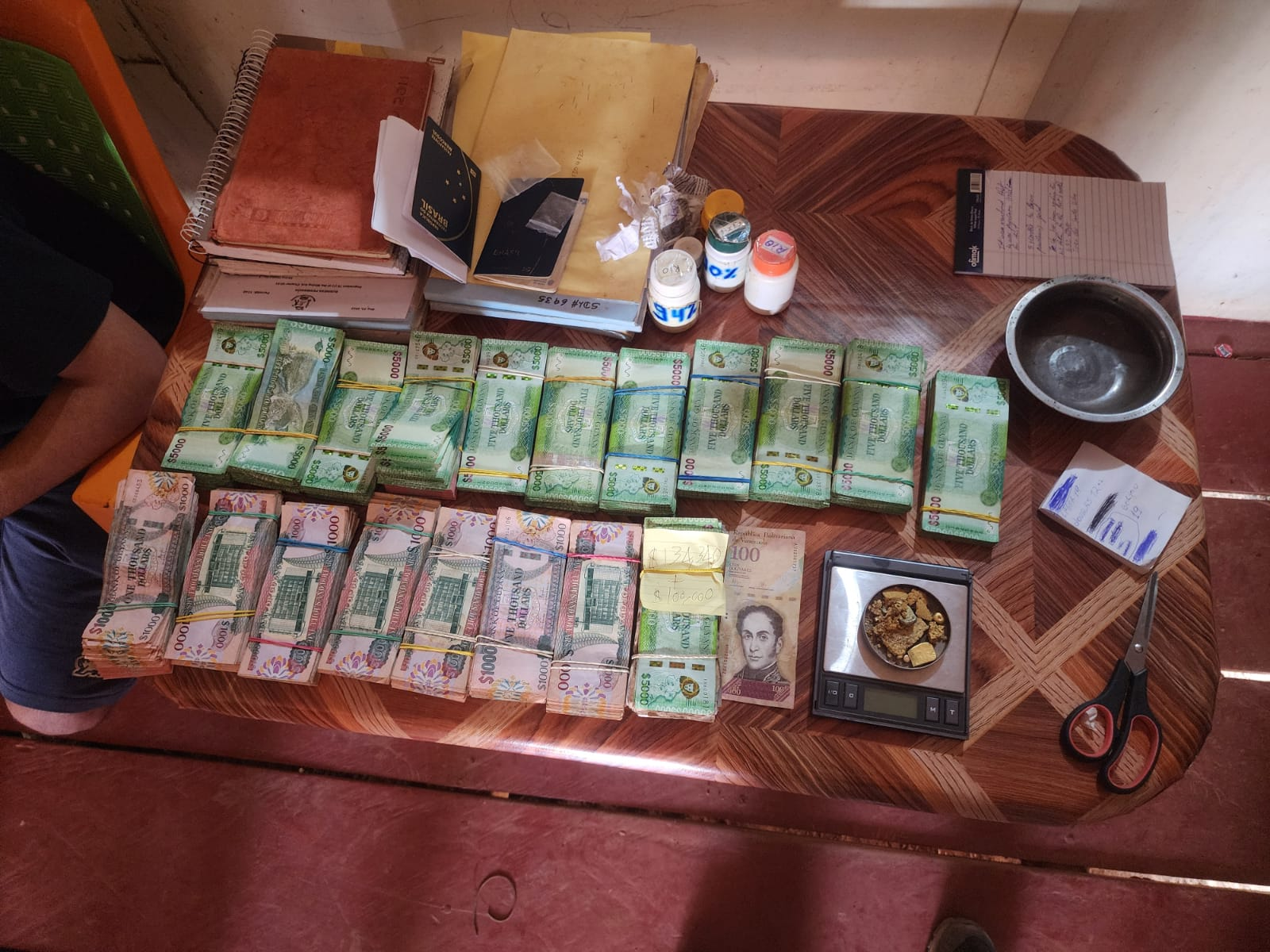
In a recent enforcement crackdown on unregulated mining activity, Guyana’s Ministry of Natural Resources announced Monday night that two individuals suspected of illicit gold trading have been taken into custody at Tamakay Landing, located in the country’s Region Seven (Cuyuni/Mazaruni). The joint operation, carried out on September 28 by the enforcement division of the Guyana Geology and Mines Commission, not only netted the two suspects but also resulted in the seizure of 6 million Guyanese dollars, approximately two ounces of unlicensed gold, and an array of unspecified specialized trading equipment. As a direct consequence of the violations uncovered during the inspection, the retail gold shop operating out of Tamakay Landing in the Mazaruni mining district has had all its operational activities suspended pending further investigation. Ministry officials confirmed in an official statement that the site was found to be actively buying and selling gold without holding the mandatory government approvals and operating licenses required for participation in Guyana’s regulated gold sector. Following the arrest, the two suspects were transferred to local police custody for further processing and legal proceedings. In the statement, the Ministry emphasized that this latest enforcement action is just one component of its sustained, nationwide campaign to eliminate illegal mining and all associated illicit activities that undermine the regulated sector. Monitoring and enforcement operations will remain active across every mining district in the country, as authorities work to curb unregulated activity that deprives the nation of tax revenue and weakines regulatory oversight of the critical mining industry. The Ministry closed its statement by issuing a formal call to all industry stakeholders, from small-scale traders to large mining operators, to proactively verify that their operations fully comply with all existing national laws and mandatory licensing requirements governing Guyana’s mining sector, warning that additional enforcement actions will continue in the coming months.
-
PM denies reports of Saint Lucia walk out
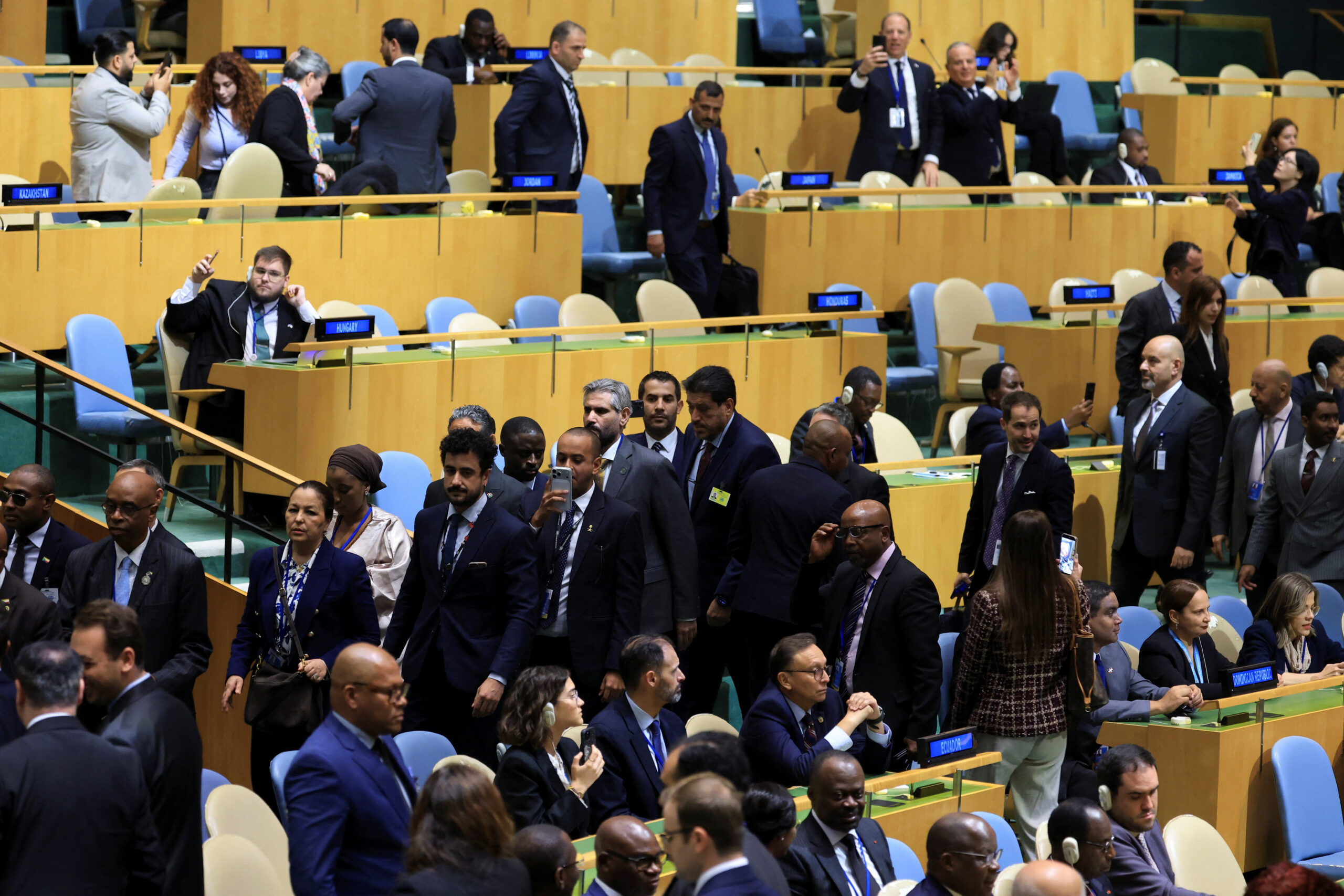
A recent diplomatic controversy has put Saint Lucia in the global spotlight following widespread reports that its UN delegation joined a mass walkout of the United Nations General Assembly (UNGA) chamber as Israeli Prime Minister Benjamin Netanyahu delivered his scheduled address last Thursday.
The coordinated walkout, which saw delegates from dozens of countries exit the hall moments after Netanyahu took the podium, quickly sparked international backlash. In his speech, the Israeli leader publicly denounced the departing diplomats, labeling their collective action an act of “moral cowardice.” In the days that followed, multiple circulating reports named Saint Lucia as one of the nations whose representatives either participated in the walkout or were absent from the chamber during the address.
However, during a pre-Cabinet press briefing held on Monday, Saint Lucia’s Prime Minister Philip J. Pierre firmly pushed back against these claims, issuing a categorical denial that Saint Lucia took any part in the protest action. “Saint Lucia did not walk out,” Pierre stated, confirming that at least one member of the country’s delegation remained at the nation’s assigned seat for the full duration of Netanyahu’s speech.
Beyond clarifying the delegation’s actions, Pierre also reaffirmed that the Caribbean nation has long maintained a transparent and consistent position on global conflicts, including ongoing tensions in the Middle East. In his own address to the UNGA delivered just one day after Netanyahu’s speech, last Friday, Pierre laid out Saint Lucia’s formal stance to the global body.
“Saint Lucia laments the continued conflicts and human suffering across the globe, including Ukraine, Sudan and the wider Middle East, including Gaza, and calls for renewed efforts towards peace, stability and respect for international law,” Pierre told assembled delegates. He added: “In accordance with their right to self-determination and UN resolutions, in particular Resolution 3236 of 1974, the people of Palestine should be allowed their own State and full membership of the UN, alongside the state of Israel.”
-

Taiwan’s Foreign Minister to Arrive in Belize, What’s on the Itinerary?
Scheduled for September 28, 2026, a high-stakes diplomatic and trade visit led by Taiwan’s Foreign Minister Lin Chia-lung is set to kick off in Belize, one of Taiwan’s few remaining diplomatic allies, bringing with it a broad delegation of more than 30 industry representatives and key stakeholders.
During his time in Belize, Lin is slated to hold official bilateral meetings with the country’s top leadership, including Prime Minister John Briceño, Governor-General Froyla Tzalam, and Belizean Foreign Minister Francis Fonseca. A core deliverable of the diplomatic leg of the trip is the expected signing of two documents: a joint communique reaffirming bilateral ties, and a formal agreement focused on expanding training and personnel exchanges between the two countries’ diplomatic corps.
Beyond diplomatic negotiations, Lin will conduct on-site inspections of three ongoing development projects funded by Taiwan in Belize. These include the under-construction San Pedro Hospital, a completed social housing initiative that will deliver 50 new affordable residential units to local communities, and the planned location for the upcoming Taiwan-Caribbean Prosperity Academy, a proposed educational institution focused on boosting regional economic capacity.
The cross-sector business delegation accompanying Lin brings together stakeholders from a wide range of high-growth and key economic sectors, spanning renewable green energy, intelligent transportation systems, artificial intelligence, space technology, biotechnology, healthcare services, tourism, and cross-border finance and trade. Notably, the U.S.-Taiwan Business Council, a leading private sector group promoting economic ties between the United States and Taiwan, is also participating in the delegation.
Taiwan’s Ministry of Foreign Affairs has framed the visit around the so-called “flying geese” model of regional economic development. The stated strategic goal of the framework is to leverage Belize’s strategic geographic location at the intersection of the Caribbean, Central America, and North America to build new economic connections linking Taiwan with consumer and industrial markets across North America, Latin America, the broader Caribbean basin, and the Pacific region.
Following the conclusion of his engagements in Belize, Lin will continue his regional diplomatic trip with a stop in neighboring Guatemala, another of Taiwan’s diplomatic allies in Central America. During his time there, he is scheduled to hold a formal meeting with Guatemalan President Bernardo Arévalo, preside over an event marking the completion of renovation works at Guatemala’s Ministry of Foreign Affairs headquarters, and officially inaugurate a new monitoring and emergency response facility at La Aurora International Airport, Guatemala’s primary air hub.
This trip marks one of a series of similar diplomatic and economic outreach missions Lin has led since taking office as Taiwan’s Foreign Minister in May 2024. All these missions fall under the umbrella of the Diplomatic Allies Prosperity Project, an initiative focused on deepening both political and economic ties between Taiwan and its diplomatic partners around the globe.
-
PM Browne Says Antigua Senator ‘Deh Wid’ a Pedophile
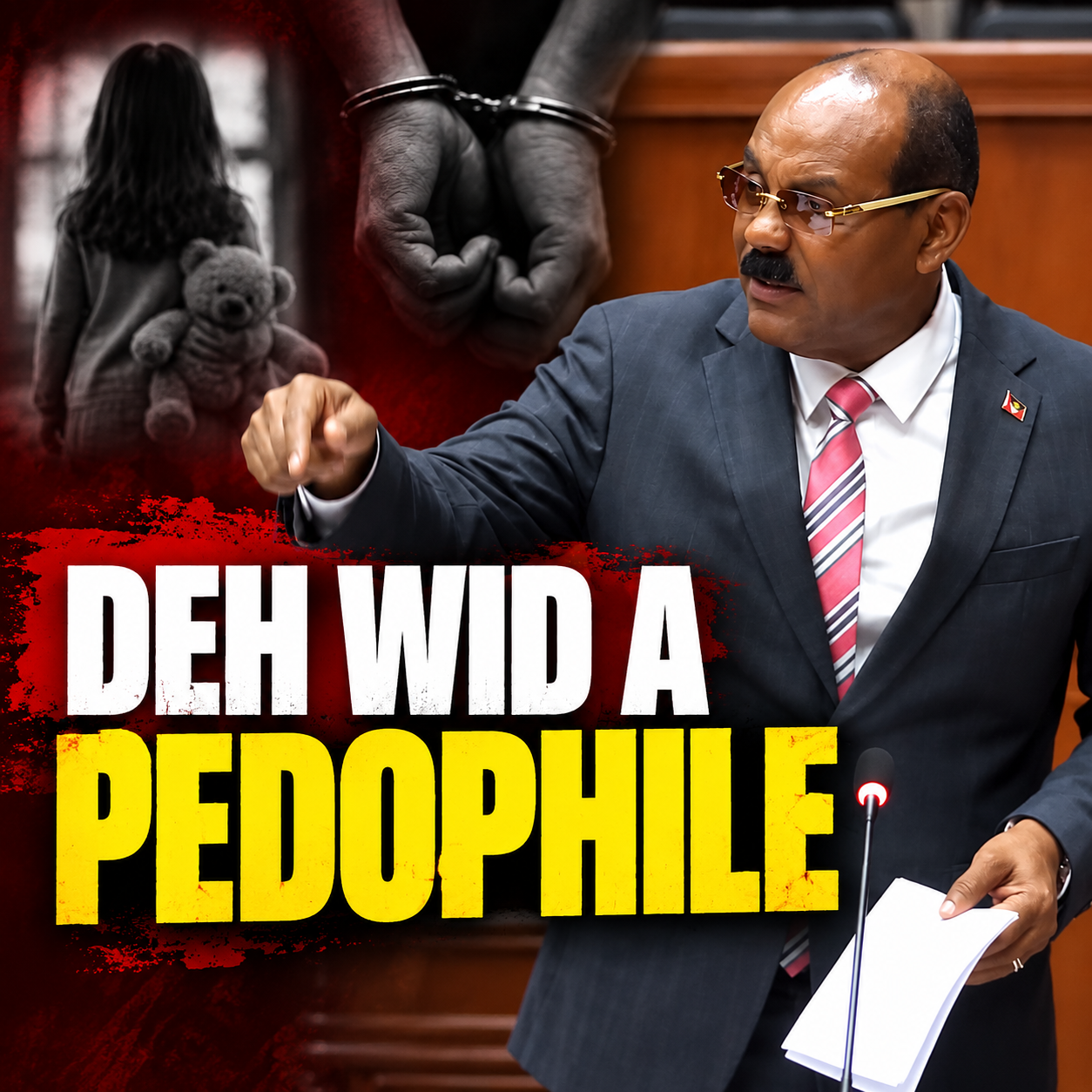
During a heated parliamentary debate on proposed firearms legislation this week, Antigua and Barbuda Prime Minister Gaston Browne delivered a startling allegation: he claimed an unnamed sitting senator is currently in a romantic relationship with a convicted pedophile, using the local Antiguan colloquial phrase “deh wid” to describe the pairing. The explosive claim formed part of a broader argument from Browne centered on what he frames as growing societal tolerance for dangerous, repeat offenders in the twin-island nation.
Browne made the remarks Monday while contributing to debate on the 2026 Firearms Amendment Bill. Wading into a discussion of rising acceptance and even glorification of criminal activity across Antigua and Barbuda, Browne repeated his accusation for emphasis: “You have a senator in this Honourable House who deh wid a pedophile. Can you imagine? A senator in this Honourable House who deh wid a pedophile.”
The prime minister went on to question the ethical precedent the senator is setting for her own children, particularly her daughters. “That is how slack we have become in this country. What do you think will happen to her children? What example is she setting for her girl children?” Browne said. Notably, Browne did not name the senator at any point during his address, nor did he offer any concrete evidence or supporting details to back up the serious public allegation.
The claim was not an isolated comment, but part of a wider push from Browne for harsher sentencing and more punitive measures for people convicted of violent and sexual offenses in Antigua and Barbuda. Shortly before making the allegation about the senator, Browne had opened discussion on the treatment of convicted sex offenders, proposing that chemical castration — and in extreme cases, surgical castration — should be implemented for serial rapists.
Reaffirming his stance on systemic laxity around crime, Browne argued that Antigua and Barbuda has grown overly accepting of individuals linked to serious criminal activity, and called for the country to adopt a firm “zero tolerance” policy toward all crime and violent offending.
-
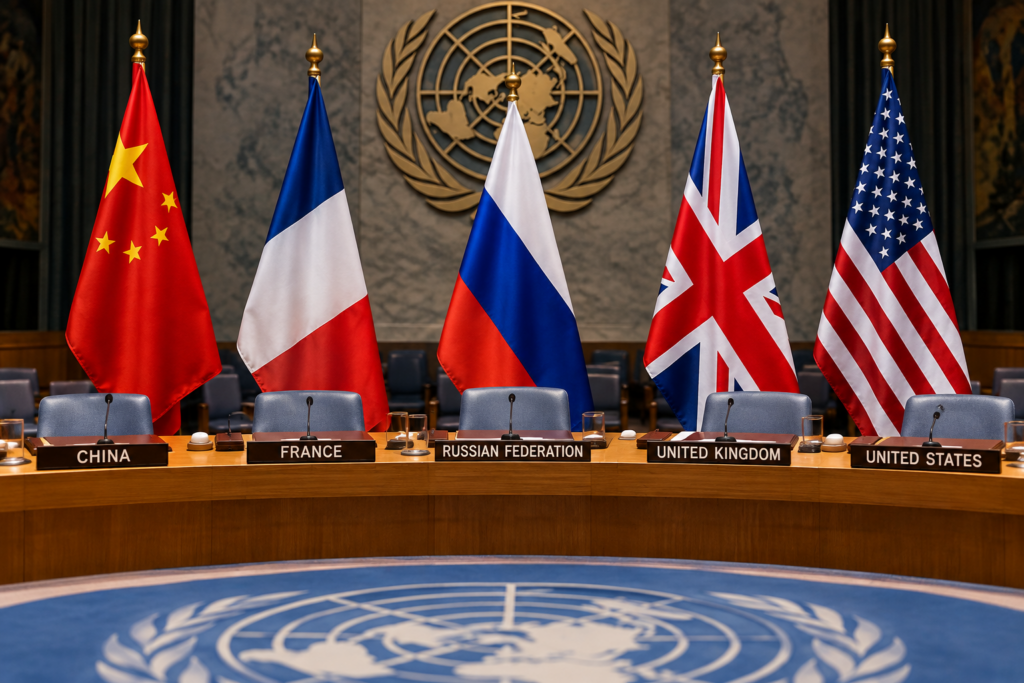
Antigua and Barbuda Calls for Dedicated SIDS Seat on UN Security Council
Against a backdrop of ongoing global discussions over updating decades-old United Nations governance structures, Antigua and Barbuda has put forward a bold demand to center the voices of historically marginalized small island nations in key global decision-making. Speaking during the General Debate of the 81st Session of the UN General Assembly on Monday, Ambassador Dr. Walton Aubrey Webson, the Caribbean nation’s permanent representative to the UN, formally called for Small Island Developing States (SIDS) to be granted a dedicated, guaranteed seat on a reformed UN Security Council.
Webson emphasized that any meaningful overhaul of the 15-member Security Council must tackle two core dimensions: the body’s operational procedures and its fundamental representation gaps. For small, vulnerable island nations that have long been sidelined in global power negotiations, an assured place at the Security Council table is non-negotiable, he argued. “Small Island Developing States must also have an assured voice at this table. Antigua and Barbuda calls for a dedicated SIDS seat on a reformed Security Council,” Webson stated during his address.
Beyond advocating for SIDS representation, Antigua and Barbuda also joined growing international calls to correct historical injustice by granting Africa permanent membership on the Security Council. Webson noted that the continent’s continued exclusion from permanent seats on the powerful body is an unacceptable wrong that demands immediate redress.
The Caribbean nation also threw its support behind a high-profile initiative led by France and Mexico, which calls on the Security Council’s five permanent members to voluntarily restrict their veto power. Under the proposal, permanent members would agree not to use vetoes to block council action in cases where mass atrocities are occurring. Webson confirmed that Antigua and Barbuda would add its name to the list of growing UN member states backing the initiative, stressing that the veto power should never be used to stop the Security Council from fulfilling its core mandate of upholding global peace and security.
The push for Security Council reform forms a central plank of Antigua and Barbuda’s broader argument that global multilateral institutions must evolve to better reflect and prioritize the interests of small, economically and militarily vulnerable states. Earlier in his address, Webson underscored that for small island nations like his country, multilateral cooperation and respect for international law are not abstract political goals—they are existential necessities. Unlike major global powers that wield significant military and economic clout to advance their interests, small developing island states rely entirely on the UN system to protect their sovereignty and security. “For us, the United Nations is not optional. It is essential to our survival,” he said.