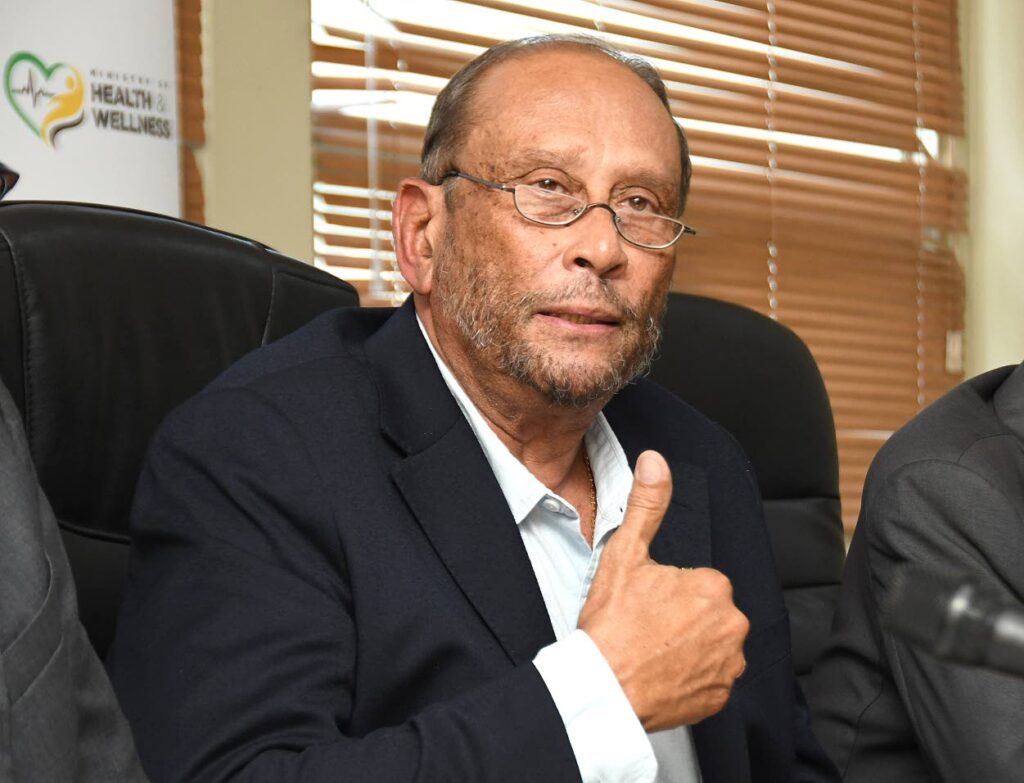
Veteran Jamaican attorney Howard Mitchell, who leads a government-appointed review committee probing governance irregularities at the University Hospital of the West Indies (UHWI), has sounded the alarm over a deeply entrenched culture of insufficient accountability and lax oversight that permeates nearly the entire public sector. Far from being an isolated issue at the prominent teaching hospital, Mitchell argues that the gaps uncovered during the UHWI investigation are symptomatic of broad, structural flaws that have undermined the performance and integrity of state institutions across the island.
Mitchell outlined three core drivers that allow governance failures to persist across the country’s 156 public bodies: widespread non-compliance with existing regulatory requirements, toothless monitoring mechanisms, and inadequate enforcement of established rules. To illustrate the scope of the compliance crisis, he noted that only 12 of the 156 public bodies are fully up to date on the mandatory financial and operational reports required under the Public Bodies Management and Accountability Act (PBMA). Shockingly, at least one public body has failed to submit a single required report in the 50 years since it was founded, leaving public funds unaccounted for and raising urgent questions about fiscal transparency. This lack of transparency is particularly striking, Mitchell emphasized, given Jamaica’s widely celebrated recent successes in macroeconomic management.
The review committee was convened specifically to examine procurement and governance shortcomings at UHWI, following a 2025 report from Jamaica’s Auditor General that flagged major irregularities at the facility. But Mitchell said the investigation quickly revealed that the same weaknesses extend across the entire public administration system. A primary contributing factor, he explained, is that the agencies tasked with overseeing public bodies are themselves starved of the resources, staffing, and training needed to do their jobs effectively. The Auditor General’s Department, for example, faces such significant budget constraints that it can only conduct superficial, one-off checks rather than sustained follow-up oversight. Compliance units within the Ministry of Finance and the Public Service also lack sufficient funding and capacity to drive the cultural shift needed to embed accountability across all public institutions.
Compounding the challenge is the unwieldy structure of Jamaica’s public sector, which places an unmanageable number of agencies under the supervision of individual ministries. Mitchell noted that some cabinet departments are responsible for monitoring more than two dozen public bodies, while 39 separate agencies report directly to the prime minister – a workload that makes consistent, effective oversight functionally impossible.
Over time, these persistent systemic failures have created a dangerous trust deficit that erodes public confidence in national institutions, Mitchell warned. When public bodies fail to deliver on their mandated services, the backlash falls directly on political leaders and state institutions, damaging social cohesion and undermining the legitimacy of governance. He added that political stakeholders have begun to recognize that this gap between public promises and actual service delivery is a core root of declining citizen trust.
Against this backdrop, the UHWI reform process has emerged as a critical test case for broader public sector overhaul. The review committee has concluded that Jamaica lacks the specialized local expertise to manage the complex transformation of a large teaching hospital, and is therefore recommending that the government hire an independent international change management expert to lead UHWI’s restructuring, develop a formal implementation roadmap, and enforce accountability for outcomes. Health Minister Dr. Christopher Tufton has endorsed the recommendation, confirming that the government will source the required expertise from the international market, as no local firm possesses the specialized experience in teaching hospital governance and service delivery needed for the project.
Mitchell stressed that the UHWI reform should not be a standalone fix. Instead, he framed the process as a critical wake-up call for Jamaica to address the accountability crisis across all public bodies, using the hospital’s transformation as a benchmark to raise standards across the entire public sector.