分类: politics

  • Transport Ministry Under Fire for Flip-Flop Policies

    Transport Ministry Under Fire for Flip-Flop Policies

    The Ministry of Transport finds itself at the center of a growing controversy regarding its policymaking approach, following multiple instances of proposed regulations meeting public resistance and subsequent modifications. This pattern has raised questions about whether policies are being developed with adequate stakeholder engagement or implemented hastily without proper consultation.

    The sequence of contentious proposals began with initial plans for a national bus company that encountered significant pushback. This was followed by comprehensive motorcycle regulations criticized for their lack of clarity, and most recently, amendments to house transportation rules that generated strong opposition from affected parties.

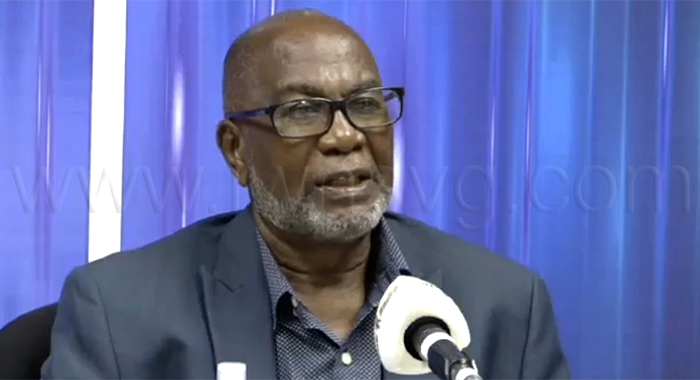
    In response to mounting criticism, Transport Ministry CEO Chester Williams defended the department’s approach, characterizing the adjustments as responsive governance rather than policy reversals. “We are not walking back on nothing,” Williams stated during a phone interview. “We are putting in place a system temporarily until we can discuss.”

    Williams emphasized that recent meetings have produced recommendations requiring Cabinet approval before implementation, framing the process as one of listening to affected constituencies and making reasonable recommendations for governmental consideration. Regarding the motorcycle regulations specifically, Williams asserted there has been no retreat from the proposed framework, noting that the Prime Minister and Cabinet are collaboratively exploring how best the government can support this initiative while acknowledging the necessity of training programs.

    The ongoing situation highlights broader questions about governance methodology, particularly whether reactive policymaking is becoming institutionalized within the transport sector administration.

  • Diplomacy : Review and wishes of the American Ambassador Henry T. Wooster

    Diplomacy : Review and wishes of the American Ambassador Henry T. Wooster

    In his year-end address, U.S. Ambassador to Haiti Henry T. Wooster provided a comprehensive review of the nation’s tumultuous 2025 while extending holiday wishes to the Haitian people. The diplomat acknowledged the “profound hardship” facing the Caribbean nation, characterized by widespread insecurity, mass displacement, and political instability, yet emphasized the remarkable resilience demonstrated by Haitians throughout these challenges.

    Ambassador Wooster highlighted several significant achievements that brought national pride, including Haiti’s historic qualification for the 2026 World Cup after a 51-year absence from international soccer’s premier tournament. He also celebrated UNESCO’s recognition of compas music (konpa) as an intangible cultural heritage, noting these accomplishments demonstrate Haiti’s cultural richness beyond the narrative of gang violence.

    On security matters, the ambassador commended the Haitian National Police (HNP) for their courage and determination in confronting armed gangs under extremely difficult conditions. He reaffirmed America’s steadfast partnership through training, equipment, and technical assistance programs. Wooster specifically noted the UN Security Council’s authorization of a 5,500-strong Gang Suppression Force as a critical step forward, thanking the international community for responding to Haiti’s call for assistance.

    The diplomatic address recognized important institutional progress, particularly the publication of an electoral decree that establishes a pathway toward restoring constitutional order through elections. The United States pledged continued support for this process while urging swift action to organize free and fair elections by 2026.

    Ambassador Wooster emphasized the Trump Administration’s ongoing efforts to combat instability, noting that individuals destabilizing Haiti through arms smuggling, financing, or other means have been sanctioned, detained, or arrested both in Haiti and the United States. He declared that “the era of impunity in Haiti is over” for those seeking to profit from the nation’s instability.

    Looking ahead, the ambassador expressed optimism about 2026 offering an opportunity to restore security, conduct elections, and move toward a safer, more prosperous Haiti governed by leaders chosen by the people themselves. He concluded by extending Christmas and New Year wishes on behalf of the entire U.S. Embassy team, acknowledging the hard-working Haitians from all walks of life who continue working to build their nation.

  • Jones waarschuwt voor ‘vergaande bevoegdheden’ in milieuwet

    Jones waarschuwt voor ‘vergaande bevoegdheden’ in milieuwet

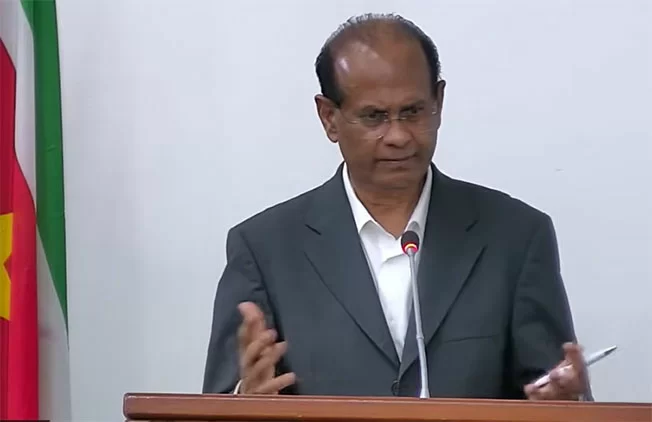
    In a heated session at De Nationale Assemblee, opposition parliamentarian Ebu Jones of the National Democratic Party (NDP) launched scathing criticism against the proposed Sustainable Nature Management Act, warning of constitutional violations and potential foreign interference in Suriname’s natural resources.

    Jones articulated fundamental objections to the legislation during Monday’s debate, characterizing it as granting “abnormal, unprecedented, and far-reaching powers” to the National Environmental Authority (NMA). The lawmaker emphasized that Suriname’s constitution explicitly mandates that natural resources and their revenues must benefit the nation’s overall development—a principle he believes the proposed legislation undermines.

    The parliamentarian expressed particular concern over provisions that would allow revenues from natural resources, including carbon credits, to flow directly to concession holders rather than national development funds. “This effectively diverts money from society and central authority that should instead be deployed for national development,” Jones stated, making clear his intention to block such arrangements.

    Jones further raised alarms about potential foreign influence, suggesting international organizations and foreign powers might use non-governmental organizations (NGOs) to gain control over Suriname’s natural wealth. He warned that such influences could become institutionalized through legislation, requiring heightened vigilance.

    Addressing President Jennifer Simons directly, Jones urged extreme caution in selecting advisors on this matter, warning against opening doors to structures that would divert funds from society.

    The politician asserted that environmental policy should remain with the government—which bears political responsibility and answers to parliament—rather than being delegated to an authority. He criticized provisions making the NMA central to policy preparation, effectively rendering the government dependent on an authority, which he deemed constitutionally improper.

    Jones also identified contradictions between the proposed legislation and existing environmental framework laws, noting that concepts, responsibilities, and powers weren’t consistently aligned, potentially creating legal complications.

    Additional criticisms focused on granting investigative powers to the NMA, which Jones called unacceptable since economic crime investigation and prosecution traditionally fall under police and public prosecutor jurisdiction. He also expressed concerns about the environmental fund gaining expanded capabilities, including loan provision authority, through what he described as “surreptitious means.

    Following unanimous criticism during initial debate, further proceedings have been postponed indefinitely while initiators and legal experts continue refining the legislation.

  • STATEMENT: UWP Christmas message

    STATEMENT: UWP Christmas message

    In a seasonal address to the nation, United Workers Party (UWP) leader Thomson Fontaine delivered a Christmas message that blended holiday greetings with political commentary, calling for national unity amid ongoing challenges facing Dominica. Speaking to citizens both domestically and abroad, Fontaine emphasized the shared values that transcend political differences while reaffirming his party’s commitment to holding the government accountable.

    The opposition leader’s message highlighted the symbolic significance of Christmas as a period for reflection, compassion, and unity. Fontaine specifically urged citizens to support vulnerable community members including the sick, elderly, and those experiencing economic hardship. His address acknowledged the substantial difficulties many Dominicans have faced throughout the year, including health challenges, personal loss, and financial struggles exacerbated by unemployment and low wages.

    Fontaine pointed to what he described as declining living standards, characterized by rising prices and inadequate health services, as evidence of systemic failures. In response to these challenges, the UWP leader promoted his party’s proposed ‘Ten Pillars to Shared Prosperity’ policy framework, which he claims would address unemployment, stimulate economic growth, and improve social services.

    The political message concluded with a call for collective action, emphasizing that national progress requires unified effort rather than policies that benefit ‘a selected few.’ Fontaine expressed optimism for the new year, encouraging citizens to move forward with mutual respect and love while working toward building a nation that fulfills its potential for all citizens.

  • Trump Administration Recalls Dozens of US Ambassadors

    Trump Administration Recalls Dozens of US Ambassadors

    In a significant restructuring of U.S. diplomatic representation, the Trump administration has commenced the recall of approximately 30 career ambassadors and senior embassy officials across global posts. This strategic move aligns with President Donald Trump’s “America First” policy framework and represents the most substantial diplomatic personnel overhaul since his return to office.

    According to senior State Department sources who spoke on condition of anonymity, chief diplomats in at least 29 countries received formal notifications last week indicating their tenures would conclude by January 2026. The official recall communications, dispatched from Washington headquarters beginning Wednesday, December 17, 2025, detailed the impending conclusion of their overseas assignments.

    Notably, these diplomatic professionals—all appointed during the preceding Biden administration—had previously maintained their positions through the initial transition period. While earlier personnel changes primarily affected political appointees, this latest directive extends the administration’s reorganization efforts to seasoned career foreign service officers occupying critical ambassadorial roles.

    The recall process follows established diplomatic protocols wherein ambassadors serve at the discretion of the sitting president. Although typically maintaining three-to-four-year terms, these officials are not facing termination from foreign service. The State Department clarified that recalled diplomats may pursue alternative assignments within Washington’s administrative structure should they elect to continue their governmental service.

  • Cuba warns of the dangers of fentanyl use

    Cuba warns of the dangers of fentanyl use

    A Latin American official has launched a scathing critique against the United States government’s recent designation of fentanyl as a weapon of mass destruction, characterizing the move as a calculated strategy to justify military intervention in sovereign nations. Through a statement published on the social media platform X, the representative asserted that this classification establishes dangerous false pretexts for initiating warfare against states throughout Latin America and the Caribbean.

    The official further contended that this designation serves broader geopolitical objectives, including the overthrow of legitimately elected governments and the appropriation of natural resources belonging to other nations. The criticism extended to what was described as a deliberate effort by U.S. authorities to oversimplify the complex, multifactorial origins of the fentanyl crisis while simultaneously obscuring the devastating consequences of its misuse.

    Additionally, the statement included strong condemnation of American pharmaceutical corporations, accusing them of engaging in systematic malpractice that contributes to the epidemic. The official pointed to inherent vulnerabilities within the United States itself, citing the country’s vast drug market, the widespread and often indiscriminate prescription of potent opioids like oxycodone, amphetamines, and other addictive substances, coupled with a healthcare system that remains financially inaccessible for many citizens, as fundamental drivers of the crisis.

  • US Congressman Backs Trinidad PM as She Denounces CARICOM and Venezuela’s Maduro

    US Congressman Backs Trinidad PM as She Denounces CARICOM and Venezuela’s Maduro

    In a significant geopolitical development, US Congressman Carlos Gimenez has thrown his weight behind Trinidad and Tobago Prime Minister Kamla Persad-Bissessar’s controversial criticism of Caribbean regional consensus and Venezuela’s leadership. The Florida representative publicly endorsed Persad-Bissessar’s alignment with Washington’s hardline approach toward Caracas through a social media post on Monday.

    Gimenez specifically commended the Prime Minister’s dismissal of CARICOM’s longstanding ‘zone of peace’ doctrine as ‘fakery’ while applauding her support for enhanced US military and maritime operations in the region. The congressman characterized Nicolás Maduro’s administration as an ‘illegitimate, narco-dictatorship,’ echoing Persad-Bissessar’s own characterization of Venezuela’s government.

    This endorsement represents a rare instance of explicit US legislative support since Persad-Bissessar began realigning her nation’s foreign policy closer to Washington’s strategic interests. The Trinidadian leader has accused the Caribbean Community of supporting what she terms a ‘narco government’ in Caracas and has withdrawn her nation’s support from CARICOM’s traditional peace-oriented stance.

    Persad-Bissessar has justified her position by citing Venezuela’s alleged threats toward Guyana and implying potential territorial claims involving Trinidad and Tobago. This strategic pivot marks a dramatic departure from Trinidad’s historical support for CARICOM’s emphasis on diplomatic dialogue and non-militarization, sparking intense regional debates about foreign policy sovereignty and security priorities in the Caribbean basin.

    The developing alliance signals potential recalibration of regional alliances and could influence broader geopolitical dynamics between Caribbean nations and external powers.

  • Mexico to state position on Venezuela at Security Council Meeting

    Mexico to state position on Venezuela at Security Council Meeting

    Mexican President Claudia Sheinbaum has announced that her administration will present a strong diplomatic position at the United Nations opposing U.S. military threats against Venezuela. Ambassador Héctor Vasconcelos will represent Mexico at the UN, with Foreign Affairs lead Roberto Velasco delivering what the president described as “a very firm statement” reflecting Mexico’s longstanding foreign policy principles.

    The Mexican government reaffirmed its commitment to core diplomatic doctrines including non-intervention in sovereign states, non-interference in internal affairs, and peaceful conflict resolution. This position comes in direct response to recent announcements by U.S. President Donald Trump regarding the construction of new naval capabilities, which Mexican officials perceive as threatening to regional stability.

    President Sheinbaum referenced her November 2024 proposal at the G20 Leaders’ Summit in Brazil, advocating for global arms spending reallocation. Her initiative suggested that diverting just one percent of worldwide military expenditures to social programs like Mexico’s ‘Sembrando Vida’ (Sowing Life) initiative could support over six million participants while promoting sustainable peace.

    The diplomatic stance aligns with Venezuelan President Nicolás Maduro’s recent appeals to Latin American, Caribbean, and UN member states to form a united front against what he characterized as U.S. “military and piracy threats.” Mexico’s declaration signals a significant reinforcement of regional opposition to potential military intervention in Venezuela.

  • Nicaragua reiterates solidarity with Venezuela before of US

    Nicaragua reiterates solidarity with Venezuela before of US

    The Nicaraguan Government of Reconciliation and National Unity has issued a forceful declaration of solidarity with Venezuela, condemning what it characterizes as imperialist aggression against the Bolivarian nation. In an official communiqué, Managua expressed profound appreciation for detailed documentation of threats and hostile actions targeting both Venezuela and the broader “Our America” region.

    Nicaragua’s executive leadership explicitly recognized the Venezuelan government’s commitment to peaceful resolution of conflicts while simultaneously pledging the “unwavering solidarity” of the Nicaraguan people with their Venezuelan counterparts. The statement invoked revolutionary symbolism by referring to the “heroic and unyielding people of Bolívar and Chávez,” connecting current struggles to historical anti-imperialist movements.

    The comprehensive condemnation specifically targeted what Nicaragua described as systematic destabilization campaigns orchestrated by imperial powers and their allies. These actions, according to the statement, fundamentally oppose peace, violate established international legal frameworks, and demonstrate disregard for national sovereignty principles.

    Nicaragua further aligned itself with Venezuela’s position regarding several specific grievances: acts of aggression against territorial integrity; economic actions characterized as “piracy, looting, and theft” of natural resources; and extrajudicial killings deemed illegal even under United States jurisprudence. The government demanded immediate cessation of all activities violating both the United Nations Charter and broader international law.

    Despite acknowledging “extraordinarily difficult times,” the statement concluded with resolute optimism, asserting certainty that Venezuela would ultimately prevail through what it described as a divinely-supported defense of rights, progress, and revolutionary achievements.

  • Cuba presents environmental protection policy

    Cuba presents environmental protection policy

    Cuba has established a comprehensive regulatory framework for environmental protection and safety through the Office of Regulation and Environmental Safety (ORSA), which operates as the nation’s primary authority in this domain. Under the leadership of Director General Antonio Casanova, this agency functions as a critical enforcement body ensuring adherence to environmental laws and technical provisions throughout the island nation.

    ORSA’s mandate extends across multiple specialized areas including chemical, biological, nuclear, and radiological safety protocols. The agency maintains particular focus on preventing environmental pollution while simultaneously balancing Cuba’s economic and social development priorities. As an entity within the Ministry of Science, Technology and Environment (CITMA), ORSA receives institutional support and coordinates with various inspection bodies to fulfill its mission.

    The agency’s responsibilities encompass biodiversity conservation efforts, specifically protecting species of special significance to Cuba’s unique ecosystem. ORSA regulates international trade of threatened wildlife and flora under international conventions, while also overseeing genetic resources derived from biological diversity. Additional oversight extends to industrial chemicals management, hazardous waste disposal protocols, and technology transfer regulations.

    Furthermore, ORSA operates with government-delegated authority to verify Cuba’s compliance with international environmental commitments. This function positions the agency as Cuba’s primary interface for global environmental agreements, ensuring the nation meets its obligations across all areas of the agency’s competence. The integrated approach combines domestic regulatory enforcement with international treaty compliance, creating a comprehensive environmental governance system.