分类: politics

  • President Morales Ojeda welcomed the Chinese delegation participating in the First International Colloquium

    President Morales Ojeda welcomed the Chinese delegation participating in the First International Colloquium

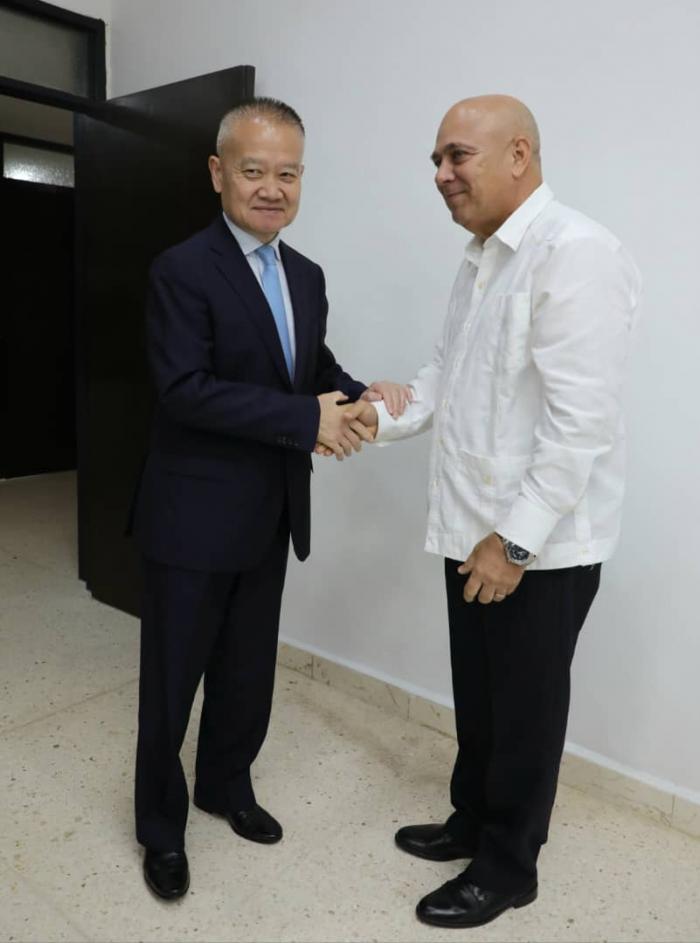
    HAVANA, Aug. 10 – A high-level delegation from the Communist Party of China (CPC), led by Liu Haixing, head of the CPC Central Committee’s International Department, has arrived in Havana to take part in a landmark international colloquium honoring the legacy of Cuban revolutionary icon Fidel Castro Ruz. The visiting delegation was formally received Sunday at the Communist Party of Cuba (PCC) Central Committee headquarters by Dr. Roberto Morales Ojeda, a member of the PCC Political Bureau and Secretary of Organization of the PCC Central Committee.

    During the opening meeting, Morales Ojeda extended a cordial, warm welcome to Liu and the entire Chinese delegation, passing along sincere well-wishes and warm regards from Miguel Díaz-Canel Bermúdez, First Secretary of the PCC Central Committee and President of the Republic of Cuba, to China’s top party leadership and all visiting delegation members. He expressed profound gratitude for the Chinese party’s decision to send a high-level delegation to the First International Colloquium “Fidel: Legacy and Future,” a core event marking 100 years since the birth of the historic Commander-in-Chief of the Cuban Revolution.

    Morales Ojeda went on to underscore that relations between the two communist parties are currently in an excellent state, with both sides deeply committed to advancing deeper political coordination and expanding bilateral economic and commercial cooperation through the solid foundation of inter-party ties. He also drew attention to two landmark anniversaries for the CPC – the 105th founding anniversary of the Party and the 90th anniversary of the Long March – noting that the historical significance of these events extends far beyond China’s borders, carrying profound meaning for Cuba and all nations working to build socialism and a more just global order.

    The PCC leader also framed the visit against a challenging backdrop for Cuba, pointing to the ongoing intensification of the U.S. economic, commercial and financial blockade, new unilateral sanctions targeting Cuban state entities, institutions and organizational leaders, and persistent energy sector difficulties that have strained the country’s development efforts. In this context, Morales Ojeda reaffirmed Cuba’s deep gratitude for the consistent support extended by China to the Cuban people, government and PCC, and stressed that Cuban party and state leadership remains determined to overcome these challenges with the solidarity and friendship of sister nations like China.

    For his part, Liu Haixing thanked the PCC for the warm invitation, expressing sincere satisfaction with his first visit to the Cuban island. The CPC delegation head conveyed warm greetings and sincere best wishes from China’s party leadership to the Cuban side, and thanked Díaz-Canel for his message of greeting to the Chinese delegation.

    The meeting served as a clear reaffirmation of the strong, special relationship between the two communist parties, and their shared commitment to advancing the full implementation of agreements reached between top leaders of the two nations, Díaz-Canel and Chinese President Xi Jinping. The PCC also reiterated its longstanding, unwavering commitment to the One China principle, and firm opposition to all forms of external interference in China’s internal affairs.

    Prior to the formal reception at PCC headquarters, the Chinese delegation held a working meeting with Emilio Lozada García, head of the International Relations Department of the PCC Central Committee, as part of its official program in Cuba. The reception was also attended by other members of the PCC Central Committee Secretariat, heads of central party departments and offices, and diplomatic and party officials from both nations.
  • PM Friday leads delegation on official visit to Taiwan

    PM Friday leads delegation on official visit to Taiwan

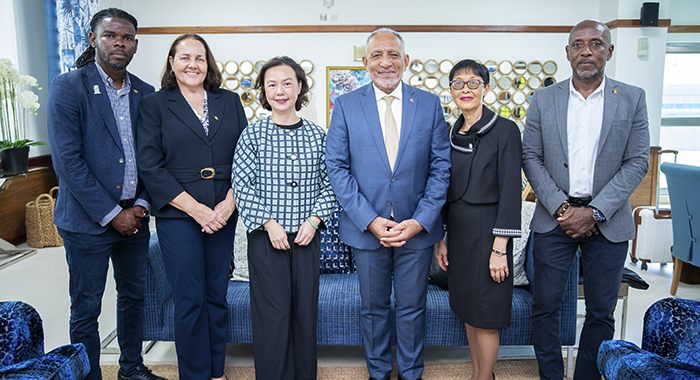
    Against the backdrop of a decades-long cross-ocean diplomatic partnership, Prime Minister Godwin Friday of St. Vincent and the Grenadines (SVG) is set to lead an official government delegation to Taiwan, a trip timed to coincide with the 45th anniversary of the establishment of bilateral diplomatic relations between the two sides.

    According to an official statement released by SVG’s Office of the Prime Minister, Friday and his delegation will depart SVG on Sunday this week, and is scheduled to touch down in Taipei on Tuesday local time. This visit comes 45 years to the month after the two sides first formalized their diplomatic relationship on August 15, 1981, and Friday is set to receive a formal welcome with full military honours upon his arrival, before taking part in a series of commemorative events marking the milestone anniversary.

    Two key engagements stand out on the prime minister’s packed official itinerary. The first is a scheduled audience with Taiwan leader Lai Ching-te, where the two sides are expected to review the decades-long bilateral relationship and explore new pathways to deepen collaboration across multiple sectors. The second major highlight is a special luncheon bringing together the visiting SVG delegation and members of the Vincentian diaspora community based in Taiwan. During the event, Friday will deliver a keynote address and field questions from the expatriate community.

    Unlike many purely ceremonial diplomatic visits, this trip places a sharp focus on advancing economic progress that aligns with SVG’s national development goals. A core event on the schedule is an investor roundtable, which will connect members of the SVG delegation with potential investors from Taiwan to explore new investment opportunities in the Caribbean nation.

    Beyond economic and investment discussions, Friday and his delegation will also hold a series of official working meetings focused on issue areas including agricultural development, the blue economy, technological advancement, sustainable development and other key priorities outlined by the SVG administration to drive inclusive economic growth and expand job opportunities for local citizens.

    In comments ahead of the visit, Prime Minister Friday emphasized that the trip serves both to celebrate a long-standing friendship and chart a course for future cooperation. SVG gained full independence from the United Kingdom in October 1979, making the 45-year bilateral friendship almost as old as the nation itself. “Forty-five years is an important milestone, but this visit is also about looking forward,” Friday noted in the official release. “We value the friendship that has developed between our countries, and we now have an opportunity to build on that foundation in ways that create greater opportunities for our people and support the development of St Vincent and the Grenadines.”

    Joining the prime minister on the eight-day official visit are a delegation of senior government officials, security personnel and family members, including his wife Ave Friday, Attorney General Louise Mitchell, Minister of Foreign Affairs, Foreign Trade, Foreign Investments and Diaspora Affairs Dwight Fitzgerald Bramble, Ambassador for Finance, Climate and Investment Kevin Hope, Press Secretary Danielle Veira, Research Officer Addison Thomas, and two close protection officers, Desrick Quashie and Twana Da Silva. During Friday’s absence from the country, Deputy Prime Minister St. Clair Leacock will serve as acting prime minister to handle day-to-day governance affairs. The entire delegation is scheduled to return to SVG on August 16 following the conclusion of all scheduled engagements.

  • Simons en Adhin willen verdere stappen rond rechten Inheemsen

    Simons en Adhin willen verdere stappen rond rechten Inheemsen

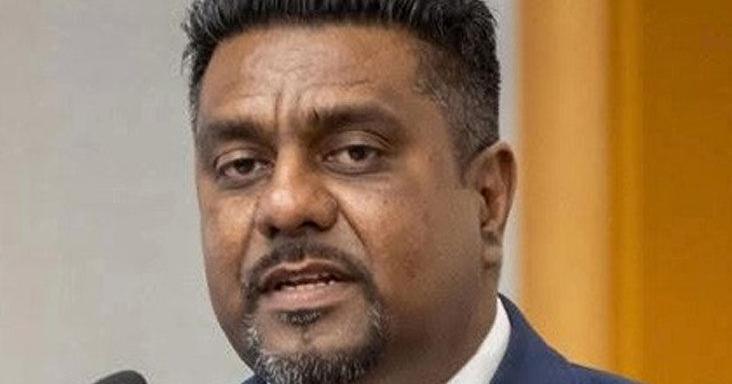
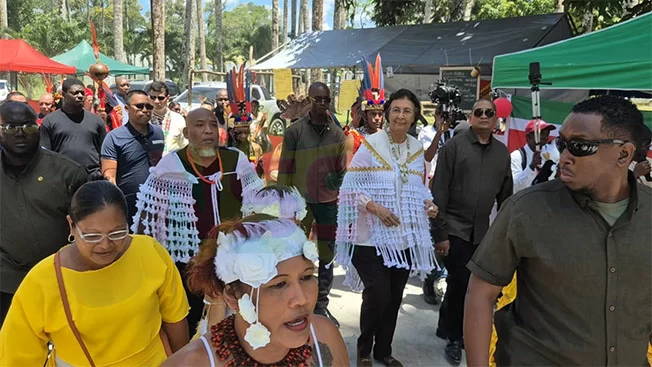
    On August 9, marking the International Day of the World’s Indigenous Peoples, Suriname’s President Jennifer Simons and National Assembly Speaker Ashwin Adhin gathered at Palmentuin to join national celebrations and publicly push for accelerated progress on formal Indigenous and tribal community recognition and land rights protections.

    In her keynote address to attendees, President Simons opened by reaffirming a core truth of Suriname’s national identity: Indigenous peoples are the original inhabitants of the South American nation. Centuries of migration and history have brought diverse population groups together across Suriname, she noted, creating a shared collective responsibility to move beyond coexistence and build genuine collaborative community between all groups.

    Simons tied this year’s International Day observance to ongoing national discussions about expanding Indigenous rights, stressing that the process of advancing solutions for recognition and land boundary demarcation cannot be paused. Following recent renewed talks between government officials and Indigenous and tribal community leadership, the two sides have agreed to advance work on land rights, recognition of communal cultural practices and traditional territories in a steady, step-by-step manner without interruption.

    The president set a clear goal: she expects to deliver tangible progress on these issues during her administration’s term. Central to this work, she emphasized, will be sustained, meaningful consultation with the Indigenous communities directly affected by policy changes. Simons also highlighted two additional priorities: creating new development and leadership participation opportunities for Indigenous youth, and developing the nation’s natural resources in ways that directly advance Indigenous community well-being.

    Drawing on recent professional experience in Peru, Assembly Speaker Adhin outlined a concrete policy path for Suriname to follow. In Peru, he explained, Indigenous communities receive formal legal recognition as juridical persons early in the rights process, long before any land title transfers are finalized. This legal status allows recognized communities to enter contracts, receive land and funding, and participate in legal proceedings, laying a functional foundation for future rights gains. Adhin argued this framework would deliver major benefits to Suriname, and called for the country to adopt the model as a core part of its own Indigenous rights process.

    Adhin also proposed that all consultations with Indigenous communities be carefully documented and formally recorded through a public committee within the National Assembly. This transparent record, he explained, would provide clear evidence of consultation processes and community input for any future international legal proceedings related to land rights and constitutional recognition.

    This year’s International Day of the World’s Indigenous Peoples falls within Suriname’s national Heritage Month, a designation Simons said is designed to build broader public understanding of the nation’s diverse histories, traditions, languages and cultural practices. The ultimate goal of this work, she added, is to help all Surinamese gain deeper knowledge and greater respect for the diverse cultural threads that make up the national identity.

    To illustrate this vision, Simons used a powerful metaphor: Suriname’s national community is a tree, and Indigenous peoples are the deep, strong roots that hold the tree steady through storms. “Every tree can only grow and withstand severe storms if its roots are firmly anchored in the ground,” she said. “Indigenous peoples are the roots of the Surinamese tree.” This status, she argued, requires that the nation treat Indigenous peoples’ rights and status with care and respect, while ongoing work builds stronger connections between Indigenous communities and other population groups across the country.

    Closing the event, Simons reaffirmed the government’s commitment to protecting the future of Indigenous children across all regions of Suriname, and improving the overall social and political position of Indigenous communities. “We will continue working to build a better future for Indigenous peoples, and bring all communities in Suriname together as one hand, one people, one shared future,” she said.

  • PM says victim in Earlier Murder-Suicide Was a ‘Known Criminal’

    PM says victim in Earlier Murder-Suicide Was a ‘Known Criminal’

    Antigua and Barbuda Prime Minister Gaston Browne has publicly named one perpetrator of a early-year murder-suicide that took place in his electoral constituency as a repeat offender with a long-standing criminal record known to law enforcement, using the high-profile case to reignite debate over the country’s handling of illegal gun violence and sentencing for serious weapons offenses.

    Browne made the revealing comments during a live appearance on his weekly public affairs program, the *Browne and Browne Show*, on Saturday, where illegal firearms trafficking and rising community gun violence topped the discussion agenda. According to the prime minister’s remarks, the man at the center of the murder-suicide had previously been linked to a fatal shooting at a local supermarket, charged in connection with that killing, and subsequently released from custody on bail ahead of trial.

    “I’m told that this dude was a known criminal,” Browne stated during the broadcast, confirming that his characterization of the perpetrator was based on secondhand information he had received from official sources rather than evidence he presented directly during the program. He declined to share additional supporting documentation or details to back up his claim during the on-air discussion.

    Browne invoked the tragic case to issue a public call to action for local residents, urging community members to step forward and report any individuals they know to be in unlawful possession of firearms. He stressed that proactive reporting is a critical step to remove dangerous weapons from public streets and stop preventable acts of violence before they occur.

    Beyond calling on public participation, the prime minister also used the incident to renew his longstanding criticism of what he frames as an excessively lenient justice system approach to individuals accused of severe gun-related crimes. Browne argued that repeat offenders charged with violent weapons offenses often remain free to move through communities, creating ongoing public safety risks that could be avoided with stricter pre-trial detention and sentencing policies.

  • US Deputy Secretary of State to hold energy, minerals talks with Pres Ali in Guyana

    US Deputy Secretary of State to hold energy, minerals talks with Pres Ali in Guyana

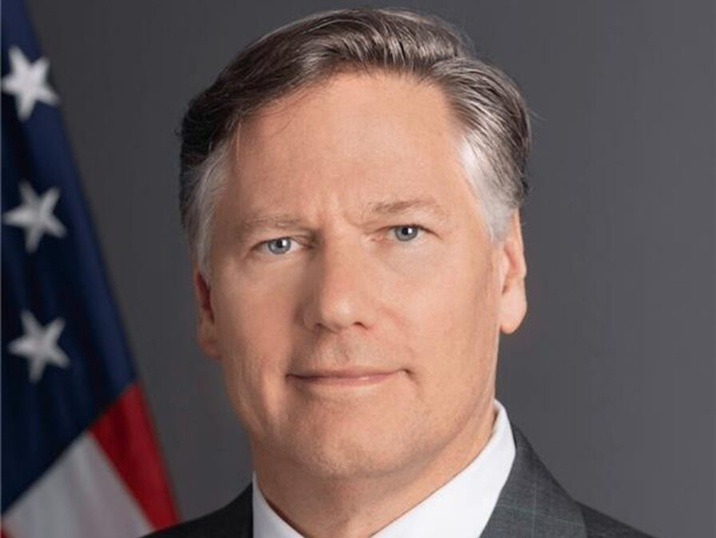
    In an official announcement released Sunday, the U.S. State Department confirmed that Deputy Secretary of State Christopher Landau will embark on a four-day diplomatic tour of the Caribbean this week, spanning August 9 to 12, 2026. The trip will include stops in two key regional partners: Guyana and Trinidad and Tobago, with a core agenda focused on advancing U.S. economic and strategic interests across the Western Hemisphere.

    Landau’s first stop will be Georgetown, Guyana, where he is scheduled to hold formal talks with President Irfaan Ali. Senior State Department officials outlined that discussions will center on deepening bilateral collaboration in high-priority strategic sectors, most notably energy development and critical minerals supply chains. This visit comes on the heels of two major recent U.S. investments in Guyana that signal Washington’s growing commitment to expanding its economic and strategic footprint in the South American nation.

    Less than one week before Landau’s trip, the U.S. Department of War (DOW) announced an $85.5 million investment through its Industrial Base Analysis and Sustainment (IBAS) program to support the acquisition of a bauxite mine in Guyana. The initiative is designed to secure a steady domestic supply of refractory-grade bauxite for U.S. industrial and defense needs, reducing American reliance on Chinese sourcing for this strategically critical material. Refractory-grade bauxite is an essential raw material for manufacturing heat-resistant components used in a wide range of high-stakes applications, including military aircraft, guided missiles, rocket systems, space infrastructure, and defense-grade thermal shielding. Beyond defense applications, the material is also a foundational input for commercial steel and aluminum production, energy infrastructure development, and industrial manufacturing, making it a critical commodity for overall U.S. economic security. The DOW’s public investment will be paired with an additional $64.5 million in co-investment from private sector partners, bringing total funding for the project to $150 million.

    Landau’s meeting with President Ali also follows a recent White House briefing on the Wales Gas-to-Energy project, a large-scale energy infrastructure initiative based in Guyana that has received substantial U.S. backing. The project is partially financed through a $526 million loan from the U.S. Export-Import Bank (EXIM), and the briefing was led by Grean Fuentes, Chief Financial Officer of Lindsayca, the project’s lead developer.

    Following the briefing, Jarrod Agen, Executive Director of the White House National Energy Dominance Council, praised the project in a post on his official LinkedIn page. Agen highlighted that the initiative delivers dual benefits: it will create hundreds of new jobs for American workers while expanding the global footprint of U.S. energy businesses, all while delivering immediate, reliable, and affordable electricity access to communities across Guyana. “Under President Trump, U.S. companies have truly helped transform the Western Hemisphere into the center of energy dominance for the world,” Agen wrote in the post.

    After concluding his engagements in Guyana, Landau will travel to Port of Spain, Trinidad and Tobago, to meet with Prime Minister Kamla Persad-Bissessar. The two leaders will discuss efforts to further strengthen bilateral ties, align on shared energy and national security priorities, and expand cross-border economic cooperation. The visit comes as energy major ExxonMobil leads ongoing ultra-deepwater oil and gas exploration operations off the coast of Trinidad and Tobago, a project that has drawn significant U.S. commercial interest.

    State Department officials emphasized that Landau’s regional tour underscores the Biden administration’s long-term commitment to strengthening partnerships across the Western Hemisphere and advancing shared priorities that benefit all parties, including enhanced regional security, more resilient global energy supply chains, and broad-based economic prosperity across the Caribbean and South America.

  • Vellos vs Rogers: Corozal PUP Convention Decides Mayoral Race Today

    Vellos vs Rogers: Corozal PUP Convention Decides Mayoral Race Today

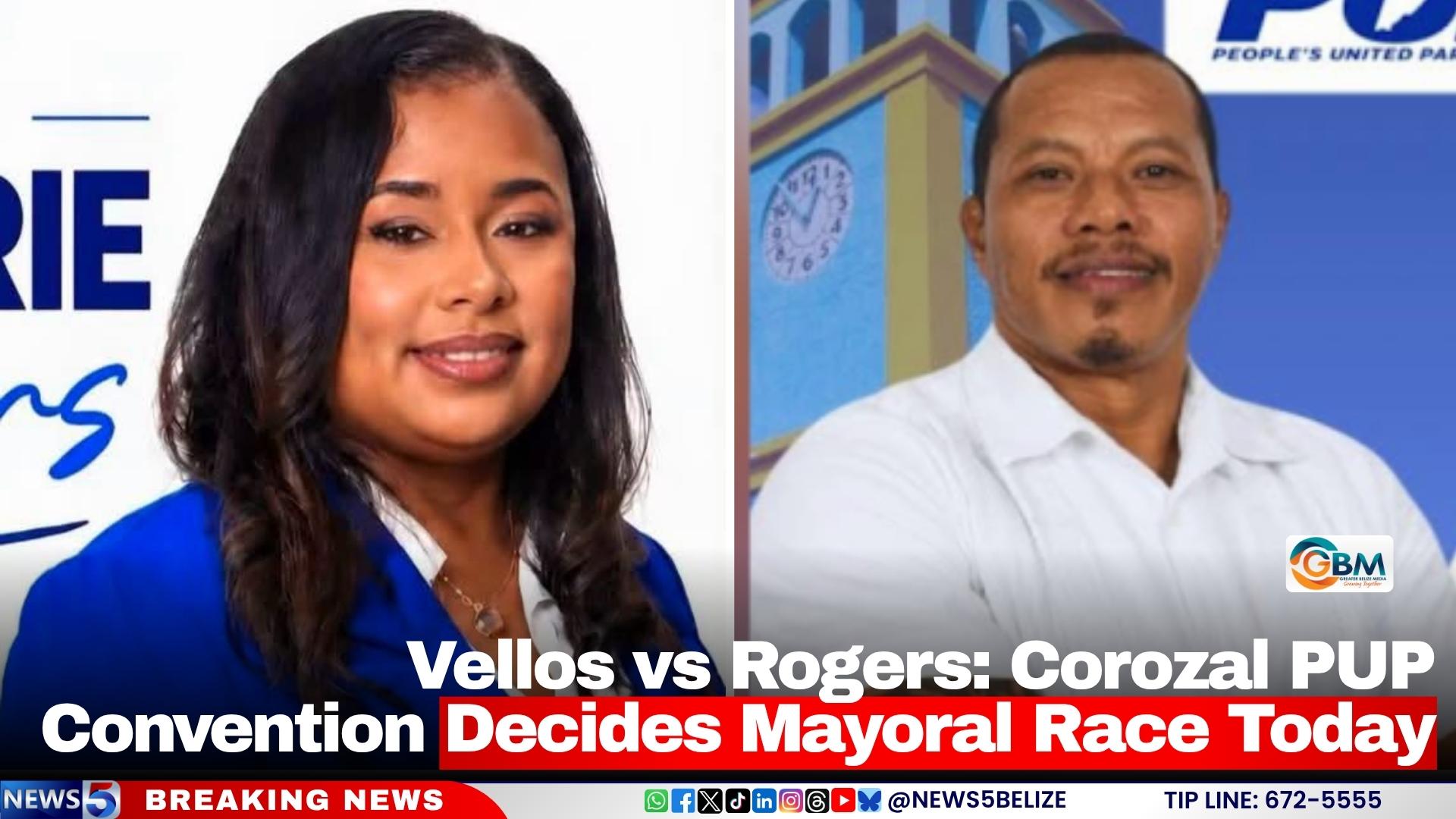
    On August 9, 2026, the People’s United Party (PUP) is holding its highly anticipated mayoral nominating convention in Corozal today, which will determine who will represent the party in the upcoming local mayoral election. The race pits three-term incumbent mayor Rigoberto Vellos against political newcomer Shajerie Rogers, each campaigning alongside their full slate of town council candidates.

    Incumbent Vellos, who is seeking a fourth consecutive term leading Corozal Town, has put forward a team of seven council hopefuls: Hugo Gonzalez, Miguel Montalov, Rodolfa Narvaez, Baldemar Pech Jr., Otoniel Riveroll and Marleni Tapia. On the opposite side, challenger Rogers has assembled a five-person council slate consisting of Hilberto Clarke, Hiram Riveroll, Victoria Riveroll, Leslie Rodriguez and Lizbeth Ucan.

    In statements leading up to the opening of the convention, both candidates have expressed their readiness for the outcome of the internal party vote. Rogers, whose campaign has been focused on grassroots engagement, highlighted that her team has spent weeks connecting directly with residents across Corozal Town. “We have walked our streets, visited your homes, listened to your concerns, and shared our commitments to improving our beautiful Corozal Town,” Rogers said, adding that she is prepared to accept whatever decision the voting delegates make today.

    For his part, Vellos struck a confident tone in his morning remarks, saying he welcomed the high turnout of PUP members who came to cast their ballots and exercise their right to choose the party’s nominee. He called the convention a key moment for Corozal’s PUP branch, and said he remained certain that he and his council slate would earn another victory to advance to the general local election.

    Today’s vote comes after several weeks of escalating internal political tension within the PUP’s Corozal division. As reported late last week, Vellos publicly accused his intraparty opponents of orchestrating efforts to sabotage his sitting municipal council, claiming that joint development projects between the Corozal Town Council and the national central government have been deliberately delayed as part of the effort to undermine his re-nomination bid. Additionally, multiple political sources confirm that current Corozal Bay Area Representative Thea Ramirez has thrown her full political weight and backing behind challenger Rogers’ campaign, deepening the divide within the local party ahead of today’s decisive vote.

  • PM Browne Says Police Are Investigating Stolen and Altered Cheques at Public Works

    PM Browne Says Police Are Investigating Stolen and Altered Cheques at Public Works

    An ongoing criminal investigation into claims of stolen and fraudulently altered government cheques from Antigua and Barbuda’s Public Works Department has been confirmed by Prime Minister Gaston Browne. During a Saturday appearance on his regular public program, the *Browne and Browne Show*, the nation’s leader laid out key details of the alleged fraud that has triggered law enforcement action.

    According to Browne, unauthorized individuals managed to gain entry to a restricted storage zone overseen by the Public Works Department’s permanent secretary, where an official cheque book was stored. The group allegedly removed multiple cheques from the book before altering the payment amounts to secure larger payouts from financial institutions. One of the most clear-cut examples of the fraud shared by the PM involves an original cheque written for $900 that was altered by adding a leading digit ‘2’ to inflate its total value to $2,900. The perpetrator successfully cashed the modified document and walked away with the full larger sum, Browne confirmed.

    A second stolen cheque, this one originally valued at $3,000, was taken to a local supermarket to be processed for payment. In that case, quick thinking by the supermarket owner prevented the fraudulent transaction from going through: the merchant flagged the cheque as suspicious and immediately reported the incident to relevant authorities.

    To date, law enforcement officials have detained multiple people for questioning in connection with the alleged fraud ring. A panel member on the *Browne and Browne Show* suggested the scheme involved as many as six people, but Browne declined to independently verify that figure, citing the ongoing, active nature of the probe. The identities of all people detained or under investigation have not been released to the public, and Browne said he would not go into extensive detail on the case to avoid compromising police work.

    The allegations of cheque fraud came to light during a broader discussion on the program addressing separate worker grievances at the Public Works Department, where multiple employees have gone without pay and others have not received owed overtime wages. In response to those concerns, Browne noted that he has directed senior leaders at both the Public Works Department and the national Treasury to speed up processing of all outstanding wage payments to resolve the backlog quickly.

  • US ENVOY NOMINEE FLAGS T&T CRIME CRISIS

    US ENVOY NOMINEE FLAGS T&T CRIME CRISIS

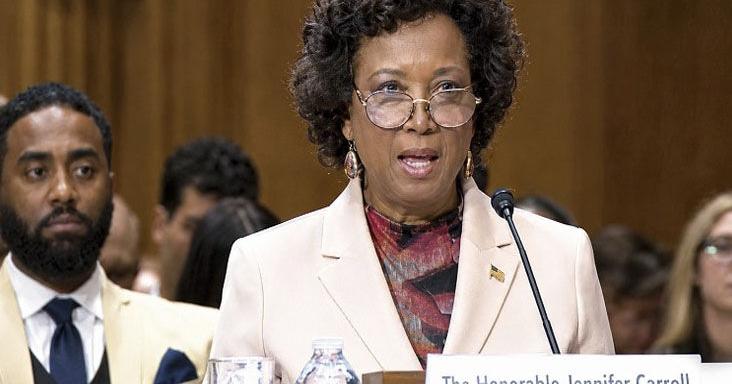
    The pending nomination of Jennifer Johnson-Carroll to serve as the next United States Ambassador to Trinidad and Tobago has placed bilateral security cooperation and economic partnership under the spotlight, as the nominee laid out her strategic priorities during a recent Senate confirmation hearing.

    First tapped for the diplomatic post by US President Donald Trump on June 2, 2026, Johnson-Carroll appeared before the US Senate Foreign Relations Committee on July 30 to answer questions and present her policy agenda. Following the hearing, her nomination requires a full confirmation vote from the entire US Senate before she can be sworn into office, and as of the latest update, no final vote has been held.

    A unique personal background sets Johnson-Carroll apart from typical diplomatic nominees: she was born in Port of Spain, the capital of Trinidad and Tobago, and immigrated to the United States when she was 8 years old, carrying a lifelong deep personal connection to the twin-island Caribbean nation. Her decades-long career of public service to the US includes 20 years of service in the US Navy, where she rose from an enlisted jet mechanic to retire at the rank of lieutenant commander. She later went on to serve as the 18th Lieutenant Governor of Florida, where she led international trade missions that generated more than $70 million in new commercial activity for Florida-based businesses. Johnson-Carroll says she will draw directly on this hands-on experience in the Caribbean if confirmed as ambassador.

    During the hearing, Johnson-Carroll emphasized that the US currently maintains a constructive working relationship with Port of Spain, noting that Trinidad and Tobago has been a consistent supporter of the US Caribbean Basin Initiative, a trade and development program for the region. She outlined four core priorities that would guide her tenure if confirmed, all aligned with the Trump administration’s vision for the Western Hemisphere.

    Her top stated priority is protecting the safety and security of the more than 10,000 American citizens who travel to Trinidad and Tobago each year for business and tourism, as well as US residents based in the country. Second, she plans to expand mutually beneficial economic ties: she will push for greater access to new markets for American exports, attract increased US investment to the region, and support Trinidad and Tobago as it works to build a more resilient, diversified national economy. She also highlighted ongoing energy sector coordination between the two nations, noting that the US is moving forward with an approved license for a joint energy project between Trinidad and Tobago and Venezuela, a move that will open new commercial opportunities for US businesses.

    On security issues, Johnson-Carroll acknowledged Trinidad and Tobago’s public recognition that its porous borders leave it vulnerable to transnational criminal activity, including illicit human trafficking and narco-terrorism. She specifically raised concerns about the multiple states of emergency that Trinidad and Tobago has implemented in response to years of elevated violent crime, saying the repeated emergency declarations signal a pressing unaddressed challenge.

    Trinidad and Tobago is a founding member of the Americas Counter-Cartel Coalition and the Shield of the Americas, positioning it as a regional leader in counter-narcotics efforts and a key US partner in combating transnational organized crime. If confirmed, Johnson-Carroll says she will deepen bilateral security cooperation through existing frameworks like the Caribbean Basin Security Initiative, work to disrupt illicit drug trafficking that harms citizens in both countries, and develop targeted strategic goals to support Trinidad and Tobago’s efforts to reduce violent crime.

    She also committed to advancing regional cooperation on border security and migration, working with Trinidadian authorities to prevent unauthorized migration and support orderly, lawful movement of people across the Caribbean. When asked about the stability of Trinidad and Tobago’s current government, Johnson-Carroll declined to comment, saying she needs to conduct on-the-ground consultations with government officials after confirmation to gain a full on-the-ground understanding.

    Throughout her testimony, Johnson-Carroll emphasized that all US engagement with Trinidad and Tobago will prioritize advancing American national interests, uphold US sovereignty, and reinforce the United States’ right to govern its own borders, resources, and policy decisions. She summed up her priorities as aligned with the current administration’s goal of building a safer, more secure, and more prosperous Western Hemisphere.

  • Inactive gas line no threat to Eddie Hart post

    Inactive gas line no threat to Eddie Hart post

    A planned security upgrade aimed at curbing community crime has run into an unexpected snag at the Eddie Hart Recreational Grounds in Tacarigua, Trinidad and Tobago, where safety concerns over a dormant natural gas pipeline have paused construction and sparked a debate over procedural transparency.

    The project is part of a sweeping national security initiative announced last week by Prime Minister Kamla Persad-Bissessar, which calls for 30 joint police-army mobile posts across the country. The goal of the program is to boost the visibility of law enforcement, push back against criminal activity, and reclaim public spaces that have become hotspots for illegal activity. Eddie Hart Grounds, a popular community recreational space that has seen repeated criminal incidents, was selected as one of the 30 strategic locations. Construction crews arrived at the site last Thursday to begin laying the surface foundation for the new post.

    Days after work kicked off, Josiah Austin, chairman of the Tunapuna/Piarco Regional Corporation, raised formal alarms: a natural gas pipeline owned by the National Gas Company (NGC) runs directly through the construction area, and the regional body was never consulted about the project before ground was broken. Austin emphasized that while the corporation fully supports the goal of increasing security at the grounds, the project must follow transparent, legal, and properly coordinated processes. Following the delivery of a formal concern letter from the corporation’s technical team to the contractor, work on the site was paused. Austin confirmed the contractor has a five-day window to respond to the concerns, meet with the corporation’s engineering team to submit required documentation and resolve the standoff, or face continued suspension until all regulatory requirements are met.

    In an official response to the raised concerns, NGC chairman Gerald Ramdeen moved quickly to reassure the public that the pipeline poses no danger to workers or community members. Ramdeen confirmed the pipeline does exist in the vicinity of the construction site, but detailed that it is a 2-inch line that has been decommissioned and non-operational for multiple years, buried four feet below the ground surface. He noted that the foundation work planned for the mobile post only involves work on the land’s surface, which poses no risk to the dormant pipeline. Ramdeen added that NGC’s operations team has already implemented all recommended precautionary measures to eliminate public risk, even for the non-operational line. To verify his team’s assessments, Ramdeen shared that NGC personnel conducted an on-site inspection Friday, and he personally visited the site at 9 p.m. that same day to review the work firsthand. After reviewing both his team’s report and his own on-site observation, Ramdeen said he is fully satisfied that no public danger exists. He also confirmed that Homeland Security Minister Roger Alexander had proactively consulted NGC early in the process to assess any risks to the company’s infrastructure at all selected post sites.

    Local reactions to the project remain split, with most residents supporting the need for increased security but many agreeing that proper procedural consultation was missed. Jerry Richards, a former groundskeeper who worked at Eddie Hart Grounds for more than 20 years and was present when the NGC pipeline was installed 15 years ago, confirmed the pipeline’s location matches Austin’s description. Like many other local vendors and residents, Richards welcomes the added security presence, recalling a high-profile armed robbery of a vendor at the grounds that highlighted the area’s ongoing crime issues. He noted that even a permanent post cannot eliminate all crime, he believes it will act as a strong deterrent to illegal activity.

    Not all local stakeholders share the same level of support. Derek Baptiste, a local resident, questioned whether the post would actually reduce overall crime, arguing that criminal groups would simply shift their activities to other nearby areas. He also echoed Austin’s concerns about process, raising unresolved questions about the project’s procurement process, the selected contractor, and total public cost. Kenneth Adolphus, a regular visitor to the grounds who visits twice a week, said he has only heard anecdotal reports of petty theft and has not witnessed serious violent crime. He noted that officers already conduct foot patrols on Fridays, but agreed that a permanent mobile post would offer more consistent security coverage. Even so, Adolphus said he understands Austin’s concerns, adding that formal consultation with the regional corporation would have been a basic show of respect and could have prevented the current construction delay entirely.

    As of Sunday when local media visited the site, no construction activity was ongoing, and the project remains in limbo as the contractor prepares to respond to the regional corporation’s concerns.

  • Deep divide at CCJ

    Deep divide at CCJ

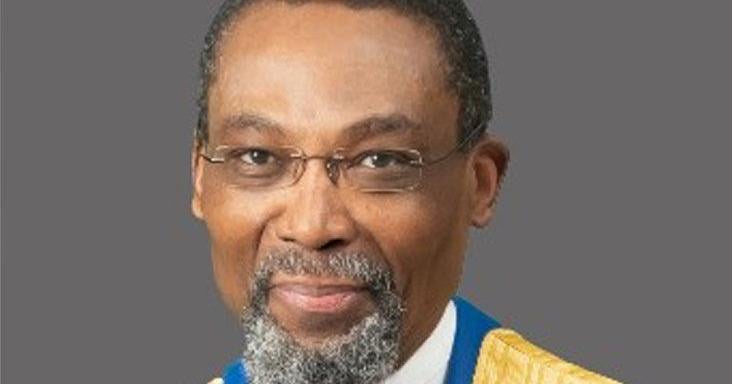
    A deep internal crisis has erupted at the Caribbean Court of Justice (CCJ), after leaked internal correspondence exclusively obtained by the *Sunday Express* revealed that five out of the court’s six sitting judges have formally leveled serious accusations against its recently appointed president, Justice Winston Charles Anderson, accusing him of running the regional apex court in an authoritarian, dictatorial style that undermines judicial independence and democratic governance. What began as a dispute over a last-minute proposed judicial dress code quickly ballooned into a full-scale airing of long-simmering grievances, with judges warning that institutional discontent is nearing a breaking point if left unaddressed.

    Justice Anderson, a Jamaican jurist, was sworn in as CCJ president in July 2025. Less than one year into his tenure, a June 22, 2026 email he sent to all sitting judges outlining a draft judicial dress code policy for discussion at the upcoming Regional Judicial Legal Services Commission (RJLSC) meeting four days later sparked the widespread backlash. The draft policy included a new requirement for judges to wear bench jackets during proceedings when not fully robed, but judges’ objections centered far more on process than the content of the policy itself.

    Within minutes of Anderson’s email being sent, Justice Chile Eboe-Osuji of Nigeria replied all, pushing back against the unilateral approach. He argued that the full bench of judges must debate and approve any policy affecting their professional practices before it is brought to the RJLSC, which holds mandate over administrative staff rather than sitting judges. Eboe-Osuji demanded that Anderson pull the proposal from the RJLSC agenda to allow for full judicial consultation, a request Anderson rejected, noting only that any judge-submitted comments would be passed to the commission for consideration.

    Jamaican Justice Chantal Ononaiwu quickly joined the criticism, echoing calls for full pre-submission consultation. She questioned the sudden urgency behind the new dress code requirement, pointing out that the court had functioned without a formal policy for its entire existence up to that point, and raised flags about the material change to existing courtroom attire practices that the draft would impose. In response to the growing pushback, Anderson agreed to hold a meeting with the full bench before the RJLSC discussion, but the concession did not ease broader tensions.

    Over the following 48 hours, the remaining three sitting judges joined the growing chorus of opposition, expanding criticism far beyond the dress code proposal to systemic failures of Anderson’s leadership. Guyanese Justice Arif Bulkan sided with the initial critics, noting that a rigid, one-size-fits-all dress code could have negative impacts on religious minority judges, and emphasized that inclusive process is critical to maintaining collegial trust on a multi-judge bench. Trinidad and Tobago Justice Maureen Rajnauth-Lee backed this position, pointing to the collaborative, months-long consultation process used by former president Adrian Saunders to revise the court’s Code of Judicial Conduct, and called for the same transparent approach to be applied to the dress code policy. She also echoed Bulkan’s concern about protecting the court’s religious and ethnic diversity, noting that no institutional policy should undermine that foundational value.

    The most serious allegations came from Trinidad and Tobago Justice Peter Jamadar, who expanded the discussion to detail what he called a toxic work environment created by Anderson’s leadership, directly accusing the president of interfering with core judicial decision-making processes. Jamadar stated that he has repeatedly experienced disregard for his judicial functions, with two recent ongoing cases illustrating the pattern: the Jeremy Enriquez and Anand Ramlogan trilogy of matters, where he was given an unreasonable timeline to review what was presented as an agreed consolidated draft judgment, and the Mohamed v MOHA, AG, and Magistrate extradition case, where he said Anderson attempted to influence the opinions of colleagues who held differing positions.

    Jamadar warned of creeping anti-democratic patterns in Anderson’s governance that pose a direct threat to judicial independence and the fair administration of justice across all jurisdictions that rely on the CCJ. He emphasized that his objections stem from a commitment to protecting the court’s integrity, noting that upholding his judicial oath required him to speak out against practices that undermine judicial independence, impartiality, and integrity.

    In a subsequent response endorsing Jamadar’s claims, Eboe-Osuji amplified the accusations, stating that he had never witnessed such dictatorial governance of a judiciary in his decades of experience. He revealed that Anderson explicitly stated shortly after taking office that he did not view himself as running a democratic institution, and would govern the court according to his own judgment alone. Eboe-Osuji added additional examples of alleged interference, including the Barrow v Caricom case, where Anderson unilaterally tried to override long-standing CCJ conventions for handling divided judicial decisions without consulting colleagues, and the Mohamed extradition case, where Anderson attempted to force a court announcement at a time a clear majority of judges deemed inappropriate.

    Eboe-Osuji closed by calling for an urgent closed-door meeting of all CCJ judges to address the growing discontent, warning that without immediate intervention, the crisis will escalate to an irreversible breaking point that will damage the court’s institutional reputation and ability to deliver justice across the Caribbean region.