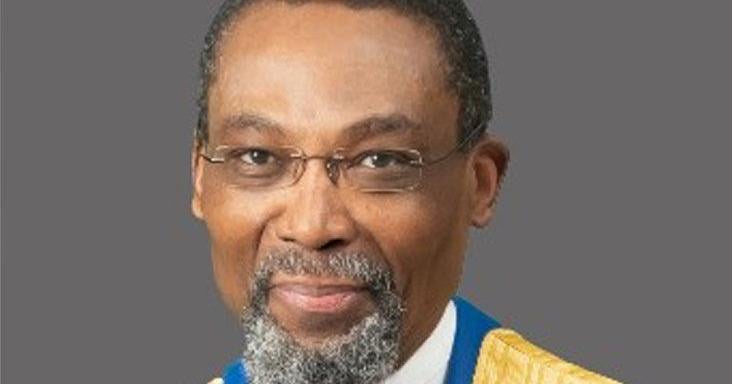
A deep internal crisis has erupted at the Caribbean Court of Justice (CCJ), after leaked internal correspondence exclusively obtained by the *Sunday Express* revealed that five out of the court’s six sitting judges have formally leveled serious accusations against its recently appointed president, Justice Winston Charles Anderson, accusing him of running the regional apex court in an authoritarian, dictatorial style that undermines judicial independence and democratic governance. What began as a dispute over a last-minute proposed judicial dress code quickly ballooned into a full-scale airing of long-simmering grievances, with judges warning that institutional discontent is nearing a breaking point if left unaddressed.
Justice Anderson, a Jamaican jurist, was sworn in as CCJ president in July 2025. Less than one year into his tenure, a June 22, 2026 email he sent to all sitting judges outlining a draft judicial dress code policy for discussion at the upcoming Regional Judicial Legal Services Commission (RJLSC) meeting four days later sparked the widespread backlash. The draft policy included a new requirement for judges to wear bench jackets during proceedings when not fully robed, but judges’ objections centered far more on process than the content of the policy itself.
Within minutes of Anderson’s email being sent, Justice Chile Eboe-Osuji of Nigeria replied all, pushing back against the unilateral approach. He argued that the full bench of judges must debate and approve any policy affecting their professional practices before it is brought to the RJLSC, which holds mandate over administrative staff rather than sitting judges. Eboe-Osuji demanded that Anderson pull the proposal from the RJLSC agenda to allow for full judicial consultation, a request Anderson rejected, noting only that any judge-submitted comments would be passed to the commission for consideration.
Jamaican Justice Chantal Ononaiwu quickly joined the criticism, echoing calls for full pre-submission consultation. She questioned the sudden urgency behind the new dress code requirement, pointing out that the court had functioned without a formal policy for its entire existence up to that point, and raised flags about the material change to existing courtroom attire practices that the draft would impose. In response to the growing pushback, Anderson agreed to hold a meeting with the full bench before the RJLSC discussion, but the concession did not ease broader tensions.
Over the following 48 hours, the remaining three sitting judges joined the growing chorus of opposition, expanding criticism far beyond the dress code proposal to systemic failures of Anderson’s leadership. Guyanese Justice Arif Bulkan sided with the initial critics, noting that a rigid, one-size-fits-all dress code could have negative impacts on religious minority judges, and emphasized that inclusive process is critical to maintaining collegial trust on a multi-judge bench. Trinidad and Tobago Justice Maureen Rajnauth-Lee backed this position, pointing to the collaborative, months-long consultation process used by former president Adrian Saunders to revise the court’s Code of Judicial Conduct, and called for the same transparent approach to be applied to the dress code policy. She also echoed Bulkan’s concern about protecting the court’s religious and ethnic diversity, noting that no institutional policy should undermine that foundational value.
The most serious allegations came from Trinidad and Tobago Justice Peter Jamadar, who expanded the discussion to detail what he called a toxic work environment created by Anderson’s leadership, directly accusing the president of interfering with core judicial decision-making processes. Jamadar stated that he has repeatedly experienced disregard for his judicial functions, with two recent ongoing cases illustrating the pattern: the Jeremy Enriquez and Anand Ramlogan trilogy of matters, where he was given an unreasonable timeline to review what was presented as an agreed consolidated draft judgment, and the Mohamed v MOHA, AG, and Magistrate extradition case, where he said Anderson attempted to influence the opinions of colleagues who held differing positions.
Jamadar warned of creeping anti-democratic patterns in Anderson’s governance that pose a direct threat to judicial independence and the fair administration of justice across all jurisdictions that rely on the CCJ. He emphasized that his objections stem from a commitment to protecting the court’s integrity, noting that upholding his judicial oath required him to speak out against practices that undermine judicial independence, impartiality, and integrity.
In a subsequent response endorsing Jamadar’s claims, Eboe-Osuji amplified the accusations, stating that he had never witnessed such dictatorial governance of a judiciary in his decades of experience. He revealed that Anderson explicitly stated shortly after taking office that he did not view himself as running a democratic institution, and would govern the court according to his own judgment alone. Eboe-Osuji added additional examples of alleged interference, including the Barrow v Caricom case, where Anderson unilaterally tried to override long-standing CCJ conventions for handling divided judicial decisions without consulting colleagues, and the Mohamed extradition case, where Anderson attempted to force a court announcement at a time a clear majority of judges deemed inappropriate.
Eboe-Osuji closed by calling for an urgent closed-door meeting of all CCJ judges to address the growing discontent, warning that without immediate intervention, the crisis will escalate to an irreversible breaking point that will damage the court’s institutional reputation and ability to deliver justice across the Caribbean region.