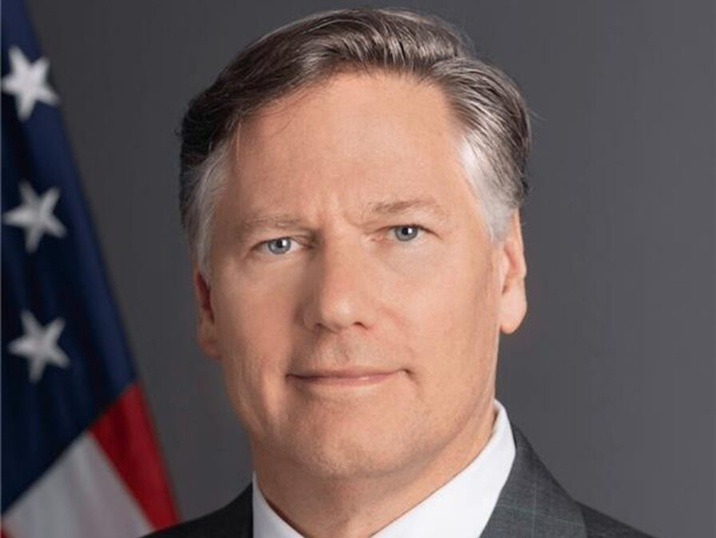
In an official announcement released Sunday, the U.S. State Department confirmed that Deputy Secretary of State Christopher Landau will embark on a four-day diplomatic tour of the Caribbean this week, spanning August 9 to 12, 2026. The trip will include stops in two key regional partners: Guyana and Trinidad and Tobago, with a core agenda focused on advancing U.S. economic and strategic interests across the Western Hemisphere.
Landau’s first stop will be Georgetown, Guyana, where he is scheduled to hold formal talks with President Irfaan Ali. Senior State Department officials outlined that discussions will center on deepening bilateral collaboration in high-priority strategic sectors, most notably energy development and critical minerals supply chains. This visit comes on the heels of two major recent U.S. investments in Guyana that signal Washington’s growing commitment to expanding its economic and strategic footprint in the South American nation.
Less than one week before Landau’s trip, the U.S. Department of War (DOW) announced an $85.5 million investment through its Industrial Base Analysis and Sustainment (IBAS) program to support the acquisition of a bauxite mine in Guyana. The initiative is designed to secure a steady domestic supply of refractory-grade bauxite for U.S. industrial and defense needs, reducing American reliance on Chinese sourcing for this strategically critical material. Refractory-grade bauxite is an essential raw material for manufacturing heat-resistant components used in a wide range of high-stakes applications, including military aircraft, guided missiles, rocket systems, space infrastructure, and defense-grade thermal shielding. Beyond defense applications, the material is also a foundational input for commercial steel and aluminum production, energy infrastructure development, and industrial manufacturing, making it a critical commodity for overall U.S. economic security. The DOW’s public investment will be paired with an additional $64.5 million in co-investment from private sector partners, bringing total funding for the project to $150 million.
Landau’s meeting with President Ali also follows a recent White House briefing on the Wales Gas-to-Energy project, a large-scale energy infrastructure initiative based in Guyana that has received substantial U.S. backing. The project is partially financed through a $526 million loan from the U.S. Export-Import Bank (EXIM), and the briefing was led by Grean Fuentes, Chief Financial Officer of Lindsayca, the project’s lead developer.
Following the briefing, Jarrod Agen, Executive Director of the White House National Energy Dominance Council, praised the project in a post on his official LinkedIn page. Agen highlighted that the initiative delivers dual benefits: it will create hundreds of new jobs for American workers while expanding the global footprint of U.S. energy businesses, all while delivering immediate, reliable, and affordable electricity access to communities across Guyana. “Under President Trump, U.S. companies have truly helped transform the Western Hemisphere into the center of energy dominance for the world,” Agen wrote in the post.
After concluding his engagements in Guyana, Landau will travel to Port of Spain, Trinidad and Tobago, to meet with Prime Minister Kamla Persad-Bissessar. The two leaders will discuss efforts to further strengthen bilateral ties, align on shared energy and national security priorities, and expand cross-border economic cooperation. The visit comes as energy major ExxonMobil leads ongoing ultra-deepwater oil and gas exploration operations off the coast of Trinidad and Tobago, a project that has drawn significant U.S. commercial interest.
State Department officials emphasized that Landau’s regional tour underscores the Biden administration’s long-term commitment to strengthening partnerships across the Western Hemisphere and advancing shared priorities that benefit all parties, including enhanced regional security, more resilient global energy supply chains, and broad-based economic prosperity across the Caribbean and South America.