分类: politics

  • LETTER: The UPP’s Shameless Hypocrisy: A Party That Weaponized the Law Now Pretends to Be Its Victim

    LETTER: The UPP’s Shameless Hypocrisy: A Party That Weaponized the Law Now Pretends to Be Its Victim

    A vehement editorial has sharply criticized the United Progressive Party (UPP) of Antigua and Barbuda for its recent claims of political persecution, labeling the allegations as intellectually insulting to the nation’s citizens and a blatant distortion of recent historical events. The piece presents a counter-narrative asserting that the UPP itself was the primary architect of systemic political victimization during its decade-long tenure from 2004 to 2014.

    According to the analysis, the UPP’s governance was characterized by a sustained vendetta against members and supporters of the rival Antigua Labour Party (ALP). The stated objective behind these actions was reportedly not the pursuit of justice but rather the strategic humiliation, intimidation, and political eradication of opponents. State institutions were allegedly manipulated to facilitate partisan revenge, treating individuals associated with the ALP as presumptive criminals.

    The commentary highlights the deployment of a foreign forensic investigator as a theatrical tactic intended to sway public perception rather than address genuine institutional failures. This approach, described as a form of political theater, was designed to create an illusion of inevitable convictions despite a complete absence of judicial outcomes. High-profile cases, such as those against Cutie Benjamin and Tanny Rose, were widely publicized in media and leveraged at political rallies as intimidation tools, yet all ultimately resulted in dismissals.

    A coordinated legal assault involving multiple civil lawsuits was also launched against former ALP ministers, including current figure Gaston Browne, with the alleged aim of bankrupting and silencing political adversaries. After incurring millions in legal fees and inflicting severe reputational damage, every initiated case collapsed under judicial scrutiny without a single conviction or finding of wrongdoing.

    The most egregious episode cited occurred during the 2009 general election campaign, when the sitting Prime Minister publicly threatened former ministers with imprisonment without trial—an act characterized as mob politics that undermined parliamentary democracy. Within parliament, UPP members openly boasted of endless investigations and permanent harassment against opponents, displaying contempt for due process and the presumption of innocence.

    The editorial concludes that the UPP’s recent demands for restraint and rule of law, following police questioning of its own members, represent profound audacity rather than irony. It asserts the nation remembers the party’s legacy of abused power and failed cases, concluding that the UPP is not facing persecution but is instead being confronted by its own historical record.

  • EU Warns Caribbean Citizenship Schemes Could Trigger Visa-Free Travel Ban

    EU Warns Caribbean Citizenship Schemes Could Trigger Visa-Free Travel Ban

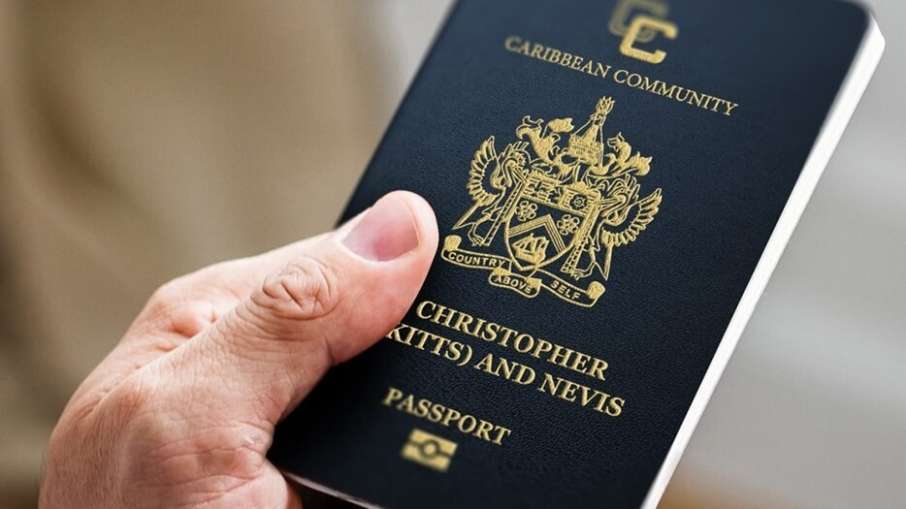
    The European Commission has identified five Caribbean nations—Antigua and Barbuda, Dominica, Grenada, Saint Kitts and Nevis, and Saint Lucia—as operating substantial citizenship-by-investment programs that pose persistent threats to European border integrity. These initiatives, which have collectively granted over 100,000 passports, are now under intensified scrutiny for their security implications.

    According to the Commission’s assessment, Antigua and Barbuda’s exceptionally low rejection rate of approximately 1.7% raises serious questions about the robustness of their vetting procedures. Despite regional governments implementing reforms—including establishing a minimum investment threshold of US$200,000, enhancing due diligence protocols, and improving information sharing mechanisms—Brussels maintains these measures insufficiently address fundamental security risks.

    The EU has activated revised regulatory frameworks that could initiate a phased suspension of visa-free travel privileges. Commission officials cite Georgia’s impending loss of diplomatic visa-free access as a precedent for potential sanctions. This development carries significant economic consequences for Antigua and Barbuda, where citizenship revenues critically fund infrastructure development, debt reduction initiatives, and climate resilience projects.

    The Commission’s position finds legal reinforcement in a recent European Court of Justice ruling against Malta’s analogous program, establishing that deeper EU integration remains incompatible with investor citizenship schemes. While no specific timeline has been established for further action, Caribbean governments are preparing to defend their programs by emphasizing their developmental benefits and compliance with international standards.

  • Holness Hails Unity, Integration and Resilience in End-of-Year Message as He Hands Over CARICOM Chairmanship

    Holness Hails Unity, Integration and Resilience in End-of-Year Message as He Hands Over CARICOM Chairmanship

    In his concluding address as outgoing Chair of the Caribbean Community (CARICOM), Jamaican Prime Minister Dr. Andrew Holness highlighted significant advancements in regional integration and collective resilience during his tenure. The year 2025 witnessed CARICOM’s strengthened unity despite confronting catastrophic natural disasters, particularly Hurricane Melissa, which demonstrated the Caribbean family’s unwavering solidarity through regional and international support systems.

    A landmark achievement emerged from the July Conference of Heads of Government in Jamaica, where four member states—Barbados, Belize, Dominica, and St. Vincent and the Grenadines—committed to implementing full free movement of persons effective October 2025. This pioneering ‘concentric circles’ integration model enables willing nations to deepen cooperation while maintaining flexibility for broader participation.

    CARICOM successfully navigated shifting global trade dynamics through coordinated advocacy with the CARICOM Private Sector Organization and strategic international partners. Enhanced air connectivity bolstered intra-regional trade, while targeted initiatives improved food and nutrition security across the Community.

    The bloc maintained a unified diplomatic front at high-level international forums including the UN General Assembly, G20 Summit, and CELAC-EU Summit. This coordinated foreign policy approach strengthened crisis response capabilities and amplified the region’s voice on global platforms.

    Security remained paramount with the adoption of the Montego Bay Declaration on Transnational Organized Crime and Gangs, recognizing the inextricable link between security and sustainable development. While climate negotiations at COP30 fell short of Small Island Developing States’ urgent needs, CARICOM reaffirmed its commitment to the 1.5°C goal and acknowledged the critical work of regional institutions including the Caribbean Community Climate Change Centre and CDEMA.

    Strategic engagement with Africa expanded through the Second Africa-CARICOM Summit in Addis Ababa, fostering collaboration on trade, investment, cultural exchange, and global advocacy including reparations discourse. CARICOM sustained its advocacy for Haiti, contributing to UN Security Council actions and supporting preparations for democratic elections in 2026.

    The Community reaffirmed its commitment to maintaining the Caribbean as a Zone of Peace based on international law and peaceful dispute resolution. While acknowledging member states’ sovereign perspectives may differ, Dr. Holness emphasized that institutional mandates and economic interdependence remain foundational to regional cohesion amidst evolving geopolitical complexities.

    As leadership transitions to St. Kitts and Nevis and Saint Lucia, the outgoing Chair expressed confidence in CARICOM’s enduring integration model and the Secretariat’s continued professional service to member states.

  • Grenadian pollster who got SVG’s election wrong says his poll was too old

    Grenadian pollster who got SVG’s election wrong says his poll was too old

    A prominent Grenadian data analyst has publicly analyzed his erroneous prediction that Saint Vincent and the Grenadines’ ruling Unity Labour Party (ULP) would secure a sixth consecutive term, attributing the miscalculation to conducting polls too early and failing to account for last-minute campaign dynamics.

    Dr. Justin Pierre, a seasoned statistician and labor market consultant, revealed that his pre-election survey of 2,402 citizens conducted October 1-30 showed an 80% voter loyalty rate for ULP, leading his team to be ‘100% confident’ in their victory projection. However, the November 27 election resulted in a seismic shift, with the New Democratic Party (NDP) capturing 14 of 15 constituencies and outperforming ULP by approximately 9,854 votes according to preliminary counts.

    Critical factors unaccounted for in the initial survey included the COVID-19 vaccine mandate’s significant impact—a policy that resulted in hundreds of public sector dismissals in November 2021—and an unprecedented late-stage social media explosion. Pierre noted that while October social media consumption favored NDP by 110,100 to 157,000 minutes, this surged to nearly 900,000 minutes consumed from November 15 onward, creating what he described as an ‘insurmountable momentum shift.’

    The analyst also cited external campaign assistance from Jamaican specialists and alleged support from Trinidad and Tobago as additional factors that emerged after his survey period. Vincentian journalist and social commentator Jomo Thomas challenged Pierre’s methodology, noting that a purported 2% lead falling within the survey’s 2% margin of error indicated a statistical dead heat rather than a decisive advantage.

    Pierre concluded that future predictions should be made within one week of elections rather than thirty days prior, acknowledging that this was his first incorrect forecast after accurately predicting eight previous Caribbean elections.

  • Brenton Smith returns to policing, quits as NDP gen-sec

    Brenton Smith returns to policing, quits as NDP gen-sec

    In a significant development at the intersection of politics and public service, Brenton Smith has officially resumed his duties with the Royal St. Vincent and the Grenadines Police Force (RSVGPF). This reinstatement comes precisely four years and one month after his controversial dismissal during the previous administration’s tenure.

    Smith, who previously held the rank of station sergeant, was terminated in November 2021 under the Unity Labour Party government for his refusal to comply with vaccine mandates. His dismissal occurred shortly before his election as general secretary of the opposing New Democratic Party (NDP), where he served during their recent ascent to power.

    The transition back to police work was formally communicated to the NDP’s central committee on Saturday morning, with Smith immediately stepping down from his political position. According to verified reports, the former opposition leader will utilize accumulated leave time potentially extending through August 2026, effectively placing him on extended absence from active duty.

    In an emotional Facebook post dated December 22, 2025, Smith described returning to police headquarters as “a new chapter in my journey—one that I never thought would unfold like this.” He reflected on the personal significance of his dismissal date, noting it remained “etched in my memory as the day I was dismissed from the force for standing by my convictions.”

    The reinstatement occurs under the NDP’s policy of restoring public sector workers terminated due to vaccine requirements with full benefits. This policy mirrors similar measures implemented by the previous ULP administration, though the NDP has additionally committed to compensating affected workers for lost income during their termination period.

    Meanwhile, the legal battle surrounding the vaccine mandate continues its journey through the judicial system. Public sector unions successfully challenged the policy in High Court, but faced reversal in a 2-1 Court of Appeal decision. The case now advances to London’s Privy Council for final adjudication.

    Smith indicated his future plans include developing his private business ventures and composing an autobiography documenting his “trials, triumphs, and lessons learned” throughout his politically tumultuous journey.

  • Some public servants to get more than double their salary as bonus — PM

    Some public servants to get more than double their salary as bonus — PM

    In a significant move to address economic disparities, the newly elected government of St. Vincent and the Grenadines has unveiled details of its promised salary bonus for public servants, revealing an equitable distribution model that disproportionately benefits lower-income workers. Prime Minister Godwin Friday, who also serves as Finance Minister, confirmed the initiative during a recent radio interview on Hot 97 FM.

    The compensation scheme, designed as a flat-rate across-the-board payment rather than a percentage-based increase, will result in approximately half of all public servants receiving a full double salary. Notably, those at the lower end of the pay scale will obtain more than double their regular monthly earnings. This approach marks a deliberate departure from traditional bonus structures that typically advantage higher-paid employees.

    Prime Minister Friday emphasized the government’s commitment to equity, stating, ‘The intention is that persons at the bottom of the scale would have the biggest benefit.’ He illustrated this principle with a comparative example: while an employee earning EC$9,000 would receive EC$18,000, someone making EC$1,500 would get the same flat bonus amount, effectively receiving more than double their regular salary.

    The payout, characterized as a ‘salary bonus’ rather than a conventional raise, is scheduled for disbursement in late January, separate from regular salary payments. This fulfills one of four key campaign pledges made by the New Democratic Party (NDP), which achieved a landslide victory in the November 27 general election, securing 14 of 15 parliamentary seats and ending the 22-year administration of the Unity Labour Party.

    The Prime Minister expressed confidence that public servants would appreciate the equitable approach, noting, ‘They know what the intent is: to put some money back into your pocket.’ He framed the bonus as a direct response to the ongoing cost-of-living crisis affecting the nation.

    Regarding other campaign commitments, the government has already implemented a VAT-free shopping day on December 19. The promised increase of Public Assistance to EC$500 will be incorporated into January’s budget legislation with implementation expected in February. Prime Minister Friday stressed the importance of responsible fiscal management, contrasting his administration’s approach with what he characterized as the previous government’s disregard for constitutional and financial safeguards.

    Despite acknowledging fiscal challenges, the Prime Minister remained resolute: ‘I’m not gonna go out and wring my hand and say things are worse than expected. I promised these things, I will deliver them.’

  • Andrew Holness blikt terug op voorzitterschap Caricom

    Andrew Holness blikt terug op voorzitterschap Caricom

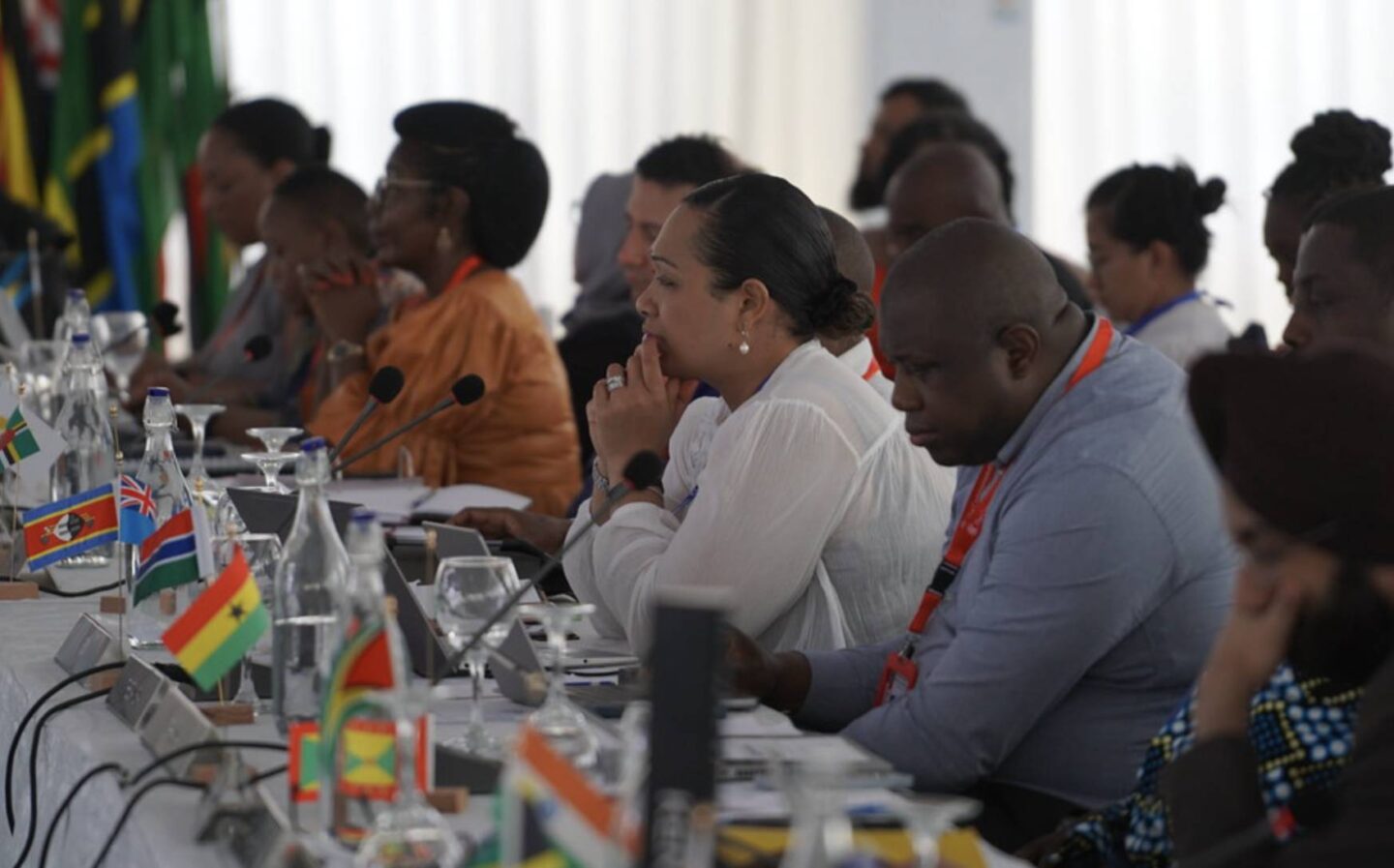
    Jamaican Prime Minister Andrew Holness has concluded his tenure as Chairman of the Caribbean Community (CARICOM) for the second half of 2025, emphasizing the profound unity and shared purpose that defined regional cooperation during his leadership. In his closing address, Holness expressed unwavering confidence in CARICOM’s collective strength and optimism about the member states’ shared future.

    The year 2025 proved transformative for the Caribbean region, particularly in post-hurricane recovery efforts following the devastating impact of Hurricane Melissa. Holness highlighted how the crisis demonstrated the unshakable solidarity among Caribbean nations, stating, ‘As members of the Caribbean family, we never stand alone.’

    Significant milestones were achieved under Holness’s leadership, including substantial progress in regional integration and economic advancement. A historic development emerged with the announcement that Barbados, Belize, Dominica, and St. Vincent and the Grenadines will implement complete freedom of movement among their citizens starting October 1, 2025. This ‘concentric circles’ approach allows for enhanced cooperation while maintaining flexibility for other member states to join subsequently.

    CARICOM also strengthened its global positioning through strategic partnerships, particularly with the Caribbean Private Sector Organization (CPSO). The expansion of regional and international air transportation networks, alongside initiatives to bolster food and nutrition security, marked additional achievements.

    In international diplomacy, CARICOM maintained a unified voice during critical forums including the United Nations General Assembly, G20 Summit, and CELAC-EU Summit. This cohesion enhanced foreign policy coordination and enabled proactive crisis management.

    Security challenges remained prioritized throughout Holness’s chairmanship, with transnational organized crime and gang violence addressed through the Montego Bay Declaration adopted during July’s CARICOM summit. The Prime Minister emphasized the intrinsic connection between security and sustainable development.

    Climate change continues to pose existential threats to the region. While acknowledging progress made at COP30 in Belém, Holness noted that outcomes fell short of addressing the urgent needs of small island and low-lying coastal states. He commended regional organizations including the Caribbean Community Climate Change Centre and the Caribbean Disaster Emergency Management Agency for enhancing preparedness and resilience.

    The year also witnessed deepened ties with Africa during the Second Africa-CARICOM Summit in Addis Ababa, which reinforced the vision of an ‘Atlantic Bridge’ promoting development and shared prosperity. Discussions emphasized trade, investment, cultural exchange, and international cooperation—including the ongoing priority of reparations.

    CARICOM’s sustained engagement with Haiti remained crucial, with the community playing a pivotal role in coordinating international support and stabilization efforts ahead of planned free and fair elections in 2026.

    Concluding his remarks, Holness called for continued unity, strategic clarity, and discipline among member states amidst rapidly evolving geopolitical dynamics. He emphasized that regional responses must remain grounded in respect for sovereignty, international law, peaceful dialogue, and mutual respect, warning that division would undermine CARICOM’s credibility and effectiveness.

  • EC confirms Federation gained more than 56,000 economic citizens in a decade

    EC confirms Federation gained more than 56,000 economic citizens in a decade

    WASHINGTON, DC — Recent data reveals that St. Kitts and Nevis has processed 56,015 Citizenship by Investment (CBI) passports over the past decade, making it the Caribbean’s most sought-after economic citizenship program despite growing international concerns. The European Commission’s latest report indicates that 48,844 passports were issued between 2015 and 2023, with an additional 6,437 in 2024, though approvals have dramatically slowed to just 734 through April this year.

    The transparency of CBI programs has historically been limited, but regional reforms have significantly impacted application volumes. Prime Minister Dr. Terrance Drew acknowledged this decline during his Budget address, noting that while the Federation received 19,655 applications between 2015-2023, only 223 were recorded in 2024, with 171 additional applications through April.

    Rejection rates remain comparatively low—739 applications between 2015-2023, 98 in 2024, and 86 through April—but the program faces intense international scrutiny. The European Union and United States have pushed for reforms including enhanced due diligence, mandatory applicant interviews, and cooperation on application denials.

    Concerns center on security risks posed by successful applicants from visa-restricted countries. The Commission reported that in 2024, successful applicants included 531 Syrians, 365 Iraqis, and 333 Chinese nationals. St. Kitts and Nevis specifically approved citizens from Russia, Belarus, Iran, Iraq, North Korea, and Afghanistan.

    The EU has warned that these programs “inherently carry security risks for the Schengen area” and could lead to withdrawal of visa-free access. The Commission emphasized that obtaining visa-free EU access remains a primary benefit for investors who would otherwise require visas, creating ongoing migration control challenges.

  • Justice : Haiti’s double debt discussed at the Panthéon-Sorbonne University in Paris

    Justice : Haiti’s double debt discussed at the Panthéon-Sorbonne University in Paris

    In a landmark address at Paris’ prestigious Panthéon-Sorbonne University, Dieuseul Prédélus, Rector of Haiti’s State University and President of the Haitian National Committee for Restitution and Reparation (CNHRR), presented a compelling case for historical justice regarding what he termed Haiti’s “double debt” imposed by France in 1825.

    Addressing academics, students, diaspora members, and distinguished guests, Prédélus delivered an emotionally charged speech that traced Haiti’s two-century struggle for dignity and reparations. He recounted how Haiti, having achieved independence through bloodshed, was subsequently forced under threat of French naval invasion to pay massive indemnities to its former colonizers—creating what he described as a “moral absurdity” where a liberated people had to pay to avoid re-enslavement.

    The financial burden, contracted through what Prédélus characterized as “usurious” French banking interest rates, trapped the Caribbean nation in a century-long debt spiral that permanently crippled its development prospects. The CNHRR president emphasized that Haiti’s demand constitutes neither charity nor revenge but rather “an act of basic justice” grounded in contemporary international law and UN principles regarding crimes against humanity.

    Prédélus cited current estimates valuing the debt between $21-115 billion in today’s terms, posing a fundamental moral question: “How can one demand that a people pay for their liberation from a crime against humanity?”

    The address acknowledged evolving attitudes in France, including the emergence of a new generation willing to confront historical truths, the establishment of a joint Franco-Haitian historical commission, and the French National Assembly’s June 2025 resolution encouraging governmental consideration of restitution pathways.

    Outlining the CNHRR’s 2026 roadmap, Prédélus issued a passionate appeal for national unity and diaspora mobilization, framing the restitution struggle as transcending political and generational divisions. He positioned reparations not as historical score-settling but as an opportunity to build a more just future—for Haiti’s regained dignity and development possibilities, and for the international community to redress profound historical injustice.

    The speech concluded with a solemn call for global solidarity around what Prédélus characterized as a fundamental matter of historical justice and human dignity.

  • FLASH : US Donation of 25 New Armored Vehicles to the PNH

    FLASH : US Donation of 25 New Armored Vehicles to the PNH

    In a significant move to reinforce Haiti’s security infrastructure, the United States has delivered 25 armored personnel carriers to the Haitian National Police (PNH). The handover ceremony occurred on December 27, 2025, at the National Port Authority (APN) headquarters, where Acting PNH Commander-in-Chief Vladimir Paraison and senior officials formally received the tactical vehicles.

    The donation, facilitated through the U.S. State Department’s Bureau of International Narcotics and Law Enforcement Affairs (INL), represents a strategic enhancement to Haiti’s law enforcement capabilities. These armored vehicles are specifically designed to improve operational effectiveness in high-risk zones while providing critical protection for police units during interventions.

    Commander Paraison expressed official gratitude for the American contribution, acknowledging the continued partnership between the two nations. The equipment transfer occurs within the framework of bilateral cooperation emphasizing professional law enforcement standards, institutional autonomy, and operational security.

    This substantial logistical support demonstrates Washington’s commitment to assisting Port-au-Prince in its ongoing struggle against armed gangs and terrorist elements that have destabilized the country. The armored vehicles are expected to enable more balanced tactical deployment nationwide while increasing the mobility and safety of Haitian police forces operating in dangerous environments.