分类: politics

  • Mitchell warns us entry rules becoming ‘unforgiving’

    Mitchell warns us entry rules becoming ‘unforgiving’

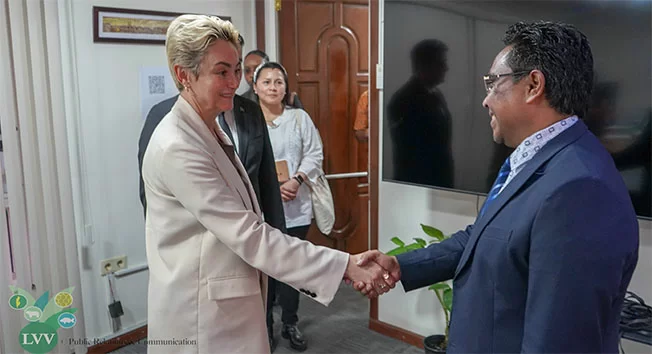
    The Bahamas’ Foreign Affairs Minister Fred Mitchell has issued a stark warning regarding increasingly stringent US immigration policies that are creating significant barriers for Bahamian citizens seeking entry to the United States. In recent discussions with American officials, including newly appointed US Ambassador Herschel Walker and former Chargé d’Affaires Kimberley Furnish, Minister Mitchell emphasized the critical nature of maintaining access between the two nations.

    Mitchell characterized the evolving immigration landscape as growing progressively ‘stricter’ and more ‘unforgiving’ with each passing week, noting that while access remains technically available, the practical hurdles continue to multiply. The minister highlighted the profound historical and demographic connections between the countries, pointing to the substantial Bahamian diaspora of over 57,000 individuals residing in the United States.

    The foreign minister referenced Robert Wilder’s novel ‘Wind From the Carolinas’ as a literary testament to an era when movement between The Bahamas and US was considerably more fluid and American visitors frequented Nassau with minimal restrictions. This historical contrast underscores the dramatic shift in contemporary border policies.

    Mitchell’s concerns extend beyond travel convenience to encompass fundamental economic considerations. The Bahamas faces persistent labor shortages across vital sectors including hospitality, construction, healthcare, and tourism—challenges that have prompted increased requests for work permits to supplement the domestic workforce. These economic realities create a complex bilateral dynamic where The Bahamas must balance its own labor needs while advocating for its citizens’ access to the United States.

    Contrary to assumptions about population decline, recent preliminary census data from the Bahamas National Statistical Institute reveals a 13.6 percent population increase between 2010 and 2022, primarily driven by net migration. The data further indicates that New Providence is experiencing more rapid growth compared to the Family Islands. Minister Mitchell concluded that without this migratory pattern, the Bahamian economy would face severe challenges, emphasizing the interconnected nature of immigration and economic stability.

  • EU warns CBI Programmes could threaten Visa-Free Access

    EU warns CBI Programmes could threaten Visa-Free Access

    The European Union has significantly hardened its stance against citizenship-by-investment (CBI) programs, placing five Eastern Caribbean nations under intensified scrutiny and potentially jeopardizing their visa-free access to the Schengen area. This policy shift is formally outlined in the EU’s Eighth Report under the Visa Suspension Mechanism, published December 19, which reviews 2024 developments and anticipates major changes in 2025.

    The report, prepared under Article 8 of the EU’s Visa Regulation, identifies investor citizenship schemes as inherently risky, asserting they enable third-country nationals to bypass standard security checks and gain Schengen access through financial means rather than genuine ties. The Commission specifically highlights concerns about “illegal migration, security threats, and tax evasion” when vetting processes are weak or identity changes are permitted.

    For the first time, the mere operation of a CBI program is now grounds for potential suspension of visa-free privileges under the EU’s revised Visa Suspension Mechanism. While referencing similar concerns in Serbia and Georgia, the report focuses particularly on Eastern Caribbean nations where these programs have operated for decades at scale.

    EU estimates reveal approximately 107,000 passports have been issued through CBI programs in Antigua and Barbuda, Dominica, Grenada, Saint Kitts and Nevis, and Saint Lucia. Despite recent reforms, demand remains strong with over 23,000 applications across 2023-2024. The Commission cites alarmingly low rejection rates—ranging from 1.7% to 6.5% in 2024—as evidence of insufficient due diligence.

    Although these nations have implemented harmonized minimum investments ($200,000), enhanced screening, and transparency standards in response to previous EU warnings, the Commission concludes these measures remain inadequate. The report states these programs “pose a non-negligible security risk” and will face further examination under the revised legal framework.

    This EU position coincides with growing international pressure on investor citizenship schemes, including recent US moves to expand travel restrictions on countries presenting security or migration risks.

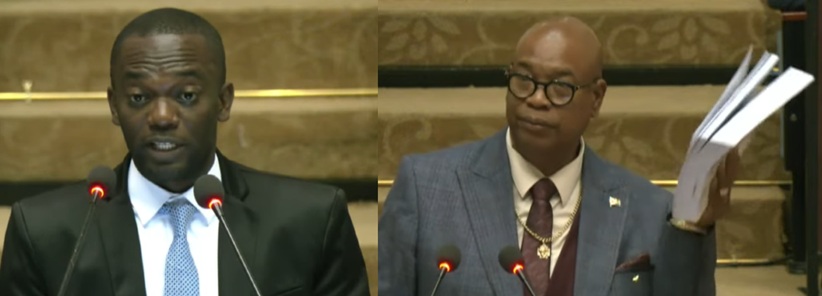
  • Senator Dwayne George thanks St Mary’s South residents, renews pledge for 2026

    Senator Dwayne George thanks St Mary’s South residents, renews pledge for 2026

    In a comprehensive year-end address, Senator Dwayne George has extended heartfelt appreciation to constituents of St Mary’s South while outlining a forward-looking agenda for 2026. The senator characterized 2025 as a period of substantial progress achieved through synergistic collaboration between his office and community members.

    George emphasized that his approach has been fundamentally centered on maintaining direct engagement with residents to identify pressing concerns and implement targeted solutions. Key accomplishments highlighted include educational support programs for students, family assistance initiatives, and specialized care provisions for vulnerable populations. The senator particularly noted the successful implementation of elder recognition programs honoring senior citizens’ contributions.

    Infrastructure enhancement and environmental improvements emerged as significant focus areas, with George attributing these developments to productive advocacy efforts and coordinated work with governmental bodies. The senator explicitly acknowledged the critical support provided by community volunteers, private donors, and the ruling Antigua and Barbuda Labour Party (ABLP) administration in facilitating various constituency programs.

    George’s philosophical framework prioritizes resident-centric decision making, which has guided all public events and outreach activities throughout the year. As the new year approaches, the senator has reaffirmed his commitment to serving with unwavering dedication and ethical integrity, while calling for sustained cooperation to foster greater unity and economic prosperity within St Mary’s South.

    The address concluded with New Year’s greetings extended to all constituents and citizens of Antigua and Barbuda, expressing wishes for health, happiness, and success throughout the coming year.

  • China’s grootste militaire oefeningen rond Taiwan vergroten spanningen

    China’s grootste militaire oefeningen rond Taiwan vergroten spanningen

    China has initiated its most extensive military exercises to date in the Taiwan Strait, deploying a formidable array of naval vessels, combat aircraft, and artillery systems in an operation codenamed “Justice Mission 2025.” The drills, which commenced on Monday, represent a significant escalation in Beijing’s demonstration of military capability, explicitly designed to simulate the isolation of Taiwan from external support channels.

    The Eastern Theater Command of the People’s Liberation Army released footage showing advanced weaponry being deployed during the exercises, which are positioned closer to Taiwan’s territory than previous military maneuvers. Seven designated zones surrounding the island have been established for live-fire exercises and simulated blockade operations, effectively disrupting maritime traffic near key Taiwanese ports.

    Chinese Foreign Ministry spokesperson Lin Jian characterized the operations as “punitive and deterrent measures” targeting what Beijing terms “Taiwanese separatist activities.” The drills directly respond to recent U.S. weapons transfers to Taiwan, which China views as unacceptable foreign interference in its internal affairs. Lin emphasized that protecting national sovereignty and territorial integrity remains China’s “sacred right” under international law.

    Taiwan has responded by elevating its military readiness and showcasing recently acquired American defense systems, including the HIMARS rocket platform capable of striking deep into Chinese territory. Taiwanese defense officials have reiterated their commitment to self-defense capabilities while calling for international support against what they describe as “coercive military posturing.

    Security analysts note that the exercises blur the line between routine training and potential preparation for actual conflict scenarios. The proximity of Chinese forces to Taiwan’s main island significantly reduces potential response time for U.S. and allied forces, creating new escalation risks in the strategically vital waterway.

    The geopolitical implications extend beyond immediate military concerns. China’s combination of hardware demonstration and political messaging reinforces its position that any movement toward Taiwanese independence—particularly when supported by external powers—represents a red line that Beijing will enforce with increasing severity. This development forces international policymakers to balance stability maintenance with support for Taiwan’s defensive needs, creating complex diplomatic challenges for the coming months.

  • Russia and China want to cooperate in AI and aviation electronics

    Russia and China want to cooperate in AI and aviation electronics

    In a significant diplomatic development, a senior Chinese ambassador has articulated a comprehensive vision for deepened technological cooperation with Russia during an interview with Izvestia newspaper this Monday. The high-ranking official emphasized that bilateral collaboration possesses substantial potential across cutting-edge sectors including artificial intelligence, information technologies, microelectronics, semiconductor manufacturing, and civil aircraft construction.

    The ambassador explicitly extended China’s invitation for Russia to actively participate in Beijing’s pioneering initiative to establish a global cooperative organization dedicated to artificial intelligence. This proposed international framework aims to facilitate multinational cooperation in AI development and governance.

    Beyond AI, the diplomatic representative outlined concrete areas for enhanced technological partnership. China has expressed willingness to collaborate with Russian counterparts in developing semiconductor materials, designing specialized microchips, advancing manufacturing processes, and creating specialized equipment. This cooperation is strategically positioned to strengthen supply chain stability and security for both nations.

    The proposed collaboration extends to practical implementation areas including industrial development, specialized personnel training, and joint management approaches to technological innovation. This bilateral technological initiative represents a significant development in international relations, potentially reshaping global technology partnerships and supply chain dynamics in strategic sectors.

  • Hamas accuses Israel of daily violating Gaza ceasefire

    Hamas accuses Israel of daily violating Gaza ceasefire

    Senior Hamas official Mahmoud Mardawi has issued a forceful condemnation of Israeli Prime Minister Benjamin Netanyahu’s administration, characterizing its ongoing military operations as systematic “policies of murder” against Palestinian civilians. The accusation comes amid escalating tensions regarding humanitarian access to conflict-affected territories.

    Mardawi specifically denounced Israel’s stringent limitations on humanitarian aid corridors into Gaza, framing these restrictions as a deliberate strategy to weaponize starvation against the Palestinian population. He asserted that these measures represent a calculated effort to exacerbate the humanitarian crisis rather than addressing security concerns.

    The Hamas leader challenged the international community’s continued silence regarding Israel’s military campaigns, urging global powers to intervene more decisively. He emphasized that passive observation effectively enables the perpetuation of what he termed “continued crimes” against Palestinian civilians.

    Directing his appeal toward Washington, Mardawi called upon the United States to leverage its diplomatic influence with its principal Middle Eastern ally. He specifically demanded American pressure to ensure Israel complies with previously agreed ceasefire commitments, including unimpeded humanitarian access and de-escalation of military operations. The statement reflects growing frustration among Palestinian leadership regarding international response mechanisms to the ongoing conflict.

  • Kremlin reveals details of Putin-Trump talk

    Kremlin reveals details of Putin-Trump talk

    In a significant diplomatic exchange preceding his meeting with Ukrainian President Volodymyr Zelensky, U.S. President Donald Trump engaged in substantive discussions with Russian counterpart Vladimir Putin regarding the ongoing conflict in Ukraine. According to Kremlin aide Yuri Ushakov, the conversation commenced with ceremonial exchanges of Christmas and New Year greetings before transitioning to grave deliberations about Eastern European security dynamics.

    Ushakov revealed that President Trump exhibited attentive engagement with Russia’s geopolitical perspectives, carefully considering Moscow’s assessments of potential conflict resolution pathways. The American leader characterized the Ukrainian crisis as the most formidable foreign policy challenge of his administration, while simultaneously acknowledging Russia’s professed commitment to pursuing political and diplomatic solutions.

    A critical consensus emerged regarding peace proposals advanced by Ukrainian authorities and European Union mediators. Both leaders concurred that these initiatives risked prolonging hostilities rather than achieving sustainable peace. They particularly criticized ceasefire arrangements predicated on referendum preparations, warning such measures could create conditions for escalated military confrontations.

    The dialogue yielded commitments to continue bilateral negotiations through specialized working groups, a procedural framework reportedly initiated at Washington’s request. President Trump emphasized the urgent necessity to terminate armed conflict while envisioning enhanced trilateral economic cooperation between the United States, Russia, and Ukraine as a stabilizing mechanism for post-conflict recovery.

  • Nicaraguan solidarity movement voices support for Venezuela

    Nicaraguan solidarity movement voices support for Venezuela

    The Nicaraguan government has issued a forceful condemnation against what it characterizes as a resurgence of imperial aggression from the United States. In an official statement, the administration asserted that Washington has recently escalated a series of hostile measures targeting global populations, with particular focus on Latin America and the Caribbean. This strategic shift, occurring against the backdrop of diminishing U.S. global dominance, represents a deliberate attempt to revive the nineteenth-century Monroe Doctrine framework of hemispheric domination.

    Venezuela emerges as the primary target of these alleged neocolonial operations, according to the communiqué. The Bolivarian nation, guided by the political legacy of the late Commander Hugo Chávez and demonstrating remarkable unity and resilience, continues to withstand substantial external pressure campaigns. The Nicaraguan movement expressed confidence that these imperial designs would ultimately fail despite their current intensity.

    The statement further contextualized these geopolitical maneuvers as direct retaliation against Venezuela’s sovereign governance and resource independence. Specifically, Caracas’s control over the world’s largest proven oil reserves has reignited foreign interest in controlling the nation’s natural wealth, prompting aggressive tactics aimed at resource appropriation.

    Reaffirming its regional commitments, Nicaragua pledged unwavering dedication to protecting peace, prosperity, and self-determination for all Latin American and Caribbean peoples. The government highlighted the enduring relevance of the 2014 Havana Declaration established by the Community of Latin American and Caribbean States (CELAC), which formally designated the region as a Zone of Peace, free from external intervention and conflict.

  • OPINION: A Breach within CARICOM Widens

    OPINION: A Breach within CARICOM Widens

    A significant and widening fissure within the Caribbean Community (CARICOM) is posing a substantial threat to the bloc’s historic unity and operational effectiveness. This internal discord, which has been developing over recent months, transcends mere policy disagreements and strikes at the core of the organization’s foundational principles of consensus and collective action.

    The schism appears to center on divergent approaches to critical regional issues, including external diplomatic engagements, economic strategy, and security cooperation. Member states are reportedly aligning into informal factions with contrasting visions for CARICOM’s future direction, creating an atmosphere of strategic ambiguity that could undermine the community’s negotiating power on the international stage.

    Analysts observing the situation note that this internal fragmentation occurs at a particularly inopportune time, as the region faces mounting challenges from climate change vulnerabilities, economic pressures from global inflation, and complex geopolitical maneuvering by major powers seeking influence in the Caribbean basin. The inability to present a unified front potentially diminishes CARICOM’s capacity to secure favorable trade terms, attract strategic investment, and effectively advocate for climate justice.

    The current impasse reflects broader tensions between maintaining traditional partnerships and exploring new alliances, between sovereignty and integration, and between immediate national interests and long-term regional benefits. How CARICOM leadership navigates this period of internal contention will likely determine the organization’s relevance and effectiveness in addressing the pressing issues facing Caribbean nations in the coming decades.

  • Cuba rejects U.S. arms sale to Taiwan

    Cuba rejects U.S. arms sale to Taiwan

    Cuban Foreign Minister Bruno Rodríguez Parrilla has issued a strong condemnation of the United States government’s planned $11.1 billion arms transfer to Taiwan, characterizing the move as a direct threat to Chinese sovereignty and regional stability. The high-ranking diplomat, who serves on the Political Bureau of the Central Committee of Cuba’s Communist Party, utilized his social media platform to articulate Havana’s firm opposition to the weapons deal.

    Minister Rodríguez emphasized that such military transactions severely compromise the territorial integrity of the People’s Republic of China while simultaneously destabilizing the delicate security equilibrium across the Asia-Pacific region. The Cuban diplomat reiterated his nation’s steadfast commitment to the ‘One China’ principle, explicitly recognizing Taiwan as an inseparable component of Chinese territory.

    The record-breaking arms package announcement prompted immediate countermeasures from Beijing, with Chinese authorities imposing sanctions against 20 American defense contractors and ten senior executives implicated in recent weapons sales to Taiwan. Chinese foreign ministry representatives have urgently called upon Washington to honor previous bilateral agreements, specifically referencing the three joint communiqués that have historically guided Sino-American relations.

    Official statements from Beijing further cautioned that Taiwan represents the most sensitive core interest in China’s foreign policy framework, describing it as an ‘uncrossable red line’ in diplomatic engagements with the United States. Chinese officials have vowed to implement all necessary measures to protect national sovereignty and maintain territorial integrity against external interference.