分类: politics

  • China Launches Massive Military Drills Around Taiwan

    China Launches Massive Military Drills Around Taiwan

    In a significant escalation of regional tensions, China has initiated comprehensive military maneuvers encircling Taiwan, deploying combined forces from its army, navy, air, and rocket divisions. The extensive two-day exercises, officially designated “Justice Mission-2025,” commenced on December 30, 2025, featuring live-fire artillery drills and precision rocket launches that reportedly landed in closer proximity to Taiwanese territory than previous operations.

    The provocative military demonstration comes as a direct response to Washington’s recent authorization of an $11.1 billion defensive arms package to Taipei, including advanced HIMARS rocket systems and surveillance drones. Chinese authorities characterized the drills as a necessary warning against what they term ‘Taiwan independence separatist activities’ and foreign interference in China’s internal affairs.

    Taiwan’s defense ministry reported tracking approximately 130 Chinese military aircraft and 22 naval vessels throughout the operation, with an unprecedented 90 warplanes crossing the median line of the Taiwan Strait. Taiwanese armed forces responded with heightened alert status, scrambling fighter jets, deploying naval patrols, and activating coastal missile defense systems.

    The exercises generated substantial disruption to civilian air traffic, compelling the cancellation of dozens of commercial flights and affecting over 6,000 travelers. Military analysts observed that the complexity and scale of the drills appear designed to simulate effective blockade scenarios, potentially signaling China’s evolving strategy to deter foreign military intervention in the Taiwan Strait.

    International reaction emerged promptly, with Belize’s foreign ministry issuing a formal condemnation of China’s ‘military intimidation’ against Taiwan, emphasizing the undermining of peaceful dialogue and stability in the region. The United States and Taiwanese officials have reiterated the legitimacy of defensive arms agreements and the right to self-defense under international norms.

  • How the Law and the Court are continuing to circle around politicians

    How the Law and the Court are continuing to circle around politicians

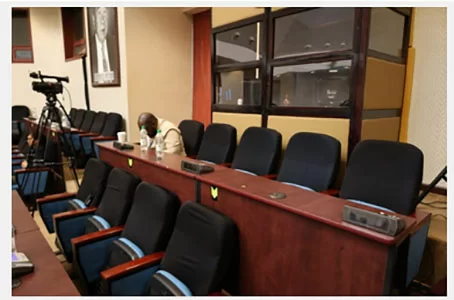
    In a landmark ruling with profound implications for political discourse, the Eastern Caribbean Supreme Court has delivered a powerful judgment in Frederick v. Chastanet [2025], establishing stringent legal boundaries for political speech. The case centered on allegations made by former Prime Minister Allen Chastanet against sitting minister Richard Frederick, whom he accused of corruption, dishonesty, and abuse of office in a widely circulated Facebook video.

    The court meticulously applied Saint Lucia’s defamation framework, incorporating the UK Defamation Act 2013 through Article 917A of the Civil Code. Justice Pariagsingh’s ruling emphasized that while robust political debate is essential to democracy, allegations of criminal conduct must be substantiated with evidence rather than presented as rhetorical weapons.

    Critical to the case was the failure of Chastanet’s defenses of truth, honest opinion, and public interest. Testimony from key witnesses, including Stephenson King and managing directors of SLASPA and NHC—all appointed during Chastanet’s own administration—systematically dismantled the factual basis for the allegations. Records revealed no objection to the land sale in question, no existing plans for a marine police base on the property, and full compliance with established board processes.

    The judgment particularly scrutinized the casual deployment of the term ‘corruption’ in political rhetoric. The court noted that such language carries specific legal connotations of misuse of office, abuse of public trust, and improper enrichment—not merely colorful criticism. By using these terms without evidence, politicians risk eroding public trust and discouraging honest individuals from public service.

    Regarding serious harm, the court considered both the significant reach of the Facebook video and the gravity of allegations against a sitting minister. The ruling distinguished between the ‘court of public opinion,’ where unsubstantiated claims may circulate freely, and the legal system where words carry precise consequences.

    The court awarded $60,000 in damages to Frederick, noting that while no financial loss was demonstrated, the allegations caused significant humiliation and embarrassment. Aggravating factors included Chastanet’s refusal to apologize, persistence in unsubstantiated claims, and conduct during litigation.

    Beyond the immediate case, the judgment raises crucial questions about democratic accountability. It challenges citizens, institutions, and media to move beyond passive consumption of political rhetoric and actively demand evidence for serious allegations. The ruling suggests that effective democracy requires continuous citizen engagement through mechanisms like freedom of information requests, parliamentary petitions, and rigorous media scrutiny—not merely electoral participation every five years.

    This decision establishes an important precedent for Caribbean jurisprudence, signaling that the judiciary will hold politicians accountable for unfounded allegations that damage reputations and undermine governance.

  • Bangladesh: Eerste vrouwelijke premier overleden

    Bangladesh: Eerste vrouwelijke premier overleden

    Bangladesh’s political landscape has been permanently altered with the passing of Begum Khaleda Zia, the nation’s first female prime minister, who died Tuesday at age 80 after a prolonged illness. The opposition Bangladesh Nationalist Party (BNP) confirmed her death following an extended battle with advanced liver cirrhosis, arthritis, diabetes, and cardiovascular complications.

    Khaleda Zia’s political journey represents one of modern South Asia’s most compelling narratives. She initially rose to power in 1991 through a surprising electoral victory against her rival Sheikh Hasina, becoming only the second woman to lead a democratic government in a predominantly Muslim nation after Pakistan’s Benazir Bhutto.

    Her legacy is characterized by both groundbreaking achievements and intense political conflicts. During her tenure, she transformed Bangladesh’s governmental structure by replacing the presidential system with a parliamentary framework, relaxed restrictions on foreign investment, and implemented mandatory free basic education.

    The relationship between Khaleda Zia and Sheikh Hasina defined decades of Bangladeshi politics. Initially collaborators in the 1990 pro-democracy movement that ousted military ruler Hossain Mohammad Ershad, their alliance quickly dissolved into what became known as the “Battling Begums” rivalry—a reference to the Urdu honorific for prominent women.

    Their contrasting leadership styles became legendary: Khaleda, described as reserved, traditional, and carefully measured in speech; Hasina, markedly more outspoken and assertive. This personal and political dichotomy fueled a power struggle that would dominate the nation’s affairs for over three decades.

    Khaleda’s second term as prime minister (2001-2006) was marred by rising Islamic militancy and corruption allegations. The 2004 grenade attack on a Hasina rally, which killed over 20 people and injured 500, remains one of the most controversial events of this period, with Khaleda’s government and its Islamic allies widely blamed.

    The subsequent years saw Khaleda’s political fortunes decline dramatically. After a military-backed caretaker government assumed power in 2006, both she and Hasina faced approximately one year of imprisonment on corruption charges. Though released before the 2008 elections, Khaleda never regained power.

    Her later years were marked by legal battles and deteriorating health. In 2018, she was imprisoned on corruption charges related to embezzlement of orphanage funds—accusations she maintained were politically motivated attempts to exclude her family from politics. She was transferred to house arrest in March 2020 on humanitarian grounds as her health declined.

    The recent political upheaval in Bangladesh had created new dynamics for Khaleda’s legacy. Following student-led protests that ousted Hasina in August 2024, an interim government under Nobel Peace Prize winner Muhammad Yunus assumed control. Hasina herself was sentenced to death in absentia in November for her lethal suppression of student protests.

    Khaleda’s release from house arrest in August 2024 and subsequent court exonerations in early 2025—both in the corruption case that had imprisoned her and the 2004 grenade attack allegations against her son Tarique Rahman—marked significant late-life developments.

    The return of her son Tarique Rahman after nearly 17 years in self-exile last week, combined with the BNP’s position as favorite for February’s parliamentary elections, suggested a potential political resurgence that her death has now cut short.

    Khaleda Zia’s story began not as a politician but as a mother dedicated to raising her two sons. Her entry into politics came only after the 1981 assassination of her husband, military leader and president Ziaur Rahman, during a failed coup. Assuming leadership of his BNP party three years later, she vowed to continue his mission to “free Bangladesh from poverty and economic backwardness.”

    Her passing closes a monumental chapter in Bangladesh’s history while leaving unanswered questions about the nation’s political future and the resolution of the epic rivalry that shaped its democracy.

  • Diaz-Canel: ICAP is a bridge between peoples, a voice for just causes

    Diaz-Canel: ICAP is a bridge between peoples, a voice for just causes

    Cuban President Miguel Díaz-Canel has publicly commemorated the 65th anniversary of the Cuban Institute of Friendship with the Peoples (ICAP), utilizing social media platform X to honor the institution originally established by revolutionary leader Fidel Castro.

    In his digital tribute, Díaz-Canel emphasized the organization’s enduring relevance, stating: ‘Guided by Fidel’s visionary principles and foundational ideology, ICAP maintains—and now more than ever—its crucial mission of bridging nations and championing humanity’s most noble causes.’

    The President characterized the anniversary celebrations as possessing ‘particular symbolic importance,’ noting that ICAP’s headquarters has served as a epicenter for ‘dedication to peace, international friendship, and global solidarity throughout its sixty-five years of operation.’

    Echoing these sentiments, Foreign Minister Bruno Rodríguez extended official congratulations to ICAP and its personnel through the same digital platform. Rodríguez specifically recognized the institution’s ‘effectual and demanding efforts in advancing solidarity and friendship, while defending Cuba against imperialist aggression and supporting righteous global causes.’

    The commemorative events included a central ceremony held preceding the anniversary date, featuring ICAP President Fernando González. During his address, González portrayed the organization as ‘a fortress of ideals, a laboratory of friendship, and a strategic component in safeguarding the Revolution’s legacy.’

  • Syrian city imposes curfew after sectarian violence

    Syrian city imposes curfew after sectarian violence

    The Syrian government has declared an overnight curfew for the coastal province of Latakia, effective from 5:00 PM local time Tuesday through 6:00 AM Wednesday, in response to escalating sectarian violence. The security measure exempts emergency personnel including medical workers, ambulance services, and firefighters from the restrictions.

    Interior Ministry spokesperson Noureddine al-Baba, in official communications with the state-run SANA news agency, called upon Latakia’s residents to maintain lawful conduct and preserve public safety. The spokesman specifically cautioned citizens against responding to provocative language and destabilizing actions that threaten national cohesion.

    al-Baba emphasized the state’s firm stance against acts of vandalism and aggression targeting civilian property or dignity, characterizing such behavior as explicit violations of Syrian law. He warned that perpetrators would face full legal consequences for actions undermining stability.

    The curfew implementation follows reports from local sources and monitoring groups indicating several western Syrian regions have experienced violent riots and sectarian clashes in recent hours. These disturbances have primarily targeted members of the Alawite community, representing a significant escalation in regional tensions.

  • Noboa declares prison perimeters in Ecuador security zones

    Noboa declares prison perimeters in Ecuador security zones

    In a decisive move to confront organized crime, the Ecuadorian government has authorized the establishment of classified security perimeters under military jurisdiction within the nation’s prison system. This strategic initiative, formally documented on April 7, 2024, stems directly from President Daniel Noboa’s declaration of an internal armed conflict, which mandated the Ministries of Defense and the Interior to develop comprehensive technical frameworks for securing penitentiary facilities.

    The newly implemented measures represent a significant militarization of prison security. The Armed Forces are now vested with full control and operational responsibility over these restricted zones, though the policy explicitly clarifies that this does not equate to military ownership of the physical locations. The multi-faceted security protocol includes the deployment of advanced anti-drone technology systems, capable of remotely inhibiting or destroying unauthorized unmanned aerial vehicles attempting to breach prison airspace.

    Further bolstering the crackdown, the government has enacted stringent telecommunications controls, including signal jamming within prison confines to sever illicit communication channels. Construction activities near penitentiaries face severe restrictions, with an outright ban on tunnel excavation and limitations on the erection of any vertical or horizontal structures within the newly defined security boundaries.

    This aggressive policy is a direct response to the government’s assessment that Ecuador’s prisons serve as primary epicenters of criminal violence. Statistical evidence underscores the crisis: since 2021, nearly 600 inmates have been killed, predominantly in violent clashes between rival gangs operating from within the penitentiary centers, highlighting the urgent need for enhanced security intervention.

  • Trump says pulling National Guard from Chicago, LA, Portland

    Trump says pulling National Guard from Chicago, LA, Portland

    In a significant policy reversal, former President Donald Trump announced the withdrawal of National Guard troops from Chicago, Los Angeles, and Portland on Wednesday. The decision comes after multiple legal challenges successfully blocked his administration’s deployment initiatives in these Democratic-led municipalities.

    The initial deployment, implemented during the first year of Trump’s second term, was justified by the White House as necessary for combating illegal immigration and reducing urban crime rates. However, local government officials consistently criticized the move as an excessive use of federal authority that overstepped constitutional boundaries.

    The legal opposition culminated last week when the U.S. Supreme Court intervened to halt the troop deployment in Chicago, dealing a substantial blow to the administration’s strategy. This judicial setback appears to have forced the withdrawal decision despite Trump’s claims of success.

    Through his Truth Social platform, Trump maintained that the presence of National Guard personnel had dramatically reduced crime in these cities, referring to the troops as ‘great Patriots.’ He asserted that federal intervention had saved these urban centers from deterioration while hinting at potential future deployments ‘in a much different and stronger form’ if crime rates increase again.

    The development highlights ongoing tensions between federal authority and municipal governance, particularly regarding law enforcement jurisdiction and the appropriate use of military resources in domestic settings.

  • Mysterday as Bank exec quits

    Mysterday as Bank exec quits

    The Bahamas’ diplomatic and financial sectors are grappling with the abrupt departure of Taran Mackey, who has simultaneously resigned from his dual roles as Ambassador to the Kingdom of Bahrain and as a director of the Bank of The Bahamas after a brief eight-month tenure. The unexpected move was announced through a concise statement in which Mackey attributed his decision solely to the need to address a private personal matter, offering no further elaboration.

    Mackey’s appointment in April had marked a significant milestone, as he became the youngest individual ever to join the board of directors at the Bank of The Bahamas. His professional background, as detailed in an official bank biography, paints a picture of a highly specialized financial expert. He serves as the managing director of IPG Family Office Limited, a multi-family office overseeing more than $2 billion in assets, with a focus on sophisticated trust and estate planning services.

    His expertise extended to advising financial institutions and ultra-high-net-worth individuals on complex international matters, including cross-border tax planning, succession strategies, and pre-immigration structuring. Mackey possessed particular specialization in crafting bespoke fiduciary vehicles—such as private trust companies, limited partnerships, and foundations—primarily for affluent families across Latin America and the Middle East.

    A graduate with an Honors LLB from the University of Nottingham, Mackey is a qualified member of both the Society of Trust and Estate Practitioners and the International Tax Planning Association. Beyond his now-former roles, he maintained a directorship at the Bahamas Financial Services Board and had served as co-chairman of its Immigration Sub-Committee since 2020. His simultaneous exit from both a high-profile ambassadorship and a key position in the nation’s banking system has created a notable void, sparking speculation within government and financial circles regarding the undisclosed reasons behind his sudden departure.

  • Caricom head wants co-ordination, not isolation

    Caricom head wants co-ordination, not isolation

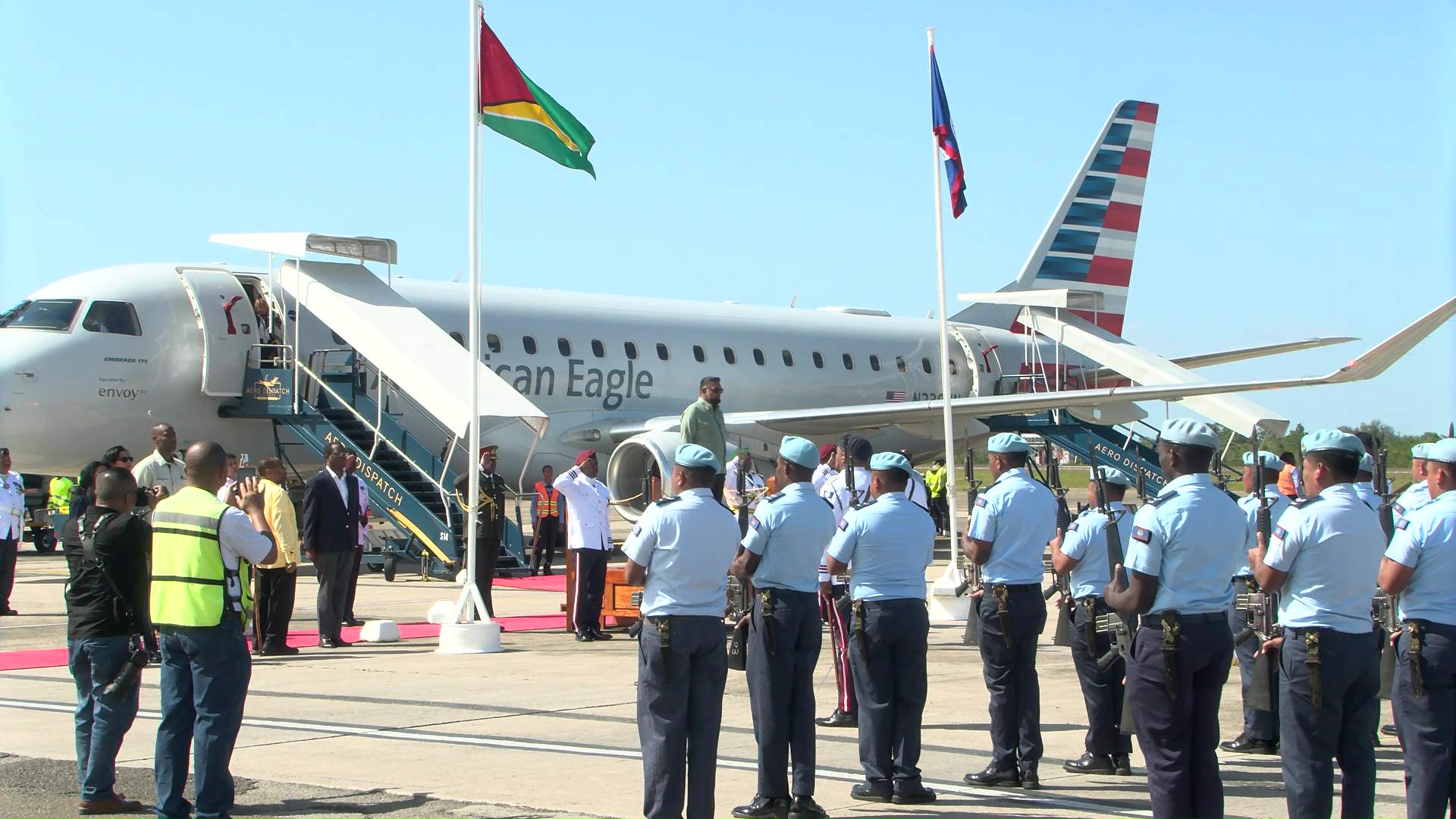
    The Caribbean Community (CARICOM) faces a significant test of regional solidarity as new chairman Dr. Terrance Drew, Prime Minister of St. Kitts and Nevis, advocates for enhanced coordination amid growing internal divisions. In his inaugural New Year’s address on December 31, Dr. Drew emphasized that regional integration represents an essential strategy rather than an optional pathway for Caribbean nations navigating global uncertainties.

    Dr. Drew’s message promoting collective Caribbean interests stands in stark contrast to the position articulated by Trinidad and Tobago Prime Minister Kamla Persad-Bissessar, who has openly criticized CARICOM’s geopolitical stance. The divergence centers particularly on responses to recent U.S. military operations in the region, including actions against Venezuelan facilities described as drug operations and the seizure of oil tankers.

    While Persad-Bissessar has aligned her nation with United States policy objectives, she has simultaneously condemned CARICOM’s official position maintaining the Caribbean as a zone of peace. In media statements from December 20-22, she characterized the organization as supporting what she termed the ‘Maduro narco-government’ and accused CARICOM of engaging in ‘zone of peace fakery.’

    The incoming chairman, who will guide the 21-member bloc for the next six months, framed current challenges within the historical context of Caribbean achievement. Dr. Drew highlighted the region’s extraordinary contributions to global culture, sports, intellectual thought, and political philosophy despite its relatively small size and complex history shaped by slavery and indentured labor.

    Addressing the visible tensions between member states, Dr. Drew acknowledged that differences naturally occur within diverse communities but emphasized the importance of managing dialogues with ‘mutual respect and regional responsibility.’ He articulated CARICOM’s fundamental purpose as a forum for constructive conflict resolution rather than unanimous agreement, asserting that ‘our collective strength is greater than any single issue before us.’

    The chairman’s vision calls for enhanced institutional strengthening, deeper consultation mechanisms, and strategic maturity in international engagements. Dr. Drew announced preparations for the 50th Regular Meeting of the Conference of Heads of Government, scheduled for February 24-27, 2026, in St. Kitts and Nevis, where these critical issues will feature prominently on the agenda.

    Meanwhile, Persad-Bissessar’s criticisms extend beyond geopolitical alignment to fundamental concerns about CARICOM’s institutional health. She has pointed to ‘poor management, lax accountability, factional divisions, and private conflicts between regional leaders’ as existential threats requiring transparent addressing rather than diplomatic concealment.

    The emerging divide presents a crucial moment for Caribbean governance, testing whether the region can maintain a unified voice amid increasingly complex global pressures and internal disagreements about strategic partnerships and fundamental values.

  • Trump’s Venezuelan siege

    Trump’s Venezuelan siege

    In a startling escalation of military aggression, former President Donald Trump’s actions have precipitated a global crisis that now threatens to erupt into widespread conflict. During a radio interview on December 26, 2025, the Republican leader casually disclosed that U.S. forces had executed a significant military strike within Venezuelan territory, remarking with characteristic bluntness: “We hit them very hard.

    This revelation, delivered offhandedly during a little-noticed Boxing Day broadcast, preceded further disturbing details shared three days later. While hosting Israeli Prime Minister Benjamin Netanyahu at the White House, Trump added: “We hit all the boats and now we hit the implementation area.” These statements confirm an alarming expansion of operations against the Maduro administration that began with maritime operations and has now progressed to apparent land strikes.

    The human cost of these operations has reached devastating proportions. Prior to Christmas, the U.S. military’s campaign achieved a grim milestone with at least 100 lives lost in what human rights organizations describe as extrajudicial executions. Subsequent strikes have pushed the death toll to approximately 107, with bodies continuing to wash ashore along Venezuela’s coastline.

    This military escalation has been accompanied by a comprehensive display of force in the Caribbean Sea, including seizures of oil tankers, increased bounties on President Nicolás Maduro’s head, and reportedly, a direct ultimatum delivered by Trump himself. The justification for these actions has shifted dramatically from initial claims about Venezuela “emptying their prisons into the USA” to more recent assertions about reclaiming “oil, land and other assets that they previously stole from us.”

    The international community has responded with unprecedented statements supporting Venezuelan sovereignty. Russian President Vladimir Putin personally called Maduro on December 11, while China implicitly accused the United States of “unilateral bullying.” The potential involvement of these global powers in any military confrontation remains uncertain, yet their positioning underscores the grave risks inherent in Trump’s provocative strategy.

    Despite earlier concerns that two nationals may have perished in maritime strikes, the Trinidad and Tobago government has maintained support for American actions even as the world moves closer to what critics describe as a manufactured Armageddon.