分类: politics

  • MSJ’s Abdulah slams PNM, UNC

    MSJ’s Abdulah slams PNM, UNC

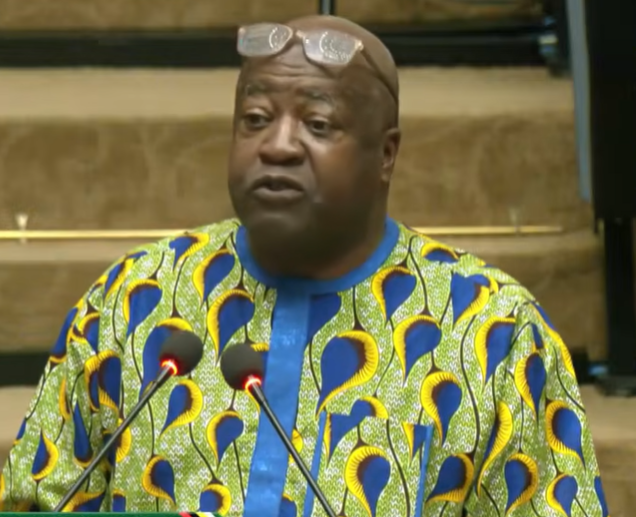
    In a sharply critical New Year’s address, Movement for Social Justice (MSJ) political leader David Abdulah delivered a sweeping condemnation of Trinidad and Tobago’s two dominant political parties, accusing both the ruling United National Congress (UNC) and opposition People’s National Movement (PNM) of fundamental governance failures.

    Abdulah characterized 2025 as a historically significant year marked by consequential elections in both Trinidad and Tobago and the United States. He expressed deep concern about the international political climate, particularly referencing Donald Trump’s return to power and the subsequent Project 2025 initiative, which he described as promoting “an ultra right-wing agenda rooted in white supremacy and the aggressive rewriting of historical narratives through executive overreach.”

    The MSJ leader elaborated on global implications, stating this agenda represents “imperialism on steroids” characterized by resource exploitation tactics, unilateral tariff impositions contravening WTO regulations, visa revocation threats, illegal sanctions, and the resurgence of gunboat diplomacy.

    Domestically, Abdulah presented a detailed electoral analysis, noting that the PNM suffered a catastrophic collapse in public support during the April general election. The party’s vote count plummeted by over 100,000 ballots from 322,180 in 2020 to merely 220,160 in 2025. He attributed this dramatic rejection to the PNM’s alleged arrogance in governance, its adherence to neoliberal economic policies that disproportionately favored the wealthy, and specific controversial actions including the closure of Petrotrin refinery and mass worker retrenchments.

    While acknowledging the UNC’s electoral victory under Kamla Persad-Bissessar’s leadership, Abdulah highlighted concerning democratic metrics. Despite securing 26 of 41 parliamentary seats (68% representation), the UNC coalition garnered only 350,734 votes representing approximately 30% of electoral support amid a record-low 54% voter turnout—the poorest participation rate since the 1971 ‘No Vote’ campaign.

    The opposition leader criticized the new government for exhibiting concerning tendencies reminiscent of its predecessor, citing Prime Minister Persad-Bissessar’s characterization of Trinidad as “a lawless dump” and abrupt reversals of longstanding foreign policy positions. While acknowledging some positive developments including stakeholder consultations on scrap iron regulations, refinery restart committees, and settled wage negotiations, Abdulah noted troubling patterns of insufficient consultation with maxi-taxi associations and Carnival stakeholders, and what he termed “a new manifestation of prime ministerial power.”

    Abdulah concluded that neither major party demonstrates capacity for the fundamental transformation required—a shift from top-down governance to participatory democracy and economic reconstruction that benefits all citizens rather than select elites. He called for emergence of a new mass movement capable of challenging the status quo, citing growing civic engagement around peace vigils, Palestinian solidarity, and global liberation movements as promising indicators of potential change.

  • Maduro says Venezuela open to talks with US, amid pressure

    Maduro says Venezuela open to talks with US, amid pressure

    CARACAS, Venezuela—In a televised state interview on Thursday, Venezuelan President Nicolas Maduro strategically avoided directly confirming or denying a recent alleged United States military strike on Venezuelan territory. When pressed about the incident, Maduro deferred commentary, suggesting the matter “could be something we talk about in a few days.” This development follows assertions from US President Donald Trump, who claimed on Monday that US forces had executed a successful operation targeting and destroying a dock facility allegedly used for loading narcotics onto vessels. Trump described the action as targeting a key “implementation area” for drug traffickers, though he provided no specific operational details, including whether it was conducted by military or intelligence assets, or its precise location beyond being “along the shore.

    Despite this escalation, President Maduro projected a conciliatory stance towards Washington, expressing a conditional willingness to engage in bilateral discussions. “Wherever they want and whenever they want,” Maduro stated, indicating openness to dialogue concerning critical issues such as drug trafficking, oil policies, and migration. This overture occurs amidst a sustained period of US military pressure in the region, which has included numerous maritime strikes on suspected drug-smuggling boats in the Caribbean Sea and eastern Pacific Ocean since September.

    The alleged land strike represents a significant and potentially precedent-setting escalation in the US campaign against narcotics trafficking in Latin America, marking what would be the first known ground incursion. The Trump administration has repeatedly threatened such actions against drug cartels, promising they would commence “soon.” However, the legal and ethical foundations of these operations are under intense scrutiny. The administration has yet to publicly furnish evidence verifying that the targeted vessels or facilities were indeed involved in illicit activities, sparking a robust debate among international law experts and human rights organizations. These groups contend that the strikes may constitute extrajudicial killings, a characterization vehemently rejected by US authorities.

  • Browne: Trinidad and Tobago has distanced itself from PM

    Browne: Trinidad and Tobago has distanced itself from PM

    In a blistering condemnation of current leadership, Opposition Senator Dr. Amery Browne has characterized Prime Minister Kamla Persad-Bissessar as the most deficient leader in Trinidad and Tobago’s political history. During a December 30 press conference at the Opposition Leader’s Office in Port of Spain, Browne asserted that no previous administration has experienced such rapid public disengagement within its first eight months.

    Browne presented a comparative analysis of Persad-Bissessar’s current performance against her predecessors, including former prime ministers ANR Robinson, Patrick Manning, Dr. Keith Rowley, UNC founder Basdeo Panday, and Dr. Eric Williams. He maintained that even during their most challenging periods, these leaders provided superior governance to what the nation currently experiences.

    The senator particularly criticized the Prime Minister’s diplomatic approach, noting that her administration has diminished Trinidad and Tobago’s international standing through unprecedented attacks against Caribbean Community (Caricom) partners and other regional heads of state. Browne highlighted concerning patterns of government ministers employing deplorable language and launching personal attacks against family members of foreign leaders, describing these developments as a significant deterioration of diplomatic standards.

    Addressing communication deficiencies, Browne revealed that the Opposition Leader has repeatedly requested the Prime Minister to articulate her governmental vision and policy directions through proper channels. Instead, Persad-Bissessar has predominantly relied on social media platforms, selective WhatsApp communications, and irregular responses to individual journalists rather than conducting structured press conferences.

    The senator questioned the Prime Minister’s pre-election promise that citizens would find themselves ‘in a happier place’ within six months of her administration. He contrasted her communication style with that of former Prime Minister Dr. Keith Rowley, who faced criticism for conducting excessive but regular media engagements.

    Browne further challenged Persad-Bissessar’s description of Trinidad and Tobago as a ‘lawless dump’ populated by people of ‘sub-par intelligence,’ warning that governance through insult and innuendo inevitably alienates the population. He noted that the current administration has experienced the most rapid loss of public support in the nation’s history.

    The senator also expressed concern about the international repercussions of the Prime Minister’s rhetoric, noting that Trinidad and Tobago nationals occupying senior positions throughout the Caribbean region experience professional unease and trepidation when their leader attacks regional partners, potentially affecting their careers and family stability.

  • Na jaren weer proefzending fruit en gewassen naar Frans-Guyana

    Na jaren weer proefzending fruit en gewassen naar Frans-Guyana

    In a significant development for Suriname’s agricultural sector, the first trial shipment of fruits and crops to French Guiana has been successfully conducted after years of inactivity. This milestone achievement stems directly from Agriculture, Livestock, and Fisheries Minister Mike Noersalim’s policy agenda focused on reducing imports while expanding export capabilities.

    Throughout the past year, the ministry has demonstrated exceptional commitment to this strategic shift. Minister Noersalim has outlined ambitious plans for 2026 to accelerate export growth, emphasizing that certain fundamental conditions must be established first. Critical institutions and departments require strengthening—a priority the ministry is currently addressing with urgency. Effective communication with exporters remains essential, as they need clear guidance on compliance requirements and standards.

    The ministry acknowledges its vital role in encouraging farmers to increase production, particularly of climate-resilient crops. “These are matters we intend to address expediently, in collaboration with entrepreneurs. The current challenge lies in moving forward collectively,” stated the minister. He stressed that success depends entirely on establishing mutual trust. To facilitate this, Noersalim advocates for increased funding to the NOVA fund, enabling more farmers to access low-interest loans and ramp up production.

    In a notable operational shift, the ministry has significantly reduced outsourcing of repair and maintenance work. Noersalim revealed that the Surinamese government had previously acquired equipment through loans specifically for agricultural purposes, yet these resources were seldom utilized as intended. Many machines were diverted for third-party use—a matter currently under investigation. Emergency tasks such as dam breach repairs or urgent drainage canal cleaning were consistently contracted out.

    “Over the past five months, we’ve managed all emergencies internally,” Noersalim announced. “The state incurred enormous costs from continuous outsourcing. We’ve completed these tasks at expenses substantially below contractor prices, often covering only labor costs, diesel, and machine maintenance. This policy will continue alongside ongoing support for cooperatives.”

    The minister champions fundamental solutions and establishing minimum baseline conditions for optimal operational processes. This approach extends to the rice sector, where significant improvements have been made. “When I assumed leadership, we essentially had half a pumping station operational. Today, three stations are functional with adequate water supplies and guaranteed fuel availability. We maintain ongoing dialogue with various organizations and sectors. These are all initiatives we’ll accelerate starting January, having established a solid foundation for progress.”

    During today’s year-end gathering, Minister Noersalim encouraged LVV staff to maintain courage and determination. Recent months have exposed several institutional issues that required addressing. The minister described this organizational overhaul as necessary for creating a robust foundation that will support accelerated agricultural development. He assured integrity-driven employees they have nothing to fear while promising continued efforts toward staff revaluation in the new year.

  • Pringle Says UPP Would Move Quickly to Repair U.S. Relations

    Pringle Says UPP Would Move Quickly to Repair U.S. Relations

    Antigua and Barbuda’s political landscape is bracing for potential diplomatic shifts as Opposition Leader Jamale Pringle announced ambitious plans to repair strained relations with the United States should his United Progressive Party (UPP) gain power. The declaration comes amid escalating concerns over recently imposed visa restrictions that threaten both citizen mobility and economic stability.

    In his comprehensive New Year’s address, Pinter highlighted the immediate ramifications of the visa constraints, noting that effective January 1st, numerous visa categories have become inaccessible to Antiguan and Barbudan nationals. “Prospective applicants find themselves confronting closed doors at the dawn of this new year,” Pinter emphasized, adding that those without existing valid visas face indefinite limitations on US entry permissions.

    The opposition leader challenged the current administration’s approach, asserting that Prime Minister Gaston Browne’s assurances of diplomatic resolution have yielded no tangible progress. “Despite repeated governmental promises that negotiated solutions would emerge, the situation remains fundamentally unchanged,” Pinter stated, positioning his party as the alternative capable of genuine diplomatic breakthrough.

    Pinter outlined a strategic framework for engagement, promising that a future UPP government would leverage all available diplomatic channels and historical goodwill to rapidly normalize relations with Washington. Central to this initiative would be preventing additional economic sanctions that could further destabilize the nation’s fragile economy and compromise citizen welfare. The proposed diplomatic offensive aims to safeguard national interests while restoring critical access to American markets and mobility options.

  • Pringle Warns Citizenship Programme May Be Doing More Harm Than Good, UPP Reviewing CIP

    Pringle Warns Citizenship Programme May Be Doing More Harm Than Good, UPP Reviewing CIP

    In a significant political development, United Progressive Party (UPP) Leader Jamale Pringle has announced a comprehensive internal review of Antigua and Barbuda’s Citizenship by Investment Programme (CIP). This decisive action comes amid mounting international scrutiny and newly implemented restrictions affecting visa access to the United States for Antiguan and Barbudan nationals.

    During his 2026 New Year’s address, Pringle revealed that his opposition party is critically examining whether the controversial program continues to serve the nation’s best interests. He emphasized that the current administration has created excessive dependency on CIP revenues, with even essential government obligations like monthly Social Security Scheme payments now relying on the program’s proceeds.

    “Our caucus is actively evaluating the viability of our Citizenship by Investment Programme,” Pringle stated. “Due to the Browne Administration’s inadequate management, numerous critical governmental functions have become disproportionately dependent on CIP revenues.”

    The opposition leader outlined plans to engage financial experts, policy analysts, and key stakeholders to conduct a thorough risk-benefit analysis. This consultation aims to determine whether the program’s advantages still justify the associated challenges and international concerns.

    Pringle directly connected the CIP review to recent visa access issues, noting that since January 1st, many citizens have found themselves unable to obtain certain categories of U.S. visas. He criticized the government’s diplomatic approach, stating that despite Prime Minister Gaston Browne’s assurances of resolution through diplomatic channels, the restrictions remain firmly in place.

    The UPP leader pledged that a future administration under his leadership would prioritize restoring positive relations with the United States and preventing additional restrictions that could destabilize the nation’s economy. Pringle framed the CIP evaluation as part of a broader initiative to reestablish governance credibility and protect Antigua and Barbuda’s international reputation throughout 2026 and beyond.

  • VS kondigt nieuwe sancties aan tegen de Venezolaanse oliesector

    VS kondigt nieuwe sancties aan tegen de Venezolaanse oliesector

    The United States has intensified its economic pressure campaign against Venezuelan President Nicolás Maduro’s administration by imposing sanctions on four companies operating in Venezuela’s oil sector along with their associated oil tankers. The Treasury Department announced these measures on Wednesday as part of President Donald Trump’s ongoing strategy to isolate Maduro’s government.

    These latest sanctions represent an escalation in Washington’s multifaceted approach, which has previously included enhanced U.S. military presence in the region and interdiction operations against vessels suspected of drug trafficking in Pacific and Caribbean waters. Earlier this month, Trump implemented a blockade preventing sanctioned ships from entering or exiting Venezuelan territorial waters, a move that has already cut Venezuela’s oil exports by approximately half compared to November levels.

    The targeted entities include oil traders allegedly facilitating sanctions evasion for Maduro’s government, with four tankers identified as part of what officials term a ‘shadow fleet’ – aging vessels with opaque ownership structures that transport sanctioned oil without required insurance coverage, operating outside international standards observed by major oil companies and ports.

    Among the specifically sanctioned vessels are the Panama-flagged Nord Star, Guinea-flagged Lunar Tide, and Hong Kong-flagged Della, all of which have transported Venezuelan crude oil or fuel to destinations in Asia and the Caribbean this year according to internal documents from Venezuela’s state energy company PDVSA and ship tracking data. The Hong Kong-flagged supertanker Valiant, owned by sanctioned company Aries Global Investment LTD, appears not to have carried Venezuelan crude based on available records.

    The Treasury Department emphasized that ‘today’s action makes clear that those involved in Venezuela’s oil trade continue to face significant sanctions risks.’ This follows earlier sanctions imposed this month against six additional Venezuela-linked tankers.

    Treasury Secretary Scott Bessent stated: ‘President Trump has been clear: we will not allow Maduro’s illegitimate regime to profit from oil exports while flooding the United States with deadly drugs.’ Venezuelan officials have consistently denied involvement in criminal activities and accuse the U.S. of pursuing regime change to control Venezuela’s substantial oil reserves.

    The cumulative effect of these measures has virtually paralyzed Venezuela’s export capabilities, creating fuel storage backups that threaten to force PDVSA to take extreme measures to prevent refinery shutdowns, as previously reported by Reuters.

  • New Year’s Day Message ABEC’s Chairman Ambassador Arthur G.B Thomas

    New Year’s Day Message ABEC’s Chairman Ambassador Arthur G.B Thomas

    In his annual New Year’s address, Chairman of the Antigua and Barbuda Electoral Commission (ABEC) Ambassador Arthur G.B. Thomas articulated a comprehensive vision for democratic consolidation throughout 2026. The message emphasized the Commission’s ongoing dedication to enhancing electoral integrity through systematic modernization initiatives while honoring the nation’s democratic legacy.

    The commencement of the new year represents a pivotal moment for national reflection and renewed commitment to constitutional principles that form the foundation of Antigua and Barbuda’s governance structure. Throughout the previous year, ABEC has implemented strategic measures to reinforce electoral safeguards and advance systemic modernization, operating under core values of transparency, professional excellence, and institutional integrity.

    Chairman Thomas formally acknowledged critical partnerships that have supported these efforts, specifically highlighting Canadian Bank Note as the Commission’s principal technology provider. Their technical expertise has proven instrumental in developing essential electoral infrastructure components. The Commission additionally expressed gratitude toward dedicated staff members, civil society organizations, and political representatives whose collaborative engagement remains vital to successful election administration.

    The address included solemn recognition of the late Sir Gerald Watt, whose profound contributions to democratic institution-building and constitutional governance established an enduring legacy. His exemplary public service continues to inspire current democratic strengthening initiatives.

    Looking toward future electoral processes, the Commission urged all eligible citizens to complete voter registration procedures and confirmed registrants to verify their identification documents remain current. ABEC reaffirmed its commitment to promoting active civic participation, comprehensive voter education, and informed citizenship as fundamental pillars of democratic vitality.

    Chairman Thomas concluded by reiterating ABEC’s dedication to collaborative governance through open consultation and shared responsibility with the citizens of Antigua and Barbuda. This cooperative approach aims to ensure democratic institutions maintain responsiveness, credibility, and public trust throughout the coming year and beyond.

  • Pringle Pledges ‘People-First’ Governance in New Year’s Message

    Pringle Pledges ‘People-First’ Governance in New Year’s Message

    In a landmark New Year’s address to the nation, Premier Pringle articulated a transformative vision for governance, placing citizens at the epicenter of all policy and administrative actions. The speech, broadcast nationally, marked a significant departure from traditional rhetoric by introducing a comprehensive ‘People-First’ framework designed to recalibrate the government’s operational ethos.

    The Premier’s message meticulously detailed a multi-faceted strategy focused on enhancing public service efficiency, expanding social welfare protections, and fostering inclusive economic growth. This initiative promises to prioritize healthcare accessibility, educational reform, and housing affordability as foundational pillars of the new governance model. Pringle emphasized that every governmental department will undergo restructuring to ensure bureaucratic processes are streamlined to serve citizens more effectively, rather than perpetuate administrative hurdles.

    Beyond domestic policy, the address situated this people-centric approach within a broader global context, suggesting that rebuilding public trust is paramount in an era of geopolitical uncertainty and technological disruption. The Premier acknowledged past systemic shortcomings and pledged unprecedented transparency measures, including real-time performance tracking of public services and community-led oversight committees.

    Political analysts are already characterizing the speech as a defining moment for Pringle’s administration, potentially setting the ideological course for the remainder of their term. The commitment to a ‘People-First’ agenda signals a deliberate pivot towards empathetic and accountable leadership, with tangible benchmarks expected to be unveiled in the upcoming parliamentary session.

  • MP Richard Lewis’ New Year Message

    MP Richard Lewis’ New Year Message

    As the calendar turns to 2026, Member of Parliament Richard S. Lewis has delivered a contemplative New Year’s message blending spiritual gratitude with a call to civic action. The representative for St. John’s Rural West framed the transition between years as both a moment of reflection and an opportunity for national transformation.

    Lewis commenced his address by expressing theological thankfulness for safe passage through 2025 while invoking divine grace for the uncertainties ahead. His message honored citizens who passed away in the previous year while extending prayers to grieving families throughout Antigua and Barbuda.

    The parliamentarian’s narrative then pivoted toward national development, emphasizing that meaningful change must originate from individual citizens rather than external forces. “Many of us desire change in many aspects of life here in Antigua and Barbuda,” Lewis observed. “Let the change begin with us. Let us be the change we want to see.”

    Central to his address was the advocacy for substantive governance reforms characterized as “true people-centered governance – not only in words but in deeds.” Lewis articulated a vision of collective progress through the national motto “Each Endeavouring, All Achieving,” positioning communal effort as the foundation for national improvement.

    The MP made specific commitments to his constituency, promising continued advocacy for infrastructure development and services through engagement with central government agencies. He characterized his representation as both ongoing and deeply rooted in local identity, signing his message with the phrase “Rural West to the Bone” and the hashtag “#Homegrown.”

    Lewis concluded with traditional seasonal blessings wishing citizens health, prosperity, and the realization of personal aspirations for 2026, framing these hopes within the context of national unity and collaborative nation-building.