分类: politics

  • Dragon deal in doubt after Maduro’s removal

    Dragon deal in doubt after Maduro’s removal

    Following the dramatic extraction of Venezuelan President Nicolas Maduro by US military forces on January 3, Trinidad and Tobago faces significant uncertainty regarding its long-term energy arrangements with Venezuela. Foreign and Caricom Affairs Minister Sean Sobers addressed these developments at a January 4 press conference at the UNC headquarters in Chaguanas, acknowledging that the future of the Dragon gas field exploration agreement remains unclear.

    The previous PNM administration had secured a 30-year license for the Dragon gas project in December 2023, which was subsequently revoked in April 2024 following Donald Trump’s presidential election victory. The current UNC government obtained a six-month license extension in September 2025 after Prime Minister Kamla Persad-Bissessar met with US Secretary of State Marco Rubio in Washington, DC.

    Minister Sobers characterized the Dragon gas project, along with other cross-border energy initiatives including Cocuina-Manakin and Loran/Manatee, as “continuously developing situations” that require years of negotiation and development. He emphasized that none of these matters would be resolved immediately.

    The Trinidad and Tobago government has unequivocally expressed its support for the US National Security Strategy 2025 document, despite Sobers admitting unfamiliarity with its specific contents. The minister stated that the administration supports any policy ensuring population security against transnational criminal threats. This alignment with US strategy includes support for ongoing US military deployment in the Southern Caribbean, establishment of a US radar system in Tobago, and granting indefinite transit rights for US military flights through Trinidad and Tobago airports.

    Prime Minister Persad-Bissessar had previously declared the Dragon gas deal “dead” in May and indicated intentions to seek alternative gas supplies from Grenada, Guyana, and Suriname, though the feasibility of these alternatives remains questionable due to either limited availability or prior commitments.

  • Brazil, Chile, Colombia, Mexico, Uruguay, Spain reject outside ‘control’ of Venezuela

    Brazil, Chile, Colombia, Mexico, Uruguay, Spain reject outside ‘control’ of Venezuela

    BOGOTA, Colombia — A coalition comprising five Latin American nations and Spain issued a forceful joint declaration on Sunday, expressing profound concern over any external attempts to exert control over Venezuela’s governance or appropriate its strategic resources. This diplomatic move came in direct response to recent remarks by U.S. President Donald Trump suggesting Washington could “run” the crisis-stricken nation and access its vast oil reserves.

    The statement, jointly released by Brazil, Chile, Colombia, Mexico, Uruguay, and Spain, articulated a clear rejection of foreign military intervention aimed at ousting Venezuelan President Nicolas Maduro. The nations emphasized their commitment to Venezuela’s self-determination and territorial integrity, warning against any administration or control by outside forces that would compromise the country’s sovereignty.

    This collective position highlights growing regional apprehension about potential foreign intervention in Venezuela’s prolonged political and economic crisis. The six nations called for peaceful, diplomatic solutions guided by international law and respect for Venezuela’s institutional framework, distancing themselves from external interference while advocating for democratic resolution mechanisms within the region.

  • US to work with current Venezuela leaders if they make ‘right decision’ — Rubio

    US to work with current Venezuela leaders if they make ‘right decision’ — Rubio

    WASHINGTON, United States — In a significant diplomatic development, the United States has indicated its willingness to engage with Venezuela’s governing authorities under specific conditions following the dramatic removal of President Nicolas Maduro. Secretary of State Marco Rubio articulated this position during a Sunday appearance on CBS News’ “Face the Nation” program, emphasizing that future relations would be contingent on Caracas’ political decisions.

    Rubio stated that American officials would carefully evaluate actions rather than rhetoric from Venezuela’s remaining leadership, suggesting that Washington maintains substantial influence mechanisms regardless of Caracas’ choices. The Secretary’s comments represent the first explicit framework for potential normalization of relations between the two nations after what he characterized as a “necessary intervention” in the oil-rich South American country.

    The diplomatic overture comes amid regional uncertainty about Venezuela’s political future and the potential restructuring of its energy sector, which holds the world’s largest proven oil reserves. Rubio’s conditional approach indicates the Biden administration’s strategy of maintaining pressure while offering cooperation pathways, reflecting the complex geopolitical calculations surrounding Venezuela’s transition period.

    Analysts suggest this represents a calibrated attempt to encourage democratic reforms while protecting American interests in a region where Chinese and Russian influence has grown during Maduro’s controversial presidency. The Secretary’s remarks did not specify which Venezuelan officials might qualify as acceptable partners, leaving open questions about the practical implementation of this new diplomatic position.

  • VS vangt Maduro: herinneringen aan Noriega en Saddam

    VS vangt Maduro: herinneringen aan Noriega en Saddam

    In a stunning geopolitical development, President Donald Trump has announced the capture of Venezuelan leader Nicolás Maduro and his wife Cilia Flores amid what he described as “large-scale” offensive operations against Venezuela. The unprecedented move has sent shockwaves through international diplomatic circles and drawn immediate comparisons to previous US-led captures of foreign leaders.

    The Venezuelan government, through Vice President Delcy Rodríguez, has expressed grave concerns about Maduro’s whereabouts. In an audio message broadcast on state television, Rodríguez demanded concrete evidence that both Maduro and Flores remain alive, indicating complete uncertainty within Caracas about their president’s status.

    This dramatic escalation follows sustained military operations by US forces in the Caribbean Sea and Eastern Pacific targeting vessels suspected of drug trafficking. Washington has long accused Maduro’s administration of involvement in narcotics smuggling, providing the stated justification for these recent actions.

    The capture evokes historical precedents including the 1989 US invasion of Panama that ousted Manuel Noriega. Like Maduro, Noriega faced US drug trafficking charges before being captured, tried in American courts, and imprisoned. The Panama operation represented the largest US combat mission since Vietnam at the time, justified variously as protecting American citizens, combating dictatorship, and stopping drug trafficking.

    Similarly, the 2003 capture of Iraqi leader Saddam Hussein by US forces following the invasion based on disputed weapons of mass destruction intelligence presents another parallel. Both Noriega and Hussein had previously been US allies before falling out of favor with Washington.

    Adding contemporary complexity, the recent case of former Honduran President Juan Orlando Hernández demonstrates the unpredictable nature of US foreign policy. Despite being convicted on drug and corruption charges and sentenced to 45 years in US prison, Hernández received a presidential pardon from Trump in December 2025, only to subsequently face an international arrest warrant from Honduran authorities.

    The capture of a sitting head of state represents an extraordinary escalation in US-Venezuela relations and raises profound questions about international law, sovereignty, and the future of regime change operations in the 21st century.

  • Venezuelan Vice President Flees to Russia

    Venezuelan Vice President Flees to Russia

    In a dramatic escalation of international tensions, Venezuelan Vice President Delcy Rodríguez has reportedly fled to Russia seeking political asylum. This development comes mere hours after a daring early morning operation conducted by United States forces resulted in the capture of Venezuelan President Nicolás Maduro.

    According to exclusive reporting from Reuters News Agency, four separate sources with direct knowledge of the situation have confirmed Rodríguez’s sudden departure to Russian territory. The vice president’s abrupt exit marks a significant turning point in Venezuela’s ongoing political crisis, which has seen increasing international involvement.

    Prior to her departure, Rodríguez had issued a formal demand for the United States government to provide verifiable proof of life for both President Maduro and his wife, Cilia Flores. This request underscores the heightened concerns regarding the treatment and status of the captured Venezuelan leader.

    The geopolitical implications of these events are substantial, potentially reshaping diplomatic relations between Venezuela, Russia, and the United States. Russia’s decision to grant refuge to Venezuela’s second-highest ranking official suggests strengthened alliances that could complicate international efforts to resolve the Venezuelan political standoff.

    This development represents one of the most significant confrontations between the U.S. and Venezuelan governments in recent history, with potential ramifications for regional stability throughout Latin America. The situation continues to evolve rapidly as international observers monitor both Maduro’s status and Rodríguez’s activities in Russia.

  • Venezuela’s attorney general accuses US of endangering President Maduro after Caracas strikes

    Venezuela’s attorney general accuses US of endangering President Maduro after Caracas strikes

    Venezuela’s top prosecutor has launched a fierce diplomatic offensive against the United States, alleging Washington orchestrated military operations in Caracas that potentially endangered President Nicolás Maduro and First Lady Cilia Flores. Attorney General Tarek William Saab issued a dramatic televised statement in the early hours of Saturday, characterizing the situation as an effective ‘kidnapping’ of the nation’s leadership due to their uncertain whereabouts following reported aerial assaults.

    Drawing historical parallels to the 2002 coup that briefly ousted former president Hugo Chávez, Saab framed the current crisis as a defining moment in Venezuela’s political history. The prosecutor emphasized that the United States would bear full responsibility for the safety of Maduro and Flores, while simultaneously calling for intervention from United Nations bodies and international human rights organizations.

    The Venezuelan government reported multiple explosions across strategic locations in Caracas, accompanied by low-flying aircraft operations that targeted both civilian and military infrastructure. Officials branded the incident as an ‘imperialist attack’ originating from the United States, though American authorities have maintained complete silence regarding the allegations.

    Vice President Delcy Rodríguez compounded the uncertainty by stating that the president’s condition remains unverified. Meanwhile, Saab has directed prosecutors to comprehensively document what he termed human rights violations connected to the alleged American operation, simultaneously criticizing international organizations for their perceived inaction during the crisis.

  • CARICOM Heads Meet in Emergency Session Following Military Action in Venezuela

    CARICOM Heads Meet in Emergency Session Following Military Action in Venezuela

    CARICOM Heads of Government assembled for an urgent summit on January 3rd, responding to escalating military developments in Venezuela that have sent shockwaves throughout the Western Hemisphere. The emergency session was prompted by confirmed reports of direct U.S. military intervention targeting Venezuelan leadership.

    Following deliberations, the Caribbean Community issued an official communiqué expressing profound regional apprehension regarding the rapidly unfolding situation. The organization characterized the developments as presenting potentially severe consequences for neighboring nations and the broader Caribbean basin, emphasizing the critical need for stability in the region.

    The crisis erupted when United States forces executed a comprehensive military operation resulting in the capture of Venezuelan President Nicolás Maduro and First Lady Cilia Flores. American authorities have formally indicted Maduro on multiple charges including narcotics trafficking and illegal weapons distribution, with plans to prosecute him through the U.S. judicial system.

    Venezuela has confirmed widespread explosions throughout the capital city of Caracas, with government officials accusing the United States of launching attacks against both civilian infrastructure and military installations. The Venezuelan government has formally declared a nationwide emergency while demanding immediate verification regarding the status and whereabouts of their captured leadership. Current governmental authority within Venezuela remains uncertain following these extraordinary events.

  • Trump says US strike captures Venezuelan president Maduro; global reactions follow

    Trump says US strike captures Venezuelan president Maduro; global reactions follow

    In an unprecedented military intervention, Venezuelan President Nicolás Maduro has been apprehended and transported out of Venezuela following targeted strikes by US forces on Caracas. US President Donald Trump announced the operation via social media, scheduling a detailed press conference for 11 a.m. ET to address the developments.

    US Attorney General Pam Bondi disclosed that Maduro faces formal indictment in New York federal court on multiple charges related to narcotics trafficking and weapons offenses. Secretary of State Marco Rubio informed Republican legislators that Maduro would undergo judicial proceedings in the United States, indicating that no additional military engagements were anticipated.

    Venezuelan Vice President Delcy Rodríguez reported that both Maduro and First Lady Cilia Flores remain missing following the attacks. Rodríguez vehemently denounced the US operation, claiming it resulted in numerous casualties among government officials, military personnel, and civilians nationwide.

    The international community has responded with heightened security measures. China’s Foreign Ministry and Embassy in Venezuela issued urgent travel advisories, instructing citizens to avoid non-essential movement and prepare emergency contingency plans. Similarly, the United Kingdom’s Foreign Office implemented comprehensive shelter-in-place protocols for British nationals while Prime Minister Keir Starmer explicitly denied UK involvement in the operation. Starmer emphasized adherence to international legal standards and announced intentions to directly consult with President Trump regarding the factual basis for the military action.

  • CARICOM leaders meet as US invades Venezuela

    CARICOM leaders meet as US invades Venezuela

    GEORGETOWN, Guyana – Caribbean Community (CARICOM) leaders convened an urgent meeting early Saturday following a dramatic U.S. military incursion into Venezuelan territory that resulted in the capture of President Nicolás Maduro and his wife. The regional body expressed profound concern over developments that could potentially destabilize neighboring nations.

    In an official communiqué, the 15-member bloc stated it was ‘actively monitoring the situation which is of grave concern to the Region with possible implications for neighbouring countries.’ CARICOM pledged to provide continuous updates as information emerges regarding the unprecedented intervention.

    Trinidad and Tobago’s Prime Minister Kamla Persad-Bissessar swiftly clarified her nation’s non-involvement in the military operations. ‘Trinidad and Tobago is NOT a participant in any of these ongoing military operations,’ she emphasized in a social media statement, reaffirming her country’s commitment to ‘maintain peaceful relations with the people of Venezuela.’

    The Prime Minister’s stance appears at odds with CARICOM’s collective vision of maintaining the region as a ‘Zone of Peace,’ particularly given her previous support for U.S. anti-narcotics initiatives in the area.

    Venezuelan authorities declared a state of emergency in response to what they termed ‘extremely serious military aggression’ by the United States. Residents of Caracas reported multiple explosions and aircraft activity over the capital.

    The Venezuelan government issued a strong condemnation: ‘Venezuela rejects, repudiates, and denounces before the international community the extremely serious military aggression perpetrated by the current government of the United States of America.’

    U.S. President Donald Trump confirmed the capture of Maduro and his wife in a ‘large scale’ military strike, announcing they had been successfully extracted from Venezuelan territory.

  • Maduro and wife charged after US announces capture following Venezuela strike

    Maduro and wife charged after US announces capture following Venezuela strike

    The United States has initiated unprecedented legal and military actions against Venezuelan leadership, with Attorney General Pamela Bondi formally announcing criminal indictments against President Nicolás Maduro and First Lady Cilia Flores. The charges, filed in the Southern District of New York, include serious allegations of Narco-Terrorism Conspiracy, Cocaine Importation Conspiracy, and weapons-related violations involving machine guns and destructive devices.

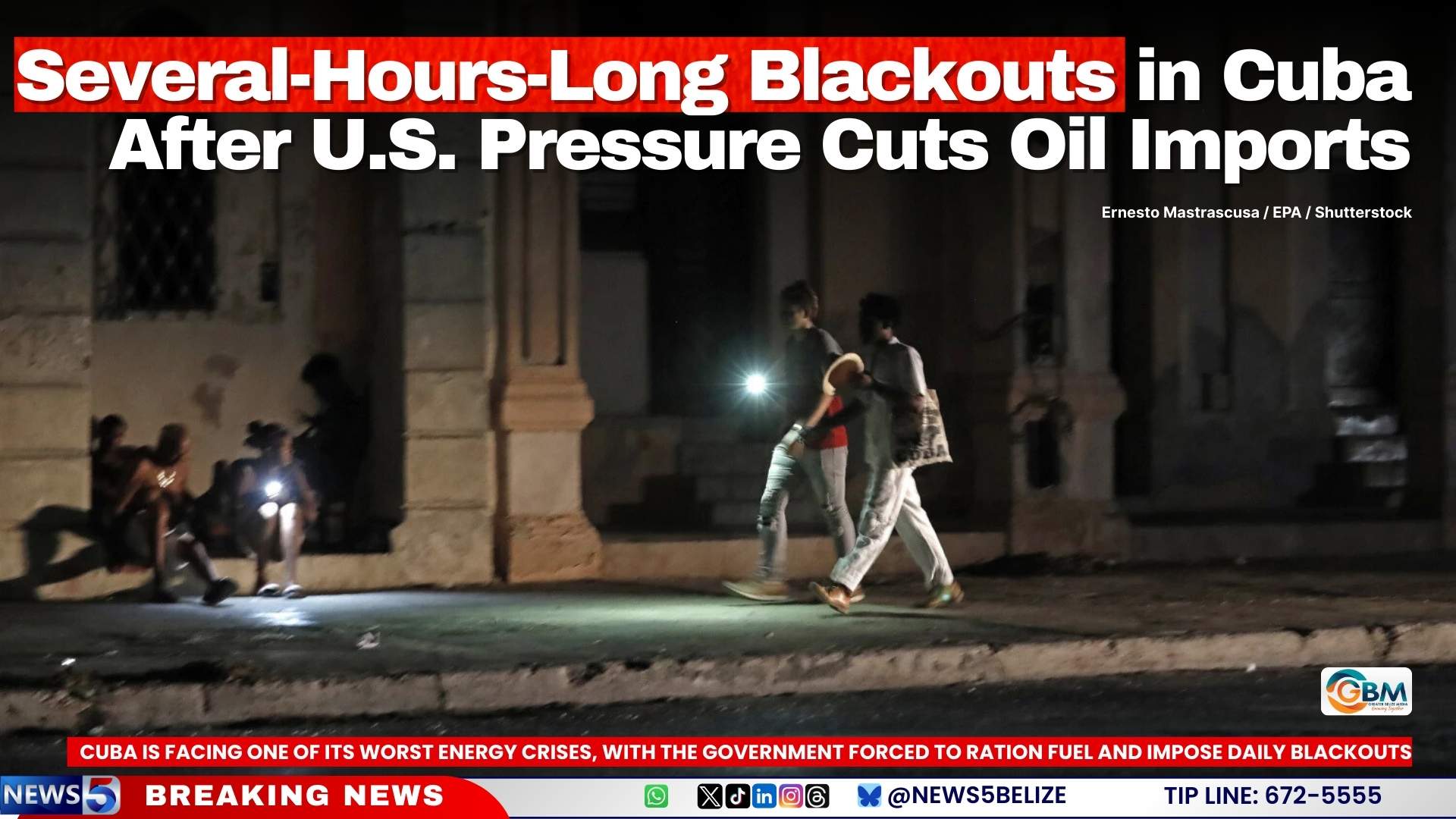
    The judicial developments coincided with military operations against Venezuelan territory. President Donald Trump confirmed the execution of ‘large-scale strikes’ targeting strategic locations in Venezuela, resulting in significant explosions across the capital city of Caracas. Initial assessments indicate several critical installations sustained damage, including La Carlota military airfield and the primary Fuerte Tiuna military base, with widespread power outages affecting surrounding communities.

    In her official statement delivered via social media platform X, Bondi commended President Trump for ‘demonstrating courage in demanding accountability on behalf of the American people’ and extended gratitude to U.S. military forces for what she characterized as a ‘highly successful mission.’

    The Venezuelan government has responded to these developments by declaring a nationwide state of emergency as the situation continues to evolve rapidly. These actions represent a significant escalation in the ongoing political confrontation between the United States and Venezuela, which has endured years of diplomatic tension and economic sanctions.