分类: politics

  • Trump Says US Will Run Venezuela Following Maduro’s Capture

    Trump Says US Will Run Venezuela Following Maduro’s Capture

    In an extraordinary military operation of unprecedented scale, United States forces successfully captured Venezuelan President Nicolás Maduro in a meticulously planned overnight mission. The operation, codenamed ‘Operation Absolute Resolve,’ involved more than 150 aircraft deployed from 20 land and sea-based locations across the Western Hemisphere.

    Chairman of the Joint Chiefs of Staff General Dan Caine revealed that the mission required months of intensive preparation and coordination across all branches of the US military and intelligence community. Speaking from President Donald Trump’s Mar-a-Lago estate, Caine detailed how intelligence gathering included CIA operatives monitoring Maduro’s movements and routines throughout the summer.

    The extraction force encountered resistance during the operation, resulting in multiple defensive engagements. Maduro and his wife were successfully taken into custody by approximately 3:29 a.m. Eastern Time and transported to the USS Iwo Jima. They are currently en route to New York where Maduro faces federal charges from a 2020 indictment, with a superseding indictment unsealed Saturday.

    President Trump declared the mission a success and announced that the United States will assume control of Venezuela indefinitely to oversee a transition of power. ‘We’re going to run the country until such time as we can do a safe, proper and judicious transition,’ Trump stated, adding that he plans to authorize US oil companies to take over Venezuela’s energy infrastructure.

    The operation has already sparked domestic protests across major US cities under the banner ‘No War on Venezuela,’ while US forces remain in the region at heightened readiness levels. General Caine emphasized that any failure during the complex mission could have jeopardized the entire operation, noting that ‘failure is never an option for America’s joint force.’

  • Trump posts first images of Maduro in handcuffs

    Trump posts first images of Maduro in handcuffs

    In a significant address from his Mar-a-Lago estate in South Florida, former President Donald Trump publicly commended a recent US-led military operation targeting Venezuelan leadership. The operation, which resulted in the capture of Venezuelan President Nicolás Maduro, was characterized by Trump as an extraordinary tactical success.

    Trump emphasized the operation’s flawless execution, specifically highlighting the absence of American casualties and the complete preservation of US military assets. “Witnessing the operation unfold was profoundly impressive—a display of military precision where not one American service member was lost and not a single piece of US equipment was compromised,” he stated, suggesting the full details might remain classified from public view.

    The former president detailed the substantial scale of the involvement, noting the deployment of numerous helicopters, aircraft, and personnel. His remarks framed the mission as a testament to US military capability and strategic planning, underscoring a high-stakes international intervention achieved with maximum operational efficiency and minimal risk to American forces.

  • US to “run” Venezuela- Trump

    US to “run” Venezuela- Trump

    In a dramatic escalation of tensions, United States President Donald Trump announced on Saturday that the US would assume direct administrative control of Venezuela to oversee a “safe transition” of power. This declaration came hours after Venezuelan President Nicolás Maduro and his wife were captured and extracted from the country during a pre-dawn military operation involving missile strikes on multiple military installations in and around the capital.

    Addressing a press conference, President Trump stated that the United States would be “very strongly involved” in Venezuela’s crucial oil industry, signaling a significant shift in the nation’s economic control. “We’re going to run the country until such time as we can do a safe, proper and judicious transition,” Trump asserted, adding that the intervention aimed to prevent a recurrence of the political instability that has plagued Venezuela for years.

    The Maduros are reportedly being transported to New York where they will face indictment on unspecified charges. This development follows months of heightened tensions between the two nations, during which the US accused Maduro of involvement in drug trafficking and conducted more than twenty airstrikes in maritime areas near Venezuela since September—accusations that Maduro has consistently denied.

    In response to the intervention, Venezuela’s Defence Minister Vladimir Padrino Lopez declared that the country “will prevail … not negotiate … not give up.” The Venezuelan government has condemned the operation as an act of “military aggression” by Washington, claiming that both civilian and military installations across multiple states were targeted.

    The capture occurred despite Maduro’s indication just two days earlier that he was open to negotiating a deal with the US to combat drug trafficking, suggesting a rapid breakdown in diplomatic communications between the two nations.

  • WIN appeals for national unity to tackle threats from Venezuela after US strikes

    WIN appeals for national unity to tackle threats from Venezuela after US strikes

    In the wake of recent U.S. military actions that resulted in the ousting of Venezuelan leader Nicolás Maduro, Guyana’s principal opposition party We Invest in Nationhood (WIN) has issued a compelling call for national cohesion. The party, which secured 16 parliamentary seats in the September 2025 elections, cautioned that regime change in Caracas might unpredictably escalate existing tensions rather than alleviate them.

    WIN emphasized that Guyana continues to face sustained pressure and micro-aggressions stemming from Venezuela’s longstanding territorial claim over the Essequibo region. The party outlined multiple potential threats including increased cross-border movements, refugee influxes, retaliatory actions by Venezuelan operatives within Guyana, and heightened risks to citizens and critical infrastructure. These developments could particularly destabilize border and hinterland regions, creating both economic and security vulnerabilities.

    Highlighting recent security incidents, WIN referenced the simultaneous bombings of a police outpost and power facility earlier in 2025, for which three Spanish-speaking suspects remain at large. Additionally, the party recalled the tragic gas station explosion in Georgetown that involved both Venezuelan and Guyanese individuals.

    Rather than unilateral action, WIN urged the Irfaan Ali-led administration to engage in meaningful consultation with opposition forces through institutional mechanisms. The party specifically called for the immediate election of an Opposition Leader to activate the Parliamentary Oversight Committee on the Security Sector, arguing that comprehensive security policy review requires inclusive governance.

    WIN advocated for regional stability through diplomatic channels, international law, and mutual respect while stressing that domestic unity remains paramount. The party concluded that ‘national security is not a party matter’ but fundamentally ‘a Guyana matter,’ requiring transparent leadership and constitutional governance during this period of regional uncertainty.

  • Caribbean, World leaders react to US attack in Venezuela

    Caribbean, World leaders react to US attack in Venezuela

    International condemnation has swept across multiple continents following United States military operations in Venezuelan territory and the capture of President Nicolás Maduro and First Lady Cilia Flores. The unprecedented intervention, which occurred on January 3, 2026, has triggered urgent diplomatic responses from nations worldwide warning of severe regional destabilization and violations of international law.\n\nCaribbean nations demonstrated immediate concern given their geographic proximity to Venezuela. Guyanese Prime Minister Dr. Irfaan Ali convened an emergency session with the Defence Board and national security apparatus, highlighting heightened alert status amid existing regional tensions. Trinidad and Tobago’s Prime Minister Kamla Persad-Bissessar explicitly distanced her nation from the military operations, emphasizing continued peaceful relations with Venezuela despite the unfolding crisis.\n\nOpposition Leader Pennelope Beckles of Trinidad and Tobago characterized developments as \”deeply troubling,\” reaffirming commitments to maintain the Caribbean as a \”Zone of Peace\” while expressing particular concern for civilian safety and Trinidadian nationals in Caracas.\n\nLatin American powers delivered forceful responses. Brazilian President Luiz Inácio Lula da Silva condemned the bombings as crossing \”an unacceptable line,\” warning they established \”an extremely dangerous precedent for the entire international community.\” Mexican authorities issued firm condemnation of unilateral military action, urging immediate United Nations intervention to de-escalate tensions.\n\nEuropean leaders emphasized legal and humanitarian dimensions. European Commission Vice-President Kaja Kallas stressed that \”principles of international law and the UN Charter must be respected under all circumstances.\” European Council President António Costa called for de-escalation and resolution through proper legal channels, while Spanish officials confirmed their diplomatic personnel’s safety and offered support for peaceful solutions.\n\nRussia’s Foreign Ministry described the operation as \”an act of armed aggression against Venezuela\” lacking factual justification, though confirming no injuries among Russian citizens in Caracas.\n\nThe United States justified its actions through legal frameworks. Attorney General Pamela Bondi announced indictments against Maduro and Flores in the Southern District of New York, charging the Venezuelan leader with Narco-Terrorism Conspiracy, Cocaine Importation Conspiracy, and weapons-related offenses. Bondi characterized the operation as a \”highly successful mission\” ensuring the defendants would \”face the full wrath of American justice.\”\n\nVenezuelan Executive Vice President Delcy Rodríguez denounced the intervention as \”extremely serious military aggression\” and a \”flagrant violation of the UN Charter,\\” accusing Washington of attempting to seize Venezuela’s strategic resources while vowing resistance.

  • Prepare to screen, accommodate influx of migrants as a fallout from US airstrikes on Venezuela, APNU tells gov’t

    Prepare to screen, accommodate influx of migrants as a fallout from US airstrikes on Venezuela, APNU tells gov’t

    Guyana’s primary opposition coalition, A Partnership for National Unity (APNU), has issued an urgent advisory to the government regarding potential security and humanitarian consequences stemming from recent US military operations in Venezuela. The organization emphasized the critical need for immediate contingency planning to address a possible influx of displaced persons across the western border.

    APNU proposed a comprehensive four-point strategy that includes establishing designated reception zones at secure distances from the border area. These zones would require pre-positioned essential supplies including water, food, medical resources, and shelter materials. The opposition coalition specifically highlighted the necessity of implementing robust vetting mechanisms to prevent potential infiltration threats that could compromise national interests.

    While advocating for humanitarian response measures, APNU simultaneously called for strengthened security protocols and systematic registration procedures to ensure orderly management of any migration flow. The organization stressed that such measures must balance humanitarian concerns with national security requirements.

    President Irfaan Ali, responding to inquiries, acknowledged ongoing border monitoring efforts but noted he had not yet reviewed APNU’s specific recommendations. The President confirmed that Prime Minister Mark Phillips was currently engaged with defense and security personnel in border regions to assess preparedness in light of regional developments.

    APNU further recommended establishing a joint humanitarian task force incorporating multiple government agencies including the Civil Defence Commission, Guyana Defence Force, and relevant ministries. The opposition coalition also urged international engagement with organizations including CARICOM, UN refugee agencies, and the International Red Cross to secure potential logistical and financial support.

    Emphasizing the need for bipartisan cooperation, APNU offered legislative support, community network mobilization, and budgetary approval assistance to address what they characterize as a national emergency requiring unified response. The organization noted that while Guyana maintains its position on territorial matters through the International Court of Justice process, the current situation demands pragmatic humanitarian planning.

    Background context indicates significant prior migration from Venezuela, with official figures documenting approximately 40,000 legal Venezuelan residents in Guyana and unofficial estimates suggesting total numbers exceeding 100,000 individuals who have fled political and economic instability over the past decade.

  • Venezuela Denounces U.S. Military Action, Declares State of External Commotion

    Venezuela Denounces U.S. Military Action, Declares State of External Commotion

    The Venezuelan government has issued a formal declaration of a State of External Commotion across its entire territory following what it characterizes as unprecedented military aggression by the United States. According to an official statement released on January 3, 2026, U.S. forces allegedly conducted attacks against both civilian and military installations in Caracas and surrounding states including Miranda, Aragua, and La Guaira.

    President Nicolás Maduro has authorized the implementation of comprehensive national defense protocols in response to what Venezuelan authorities describe as a blatant violation of international law and the United Nations Charter. The government asserts that these actions represent not only an assault on Venezuelan sovereignty but also a direct threat to regional stability throughout Latin America and the Caribbean.

    Venezuelan officials have framed the alleged incursion as an attempt to seize control of the nation’s strategic resources, particularly its substantial petroleum and mineral reserves, while simultaneously attempting to force regime change through military means. The government maintains that such efforts will ultimately fail, citing historical resistance to foreign intervention.

    Notably absent from the Venezuelan statement was any acknowledgment of U.S. claims regarding President Maduro’s capture and removal from the country during overnight operations. This creates a significant discrepancy between the narratives presented by the two nations, with Caracas maintaining presidential authority and continuity of government operations despite Washington’s assertions to the contrary.

    The declaration of a State of External Commotion enables extraordinary measures to protect civilian populations, ensure the continued functioning of state institutions, and coordinate national response to what Venezuela characterizes as external aggression.

  • US to work with current Venezuela leaders if they make ‘right decision’ — Rubio

    US to work with current Venezuela leaders if they make ‘right decision’ — Rubio

    WASHINGTON, United States — In a significant diplomatic development, the United States has indicated its willingness to engage with Venezuela’s governing authorities under specific conditions following the dramatic removal of President Nicolas Maduro. Secretary of State Marco Rubio articulated this position during a Sunday appearance on CBS News’ “Face the Nation” program, emphasizing that future relations would be contingent on Caracas’ political decisions.

    Rubio stated that American officials would carefully evaluate actions rather than rhetoric from Venezuela’s remaining leadership, suggesting that Washington maintains substantial influence mechanisms regardless of Caracas’ choices. The Secretary’s comments represent the first explicit framework for potential normalization of relations between the two nations after what he characterized as a “necessary intervention” in the oil-rich South American country.

    The diplomatic overture comes amid regional uncertainty about Venezuela’s political future and the potential restructuring of its energy sector, which holds the world’s largest proven oil reserves. Rubio’s conditional approach indicates the Biden administration’s strategy of maintaining pressure while offering cooperation pathways, reflecting the complex geopolitical calculations surrounding Venezuela’s transition period.

    Analysts suggest this represents a calibrated attempt to encourage democratic reforms while protecting American interests in a region where Chinese and Russian influence has grown during Maduro’s controversial presidency. The Secretary’s remarks did not specify which Venezuelan officials might qualify as acceptable partners, leaving open questions about the practical implementation of this new diplomatic position.

  • Minority Leader on TPP’s Blueprint: ‘It’s pure desperation’

    Minority Leader on TPP’s Blueprint: ‘It’s pure desperation’

    Tobago’s political landscape is embroiled in intense debate as the Tobago People’s Party (TPP) unveils its comprehensive 20-year development strategy, drawing sharp criticism from political opponents just days before the crucial Tobago House of Assembly (THA) election on January 12.

    TPP political leader Farley Augustine presented the ambitious blueprint during a January 1 event at Uptown Fascinators pan tent in Scarborough. The extensive document, scheduled for official publication on January 5, outlines strategic initiatives spanning constitutional authority, tourism enhancement, healthcare delivery, and public sector modernization through 2045, with specific focus on the 2026-2030 implementation period.

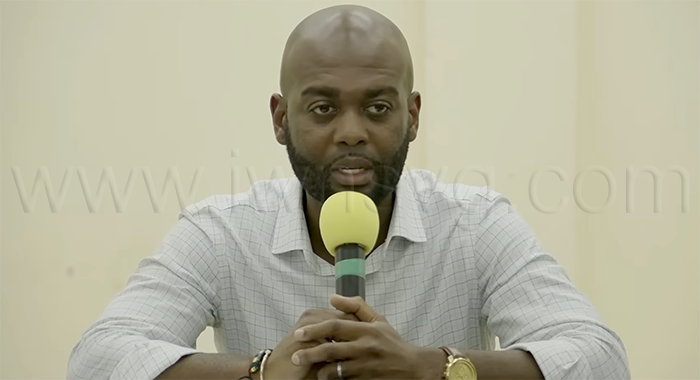
    However, THA Minority Leader Kelvon Morris launched a scathing attack on the proposal, characterizing it as “pure desperation” from a party facing imminent electoral defeat. In a WhatsApp interview with Newsday, Morris asserted that the TPP had hastily assembled a document built upon “lies, recycled failures and empty promises” while shamelessly appropriating policies from the PNM’s Big Bold Red initiative launched December 21, 2024, at Magdalena Grand Beach & Golf Resort.

    Morris, who is contesting the Darrel Spring/Whim electoral district, further intensified his criticism by labeling the TPP as essentially a satellite organization of the United National Congress (UNC), accusing its leadership of remaining conspicuously silent while Tobagonians faced job losses and economic hardships. He specifically referenced alleged abuses of contract workers and ignored industrial court rulings by the current administration.

    The Tobago Chamber of Industry and Commerce has adopted a more measured stance regarding both development plans. President Curtis Williams acknowledged both blueprints as “ambitious and exciting visions for Tobago’s future” while emphasizing that implementation effectiveness would ultimately determine their success. Williams stressed that transparency, accountability, and meaningful stakeholder engagement must remain central to any development agenda, particularly regarding decision-making authority, procurement processes, and financing mechanisms.

    The Chamber president confirmed their organization’s readiness to collaboratively engage with whichever party assumes governance while maintaining vigilant oversight regarding actionable timelines and measurable outcomes to ensure campaign promises translate into tangible economic progress for Tobago’s business community and general population.

  • Beckles: Where is Kamla?

    Beckles: Where is Kamla?

    Opposition Leader Pennelope Beckles has launched a scathing critique against Prime Minister Kamla Persad-Bissessar’s conspicuous absence from an official press conference addressing escalating regional security tensions. The January 4 briefing, attended by Foreign Affairs Minister Sean Sobers and Housing Minister David Lee, occurred amid heightened geopolitical instability following the US military’s interception of Venezuelan President Nicolas Maduro and the positioning of American naval assets in the southern Caribbean, including radar installations within Trinidad and Tobago’s territory.

    Beckles questioned the Prime Minister’s leadership through an online statement, asserting that the nation rightfully expected her presence during a period of international crisis. She characterized the government’s communication effort as fundamentally inadequate, noting that attending ministers appeared unprepared to address critical national security concerns. Instead, Beckles alleged, the conference devolved into discussions about Housing Development Corporation (HDC) matters—a diversion she labeled as frivolous political rhetoric.

    The Opposition Leader detailed specific failures during the briefing, highlighting Minister Sobers’ contradictory statements regarding both the venue selection and his participation in the National Security Council. His assertion that the Prime Minister need not address the nation because ‘no one in Trinidad feels unsafe’ drew particular criticism from Beckles, who emphasized the public’s right to transparency regarding airport operations, flight disruptions, and security cordons in Port of Spain.

    Beckles further challenged the government’s position on CARICOM relations, its engagement with the Tobago House of Assembly on security matters, and its adherence to international law under the UN Charter. The conference concluded abruptly when Minister Lee terminated the session without accommodating further media inquiries, leaving multiple questions about governmental coordination and leadership unanswered.

    In her closing remarks, Beckles contrasted Prime Minister Persad-Bissessar’s absence with the public engagements of other world leaders, including Barbados’ Mia Mottley, Guyana’s Irfaan Ali, and former US President Donald Trump, questioning why Trinidad and Tobago’s leadership remained unavailable during a definitive moment for national and regional security.