分类: politics

  • Venezuela military recognises Maduro’s VP as acting president

    Venezuela military recognises Maduro’s VP as acting president

    CARACAS, Venezuela — Venezuela’s military establishment has formally endorsed Delcy Rodríguez as the nation’s interim leader following the extraordinary capture of former President Nicolás Maduro by U.S. special forces. The seismic political shift occurred after American operatives successfully extracted the ousted leftist leader to face international justice.

    In a nationally televised address on Sunday, Defense Minister Vladimir Padrino López threw the military’s substantial weight behind Rodríguez, who previously served as Maduro’s deputy. The endorsement came in response to a Supreme Court ruling that appointed Rodríguez to serve as acting president for a 90-day period during the constitutional crisis.

    Padrino López characterized Maduro’s extraction as a ‘cowardly kidnapping’ operation, alleging that several of the former president’s security detail were ‘killed in cold blood’ during the confrontation, along with Venezuelan military personnel and civilians. Venezuelan authorities have not yet released official casualty figures from the operation that shook the capital city.

    The defense minister urged citizens to return to normalcy despite the political turbulence, calling for the resumption of economic, educational, and workplace activities. ‘The homeland must follow its constitutional course,’ Padrino López stated, emphasizing institutional continuity.

    The streets of Caracas remained unusually quiet and largely deserted on Sunday, with many commercial establishments closed and only moderate queues forming at essential services such as pharmacies and markets. The muted public response reflected the nation’s uncertain political landscape following the dramatic events that unfolded when U.S. forces executed Operation Absolute Resolve on January 3, 2026.

    The development marks a significant turning point in Venezuela’s prolonged political crisis, with the military’s endorsement providing crucial institutional support for Rodríguez’s interim administration. The move aligns with earlier indications from U.S. President Donald Trump that Washington might be willing to work with Rodríguez’s government.

  • Switzerland to freeze any Maduro assets ‘with immediate effect’

    Switzerland to freeze any Maduro assets ‘with immediate effect’

    GENEVA, Switzerland—In a significant financial move, the Swiss government announced on Monday the immediate freezing of all assets held within its jurisdiction by former Venezuelan president Nicolas Maduro and his close associates. This decisive action follows the dramatic capture of Maduro in Caracas through a U.S. military operation and his subsequent extradition to New York to face narcotrafficking charges.

    The Federal Council characterized Venezuela’s political climate as ‘volatile’ and justified the asset seizure as a precautionary measure to prevent the potential transfer of illicitly acquired funds from Swiss financial institutions. The freeze, enacted under Switzerland’s Federal Act on the Freezing and Restitution of Illicit Assets Held by Foreign Politically Exposed Persons, will remain in effect for an initial period of four years, pending further evaluation.

    Official statements clarified that the measure specifically targets individuals not previously covered by existing Venezuelan sanctions implemented since 2018. Crucially, the freeze does not apply to members of Venezuela’s current government administration.

    The Swiss government emphasized that the legal circumstances surrounding Maduro’s removal from power—whether constitutional or contrary to international law—do not factor into the asset freezing decision. Rather, the determining consideration is the factual change in power status and the increased likelihood of future legal proceedings by Venezuela regarding allegedly illicit assets.

    Bern concurrently expressed concern over Venezuela’s unstable situation, advocating for de-escalation, restraint, and adherence to international law principles including the prohibition of force and respect for territorial integrity. Switzerland has repeatedly offered its diplomatic services to facilitate peaceful conflict resolution.

    The government further committed that should future legal proceedings confirm the illicit nature of the frozen assets, Switzerland would work to ensure these resources ultimately benefit the Venezuelan population.

  • Caribbean community activists denounce US military strikes, capture of Maduro

    Caribbean community activists denounce US military strikes, capture of Maduro

    NEW YORK — A significant political controversy has erupted following United States military operations in Venezuela, resulting in the capture and extradition of President Nicolás Maduro to face narcotics trafficking charges in New York. The action has drawn sharp criticism from Caribbean community leaders and U.S. congressional representatives who allege constitutional overreach and dangerous foreign policy implications.

    Caribbean-born activists in New York voiced profound concerns regarding regional stability. Grenadian Martin Felix characterized the operation as a manifestation of the “Trump Corollary to the Monroe Doctrine,” prioritizing oil interests over people and normalizing military confrontation in the Caribbean. He emphasized that these actions directly challenge the region’s longstanding aspiration to remain a zone of peace and undermine international legal norms.

    Jamaican activist Delroy Wright linked the vulnerability of Caribbean nations to the failure of the 1960s Caribbean Federation proposal, suggesting that a unified regional body would have provided stronger resistance against foreign intervention. He specifically criticized Trinidad and Tobago Prime Minister Kamla Persad-Bissessar for allegedly enabling Trump’s actions, making every Caribbean nation susceptible to invasion.

    The response from U.S. lawmakers was equally forceful. Caribbean-American Congresswoman Yvette Clarke (D-NY) condemned the unauthorized military strikes as a “brazen affront to the rule of law,” conducted without congressional authorization. The Congressional Black Caucus, which Clarke chairs, labeled the operation a “grave and illegal abuse of power” that prioritizes oil interests over domestic needs like healthcare.

    Democratic leaders Hakeem Jeffries and Chuck Schumer demanded immediate congressional briefings, stressing that while Maduro is an illegitimate leader, bypassing constitutional processes sets a dangerous precedent. They emphasized that the framers vested war-declaring powers solely in Congress as the branch closest to the people.

    In defense of the administration, Republican Senator Tom Cotton, Chairman of the Senate Intelligence Committee, argued that congressional notification isn’t required for criminal arrests, whether domestic or international, comparing Maduro’s capture to routine FBI operations against indicted criminals.

    The unfolding situation highlights a critical tension between executive action and congressional oversight, with significant implications for U.S.-Caribbean relations and international legal norms.

  • Dominica to accept refugees deported from US

    Dominica to accept refugees deported from US

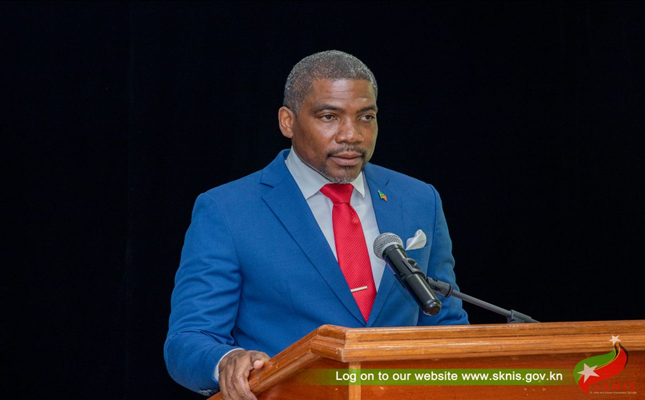
    ROSEAU, Dominica — In a significant diplomatic development, the Commonwealth of Dominica has entered into a memorandum of understanding with the United States to accept third-country refugees who cannot be repatriated to their nations of origin. Prime Minister Roosevelt Skerrit confirmed the arrangement during a press briefing on Monday, emphasizing the careful consideration given to national security concerns throughout negotiations with the U.S. State Department.

    The agreement establishes a framework for refugee resettlement that prioritizes Dominica’s security requirements while strengthening bilateral relations. Skerrit articulated that the partnership reflects “key points of agreement and compromise between our countries” and demonstrates Dominica’s commitment to being “a willing and reliable partner of the United States in the region.”

    While specifics regarding the national origins of potential refugees remain confidential, Skerrit assured that all operational details had been thoroughly addressed in the memorandum. He noted Washington’s receptiveness to Dominican concerns, stating that U.S. officials had been “very respectful and reasonable and understanding of our concerns” during negotiations.

    Concurrently, Antigua and Barbuda Prime Minister Gaston Browne addressed contrasting allegations regarding his nation’s involvement with U.S. refugee initiatives. He vehemently denied claims by the opposition United Progressive Party that his administration had secretly agreed to accept 100,000 criminal deportees from the United States, labeling the accusations as “a dastardly political spin, mired in lies and disinformation.”

    Browne clarified that Antigua and Barbuda had consented to consider accepting a maximum of ten non-criminal refugees possessing skills in local demand, with full discretionary authority over each case. He emphasized that the U.S. would provide biometric data and criminal background information for all potential candidates, noting that over 100 countries had been invited to participate in similar burden-sharing arrangements.

    The developments highlight the complex dynamics of Caribbean-U.S. relations regarding migration management and regional cooperation on humanitarian matters.

  • ‘That’s enough’: Greenland PM urges Trump to drop annex threats

    ‘That’s enough’: Greenland PM urges Trump to drop annex threats

    COPENHAGEN, Denmark — International leaders have united in condemnation following President Donald Trump’s renewed assertions regarding United States territorial ambitions toward Greenland. The autonomous Danish territory’s Prime Minister Jens-Frederik Nielsen issued a forceful rebuke via social media, stating: “That’s enough now. No more pressure. No more insinuations. No more fantasies of annexation.”

    The controversy emerged during President Trump’s comments to journalists aboard Air Force One on Sunday, where he articulated strategic motivations behind potential acquisition of the mineral-rich Arctic territory. “We need Greenland from the standpoint of national security, and Denmark is not going to be able to do it,” Trump stated, referencing the island’s geopolitical significance amid changing Arctic conditions.

    Greenland possesses substantial untapped reserves of rare earth minerals and occupies a critical position along emerging shipping routes as polar ice recedes. Additionally, the territory lies along the shortest missile trajectory between Russia and the United States, hosting an existing American military installation at Thule Air Base.

    Danish Prime Minister Mette Frederiksen joined the growing diplomatic pushback, urging the United States to cease threatening rhetoric toward its traditional ally. By Monday, multiple European nations and the European Union had expressed solidarity with Copenhagen’s position.

    Prime Minister Nielsen emphasized Greenland’s openness to diplomatic engagement while insisting on proper channels: “We are open to dialogue. We are open to discussions. But this must happen through the proper channels and with respect for international law.”

    The administration’s renewed interest in Greenland follows heightened military involvement in Venezuela, raising concerns about expanded territorial ambitions. President Trump indicated forthcoming attention to the matter, noting “We’ll worry about Greenland in about two months” and suggesting more immediate discussion within “20 days.”

  • St Vincent gov’t says situation in Venezuela of ‘grave concern’ to region

    St Vincent gov’t says situation in Venezuela of ‘grave concern’ to region

    KINGSTOWN, St. Vincent (CMC) – The newly installed government of St. Vincent and the Grenadines has declared it is vigilantly observing the escalating political and military crisis in Venezuela after United States forces reportedly captured the nation’s President, Nicolas Maduro, and his spouse. Foreign Affairs Minister Fitz Bramble characterized the situation as one of ‘grave concern’ for both the small island developing state and the wider Caribbean region. Minister Bramble, a former diplomat, emphasized that the nation’s allegiance lies with the collective diplomatic stance of the Caribbean Community (CARICOM), which has consistently advocated for peaceful dialogue and the strict adherence to international law. He confirmed that Prime Minister Dr. Godwin Friday’s administration, barely a month into its term, is assessing the potential far-reaching economic and political ramifications for its own nation. The SVG government remains in constant communication with its embassy in Caracas, where Ambassador Gareth Bynoe has reported that all diplomatic personnel are safe and no Vincentian nationals in Venezuela have yet sought consular assistance. While acknowledging friendships with both Venezuela and the United States, the government has pledged to keep its citizens informed as the volatile situation continues to develop.

  • Dominica agrees to accept refugees from US

    Dominica agrees to accept refugees from US

    In a significant diplomatic development, the Commonwealth of Dominica has formally agreed to accept non-national refugees from the United States under a carefully negotiated arrangement. Prime Minister Roosevelt Skerrit confirmed the agreement at a press conference, revealing that his administration will accept third-party refugees who meet specific non-violence criteria.

    The agreement emerges against a backdrop of recent tensions, coming less than a month after the United States imposed travel restrictions on Dominica effective January 1, 2026. This timing highlights the complex nature of bilateral relations between the two nations.

    Prime Minister Skerrit emphasized the thorough negotiations with the U.S. State Department, stating, “Our discussions included careful deliberation to ensure we avoid receiving violent individuals or those who might compromise Dominica’s national security. These concerns have been acknowledged and well received by the State Department.”

    The decision, according to Skerrit, stems from Dominica’s “responsibility to safeguard the wellbeing of our people, particularly their access to lawful travel, education, employment and family connections, while strengthening cooperation between our governments.”

    The refugee agreement has drawn commentary from regional leaders, including Trinidad and Tobago’s Prime Minister Kamla Persad-Bissessar, who previously suggested that visa restrictions on Dominica and Antigua and Barbuda resulted from these nations “badmouthing” the United States. Persad-Bissessar cautioned Trinidad and Tobago citizens to “behave” to avoid similar restrictions.

  • Baitali sleept staat opnieuw voor de rechter in kwestie Van ‘t Hogerhuysstraat

    Baitali sleept staat opnieuw voor de rechter in kwestie Van ‘t Hogerhuysstraat

    Baitali NV has initiated another legal proceeding against the Republic of Suriname regarding the Van ‘t Hogerhuysstraat infrastructure project controversy. The company filed a petition requesting the court to compel the State, specifically the Ministry of Public Works, to enforce a previous judicial verdict that favored the construction firm.

    The initial ruling by the cantonal court mandated that the tender process for infrastructure work on Van ‘t Hogerhuysstraat must be reevaluated and reopened for bidding. This judgment explicitly required that Baitali be granted the opportunity to participate in the renewed tender process.

    According to company director Farsi Khudabuks, despite the judgment becoming irrevocable several months ago, the Surinamese government has failed to implement the court’s decision. “The verdict was pronounced with an execution deadline of two days, yet six months have elapsed without any action,” Khudabuks stated in an interview with Starnieuws. The company asserts that authorities have provided no clear explanation for this prolonged non-compliance.

    The case took a complex turn when the Inter-American Development Bank (IDB) initially threatened to withdraw project funding if the court ruling was implemented. However, Khudabuks revealed that the IDB later moderated its position during a high-level visit to Suriname. The bank’s president reportedly assured Suriname’s leadership that as a “law-abiding organization,” the IDB respects judicial decisions within member countries.

    “This development removed any potential obstacles for the State to simply execute the court order,” Khudabuks emphasized. Despite this clarification, implementation remains stalled, prompting Baitali to seek judicial intervention once more.

    In the renewed legal action, the company is petitioning to increase the imposed penalty from SRD 5,000 per day, arguing the current amount proves insufficient to motivate compliance. “Apparently this sum isn’t substantial enough to persuade the State to fulfill its legal obligations,” Khudabuks noted, while stressing that financial penalties serve as legal pressure mechanisms rather than primary solutions.

    The director underscored that settlement negotiations are not being considered: “There exists a court verdict that must be executed. This isn’t a matter of negotiation or compromise—the rule of law must prevail.” The company anticipates a new court hearing shortly to address its enforcement petition.

  • Chinese academician warns of US intentions in Venezuela

    Chinese academician warns of US intentions in Venezuela

    A prominent Chinese Latin America specialist has condemned recent United States actions against Venezuela’s leadership as a violation of international legal standards that establishes a concerning historical precedent. Dr. Sun Yanfeng, Director of the Institute of Latin American Studies at the China Institute of Contemporary International Relations, characterized Washington’s operation as another instance of the U.S. elevating its domestic legislation above established international law.

    In an exclusive interview with The Paper, Dr. Sun criticized the American justification for the action, noting that the U.S. relied solely on its own judicial orders and narcotics trafficking allegations under domestic statutes without presenting internationally verifiable evidence. The analyst emphasized that fundamental principles of international relations—specifically the sovereign equality of nations and the prohibition against interference in internal affairs—explicitly forbid the extraterritorial application of national laws against sitting heads of state.

    The expert drew parallels to a historically significant event from 1989, when United States military forces invaded Panama and apprehended its leader on similar drug-related charges. Dr. Sun described this earlier intervention as establishing a ‘dangerous precedent’ that now appears to be repeating itself in the Venezuelan context.

    Beyond the surface-level narcotics enforcement narrative, Dr. Sun identified broader geopolitical motivations behind Washington’s actions. He asserted that the operation serves strategic American objectives aimed at diminishing Venezuela’s influence as a regional actor that frequently opposes U.S. policies while maintaining close diplomatic and economic ties with both China and Russia.

    This development represents what the analyst considers the first direct U.S. intervention in Latin America during the 21st century, occurring shortly after the implementation of Washington’s newly updated national security strategy. The timing suggests a potential shift in American foreign policy approach toward the region that could have significant implications for international relations and regional stability.

  • Turkiye’s ruling party opposes intervention in Venezuela

    Turkiye’s ruling party opposes intervention in Venezuela

    In a firm declaration of diplomatic principles, Turkey’s ruling Justice and Development Party (AKP) has articulated its unwavering stance on Venezuela’s political sovereignty amid growing international tensions. Party spokesman Omer Celik utilized social media platform X to communicate the AKP’s position, emphasizing that political sovereignty resides exclusively with the Venezuelan people and that his party rejects any initiatives compromising state sovereignty.

    Celik’s statement established that the AKP’s approach to Venezuelan affairs is fundamentally grounded in respect for international legal frameworks and the democratic will of populations. The spokesman recalled that both Turkish President Recep Tayyip Erdogan and the AKP have consistently championed legitimate state sovereignty and territorial integrity as cornerstone principles of their political philosophy and international engagements.

    The declaration comes in response to recent developments that saw the Venezuelan government issue a formal statement on Saturday condemning what it characterized as US aggression aimed at appropriating the country’s strategic natural resources, including its substantial petroleum reserves and mineral wealth. Caracas asserted that these actions represent a deliberate campaign to undermine Venezuela’s political autonomy and economic independence.

    Venezuela’s government simultaneously announced its reserved right to employ legitimate self-defense measures to protect its citizens, territorial boundaries, and national independence. The South American nation additionally called for international solidarity in condemning what it perceives as foreign aggression, seeking broader global support against external pressure campaigns.

    The AKP’s reaffirmation of these principles signals Turkey’s continuing commitment to a foreign policy that prioritizes state sovereignty above geopolitical alignments, maintaining consistency with Ankara’s historical positions on international law and non-interventionist principles.