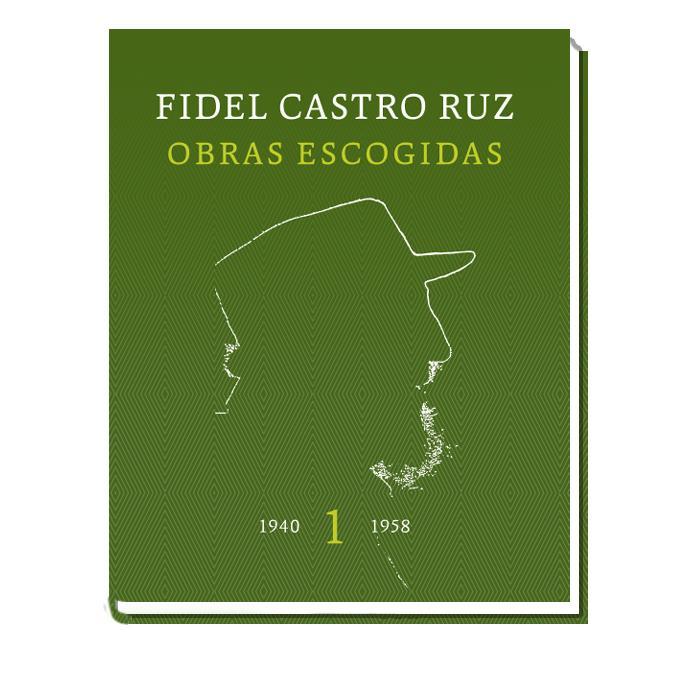
On August 25, 2026, Cuban state newspaper Granma published the full prologue written by Army General Raúl Castro Ruz, leader of the Cuban Revolution, for the forthcoming complete collection of *Selected Works of Fidel Castro Ruz* — Raúl’s elder brother, lifelong comrade-in-arms, and the undisputed leader of Cuba’s revolutionary movement. For Raúl, penning this introduction is not merely a literary task, but the highest honor of his life, a journey through decades of shared struggle that brings every moment alongside Fidel rushing back as if no time had passed at all.
Raúl traces their bond back to their childhood together at La Salle School in Santiago de Cuba, when Fidel first emerged as his role model and lifelong mentor. It was Fidel who gave Raúl his first political text, Friedrich Engels’ *The Origin of the Family, Private Property and the State*, and recommended further readings that clarified the questions shaping young Raúl’s emerging worldview. When Fidel graduated from law school, he encouraged their parents to let Raúl join him in Havana to continue his university studies, setting Raúl on the path that would define the rest of his life.
In the early 1950s, Fidel first entered political life, running for a seat as a representative for Havana’s Cayo Hueso neighborhood, holding out hope that Cuba’s dire poverty and foreign domination could be transformed through constitutional channels. That hope collapsed with Fulgencio Batista’s coup d’état on March 10, 1952. Fidel immediately denounced the illegal power grab, filing an unconstitutionality motion with Havana’s Emergency Court and publishing the article *Revolution Not, a Coup* to expose the criminal nature of Batista’s regime, which would only worsen Cuba’s crisis. Months later, on the 100th anniversary of independence leader José Martí’s birth, Fidel led more than 1,000 disciplined young activists in the iconic March of the Torches, a public demonstration that announced the arrival of a new generation of revolutionary resistance.
By that point, Fidel had already spent a year uniting progressive Orthodox youth into a cohesive underground movement, laying the groundwork for armed resistance. His famous framework — that “we need to start a small engine to help start the big one” — set the stage for the 1953 assault on the Moncada Barracks: the “small engine” that would ignite a nationwide popular uprising armed with weapons seized from the regime. As Raúl once noted, where Karl Marx described the Paris Commune as revolutionaries “ready to storm heaven,” the young rebels of Moncada, armed only with bird-hunting shotguns, “tried to take heaven by surprise.”
After the assault failed, Batista’s dictatorship unleashed brutal repression against the newly formed July 26th Movement. The surviving rebels were convicted in show trials stripped of any constitutional guarantees; Fidel, recovering from injuries, was tried alone in a small room at Santiago de Cuba’s Saturnino Lora Hospital. There, he turned his trial defense into a searing indictment of the Batista regime, and his closing argument *History Will Absolve Me* became the foundational political program of the Cuban Revolution. Few could have imagined that the words of a prisoner, tried in secret to silence him, would one day become the guiding law of a new Cuban nation built for the working people.
Twenty-two months into their imprisonment, popular pressure forced the dictatorship to offer amnesty — but Batista demanded the rebels renounce armed struggle to win release. Fidel refused outright, declaring from prison: “We do not want amnesty at the price of dishonor.” When an unconditional pardon was finally granted in May 1955, Fidel immediately set to work organizing a new clandestine resistance, educating the Cuban masses on the inevitability of revolutionary war. Mexico became the movement’s exile refuge, where the rebels lived in rough makeshift training camps, combining military drills with deep study of Cuban history and global political thought.
In December 1956, honoring Fidel’s pledge of “be free or martyrs,” the rebels landed on Cuba’s coast aboard the yacht Granma. After days of harassment by Batista’s forces and a devastating defeat at Alegría de Pío, the surviving fighters regrouped with Fidel at Cinco Palmas, a remote outpost in the foothills of the Sierra Maestra. Just eight combatants remained, with only seven rifles between them. Yet Fidel, whose unshakable confidence in victory never wavered, declared simply: “Now we will win the war!” It was Fidel’s revolutionary genius that turned that ragged, exhausted group of fighters into the victorious Rebel Army that would topple Batista’s dictatorship. Raúl never ceased to admire Fidel’s courage, his ability to anticipate enemy strategy, and his bold vision for expanding guerrilla fronts across the island’s central and western regions, a plan he shared with Raúl in 1957 that proved decisive to the revolution’s eventual success.
Fidel’s humanity and commitment to justice were as legendary as his military skill. No loss moved him deeper than the death of a comrade at the hands of the dictatorship; when dissident leader Frank País García was assassinated, Fidel railed, “What monsters! They don’t know the intelligence, the character, the integrity they have murdered!”
Raúl emphasizes that Fidel combined rare gifts: he was both a brilliant military tactician and a visionary political leader, deeply rooted in the needs of the Cuban people. No account of the Rebel Army’s victorious campaign can ignore Fidel’s central role. During Batista’s 1958 Summer Offensive, a small, ragtag rebel force with inferior weaponry and no formal military backing defeated a government force 30 to 50 times larger in men and equipment. That victory, Raúl argues, stemmed entirely from Fidel’s wise leadership and his core conviction that ideas are the most powerful moral force in the world.
Five years, five months, and five days after the Moncada assault, on January 1, 1959, the revolution won power — and from its earliest days, Fidel held firm to the promise he made at his 1953 trial: the revolution existed solely to serve the Cuban people. The new revolutionary government immediately reclaimed national sovereignty, which had been eroded by U.S. intervention since 1898, and implemented sweeping pro-popular reforms: rent cuts, reduced utility rates, affordable housing programs, and most transformative of all, the Agrarian Reform Law that broke up large landholdings and distributed land to the peasants who worked it. These measures, paired with the nationalization of foreign-owned corporations, cleared the path for Cuba’s socialist project, led unwaveringly by Fidel.
Over the following decades, Fidel led Cuba through every turning point of its revolutionary history: he proclaimed the revolution’s socialist character in April 1961, and weeks later personally led Cuban forces to defeat a U.S.-backed invasion at the Bay of Pigs, handing Yankee imperialism its first major military defeat in Latin America. That same year, Cuba declared itself a territory free of illiteracy, a historic achievement delivered by Cuban youth answering Fidel’s call. During the 1962 Cuban Missile Crisis, Fidel demonstrated remarkable statesmanship defending the revolution’s core principles. In 1965, he oversaw the founding of the first Central Committee of the Communist Party of Cuba, and was elected First Secretary in recognition of his service. That same night, he read Che Guevara’s final farewell letter to the party, honoring Che as a symbol of the highest human values for all Cuban revolutionaries.
Fidel dedicated his life to international solidarity and anti-imperialist struggle, fighting against colonialism, apartheid, and foreign domination, and advancing the emancipation and dignity of oppressed nations across the globe. His commitment to working-class power and proletarian internationalism remains a touchstone for Cuba’s revolutionary movement today. When the Soviet Union and the Eastern Bloc collapsed in 1989, Fidel warned of the coming turmoil but publicly affirmed that Cuba would never abandon the banner of socialism. When global commentators predicted Cuba’s revolution would collapse in the 1990s Special Period, Fidel’s leadership and his deep connection to the Cuban people allowed the country to preserve the core gains of the revolution, from universal healthcare to free education. Later that decade, when the United States launched a new aggressive offensive against Cuba, Fidel led a successful strategic counteroffensive to defend the revolution.
Fidel refined Cuba’s doctrine of People’s War, building on Martí’s maxim that “trenches of ideas are worth more than trenches of stone,” deepening and expanding Cuban military theory more than any leader before him. His campaigns to win the return of six-year-old Elián González from the United States and the release of the Cuban Five imprisoned in the U.S. demonstrated his skill as a political strategist, his unwavering belief in Cuban unity, and his certainty that justice would prevail. He proved that even under the weight of a more than 60-year U.S. economic, commercial, and financial blockade, Cuba could make transformative progress in education, healthcare, culture, and cutting-edge fields like genetic engineering and biotechnology. He taught Cubans to turn limited resources into strength, to outthink superior military power with intelligence, and to never surrender their principles in the face of overwhelming force.
Even as a staunch anti-imperialist, Fidel was willing to pursue dialogue and cooperation with the United States and other capitalist countries, rooted in mutual respect for Cuban sovereignty. He never failed to recognize the decency of the American people, and expressed solidarity with them during moments of crisis. On the global stage, he was a leading voice for Third World nations, defending global peace, the right to development, and denouncing imperialism, the global arms race, and the illegitimacy of unpayable Third World external debt. He transformed the Non-Aligned Movement into a powerful force for peace and conflict mediation, and was one of the earliest global leaders to warn that delaying action on climate protection would threaten the survival of the entire human species.
As a revolutionary humanist who rejected personal wealth, Fidel lived his solidarity: he donated his own blood to disaster victims, led relief efforts for communities hit by hurricanes, floods, and earthquakes, and taught Cubans that solidarity means sharing what little you have, not just what you have in excess. He was a lifelong advocate for Latin American and Caribbean unity, and found a close comrade in Venezuelan leader Hugo Chávez, whose political potential he recognized long before Chávez became a global revolutionary icon. Together, they worked tirelessly to turn their shared vision of regional integration into reality.
Even when his health declined in his later years, Fidel continued to share his wisdom with the Cuban people, working until his final days as a “soldier of ideas,” a researcher, and an advocate for sustainable food production for both people and animals. Fidel insisted that his memory never be used to build a cult of personality, Raúl recalls; the only proper monument to his work is continuing the struggle to make his vision a reality, under the unified leadership of the Communist Party of Cuba. He expressed unwavering confidence in Cuban youth, and left a legacy of personal example and unshakable will that empowers new generations to achieve what once seemed impossible. That legacy unites Cubans today, and forms an impenetrable bulwark against efforts to destroy the revolution.
The *Selected Works of Fidel Castro Ruz* collected in 23 volumes brings together 690 texts: speeches, interviews, articles, reflections, prologues, and other materials, including some never before published or rarely seen. The final volume closes with a tribute to Fidel’s deep friendship with Chávez, whom Fidel called “the best friend the Cuban people ever had.” The collection demonstrates Fidel’s extraordinary gifts as a communicator: a profound, passionate orator who could captivate crowds of thousands. It stands as a critical piece of Cuba’s national historical memory, covering every pivotal event of the revolution, though Raúl acknowledges it cannot capture every word Fidel ever spoke. Even so, it will serve as an essential resource for generations to come to understand Fidel’s thought, life, work, and example, and it highlights how much more remains to be studied about the epic of the Cuban Revolution and its global impact. The team that compiled the collection credits the work as a masterclass in revolutionary thought, and Raúl notes that the next critical step is the publication of Fidel’s complete works by the Fidel Castro Ruz Center, an urgent project to preserve Cuba’s national historical memory.
For current and future generations, Raúl writes, these works are an inexhaustible resource: they help explain the crises of the modern world, and provide a powerful weapon to defend Cuba, carrying forward the unyielding spirit of Cuban independence hero Antonio Maceo, who declared that any who try to seize Cuba will “reap the dust of its soil soaked in blood, if they do not perish in the struggle.”
Closing the prologue, Raúl writes: “Infinite thanks, Fidel, for your teachings and example. With you, we reaffirm the commitment you instilled in us: Homeland or Death! We shall overcome! Always onward to victory!”