分类: politics

  • St Kitts-Nevis commends OAS Permanent Observers for Strengthening Regional Cooperation and Democracy

    St Kitts-Nevis commends OAS Permanent Observers for Strengthening Regional Cooperation and Democracy

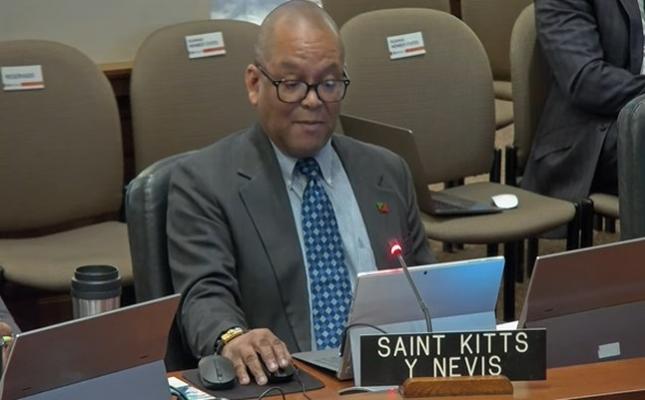
    In a significant address to the Organization of American States (OAS) Permanent Council, St. Kitts and Nevis has formally recognized the indispensable role of permanent observer nations in advancing regional stability and democratic values across the Western Hemisphere. Augustine Skerritt, Minister Counselor and Alternate Representative of the Federation, delivered the commendation during yesterday’s council session, highlighting the transformative impact of international partnerships on the organization’s operational capabilities.

    Skerritt characterized the observer network as providing “the oxygen of technical expertise and financial support” that sustains the OAS’s foundational pillars: democracy promotion, human rights protection, security enhancement, and development initiatives. His address detailed how observer contributions have evolved the OAS from a regional dialogue platform into a globally significant cooperation mechanism since the establishment of permanent observer status in 1971.

    The diplomat specifically cited the Spanish Fund’s judicial system strengthening programs across member states and the critical support for electoral observation missions from European and Asian partners as demonstrable successes. These collaborations have yielded tangible benefits for citizens through practical applications in cybersecurity infrastructure and disaster risk management frameworks.

    With the organization now boasting 75 observer states plus the European Union, Skerritt emphasized that this expanding partnership reflects growing international commitment to shared democratic principles. In an era of increasing global interconnectedness, these alliances reinforce collective dedication to liberty, justice, and rule of law throughout the Americas.

    Looking toward future collaboration, the Kittitian representative advocated for enhanced cooperation in sustainable development and climate resilience initiatives, positioning the OAS observer network as an essential component in addressing emerging hemispheric challenges.
  • St Philip constituencies hit by missing voter names

    St Philip constituencies hit by missing voter names

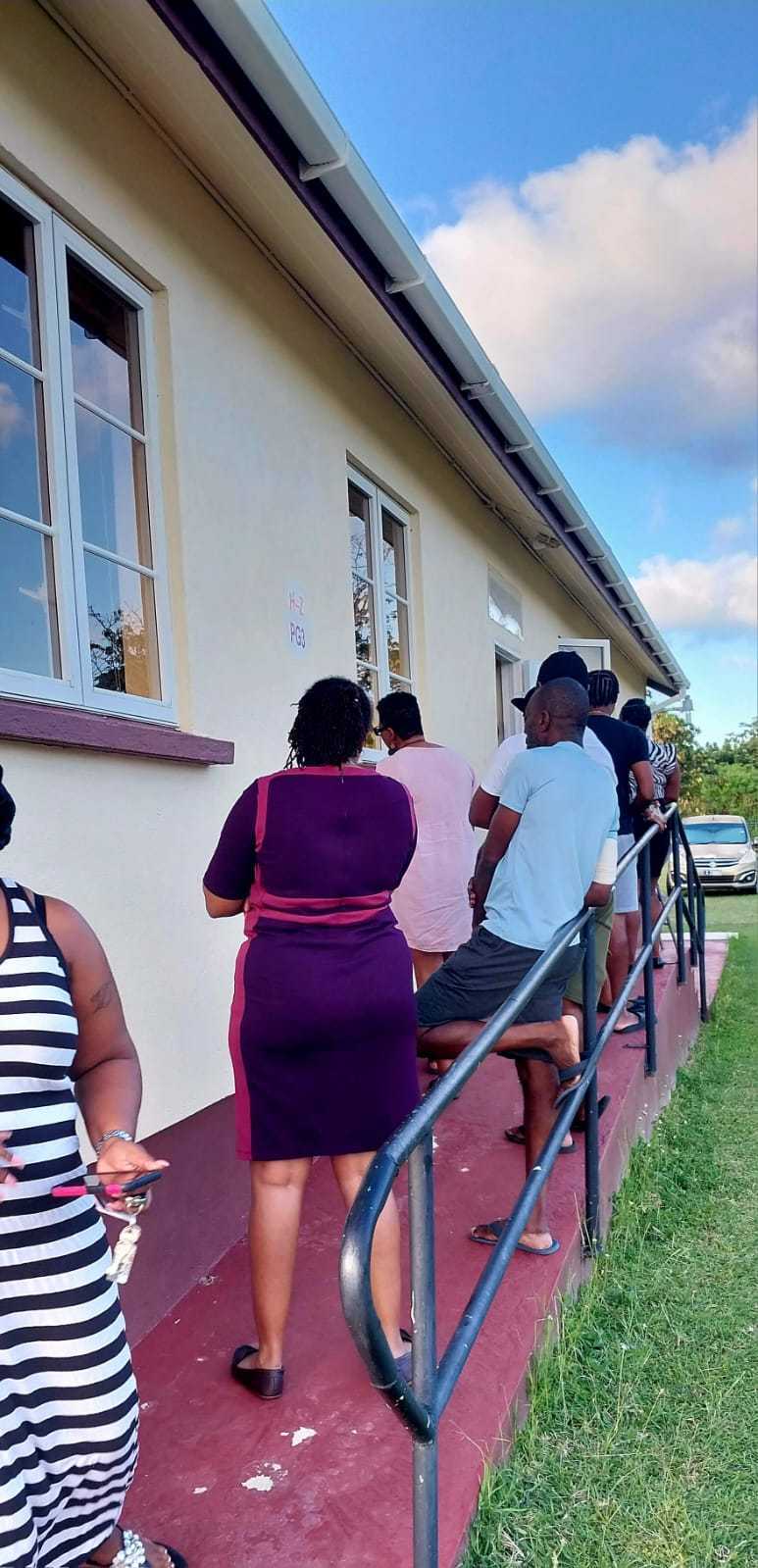
    Significant voting irregularities disrupted Barbados’ electoral process on Wednesday as numerous citizens in the crucial St Philip South and St Philip West constituencies found themselves disenfranchised due to administrative errors. Multiple presiding officers confirmed systemic issues with the official voters’ lists that prevented legitimate voters from casting ballots in what was anticipated to be among the election’s most hotly contested races.

    At Princess Margaret Secondary School in St Philip West, presiding officer Allison Headley-Callender reported that 79 individuals had successfully voted by 11:30 a.m., but two electors were turned away during the first five-and-a-half hours of polling. In one concerning case, a voter presented correspondence from the Electoral and Boundaries Commission (EBC) confirming their registration at that specific polling station, where they had previously voted in the last general election. Despite this documentation, their name was conspicuously absent from the official list.

    Another voter claimed to have registered just two days prior to election day, which similarly resulted in their exclusion from the voting rolls. Both individuals were directed to consult the EBC’s master list for resolution.

    The electoral tensions were particularly heightened in St Philip West, where Democratic Labour Party veteran Dr. David Estwick challenged incumbent Barbados Labour Party representative Kay McConney, with additional candidates Karina Goodridge (Friends of Democracy) and Lynette Eastmond (People’s Coalition for Progress) adding to the competitive landscape.

    Bridgette Marshall-Griffith, another presiding officer at the same location, noted a ‘steady’ early morning turnout with expectations of a traditional late afternoon surge. She confirmed two additional cases of voter exclusion, including a lifelong resident who had never encountered previous voting difficulties and a relocated couple where only the wife’s name appeared on the list despite both having changed addresses together.

    Similar problems emerged at Faith New Testament Church of God in neighboring St Philip South, where presiding officer Annette Campbell reported a ‘steady stream’ of voters but confirmed at least one exclusion case due to list irregularities. Campbell, a three-election veteran in the constituency, explained that polling stations lacked physical master lists, forcing turned-away voters to either contact the EBC directly or check online resources.

    The incidents raised serious questions about the integrity of the electoral process and the preparedness of election authorities to handle administrative challenges that potentially disenfranchised legitimate voters in critical marginal constituencies.

  • Mottley leads BLP to third clean sweep in general electionBy Peter Richards

    Mottley leads BLP to third clean sweep in general electionBy Peter Richards

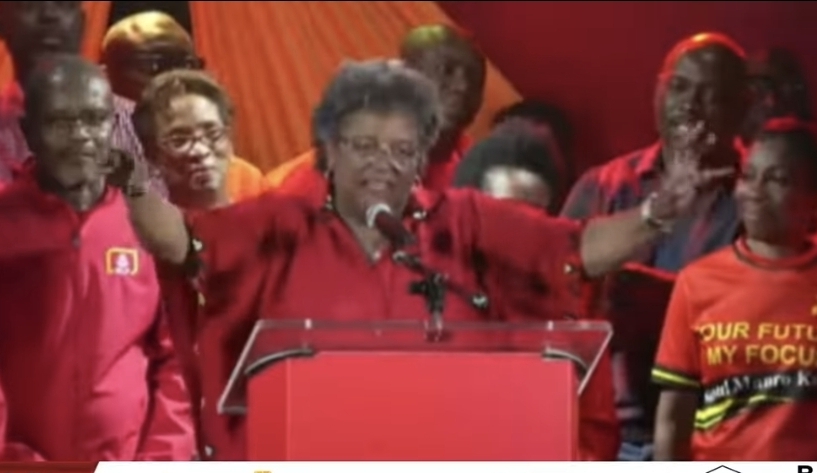
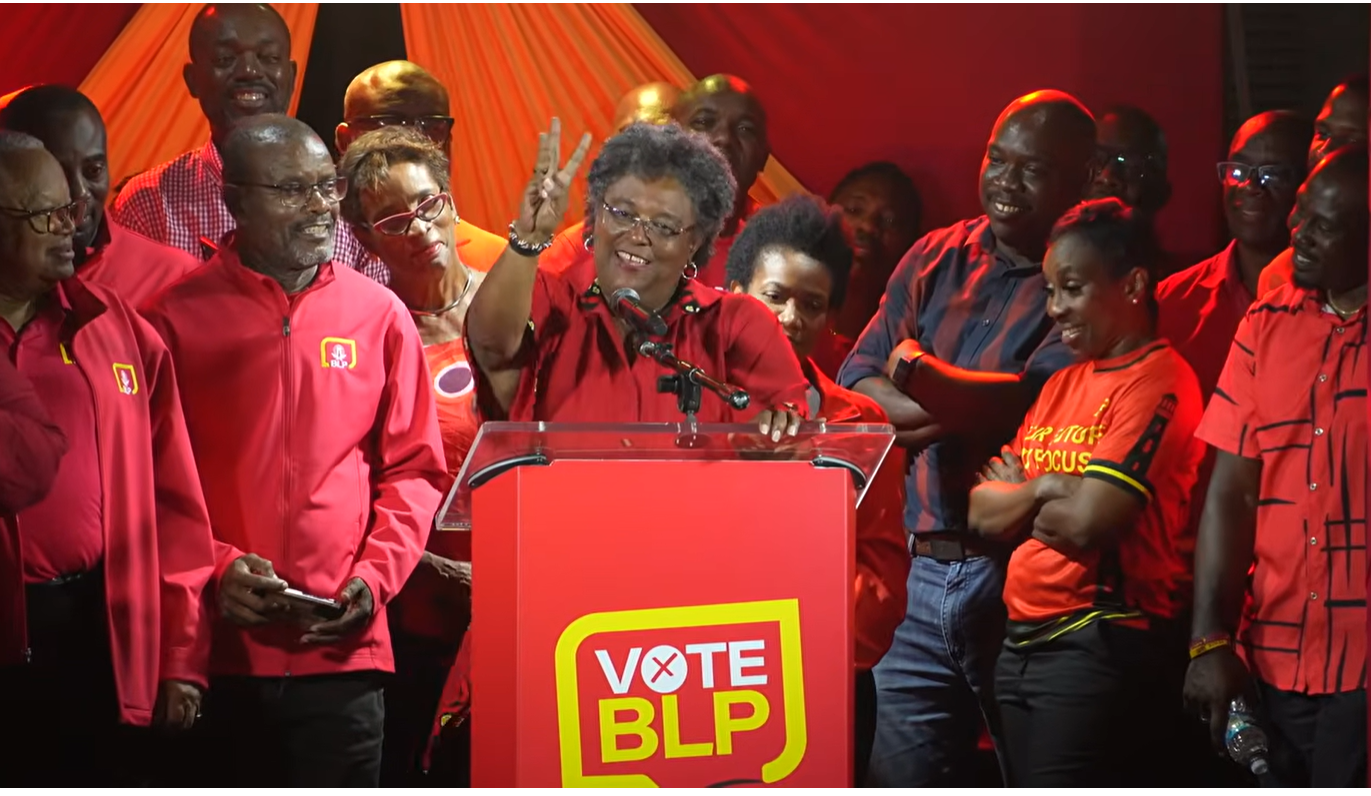
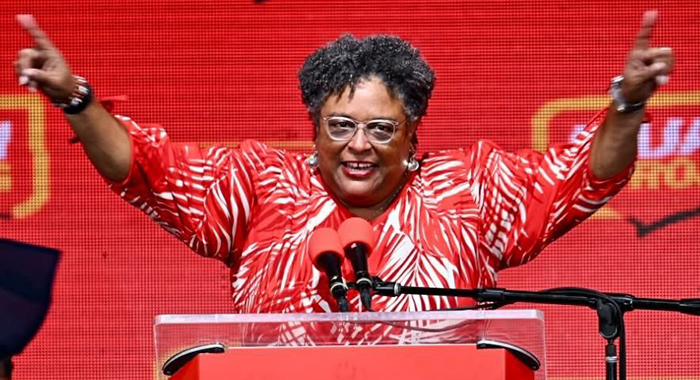
    In an unprecedented political triumph, Prime Minister Mia Mottley has secured her place in Caribbean history by leading the Barbados Labour Party (BLP) to a third consecutive parliamentary whitewash in Wednesday’s general election. The 60-year-old leader becomes the region’s second politician to achieve complete parliamentary dominance on three occasions, following former Grenada Prime Minister Keith Mitchell’s earlier accomplishment.

    Mottley’s victory marks a significant milestone as she becomes the first party leader to secure three consecutive terms while maintaining complete parliamentary control since initially winning all 30 parliamentary seats in 2018, when she made history as Barbados’ first female prime minister.

    The victorious prime minister comfortably retained her St. Michael North East constituency and addressed supporters at the party’s Bridgetown headquarters, announcing that her new cabinet will be sworn in on Monday, with Parliament’s first session scheduled for February 20.

    Reflecting on her administration’s journey, Mottley acknowledged the unexpected challenges her government faced, particularly the COVID-19 pandemic that disrupted their initial plans for economic growth. “We did not come to hold office, we come to make Barbados better and your lives better,” she emphasized, highlighting the government’s ongoing transformation mission during the past two and a half years.

    The legal professional turned politician stressed the importance of maintaining democratic institutions as Barbados approaches its 60th independence anniversary and fifth year as a republic. She expressed concern about the opposition Democratic Labour Party’s (DLP) situation, emphasizing Barbados’ need for “strong institutions” and recalling her previous efforts to ensure opposition representation in the Senate.

    The DLP suffered another devastating defeat, with leader Ralph Thorne losing his St. John’s constituency to BLP candidate Charles Griffith. Thorne, who previously represented Christ Church South for the BLP before crossing the floor, described the outcome as “disappointing” despite what he characterized as a clean campaign. He additionally claimed he was denied voting rights due to an administrative error by the Electoral and Boundaries Commission.

    Political analysts delivered harsh assessments of the opposition’s performance. University lecturer and former DLP president Ronnie Yearwood stated the electorate had delivered a “clear message” requiring party reform, while prominent pollster Peter Wickham described the DLP campaign as “horrible” and called for leadership change and new talent identification.

    Historically, this election marked the first time Barbados welcomed international observer missions from CARICOM and the Commonwealth, signaling the nation’s growing prominence in democratic practices within the Caribbean community.

  • BARBADOS: Mottley leads BLP to yet another clean sweep in general election

    BARBADOS: Mottley leads BLP to yet another clean sweep in general election

    BRIDGETOWN, Barbados – In a stunning display of political dominance, Prime Minister Mia Mottley has secured her place in Caribbean political history by leading the Barbados Labour Party (BLP) to its third consecutive clean sweep in parliamentary elections. The February 12th general election results mirror her previous landslide victories in 2018 and 2022, making her only the second regional leader to achieve such a feat after former Grenada Prime Minister Dr. Keith Mitchell.

    The 60-year-old attorney and political veteran now stands as the first party leader to win three consecutive terms in office, maintaining the BLP’s complete control over all 30 parliamentary seats. Addressing enthusiastic supporters at party headquarters in Bridgetown during the early hours of Thursday, Mottley expressed humility at the overwhelming public mandate.

    “We are humbled by your confidence and trust. Thank you. Let us now come together as one people to continue building our nation,” the BLP stated officially on its social media platforms.

    The Prime Minister revealed that her new cabinet will be sworn in on Monday, with the first parliamentary session scheduled for next Friday. She reflected on her administration’s challenging journey since first taking office in 2018, noting that initial plans for economic stabilization and growth were disrupted by the global COVID-19 pandemic. Despite these challenges, Mottley emphasized her government’s continued commitment to national transformation over the past two and a half years.

    Meanwhile, the opposition Democratic Labour Party (DLP) faced catastrophic defeat, with even party leader Ralph Thorne losing his St. John constituency bid. Thorne, who had previously crossed the floor from the BLP to become Opposition Leader, described the results as “disappointing” without clear explanation. His election day was further marred by voting complications, as he claimed administrative errors prevented him from casting his ballot in his proper constituency.

    Political analysts delivered harsh assessments of the DLP’s performance. University lecturer and former DLP president Dr. Ronnie Yearwood called for comprehensive party reform, stating that three consecutive landslide defeats sent an unmistakable message. Prominent political scientist Peter Wickham characterized the DLP campaign as “horrible” and urged immediate leadership change and talent identification.

    This historic election marked another milestone as the first in Barbados’ political history to be observed by international monitoring teams from both the Caribbean Community (CARICOM) and the Commonwealth, underscoring the growing significance of Barbados’ democratic processes on the regional stage.

  • Steady morning turnout, smooth process mark early voting in St Michael North West

    Steady morning turnout, smooth process mark early voting in St Michael North West

    The electoral process in Barbados’s St Michael North West constituency commenced with notable efficiency and civic engagement on Wednesday morning. Multiple polling stations reported smooth operations as citizens exercised their democratic rights in a tranquil atmosphere.

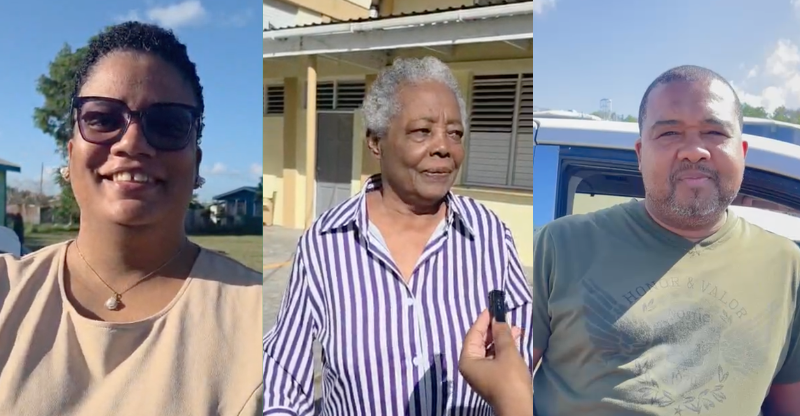
    At Deacons Primary School, voter Gillian Marville commended the streamlined voting procedure, emphasizing both accessibility and expediency. “The process was remarkably simple and efficient,” Marville noted, observing minimal queues and rapid processing times. Her participation stemmed from a profound sense of civic obligation, stating: “Voting constitutes both your right and duty as a Barbadian citizen. I fulfilled that responsibility this morning.”

    Parallel experiences emerged at St Stephens Primary School, where Jason Martin underscored the personal significance of electoral participation. “Exercising my voting rights represents a conscious decision,” Martin explained. “Our community requires substantial change, and casting my ballot serves as the initial step toward that transformation.” Martin reported expedited processing times, noting only five voters ahead of him in line, and facilitated priority access for an individual with mobility challenges.

    Election officials at Ellerslie School’s HA4 polling station confirmed consistently steady voter turnout without operational complications. Presiding Officer Elizabeth Jones verified seamless proceedings, indicating: “All operations are progressing optimally.” When questioned about comparative voter turnout metrics, Jones maintained that electoral participation “has been maintaining consistent flow.” The station reported no incidents of voter confusion regarding designated polling locations.

    Voter Marlene Nurse, participating at Ellerslie School, characterized her experience as “exceptionally positive and well-organized.” Nurse highlighted her unwavering commitment to electoral participation, asserting: “I consistently vote during every election cycle to support my preferred party.” Addressing concerns regarding voter apathy, she affirmed: “I will continue voting throughout my lifetime.”

    The constituency election features three competing candidates: incumbent Neil Rowe (Barbados Labour Party), Ryan Walters (Democratic Labour Party), and Ricardo Williams (Friends of Democracy). Preliminary observations from key polling stations—including Eagle Hall Primary, St Stephens Primary, Deacons Primary, and Ellerslie School—indicated gradually increasing voter attendance throughout the morning, initiating at a measured pace within a relaxed electoral environment.

  • Mottley Secures Third Term as BLP Sweeps Barbados Election

    Mottley Secures Third Term as BLP Sweeps Barbados Election

    In an extraordinary electoral triumph, Prime Minister Mia Amor Mottley has secured a third consecutive term as Barbados’ leader following her Barbados Labour Party’s historic capture of all 30 parliamentary seats in Wednesday’s general election. The unprecedented victory, confirmed by state broadcaster CBC Barbados in early Thursday reports, represents the first time in modern Barbadian history that a single party has achieved complete dominance of the House of Assembly.

    The electoral outcome has fundamentally reshaped the nation’s political landscape, resulting in the stunning defeat of opposition leader Ralph Thorne and leaving Parliament without any elected opposition representation for the upcoming five-year term. This development marks a significant moment in the island nation’s democratic journey as it commemorates 75 years of universal adult suffrage.

    Addressing jubilant supporters during her victory speech, Prime Minister Mottley characterized the landslide win as a powerful mandate for comprehensive social transformation and economic restructuring. The 60-year-old leader, widely regarded as one of the Caribbean’s most influential political figures, made firm commitments to safeguard Barbados’ democratic institutions while pursuing an ambitious reform agenda.

    The election campaign saw Mottley’s BLP emphasizing economic stability measures, addressing pressing cost-of-living challenges, and enhancing Barbados’ international standing. Opposition forces had centered their campaign on crime reduction and infrastructure development, advocating for greater focus on domestic concerns, though their message ultimately failed to resonate with the electorate.

    With a population of approximately 283,000 citizens, Barbados now enters a new political era under a government possessing an exceptionally strong mandate. Political analysts anticipate heightened scrutiny regarding the administration’s implementation of its promised reforms and its ability to address the nation’s socioeconomic challenges effectively.

  • Mia Mottley wint derde termijn met volledige overwinning in Barbados

    Mia Mottley wint derde termijn met volledige overwinning in Barbados

    In a remarkable political achievement, Barbados Prime Minister Mia Amor Mottley has secured an unprecedented third consecutive term in office following a decisive electoral victory. Early Thursday morning, state broadcaster CBC Barbados confirmed that Mottley’s Barbados Labour Party (BLP) captured all 30 seats in the House of Assembly, solidifying her political dominance and defeating opposition leader Ralph Thorne.

    The 60-year-old leader, who has emerged as one of the Caribbean’s most influential political figures, enjoys widespread support across the island nation. In her victory address, Mottley emphasized her administration’s commitment to combating poverty and eliminating systemic injustices while creating opportunities for all citizens. She further pledged to safeguard Barbados’ democratic institutions, particularly significant as the nation recently celebrated the 75th anniversary of universal adult suffrage without property requirements.

    Under Mottley’s continued leadership, the BLP will maintain its focus on stimulating economic growth, managing cost-of-living pressures, and enhancing Barbados’ international standing. The opposition had criticized the government’s approach to security and infrastructure issues, with Thorne arguing for greater emphasis on domestic priorities affecting Barbadian residents.

    This electoral triumph marks a historic milestone for both Mottley and the easternmost Caribbean nation of approximately 283,000 inhabitants. With no term limits constraining leadership duration, Mottley becomes the first woman in Barbados’ history to serve three consecutive terms as prime minister, opening a new chapter in the island’s political narrative.

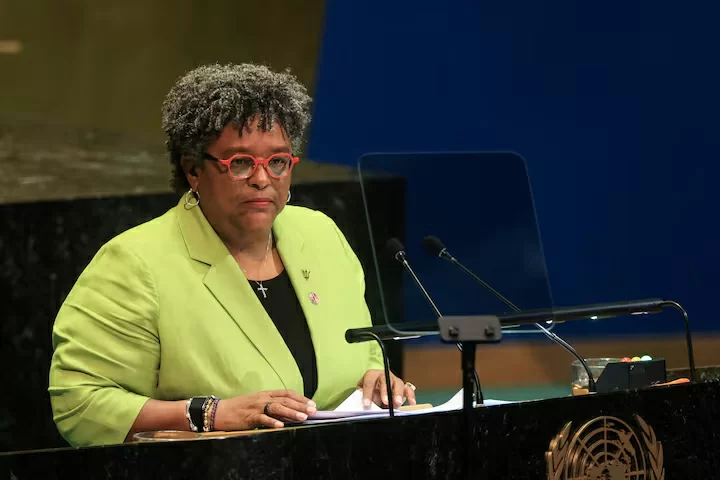
    Internationally recognized as a powerful advocate, Mottley has gained prominence through her role as chair of the Caribbean Community (Caricom) and her vigorous campaigning for stronger global climate action. In 2021, she spearheaded Barbados’ transition to a republic, formally severing colonial ties with Britain.

    The electoral process received validation from a Caricom observation mission, which confirmed the election was conducted transparently and orderly while praising Barbados’ stable democratic traditions. This historic victory provides Mottley with a mandate to continue implementing her policy agenda and pursuing socio-economic advancements amid rapidly changing global circumstances.

  • Mottley leads BLP to historic third clean sweep at polls

    Mottley leads BLP to historic third clean sweep at polls

    Prime Minister Mia Mottley’s Barbados Labour Party (BLP) has secured an unprecedented third consecutive general election victory, capturing all 30 seats in the House of Assembly in a Wednesday electoral landslide. The complete parliamentary sweep reinforces Mottley’s political dominance and represents a continuing mandate for her administration’s policies.

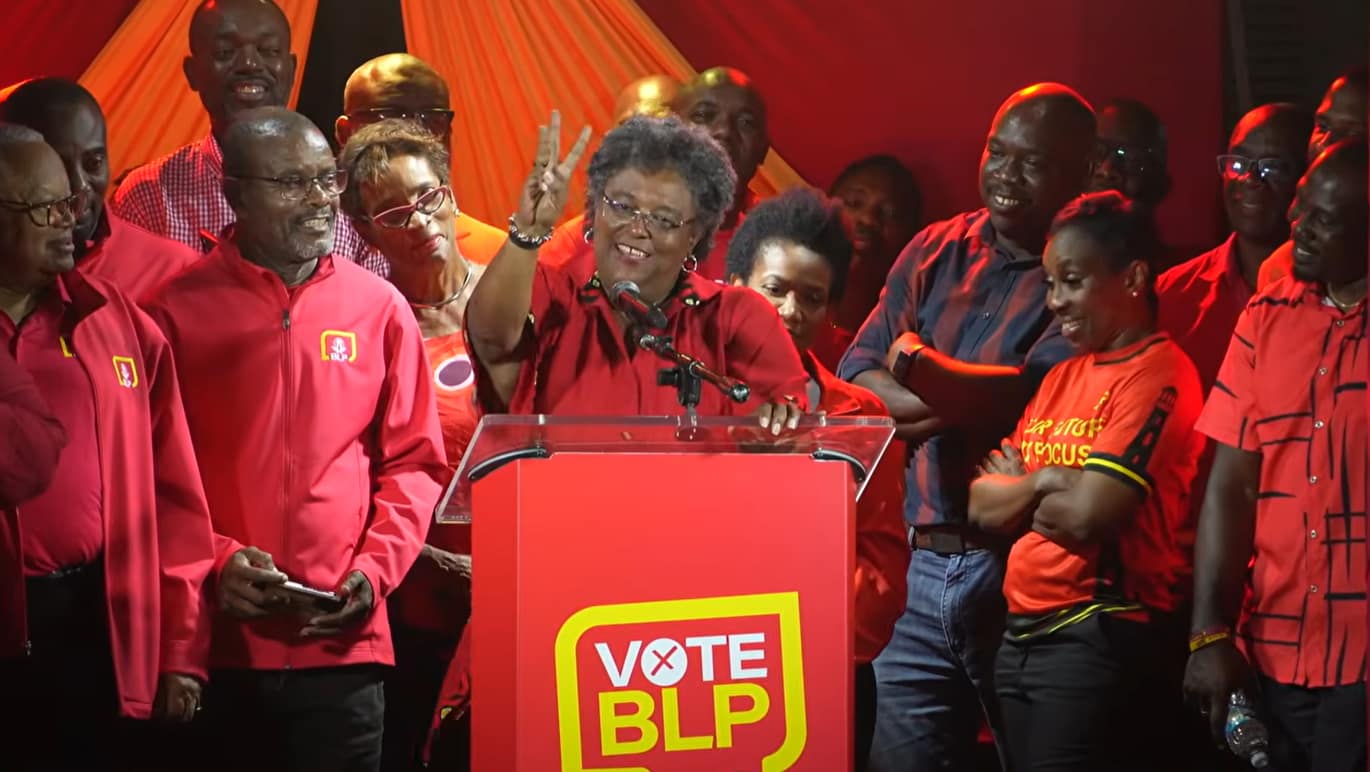
    Jubilant celebrations erupted at the party’s Roebuck Street headquarters as results confirmed the comprehensive victory. Supporters gathered in a sea of red attire, the party’s signature color, as electoral returns confirmed the BLP’s total control of Barbados’s legislative body.

    In response to the electoral triumph, Prime Minister-elect Mottley declared Friday a national public holiday and announced a national thanksgiving celebration scheduled for Saturday afternoon at the National Botanical Gardens. “Saturday is not only the day of love. Saturday is the day of red, red, red,” she proclaimed, referencing both Valentine’s Day and the party’s symbolic color.

    The electoral sweep began with Deputy Prime Minister Santia Bradshaw’s victory in St Michael South East, where she secured 3,050 votes against Democratic Labour Party (DLP) challenger Pedro Shepherd’s 734 votes. This pattern repeated across constituencies, with several notable contests including St John, where Charles Griffith retained his seat with 2,327 votes against DLP leader Ralph Thorne’s 1,877 votes.

    Several first-time BLP candidates achieved significant victories, including Ryan Brathwaite in the traditional Labour stronghold of St Joseph with 2,662 votes, and Tyra Trotman in St Michael Central, the party’s youngest candidate, who secured 1,962 votes after recently crossing from the DLP.

    In her victory address, Mottley emphasized that the overwhelming mandate carried responsibility rather than entitlement. “We did not come simply to hold office. We have come to make Barbados better, and to make your lives better,” she stated, acknowledging the need to protect democratic institutions despite repeated electoral dominance.

    The Prime Minister-elect pledged immediate attention to constituent concerns including infrastructure, healthcare, and public safety. She announced plans for a swift governmental transition, with Cabinet members to be sworn in on Monday and parliamentary business to commence by next Friday, signaling an immediate return to governance following brief celebrations.

  • DLP leader Ralph Thorne steps down after third ‘redwash’

    DLP leader Ralph Thorne steps down after third ‘redwash’

    In the aftermath of an unprecedented third consecutive electoral sweep by the ruling Barbados Labour Party, Democratic Labour Party President Ralph Thorne has announced his resignation from leadership. The devastating 30-0 defeat marks a continuing political crisis for Barbados’ main opposition party, which hasn’t secured a parliamentary seat since 2018.

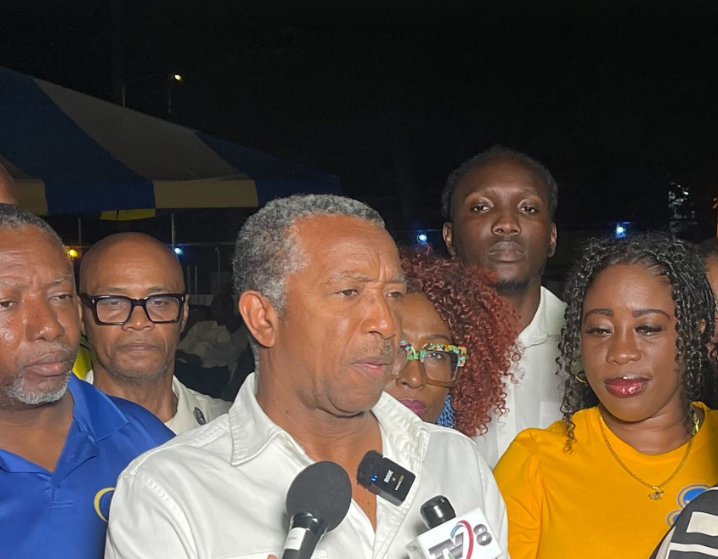
    Addressing reporters at the party’s George Street headquarters in the early hours of Thursday morning, Thorne characterized the outcome as “very disappointing” while maintaining that the 70-year-old institution remained “resourceful” and capable of rebuilding under new leadership. “Clearly, the time comes when I must pass on to other persons,” stated Thorne, surrounded by defeated DLP candidates. “This is a democratic organization. I do not write political will and a new leader will emerge in the fullness of time.”

    The night’s results delivered Prime Minister Mia Mottley’s BLP a historic ‘three-peat’ victory, maintaining their complete control of the House of Assembly. Several constituencies initially appeared competitive before ultimately swinging to the governing party. In St. John, a traditional DLP stronghold, Thorne himself garnered 1,884 votes against incumbent Charles Griffith’s 2,327.

    Other closely-watched races included St. Michael North West, where BLP’s Neil Rowe defeated Ryan Walters 1,674 to 1,441, and St. Lucy, where Peter Phillips secured victory over DLP’s Ian Griffith by 2,211 to 2,026 votes. In St. Philip West, Dr. David Estwick’s narrow early lead evaporated as Kay McConney ultimately triumphed 2,740 to 2,187.

    Thorne’s tenure as leader was marked by internal turmoil from its inception. His dramatic 2024 defection from the BLP backbench to assume opposition leadership—initially as the House’s sole non-government member—generated immediate controversy. This move exacerbated existing tensions within the DLP regarding party democracy and control, particularly from figures like former general secretary Steve Blackett.

    Despite the overwhelming defeat, Thorne emphasized the positive aspects of the campaign, stating the party had set an example for Barbados’ youth by conducting a “clean” campaign. “We fought the good fight, we finished the course, and we kept our faith,” he reflected, expressing gratitude for the “amazing comradeship” and “genuine affection” within his team of young candidates.

    The resignation signals a critical juncture for the Democratic Labour Party as it confronts its increasingly marginalized position within Barbados’ political landscape and seeks to redefine its purpose and leadership ahead of future electoral challenges.

  • U.S. Ambassador orders indefinite closure of DEA office in Dominican Republic

    U.S. Ambassador orders indefinite closure of DEA office in Dominican Republic

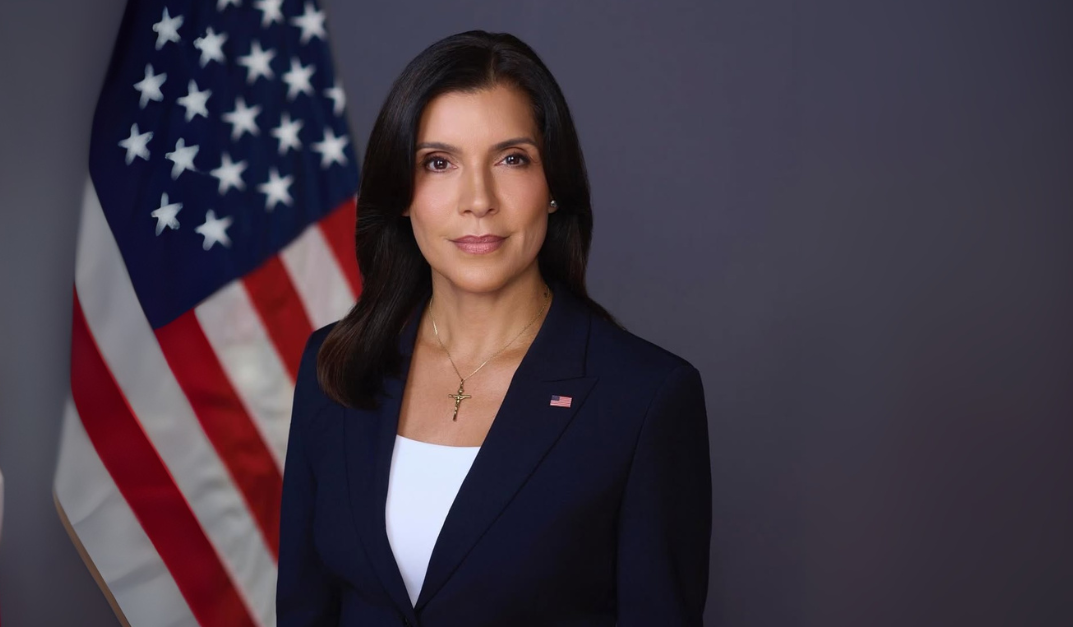
    In a dramatic development that signals a major recalibration of bilateral security relations, United States Ambassador to the Dominican Republic Leah Francis Campos declared this Thursday the immediate and indefinite suspension of all Drug Enforcement Administration operations in Santo Domingo. The extraordinary measure, which took effect without prior warning, represents one of the most significant disruptions to U.S.-Caribbean counter-narcotics cooperation in recent history.

    Ambassador Campos framed the decisive action as an uncompromising stance against ethical violations within American diplomatic ranks. ‘This suspension will remain in force until further notice as we address serious concerns about professional conduct,’ the ambassador stated, emphasizing her zero-tolerance approach to corruption or even the appearance of misconduct among U.S. personnel.

    The abrupt closure creates immediate operational uncertainties for anti-drug initiatives in a region critically important to transnational narcotics trafficking. While U.S. officials have maintained discretion regarding specific incidents prompting the shutdown, Ambassador Campos underscored that the move addressed both confirmed irregularities and potential perceptions of impropriety.

    ‘Maintaining the integrity of our diplomatic mission supersedes all other considerations,’ Campos asserted in her official declaration. ‘I will not permit any circumstance that could undermine public trust in our institutions.’

    The State Department now faces complex logistical challenges regarding the continuation of intelligence-sharing and joint operations with Dominican authorities. No timeline has been established for the possible reinstatement of DEA activities, nor have details emerged about the reassignment of affected agents and support staff. The development occurs amid ongoing regional efforts to combat drug trafficking through the Caribbean corridor, raising questions about interim security coordination protocols between the two nations.