分类: politics

  • Dems press govt on transparency, spending, public services

    Dems press govt on transparency, spending, public services

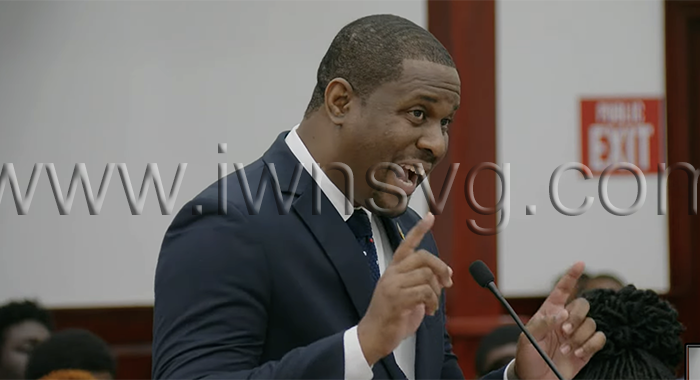
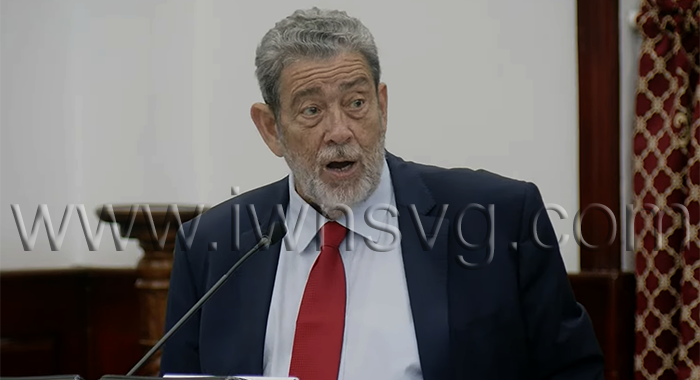
    In a forceful address from his Hincks Street office, Democratic Labour Party Leader Ralph Thorne launched a comprehensive critique against the Mottley administration’s governance, highlighting critical institutional failures and a perceived culture of financial mismanagement. The opposition leader identified the vacant Auditor General position as particularly alarming, drawing parallels to operating a judiciary without a Chief Justice. Thorne revealed his discussions with former Auditor General Leigh Trotman prior to retirement, during which Trotman reportedly expressed serious concerns about chronic understaffing that persists despite the government’s expansive spending initiatives.

    Thorne shifted scrutiny to two high-profile development projects: the Newton Enslaved Burial Ground Memorial and the adjacent National Performing Arts Centre in Christ Church. While acknowledging the aesthetic appeal of the memorial’s dome structure, he condemned the complete absence of financial transparency regarding the millions spent on these largely unused facilities. The opposition leader derisively referred to the arts center as a ‘chicken pen’ and questioned whether proper tender processes were followed for both projects designed by renowned architect David Adjaye.

    The DLP leader further amplified grievances from emergency service personnel, citing petitions from police, fire, and prison officers who allege systematic favoritism in promotion practices. Thorne characterized these complaints as evidence of a broader breakdown in public service integrity, where dedicated officers witness ‘supersession occurring right under their noses’ based on preferential treatment rather than merit.

  • Venezuela’s Ambassador to Grenada calls on Caribbean allies to reject aggression

    Venezuela’s Ambassador to Grenada calls on Caribbean allies to reject aggression

    Venezuela’s diplomatic representative to Grenada, Ambassador Jorge Guerrero Veloz, has issued a stark warning to Caribbean nations regarding the alleged military capture of President Nicolás Maduro and his wife by United States forces on January 3. The ambassador characterized this operation as both an assault on Venezuelan sovereignty and a direct challenge to regional stability throughout Latin America and the Caribbean.

    In an exclusive interview with NOW Grenada, Guerrero Veloz articulated grave concerns about Washington’s apparent resurgence of Monroe Doctrine principles through military intervention. He emphasized that the incident represents a fundamental violation of international legal frameworks, including the UN Charter, which guarantees sovereign equality and prohibits the use of force against territorial integrity.

    The diplomatic official revealed that the Community of Latin American and Caribbean States (CELAC), under Colombia’s pro tempore presidency, recently convened to address the situation. Member states reportedly expressed unanimous concern and rejection of unilateral military actions undertaken by the U.S. government on Venezuelan territory.

    Ambassador Guerrero Veloz detailed multiple legal violations allegedly committed during the operation, including breaches of international humanitarian law through indiscriminate attacks affecting civilian populations and infrastructure. He referenced UN General Assembly Resolution 3314, which defines bombardment or occupation of another state’s territory as acts of aggression.

    Tragically, international news agencies including Al Jazeera have reported 32 Cuban casualties resulting from the military operation, with both Venezuelan and Cuban governments acknowledging deaths among civilians and military personnel. The ambassador condemned these actions as criminal acts of state terrorism.

    Despite the escalating crisis, Venezuela maintains its commitment to peaceful trade relations with Caribbean partners. However, Guerrero Veloz acknowledged that broader economic consequences might emerge due to extensive unilateral coercive measures currently imposed on Venezuela, including sanctions, asset freezes, and the seizure of oil tankers.

    The ambassador concluded with a determined statement: Venezuela will continue diplomatic battles for the liberation and return of President Maduro and his wife, framing the incident as a pivotal moment for regional sovereignty that will resonate across Latin America and the Caribbean.

    Meanwhile, judicial proceedings continue against Maduro, with a court hearing scheduled for March 17. In his absence, former Vice President Delcy Rodríguez has been officially sworn in to lead the South American nation.

  • LETTER: From Support to Disappointment: Action Over Talk

    LETTER: From Support to Disappointment: Action Over Talk

    A once-ardent supporter of representative Kelvin ‘Shugy’ Simon has publicly expressed profound disappointment, marking a significant shift from initial optimism to current frustration within the constituency. The critique centers on what the constituent describes as excessive rhetoric without commensurate action, creating a growing divide between political promises and tangible results.

    The anonymous author, who identifies as a strong United Progressive Party (UPP) supporter, contrasts Simon’s approach with that of political counterpart Dwayne George, whose consistent community engagement provides a stark comparison. George demonstrates his commitment through practical initiatives including bi-weekly food distribution programs every other Thursday and maintaining regular weekly availability for direct constituent meetings at his branch office.

    This detailed account highlights the growing constituent demand for leadership characterized by physical presence and active service rather than eloquent speeches. The writer observes George frequently engaged in direct fieldwork, interacting with community members during critical hours, which reinforces the perception of accessible, action-oriented representation.

    The political commentary emerges as a microcosm of broader democratic expectations, where electoral support becomes contingent on demonstrable effort rather than partisan loyalty. The constituent concludes with a poignant warning about diminishing patience among the electorate, suggesting that George’s consistent community presence could potentially sway voting decisions despite traditional party affiliations.

    The testimony serves as both a personal appeal to Simon and a broader statement on the evolving nature of political accountability, where visible action increasingly outweighs ideological alignment in determining electoral success.

  • Maduro challenges US authority in first court appearance, insists he remains Venezuela’s president

    Maduro challenges US authority in first court appearance, insists he remains Venezuela’s president

    In a dramatic first appearance before the U.S. judicial system, Venezuelan President Nicolás Maduro mounted a direct challenge to American legal authority, asserting his status as the nation’s legitimate head of state despite facing serious criminal charges. The proceeding took place in a Manhattan federal courtroom presided over by U.S. District Judge Alvin Hellerstein.

    Maduro, speaking through a court-appointed interpreter, entered a formal plea of not guilty to multiple indictments including narco-terrorism conspiracy, cocaine trafficking, and weapons-related offenses. He characterized his presence in the courtroom as the result of an unlawful military seizure from his homeland, vehemently maintaining his innocence throughout the hearing.

    The Venezuelan leader appeared alongside his wife, Cilia Flores, who similarly pleaded not guilty while identifying herself as Venezuela’s First Lady. Both defendants remain in custody at the Metropolitan Detention Center pending further proceedings.

    Defense attorney Barry Pollack signaled forthcoming legal challenges, arguing that Maduro’s transfer to U.S. custody constituted an illegal military abduction. The defense team intends to contest both U.S. jurisdiction and claims of head-of-state immunity, with Maduro describing himself as a ‘prisoner of war’ during the hearing.

    Judge Hellerstein acknowledged that questions regarding the legality of Maduro’s detention could be addressed in subsequent proceedings while outlining the defendant’s constitutional rights. Maduro responded that he was learning about these rights for the first time in the courtroom.

    The judicial confrontation unfolds against the backdrop of the Trump administration’s increasingly hardline stance toward Venezuela, with the U.S. president asserting American control over the situation and warning of consequences for non-cooperation. The administration’s simultaneous focus on Venezuela’s substantial oil reserves has drawn criticism from regional leaders and analysts, who suggest strategic and economic considerations are inextricably linked to the legal prosecution.

  • COMMENTARY: Is Accepting Refugees in the National Interest?

    COMMENTARY: Is Accepting Refugees in the National Interest?

    A profound national debate is unfolding across Antigua and Barbuda regarding the government’s decision to accept deportees from the United States, a move critics are labeling as potentially catastrophic for the nation’s sovereignty and social fabric. Political commentator Yves Ephraim has framed this development as an existential crossroads for the twin-island state, urging citizens to look beyond partisan politics and consider the long-term implications.

    The timing of this agreement, coordinated simultaneously with neighboring Dominica, raises significant geopolitical questions. The arrangement follows closely behind recent diplomatic efforts to reverse U.S. visa restrictions and controversial allegations of Caribbean leaders’ collusion in the capture of Venezuelan President Nicolás Maduro. This synchronization suggests a broader strategic negotiation rather than an isolated humanitarian gesture.

    Ephraim articulates four core objections to the policy: First, he questions whether Antigua and Barbuda risk becoming a ‘dumping ground’ for individuals deemed undesirable by the United States and their countries of origin, potentially earning the derogatory ‘sh*thole country’ label previously used by U.S. officials. Second, he warns against trading national dignity for visa privileges, establishing a dangerous precedent of concession under pressure. Third, he challenges the fairness of a ‘friendly’ nation denying entry to Antiguan citizens while expecting unconditional acceptance of U.S. deportees. Finally, he suggests this agreement could permanently brand the nation as a security concern, justifying continued visa restrictions.

    The commentary draws parallels with global migration challenges, specifically referencing increased knife violence and sexual assaults in the United Kingdom following substantial refugee influxes. Ephraim emphasizes that economic consequences remain unassessed but potentially devastating. He concludes with a powerful invocation of the national anthem’s call to ‘defend her liberty,’ urging citizens to consider what future they envision for their children and whether accepting ‘dubious rejects’ aligns with that vision.

  • Internationale kritiek op ontvoering Maduro tijdens spoedbijeenkomst VN-Veiligheidsraad

    Internationale kritiek op ontvoering Maduro tijdens spoedbijeenkomst VN-Veiligheidsraad

    The United Nations Security Council convened an emergency session in New York following the controversial apprehension of Venezuelan President Nicolás Maduro and his wife by US special forces. The operation, which multiple member states characterized as a violation of international law, has sparked unprecedented diplomatic backlash against Washington.

    Venezuela’s UN Ambassador Samuel Moncada denounced the mission during Monday’s urgent meeting, labeling it “an illegitimate armed assault without any legal justification.” This sentiment found resonance across the diplomatic spectrum, with unusual allies Russia, China, Cuba, and Colombia jointly condemning the action.

    The criticism extended beyond traditional US adversaries. Mexico and Denmark—typically aligned with American interests—delivered sharp rebukes. Mexican representatives emphasized the Security Council’s obligation to avoid double standards, while Danish diplomats pointedly referenced border inviolability, an apparent allusion to former President Trump’s previous threats regarding Greenland.

    France, initially supportive of Maduro’s detention, recalibrated its position, noting the military operation contravened principles of peaceful conflict resolution and prohibitions on unilateral force.

    Only the United States defended the operation, with Ambassador Mike Waltz characterizing it as a “surgical enforcement action” targeting two fugitive suspects. The White House justified the mission and accompanying airstrikes as essential for national security, despite presenting no verified evidence linking Maduro to “narcoterrorist” cartels.

    British and Latvian representatives redirected focus to Venezuela’s internal affairs, citing widespread repression, corruption, and drug trafficking under Maduro’s administration. The UK ambassador explicitly described Maduro’s claim to power as fraudulent.

    The Venezuelan government has called for international sanctions against the US and warned of escalating regional tensions. Both pro-Maduro loyalists and opposition factions within Venezuela remain on high alert, anticipating potential further conflict.

    Human rights organizations and numerous nations advocate for diplomatic solutions, cautioning against military intervention in an already volatile region. The Security Council remains divided, with permanent members threatening vetoes against additional measures.

    These developments highlight deteriorating international norms concerning sovereignty and the potential for destabilization throughout Latin America.

  • Column: Wie mag een president uit bed lichten?

    Column: Wie mag een president uit bed lichten?

    The recent detention of Venezuelan President Nicolás Maduro and his wife by United States authorities has ignited a profound debate about sovereignty, power politics, and the erosion of international legal norms. While Washington justifies the action as part of anti-narcotics operations, the incident represents a dangerous precedent in international relations.

    Maduro, despite controversies surrounding his administration, remains the democratically elected leader of a sovereign nation. International law explicitly protects sitting heads of state from foreign arrest and prosecution, establishing clear protocols through treaties, diplomatic channels, and international courts for addressing allegations against foreign leaders. The unilateral action bypasses these established mechanisms, substituting legal process with power-based intervention.

    The global response has been notably muted, revealing a troubling hypocrisy in the international community’s application of principles. Many nations that rightly condemned Russia’s invasion of Ukraine now demonstrate selective outrage when the United States violates international norms. This double standard undermines the very foundation of global governance.

    The United Nations Security Council remains paralyzed, particularly when a veto-wielding permanent member is directly involved in such actions. This institutional impotence exposes the fundamental flaw in the international system: rules only bind those without power to ignore them.

    Historical patterns suggest economic motivations behind the intervention, with Venezuela’s vast oil reserves and strategic location likely influencing the calculus. This echoes previous US military interventions in Iraq, Afghanistan, and Libya, which consistently produced chaos rather than democracy or stability.

    The silence of neighboring countries, including Suriname and CARICOM nations, carries significant implications. While caution is understandable, failure to defend sovereignty principles ultimately legitimizes their violation. Smaller nations particularly depend on a rules-based international order where might doesn’t automatically equal right.

    The operation reportedly resulted in casualties, though details remain scarce—another characteristic of interventions where accountability often follows action rather than preceding it.

    This situation transcends Venezuela or Maduro personally. It represents a critical test for whether international law maintains meaningful authority or merely serves as convenient rhetoric when aligned with powerful interests. The normalization of arbitrary power today establishes dangerous precedents that could affect any nation tomorrow.

  • Wereldwijde machtsstrijd: Venezuela en Groenland centraal

    Wereldwijde machtsstrijd: Venezuela en Groenland centraal

    In a dramatic geopolitical development, Delcy Rodríguez has been sworn in as Venezuela’s interim president following the capture of President Nicolás Maduro by U.S. special forces. The ceremony took place before the National Assembly, dominated by Maduro loyalists, where Rodríguez condemned American intervention and vowed to pursue peace and stability.

    Meanwhile, Maduro appeared in a New York courtroom pleading not guilty to serious charges including narco-terrorism and weapons possession. The U.S. government alleges Maduro collaborated with drug cartels to smuggle thousands of tons of cocaine into the United States over an extended period.

    President Donald Trump indicated willingness to work temporarily with Rodríguez but issued a clear warning that her tenure depends on compliance with American demands. The U.S. administration confirmed it would temporarily govern Venezuela until a secure and just transition can be established, including access for American oil companies to Venezuela’s substantial reserves.

    The political crisis follows disputed elections marred by fraud allegations that triggered widespread protests and severe government crackdowns. The U.S. operation resulted in approximately 80 casualties, including 32 Cuban military personnel who had provided personal security for Maduro. The U.S. State Department is preparing to reopen its Caracas embassy pending political stability.

    Simultaneously, renewed U.S. interest in Greenland has created additional geopolitical friction. President Trump reiterated his desire to annex the autonomous Danish territory, valued for its strategic location and mineral resources. Greenlandic Prime Minister Jens Frederik Nielsen firmly rejected the proposition, stating Greenland is “not for sale” and maintains the right to determine its own future.

    Danish Prime Minister Mette Frederiksen and European allies, including British Prime Minister Keir Starmer and Germany’s Foreign Minister, emphasized the importance of sovereignty and democratic decision-making. Though not an independent NATO member, Greenland’s strategic significance is amplified through its association with Denmark and its resource-rich Arctic position.

    These parallel developments illustrate escalating global power competition over influence, resources, and security. From Latin America to the Arctic, local leaders are asserting self-determination principles and demanding respect for international law amid great power rivalry.

  • Honor and glory!

    Honor and glory!

    Havana has confirmed the deaths of 32 Cuban military personnel during operations in Venezuela, characterizing the incident as a direct result of what it describes as “U.S. state terrorism” against the Bolivarian Republic. According to official reports from Cuban state media outlet Granma, the casualties occurred during combat operations where Cuban forces exhibited “fierce resistance” against unspecified aggressors.

    The deceased personnel were reportedly deployed on official missions at the request of Venezuelan authorities, operating under both Cuba’s Revolutionary Armed Forces and Ministry of the Interior. Their duties involved collaboration with counterpart agencies within the South American nation, though specific operational details remain undisclosed.

    This development represents a significant escalation in the ongoing geopolitical tensions between Cuba, Venezuela, and the United States. Cuban authorities have framed the incident as another chapter in what they characterize as Washington’s aggressive policies toward leftist governments in Latin America.

    The announcement, accompanied by military photographs of the deceased operatives, appears designed to bolster domestic support while internationally condemning U.S. foreign policy. The timing and nature of the disclosure suggest calculated diplomatic messaging aimed at multiple audiences, both domestic and international.

    This incident marks one of the largest single losses of Cuban military personnel abroad in recent decades and will likely have substantial implications for Cuba-Venezuela relations and their collective stance against U.S. influence in the region.

  • UN Secretary-General raises concerns over Venezuela’s long-term stability

    UN Secretary-General raises concerns over Venezuela’s long-term stability

    United Nations Secretary-General António Guterres has issued a stark warning regarding Venezuela’s deteriorating stability in the wake of recent U.S. military operations within the South American nation. During an emergency session of the UN Security Council convened on January 5th, Guterres articulated profound apprehensions about the potential escalation of regional instability and the dangerous precedent set by these developments.

    The Secretary-General emphasized that the current crisis represents an alarming escalation of Venezuela’s prolonged political and economic turmoil, which has drawn international scrutiny since the controversial July 2024 presidential elections. Guterres revealed that electoral observation panels commissioned by the Venezuelan government itself had identified serious procedural irregularities, while repeated calls for electoral transparency from international bodies went unheeded.

    The situation reached a critical juncture with a pre-dawn U.S. military strike that resulted in approximately 40 casualties and the subsequent capture of President Nicolás Maduro and First Lady Cilia Flores. Both were transported to New York where they faced federal charges related to firearms and cocaine trafficking, entering not guilty pleas during their Monday arraignment.

    Guterres expressed particular concern over interim President Delcy Rodríguez’s declaration of a nationwide emergency decree on January 3rd, which significantly expanded government security powers. The UN chief stressed that the military action constituted a clear violation of international law, specifically the UN Charter’s prohibition against the use of force against sovereign states’ territorial integrity.

    The Secretary-General concluded that maintaining international peace and security depends entirely on member states’ unwavering commitment to uphold these fundamental principles, warning that the current trajectory could have devastating consequences for Venezuela and the broader Latin American region.