分类: politics

  • Thorne: Transport Board privatisation ‘follows path of failed sugar industry pledges’

    Thorne: Transport Board privatisation ‘follows path of failed sugar industry pledges’

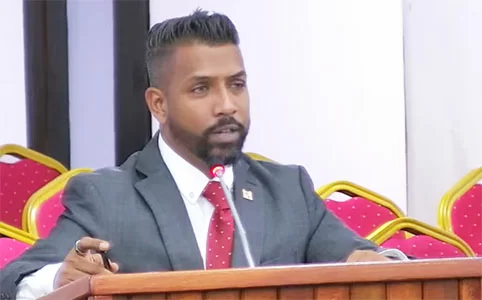
    Opposition Leader Ralph Thorne has issued a stern condemnation of the Barbados government’s initiative to privatize the state-owned bus service, drawing parallels to the failed sugar industry cooperative scheme. During a heated House of Assembly debate on amendments to the Road Traffic Act, the Christ Church South representative challenged the administration’s claims of worker enfranchisement through ownership opportunities.

    Thorne recalled the 2021 sugar co-operative initiative that promised agricultural workers ownership of plantations and the Portvale mill, which ultimately collapsed without delivering on its commitments. ‘They boasted to thunderous applause that sugar industry workers would own the plantations,’ Thorne stated. ‘What is the position today? Nothing! Nil! And the same thing will happen with the Transport Board.’

    The opposition leader particularly criticized the government’s approach of deciding on divestment before conducting stakeholder consultations. He raised practical concerns about the newly acquired electric buses, questioning their cost-effectiveness for individual drivers who might purchase them under the proposed privatization model.

    In response, Deputy Prime Minister Santia Bradshaw, who serves as Minister of Transport and Works, defended the government’s position. She emphasized that the cabinet decision merely enables discussions with stakeholders, describing the process as still being at a consultative phase. Bradshaw outlined that the envisioned ‘enfranchisement model’ aims to focus on ‘improving and modernizing this economy’ while maintaining essential services for vulnerable populations including elderly citizens and school children.

    The exchange highlights growing tensions over public asset management in Barbados, with the opposition demanding greater transparency and evidence of successful worker ownership models before supporting the proposed transportation sector reforms.

  • US Secretary of State praises Ali for leadership in regional security

    US Secretary of State praises Ali for leadership in regional security

    In a significant diplomatic engagement, US Secretary of State Marco Rubio commended Guyanese President Irfaan Ali for his assertive leadership in regional security matters during their Tuesday morning discussion. The high-level conversation, confirmed by Principal Deputy Spokesperson Tommy Pigott, highlighted Guyana’s expanding role as a crucial security partner in the Western Hemisphere.

    The dialogue occurred against the backdrop of escalating regional tensions, specifically referencing recent US military operations in Venezuela that resulted in the capture of President Nicolas Maduro on narco-terrorism charges. Secretary Rubio utilized the opportunity to reinforce Washington’s commitment to enhancing security collaboration with Guyana, focusing particularly on combating transnational criminal networks, illicit narcotics trafficking, and firearms smuggling that threaten regional stability.

    Both leaders emphasized the critical need for continued cooperation in disrupting foreign terrorist organizations while simultaneously strengthening law enforcement capabilities and border security infrastructure. President Ali received reassurances regarding US support for Guyana’s sovereignty and territorial integrity—a pointed reference to ongoing Venezuelan claims over Guyana’s Essequibo Region.

    Guyana’s Foreign Secretary Robert Persaud confirmed the discussions extended to recent Venezuelan developments and broader hemispheric concerns. President Ali acknowledged US leadership under President Trump and Secretary Rubio, reiterating Guyana’s unwavering commitment to democratic principles, rule of law, and free elections. The Guyanese leader further emphasized his nation’s dedication to collaborative efforts against transnational crimes including drug trafficking, gold smuggling, and narco-terrorism.

    The diplomatic exchange builds upon the expanded military cooperation agreement signed between the two nations in December 2025, though specific details remain classified. Facing persistent Venezuelan territorial claims, Guyana has strategically strengthened defense partnerships with the United States, Britain, and France as protective measures against potential military aggression.

  • COMMENTARY: What Price Are You Willing To Pay For A US Visa

    COMMENTARY: What Price Are You Willing To Pay For A US Visa

    By Yves Ephraim

    CARIBBEAN NATION CONFRONTS DILEMMA BETWEEN VISA PRIVILEGES AND NATIONAL IDENTITY

    Beyond the substantial financial costs of US visa applications—typically exceeding $185 plus travel expenses to Barbados—lies a more profound consideration: what intangible national assets might be sacrificed in pursuit of visa convenience? This examination probes the complex trade-offs between access to American travel and the preservation of fundamental national principles.

    The core debate centers on four essential pillars of sovereignty. Birthright encompasses the authority to reject becoming a refugee processing center for foreign nations. Freedom involves protecting citizen biometrics from foreign surveillance programs without reciprocal data access. Dignity reflects the ability to conduct international relations without succumbing to coercive diplomacy. Sovereignty represents the ultimate right to refuse policies contrary to national interests.

    While US visa privileges undoubtedly provide practical advantages, this analysis questions the catastrophic assumptions surrounding potential visa restrictions. Should the United States implement comprehensive travel bans against Antiguans and Barbudans—a scenario not entirely hypothetical—would societal collapse inevitably follow? Or would alternative travel partnerships and strengthened regional alliances emerge?

    The psychological dimension reveals deeper concerns: does visa anxiety reflect what cultural icons have termed ‘mental enslavement’ or diplomatic Stockholm syndrome? This provocative inquiry challenges citizens to examine their attachment to US travel permissions.

    The ultimate question remains: are citizens prepared to endure potential economic hardships to safeguard national sovereignty? This decision transcends individual travel convenience, representing a collective determination about national direction. Unlike historical forced migrations, contemporary societies possess agency in determining their international relationships.

    The concluding choice presents two stark alternatives: comfortable compliance with external demands or resilient independence despite challenges. This sovereign decision requires courageous sacrifice and will ultimately define the nation’s geopolitical trajectory for generations.

  • LETTER TO THE EDITOR: Balancing diplomacy and reality – Dominica’s refugee decision under scrutiny

    LETTER TO THE EDITOR: Balancing diplomacy and reality – Dominica’s refugee decision under scrutiny

    Dominican Prime Minister Roosevelt Skerrit’s controversial decision to accept third-country refugees from the United States has ignited intense national debate, balancing diplomatic calculations against domestic practicalities. The arrangement, presented as a strategic move to strengthen bilateral relations with Washington, aims to safeguard Dominican citizens’ access to American travel, education, and employment opportunities while implementing stringent security protocols.

    The announcement has drawn sharp criticism from opposition figures and legal experts who question both the procedural and substantive implications. Prominent attorney Cabral Douglas highlights the absence of parliamentary approval, characterizing the bypass as a concerning erosion of democratic sovereignty. The United Progressive Party has amplified these concerns, citing insufficient public consultation and potential strains on the nation’s housing infrastructure, job market, and social services.

    Beyond the sovereignty questions, practical implementation challenges loom large. The arrangement lacks transparent details regarding security vetting procedures, financial support mechanisms, and resource allocation for refugee integration. Economic analysts note that Dominica’s limited capacity necessitates substantial U.S. support across housing, healthcare, and education sectors to prevent overwhelming domestic systems.

    The geopolitical context reveals additional layers to the decision, with observers noting the timing follows recent U.S. visa restrictions that potentially threatened Dominican interests. While the humanitarian dimension remains undeniable, the success of this initiative hinges on robust security safeguards, transparent governance, and verifiable commitment of American resources. Ultimately, this delicate balancing act between international diplomacy, humanitarian responsibility, and domestic capability will test the Skerrit administration’s ability to protect national interests while honoring global commitments.

  • Today marks the anniversary of the death of former Prime Minister Pierre Charles

    Today marks the anniversary of the death of former Prime Minister Pierre Charles

    The Commonwealth of Dominica observes the twentieth anniversary of the passing of former Prime Minister Pierre Charles, who led the nation from 2000 until his untimely death on January 6, 2004. Charles, who represented the Grand Bay constituency as Member of Parliament for nearly two decades, passed away following a cabinet meeting after battling a chronic heart condition.

    Charles’ ascent to the premiership occurred under tragic circumstances when he succeeded Prime Minister Roosevelt Douglas, who had died suddenly in office just three years prior. This marked the second consecutive instance of a sitting prime minister dying while in service, creating a period of significant political transition for the Caribbean nation.

    His political career began with an appointment to the Senate at the remarkably young age of 25 in 1979. After entering electoral politics, Charles secured his parliamentary seat in 1985 as a member of the Dominica Labour Party (DLP), maintaining this position for fifteen consecutive years despite his party being in opposition.

    When the DLP formed a coalition government with the Dominica Freedom Party in 2000, Charles assumed the portfolio of Minister for Public Works and Communications. During Prime Minister Douglas’s eight-month tenure, Charles frequently served as acting Prime Minister, demonstrating his readiness for national leadership.

    Following Douglas’s sudden passing in October 2000, Charles seamlessly transitioned into the role of Prime Minister. Despite undergoing angioplasty surgery in February 2003 and requiring medical leave—during which Osborne Riviere acted as Prime Minister—Charles continued governing until his final day.

    Before entering politics, the Grand Bay native pursued education at Dominica Grammar School and St. Mary’s Academy, followed by teacher’s college. He worked as an educator and community organizer, developing the grassroots connections that would later define his political approach.

  • PM complains about media workers virtually attending news conferences

    PM complains about media workers virtually attending news conferences

    Prime Minister Dickon Mitchell of Grenada has publicly addressed the conspicuous absence of journalists at physical press conferences, attributing the trend to a lingering ‘long Covid’ effect on media engagement practices. During an exclusive interview on the Grenada Broadcasting Network (GBN), the Prime Minister revealed his perplexity at frequently arriving at designated venues only to find empty rooms, with the sole presence being cameras from the Government Information Service (GIS).

    The phenomenon, which Mitchell colloquially termed ‘long Covid,’ reflects a sustained preference for virtual participation that originated during the pandemic’s peak in 2020. Since assuming office in June 2022, the Prime Minister has maintained a hybrid approach to media briefings, offering both in-person and virtual attendance options. However, he noted that most journalists have consistently chosen the remote option, creating what he described as a disconnect in direct government-media interaction.

    Mitchell’s administration has demonstrated particular commitment to public communication during crises, having conducted an impressive 19 news conferences following Hurricane Beryl in 2024 to keep citizens informed about recovery operations. Despite this accessibility, the Prime Minister expressed frustration that media professionals often claim they receive ‘too much information’ during briefings and require additional time to process the content before formulating questions.

    The government’s transition to virtual press conferences began as a necessary adaptation during the Covid-19 pandemic through GIS coordination. This digital approach has persisted as a standard practice, with many journalists continuing to favor remote access despite the restoration of in-person opportunities. Mitchell emphasized his willingness to maintain regular briefings—whether weekly or post-Cabinet—but stressed that meaningful engagement requires physical media presence, noting that he cannot ‘do their work for them.’

    Complementing press conferences, the Prime Minister highlighted his accessibility through regular appearances on radio programs, where he and government officials address public inquiries and provide project updates. While acknowledging room for improvement in government-media relations, Mitchell reaffirmed his commitment to transparency through whatever communication channels prove most effective.

  • BLP candidate shift ‘strategic recalibration’ ahead of possible poll, says analyst

    BLP candidate shift ‘strategic recalibration’ ahead of possible poll, says analyst

    Political analyst Devaron Bruce has identified the Barbados Labour Party’s (BLP) decision to replace St Michael Central MP Arthur Holder as a strategic maneuver indicating potential early general elections. The party’s selection of attorney Tyra Trotman as the replacement candidate, despite her previous affiliation with the Democratic Labour Party (DLP), suggests a significant political recalibration.

    Bruce characterized the development as “curious” yet strategically coherent, noting that Trotman carries endorsements from both outgoing MP Holder and Prime Minister Mia Mottley. However, the unexpected emergence of business executive Dr. Lynette Holder as a contender has introduced complexity to the candidate selection process.

    The political scientist acknowledged potential internal friction due to Trotman’s previous role as president of the Young Democrats before switching allegiances. Bruce emphasized that despite her brief DLP association, Trotman never held elected office or government membership, having distanced herself from the DLP’s political trajectory.

    Bruce suggested the BLP leadership prioritizes political potential over longstanding party loyalty, potentially creating tensions among veteran members who may feel overlooked. The analyst dismissed anticipated criticism from the DLP as lacking credibility, noting that their own political leader had previously switched parties and won election twice on a BLP ticket.

    The recent nomination activities across multiple constituencies, including St Thomas and St Joseph, strongly indicate impending elections. This assessment was echoed by DLP Senator Andre Worrell, who questioned the timing of candidate changes and suggested internal disunity within the governing party.

    These developments reflect broader political realignments in Barbados, with parties positioning themselves for potential electoral contests through strategic candidate placements and coalition-building efforts.

  • Panama: Broad ront for Democracy Party decries US attack on Venezuela

    Panama: Broad ront for Democracy Party decries US attack on Venezuela

    The Panamanian advocacy organization Frente Amplio por la Democracia (FAD) has issued a scathing condemnation of United States foreign policy under former President Donald Trump, characterizing it as a modern-day colonization project targeting Latin America and the Caribbean. In an official statement delivered to Prensa Latina, the group articulated grave concerns regarding what they perceive as resource-driven imperialism disguised as counter-narcotics operations.

    The organization specifically referenced the armed aggression against Venezuela, which reportedly resulted in approximately 80 fatalities, including 32 Cuban internationalist combatants. FAD contends that the official narrative of combating a ‘drug-trafficking dictatorship’ served merely as a pretext for seizing control of Venezuela’s extensive petroleum reserves and other natural resources. According to their assessment, this resource grab included the alleged kidnapping attempts targeting President Nicolás Maduro and First Lady Cilia Flores.

    Expanding their critique beyond Venezuela, FAD highlighted the Trump administration’s confrontational approach toward multiple nations, including Colombia, Mexico, Greenland, Canada, and Iraq. This pattern of behavior, the group argues, demonstrates a consistent doctrine of global interventionism threatening national sovereignty worldwide.

    In response to these developments, FAD is demanding transparency from Panamanian President Jose Raul Mulino regarding a memorandum of understanding established with Washington. The organization insists that the administration provide a full public accounting of its commitments to the U.S. government concerning the Panama Canal, emphasizing concerns about national sovereignty and potential foreign influence.

    Concluding their statement, FAD reaffirmed their commitment to international law, self-determination principles, and peaceful dialogue. They issued a dual demand: the immediate cessation of U.S. interventionism in Venezuela and the unconditional release of President Maduro and his wife from what they describe as unlawful detention.

  • BLP denies leadership involvement in candidate selection

    BLP denies leadership involvement in candidate selection

    The Barbados Labour Party (BLP) has formally refuted allegations suggesting its senior leadership improperly influences candidate selection during contested nomination proceedings. In an official communiqué released by Chief Executive Officer Senator Patricia Parris, the party categorically denied any involvement of its Political Leader, Chairman, or General Secretary in endorsing specific candidates when multiple individuals seek nomination.

    Senator Parris clarified that these three officers collectively constitute the Candidate Selection Committee, maintaining what she described as ‘scrupulous impartiality’ throughout the process. The committee ensures equitable treatment and equal opportunities for all prospective candidates when they present their credentials before relevant party branch members.

    The statement emphasized that any suggestions implicating the Political Leader or other party officials in favoring particular candidates during contested nominations are fundamentally false and motivated by improper intentions. ‘Those acquainted with BLP’s operational protocols recognize that such allegations stem from falsehoods and ulterior motives,’ the release asserted.

    This official rebuttal emerges against a backdrop of intensifying public discourse regarding internal party nomination mechanisms within Barbados’ political landscape. The BLP’s response signals its commitment to transparent internal democratic processes while addressing circulating misinformation about its candidate selection procedures.

  • Colombia emphasizes aggression against Venezuela is for hydrocarbons

    Colombia emphasizes aggression against Venezuela is for hydrocarbons

    Colombia has issued a firm diplomatic declaration reaffirming its commitment to international principles and opposing foreign intervention in Venezuela’s affairs. During a press conference, a senior Colombian official articulated the nation’s position that any resolution to the Venezuelan situation must emerge exclusively through peaceful dialogue and the autonomous will of its citizens, without external pressure.

    The Minister of Foreign Affairs presented a critical analysis of the regional instability, attributing its primary cause to economic interests centered on natural resource acquisition. The official specifically identified the United States’ fossil fuel economy as a driving force behind interventionist policies that violate fundamental international norms.

    Foreign Minister Villavicencio articulated that Washington’s pursuit of energy resources has repeatedly crossed established red lines in international relations, particularly regarding respect for national sovereignty and territorial integrity. The minister referenced historical patterns of US interventionism targeting resource-rich nations to meet economic demands.

    This stance forms the foundation of Colombia’s diplomatic rejection of any external interests that seek to compromise the sovereignty of nations in their management and control of natural resources. The South American nation emphasized its unwavering defense of established diplomatic mechanisms designed to preserve peace and security throughout the region.

    Colombia reaffirmed its commitment to maintaining Latin America as a Zone of Peace, advocating for solutions that prioritize dialogue over coercion and respect the self-determination of all nations in the region.