分类: politics

  • ABEC participates in International Course on Artificial Intelligence and Elections in India

    ABEC participates in International Course on Artificial Intelligence and Elections in India

    St. John’s, Antigua — In a significant step toward modernizing electoral operations and building institutional expertise, the Antigua and Barbuda Electoral Commission (ABEC) has sent two of its staff members to take part in a prestigious international training program centered on the integration of artificial intelligence into election management, as of July 8, 2026.

    Kisher Esprit, Assistant to ABEC’s Human Resource and Training Officer, and Joycelyn Peters, a Data Entry Clerk II, are the commission’s official representatives at the five-day Certificate Course on Artificial Intelligence, Elections and Democratic Governance. Hosted by the India International Institute of Democracy and Election Management (IIIDEM), the program is being held on IIIDEM’s New Delhi campus from July 6 to July 10, 2026.

    This training participation is not an isolated initiative for ABEC, but rather a core part of the commission’s long-term strategy to prioritize continuous professional development, embrace global knowledge sharing, and adopt proven best practices from electoral bodies around the world. The overarching goal of these efforts is to steadily raise the quality of electoral services delivered to voters and stakeholders across Antigua and Barbuda.

    By engaging with cross-border insights and cutting-edge innovative approaches to election administration, the two participating officers are expected to bring back actionable knowledge that will strengthen multiple internal processes at ABEC. Key areas set to benefit include staff training frameworks, human resources development, standardized data management protocols, and the development of guidelines for the responsible deployment of emerging technology in day-to-day electoral operations.

    ABEC has publicly expressed its sincere gratitude to the program organizers and their international partner networks for curating this high-value learning opportunity. The commission confirmed it is already preparing to integrate the new skills and insights gained by its staff into its core work, with the aim of further advancing its mandate to deliver impartial, highly professional, and publicly trusted electoral services for the nation.

  • Public Urged to Cooperate During Next Phase of Exercise STRONGHOLD on Friday

    Public Urged to Cooperate During Next Phase of Exercise STRONGHOLD on Friday

    As Antigua and Barbuda gears up to host the upcoming Commonwealth Heads of Government Meeting (CHOGM) later this year, national security authorities are pressing forward with coordinated preparedness drills, urging the public to remain engaged as the next phase of the major security exercise gets underway this week.

    The initiative, known as Exercise STRONGHOLD, marked a key milestone on Wednesday when the first phase of operations wrapped up successfully. During that initial round, combined security forces and critical response agencies executed coordinated training scenarios across the area surrounding the Antigua and Barbuda National Performing Arts Centre. Officials have confirmed that all objectives for the opening phase were met without disruption.

    In a public statement following the successful first phase, the CHOGM National Security Planning Committee extended its gratitude to local residents and motorists for their understanding and collective cooperation. Committee representatives emphasized that the public’s patience and support played an indispensable role in allowing the drill to proceed smoothly, avoiding unnecessary interruptions to the exercise’s workflow.

    Now, focus has turned to the third scheduled phase of Exercise STRONGHOLD, which is set to take place on Friday, July 10, running from 6 a.m. through 12 noon. In advance of the drill, authorities are issuing clear guidance to the general public: all community members must follow any instructions issued by on-site police officers and other officially authorized personnel. Additionally, members of the public are reminded to stay clear of marked restricted security zones during the drill period, unless they hold official approval to enter these areas.

    At its core, Exercise STRONGHOLD is a central component of Antigua and Barbuda’s broader preparation framework for the upcoming CHOGM summit. The multi-phase exercise is purpose-built to evaluate and strengthen the island nation’s overall security readiness, test the speed and effectiveness of its emergency response protocols, and refine coordination and communication protocols between different government agencies and security bodies ahead of the high-profile international gathering.

  • Cuba achieves diplomatic victory at United Nations

    Cuba achieves diplomatic victory at United Nations

    In a bold rebuke of decades of unilateral U.S. policy, the United Nations General Assembly voted 136 in favor to greenlight a long-sought debate on the U.S. economic, commercial and financial blockade against Cuba, overcoming strenuous lobbying efforts by Washington to block the discussion. The overwhelming vote outcome reaffirms the deep global rejection of the U.S. policy, leaving Washington increasingly politically isolated on the global stage while validating Havana’s decades of denunciations of the punitive measures.

    Cuba’s Foreign Minister Bruno Rodríguez opened the debate with a scathing condemnation of the decades-long blockade, framing it as a multi-dimensional act of aggression that has escalated in recent years into a full-scale energy siege functionally equivalent to a traditional naval blockade. Rodríguez stressed that the coercive unilateral measures are intentionally designed to cripple Cuba’s economy, inflict widespread hardship on the island’s 11 million residents, and hide the true humanitarian cost of the sanctions from the international community.

    Beyond its direct harm to Cuban civilians, Rodríguez noted the blockade imposes sweeping extraterritorial sanctions that penalize third-party countries and businesses for maintaining normal trade ties with Havana, forcing many to cut off economic relations against their will. He emphasized that this long-running policy systematically violates core tenets of international law and foundational principles of the UN Charter, qualifying as an act of collective punishment and genocide against the Cuban people.

    Closing his opening remarks, Rodríguez extended gratitude to the vast majority of UN member states that defied U.S. pressure to support the debate, and reiterated that Cuba poses no security threat to any nation. Instead, he emphasized, it is the blockade that constitutes a direct threat to the lives and well-being of millions of Cubans, calling on the global community to unite in defense of national sovereignty and global social justice.

    The UN debate was marked by an outpouring of cross-regional support for Cuba from dozens of countries and major regional blocs. Russia’s representative told the assembly that fuel shipments to Cuba are no longer a routine commercial transaction, but an urgent humanitarian issue. Speaking on behalf of the 120-member Non-Aligned Movement, Uganda’s delegate called on the General Assembly to mobilize collective action to prevent any form of military aggression against Cuba.

    Mexico’s representative affirmed that the right to determine Cuba’s political and economic future belongs exclusively to the Cuban people, free from external interference or coercive impositions. Major regional and national groups including the African Group, China, the Association of Southeast Asian Nations, and Pakistan joined the chorus of condemnation, warning that the blockade is pushing Cuba toward a severe humanitarian crisis and noting that it has devastated critical public sectors including health care, education, and energy infrastructure.

    The debate laid bare the catastrophic daily human toll of the decades-long siege across Cuban society. Delegates detailed widespread, prolonged power outages that have disrupted daily life for millions of Cubans, brought public transportation systems to a standstill, and created severe challenges to preserving critical food supplies. Hospitals and community health centers across the island have been forced to rely on emergency backup generators amid crippling shortages of life-saving medications and essential medical supplies.

    The successful vote to hold the debate marks a major diplomatic victory for Cuba, which successfully rallied global support to open the issue for formal UN discussion despite intense opposition from Washington. The outcome of the vote confirms broad, cross-regional consensus in the international community that all peoples have the inherent right to live free from coercive unilateral sanctions imposed by foreign powers. As Rodríguez emphasized in his closing remarks, “Cuba is not a threat; the blockade is.”

  • DGII warns increase in NGOs and business closures warrants tax review

    DGII warns increase in NGOs and business closures warrants tax review

    In Santo Domingo, the top Dominican tax official has sounded an alarm over two shifting economic trends that he argues demand heightened regulatory attention: the rapid proliferation of newly registered non-governmental organizations (NGOs) and a concurrent spike in the number of companies winding down their operations. Pedro Urrutia, Director General of Internal Taxes (DGII), laid out these concerns during a scheduled meeting with leadership from the Dominican Confederation of Micro, Small and Medium Enterprises (CODOPYME).

    Urrutia acknowledged that many corporate closures stem from legitimate financial hardship, with business owners honestly reporting sustained losses to tax bodies. But he drew a clear distinction between these cases and those that raise red flags: a subset of dissolved or struggling companies continue to import high-value assets and run active commercial operations, behavior that directly contradicts the poor financial standing they have declared to regulators.

    A striking pattern has emerged in DGII tax records, Urrutia noted: time and again, waves of corporate liquidations align with surges in new NGO registrations. This correlation has prompted the tax agency to launch a deeper review, aimed at uncovering whether the shift from registered companies to nonprofits is a legitimate restructuring, or a strategic maneuver to evade tax obligations.

    Urutia emphasized that non-profit entities are legally required to operate consistent with their stated public or charitable mission, and DGII carries a core mandate to enforce this compliance. To illustrate the type of suspicious activity the agency will target, he cited a hypothetical example: an NGO registered to carry out religious community work that purchases luxury assets, a transaction that bears no logical connection to its stated purpose. Such out-of-line activity, Urrutia argued, clearly merits further investigation as part of the agency’s ongoing oversight work to protect the country’s tax base.

  • OPINION: The Government is Taking a Gamble with the Live of Antiguans and Barbudans

    OPINION: The Government is Taking a Gamble with the Live of Antiguans and Barbudans

    After processing the initial shock of the Antigua and Barbuda government’s proposal to accept up to 10 deportees from the United States, independent analyst Yves R. Ephraim has published a nuanced breakdown of the Caribbean nation’s negotiating strategy, outlining two starkly contrasting potential outcomes: a masterclass in small-state diplomacy, or a reckless gamble that could threaten national sovereignty and security.

    At the core of Ephraim’s criticism is the excessive secrecy surrounding the drafting and signing of the memorandum of understanding (MOU) between the two governments. To date, the full text of the agreement has not been released to the Antiguan and Barbudan public, a lack of transparency that Ephraim argues was only broken when a third country leaked details of the negotiations. He suspects the signed MOU includes provisions that bar the government from publicly sharing the full agreement, a restriction that leaves citizens unable to form their own informed opinions on a matter of critical national importance. The government’s failure to disclose the document has already eroded what little public trust remained in its handling of the issue, he says.

    Ephraim also poses a fundamental unanswered question: why did Antigua and Barbuda agree to enter negotiations with the U.S. over this proposal in the first place? While he acknowledges that high-level diplomatic talks often require a degree of confidentiality to avoid derailing discussions, he argues that the government’s approach to public disclosure has been mishandled from the start, leaving the public rightly angered over what many see as unnecessary concessions on core national interests including sovereignty and border security.

    To provide context for his analysis, Ephraim outlines the official position the Antigua and Barbuda government has laid out for the negotiations: first, the country is open to engaging with the U.S. in a spirit of bilateral friendship and cooperation; second, it rejects any permanent, ongoing monthly program of deportee transfers; third, it will only review potential cases on an individual basis, exercising full sovereign discretion over each decision; fourth, it has capped the total number of deportees considered for acceptance in 2026 at no more than 10, and will only move forward if all of the government’s conditions are met in writing; fifth, no deportee will be accepted until all requirements for eligibility, documentation, funding, settlement responsibility, legal status and return arrangements are finalized in advance; sixth, the government retains the full right to reject any candidate, turn away improperly documented arrivals, or suspend the entire arrangement at its own discretion; seventh, no third party or international organization will be involved in the process on Antigua and Barbuda’s behalf until all core terms are agreed to the government’s satisfaction; and eighth, all terms stand unless Antigua and Barbuda’s parliament votes to amend them.

    Based on these terms, Ephraim lays out his theory of the government’s underlying strategy: Antigua and Barbuda is aiming to avoid openly antagonizing its powerful bilateral partner the U.S., while intentionally creating a negotiating deadlock that will ultimately kill the proposal. By appearing cooperative on the surface and offering a limited concession of accepting 10 deportees, the government insulates itself from U.S. claims that it is refusing to cooperate. At the same time, the strict conditions it has attached place heavy demands on the U.S. that Ephraim argues align with a core assumption: the current U.S. administration’s ego will never allow it to acquiesce to terms set by a small Caribbean nation, nor accept that every deportation decision must be vetted and approved by Antigua and Barbuda’s government.

    Ephraim notes that this strategy, if it holds, would be a brilliant win for small-state diplomacy: the U.S. cannot accuse Antigua and Barbuda of being uncooperative, and the impasse will persist until there is a change in the U.S. administration, a timeline that fits what is publicly known about the current administration’s approach to international negotiations. But if the gamble fails, Ephraim warns, Antigua and Barbuda will have no way to back out of its public commitment to accept the 10 deportees, opening the door to further concessions down the line.

    His deepest criticism is reserved for the government’s choice to unilaterally gamble with national interests without full public consultation or transparency. “Whether this strategy is deliberate or just a lucky accident remains to be seen,” Ephraim concludes. “If the stalemate holds, the government will have pulled off a success under difficult circumstances. But if the government miscalculates, the outcome will be no different than a compulsive gambler mortgaging the family home and losing, leaving his wife and children with nowhere to go.” For now, he says, the public can only wait to see how the gamble plays out.

  • Wages protection bill: Moore seeks stronger safeguards

    Wages protection bill: Moore seeks stronger safeguards

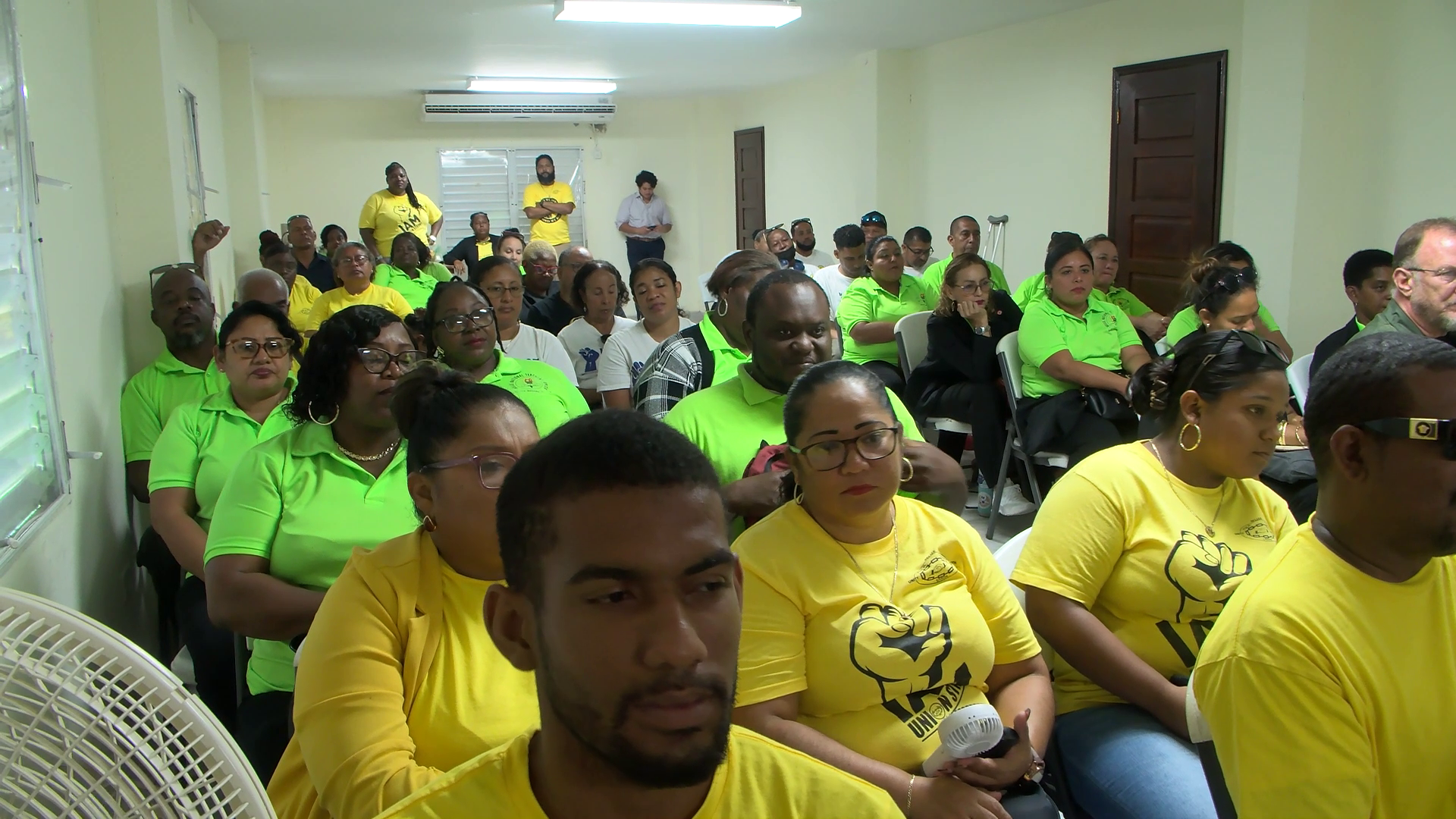
    In a heated debate in Barbados’ House of Assembly this Tuesday, Toni Moore — St George North Member of Parliament and General Secretary of the Barbados Workers’ Union (BWU) — has called on fellow legislators to reopen discussion on several key recommendations left out of the government’s updated Protection of Wages Bill, arguing that the omissions leave critical gaps in safeguards for the country’s workforce.

    Introduced by Labour Minister Colin Jordan, the bill is framed as a modernization of existing wage protection rules, but Moore says its true test lies not in updating language, but in delivering tangible, enforceable protections for working people. One of the core unadopted recommendations she is pushing to revive would tighten statutory language to require that all wages are paid on a regular working day by the established payday. Moore explained that bad actors currently exploit the lack of this rule to delay wage payments to weekends, when all financial institutions are closed, forcing workers who have already completed a full week of work to wait until the next business day to access their earnings — leaving many unable to buy immediate necessities like groceries.

    Moore offered measured praise for one new provision in the bill that formalizes employers’ ability to process authorized deductions from wages for credit union contributions, insurance premiums and loan repayments. She noted that for years, many employers have arbitrarily refused to carry out these deductions even when workers explicitly request them, creating severe financial hardship: workers are often locked out of accessing mortgages without this automated deduction arrangement, and mid-stream cancellation of deductions by employers can push workers into default and financial instability through no fault of their own.

    However, Moore voiced sharp criticism of Section 14 of the bill, which allows employers to recover wage overpayments from future earnings with no statutory time limit. She argued that the open-ended provision is unreasonable, noting that employers could claim overpayments from five, 10, or even 15 years prior, forcing workers to absorb unexpected deductions for errors that were often caused by the employer’s own faulty payroll systems. Citing past issues with underreported payroll errors among former Berger Paints workers, Moore proposed a clear cap on recovery windows, suggesting between six and 12 months as a reasonable timeframe. Though this proposal was rejected during initial drafting, Moore stressed that it must be revisited to protect workers who plan their household budgets around their expected full wages.

    Moore also put forward another key reform demand: immediate payment of all owed wages when employment is terminated, even in cases of summary dismissal. She argued that once an employment relationship ends, all outstanding payments should be settled when the National Insurance Scheme termination certificate is issued, unless the two parties agree otherwise. She added that while automated payroll systems may not always accommodate immediate off-cycle payments, manual adjustments can and should be made to deliver timely payment to dismissed workers, allowing them to move forward without financial uncertainty.

    Another major concern Moore raised centers on Section 29 of the bill, which excludes workers under “cooperation agreements” from the law’s protections. She warned that this vague language opens the door to widespread worker misclassification, particularly for people in informal work and the growing gig economy, who will be left without any wage protection if employers intentionally reclassify their employment status.

    Beyond the Protection of Wages Bill, Moore used the debate to renew longstanding calls for broader reform of Barbados’ Employment Rights Act. She pointed out that inconsistent employment tribunal procedures, arbitrary caps on compensation awards, and widespread difficulties enforcing tribunal rulings continue to block workers from accessing meaningful justice. For example, she noted that the current act allows tribunals to set their own procedural rules, which led to one high-profile case where the tribunal chair adopted complex Supreme Court rules — turning what was supposed to be a accessible, streamlined process for workers into a costly, overly litigious battle. To this day, there are no consistent, standardized rules across tribunals, creating unpredictable procedures and requirements that disadvantage workers who rarely have the resources to navigate shifting legal expectations. “Workers deserve predictability,” Moore emphasized.

    Moore also called out a problematic misinterpretation of the Minimum Wages Act by a major local company identified only as BEC. The company is classifying sales commissions as part of the statutory minimum wage, allowing it to pay a base wage lower than the legally required $10.71 an hour, with the difference made up by variable commissions. Moore explained that this practice erodes workers’ financial stability and hurts their ability to qualify for mortgages and other loans, noting that the complaint has been sitting with the Labour Department for almost a year without resolution.

    To make all existing and new labour laws effective, Moore stressed that the Labour Department needs both adequate staffing and targeted resourcing — a distinction she drew, noting that headcount alone does not guarantee capacity to deliver. The department needs sufficient resources both to educate employers and workers on new laws, and to consistently enforce protections across all workplaces. She added that public education on labour rules is a foundational requirement for any effective legislation.

    Closing her remarks, Moore clarified that she supports the Protection of Wages Bill as a meaningful step forward for worker protection, but said it requires targeted refinement to deliver on its promises. “We don’t expect perfection, so we will not stop it, but what we expect is that we will continue to work at it, to improve on it, to make sure it delivers in very practical ways to the people on whose behalf all of us in here commit to serve,” she said, pledging to continue advocating for stronger, more inclusive labour laws across Barbados.

  • Humphrey: Wage Bill protects workers’ dignity

    Humphrey: Wage Bill protects workers’ dignity

    When the Protection of Wages Bill was tabled for introduction in Barbados’ House of Assembly this Tuesday, Minister of Transport and Works Kirk Humphrey delivered a full-throated endorsement of the landmark labor legislation, describing it as more than a routine policy update – and a foundational safeguard for human dignity.

    Humphrey emphasized that the bill reaches far beyond incremental technical tweaks to the country’s existing labor regulatory framework. Instead, he argued, it was crafted to shore up worker protections amid a fast-evolving global economy, ensuring that all working people are treated fairly and afforded basic respect in their employment relationships. He opened his remarks by applauding Labour Minister Colin Jordan for his sustained commitment to advancing worker rights through targeted legislative reform.

    Unlike physical capital such as land or buildings, Humphrey noted, labor carries unique human stakes that demand explicit legal protection. “Labour is different. Land does not have a family. Land does not have to go to the supermarket at the end of the day… Buildings don’t get up on mornings and dream dreams for their children. Labour is different,” he told the chamber. For working people, delayed wage payments are not just an administrative inconvenience – they can upend access to basic needs and life opportunities, he stressed, recalling a firsthand account from one of his constituents during the COVID-19 pandemic. When the constituent’s salary was delayed, she could not cover her monthly internet bill, and her child was locked out of remote learning classes. “That is the reality of labour,” Humphrey said.

    The legislation includes several key provisions that Humphrey backed, starting with rules formalizing direct deposit as a valid payment method and enshrining workers’ right to choose which bank receives their salary. He noted that while digital banking tools have the potential to simplify payroll processes for employers, those technological advancements should not be used to erode worker autonomy. “Technology should make it easier to pay workers, but it should not make it easier to deny them their rights,” he said. “I like that this bill allows the employee certain freedom because it recognises that the wages, though paid by the employer, are owned by the employee… I get to tell you how I want my money.”

    Another provision limits the total value of coin payments an employer can issue for a single wage payment, capping coin amounts at $10. Humphrey framed that rule as a basic matter of respect for workers who have already earned their pay. “I get to tell you that I don’t want my money in bare coins. I get to tell you under this bill now that you can’t pay me any more than $10 in coins,” he said.

    Humphrey also highlighted the bill’s balanced approach to overpayments, noting that it creates clear legal pathways for employers to recover accidental overpayments while blocking unauthorized wage deductions that would cause undue financial hardship for workers. “This bill is really essentially about fairness. If you want to do it, let’s come to terms. The bill requires some consent,” he explained.

    Critical to the legislation, he added, are new protections for workers when their employing company enters insolvency. The bill places workers ahead of other creditors for unpaid wages, a provision Humphrey called long overdue – arguing that working people should never be forced to bear the cost of poor business decisions they had no part in making. “It should never be so, and I like that this bill protects the employee in those circumstances,” he said.

    Finally, Humphrey praised the bill’s requirement that all official public notices related to the legislation be made accessible to people with disabilities, framing accessibility not as an act of charity but as a fundamental human right. “The accessibility that is built into this bill is not charity… it is your right,” he said.

  • Pringle Says Third-Country Deportee Deal Lacks Transparency

    Pringle Says Third-Country Deportee Deal Lacks Transparency

    A growing political controversy has erupted in Antigua and Barbuda over the administration’s closed-door negotiations for a potential third-country deportee reception agreement, with Opposition Leader Jamal Pringle launching sharp criticism of the government’s failure to engage in inclusive consultation with lawmakers and the general public ahead of finalizing talks. Speaking during an interview with Observer Radio’s flagship current affairs program *Voice of the People* this Tuesday, Pringle laid out his core argument that the Browne administration violated basic democratic norms by choosing to handle the high-stakes national issue unilaterally, rather than opening dialogue with opposition legislators from the earliest stages of negotiation.

    Pringle emphasized that the scope of the proposed agreement carries far-reaching consequences for the entire nation, making public transparency and inclusive input non-negotiable. “When this third-country deportee proposal first emerged, the very first step the government should have taken is to convene opposition members and open a formal dialogue,” Pringle stated during the interview. “There should be full public disclosure of all details surrounding this plan, and wide-ranging consultation with the people of Antigua and Barbuda. This is not an issue that can be decided by the government alone – it will impact every corner of our country, and every citizen deserves a say.”

    The opposition leader has doubled down on longstanding demands for the government to publicly release the full text of the memorandum of understanding (MOU) that outlines the terms of the arrangement, and to formally table the document for debate in the national Parliament. Pringle recalled that he first made this request weeks prior, noting that parliamentarians require full access to all relevant details to carry out their oversight responsibilities. He stressed that the agreement must be framed as a collective national decision, not one imposed from the executive branch without broader buy-in. “This process has to be driven by the people,” Pringle said. “It is not the place of Gaston Browne and Ron Sanders to accept this deal on our behalf. They owe it to the nation to come forward, share the full proposal, outline what they hope to achieve, and lay out the details of what they intend to submit to the U.S. State Department.”

    Pringle connected the current dispute over the deportee agreement to wider systemic concerns about government transparency in Antigua and Barbuda. He pointed out that opposition legislators have repeatedly attempted to obtain critical government information through parliamentary processes, only to face consistent obstruction. He also criticized the lengthy delays in establishing a fully operational Office of the Information Commissioner, a body designed to facilitate public access to government records, noting that the institution remains unable to carry out its core mandate effectively.

    For its part, the government has pushed back against the criticism, defending its handling of negotiations with the United States. Prime Minister Gaston Browne has previously confirmed that talks over the proposed arrangement launched last year as part of broader ongoing diplomatic engagements between the two countries. In response to calls for greater transparency, Browne has stated that the administration intends to present a formal White Paper detailing the full terms of the agreement to Parliament once negotiations are complete.

  • PM Browne and Romanian Ambassador Discuss Trade, Education and Investment Opportunities

    PM Browne and Romanian Ambassador Discuss Trade, Education and Investment Opportunities

    On the sidelines of the annual CARICOM Heads of Government Meeting hosted in St. Lucia, Prime Minister Gaston Browne of Antigua and Barbuda held a strategic bilateral meeting with Theodora Magdalena Mircea, Romania’s ambassador to the region. The gathering, which brought together regional leaders from the Caribbean to tackle a broad spectrum of pressing regional and global issues, created a natural platform for Antigua and Barbuda to advance diplomatic engagement with non-Caribbean nations.

    During the closed-door discussions, the two representatives centered their dialogue on unlocking new opportunities for collaboration across three key priority areas: bilateral trade, educational exchange, and human resource development. Both Browne and Mircea reaffirmed their shared commitment to deepening long-term bilateral ties between the small Caribbean twin-island nation and the Eastern European country, signaling mutual interest in building mutually beneficial partnerships that extend beyond traditional diplomatic channels.

    The meeting marks a continued push by Antigua and Barbuda to diversify its international diplomatic and economic partnerships, even as regional leaders at the CARICOM summit work to align positions on shared challenges ranging from climate resilience to economic development. The talks did not produce immediate concrete agreements, but both sides left the meeting open to follow-up engagements to advance the cooperation priorities discussed.

  • SG reappointment dispute headed to CCJ

    SG reappointment dispute headed to CCJ

    A long-running regional disagreement over the reappointment of the Caribbean Community (CARICOM) Secretary-General is now headed for binding interpretive guidance from the Caribbean Court of Justice (CCJ), after regional leaders agreed to pursue the court’s advisory opinion to resolve the deadlock triggered by Trinidad and Tobago’s formal objection.

    The consensus decision was reached during a special retreat of CARICOM Heads of Government, held on July 6 on the sidelines of the bloc’s 51st Regular Meeting of the Conference of Heads of Government in Castries, St. Lucia.

    Per an official communiqué released by the 15-nation regional integration body, the government of Trinidad and Tobago has held firm to its opposition to the procedural framework used to advance the Secretary-General’s reappointment, and formally called for the CCJ to weigh in on the matter to clarify relevant treaty provisions. In response, CARICOM leaders voted to launch official proceedings under Article 212 of the Revised Treaty of Chaguaramas, the foundational legal document governing the regional bloc, to request the court’s non-binding but authoritative advisory opinion.

    Regional leaders emphasized that treaty interpretation is a core, founding mandate of the CCJ, making the court the appropriate venue to resolve this procedural dispute. Until the CCJ issues its advisory opinion and CARICOM member states complete their review of the ruling, the current interim status of the Secretary-General’s reappointment will remain unchanged, allowing the bloc’s day-to-day operations to continue without interruption.

    CARICOM leaders framed the decision to refer the matter to the CCJ as a deliberate, amicable pathway to resolving intra-regional disagreement. The approach prioritizes adherence to the rule of law within the bloc, rather than allowing the dispute to escalate and disrupt critical regional work.

    In addition to addressing the reappointment dispute, Heads of Government reaffirmed their commitment to a broader ongoing review of CARICOM’s governance structure, a process first authorized during the previous annual conference held in St. Kitts and Nevis. This review forms a central pillar of wider efforts to strengthen regional institutions, boost administrative efficiency, and improve the delivery of benefits to Caribbean populations across member states.

    Leaders explicitly stressed that turning to the CCJ for guidance does not indicate a lack of trust in the integrity of any member state or any individual involved in the reappointment process. Instead, they argued, the move underscores CARICOM’s long-standing commitment to principles of good governance and iterative institutional improvement. The bloc’s leaders also closed by reaffirming their shared commitment to CARICOM’s core mission and goals, pledging to continue collaborative action to advance regional interests even amid the multiple economic, social, and geopolitical challenges facing small island developing states across the Caribbean.