分类: politics

  • St. Kitts and Nevis collaborates with U.S. to accept Caribbean nationals

    St. Kitts and Nevis collaborates with U.S. to accept Caribbean nationals

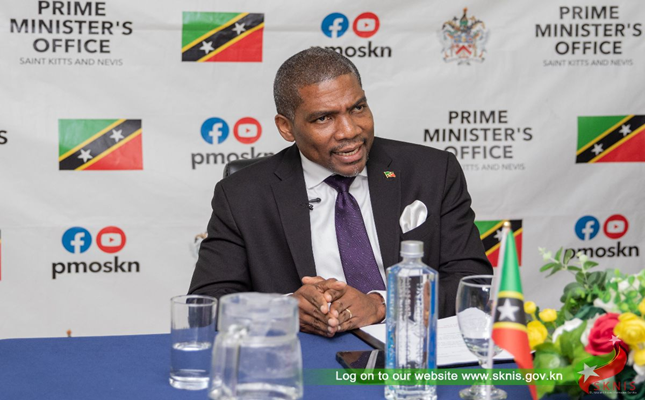
    In a significant diplomatic development, the Federation of St. Kitts and Nevis has formally entered into a bilateral arrangement with the United States government concerning the transfer of certain Caribbean Community nationals. Prime Minister Dr. Terrance Drew unveiled the agreement during his weekly ‘Roundtable’ media briefing on Thursday, January 8, 2026.

    The Memorandum of Understanding establishes a framework for the potential acceptance of third-country nationals within the CARICOM region, explicitly excluding Haitian citizens due to security considerations. Dr. Drew emphasized the selective nature of the arrangement, noting that only individuals without criminal records involving violent or sexual offenses would be considered for transfer.

    This development places St. Kitts and Nevis among several Eastern Caribbean nations that have engaged in similar negotiations with US authorities. The Prime Minister clarified that the initiative resulted from proactive diplomacy rather than external pressure, countering speculation about regional coercion.

    Regarding operational aspects, Dr. Drew indicated that financial responsibilities would predominantly fall to the United States, with logistical details currently undergoing finalization between both governments. The arrangement specifically targets CARICOM nationals who meet stringent eligibility criteria, reflecting the Federation’s commitment to regional solidarity while maintaining national security standards.

    The agreement represents a carefully balanced approach to international cooperation, addressing humanitarian considerations while implementing robust safeguards to protect national interests.

  • VS lanceert plan voor stabilisatie en oliecontrole in Venezuela

    VS lanceert plan voor stabilisatie en oliecontrole in Venezuela

    The United States has formally articulated a comprehensive three-phase strategy for Venezuela focused on stabilization, economic recovery, and political transition, according to Secretary of State Marco Rubio. This development follows Saturday’s controversial capture of Venezuelan leader Nicolás Maduro by American forces.

    The blueprint commences with establishing stability through interim authorities collaborating closely with Washington. Subsequently, American oil corporations will receive guaranteed access during the reconstruction phase, ultimately transitioning to a democratically elected government chosen by the Venezuelan people.

    President Donald Trump issued stern warnings of potential additional military interventions should emerging leadership figures from Maduro’s circle resist American demands, which predominantly center on securing Venezuelan oil resources. The administration aims to refine and market up to 50 million barrels of Venezuelan crude, with US forces continuing seizure operations against oil tankers linked to Venezuela.

    Secretary Rubio emphasized Washington’s substantial control over the interim government, asserting that oil revenue would be meticulously managed through US-controlled accounts to prevent corruption and benefit Venezuelan citizens.

    The initiative has encountered sharp bipartisan criticism. Democrats have condemned the approach as ‘oil kidnapping’ and denounced the lack of transparency. Former House Speaker Nancy Pelosi questioned the absence of public hearings regarding operational costs and motivations, while Senator Chris Murphy characterized the plan as ‘insane’ and condemned it as a violent oil seizure scheme.

    Republican dissent emerged concurrently, with Representative Don Bacon stressing the necessity of installing legitimately elected leadership and cautioning that excessive focus on oil could undermine broader American objectives.

    Energy Secretary Chris Wright highlighted the critical importance of controlling Venezuela’s oil market to stabilize the economy and rebuild the energy sector. The strategy involves initially marketing stored oil reserves followed by future production sales, with revenues administered through American-supervised accounts. Wright confirmed ongoing discussions with US oil companies regarding their participation in Venezuela’s long-term production restoration.

    Venezuela possesses the world’s largest oil reserves yet suffers from chronically low production due to prolonged mismanagement and investment deficits. Wright anticipates short-term production increases through advanced technology and equipment, though full recovery to historical production levels would require years.

    Washington recently announced a $2 billion crude oil export agreement with Caracas, interpreted as Venezuelan officials acquiescing to Trump’s demands under threat of further military action. American refining companies responded favorably, with stock appreciations observed in major corporations including Marathon Petroleum, Phillips 66, and Valero Energy.

    The White House has scheduled a Friday meeting with executives from ExxonMobil, ConocoPhillips, and Chevron regarding their anticipated involvement in the reconstruction process, though these corporations remain reticent in public statements.

    The US proposal has elicited mixed global reactions, raising concerns about sovereignty violations, economic interests, and Venezuela’s future trajectory. Coming developments will prove decisive for both Venezuela’s stability and international stakeholders’ regional influence.

  • WIN, FGM slam govt’s plan to settle foreigners from US

    WIN, FGM slam govt’s plan to settle foreigners from US

    Guyana’s political landscape erupted in controversy as two major opposition parties vehemently condemned the government’s clandestine negotiations with the Trump administration regarding the settlement of third-country nationals from the United States.

    The We Invest in Nationhood (WIN) and Forward Guyana Movement (FGM) issued separate statements on Wednesday, January 7, 2026, castigating President Irfaan Ali’s administration for engaging in talks about accepting deportees or refugees without parliamentary oversight or national consultation. Both parties characterized the negotiations as a fundamental breach of democratic principles and national sovereignty.

    FGM denounced the potential agreement as a ‘direct affront to the sovereignty of the Guyanese people,’ particularly given the absence of a functioning Parliament to provide legislative scrutiny. The party emphasized that any policy substantially altering Guyana’s demographic composition or imposing new social responsibilities must undergo rigorous parliamentary debate and national consultation.

    Foreign Secretary Robert Persaud confirmed on January 5 that ‘productive discussions’ were underway with the US to establish a ‘framework of understanding’ consistent with Guyana’s national priorities while supporting US objectives. This initiative forms part of the Trump administration’s broader strategy to relocate unwanted migrants, with several Caribbean nations including Antigua and Barbuda, Dominica, and Belize having already signed similar agreements.

    The opposition parties raised multifaceted concerns spanning security, economic, and social dimensions. FGM challenged the government to disclose the agreement’s contents publicly, subject it to parliamentary debate, and conduct comprehensive security and economic impact assessments. Critical questions emerged regarding the verification systems for migrant backgrounds, administrative oversight mechanisms, and the potential strain on Guyana’s already stretched infrastructure.

    WIN explicitly rejected supporting any agreement until the government provides full disclosure, ensures parliamentary oversight, and presents a clear plan prioritizing Guyanese citizens’ well-being. The party highlighted the existing pressure from over 100,000 Venezuelan migrants on hospitals, schools, housing, and essential services, questioning how additional influxes would be managed.

    Both opposition groups demanded transparency regarding financial contributions from the US, long-term integration plans, housing arrangements, and the potential diversion of resources from Guyanese citizens already facing challenges in accessing land and affordable homes. The parties insisted that any demographic transformation affecting the nation’s future stability and security must not be decided through secretive negotiations without clear disclosure to the Guyanese people.

  • Antonio Taveras pushes asset recovery in SENASA corruption case

    Antonio Taveras pushes asset recovery in SENASA corruption case

    SANTO DOMINGO – In a significant move against public corruption, Senator Antonio Taveras has formally petitioned the Public Prosecutor’s Office to implement the Law of Extinction of Ownership regarding the high-profile SENASA (National Health Insurance) corruption case. Representing Santo Domingo province, the senator seeks expedited recovery of public funds allegedly embezzled from the national healthcare system.

    The senator’s legal submission emphasizes the extraordinary nature of the case, noting that stolen resources were specifically allocated for public health services, thereby disproportionately harming the nation’s most vulnerable citizens. While explicitly acknowledging the constitutional autonomy of prosecutors, Taveras maintained that asset recovery represents an urgent parallel process that can proceed independently of criminal prosecutions.

    Legal grounds for the petition cite multiple alleged violations including systematic fraud against the state, blatant embezzlement schemes, utilization of front men to conceal ownership, inexplicable asset accumulation by officials, and irregular financial operations. Taveras underscored that public outrage demands not merely criminal convictions but full restitution of diverted funds.

    The senator concluded that recovered assets must be channeled back into the national health infrastructure to restore critical services, including essential medicine access and medical treatments for Dominican citizens who suffered from the alleged corruption.

  • The difficulties and the much that remains to be done continue to be the guiding principles of the Revolution

    The difficulties and the much that remains to be done continue to be the guiding principles of the Revolution

    On the 67th anniversary of the Cuban Revolution’s triumphant entry into Havana, the nation reflects on Fidel Castro’s enduring legacy amidst contemporary geopolitical pressures. January 8, 1959, marked the historic moment when Commander-in-Chief Fidel Castro Ruz led the Caravan of Liberty through the capital, greeted by millions of citizens celebrating what they perceived as their ultimate independence.

    This year’s commemoration coincides with the centenary of Castro’s birth, reviving his prophetic warnings about the difficulties inherent in revolutionary governance. His famous address—’Tyranny has been overthrown. The joy is immense. And yet, much remains to be done’—resonates profoundly in current circumstances, as Cuba faces renewed external pressures and internal challenges.

    The article draws parallels between historical and contemporary struggles, emphasizing how the United States has persistently attempted to undermine Cuba’s revolutionary project through various means. Recent developments in Venezuela, including alleged military aggression and the political targeting of President Nicolás Maduro, are presented as evidence of continued imperial ambitions in the region.

    Despite these challenges, the piece emphasizes Cuba’s resilience, attributing its endurance to the ideological foundation established by Castro and the revolutionary generation. The narrative portrays Cuba as maintaining its commitment to sovereignty and resistance against foreign domination, with Castro’s teachings continuing to guide the nation’s response to contemporary adversities.

    The commemoration serves as both a historical reflection and a call to action, invoking José Martí’s concept of ‘Our America’ while reaffirming Cuba’s revolutionary principles in the face of modern geopolitical realities.

  • Civil Aviation Pushes Forward on Drone Regulations

    Civil Aviation Pushes Forward on Drone Regulations

    The Belize Department of Civil Aviation (BDCA) has initiated a comprehensive review of national drone regulations following substantial feedback from industry operators and stakeholders. Director Nigel Carter confirmed the agency is actively revising existing frameworks through an ongoing consultation process that will include open public meetings.

    This regulatory overhaul represents a significant development for Belize’s expanding drone community, balancing operational flexibility with national security requirements. The BDCA emphasizes that while recognizing drones as legitimate commercial tools, the primary objective remains ensuring safe integration with manned aviation within Belize’s airspace.

    Carter outlined specific criteria for effective stakeholder participation, stating concerns must be accompanied by alternative proposals rather than general objections. The department employs a rigorous risk assessment methodology for each substantiated concern, implementing changes only when safety standards remain uncompromised.

    The forthcoming regulations aim to establish structured operational parameters for commercial and recreational drone usage while addressing national security priorities. Industry participants anticipate these developments will provide clearer operational guidelines while maintaining safety protocols essential for Belize’s aviation ecosystem.

  • Public Pressure Forces Thirteenth Amendment Withdrawal

    Public Pressure Forces Thirteenth Amendment Withdrawal

    In a significant policy reversal, the Belizean government has officially withdrawn its proposed Thirteenth Amendment to the constitution following substantial public opposition. The controversial legislation, which had sparked nationwide debate, faced mounting criticism from civil society organizations and citizens who argued the measures would undermine civil liberties while failing to address fundamental crime prevention strategies.

    The National Trade Union Congress of Belize (NTUCB) emerged as a leading voice against the amendment, consistently warning that the proposed changes would disproportionately impact ordinary citizens rather than enhance community safety. NTUCB President Ella Waight confirmed the government’s decision, revealing that Prime Minister John Briceño has committed to pursuing alternative legislative approaches through modifications to the criminal code instead of constitutional amendments.

    According to Waight, the revised approach will require any state of emergency (SOE) declarations to receive approval through the National Security Council, creating a more inclusive and progressive framework for addressing security concerns. This procedural change aims to prevent ordinary citizens from becoming inadvertently entangled in security operations while conducting their daily activities.

    The government’s retreat represents a notable victory for civic engagement in Belize, demonstrating how sustained public pressure can influence policymaking at the highest levels. The development underscores the continuing tension between security measures and civil liberties in addressing crime-related challenges across the nation.

  • No Ombudsman, Fewer Safeguards for Belizeans

    No Ombudsman, Fewer Safeguards for Belizeans

    Belize faces a significant governance crisis as the crucial Office of the Ombudsman remains unoccupied, creating what watchdogs describe as a dangerous protection gap for ordinary citizens. The vacancy emerged following the non-renewal of the previous Ombudsman’s contract, leaving the nation without its primary mechanism for addressing grievances against public authorities.

    The National Trade Union Congress of Belize (NTUCB) has issued a stark warning about the implications of this vacancy. According to NTUCB President Ella Waight, the absence undermines governmental accountability and disproportionately affects economically vulnerable citizens who rely on the office for free legal assistance when facing unfair treatment by police, government departments, or other public entities.

    Waight expressed particular concern about public perceptions surrounding the contract non-renewal, suggesting it creates the appearance of governmental retaliation against an official merely exercising constitutional duties. “If that is the perception the public is getting out there, that is a bad perception,” Waight stated, emphasizing that the Ombudsman’s operational independence should remain inviolable.

    The situation represents a recurrence of a previously problematic pattern for Belize, which has experienced similar vacancies in past years. The Office of the Ombudsman serves as a critical check on administrative power, providing citizens with an accessible alternative to costly legal proceedings when challenging official misconduct or malpractice.

    This development raises fundamental questions about Belize’s commitment to institutional safeguards and democratic accountability mechanisms at a time when citizens’ trust in public institutions remains paramount for national stability.

  • Fonseca Defends Vacancy, Promises New Ombudsman

    Fonseca Defends Vacancy, Promises New Ombudsman

    Foreign Minister Francis Fonseca has publicly addressed the ongoing discourse surrounding Belize’s vacant Ombudsman position, asserting the government’s constitutional prerogative in making appointments. During a recent press engagement, the senior Cabinet member clarified that the administration had no legal obligation to renew the contract of former Ombudsman Major Swaso, despite acknowledging his satisfactory service and personal respect for the official.

    Fonseca emphasized the relative brevity of the current vacancy, noting that merely one week has passed since the position became unoccupied. Drawing comparative analysis with previous administrations, he highlighted that the United Democratic Party government had left similar oversight roles unfilled for extended periods exceeding two years—a scenario he maintains has not occurred under the current leadership.

    The Foreign Minister provided assurances regarding the imminent appointment process, indicating that a replacement candidate would be identified within the coming weeks. According to Fonseca, the selection criteria will prioritize professional qualifications, demonstrated competence, and the confidence of the Belizean public. This appointment will restore the critical oversight mechanism designed to address citizen grievances against governmental entities.

    The Ombudsman’s office serves as an essential institution in Belize’s governance framework, operating as an independent authority responsible for investigating complaints of maladministration within public services. The vacancy has sparked public discourse regarding governmental transparency and accountability mechanisms.

  • Will PM Briceño Agree to Regular Union Meetings?

    Will PM Briceño Agree to Regular Union Meetings?

    Belize’s labor movement is advocating for institutionalized dialogue with the national government. Ella Waight, President of the National Trade Union Congress of Belize (NTUCB), has formally proposed establishing quarterly meetings with Prime Minister John Briceño and his administration to ensure transparent governance and responsible fiscal management.

    The proposal, initially presented during their first engagement in November 2024, seeks to create a structured framework for addressing national issues affecting workers. Waight emphasizes that consistent communication would prevent disruptions in government services and foster collaborative problem-solving between employers, employees, and policymakers.

    “We envision a partnership dynamic with the government,” Waight stated. “This nation’s productivity depends on our collective ability to optimize limited resources through wise expenditure decisions.”

    The union leader connected these proposed dialogues directly to worker benefits, noting that requests for salary adjustments and expanded parental leave provisions must be considered within the context of finite public funds. Regular engagement, she argues, would create a mechanism for evaluating these demands against broader national priorities.

    This initiative represents a strategic approach to labor relations that prioritizes prevention over reaction, aiming to address concerns before they escalate into conflicts that could impact public service delivery and economic stability.