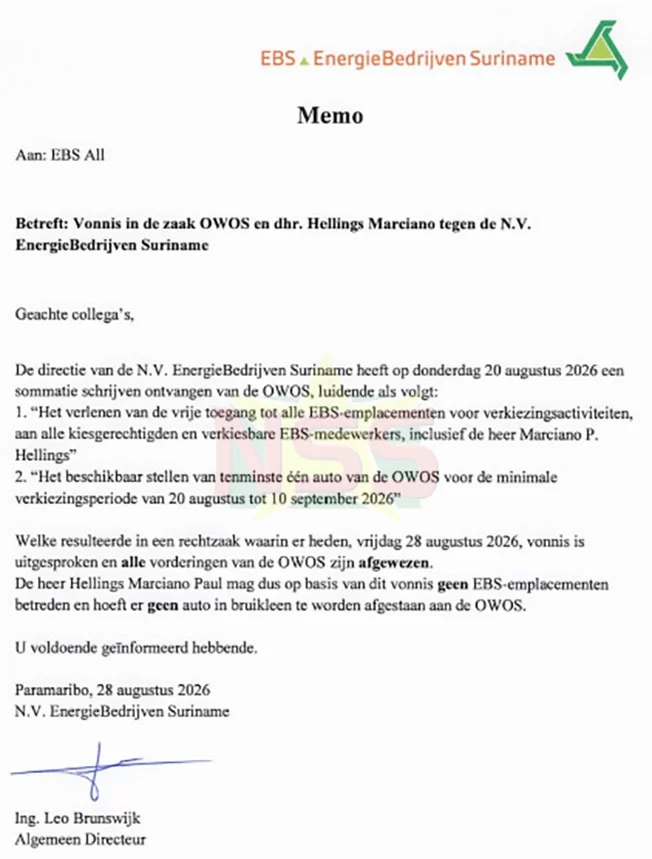
A bitter power struggle for the leadership of the OWOS union linked to Dutch public transport provider EBS is intensifying just weeks ahead of the September 10 leadership election, with incumbent chair Marciano Hellings launching an appeal after a court rejected his bid to secure equal campaign conditions against his rivals. Two major slates of candidates are competing to take control of the union’s governing board, alongside one independent candidate, turning the pre-election period into a high-stakes conflict over fair access to resources and work sites.
分类: politics
-

NDP defends sale of lands at Chatham Bay
Nine months after taking office in November, the ruling New Democratic Party (NDP) of St. Vincent and the Grenadines has publicly confirmed its full support for a government land deal: the sale of roughly 100 acres of coastal land at Chatham Bay, Union Island, for a total sum of approximately EC$54 million. The transaction, which has emerged as a central point of fiscal and political debate in the country’s parliament, frames itself as a dual win for national fiscal health and ecological protection, though opposition leaders have raised sharp questions over pricing and transparency.
During a parliamentary sitting Thursday, Prime Minister Godwin Friday first tied the land sale directly to a dramatic improvement in the country’s fiscal position for the April to July period of 2026. Data presented by the Prime Minister showed the government recorded an overall deficit of EC$57.78 million for the four-month window, a sharp reduction from the EC$125.23 million deficit reported in the same period of 2025. Friday told the legislative body that the improvement stemmed largely from elevated capital revenue and trimmed capital spending, particularly after the wrap-up of major public infrastructure projects. Of the 2026 capital revenue, the Prime Minister confirmed that EC$52.7 million came directly from the Chatham Bay land transaction, a detail that had previously been referenced to parliament, though it remains unclear when the initial disclosure was made.
The land at the center of the debate has a complex recent ownership history. Decades ago, the previous Unity Labour Party (ULP) administration, led by current Opposition Leader Ralph Gonsalves, reclaimed the Chatham Bay property after a private foreign investor failed to follow through on proposed tourism development, acquiring the land back for less than EC$700,000 in compensation. Under the new sale agreement, NDP officials confirmed Saturday that the land will be held by a private conservation-focused company, with legally binding conservation covenants written into the contract to permanently protect the area’s unique ecosystem. Chatham Bay sits adjacent to four critical forest reserves — Water Rock Reserve, Large Forest Reserve, Colin Campbell Reserve, and Jack O’Dan Reserve — and is a core habitat for the endangered Union Island Gecko, a lizard species found nowhere else on Earth outside St. Vincent and the Grenadines. The NDP statement notes that the protected status formalized through the sale will bring enhanced conservation measures to the region in the coming months.
Beyond conservation, the ruling party frames the sale as a key step in addressing the severe fiscal legacy inherited from the previous ULP administration. The NDP argues that years of mismanagement under the prior government pushed the country’s national debt to roughly 113% of GDP, a debt level that has severely constrained the government’s ability to fund core public priorities including healthcare, national development programming, and public sector reform. All proceeds from the transaction will be directed to pre-defined national priorities: capitalization of the National Development Bank, resourcing for the newly created Ministry of Fisheries, Land and Sea Conservation and Climate Resilience, debt reduction initiatives, and projects designed to improve government operational efficiency. In a critical public interest safeguard added to the agreement, the government retains the option to repurchase the full 100-acre parcel within two years at the exact sale price.
For the young NDP administration, which has governed for just nine months amid a challenging fiscal climate marked by high existing debt and limited access to low-interest concessional financing, the land sale is part of a broader economic strategy. Prime Minister Friday has positioned asset monetization as an alternative to immediate broad-based new taxes, arguing that unlocking capital from underutilized state assets will help stabilize national finances without placing new burdens on households. The Prime Minister has also framed the transaction as a reflection of the government’s broader policy agenda: liberalizing private investment, rolling back what he calls overly burdensome regulation and punitive fines that have deterred foreign and domestic investment, and upholding commitments to transparency, environmental stewardship, and responsible fiscal management.
“The transaction reflects responsible Government: protecting our natural heritage, reducing debt, and investing in the future of our people. The public interest is protected through conservation covenants,” Friday said in comments cited by the NDP’s press statement. The party emphasized that the sale delivers a substantial capital gain for the people of St. Vincent and the Grenadines, even as it prioritizes long-term conservation of the ecologically sensitive site.
Political opposition has pushed back against the government’s framing, however. Gonsalves, the former prime minister who has questioned the status of the sale for months, raised concerns during Thursday’s parliamentary debate over the sale price, arguing that the government sold the ecologically valuable “crown jewel” property for less than half of its assessed valuation from 15 years prior. He argued that the deal fits into a broader pattern of the NDP relying on one-off asset sales and external borrowing to mask deep-rooted structural weaknesses in the national economy.
Gonsalves had first outlined his concerns about the property months before the formal disclosure, using his weekly radio program to walk through the land’s history of foreign ownership, the original investor’s failure to meet development commitments, and the multi-year legal process that returned the land to state ownership. He argues that the significant public investment that has increased land values across the Grenadines in recent years, paired with the legal and political effort invested in reclaiming the bay years ago, should have resulted in a far higher sale price.
While Gonsalves had previously submitted a written parliamentary question requesting full details of the sale — including confirmation that the transaction was completed, the sale price, planned development, and information on the purchaser — it remains unclear whether the prime minister has formally responded to that request. Notably, when Friday referenced the sale during Thursday’s sitting, Gonsalves did not raise accusations that the government had intentionally concealed the transaction or failed to meet disclosure requirements.
-

Ecuador: Ex-president Lenin Moreno krijgt vijf jaar gevangenisstraf wegens omkoping
In a landmark ruling that marks one of the biggest corruption cases in modern Ecuadorian history, a national court in Quito has found former president Lenin Moreno guilty of bribery linked to widespread graft surrounding the construction of Ecuador’s largest hydropower facility, the Coca Codo Sinclair project.
The 73-year-old former head of state has been sentenced to five years in prison, and handed a lifelong ban from holding any public office in the country. The case centers on allegations of systemic fraud and bribery connected to the 1,500-megawatt hydroelectric plant, which entered commercial operation in 2016 but has been plagued by persistent technical issues and corruption accusations from its early development stages.
Prosecutors launched the formal investigation into the project in March 2023, uncovering alleged ties between Moreno, his immediate and extended family, local business partners, and Chinese commercial entities linked to the project. Presiding judge Manuel Cabrera confirmed that the evidence presented in court fully supported the bribery charges brought against the former president. According to court documents, China’s state-owned engineering firm Sinohydro paid approximately $76.1 million in bribes between 2009 and 2018, routed through a network of fake consultancy contracts to conceal the illegal payments.
In addition to Moreno’s conviction, multiple members of his family have also been found guilty in the scheme. His wife Rocio Gonzalez Navas, his daughter, two brothers, and the brothers’ spouses all received two-and-a-half year prison sentences. The court also sentenced Cai Runguo, the former Chinese ambassador to Ecuador, to five years in prison in absentia over his alleged role in the corruption network.
Investigators traced the illegal funds through a complex web of offshore bank accounts and shell companies registered in tax havens before the money reached Moreno and his family members. Court records show Moreno received more than $1 million in illicit payments during his tenure as Ecuador’s vice president between 2007 and 2013, a period when the Coca Codo Sinclair project was being negotiated and finalized.
Moreno has forcefully denied all allegations against him throughout the legal process. During his trial, he argued that he was never involved in signing or overseeing the project’s contracts, and claimed responsibility for the corruption lies with other officials who handled the contract negotiations and solicited bribes. Moreno, who served as Ecuador’s president from 2017 to 2021, voluntarily returned to Ecuador from Paraguay ahead of his trial to face the judicial process.
The Coca Codo Sinclair project is a strategic infrastructure asset for Ecuador’s national energy supply, and was developed with major loan financing from Chinese institutions. For years, it has been overshadowed by both costly technical malfunctions and persistent corruption claims. The high-profile conviction of a former president highlights growing global scrutiny of corruption risks associated with large-scale infrastructure development projects across Latin America, many of which involve significant foreign investment and partnership.
-
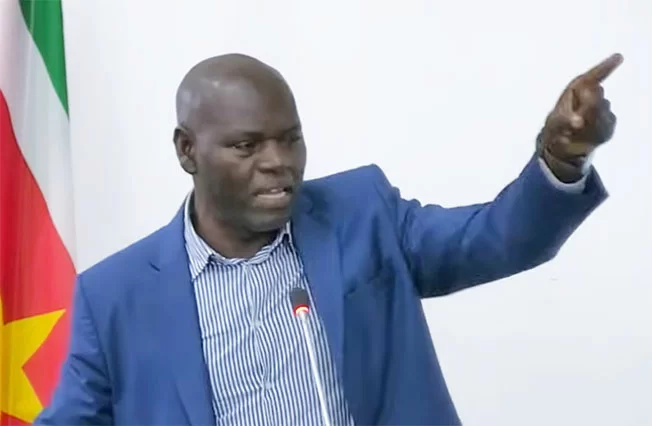
BEP-fractieleider Asabina wil af van SRD 1 miljoen-grens voor btw
During parliamentary debate on Suriname’s General Tax Law, Ronny Asabina, leader of the BEP political faction, has publicly called for the immediate elimination of the 1 million Surinamese dollar (SRD) annual turnover VAT threshold, arguing that the existing regulation creates widespread opportunities for tax avoidance and fosters an environment conducive to systemic corruption.
Under current Surinamese tax rules, businesses with annual turnover falling below the 1 million SRD threshold are exempt from the same strict VAT reporting and payment obligations that apply to firms exceeding the limit. Asabina told the National Assembly that this two-tier system is widely exploited by unethical business owners, who deliberately structure their operations or falsify administrative records to keep their reported turnover below the cutoff, allowing them to skip out on VAT obligations entirely. He specifically called out the supermarket sector, casting doubt on the credibility of claims that dozens of operators in the industry actually generate less than 1 million SRD in annual turnover.
Critically, Asabina rejected the common counterargument that eliminating the threshold would overburden the Suriname Tax Administration, which reportedly faces staffing shortages that would leave it unable to oversee a vastly expanded pool of VAT-registered businesses. Reports indicate tax officials have previously floated raising the threshold to reduce administrative workload, a proposal Asabina dismissed outright. If expanding oversight requires hiring additional tax personnel and investing in new infrastructure, he argues, the state must prioritize that investment. Shortages in enforcement capacity, he emphasized, are never a justifiable reason to preserve a regulation that enables widespread abuse of the tax system.
Asabina’s criticism of the VAT threshold is part of a broader push to strengthen Suriname’s tax administration and crack down on non-compliance. He argues that tax system reform must include a full review of all existing rules that create opportunities for manipulation, and is calling on the government to launch a formal review of whether full elimination of the 1 million SRD threshold is feasible. He has also pressed the government to clarify its official position: will it keep the current threshold, raise it, or move to abolish it entirely?
A core part of Asabina’s broader reform agenda is expanding the use of digital tools to track taxpayers and financial flows. Suriname has already introduced online filing and payment systems for VAT, payroll tax and income tax, but Asabina is demanding transparency around the actual outcomes of this digital shift. He wants clear data on how many taxpayers have transitioned to online filing, and whether digitalization has actually led to higher or more efficient tax collection.
He also called for improved cross-agency information sharing between the tax administration and other government bodies, arguing that integrating data from different public datasets would allow officials to identify and act on tax evasion far more quickly. Importantly, Asabina stressed that his push for stricter enforcement does not mean higher tax burdens for ordinary citizens and compliant businesses. Instead, his goal is a fairer distribution of tax obligations, and a dramatic increase in the likelihood that tax avoiders and evaders are caught and held accountable.
Asabina concluded that the new General Tax Law can help advance these goals by granting the tax administration expanded authority for oversight, data collection and enforcement. For these new powers to be effective, however, he added, the tax authority must be properly resourced with sufficient staff, digital tools and enforcement capacity. Parliamentary debate on the draft legislation is set to resume next week.
-

Roseau North Constituency set for September 7 By-Election
Residents of Dominica’s Roseau North Constituency are entering the final stretch of campaigning ahead of a pivotal parliamentary by-election, scheduled to take place on September 7, 2026. Three contenders have officially thrown their hats into the ring for the vacant seat, each bringing distinct political affiliations and platforms to the contest. Daniel Lugay stands as the nominee for the United Workers Party (UWP), Ashma McDougal represents the incumbent Dominica Labour Party (DLP), and Sherman Boston is competing as an independent candidate.
The electoral process formally entered its final phase on Nomination Day, August 21, 2026, when all three candidates successfully filed their paperwork to secure a place on the ballot. In a recent press briefing held at the Electoral Office Conference Room, Chief Elections Officer Anthea Joseph laid out the full operational arrangements for polling day to members of the local media, aiming to bring clarity to voters ahead of the contest.
To streamline access for all registered voters across the constituency, Joseph confirmed that 10 dedicated polling centres have been established, with each elector assigned to a specific location based on their residential community. The full breakdown of polling locations and their service areas is as follows: Polling Centre 1, based at the Goodwill Parish Hall, will serve voters residing in Pottersville. Polling Centre 2, hosted at the Alpha Center and Genesis Christian Union Preschool, caters to voters from Lower Goodwill East. Lower Goodwill West voters will cast their ballots at Polling Centre 3, located at St. Alphonsus Preschool, while residents of Upper Goodwill will head to Polling Centre 4, split between the Red Cross Headquarters and Christian Union Primary School.
For voters in Bellevue Rawle, polling will take place at Polling Centre 5 inside Goodwill Primary School. Fond Cole residents will use Polling Centre 6 at the Fond Cole Community Center. Stockfarm electors have been assigned to Polling Centre 7 on the campus of Dominica State College, and Louisville voters will cast their ballots at Polling Centre 8 at the Red Cross Headquarters. Three communities — Gutter Village, Tarish Pit, and parts of Goodwill — share Polling Centre 9, also located at Goodwill Primary School. Finally, residents of Morne Daniel will vote at Polling Centre 10, housed in the former Chinese Embassy building.
As the by-election enters its final campaign days, Joseph has issued a public call to all eligible registered voters in Roseau North to confirm their assigned polling locations ahead of September 7 to avoid delays on voting day, and emphasized the importance of civic participation in selecting the constituency’s new parliamentary representative. The upcoming contest will ultimately decide which of the three candidates will claim the vacant seat and represent Roseau North in parliament.
-
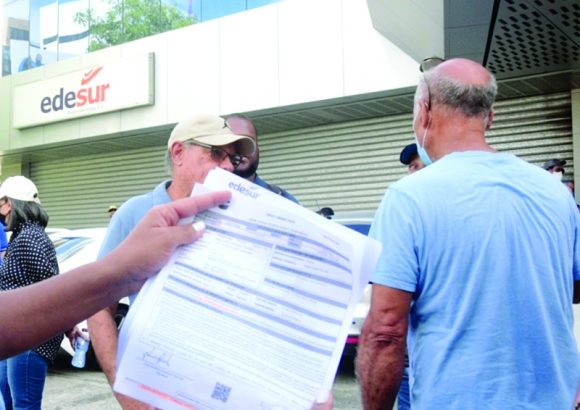
Users can demand financial compensation for blackouts
In the Dominican Republic’s capital Santo Domingo, a long-standing regulatory framework for the national electricity market continues to shape consumer protections and industry accountability, with key provisions bringing clearer obligations for power suppliers and expanded rights for residential and commercial users. At the core of this regulatory structure is Law 186-07, legislation explicitly crafted to codify user rights for electricity services and bring much-needed structure to the country’s power market. This law updates and amends the earlier 125-01 legislation, with a sharpened focus on two key areas: stiff criminal penalties for electricity fraud, and formalized definitions of binding responsibilities for both energy distribution companies and their customers.
One of the most impactful clauses of Law 186-07 is found in Paragraphs I and II of Article 93, which sets out a mandatory compensation requirement for users affected by unplanned service outages that stem from company error or systemic failures. The regulation refers to interrupted power as “unserved electricity,” and mandates that any compensation paid to affected users cannot fall below 150% of the value of the lost power at the applicable tariff rate. The full text of the regulation clarifies that distribution firms are legally required to compensate users for unserved electricity, aligned with binding service quality technical standards issued via resolution by the Superintendence of Electricity. The regulatory body is also tasked with formalizing compensation calculation rules, with the non-negotiable minimum payout threshold of 150% of the corresponding tariff written into the legislation.
To administer the compensation process, the law requires the Wholesale Electricity Market (MEM) to appoint a dedicated official to oversee unserved energy claims. This official will work alongside a Failure Committee that operates under the umbrella of MEM’s governing Coordinating Body, while the Superintendence of Electricity retains authority to set the specific procedural rules and eligibility conditions for all compensation claims.
Complementing the compensation rules laid out in Law 186-07 are consumer protection provisions for general claims contained in Decree No. 555-02, whose Articles 443 through 450 outline a full framework for user complaint processes, from initial filing to required response timelines. Article 445 explicitly guarantees users the right to have any claims or complaints formally reviewed and processed by their distribution provider, requires providers to issue written responses to all complaints, and mandates that distribution companies share a monthly summary of all received complaints with the national Consumer Protection Office.
The decree reinforces that distribution firms must adhere strictly to all procedural requirements for analyzing and responding to claims from account holders, aligned with existing regulatory standards. Critically, the regulation also protects users from service disconnection while a claim related to a disputed bill is still pending resolution, as long as the user filed the claim following official protocols.
Under the decree’s rules, users may file claims with their assigned power distribution company (known locally as EDES) via three channels: formal letter, telephone, or in-person submission. All claims are issued a unique receipt or reference number, with strict response timelines tied to the type of complaint: billing disputes must receive a response within three to 10 business days. For technical fault repairs, response and resolution windows range from 8 to 16 hours depending on the user’s geographic location; equipment replacements must be completed within two days, and meter calibration requires a maximum three-day turnaround, all without service disconnection during the process.
For users who do not receive a satisfactory resolution from their EDES in the first round of review, Article 448 grants the right to escalate the claim to the specialized Office of Consumer Protection of Electricity (Protecom), with a guarantee that power service will remain active throughout the escalation process. If a provider has already suspended service while the claim is pending, the regulation requires immediate reconnection as soon as Protecom notifies the provider of the escalated appeal.
-

‘It Will Be Built’: Browne Says Council Cannot Stop Barbuda Housing Project
The long-running ideological and political clash over land use and development in Barbuda has reignited, as Antigua and Barbuda Prime Minister Gaston Browne has publicly committed to moving forward with a controversial planned housing development on the island, rejecting objections from the local Barbuda Council and the opposition Barbuda People’s Movement (BPM).
Addressing claims that local governing bodies were kept in the dark about the housing initiative, Browne pushed back against those assertions, noting that the project has been part of public discourse and planning processes for multiple years. He went on to argue that the Barbuda Council has a pattern of blocking large-scale development projects on the island, and made clear that the current wave of opposition would not halt the central government’s agenda.
Browne specifically called out BPM leader Trevor Walker, emphasizing to Barbudan residents that neither Walker nor any sitting members of the Barbuda Council hold the legal authority to stop the development from moving forward. He drew a direct parallel between the current standoff and a years-long dispute over the Peace, Love and Happiness resort development at Palmetto Point, a previous high-profile conflict that pitted the national government against the local council over development priorities.
This latest disagreement brings the deep, long-standing divide over Barbuda’s land governance and development strategy back into the public spotlight. Browne’s administration has aggressively pushed for expanding private freehold property ownership on the island as a mechanism to drive economic growth, while the BPM has consistently advocated for protecting Barbuda’s centuries-old communal land management system, which it frames as central to the island’s cultural identity and social equity.
Parallel to the housing project dispute, the Browne administration is moving forward with a signature land reform policy: the EC$1 land initiative, which will soon see the first freehold land certificates issued to eligible Barbudan residents. Browne confirmed that roughly six parcels of land are in the final stages of processing, with official certificates set to be distributed within the coming weeks. Two of these parcels, however, will require revised land surveys, as they exceed the maximum one-acre allocation limit set out in the policy’s guidelines.
Under the initiative, qualifying Barbudans can secure freehold title for up to one acre of land for just a nominal EC$1 fee. Browne has also pre-emptively dismissed expected pushback from the Barbuda Council over the issuance of these new freehold titles. He maintained that all land in Barbuda is legally vested in the Crown, which grants the central government full legal authority to grant freehold ownership rights to residents. The BPM has repeatedly condemned the policy, arguing that it threatens the future of Barbuda’s traditional communal land ownership framework.
-

Antigua and Barbuda Installs 200 Surveillance Cameras in Crime-Fighting Push
The twin-island nation of Antigua and Barbuda is moving forward with a major upgrade to its national closed-circuit television surveillance infrastructure, with Prime Minister Gaston Browne confirming the deployment of 200 new cameras across the country. Speaking on the initiative, Browne outlined that the core goal of expanding the CCTV network is to boost the operational capabilities of local law enforcement, particularly in three key areas: gathering actionable intelligence to prevent criminal activity, advancing ongoing criminal investigations, and improving the speed and effectiveness of responses to emergency incidents nationwide.
This surveillance upgrade is not an isolated effort, but rather a central component of a wide-ranging, multi-faceted national strategy to combat rising crime rates across the country. In addition to the new surveillance cameras, the broader initiative includes the acquisition of specialized drones fitted with cutting-edge night-vision technology, which carry an operational range of up to 25 kilometers. Other complementary measures under the plan include a full digitization of existing police records to streamline information access for investigators, and targeted professional training programs to enhance the skills of public prosecutors handling criminal cases.
Prime Minister Browne also noted that law enforcement agencies have already ramped up stop-and-search operations in communities across the nation in recent months. These intensified efforts, he said, have already delivered tangible results, with officers recovering a growing volume of unregistered illegal firearms and prohibited ammunition that would have otherwise remained on the streets.
Despite the disclosure of these broad details about the crime-fighting initiative, Prime Minister Browne held back key information that many community members and transparency advocates have been seeking. He did not reveal any specifics about where the 200 new surveillance cameras will be installed, nor did he disclose the total budget allocated to the program or the timeline for when the full expansion is expected to be completed and operational.
-
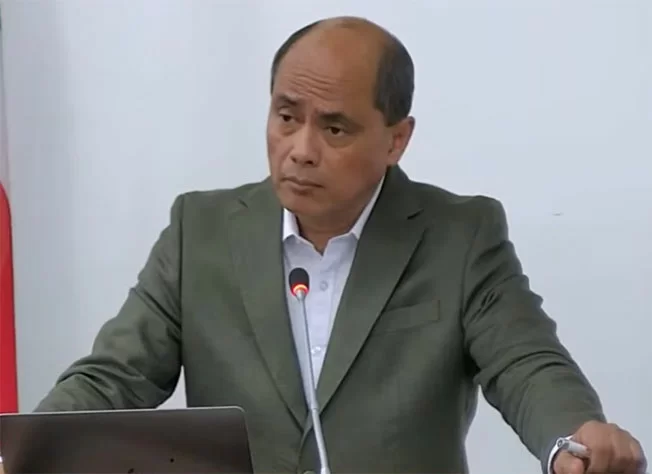
Pawiroredjo: Sterkere fiscus moet gepaard gaan met betere bescherming belastingplichtige
As debate over the new General Tax Act (AWB) gets underway in the Dutch National Assembly, the leader of the NPS parliamentary faction, Jerrel Pawiroredjo, has voiced conditional support for expanding the Dutch Tax and Customs Administration’s (Belastingdienst) powers to crack down on tax evasion and the untapped informal economy, while raising urgent alarms over unregulated authority, inadequate institutional capacity, and threats to taxpayer rights.
Pawiroredjo’s core argument centers on a fundamental balance: a powerful tax administration can only function effectively within the framework of a strong rule of law that equally protects the rights of compliant taxpayers. For the system to retain public trust, he argues, the government must demonstrate that expanded fiscal powers are paired with clear boundaries, principles of due process, and a guarantee that compliant citizens will not face unnecessary punitive measures.
Addressing the problem of the informal economy, Pawiroredjo noted that currently registered, tax-compliant individuals and businesses are already easily audited, while large swathes of economic activity remain entirely outside the tax system’s oversight. He stressed that the AWB’s new expanded powers should not be used to pressure already compliant taxpayers, but exclusively to root out unreported economic activity. Under the new legislation, the Belastingdienst will gain broader authority to request financial data and documents, audit business records, obtain information from third parties, and access private buildings and properties under specific conditions. Pawiroredjo has called on the ruling government to provide clear details on how these powers will be targeted: what data sets will be cross-linked, which high-risk informal sectors will be prioritized, and what specific strategies will be used to identify unregistered operators.
While Pawiroredjo stressed that he has no ideological opposition to a robust tax authority, as insufficient powers would prevent the agency from fulfilling its legal mandate to collect revenue for public services including education, healthcare, infrastructure, national security, and social welfare, he insisted that all government authority must be bounded by law. Core legal principles including procedural fairness, proportionality, legal certainty, and equal treatment must guide every use of new powers. A power being formally written into law, he argued, does not grant the agency carte blanche to use it in every scenario without assessment. The government, he said, must outline explicit thresholds for when the agency can request third-party data, audit private records, demand access to business premises, or impose fines, and must always prioritize the least intrusive measure possible to achieve compliance.
One key provision drawing Pawiroredjo’s scrutiny is the rule that filing an objection to a tax assessment does not automatically suspend the requirement to pay the assessed amount. While he acknowledges the rationale for this rule — to prevent bad-faith objections from being used solely to delay payment — he warned that serious harm can be done to legitimate businesses that file well-founded objections. If the tax authority proceeds with collection actions such as asset seizure while the objection is pending, and the assessment is later found to be incorrect, the business may already suffer irreversible financial damage. To address this, he called for a clear collection policy that allows for deferred payment or suspension of enforcement actions when a properly motivated objection is submitted, noting that the relevant legislative article should not become a free pass to deploy the harshest possible measures early in a legitimate dispute.
Pawiroredjo also drew attention to risks stemming from the Belastingdienst’s ongoing digital transformation. While electronic communication and digital tax services offer clear efficiency gains, he pointed out that technical failures can create unintended barriers to taxpayer rights: notifications may fail to send, digital portals can experience outages, and documents may be marked as delivered in administrative systems even if the taxpayer never actually received them. To avoid penalizing taxpayers for administrative or technical errors outside their control, he demanded clear rules outlining when objection periods officially start, and which party bears the burden of proving that an electronic message was actually sent and received. No taxpayer should lose their right to appeal through no fault of their own, he emphasized. As the tax authority gains greater access to personal and financial data from banks, suppliers, shareholders and other third parties, Pawiroredjo also stressed that taxpayers must be guaranteed full access to all information used to generate assessments or fines, with clear protocols for due process and access to personal tax records.
Beyond questions of rights and power, Pawiroredjo raised a critical practical concern: does the current Belastingdienst actually have the institutional capacity to implement the sweeping new law effectively? The AWB imposes new obligations not just on taxpayers, but on the tax authority itself: more audits mean more open cases, expanded objection procedures require additional trained staff, robust due process demands more time per case, digital transformation requires reliable, secure information infrastructure, and fair imposition of fines requires well-trained, expert personnel. Pawiroredjo has called on the government to confirm whether a full implementation capacity analysis has been conducted ahead of the vote, and to disclose how many additional staff will be required, what IT upgrades will be needed, what the total implementation cost will be, and when the agency will be fully prepared to roll out the new framework. “When we introduce a modern piece of legislation into an organization that lacks the capacity to implement it, we create a massive problem for ourselves,” he warned.
Pawiroredjo also called for a broader cultural shift within the tax administration, arguing that the agency should move away from a default presumption of guilt toward taxpayers, and that the government must get its own administrative house in order. He highlighted common cases where taxpayers have made payments that are never properly processed administratively, leaving the taxpayer to bear the burden of proving they already fulfilled their obligation. He also proposed a default minimum two-week response period for taxpayers answering information requests from the agency, except in cases of verifiable urgent need.
The NPS faction will submit a full list of proposed amendments to the minister leading the legislation. A portion of the changes are technical adjustments, but many directly address core issues of legal certainty, taxpayer protection, and limits on executive power. Repeating his core position, Pawiroredjo stressed: “I absolutely support a strong Tax Authority. We need one.” But ultimately, he said, the goal must be “a strong taxpayer in a strong rule of law.” He even suggested that compliant taxpayers willing to fulfill their tax obligations should be welcomed and supported by the government, noting they have every right to a state that helps them rather than creates unnecessary barriers to compliance.
-

Police ready for anything
For the first time since a 2024 cancellation driven by national security fears, Trinidad and Tobago is poised to host its full traditional 64th Independence Day celebrations on Monday, with law enforcement and defense officials confirming robust security plans are in place following a updated threat assessment that rated potential risks as “very low”.
Trinidad and Tobago Police Service (TTPS) Commissioner Allister Guevarro announced the force’s preparedness to address any unforeseen situation during the national holiday, speaking to reporters Saturday following a full dress rehearsal at Port of Spain’s Queen’s Park Savannah, the traditional event venue. In total, 222 uniformed officers will be deployed directly to the main Independence Day parade, with more than 400 additional personnel assigned to contingency response and support roles across all event sites.
Last year’s holiday looked drastically different: the national government scrapped the customary military parade, official state functions, and public fireworks displays after declaring a national state of emergency. The Ministry of Homeland Security justified the move with intelligence indicating a concrete threat to senior state officials, law enforcement personnel, and gathered crowds at the Savannah venue. To replace the canceled celebrations, officials hosted a National Day of Prayer and Reflection, and only permitted limited silent private fireworks displays. The 2024 cancellation was also projected to cut $2.6 million in public spending, with savings redirected to national crime-fighting initiatives — a decision that drew sharp criticism from Opposition Leader Pennelope Beckles, who questioned the government’s conflicting security messaging after the Prime Minister claimed just days earlier that citizens were safer than ever.
Looking ahead to Monday’s events, Guevarro confirmed officers will be posted along the entire ceremonial parade route and at the evening cultural festival, with all traffic and parking rules enforced under two formal legal notices. Legal Notice 671 governs road and parking restrictions for the Independence Day parade, while Legal Notice 661 covers overlapping restrictions for ongoing Caribbean Premier League (CPL) cricket matches being held in the city this week. Restrictions vary by location and event, Guevarro emphasized, with the entire Savannah closed to all parking from 6 a.m. Monday through 2 a.m. Tuesday. He added that on-site officers will manage all traffic flow, and urged motorists and attendees to comply with all direction from personnel to avoid disruptions.
TTPS’s security strategy for the celebrations centers on three core pillars: professionalism, visible presence, and event facilitation. Guevarro moved to reassure the public that all branches of national security are fully positioned to deliver one of the safest Independence Day parades in the nation’s recent history. Deputy Commissioner Suzette Martin, Gold Commander for the event, added that all entry and exit points to the Savannah will be strictly managed by law enforcement, and reminded attendees to check official TTPS communications and the full text of the legal notices for up-to-date details on restriction timelines for both Independence Day events and CPL matches.
The Trinidad and Tobago Defence Force has already completed its final parade rehearsal, which continued uninterrupted even amid heavy rainfall Saturday. All armed and unarmed detachments took part in the practice run, said Defence Force public relations officer Lieutenant Sherron Manswell. This year marks a break from tradition: Chief of Defence Staff Commodore Don Polo will serve as parade commander, leading the procession on horseback, a role that has historically been filled by officers from other Defence Force formations. President Christine Kangaloo, the nation’s Commander-in-Chief, will formally inspect the parade, which will also include contingents from national protective services, youth organizations, and volunteer groups. Manswell framed the inclusive procession as a visible demonstration of national unity, saying the event offers an opportunity to share the nation’s story and its independent legacy with all citizens.
Following the parade, the Ministry of Culture and Community Development will host a public cultural program at the Savannah starting at 5 p.m., featuring a dedicated children’s zone, performances from local artists, and family-friendly entertainment. Public fireworks displays will be held in Port of Spain at 6 p.m. and in San Fernando at 8 p.m. Ministry communications strategist Jerome Lewis urged attendees to plan ahead, comply with parking rules, follow law enforcement direction, and monitor updates on road closures to avoid traffic delays.
Guevarro emphasized that this year’s celebrations are designed to bring together national security bodies and the Trinidad and Tobago public. His message for the nation ahead of the holiday centered on collective unity: “One celebration, unity of the national security forces, unity in Trinidad and Tobago.”