分类: politics

  • Minister: Motor Vehicle Accident Fund soon

    Minister: Motor Vehicle Accident Fund soon

    Trinidad and Tobago’s Finance Minister Davendranath Tancoo has announced the imminent operationalization of the long-awaited Motor Vehicle Accident Fund, with full infrastructure expected to be in place by the first quarter of 2026. The announcement comes amid heated political debate regarding recently passed financial legislation.

    During a December 7 interview, Minister Tancoo emphasized that the Financial Bill provisions were designed specifically to protect citizens, countering opposition claims that the measures simply imposed additional taxes. “The People’s National Movement is attempting to create the impression that this is a tax on people,” Tancoo stated, “when in reality it establishes crucial protections for accident victims.”

    The Minister explained that the current system leaves victims without recourse when involved in accidents with uninsured, unlicensed, or improperly documented drivers. The new framework establishes significantly increased penalties for traffic violations while simultaneously creating a safety net for those affected by such violations.

    “We have implemented substantially higher penalties for driving without insurance, operating overloaded vehicles, driving without proper permits, and using fraudulent insurance documentation,” Tancoo detailed. “Concurrently, we’ve established an Accident Victims Fund to provide compensation for those injured by uninsured motorists.”

    The fund’s history dates back to 2008, with significant development occurring during Prime Minister Kamla Persad-Bissessar’s first administration between 2010-2015. Cabinet approval for the fund was granted in 2015 with an initial $20 million allocation. The project faced delays due to legal challenges from the Motor Insurance Bureau Association, and as recently as last year, advocacy group Arrive Alive had questioned the ministry about the fund’s status, which was reported to contain approximately $1 billion.

    Tancoo directly addressed political opposition to the measures, asserting that only lawbreakers had reason to fear the increased penalties. “The PNM voted against these protections and apparently believe there should not be increased penalties for those who break the law,” he stated. “As far as I’m concerned, the PNM is encouraging violation of the law. They have never supported government anti-crime measures.”

    The Minister emphasized that the dual approach of increased penalties and victim compensation was designed to both deter unlawful behavior and provide protection for law-abiding citizens. “We are trying to encourage compliance with traffic laws while ensuring that victims have recourse when others choose to break those laws,” he concluded.

    The Financial Bill containing these provisions passed on December 5, 2024, during the 2025/2026 budget presentation, which also announced increased fines for dangerous driving, driving under influence, and driving while disqualified.
  • Tancoo: Landlord Tax is not property tax

    Tancoo: Landlord Tax is not property tax

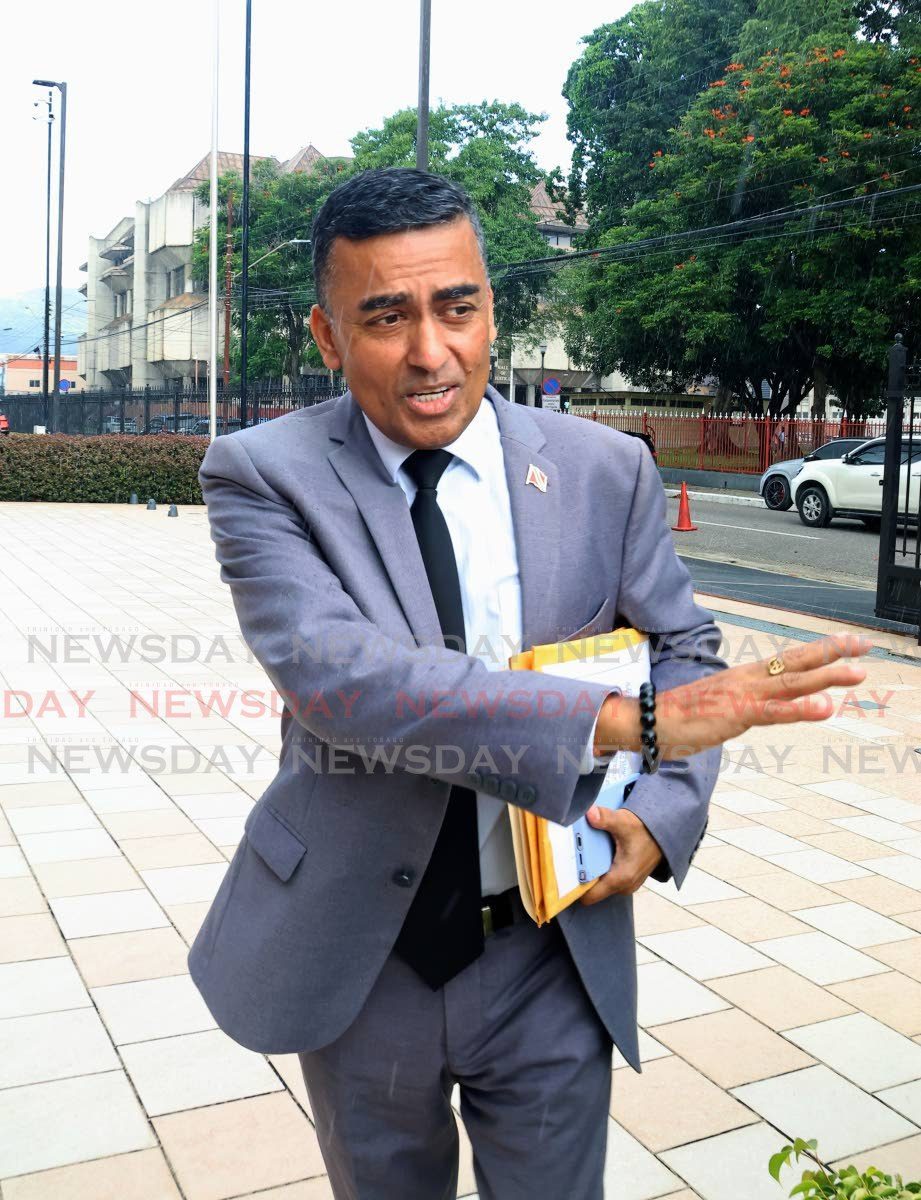
    Finance Minister Davendranath Tancoo has explicitly distinguished the newly implemented Landlord Tax from the previous administration’s controversial property tax, asserting fundamental differences in their underlying principles. In a December 7th interview with Newsday, Minister Tancoo addressed what he characterized as misinformation being propagated about the fiscal measure passed within the Finance Bill, 2025.

    The Minister clarified that while the former People’s National Movement (PNM) government’s property tax targeted private homeowners based on assumed rental income that often didn’t exist, the current Landlord Tax specifically targets actual revenue generation. “The property tax was based on residential income which did not exist,” Tancoo stated. “Home owners were being asked to pay a tax on income that they were not generating. That, in itself, was manifestly unethical and unfair.”

    Tancoo emphasized that the new tax regime focuses exclusively on landlords engaged in commercial activity who have remained unregistered and non-compliant with tax obligations. “We are not taxing fake income, we are taxing real income which should have been taxed in the first place,” he explained, characterizing rental income as a legitimate revenue stream that warrants taxation.

    The Finance Minister revealed that according to former administration estimates, there are approximately 100,000 landlords operating in Trinidad and Tobago who would fall under the purview of this tax. He notably pointed out that some government ministers themselves, described as “substantial landowners” receiving rent from the government, had not been contributing fairly to public coffers.

    Tancoo defended the current policy as “much more equitable, just and legal” than its predecessor, noting that the administration had consistently opposed taxing private residences while in opposition. The Landlord Tax specifically exempts homeowners who do not generate revenue from their properties, distinguishing it fundamentally from the previous approach that assessed taxes based on potential rental value rather than actual income.

  • JLP Central Executive to discuss intensifying Hurricane recovery efforts

    JLP Central Executive to discuss intensifying Hurricane recovery efforts

    KINGSTON, Jamaica — The Jamaica Labour Party (JLP) convened its Central Executive meeting Sunday morning at the party’s Belmont Road headquarters in St Andrew, marking the first gathering of the party’s highest decision-making body since the September 3 general elections.

    The emergency session, chaired by Party Chairman Robert Montague, Member of Parliament for St Mary West, focused primarily on developing enhanced strategies to support citizens devastated by Hurricane Melissa. JLP Communication Taskforce Chairman Senator Abka Fitz-Henley addressed media representatives prior to the closed-door meeting, emphasizing the urgency of the recovery efforts.

    Despite progress in restoring basic services—with approximately 70% of the population regaining access to running water and 80% having electricity reconnected—Senator Fitz-Henley acknowledged that statistical improvements provide little comfort to those still without essential utilities. The destruction of numerous small businesses has compounded the crisis, requiring immediate and comprehensive intervention.

    The governing party recognizes the particular significance of accelerating recovery efforts with Christmas and New Year celebrations approaching. Fitz-Henley stated the JLP’s commitment to ‘bringing as much convenience to the lives of our people as is possible’ during this challenging period.

    Prime Minister and JLP Leader Dr. Andrew Holness delivered the keynote address at the meeting, outlining the government’s roadmap for helping Jamaicans ‘build back stronger’ from the natural disaster. The party leadership emphasized that conventional political operations must yield to prioritized disaster response, recognizing their institutional responsibility to stand in solidarity with citizens facing adversity.

  • Analysts: SLP’s ‘personal touch’ won the election

    Analysts: SLP’s ‘personal touch’ won the election

    Political analysts have characterized Saint Lucia’s 2025 general election as a historic turning point in Caribbean politics, marked by a rare second-term government actually gaining popular support. Regional consultant Peter Wickham, Director of Caribbean Development Research Services (CADRES), highlighted the exceptional nature of this outcome, noting a five percentage point swing favoring the incumbent government—a phenomenon contrary to typical Caribbean political patterns where first-term incumbents usually lose ground.

    Wickham attributed this unprecedented result to fundamentally contrasting leadership approaches. He described former Prime Minister Allen Chastanet’s United Workers Party (UWP) as focusing primarily on large-scale infrastructure projects, while Prime Minister Philip J. Pierre’s Saint Lucia Labour Party successfully connected with voters through direct attention to social needs. According to Wickham, Pierre’s emphasis on education, pension reforms, and personal welfare created stronger voter allegiance, making citizens feel their leader was genuinely concerned with individual wellbeing rather than institutional development alone.

    Complementing this analysis, political professional Ajani Lebourne identified three critical factors determining the election outcome: leadership perception, voter connection, and organizational strength. Lebourne noted the UWP’s struggle to mobilize its base due to internal divisions and a diminished grassroots identity, observing that the party had transitioned from its historical roots as Sir John Compton’s people-centered institution to a personality-driven organization that failed to inspire loyalty.

    Lebourne highlighted how Labour’s tangible policies—including pension increases, small business support, and public sector commitments—resonated across diverse demographic segments, from youth to seniors and independent voters. The party’s effective messaging focused on practical, visible improvements in citizens’ daily lives, creating broad-based appeal.

    Both analysts expressed concerns about voter turnout issues, attributing declining participation to outdated voter rolls containing deceased or overseas individuals. They warned that persistent low engagement could eventually spur new political movements if existing parties fail to address structural challenges including crime, employment, economic diversification, and sustainable development.

    Regarding political futures, Wickham suggested Chastanet should initiate leadership transition while fulfilling his parliamentary duties as opposition watchdog, though he expressed skepticism about Chastanet’s long-term political viability. Meanwhile, Pierre’s successful formula of party unity and personal connection positions him potentially for continued leadership, though analysts caution against overextending his tenure.

    The election has also revived conversations about constitutional reform and campaign financing legislation, with experts emphasizing the need for greater accountability, integrity, and policy-focused discourse in Saint Lucia’s evolving democracy.

  • Antigua Government to Publish Citizen’s Guide to the 2026 Budget

    Antigua Government to Publish Citizen’s Guide to the 2026 Budget

    In a significant move toward governmental transparency, the administration announced Friday the forthcoming publication of a simplified Citizen’s Guide to the 2026 Budget. This initiative aims to demystify complex fiscal matters for ordinary citizens, providing an accessible overview of national financial performance and key policy directions.

    Maurice Merchant, Director General of Communications, revealed during the post-Cabinet media briefing that the guide has been specifically designed to help residents comprehend budgetary implications for their daily lives. The document will present critical financial data and reform initiatives through user-friendly formats accessible via smartphones or computers.

    The comprehensive guide will accompany the full 2026 budget documentation and Cabinet’s detailed synopsis, serving as an educational tool for public engagement. It will elucidate the government’s fiscal achievements, including a substantial $154.9 million primary surplus for 2025 and projected surpluses for 2026. Additionally, it will detail ongoing debt reduction efforts, with the debt-to-GDP ratio currently standing at 61.4 percent.

    Healthcare investments feature prominently in the guide, outlining scheduled openings of specialized medical facilities including a renal care center, reopened cancer treatment facility, and a new chest and cardiac center established through collaboration with China. The implementation timeline for National Health Insurance will also be clearly outlined.

    The publication further emphasizes youth-oriented initiatives, highlighting the government’s commitment to covering all CXC examination fees and continuing technological upgrades within public education systems. Digital transformation projects receive significant attention, particularly revenue-system digitization efforts and the launch of a new transparency portal.

    Merchant emphasized that this initiative aligns with the administration’s broader commitment to openness and public engagement as officials prepare what they describe as a “people-centered” budget. The guide is scheduled for public release concurrent with the commencement of budget debates next week.

  • Browne Says Johnson Can Unseat Bowen, Citing “Large Swing” in St. Philip South

    Browne Says Johnson Can Unseat Bowen, Citing “Large Swing” in St. Philip South

    Antigua and Barbuda’s Prime Minister Gaston Browne has declared newly appointed Senator Kiz Johnson the frontrunner to unseat sitting MP Sherfield Bowen in the St. Philip South constituency, citing compelling internal polling data indicating a substantial reversal in voter preferences.

    Johnson secured a decisive victory in Thursday’s Antigua and Barbuda Labour Party (ABLP) primary, amassing 167 votes against her closest competitor’s mere 12 votes. Within 24 hours of this electoral triumph, she was officially sworn into office as a government senator.

    In an exclusive interview with ABS Television, Prime Minister Browne characterized Johnson’s primary success as “an astonishing victory,” particularly noteworthy given her late entry into the political contest. “She entered the race literally two weeks before the primary and managed to defeat both a former minister and another candidate who had been building presence for three years,” Browne remarked.

    Browne emphasized the significance of Johnson’s strong support base in critical areas, specifically noting her substantial backing from Freetown residents. This demographic support, combined with recent polling data, suggests formidable electoral viability against the incumbent United Progressive Party representative.

    According to the Prime Minister’s disclosure, empirical evidence from constituency polls demonstrates a substantial erosion of support for MP Bowen, who initially captured the seat during the 2023 general elections. Browne attributed Bowen’s previous electoral success to transient national circumstances rather than enduring political support.

    “The previous election cycle occurred during period of significant economic pressures, including heightened living costs that created headwinds for our administration,” Browne explained. “Current indicators suggest these temporary factors have substantially diminished, creating favorable conditions for Johnson’s candidacy.”

    The Prime Minister concluded with a definitive prediction: based on comprehensive polling data and demonstrated voter enthusiasm, “Kiz will definitely beat him” in the upcoming electoral contest.

  • Philip J Pierre sworn in for second term

    Philip J Pierre sworn in for second term

    In a ceremony marked by regional solidarity and political significance, Philip J Pierre was formally sworn into office for an unprecedented consecutive term as Prime Minister of Saint Lucia on Saturday evening. The inauguration follows the decisive triumph of his Saint Lucia Labour Party (SLP) in the July 1 general elections, where they secured a commanding majority with 14 out of 17 parliamentary seats.

    The oath-taking ceremony at Government House on Morne Fortune witnessed an impressive gathering of Caribbean leadership, demonstrating strong regional support. Distinguished attendees included Prime Ministers Roosevelt Skerrit of Dominica, Mia Mottley of Barbados, Gaston Browne of Antigua and Barbuda, Dickon Mitchell of Grenada, and Dr. Terrance Drew of St Kitts and Nevis. Former St Vincent and the Grenadines Prime Minister Dr. Ralph Gonsalves also graced the occasion.

    Pierre, who simultaneously secured his seventh consecutive victory in the Castries East constituency, becomes only the third leader in Saint Lucia’s post-independence history to achieve back-to-back electoral victories, joining the ranks of Sir John Compton and Dr. Kenny Anthony.

    Accepting the instruments of office from Governor General Errol Charles, Prime Minister Pierre articulated a comprehensive vision for his new administration. He identified youth unemployment reduction and educational system modernization as paramount priorities, alongside commitments to digital transformation and sustainable economic development through purple and blue economy initiatives.

    The Prime Minister delivered a powerful address emphasizing national unity and social cohesion. He specifically cautioned against the normalization of divisive rhetoric, particularly on social media platforms, urging citizens toward greater tolerance and respectful discourse. “We should not encourage division and hate as normal behavior,” Pierre stated, advocating for a new national ethos characterized by truth, empathy, and mutual respect.

    His administration will maintain focus on vulnerable population support through targeted interventions, asserting that “preserving human dignity and a more equitable society” requires addressing fundamental needs of all citizens. The government will implement an ambitious public investment program featuring critical infrastructure upgrades including Hewanorra International Airport modernization, enhanced water systems, port expansions, and new transportation terminals.

    Pierre reaffirmed Saint Lucia’s steadfast commitment to regional cooperation through CARICOM and OECS frameworks, while emphasizing national sovereignty and regional peace. The ceremony concluded with a biblical reading from Psalm 21, receiving a standing ovation from assembled dignitaries.

    Concurrently, opposition leader Allen Chastanet resigned from his position leading the United Workers Party after twelve years at the helm, following his party’s substantial electoral setback wherein they retained only one parliamentary seat.

  • As APNU prepares for cash grant protest, President says the payout is “alive and well”

    As APNU prepares for cash grant protest, President says the payout is “alive and well”

    Guyana’s political landscape is witnessing heightened tensions as President Irfaan Ali faces mounting pressure to fulfill a significant campaign pledge. The central issue revolves around a promised cash grant payment that has become the focal point of national discourse.

    During the inauguration of the One Guyana Christmas Village and Supermarket 2025, President Ali attempted to reassure citizens about his administration’s commitment. “My fellow Guyanese, hope is alive tonight. The cash grant is alive and well,” he declared before hundreds of attendees. While emphasizing that “everything we promise shall come to pass,” the President notably avoided specifying any concrete timeline for the disbursement.

    This political development occurs against the backdrop of organized opposition movements. The People’s National Congress Reform-led A Partnership for National Unity (APNU) has demanded immediate action, urging the government to distribute at least GY$150,000 to every Guyanese citizen aged 18 and above. According to APNU parliamentary leader Dr. Terrence Campbell, this substantial investment in citizen welfare would total approximately GY$90.6 billion for over 600,000 eligible recipients.

    The opposition has announced plans to intensify pressure through organized protests beginning the following Monday. Dr. Campbell argued that the substantial government revenues make this proposal financially feasible, describing it as a “manageable percentage” of projected income. He emphasized the grant’s dual benefit: providing immediate support for basic needs while stimulating local economies through increased consumer spending.

    Statistical context from the Center for Global Development reveals the urgency of economic support measures, with 32% of Guyana’s population living in extreme poverty and an additional 26% experiencing moderate poverty.

    The current political confrontation traces back to specific campaign promises made by President Ali in August 2025, when he explicitly guaranteed citizens “a beautiful Christmas” and encouraged them to “look at the smile on my face and know that you will have enjoyable holiday.” These unambiguous commitments now form the foundation of the opposition’s demands and the growing public expectation for timely fulfillment.

  • LETTER: Call for Greater Recognition and Protection of Youth Leaders in Antigua and Barbuda

    LETTER: Call for Greater Recognition and Protection of Youth Leaders in Antigua and Barbuda

    In Antigua and Barbuda, a transformative shift is occurring within the political landscape as young activists increasingly assume pivotal roles in shaping national development. These emerging leaders, operating through youth wings of political parties, are demonstrating exceptional commitment to civic engagement through community outreach initiatives, policy formulation, and grassroots advocacy.

    The substantial contributions of these young political operatives remain significantly underrecognized despite their growing influence on public perception and democratic participation. They routinely undertake extensive volunteer work, endure demanding schedules, and navigate considerable expectations while bringing innovative perspectives to complex socio-economic challenges.

    Their involvement proves crucial for maintaining political stability and fostering informed public dialogue. The visible presence of youth in political processes encourages broader participation among their peers, particularly when young citizens perceive their contributions as valued and respected.

    Political analysts observe that robust youth leadership stimulates organizational evolution within parties, ensuring alignment with contemporary societal needs. Furthermore, institutional recognition through transparent mechanisms and legal frameworks would establish merit-based advancement systems across both public and private sectors.

    Such formal acknowledgment would not only protect young professionals from arbitrary decisions but also reinforce national cohesion. The nation stands to gain substantially from cultivating its youth leadership pipeline through enhanced transparency, equitable opportunities, and appropriate safeguards—elements that collectively contribute to a more vibrant and progressive political ecosystem.

  • Senator Johnson Says Constituents Can Expect ‘Proper and Effective Representation’

    Senator Johnson Says Constituents Can Expect ‘Proper and Effective Representation’

    In a significant political development, newly inaugurated government senator Kiz Larissa Kiana Johnson has committed to delivering ‘proper and effective representation’ for the residents of St. Philip’s South. The pledge came immediately following her formal swearing-in ceremony at Government House, where she outlined her dual role as both senator and the Antigua and Barbuda Labour Party’s constituency caretaker.

    Johnson’s appointment follows her decisive victory in Thursday’s primary election, where she outperformed three male contenders to secure the ABLP nomination. She characterized her return to the Upper House as an evolution of her previous work as an independent senator, now enhanced by greater official responsibilities. ‘This represents a natural progression of my service, but with expanded capacity to effect meaningful change,’ Johnson stated.

    During extensive community engagement throughout the five-week campaign, Johnson identified critical constituency needs including infrastructure development deficiencies and insufficient youth programming. These emerging priorities will inform her legislative agenda and ground-level initiatives simultaneously. ‘The consistent feedback from residents has directly shaped my action plan for both parliamentary contributions and community development,’ she explained.

    Johnson expressed particular appreciation for Prime Minister Gaston Browne’s strategic leadership in facilitating her appointment, describing the opportunity as both an honor and solemn responsibility. Referencing biblical wisdom, she noted: ‘Many are called, but few are chosen. This selection demands tangible results and accountable governance that constituents rightfully expect.’

    Regarding her parliamentary approach, Johnson promised to maintain the rigorous standards that characterized her earlier senatorial tenure. She emphasized evidence-based deliberation and thoroughly researched positions in legislative debates. ‘The public can anticipate substantive, well-prepared contributions to national discourse, not careless rhetoric,’ she affirmed.

    The senate vacancy emerged following former senator Clement Antonio’s resignation to assume diplomatic responsibilities as Antigua and Barbuda’s resident ambassador to China. Johnson’s appointment effectively completes this political transition while introducing a renewed focus on constituency service and developmental politics.