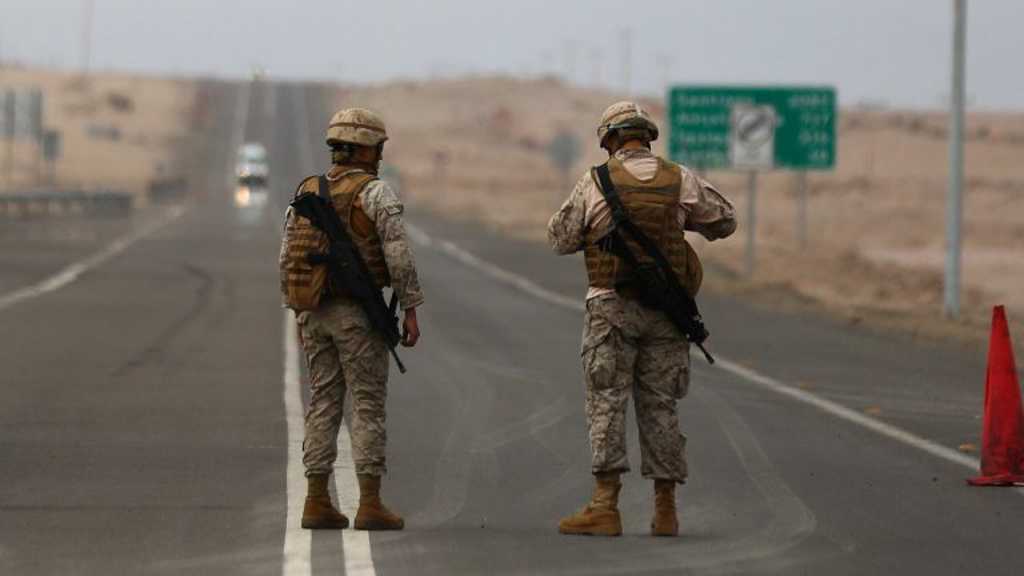
Colombia has recalled its ambassador to the United States, Daniel Garcia Pena, for consultations as tensions between the two nations escalate over drug policy and aid disputes. The move follows a series of heated exchanges between Colombian President Gustavo Petro and US President Donald Trump, who recently threatened punitive tariffs and an end to US aid to Colombia. Trump accused Petro of being an ‘illegal drug leader’ and vowed to ‘close up’ drug cultivation in Colombia if Petro fails to act. Colombia’s Interior Minister Armando Benedetti interpreted Trump’s remarks as a ‘threat of invasion or military action.’ The rift deepened after the US deployed warships off the South American coast in August, targeting drug trafficking operations. At least 27 people have been killed in these operations, with recent strikes allegedly targeting Colombian armed groups. Petro has accused Trump of violating Colombia’s sovereignty and committing murder. The US has historically been Colombia’s largest aid provider, with $740 million allocated in 2023, half of which was earmarked for anti-drug efforts. However, relations have soured, with the US decertifying Colombia as an ally in the drug war and revoking Petro’s US visa. Petro’s administration has shifted focus from forced eradication to addressing the social issues driving drug trafficking, leading to a 70% increase in coca cultivation, according to UN estimates.
分类: politics
-

US Supreme Court to rule on gun ownership by drug abusers
The United States Supreme Court has agreed to examine a federal law that prohibits individuals who abuse illegal drugs from owning firearms. This case, which will test the boundaries of the Second Amendment, involves Ali Danial Hemani, a dual US-Pakistani national and alleged habitual marijuana user, who was indicted for unlawfully possessing a Glock pistol. An appeals court previously ruled that denying Hemani the right to own a firearm violated his constitutional rights. The case has drawn attention due to its implications for gun control and individual liberties. The conservative-majority court, known for its pro-gun rulings, will determine whether the law imposes an unjustifiable burden on Second Amendment protections. The Justice Department, under former President Donald Trump, has argued that habitual drug users with firearms pose a unique societal danger, but the restriction is temporary and can be lifted if the individual ceases illegal drug use. This case is one of two gun rights disputes the court will address this term, the other involving a Hawaii law on concealed carry permits.
-

Prime Minister absent from Divali Nagar finale
Amid escalating security concerns following a United States advisory to its citizens in Trinidad and Tobago, Prime Minister Kamla Persad-Bissessar was conspicuously absent from the final night of Divali Nagar on October 19, where she was slated to deliver the keynote address. Despite multiple attempts by Newsday to reach her for comment, the Prime Minister remained unresponsive. Surujdeo Mangaroo, president of the National Council of Indian Culture (NCIC), which organized the nine-night event, indicated around 1 pm on Sunday that no security sweep had been conducted at the Chaguanas venue, suggesting Persad-Bissessar’s attendance was unlikely. Nevertheless, the NCIC implemented additional security measures as a precaution. Later that evening, ushers and NCIC members confirmed to the media that the Prime Minister would not be attending. In her Divali message, Mangaroo emphasized the importance of unity and harmony, urging citizens to strengthen the bonds that unite them. In a special message in the Divali Nagar 2025 commemorative magazine, Persad-Bissessar reflected on the event’s theme, ‘Loka Sangraha – the Welfare of the World,’ highlighting the need for compassion, justice, and peace in a world plagued by conflict and division. She underscored the nation’s commitment to building a society where every individual can live with dignity, opportunity, and hope. Meanwhile, tensions have been rising nationwide since the US deployed military assets off the Venezuelan coast to combat the drug trade. Persad-Bissessar has faced criticism for her support of US operations and her controversial statement advocating violent measures against drug runners. On October 18, the US Embassy in Port of Spain issued a social media alert warning of a heightened state of alert and advised its nationals to avoid US government facilities in Trinidad and Tobago. Rumors circulated that Persad-Bissessar and Attorney General John Jeremie had been relocated to safe houses, a claim denied by acting Commissioner of Police Junior Benjamin. Both Benjamin and Minister of National Security Roger Alexander acknowledged a credible threat but urged the public not to panic. Calls have grown for the Prime Minister to address the nation regarding the nature of the threat, particularly its connection to the US military presence in the southern Caribbean and potential risks to Trinidad and Tobago nationals. While Persad-Bissessar has remained publicly silent, she shared photographs on October 18 of herself and Foreign Affairs Minister Sean Sobers hosting US Embassy staff at a private Divali celebration at her home in Phillipine, South Trinidad—coinciding with the embassy’s alert.
-

Estephane, Preville: Fresh faces, high stakes in Babonneau’s election
The Babonneau constituency is poised for significant transformation as it edges closer to achieving township status. With a series of economic and social developments on the horizon, the area is set to witness a potential political shake-up in the forthcoming general elections. The constituency, known for its pivotal role in recent electoral cycles, has historically oscillated between major political parties, making this election particularly noteworthy.
-

Parmessar gekozen tot vicepresident van Grulac tijdens IPU-top in Genève
In a significant development for Suriname’s political representation on the global stage, Assembly Member Rabin Parmessar, leader of the National Democratic Party (NDP), has been elected Vice President of the Group of Latin America and the Caribbean (Grulac). The election took place on Saturday in Geneva, ahead of the 151st General Assembly of the Inter-Parliamentary Union (IPU). Parmessar’s election underscores Suriname’s growing influence within the regional bloc, which coordinates parliamentary strategies and represents Latin American and Caribbean nations in international forums.
-

Pers blijft rapporteren, maar buiten de muren van Pentagon
A significant portion of the American press corps has withdrawn from the Pentagon after journalists refused to comply with the Department of Defense’s new media regulations. The tightened rules prohibit journalists from publishing any information not officially pre-released by the department—even if it is not classified. Those who declined to sign the agreement lost their access passes as of October 15. Nearly all major U.S. news organizations, including CNN, ABC, The New York Times, Reuters, Associated Press, and even the typically conservative Fox News, have turned their backs on the Pentagon. Only a small minority, including some new right-wing media outlets, have formally agreed to the new terms. The rest have vacated their offices, cleared out TV studios, and surrendered their press passes. Despite the exodus, journalists emphasize that their departure does not mean an end to defense reporting. They will continue their work from editorial offices or external sources outside the Pentagon. Many reporters left the building in a symbolic procession, handing in their press passes and leaving behind empty desks. Media organizations have criticized the new rules as a ‘historically dangerous precedent,’ arguing that they bring the U.S. closer to controlled state communication. Critics warn that this makes the work of investigative journalists—who are tasked with exposing abuse of power and misconduct—nearly impossible. Trust in the transparency of the U.S. government and military accountability is under severe pressure. The Pentagon, however, maintains that the measures are necessary ‘for the safety of the troops and the national interest.’
-

Hoefdraad zal ‘onrechtmatige vervolging’ internationaal aanvechten
Former Surinamese Minister of Finance and Planning, Gillmore Hoefdraad, continues to challenge his prosecution, even after the Court of Justice declared his case inadmissible. The court ruled on Friday that his prosecution was lawful, following his indictment by the National Assembly in August 2020. Hoefdraad, who fled the country, was sentenced in absentia to 12 years in prison and a fine of SRD 500,000 for his involvement in a high-profile corruption scandal at the Central Bank of Suriname. The Public Prosecutor’s Office also sought a criminal investigation to determine if Hoefdraad unlawfully benefited from his actions, though no progress has been made since his conviction. Hoefdraad’s legal advisor, Murwin Dubois, argues that international jurisprudence, particularly the principle of Ne Bis in Idem—which prohibits double jeopardy—could favor Hoefdraad. Dubois cites cases where the Inter-American Court of Human Rights ruled in favor of defendants under similar circumstances. The case has drawn international attention, especially after Interpol refused to assist in Hoefdraad’s extradition, citing political motivations behind the prosecution. Interpol’s decision highlighted procedural flaws and the lack of original legislation justifying the extradition request. Hoefdraad’s legal team now seeks international avenues to address the legality of his prosecution, as domestic courts have dismissed his appeals.
-

Security : Presentation and authentication measures of the biometric National Identification Card
In a significant move to bolster regional security and combat cybercrime and transnational crime, Haiti’s National Identification Office (ONI), in collaboration with the Organization of American States (OAS), hosted a high-level discussion and information session this week at the Oasis Hotel. The event, attended by members of the diplomatic and consular corps accredited to Haiti, focused on the technical features and authentication process of the new Unique National Identification Card (CINU).
Led by Reynold Guerrier, Director General of the ONI, the session aimed to enhance the ability of consular missions to detect fraudulent identity documents, which are frequently submitted during visa applications or administrative procedures at foreign offices. The initiative is particularly critical for countries heavily impacted by Haitian migration, including Brazil, Mexico, Colombia, the Dominican Republic, the United States, the Bahamas, and Spain. Representatives from the People’s Republic of China and Japan, a major institutional supporter of the ONI, also participated.
During the session, Guerrier detailed the advanced security features of the biometric National Identity Card (NIC), which includes an electronic chip storing fingerprints, facial recognition data, and iris scans. The card also incorporates a QR code and a 2D barcode, making it highly resistant to forgery. Constructed from durable polycarbonate, the card is valid for 10 years. A live demonstration enabled diplomats to differentiate between genuine and counterfeit documents, while technical materials were distributed to aid their identification and verification processes.
This initiative underscores Haiti’s commitment to modernizing its identification system and strengthening international cooperation in the fight against identity fraud and transnational crime.