分类: politics

  • More Weapons and Modern Security Equipment Coming for the police in 2026

    More Weapons and Modern Security Equipment Coming for the police in 2026

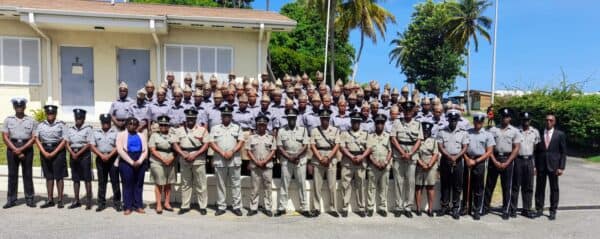
    Prime Minister Gaston Browne has announced a comprehensive security enhancement initiative for Antigua and Barbuda’s law enforcement agencies, set for implementation in 2026. The revelation came during Thursday’s parliamentary budget presentation, where Browne detailed plans to substantially upgrade both the tactical capabilities and technological infrastructure of the nation’s security forces.

    The centerpiece of this security overhaul includes the procurement of advanced weaponry, substantial ammunition reserves, and state-of-the-art security equipment specifically designed for both crime prevention and detection operations. Browne emphasized to Parliament that these enhancements are critically necessary to match the evolving sophistication of criminal networks operating within and around the nation’s borders.

    Beyond conventional arms, the government will invest in specialized crime-fighting technology featuring targeted surveillance systems intended to revolutionize intelligence gathering and operational response capabilities. This technological component represents a significant leap forward in the country’s digital security infrastructure.

    The security package extends to maritime defense assets, upgraded radar systems, and modernized communications networks. Financially, the government has committed over $4 million toward training new police recruits and providing contemporary equipment for serving officers.

    Prime Minister Browne framed these investments as essential for strengthening border security, intercepting illegal trafficking operations, and enhancing the effectiveness of frontline policing. Additional specifics regarding budget allocations and implementation timelines are anticipated during the continued budget debate proceedings scheduled for next week.
  • Process in development Santiago Hazim, former director of Senasa, is arrested

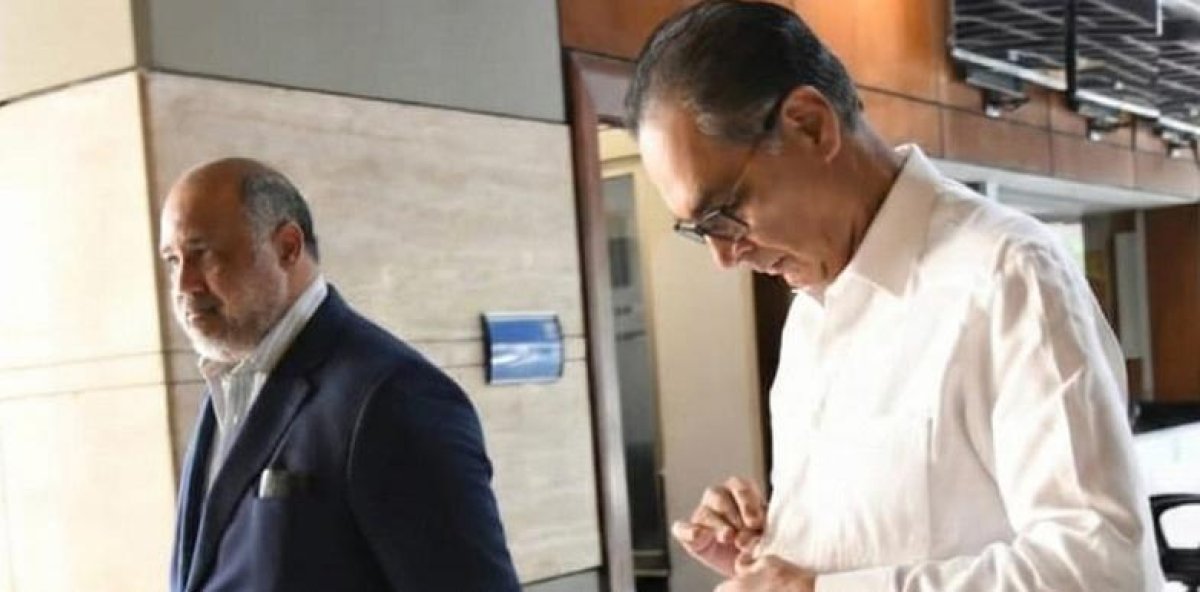
    Process in development Santiago Hazim, former director of Senasa, is arrested

    In a significant development within the Dominican Republic’s ongoing corruption investigation, former National Health Insurance (Senasa) director Santiago Hazín was taken into custody on Saturday evening. His legal counsel, Attorney Miguel Valerio, confirmed the arrest and indicated that judicial authorities will determine coercive measures within the next 48-hour period.

    Valerio stated that the defense team maintains a reserved position pending formal presentation of the prosecution’s coercion request. “We await the coercive measure filing within the established 48-hour window, at which juncture we shall articulate our definitive stance,” the attorney declared.

    The legal representative emphasized his client’s cooperative posture throughout the investigative process, noting that Hazín underwent extensive questioning for approximately five hours prior to his detention. Valerio reiterated that the former official has consistently demonstrated willingness to collaborate with judicial authorities, asserting, “My client has perpetually remained at the disposal of the justice system.”

    This arrest occurs within the broader context of the Senasa scandal that has captivated national attention. Multiple sectors have raised alarms regarding administrative deficiencies, delayed payments, and controversial operational determinations that precipitated widespread concern across the healthcare ecosystem. Political representatives, medical associations, and civil society organizations have collectively highlighted deteriorating management practices, prompting opposition forces to demand comprehensive audits and allege potential irregularities.

    Despite governmental assurances regarding institutional stability, grievances concerning service interruptions and payment delays intensified public discourse, ultimately compelling official action. The unfolding situation triggered initiated audits, managerial restructuring, and a formal prosecutorial investigation into contractual arrangements between Senasa and various state-affiliated entities.

    While implicated corporations have defended their operational legality, and former officials have sought to justify their decisions, allegations of fund misappropriation and supervisory body interventions have transformed this case into one of the most closely monitored proceedings in the public sector. The Attorney General’s Office has indicated additional investigative actions are anticipated as the probe continues to evolve.

  • Wereldwijde steun voor Venezolaanse oppositieleider Machado

    Wereldwijde steun voor Venezolaanse oppositieleider Machado

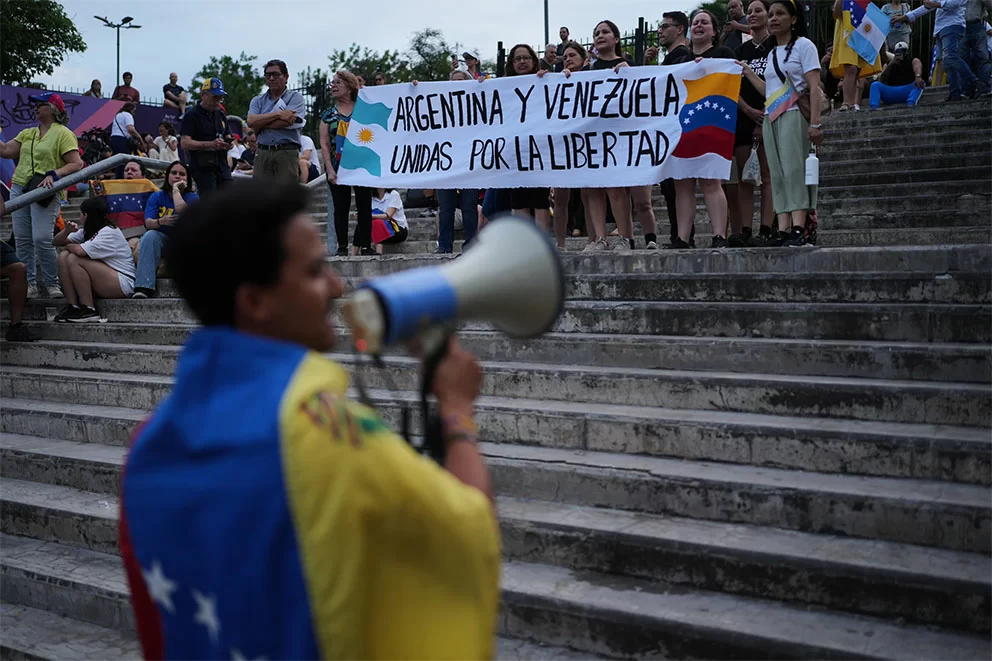
    In a remarkable display of international solidarity, supporters of Venezuelan opposition leader María Corina Machado staged coordinated demonstrations across global cities on Saturday, anticipating next week’s Nobel Peace Prize ceremony where she will be honored. Thousands of activists marched through urban centers including Madrid, Utrecht, Buenos Aires, and Lima, leveraging the prestigious award’s platform to amplify Venezuela’s democratic aspirations under Nicolás Maduro’s regime.

    In Lima, protesters clutching portraits of Machado and draped in Venezuela’s national colors demanded a ‘Free Venezuela,’ brandishing signs proclaiming ‘The Nobel Prize Belongs to Venezuela.’ Verónica Durán, a Venezuelan exile residing in Peru for eight years, emphasized that the recognition ‘represents all Venezuelans—the fallen and political prisoners in their struggle to restore democracy.’

    Colombian gatherings featured white-clad participants holding balloons during religious ceremonies praying for the prize to become ‘a symbol of hope.’ Buenos Aires witnessed approximately 500 demonstrators conducting an improvised torchlight vigil using mobile phones at Argentina’s largest university law faculty.

    The global mobilization occurs amid escalating tensions as the Trump administration reinforces military presence in the Caribbean, threatening Venezuelan territory. Maduro perceives these maneuvers as attempts to destabilize his government, while opposition factions rejuvenate promises to soon govern the nation.

    Machado, awarded the prize on October 10 for sustaining democratic hopes ‘amid deepening darkness,’ remains in hiding since her brief detention during a Caracas protest on January 9. Her disqualification from last year’s presidential election led to substitute candidate Edmundo González—now seeking asylum in Spain following an arrest warrant—challenging Maduro’s controversial third-term inauguration despite documented electoral irregularities and widespread human rights violations during the July 2024 elections.

  • Nieuwe VS veiligheidsstrategie baart Europa zorgen: Alarmerend voor internationale orde

    Nieuwe VS veiligheidsstrategie baart Europa zorgen: Alarmerend voor internationale orde

    The recently unveiled U.S. national security strategy under President Donald Trump has triggered significant apprehension across European diplomatic circles. Security analysts and government officials characterize the new doctrine as a substantial departure from multilateral cooperation toward strategic confrontation, potentially destabilizing the existing international order.

    The revised strategy emphasizes military dominance, expansion of offensive capabilities, and asserts the right to preemptively address perceived threats—even those not directly targeting American interests. European policymakers interpret this shift as particularly confrontational toward Russia, China, and several Latin American nations.

    In Brussels and Berlin, concerns center on potential destabilization effects. European security advisors have labeled the American approach “alarming” due to its potential to pressure NATO into supporting operations that contradict European interests. Diplomatic sources indicate that the EU fears Washington will increasingly conduct solo operations without prior consultation, normalize cross-border actions similar to recent Caribbean interventions, and escalate economic and military pressure against rivals—actions that could jeopardize European energy, trade, and migration interests.

    A senior EU official described the strategy to European media as “a rupture with the international consensus that has provided stability for decades.”

    The strengthened American military focus on the Indo-Pacific region and NATO’s eastern flank presents both strategic importance and substantial risk for European nations. While dependent on U.S. defense capabilities, European leaders worry that escalation around Ukraine or Taiwan could directly impact European security.

    Europe is developing a dual response: accelerating the development of independent defense capabilities to reduce reliance on American priorities, while pursuing diplomatic efforts to avoid being drawn into renewed geopolitical polarization. French and German ministers have emphasized the necessity of building “greater strategic autonomy” to protect European interests.

    Security analysts identify the most profound concern as the potential erosion of international legal norms. Experts warn that if the United States increasingly operates without UN mandates, other global powers may follow, potentially accelerating conflict escalation worldwide. As one analyst noted: “American actions carry global consequences. A security strategy that stretches the boundaries of international law endangers everyone.”

  • PM blames ‘sanction-busting Venezuelan criminals’ and PNM, in defence of US radar

    PM blames ‘sanction-busting Venezuelan criminals’ and PNM, in defence of US radar

    Prime Minister Kamla Persad-Bissessar has ignited a political firestorm by asserting that Trinidad and Tobago’s escalating crime crisis is primarily driven by Venezuelan criminal networks evading international sanctions. The declaration came through her official X account, where she simultaneously defended the controversial installation of advanced US military radar technology at ANR Robinson International Airport in Tobago.

    Persad-Bissessar articulated that the newly deployed radar system—identified by defense analysts as an AN/TPS-80 G/ATOR—serves dual purposes: enhancing national surveillance capabilities and targeting Venezuelan crude oil sanctions-busting operations. According to her statements, these illicit activities facilitate deliveries of narcotics, firearms, ammunition, and undocumented migrants from Venezuela into Trinidadian territory.

    The Prime Minister directed sharp criticism toward the opposition People’s National Movement (PNM), accusing previous administrations of permitting ‘local drug mafia’ operations to flourish unchecked. She alleged systematic negligence regarding illegal trafficking and even hinted at deeper institutional corruption within opposition ranks.

    This geopolitical development occurs against a backdrop of intensified US military presence in the Caribbean region, including approximately 15,000 troops, multiple warships, and the USS Gerald R. Ford aircraft carrier. The military buildup coincides with heightened US pressure on Venezuela, following President Donald Trump’s designation of Cartel de los Soles as a narco-terrorist organization with Venezuelan President Nicolás Maduro allegedly at its helm.

    Persad-Bissessar revealed she personally requested the radar installation through US diplomatic channels, initially describing the US military presence as roadway construction support before acknowledging the radar’s deployment. She maintains the technology provides previously unavailable protection layers while denying Trinidad would serve as a launch platform for attacks against Venezuela.

    The opposition has demanded transparency regarding the military equipment, prompting the Prime Minister to challenge PNM to explain why previous radar systems failed to detect ship-to-ship transfers of sanctioned Venezuelan oil within Trinidadian waters—allegedly with Trinidad as the point of origin.

    This escalating political confrontation highlights deepening regional tensions and the complex intersection of national security, international relations, and transnational crime in the Caribbean basin.

  • EDITORIAL: Democracy for sale?

    EDITORIAL: Democracy for sale?

    Saint Lucia faces a deepening crisis of electoral integrity as systematic vote-buying practices continue to undermine democratic processes across the Caribbean nation. This form of political corruption, now widespread and openly discussed among citizens, represents a fundamental challenge to fair representation and governance.

    Evidence indicates that electoral bribery has evolved from occasional misconduct to an entrenched practice transcending political affiliations. Multiple reports confirm politicians and their agents routinely offer cash payments and various inducements in exchange for voter support, creating a marketplace for electoral influence that corrupts the fundamental principle of free choice.

    The revised Elections Act (2023) establishes specific legal provisions to combat these practices. Section 77 prohibits influencing voters within 100 yards of polling stations during voting hours, carrying penalties of $250 fines, three-month imprisonment, or both. Section 78 explicitly criminalizes bribery through monetary offers, employment promises, or other favors intended to sway voting behavior, applying equally to those offering and accepting such inducements. Section 79 addresses ‘treating’ through provision of food, drink, or entertainment designed to influence electoral choices.

    Convicted offenders face severe consequences including fines up to $500, six-month prison sentences, and seven-year disqualification from voting or holding public office. However, enforcement remains inconsistent despite these substantial penalties, creating a significant gap between legal framework and practical application.

    Beyond immediate enforcement needs, experts emphasize addressing root causes including educational deficits regarding electoral rights and the pervasive ‘contract mentality’ where citizens increasingly expect compensation for basic civic participation. Long-term solutions require building economic equity through education, employment opportunities, and entrepreneurship rather than dependency-creating handouts.

    The persistence of vote-buying represents more than periodic electoral misconduct—it constitutes a sustained assault on democratic institutions that demands comprehensive response through legal enforcement, public education, and economic reform to preserve Saint Lucia’s democratic future.

  • New 70-Foot Patrol Vessel Coming as Antigua and Barbuda Steps Up Maritime Security

    New 70-Foot Patrol Vessel Coming as Antigua and Barbuda Steps Up Maritime Security

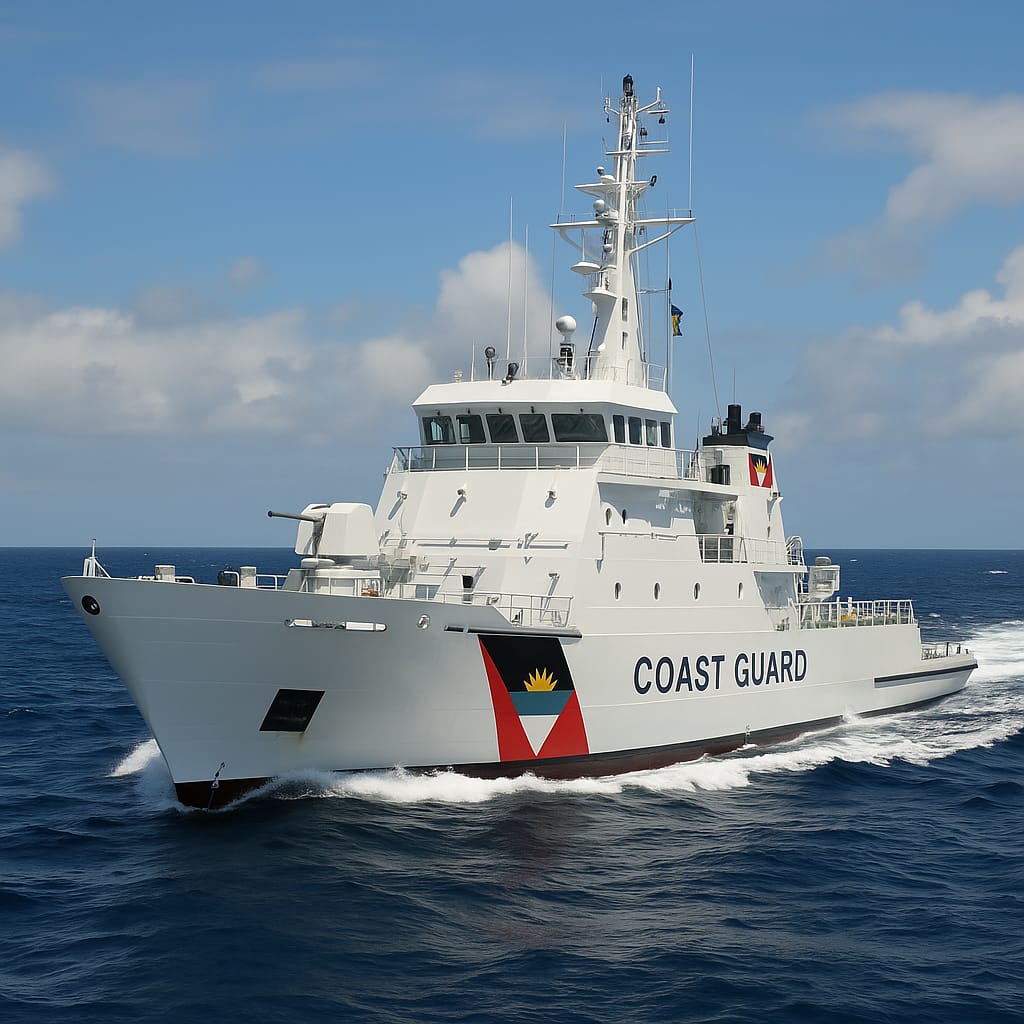
    The government of Antigua and Barbuda has unveiled a comprehensive maritime security enhancement plan as part of its 2026 national budget, signaling a decisive crackdown on transnational criminal operations in its territorial waters. Prime Minister Gaston Browne announced the forthcoming acquisition of a substantial 65-70 foot offshore patrol vessel specifically designed to strengthen deep-water operations against narcotics trafficking networks.

    The strategic investment represents a significant escalation in the nation’s border protection capabilities, building upon earlier security measures that included the deployment of a 30-foot interceptor vessel to law enforcement agencies. ‘We’re going for the drug traffickers with superior resources,’ Browne declared before Parliament. ‘We now possess vessels that outperform those used by criminal elements.’

    Complementing the naval expansion, Cabinet has approved a substantial US$1 million allocation for advanced radar systems and communications infrastructure upgrades. This technological enhancement will provide authorities with unprecedented real-time surveillance coverage across the nation’s maritime territory, addressing critical visibility gaps that smugglers have historically exploited.

    The integrated approach—combining faster interception craft, extended radar coverage, and modernized communication networks—aims to comprehensively disrupt illegal entry points and reinforce anti-narcotics operations. The new offshore patrol capability will notably extend the Coast Guard’s operational range beyond coastal regions, enabling extended missions, enhanced interdiction capacity, and improved search-and-rescue capabilities in deeper waters.

    Additional specifications regarding deployment timelines and operational details are anticipated to emerge as parliamentary budget deliberations continue next week.

  • COMMENTARY: Sometimes Good Is Unacceptable

    COMMENTARY: Sometimes Good Is Unacceptable

    A profound national conversation is unfolding in Antigua and Barbuda, challenging the very definition of progress. Drawing parallels to the biblical narrative of Cain—whose sincere offering was rejected not for its lack of effort but for its misalignment with divine standards—commentator Yves Ephraim critiques the current government’s trajectory. The central argument posits that while the administration may showcase a list of accomplishments, these achievements hold little relevance if they fail to prioritize the economic empowerment and ownership opportunities for Antiguans and Barbudans themselves.

    The core issue is identified as a fundamental misalignment between government priorities and the people’s interests. Citizens are increasingly relegated to the role of perpetual low-wage workers and mendicants, with little prospect of owning homes, building substantive careers, or securing their economic future. This model, where citizens “own nothing but be happy,” is deemed unacceptable for a nation aspiring to become a sustainable ‘Economic Powerhouse’.

    Historical and contemporary evidence is marshaled to support the thesis that national wealth is intrinsically linked to citizen ownership. China’s remarkable transformation from poverty to global powerhouse is cited as a prime example, achieved by empowering its citizens to build and own export-oriented industries. Conversely, the author finds no historical precedent for a nation achieving wealth by selling prime assets to foreign interests or ceding economic control.

    The collapse of the nation’s Gaming Industry serves as a cautionary tale. When the U.S. government threatened its citizens involved in offshore gaming, the entire sector in Antigua and Barbuda crumbled. The author speculates that a different outcome might have emerged had local citizens held a 50% ownership stake, underscoring the vulnerability of foreign-dominated sectors.

    Specific policy barriers are highlighted, particularly in the telecommunications sector, where licensing regimes allegedly prevent private Antiguan and Barbudan entrepreneurs from profiting. The article argues that liberalizing this sector could unleash a wave of young, intelligent, and entrepreneurial talent to launch international ventures, earn foreign exchange, and reverse the crippling brain drain, especially in the high-demand IT field.

    Finally, the nation’s investment in education is called into question. Without a parallel focus on cultivating an entrepreneurial class, the author contends that expensive education, like that provided at the University of the West Indies campus, merely prepares young people to flee to first-world countries for meaningful employment. The article concludes that the ‘good’ achieved by the government is ultimately irrelevant without a significant advance in Antiguan and Barbudan ownership of their land and economy.

  • More Than $4 Million Set Aside to Train Police Recruits and Equip Officers, PM Announces

    More Than $4 Million Set Aside to Train Police Recruits and Equip Officers, PM Announces

    ST. JOHN’S, Antigua – In a decisive move to reinforce national security, Prime Minister Gaston Browne has unveiled a comprehensive $4 million investment package targeting crime prevention and border protection initiatives. The announcement came during Thursday’s parliamentary budget presentation for the 2026 fiscal year, representing one of the largest dedicated security allocations in recent history.

    Addressing lawmakers, Browne emphasized the critical connection between public safety and national prosperity. “Our economic achievements remain meaningless if citizens live in fear,” stated the Prime Minister, acknowledging ongoing concerns about violent crime and border vulnerabilities despite the nation’s status as one of the Caribbean’s safest jurisdictions.

    The substantial funding will facilitate expanded police recruitment programs, enhanced training protocols, and advanced equipment provisioning for law enforcement personnel. The investment specifically encompasses cutting-edge crime-fighting technologies, sophisticated surveillance systems, and improved operational resources designed to outpace criminal networks.

    Browne delivered an unequivocal message to potential offenders: “We’re coming for you. We’ll find you. We’ll prosecute you.” This stern warning accompanied details of a broader security strategy that includes maritime defense enhancements. Recent upgrades feature a high-speed 30-foot interceptor vessel capable of 75-mile-per-hour pursuits, complemented by a $1 million allocation for advanced communications and radar infrastructure. Future plans involve acquiring additional patrol vessels to monitor the country’s economic exclusion zone.

    The Prime Minister affirmed that even single homicide incidents remain unacceptable, pledging intensified policing measures and reinforced border controls. Parliamentary debates on the full 2026 budget are scheduled to continue throughout the coming week.

  • JLP Central Executive to discuss intensifying Hurricane recovery efforts

    JLP Central Executive to discuss intensifying Hurricane recovery efforts

    KINGSTON, Jamaica — The Jamaica Labour Party (JLP) convened its Central Executive meeting Sunday morning at the party’s Belmont Road headquarters in St Andrew, marking the first gathering of the party’s highest decision-making body since the September 3 general elections.

    The emergency session, chaired by Party Chairman Robert Montague, Member of Parliament for St Mary West, focused primarily on developing enhanced strategies to support citizens devastated by Hurricane Melissa. JLP Communication Taskforce Chairman Senator Abka Fitz-Henley addressed media representatives prior to the closed-door meeting, emphasizing the urgency of the recovery efforts.

    Despite progress in restoring basic services—with approximately 70% of the population regaining access to running water and 80% having electricity reconnected—Senator Fitz-Henley acknowledged that statistical improvements provide little comfort to those still without essential utilities. The destruction of numerous small businesses has compounded the crisis, requiring immediate and comprehensive intervention.

    The governing party recognizes the particular significance of accelerating recovery efforts with Christmas and New Year celebrations approaching. Fitz-Henley stated the JLP’s commitment to ‘bringing as much convenience to the lives of our people as is possible’ during this challenging period.

    Prime Minister and JLP Leader Dr. Andrew Holness delivered the keynote address at the meeting, outlining the government’s roadmap for helping Jamaicans ‘build back stronger’ from the natural disaster. The party leadership emphasized that conventional political operations must yield to prioritized disaster response, recognizing their institutional responsibility to stand in solidarity with citizens facing adversity.