分类: other

  • And The 2026 Nominees For Best (New) Local Product Are… (Part 2)

    And The 2026 Nominees For Best (New) Local Product Are… (Part 2)

    In a submission of raw news-related material, twelve consecutive image credits are listed, all attributing photography work to Naphtali Junior. No accompanying captions, descriptive context, or narrative framing is provided to explain what these photographs capture, what event they document, or what role they were intended to play in a broader news story. This unusual presentation leaves the content of the visual work unconfirmed, with only the photographer’s attribution repeated consistently across all twelve entries. Without additional contextual details, it is impossible to determine the newsworthy topic, geographic setting, or subject matter that the images were meant to convey to an audience.

  • Condé Nast Traveller includes Punta Cana on list of best tropical getaways

    Condé Nast Traveller includes Punta Cana on list of best tropical getaways

    The Dominican Republic’s premier tourism hub, Punta Cana, has added another prestigious accolade to its growing collection of international recognition: Condé Nast Traveller has named the Caribbean coastal gem one of the “11 Best Tropical Vacation Destinations in the World.” This latest honor further cements the nation’s reputation as a must-visit travel hotspot in the Caribbean, boosting its global visibility among leisure travelers.

    As one of the most respected publications in the luxury travel space, Condé Nast Traveller highlighted a range of standout features that set Punta Cana apart from competing tropical getaways. The magazine drew particular attention to the destination’s postcard-perfect palm-fringed shorelines, energetic after-dark entertainment scene, consistently warm year-round climate, and world-class seasonal whale-watching excursions. It framed Punta Cana as a rare destination that caters equally to travelers craving quiet relaxation and those chasing thrilling outdoor adventure.

    Widely known as the Caribbean’s iconic “Coconut Coast,” Punta Cana draws more than millions of international tourists to its shores annually. Its enduring popularity stems from a unique combination of luxury all-inclusive resorts, powdery white-sand beaches, turquoise crystal-clear coastal waters, and a diverse menu of outdoor activities suited for every age and interest.

    For its 2026 curated list of top tropical destinations, Condé Nast Traveller selected locations that deliver ideal conditions for core tropical vacation activities: swimming, scuba diving, immersive nature exploration, and low-key beach getaways. Punta Cana shares a spot on the list with other globally celebrated tropical destinations, including the Maldives, the Bahamas, the Philippines, and French Polynesia, putting it in elite company among the world’s best beach travel spots.

    The publication emphasized that what makes Punta Cana truly unique is its ability to balance lively entertainment options with quiet, serene spaces for rest. This versatility, it notes, makes the destination one of the most well-rounded full-service vacation spots in the entire Caribbean region.

    Beyond bolstering Punta Cana’s reputation among travelers, the recognition reinforces the Dominican Republic’s expanding, increasingly influential position in the global tourism market. It also spotlights Punta Cana’s persistent popularity among travelers planning 2026 tropical vacations, Caribbean resort stays, and beach-focused getaways.

    Tourism has long been one of the Dominican Republic’s core economic pillars, contributing billions to the national economy and supporting hundreds of thousands of jobs across the country. As the nation’s top draw for international visitors, Punta Cana plays an irreplaceable role in growing the country’s global tourism brand and driving economic growth across the sector.

  • Weather Advisory: Tuesday, 26 May (7:30 am)

    Weather Advisory: Tuesday, 26 May (7:30 am)

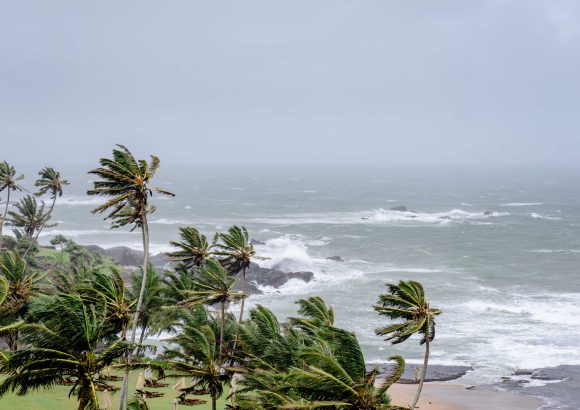
    The Grenada Meteorological Service has issued an official public advisory confirming it is actively tracking a large plume of Saharan dust that has traveled thousands of miles across the Atlantic Ocean to reach the Eastern Caribbean. This moderate-to-dense cloud of dust originates from the Sahara Desert in North Africa, carried westward by persistent trade winds across the Atlantic basin. According to official forecasts, the dust plume will continue to impact air quality and atmospheric conditions across Grenada and neighboring Eastern Caribbean islands from the current date through Thursday, May 28, 2026. Based on continuous readings from satellite imagery and cutting-edge atmospheric modeling data, the national meteorological agency confirms the dust layer will remain in place for the duration of the advisory period. Air quality across the island is projected to stay at moderate levels throughout this timeframe. Officials have outlined the two most significant expected impacts from the dust event. First, the suspended particulate matter will lead to reduced horizontal visibility across the island, which may pose risks for ground transportation and air travel operations. Second, public health officials are urging extra precaution for vulnerable populations, specifically individuals living with chronic respiratory conditions, who may experience worsened symptoms when exposed to the dust. The Grenada Meteorological Service has committed to maintaining constant surveillance of the dust plume’s movement and intensity. Updates will only be issued if atmospheric conditions deteriorate beyond current projections, or if new information requires adjustments to the existing advisory. This official notice will remain in effect through the end of the advisory period on May 28. A disclaimer from local outlet NOW Grenada notes that the outlet is not liable for opinions or content shared by contributing agencies, and invites residents to report any content that violates community guidelines through official reporting channels.

  • JCI Antigua Earns Top Regional Awards at 2026 Conference of the Americas

    JCI Antigua Earns Top Regional Awards at 2026 Conference of the Americas

    The 2026 JCI Conference of the Americas has drawn to a close in Antigua and Barbuda, leaving a landmark legacy for the host nation while delivering a major milestone for JCI Antigua, which walked away from the closing award ceremony with multiple top-three finishes across key award categories. Hosted by JCI West Indies on the Caribbean islands, this year’s regional gathering wrapped up with the traditional ceremonial flag handover, officially passing the hosting responsibility to JCI Brazil ahead of the 2027 conference.

    JCI Antigua, the local chapter of the global youth leadership organization, celebrated its strong performance in the conference’s annual awards program. Two of the chapter’s community projects earned top-three placements: the initiative “Aspire to Inspire” was recognized in the Best Local Growth and Development Project category, while “A Day of Duty & Giving” secured a top-three spot in the Best Human Duties Project category. Beyond organizational accolades, individual JCI Antigua member Jawan Jackson also earned regional recognition, named one of the conference’s Most Outstanding New Members for his contributions over the course of the event.

    The closing ceremony marked the formal conclusion of the 2026 gathering, with the ceremonial flag transferred from JCI West Indies representatives to the JCI Brazil delegation. This symbolic act officially kicks off the countdown to the 2027 Conference of the Americas, which is scheduled to take place from April 28 to May 1 next year in Florianópolis, Brazil, as the regional JCI network prepares for another cycle of leadership development and collaboration.

    Reflecting on the years of preparation and the successful execution of the event, JCI Antigua framed the 2026 Conference of the Americas as a “historic reality” for the small island nation. The organization publicly extended its gratitude to Conference Director Shenella Govia and her core organizing team, highlighting their three years of unwavering dedication, personal sacrifice, and relentless hard work that made the landmark event possible. JCI Antigua also shared appreciation for the broader network of stakeholders that supported the conference, including hundreds of volunteers, sponsoring organizations, community partners, and the hundreds of international delegates who traveled to Antigua and Barbuda for the gathering and embraced the nation’s hospitality during their stay.

  • WEATHER: Flood Watch in Effect for Dominica

    WEATHER: Flood Watch in Effect for Dominica

    The current submission provided for news processing only contains social media sharing controls and an image link, with no full core news text, background details, event descriptions or other essential journalistic information included. Without the complete original news content that outlines the specific event, key figures, timeline, and core claims being reported, it is impossible to conduct a full structured rewrite, in-depth analysis, or accurate contextualization of the purported story. This incomplete input prevents adherence to the required news processing standards, as all work relies on access to the full original journalistic material to ensure accuracy and completeness of the final output.

  • Air Peace Flight Lands in Barbados

    Air Peace Flight Lands in Barbados

    In a development that signals growing connectivity between West Africa and the Caribbean, Nigeria’s leading private airline Air Peace has successfully landed one of its commercial flights in Barbados. This landing represents a significant step forward for the carrier’s ongoing expansion strategy beyond its traditional regional operating base in West Africa.

    Air Peace, which was founded in 2013, has built a reputation for expanding Nigeria’s air access to global markets over the past decade. Prior to this landing, the airline had already expanded its routes to cover major destinations across the Middle East, Asia, and other parts of Africa, as well as select European cities. The arrival in Bridgetown, Barbados’ capital, opens up a new direct air link between West Africa and the Eastern Caribbean, a region that has long lacked convenient direct connections from African markets.

    Industry analysts note that this new route has the potential to boost multiple sectors, including tourism, trade, and cultural exchange between the two regions. For African travelers seeking access to the Caribbean, the direct service eliminates the need for inconvenient layovers in European or North American hubs, cutting down travel time and reducing overall travel costs. Similarly, Caribbean tourists looking to visit West Africa will now have a more streamlined travel option.

    Barbadian aviation officials have welcomed the new service, highlighting that increased air connectivity aligns with the island nation’s post-pandemic tourism recovery strategy, which aims to attract visitor markets from beyond North America and Europe. Air Peace representatives have not yet released full details on the frequency of this new route or long-term operational plans, but the successful landing is widely viewed as the first step in establishing a regular service between Nigeria and Barbados.

  • NOAA predicts a below-normal 2026 hurricane season

    NOAA predicts a below-normal 2026 hurricane season

    As the official start of the 2026 Atlantic hurricane season draws near, the United States National Oceanic and Atmospheric Administration (NOAA) has released its official seasonal prediction, calling for a below-average number of storms across the basin this year. The Atlantic hurricane season runs annually from June 1 through November 30, and NOAA’s updated outlook puts the probability of a below-normal season at 55%, compared to a 35% chance of near-normal activity and just a 10% chance of an above-normal season.

    In terms of projected storm counts, NOAA forecasters estimate the 2026 season will see between 8 and 14 named storms — systems that reach sustained wind speeds of 39 miles per hour (63 km/h) or higher. Of these named storms, 3 to 6 are expected to strengthen into full hurricanes, defined by sustained winds of at least 75 miles per hour, with 1 to 3 intensifying further into major hurricanes of Category 3, 4, or 5 strength, which carry winds of 115 miles per hour or stronger. Forecasters hold a 70% confidence interval in this range of projections, which falls well below the 30-year average for Atlantic hurricane seasons: a typical season brings 14 named storms, seven hurricanes, and three major hurricanes.

    U.S. Commerce Secretary Howard Lutnick emphasized that NOAA and the National Weather Service (NWS) are fully prepared to provide timely, accurate updates as the season unfolds, noting that cutting-edge forecasting and tracking infrastructure is in place to deliver real-time storm alerts to at-risk communities.

    NOAA Administrator Neil Jacobs expanded on this preparation, highlighting the agency’s integration of modern innovative tools into its forecasting workflows. “AI-powered weather models, unmanned aerial surveillance drones, and next-generation satellite data, paired with the decades of specialized expertise held by NWS forecasters, will allow us to generate the most reliable forecasts possible to keep vulnerable communities safe,” Jacobs stated.

    Meteorologists point to competing climate patterns that are driving the projection for a quieter-than-average season. The key suppressing factor is the expected development and intensification of El Niño over the course of the season, a climate phenomenon in the Pacific that is well-documented to reduce tropical cyclone formation and intensification in the Atlantic by increasing vertical wind shear that tears developing storms apart. Counteracting this trend, however, are slightly warmer-than-average projected sea surface temperatures across the Atlantic and weaker-than-average trade winds, both of which can create favorable conditions for storm growth.

    Even with the forecast for below-normal activity, NWS Director Ken Graham stressed that preparedness remains non-negotiable for all communities in hurricane-prone regions. “While El Niño often suppresses hurricane development in the Atlantic basin, it only takes one damaging storm to turn a quiet overall season into a catastrophic disaster for your community,” Graham warned. He directed residents to visit the official NWS safety website at https://www.weather.gov/safety and the Federal Emergency Management Agency’s preparedness portal at https://www.ready.gov/ to access critical resources and update emergency plans ahead of the season.

    The World Meteorological Organization’s pre-approved list of 2026 Atlantic tropical storm names is: Arthur, Bertha, Cristobal, Dolly, Edward, Fay, Gonzalo, Hanna, Isaias, Josephine, Kyle, Leah, Marco, Nana, Omar, Paulette, Rene, Sally, Teddy, Vicky, and Wilfred.

  • Dominican copyright office and Santiago municipality to host forum on cultural property rights

    Dominican copyright office and Santiago municipality to host forum on cultural property rights

    In a landmark move to safeguard one of the Dominican Republic’s most cherished cultural heritage assets, the National Copyright Office (ONDA) has joined forces with the municipal government of Santiago to stage a first-of-its-kind public forum centered on intellectual property rights for the nation’s traditional music sector, officials confirmed in an announcement made Monday.

    Titled “Derecho de Autor en la Cultura y la Música” (Copyright in Culture and Music), the event is slated to kick off Thursday, May 28 at the Santiago Municipal Palace. It forms a core component of a broader national public education initiative, developed to demystify convoluted copyright regulations for independent creators across the country’s local music ecosystem.

    A central focus of the gathering will be the long-overdue preservation and formal legal protection of merengue típico, the oldest original subgenre of Dominican merengue that carries deep historical roots in Dominican cultural identity. Organizers emphasized that the forum was designed explicitly to close the persistent knowledge gap between complex national intellectual property legal structures and working independent traditional musicians, most of whom build their careers without the support of major record labels or formal industry backing, leaving them vulnerable to copyright infringement.

    One of the most meaningful components of the forum’s agenda is a dedicated recognition segment honoring trailblazing female artists who have shaped and sustained merengue típico for decades, a contribution that has often been sidelined in mainstream cultural and industry discourse. The honorees include Fefita La Grande, a foundational figure in the genre who made history in the 1970s as the first woman to bring the accordion-driven traditional style to audiences across Europe. In 2019, she was awarded the Gran Soberano, the Dominican Republic’s highest honor for cultural achievement. She will be joined by three other acclaimed merengue típico artists: India Canela, María Díaz, and Paquel Arias.

    Legal observers involved in organizing the event note that centering the careers of these pioneering creators is a critical step toward addressing a long-standing inequity: folk and traditional culture creators have historically been excluded from formal conversations around intellectual property rights and royalty compensation, meaning many have not received rightful payment for widespread use of their work.

    The forum’s professional programming will be led by Lucía Castillo, a corporate copyright attorney and head of ONDA’s collective management department, who will deliver the keynote address. Her technical session will break down actionable, practical information for independent artists, covering step-by-step processes for official musical work registration, how domestic collective rights management organizations function, and the growing suite of digital tools available to help creators track and protect their royalty earnings.

    Attendees will also receive detailed presentations from national collective management societies on Repertorio Dominicano (Reperdom), a purpose-built digital tracking platform developed to monitor public and broadcast playbacks of Dominican musical works and streamline the distribution of royalties directly to creators – a long-awaited upgrade that addresses longstanding inefficiencies in the local compensation system.

    Beyond the forum, ONDA has announced two new complementary initiatives to expand copyright education and support for traditional creators: an upcoming national essay competition exploring intersections between copyright law and the Dominican sports industry, and the launch of the first ever institutional songwriting contest open exclusively to unpublished, original merengue típico compositions. The contest aims to incentivize new creation within the traditional genre while raising awareness of intellectual property rights among emerging artists.

    Opening remarks for the forum will be delivered by ONDA Director General José Ruben Gonell Cosme and Santiago Mayor Ulises Rodríguez, marking the high level of institutional commitment to advancing protections for traditional Dominican cultural creators.

  • Samenwerking en innovatie versterken duurzame landbouw

    Samenwerking en innovatie versterken duurzame landbouw

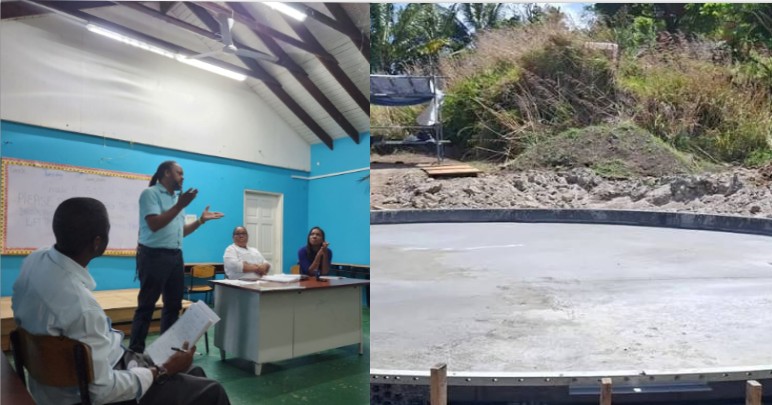
    On May 23, a hands-on training program focused on modern crop protection strategies and innovative agricultural technology wrapped up in Para District, bringing new practical skills and sustainable production insights to 31 farmers from Uitkijkpolder and surrounding areas. Designed to boost both productivity and environmental sustainability in local agricultural production, the program was jointly organized by four stakeholders: Frits Fresh Impex, RamBhai Impex, HJ-Agro N.V., and the WUSC Sustainable Agriculture in the Caribbean Project. The entire training session was hosted on the personal plot of experienced agricultural expert Frits Bechoe, located along Ds. Martin Luther Kingweg.

    Unlike traditional classroom-only agricultural training, the program integrated theoretical instruction with on-site field practice, giving farmers the chance to translate new knowledge directly into actionable skills. Agronomist Shaniza Pirbux led the first segment of the training, delivering a detailed walkthrough of the safe and responsible application of crop protection products. She emphasized several core practices that are often overlooked by small-scale local producers: accurately reading chemical labels to understand usage requirements, measuring precise dosages to avoid over-application that harms both soil and produce, using required personal protective equipment to safeguard farmers’ health, and implementing rotation strategies to prevent pests and pathogens from developing resistance to common control measures.

    Even steady rainy weather did not dampen participants’ enthusiasm for hands-on learning. After completing the indoor theoretical session, the entire group moved out into the field to observe and practice the pest and disease control methods Pirbux outlined, working through real on-farm scenarios together to deepen their understanding.

    In the second half of the training, Veldhuizen from GeoDrone Solutions introduced participants to the cutting-edge application of drone technology for precision agriculture. He explained how modern drones paired with specialized agricultural mapping software can quickly identify hidden drainage issues across large plots, map variations in soil moisture content, and pinpoint uneven crop growth that would be difficult to spot from the ground. This data-driven approach allows farmers to target water, fertilizer, and pest control interventions exactly where they are needed, cutting input costs while boosting overall crop yields. For participating smallholder farmers, exposure to this innovative technology opens up new pathways to transition to more efficient, sustainable production models that align with global and regional goals for low-impact agriculture.

  • Mas’ wire craft push aims to revive ‘dying art’, create jobs

    Mas’ wire craft push aims to revive ‘dying art’, create jobs

    A transformative regional project aimed at breathing new life into the fading traditional craft of masquerade wire bending kicked off Thursday in Barbados, with organizers laying out a clear plan to turn this centuries-old cultural skill into accredited, income-generating livelihoods for creators across the Caribbean’s booming festival sector. The initiative was formally introduced during the Spirit Bond gathering in Bridgetown, with the launch of the Wire Sculpting for Masquerade Workshop, a collaborative effort between the Pinelands Creative Workshop (PCW), the National Cultural Foundation, Caribbean Yard Campus, and the Maria Holder Trust.

    Speaking at the launch, PCW Chief Executive Sophia Greaves emphasized that the programme extends far beyond a standard technical training course, framing it as a deliberate multi-pronged effort to protect at-risk cultural heritage, empower local creative communities, and drive intentional growth across the Caribbean’s creative economy. “Today marks a profound milestone as we officially opened this wire bending workshop,” Greaves said. “I don’t see tools and wire and workspaces. I see the living heartbeat of our heritage, the sparks of economic opportunity, and the incredible power of a shared regional vision.”

    Greaves explained that the programme is structured to convert existing informal cultural knowledge into long-term, sustainable professional careers, opening multiple pathways for participants. Graduates will be able to launch their own small creative businesses, pursue full-time roles in the regional creative industry, or take on commercial design contracts tied to the Caribbean’s world-famous carnival and festival circuit. “This workshop is about building economic agency,” Greaves said. “We are investing in your talent so that you can turn heritage into sustainable livelihoods.”

    A core component of the initiative is the push to formalize the craft through international-standard professional accreditation. Greaves revealed that PCW is already in active discussions with Caribbean Yard Campus to develop official Caribbean Vocational Qualification (CVQ) pathways for all participants, a move that will formalize skills that have long been passed down informally through community networks. “We are actively moving towards cementing these traditional skills into formal qualifications,” she said. “This will ensure that the skills you hone in community spaces are recognised globally, giving you formal accredited certification as professional artisans and cultural practitioners.”

    Val Jerry, the lead workshop facilitator, noted that as carnival costume design evolves to incorporate new synthetic materials and align with modern trends, preserving the foundational techniques of traditional wire bending has become increasingly urgent. He described the craft as a “dying art,” pushing back against the idea that newer materials can fully replace the structural benefits wire frameworks bring to large, elaborate masquerade costumes. “We know carnival is changing. It has always changed from the beginning and it will keep changing,” Jerry said. “But you have to draw the line somewhere. There’s no excuse for vulgarity.”

    He went on to highlight the unique structural advantages of hand-bent wire, noting that the material can hold rigid angles that modern alternatives like fiberglass cannot replicate. “Wire is probably the only material that could give you a 45-degree angle and not move. You can’t do that with fiberglass,” he explained. “So we look to see the strong points and we incorporate this into costume building.” Jerry added that the workshop is not focused on freezing the craft in the past, but rather on adapting traditional wire bending techniques to fit the evolving needs of modern Caribbean carnival design, balancing heritage preservation with contemporary creative demands.