分类: environment

  • Residents Paint Mural to Promote Placencia Lagoon Conservation

    Residents Paint Mural to Promote Placencia Lagoon Conservation

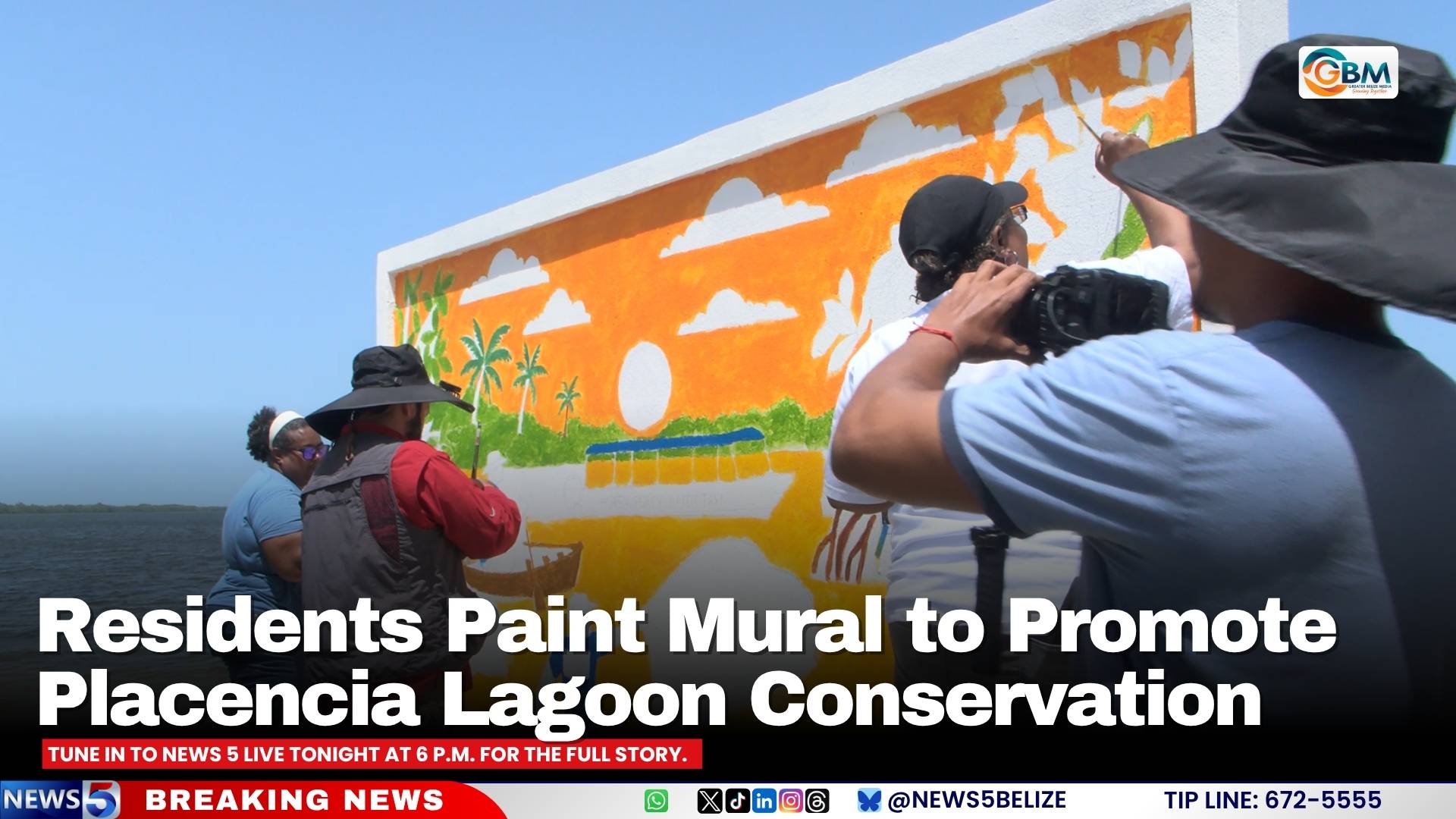
    On August 3, 2026, residents of Belize’s Independence Village came together to unveil a new community-created mural that stands as both a tribute to the ecologically rich Placencia Lagoon and a public call for urgent local conservation action. The unveiling marks the official launch of a targeted conservation awareness campaign spearheaded by the World Wildlife Fund (WWF), designed to build widespread grassroots support for protecting the critical coastal waterbody.

    This mural project is just the first phase of a larger outreach effort: additional community murals are already scheduled for installation in nearby Placencia and Stann Creek districts, each designed to highlight the unique regional histories, cultural traditions and daily livelihoods that are inextricably tied to the lagoon’s health.

    Abigail Parham Garbutt, a marine conservation officer working on the initiative, explained that the collaborative artwork does more than decorate a public space: it weaves together decades of personal memories and lived experiences of local residents, while making explicit the lagoon’s non-negotiable role in sustaining the local way of life. The entire project falls under the umbrella of WWF’s larger Reef Guard Project: Sustaining Life and Livelihoods, a program that works to improve management practices across four key marine protected areas in the region, with a specific focus on centering local community leadership in Placencia Lagoon conservation efforts.

    More than 20 local residents, ranging from young schoolchildren to long-time environmental advocates, contributed hours of work to paint the mural, turning the project into a truly community-owned effort. Lead artist Anton Leslie shared that the mural’s design intentionally incorporates the lagoon’s iconic mangrove habitats, vulnerable native manatee populations, traditional local transportation and depictions of childhood moments spent along the water, all to visualize the deep, intergenerational connection local people have to the lagoon.

    Organizers behind the campaign emphasize that the mural is intended to act as a permanent, public reminder: long-term protection of the Placencia Lagoon can only succeed when the community members who rely on its resources every day take a leading role in conservation. A full, in-depth report on the project and the community’s response will air on News 5 Live at 6 p.m. local time the same day.
  • Dominican researchers advance sargassum solutions at first SARGARD Symposium

    Dominican researchers advance sargassum solutions at first SARGARD Symposium

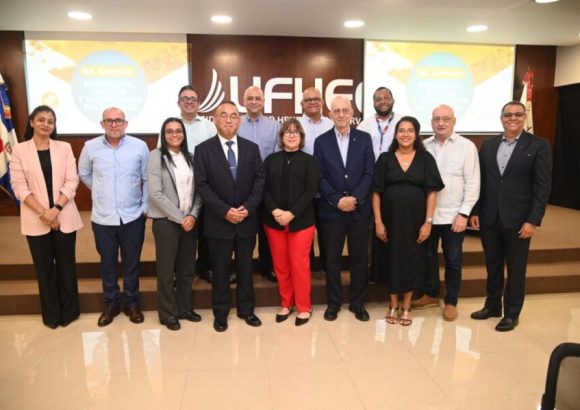
    In Santo Domingo, the Dominican Republic, an unprecedented collaborative gathering is advancing a radical rethinking of one of the Caribbean’s most pressing environmental headaches: massive, recurring sargassum blooms that choke coastlines, damage tourism, and disrupt coastal ecosystems. The Federico Henríquez y Carvajal University (UFHEC) recently played host to the inaugural SARGARD Network Symposium, a landmark event that brought together Dominican and international research communities to share breakthrough work that reframes the invasive macroalgae from a costly problem into a catalyst for inclusive, circular sustainable growth.

    The symposium was organized as a core feature of the Ministry of Higher Education, Science and Technology (MESCyT)’s annual Dominican Science and Technology Week, a platform designed to showcase the nation’s growing research capacity and foster global academic connections. The event opened with a keynote address from Professor Satoshi Nakai of Japan’s Hiroshima University, setting a collaborative, forward-looking tone for the proceedings. Following Nakai’s talk, researchers from five leading Dominican higher education institutions — UFHEC, the Instituto Tecnológico de Santo Domingo (INTEC), Pontificia Universidad Católica Madre y Maestra (PUCMM), ISA University, and Universidad APEC (UNAPEC) — took the stage to present their latest findings across a diverse range of sargassum-focused research areas.

    Attendees were treated to presentations spanning cutting-edge practical and technical applications of sargassum utilization. Research topics ranged from improved sargassum monitoring and forecasting systems, which help communities prepare for incoming blooms and coordinate collection efforts, to innovative approaches for converting the biomass into valuable goods. Experts shared progress on developing bioenergy from sargassum, creating natural agricultural biostimulants to boost crop yields, and advancing biotechnological processes that extract high-value biomolecules. These extracted compounds show significant promise for use across multiple commercial sectors, including pharmaceuticals, cosmetics, nutraceuticals, and mainstream food production. Other highlighted innovations included microwave-assisted pyrolysis for biomass conversion and the development of sargassum-based hydrogels for industrial and environmental uses.

    The cross-sector nature of the symposium underscored the complexity of the sargassum challenge and the need for coordinated action beyond academic walls. Attendees included representatives from key Dominican government bodies, such as the Ministry of Environment, the national Sargassum Control Cabinet, the National Maritime Authority (ANAMAR), and the Dominican Institute of Civil Aviation (IDAC), alongside private sector stakeholders from the Dominican Republic, Japan, and Italy. This multi-stakeholder turnout reinforced widespread commitment to co-developing scalable, innovative management and utilization strategies for the macroalgae.

    In his opening remarks, Darwin Muñoz, UFHEC’s Vice Rector for Science, Technology and Innovation, stressed that no single institution or nation can address the far-reaching impacts of sargassum blooms alone. The excess macroalgae, which has increasingly inundated Caribbean coastlines in recent years, inflicts widespread damage across the region: it harms coastal ecosystems, cuts into tourism revenue, and disrupts small-scale fishing livelihoods. Muñoz’s call for cross-border, cross-sector joint research echoed the consensus that emerged from the symposium: rather than treating sargassum as waste to be disposed of, the global community should frame it as an abundant, valuable biomass resource. Under a circular economic framework, proponents argue, sargassum can be transformed into renewable energy, sustainable agricultural inputs, and high-value industrial materials — turning a persistent crisis into an opportunity for long-term, inclusive economic growth across the Caribbean.

  • RAAS Solar launches Tesla Solar Roof in the Dominican Republic

    RAAS Solar launches Tesla Solar Roof in the Dominican Republic

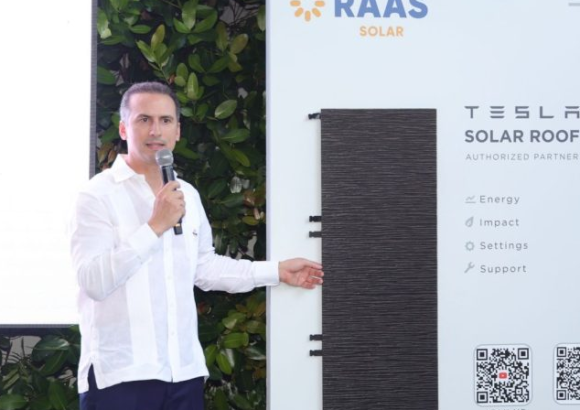
    In a major step forward for renewable energy adoption across the Caribbean, Dominican-based renewable energy firm RAAS Solar has formally introduced Tesla Solar Roof to the Dominican market, opening up access to Tesla’s cutting-edge integrated solar roofing technology for both residential and commercial properties across the country.

    The official launch event was hosted at RAAS Solar’s Sustainable Corporate Office in the nation’s capital, Santo Domingo. Unlike conventional solar panel setups that require mounting separate hardware on existing roofing, Tesla’s innovation embeds photovoltaic power-generating cells directly into durable glass roof tiles. This design allows structures to produce clean, renewable electricity while retaining the sleek, classic aesthetic of a traditional shingled roof, resolving a long-standing pain point for property owners who value curb appeal as much as energy savings.

    This launch marks another milestone in RAAS Solar’s long-standing partnership with Tesla Energy. The Dominican company first made history in 2020 as the first certified Tesla Energy partner in the country to install the Tesla Powerwall, a cutting-edge home energy storage system that stores excess solar energy for use during outages or periods of low sunlight. Company executives noted that adding Tesla Solar Roof to their service lineup significantly strengthens their comprehensive suite of clean energy solutions, giving property owners a fully integrated end-to-end renewable energy system from power generation to storage.

    To ensure optimal performance in the Dominican Republic’s unique environmental conditions, RAAS Solar mandates a full technical assessment before every installation. Technical teams evaluate a range of site-specific factors, including roof orientation, levels of shading from surrounding vegetation or structures, complex multi-level roof designs, and the hot, humid Caribbean climate that places unique demands on building materials. All installation work, product warranties, and ongoing technical support will be handled directly by RAAS Solar’s local trained team, eliminating barriers to service for local customers.

    Beyond the technological benefits, property owners who opt for Tesla Solar Roof can also take advantage of existing policy incentives designed to accelerate renewable energy adoption in the Dominican Republic. The system qualifies for benefits under the nation’s 2007 Law 57-07 on Renewable Energy, as well as the country’s popular Net Metering program, which allows solar system owners to sell excess generated power back to the local grid for credit, reducing long-term energy costs and shortening the payback period for the initial investment.

  • Sergio Carlo files complaint with Environment Ministry over Macao Beach access

    Sergio Carlo files complaint with Environment Ministry over Macao Beach access

    A prominent Dominican journalist, Sergio Carlo, has launched a formal legal complaint against the luxury Dreams Macao Punta Cana hotel over allegations that the property improperly blocked and restricted public access to a popular stretch of Macao Beach, drawing attention to longstanding tensions between private coastal resorts and public access rights in the Caribbean nation.

    Carlo’s complaint has been distributed to multiple key government bodies, including the Ministry of Environment and Natural Resources, the Ministry of Tourism (MITUR), the Higüey City Council, and the Specialized Tourist Security Corps (CESTUR). The filing centers on claims that hotel staff regularly force visiting members of the public to move their personal belongings and beach equipment, such as umbrellas and chairs, to clear sections of the shoreline for private commercial events like wedding ceremonies and professional photo shoots.

    The incident that prompted the complaint directly involved Carlo himself, during a recent visit to the beach. While he was using an explicitly public section of the shore, he says hotel employees approached him and demanded he relocate his umbrella. Staff told Carlo the area was required for a private event, following orders from hotel management, even though the location fell within the public maritime zone that is protected from private restriction under Dominican law.

    In his formal filing, Carlo lays out extensive legal backing for his position, citing multiple binding constitutional and regulatory frameworks that confirm public ownership of all Dominican beachfront and the 60-meter maritime coastal strip. These include Article 15 of the Dominican Constitution, Law 305-68 which governs the 60-meter maritime zone, General Environmental Law 64-00, a previous ruling from the Dominican Constitutional Court, and recent Environment Ministry Resolution 026/2025, all of which enshrine the right of unrestricted free public access to all beach areas falling within this public zone.

    Carlo is calling on relevant authorities to launch a full, transparent investigation into his allegations. Beyond the probe, he is pushing for regulatory bodies to immediately halt any ongoing hotel practices that unlawfully limit public access to the beach, implement routine, unannounced inspections of the coastal strip in front of the Dreams Macao Punta Cana property, and levy appropriate legal sanctions against the hotel if the violations outlined in the complaint are confirmed.

  • Caribbean photo contest returns with more than US$3,000 in prizes

    Caribbean photo contest returns with more than US$3,000 in prizes

    The 2026 edition of the *Seas & Scenes: Love the Caribbean Photo Contest* has officially opened its submission window, calling on amateur and professional photographers from the Caribbean and across the globe to turn their lenses toward the region’s dramatic coastal landscapes, rich cultural traditions, and diverse underwater ecosystems. Running from August 1 through August 31, this month-long competitive event is open to creators of all skill levels with no entry fees required, making it accessible to anyone passionate about capturing the Caribbean’s one-of-a-kind charm.

    Participants are permitted to submit up to five original, unpublished photographs to compete for a slice of the more than $3,000 in total prizes spread across 12 distinct award categories. Organized by the regional non-profit Environmental Protection in the Caribbean (EPIC), in collaboration with local publication Caribbean Compass magazine, the contest carries a core mission beyond celebrating photographic talent: it aims to highlight the Caribbean’s extraordinary natural and cultural heritage while fostering wider public engagement with marine and land conservation efforts across the region.

    This year’s competition structure includes three primary juried categories that cover the breadth of Caribbean life: *Caribbean Life & Nature*, which captures everyday moments and endemic wildlife; *Sailing, Yachting & Life on the Water*, which centers the region’s deep ties to maritime activity; and *Environmental Impact & Stewardship*, which spotlights conservation work and ongoing environmental challenges facing Caribbean communities. Complementing these judged categories is a popular *Audience Choice* award, which invites members of the public to cast up to five votes per day to select their favorite entry.

    Reflecting the contest’s rapid growth in popularity and regional reach since its launch, the 2026 edition features an expanded panel of judges with diverse expertise, including professional photographers, conservation scientists, sailing industry leaders, veteran journalists, and Caribbean cultural specialists.

    In a statement announcing the opening of entries, EPIC Executive Director Tabitha Stadler emphasized the event’s community-driven, mission-focused roots. “We wanted this to be a mission-driven contest that celebrates the beauty, diversity, and cultures of the Caribbean,” Stadler said. “It’s exciting to offer it again, because it feels like we are knitting together a community of people who care about conserving these places for future generations.”

    The contest’s inaugural 2025 edition exceeded organizational expectations, drawing more than 300 submissions from photographers based in 31 different Caribbean countries and territories. The first competition also sparked widespread public engagement, generating more than 2,800 public votes for the Audience Choice award and bringing international attention to the region’s unrivaled natural landscapes, vulnerable wildlife, and vibrant living cultural traditions.

    For 2026, the competition has secured backing from lead sponsors DSL Yachting and IGY Marinas St. Maarten, with additional prize donations from a network of local businesses and regional partners that share EPIC’s commitment to promoting and protecting the Caribbean’s natural and cultural assets.

    Photographers interested in entering the contest, members of the public who wish to vote in the Audience Choice category, and anyone seeking more detailed information about competition rules can visit the official event website at epicislands.org/photo-contest-2026.

  • Seas & Scenes: Love the Caribbean Photo Contest

    Seas & Scenes: Love the Caribbean Photo Contest

    Photography enthusiasts around the world, from amateur hobbyists to seasoned professionals, are being called on to capture the singular magic of the Caribbean as the 2026 edition of the Seas & Scenes: Love the Caribbean Photo Contest officially opens for submissions. Now in its second year, the mission-driven competition blends creative celebration with conservation advocacy, inviting participants to turn their lenses toward the region’s stunning natural landscapes, vibrant wildlife, rich local communities, and centuries-old sailing traditions. Running exclusively from August 1 to August 31, 2026, entry to the contest is completely free for all participants, with a total prize pool exceeding $3,000 and 12 distinct winning opportunities up for grabs. Participants are permitted to submit up to five original, unpublished photographs across four themed competition categories. The categories are structured to highlight the full spectrum of Caribbean identity: Caribbean Life & Nature, which centers everyday culture and native ecosystems; Sailing, Yachting & Life on the Water, which celebrates the region’s deep maritime heritage; Environmental Impact & Stewardship, which shines a spotlight on conservation efforts and environmental challenges facing the Caribbean; and the popular Audience Choice category, where members of the public can cast up to five votes daily to select their favorite entries. This year’s competition features an expanded panel of expert judges, bringing together specialists from the fields of professional photography, marine conservation, competitive sailing, investigative journalism, and Caribbean cultural studies. The growth of the judging panel mirrors the contest’s expanding regional footprint and its commitment to centering diverse, informed perspectives on the Caribbean’s many layers. Organized by Environmental Protection in the Caribbean (EPIC), a non-profit organization dedicated to regional conservation, in strategic partnership with regional publication Caribbean Compass magazine, the contest carries a core dual mission: to foster widespread public appreciation for the Caribbean’s one-of-a-kind natural and cultural heritage, and to underscore the urgent importance of protecting the fragile ecosystems that make the region so globally distinctive. “From the very beginning, we set out to build a contest rooted in purpose, one that honors the extraordinary beauty, cultural diversity, and distinct communities that make up the Caribbean,” shared Tabitha Stadler, Executive Director of EPIC, in a statement announcing the 2026 competition. “Bringing it back for a second year is incredibly exciting. It feels like we are weaving together a global community of people who share our commitment to preserving these exceptional lands and waters for future generations.” The 2026 iteration builds on the runaway success of the contest’s debut launch, which drew more than 300 individual submissions from photographers across 31 Caribbean nations and territories. Those first-year entries, which captured everything from dramatic dynamic coastal landscapes to rare glimpses of endemic marine life to intimate portraits of local cultural traditions, captivated a global public audience, generating more than 2,800 votes in the Audience Choice category and proving how deeply visual storytelling about the Caribbean resonates with audiences worldwide. This year’s expanded competition would not be possible without the generous backing of lead sponsors DSL Yachting and IGY Marinas St Maarten. Additional prizes have been donated by a growing network of local and regional businesses and partner organizations, all of which share the contest’s core commitment to celebrating and protecting the Caribbean’s natural and cultural assets. The contest will accept submissions only through the month of August 2026, with entries closing at the end of day on August 31. Photographers interested in entering, members of the public wanting to vote in the Audience Choice category, or anyone seeking additional information about the competition can visit the official contest website at epicislands.org/photo-contest-2026/.

  • INTEC study warns mangrove loss could cost Dominican Republic US$75 million annually

    INTEC study warns mangrove loss could cost Dominican Republic US$75 million annually

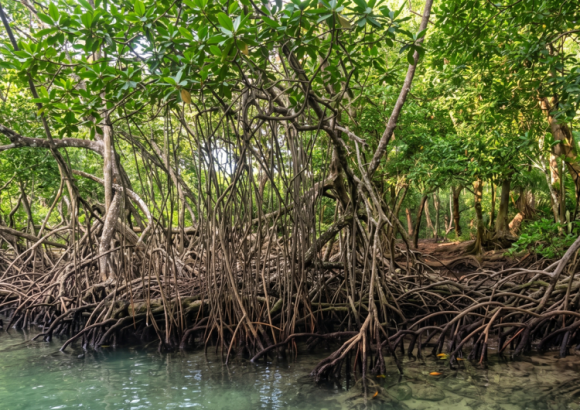
    Santo Domingo, Dominican Republic – A new research led by experts from the Technological Institute of Santo Domingo (INTEC) has drawn urgent attention to the steep economic costs of letting mangrove ecosystems decline across the country’s coastlines, projecting annual losses could reach as high as US$75 million if degradation continues. The findings, which underscore the underrecognized economic importance of these coastal habitats for the Dominican Republic’s tourism-driven economy, were officially published in the peer-reviewed academic journal *Ocean & Coastal Management*.

    To reach their conclusions, the research team conducted a comprehensive analysis of overlapping economic and environmental datasets spanning 28 years, from 1995 through 2023. Their statistical analysis confirmed a clear correlation: ongoing mangrove degradation correlates directly with slower national GDP growth, declining numbers of international tourist arrivals, and slowed investment and development of tourism infrastructure along the country’s coasts.

    Lead researchers emphasized that the $75 million annual loss estimate is intentionally conservative. This figure is calculated based only on the direct economic contributions of the Dominican Republic’s coastal and marine ecosystems, which collectively generate roughly US$1.8 billion in annual economic activity for the nation. The current projection does not account for the wide range of additional unpriced ecosystem services that mangroves provide, including long-term carbon sequestration, natural storm surge protection during hurricane season, habitat support for commercial and artisanal fisheries, and the conservation of critical regional biodiversity.

    Study authors frame mangroves as far more than just a natural wilderness feature: they act as cost-effective, vital natural infrastructure that delivers multiple overlapping benefits for coastal communities and the national economy. These root-dense coastal forests slow coastal erosion, protect the sandy beaches and adjacent coral reefs that draw millions of visitors each year, and maintain the scenic coastal landscapes that form the core of the Dominican Republic’s $10 billion-plus tourism sector. Given these far-reaching benefits, the research team argues that expanding mangrove conservation and restoration efforts should not be viewed as a purely environmental obligation, but rather a high-return investment in the country’s long-term economic resilience against climate shocks and industry decline.

    The research, which received funding from the Dominican Republic’s National Fund for Innovation and Scientific and Technological Development (Fondocyt), puts forward three core policy recommendations to reverse current degradation trends: strengthen legal and on-the-ground protections for existing mangrove habitats, integrate ecosystem conservation into long-term coastal tourism planning, and adopt targeted policy incentives that encourage private and public investment in coastal ecosystem conservation across the country.

  • Dominican government launches operation to protect six national parks from environmental crimes

    Dominican government launches operation to protect six national parks from environmental crimes

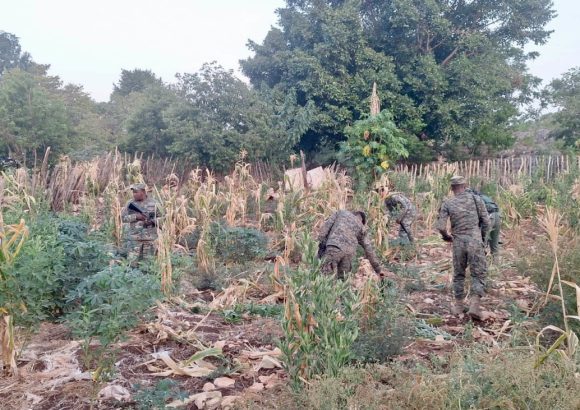
    In a coordinated, cross-government effort to address escalating threats to the country’s ecologically critical protected landscapes, the Dominican Republic’s Ministry of Defense and Ministry of Environment and Natural Resources have officially launched Operation Environmental Commitment 2026, a nationwide crackdown on destructive environmental crime. The multi-month initiative brings together a diverse coalition of state institutions to counter activities that have eroded fragile ecosystems across the nation’s most protected natural spaces.

    Operational leadership for the campaign falls to the National Environmental Protection Service (known locally as SENPA), with the Dominican Armed Forces providing tactical and logistical support alongside more than half a dozen additional government agencies. Enforcement and recovery activities are being deployed simultaneously across six of the country’s highest-priority protected areas: Los Haitises National Park, Valle Nuevo National Park, Sierra de Bahoruco National Park, José del Carmen Ramírez National Park, Armando Bermúdez National Park, and La Humeadora National Park. All six sites are home to unique biodiversity and endangered species that have faced growing pressure from unregulated human activity in recent years.

    The operation’s primary enforcement targets include five of the most widespread damaging activities plaguing Dominican protected areas: illegal land encroachment, unlicensed commercial logging, intentional vegetation burning, slash-and-burn subsistence farming that clears old-growth forest, and illegal unregulated fishing in protected aquatic habitats. Deployed inter-agency teams are conducting stepped-up aerial and ground surveillance across remote areas, carrying out enforcement actions against violators, and leading on-the-ground restoration work to reverse damage to already impacted ecosystems.

    Beyond environmental authorities and SENPA, the coalition includes the Dominican Army, Navy, and Air Force, the General Directorate of Migration, the Ministry of Agriculture, and the Specialized Prosecutor’s Office for the Defense of the Environment and Natural Resources. This whole-of-government approach is designed to break down coordination barriers that have historically hampered efforts to counter organized environmental crime in remote protected regions.

    In a statement following the launch, the Ministry of Defense emphasized that safeguarding the country’s natural resources is not merely an environmental priority, but a core pillar of national security. The institution reaffirmed its long-term commitment to advancing conservation goals by leveraging the extensive operational capabilities and geographic reach of the Armed Forces to protect ecosystems that are vital to the Dominican Republic’s biodiversity, tourism industry, and long-term climate resilience.

  • Dominican Republic holds first National Oceans Forum to strengthen marine conservation

    Dominican Republic holds first National Oceans Forum to strengthen marine conservation

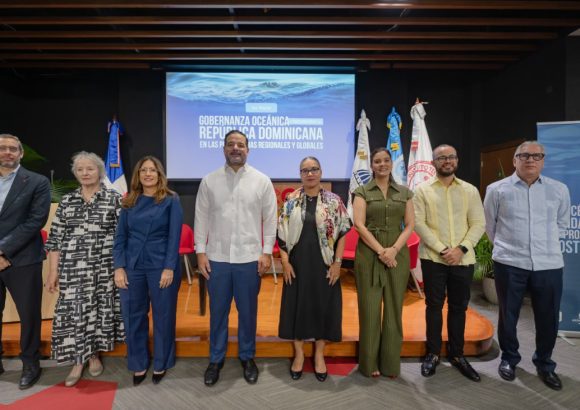
    In a landmark gathering focused on safeguarding one of the Dominican Republic’s most critical natural assets, the Ministry of Environment and Natural Resources, in partnership with the United Nations Development Programme (UNDP) and the Technological Institute of Santo Domingo (INTEC), has convened the country’s First National Oceans Forum in the capital city of Santo Domingo. The cross-sector event brought together a diverse cohort of stakeholders, including senior government representatives, leading academic researchers, private sector leaders, civil society advocates, and global organization experts, all aligned around the shared goal of advancing progressive ocean governance and responsible long-term management of marine resources.

    Framed by the theme “The Ocean as the Foundation of Sustainable Prosperity,” the forum carried a clear core mission: to elevate ocean conservation from a niche environmental concern to a central priority on the Dominican Republic’s national policy agenda, while establishing a collaborative foundation for the development of the country’s first formal National Ocean Strategy.

    Speaking at the opening of the event, Environment Minister Paíno Henríquez framed the forum as a transformative milestone for the nation’s approach to marine and coastal ecosystem management. He underscored that the long-term future of the Dominican Republic is inextricably linked to the ecological health of its surrounding seas, noting that continued degradation of marine habitats would put economic and social progress at risk across multiple sectors.

    Attendees across sectors echoed that sentiment, emphasizing a little-known but critical fact: the ocean makes up approximately 90 percent of the Dominican Republic’s total national territory. Beyond its ecological importance, this vast marine resource is the backbone of many of the country’s most vital economic sectors, from world-renowned coastal tourism that draws millions of visitors annually to small-scale and commercial fisheries that support millions of livelihoods. It also underpins the social and economic stability of hundreds of thousands of residents living in coastal communities across the nation.

    Over the course of the forum, participants dove into robust discussions centered on the most pressing threats facing the country’s marine ecosystems. Key challenges highlighted included accelerating climate change impacts such as ocean warming and acidification, growing levels of marine plastic and chemical pollution, worsening coastal erosion that threatens communities and infrastructure, and unsustainable overfishing that depletes fish stocks critical to food security and economic activity. Alongside these challenges, attendees explored a wide range of untapped opportunities to expand the country’s sustainable blue economy, balancing economic growth with long-term conservation of marine resources.

    officials also used the forum to call for urgent systemic changes to ocean management, including more effective coordination across disparate government agencies, the adoption of science-backed policy frameworks to guide decision-making, and scaled up investment in conservation initiatives across all levels of governance. Organizers confirmed that the National Oceans Forum is set to become an annual recurring event, designed to sustain cross-sector collaboration, strengthen national ocean governance frameworks, and advance the long-term protection of the Dominican Republic’s irreplaceable marine resources for future generations.

  • What does the forecast hold? Drier months, increased heat expected

    What does the forecast hold? Drier months, increased heat expected

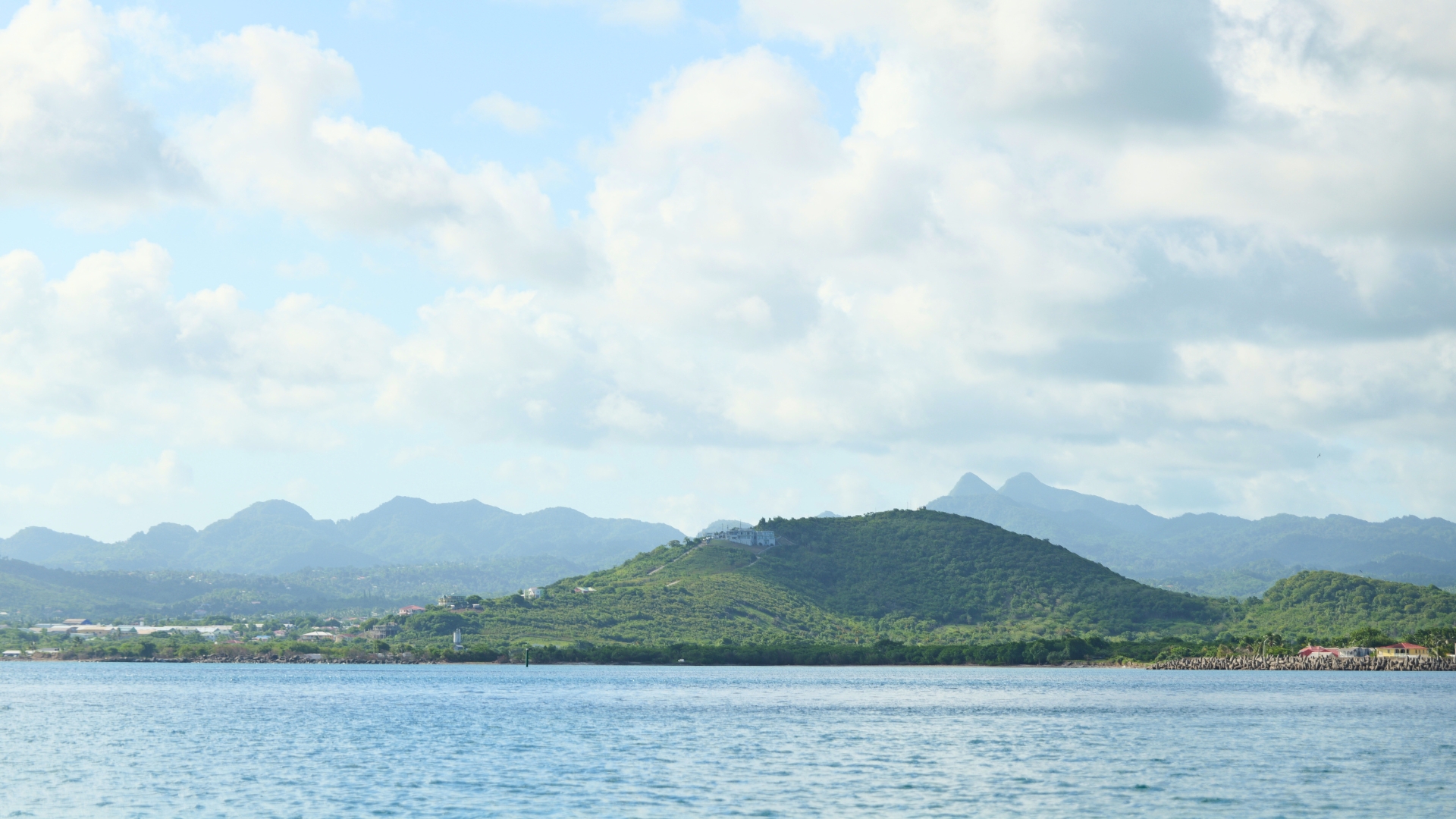
    Residents of the Caribbean island nation of Saint Lucia are being urged to prepare for prolonged dry conditions and above-average temperatures over the closing months of 2026, as a developing El Niño pattern reshapes regional weather through the island’s traditional wet season.

    Speaking at a Wednesday press briefing hosted by the Saint Lucia Water and Sewerage Company (WASCO) held at the National Workers Union Conference Room, Saint Lucia Meteorological Services Director Vigil Saltibus outlined the key risks associated with the current climate shift. El Niño, a naturally recurring ocean-atmosphere weather pattern defined by unusually warm surface temperatures across the eastern and central Pacific Ocean, is partially driving the expected deviation from typical seasonal conditions.

    “El Niño typically acts to suppress rainfall during the Caribbean wet season, and the event is also linked to higher-than-average global temperatures overall,” Saltibus explained. While the large-scale pattern reduces overall precipitation, he emphasized that dangerous weather events remain possible. Localized flooding can still develop if atmospheric instability combines with enough moisture, particularly in association with passing tropical waves, tropical storms, and upper-level troughs, he warned. Residents should remain vigilant for these events even amid broader dry conditions.

    El Niño events generally last between 9 and 12 months, and occur at irregular intervals of 2 to 7 years. Saint Lucia’s official wet season runs from June through November, but Saltibus’s forecast shows the most severe drought and peak heat will hit between September and November. This high-risk window aligns exactly with the peak of the annual Atlantic hurricane season, which runs from June 1 to November 30 each year.

    Despite the overlapping timing, Saltibus noted that El Niño typically suppresses Atlantic hurricane activity, leading to a 2026 season forecast to be near-normal to below-normal in overall activity. Official meteorological predictions call for 8 to 14 named storms, 3 to 6 hurricanes, and 1 to 3 major hurricanes (Category 3 or higher) this season. As of early August, two named storms – Arthur and Bertha – have already formed and moved through the Atlantic basin.

    In response to the forecast, both Saltibus and WASCO leadership have stressed that proactive preparedness and consistent water conservation remain top priorities for communities across Saint Lucia to mitigate the impacts of the coming dry and hot conditions.