分类: education

  • PM: TT’s future now in laptops in bookbags

    PM: TT’s future now in laptops in bookbags

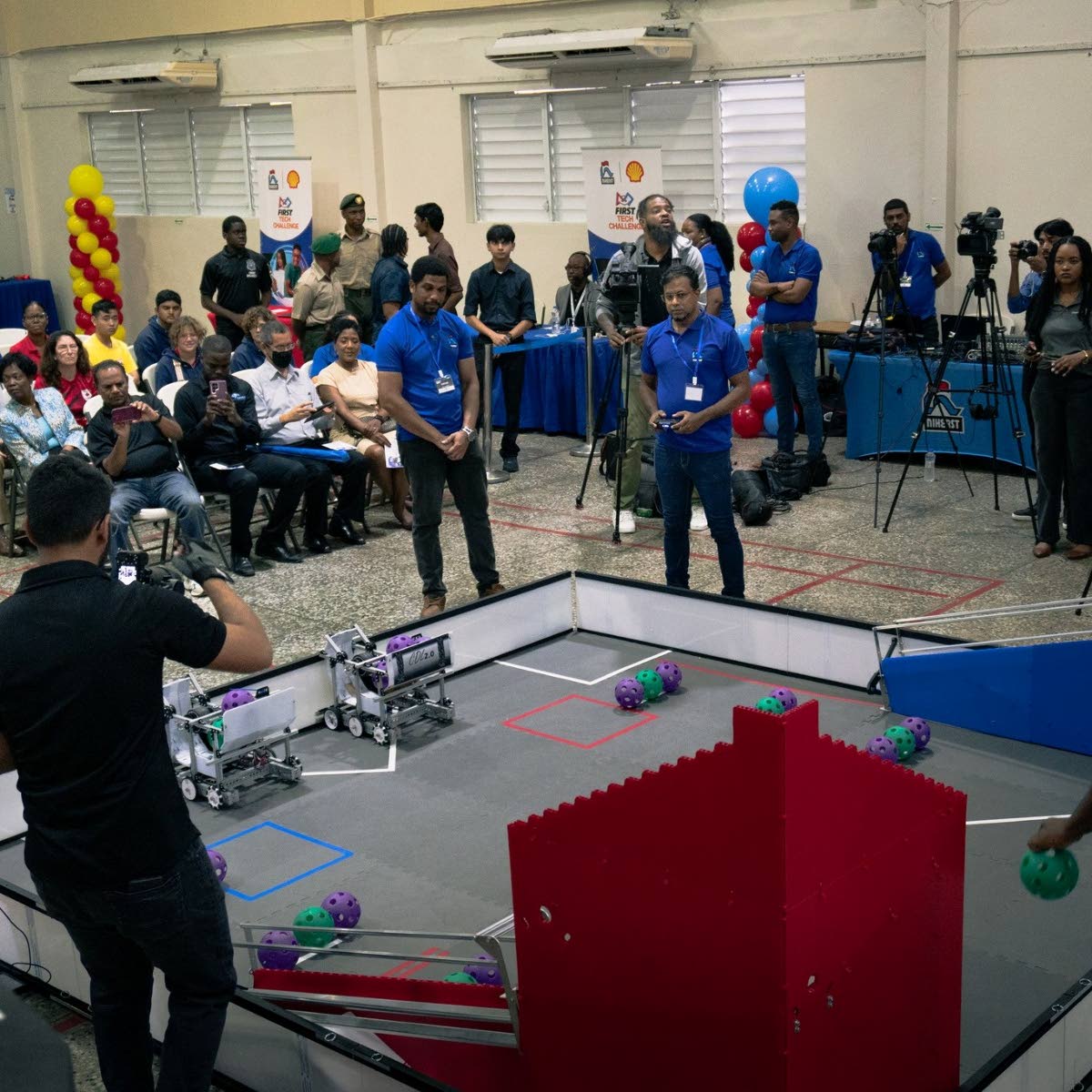
    In a significant advancement for digital education, Trinidad and Tobago has launched a comprehensive laptop distribution program for Form One secondary students, with Prime Minister Kamla Persad-Bissessar declaring these devices fundamental to the nation’s future. The initiative, unveiled during a ceremony at Penal Secondary School on November 27, represents a substantial investment in the country’s educational infrastructure.

    Drawing parallels to former Prime Minister Dr. Eric Williams’ famous assertion that the nation’s future resided in students’ bookbags, Persad-Bissessar contemporized the vision by stating, ‘I say to you, the future of our country is in the laptops in the bookbags.’ She reflected on her early encounters with massive mainframe computers, expressing astonishment at technological evolution and emphasizing that these laptops serve as digital portals to global knowledge.

    The technological initiative, managed by the Education Ministry, involves the procurement of 18,000 laptops equipped with specialized accessories at an approximate total cost of $135 million TT dollars—approximately $7,500 per unit. Education Minister Dr. Michael Dowlath revealed that these devices incorporate artificial intelligence capabilities specifically designed for educational purposes. Initial deliveries have already brought 2,500 units, with an additional 8,500 expected imminently.

    Minister Dowlath characterized the program as a revival of the technological revolution initiated during Persad-Bissessar’s first administration (2010-2015), which he claimed experienced a decade-long interruption under the previous PNM government. The ceremony also featured demonstrations of the AI components, with ministry officials assuring stringent protocols restrict the technology exclusively to teaching Mathematics and English Language.

    Concurrently, the government is enhancing school infrastructure through Cabinet-approved improvements to Wi-Fi capabilities across primary and secondary institutions. In a related health initiative, the Prime Minister acknowledged Health Minister Dr. Lackram Bodoe for advancing sugar reduction measures in school beverages, continuing efforts begun by his predecessor Terrence Deyalsingh.

  • SGU awards 30 Scholarships to Grenadian students

    SGU awards 30 Scholarships to Grenadian students

    In a significant move to combat physician shortages, St. George’s University (SGU) has unveiled 30 new scholarships exclusively for Grenadian students pursuing medical education. This strategic initiative forms part of SGU’s broader commitment to nurturing local talent and strengthening healthcare infrastructure both within Grenada and across the global community.

    Dr. Marios Loukas, President of SGU and Dean of the School of Medicine, articulated the institution’s vision: “Educating Grenadians remains fundamental to our institutional mission. Each scholarship represents an investment in our nation’s health security, ensuring that qualified medical professionals are available to serve local communities.”

    The global context underscores the urgency of this initiative. World Health Organization projections indicate a critical shortage of approximately 10 million healthcare workers by 2030, making localized medical education programs increasingly vital. For nearly fifty years, SGU has served as a cornerstone of Grenada’s medical education landscape, enabling hundreds of Grenadian students to pursue medical careers without leaving their home country.

    Beyond tuition support for medical and veterinary programs, SGU maintains active partnerships with local health authorities through community health initiatives. These collaborations include operating free clinics, organizing health fairs, and implementing various public health programs that directly benefit Grenadian communities.

    The university’s comprehensive approach addresses both educational access and healthcare delivery, creating a sustainable model for medical workforce development that other small nations might emulate.

  • BookFusion app launches in AI, digital literacy boost

    BookFusion app launches in AI, digital literacy boost

    The Ministry of Educational Transformation unveiled BookFusion, a groundbreaking digital reading application, on Wednesday. This innovative platform is designed to foster collaboration among students, teachers, and parents while enhancing technological skills and cognitive development in both home and school settings. The launch coincides with the ministry’s initiative to distribute laptops to first-form students, preloaded with security protocols and educational resources. BookFusion, a key component of the Skills for the Future 2 programme, integrates learning across classroom and home environments, offering a seamless educational experience. Asha-Akua Stoute, a communications specialist with the programme, emphasized the app’s ability to facilitate parental involvement, teacher resource allocation, and student access to materials that support cognitive and recreational growth. Stoute highlighted the platform’s robust security measures, ensuring students engage with appropriate educational content while exploring AI in a constructive manner. Stephen Savoury, project coordinator for Skills for the Future 2, underscored the programme’s commitment to inclusive education, emphasizing the shift from rote memorization to critical thinking and digital literacy. He outlined ambitious plans to modernize classroom infrastructure, transforming them into dynamic, technology-rich hubs of innovation. Dr. Ramona Archer-Bradshaw, Chief Education Officer, praised the platform for empowering educators to curate and share resources, fostering a collaborative culture across schools.

  • Confucius Institute at TAMCC : 10 years of bridge

    Confucius Institute at TAMCC : 10 years of bridge

    The Confucius Institute at T A Marryshow Community College (TAMCC) is celebrating its 10th anniversary, marking a decade of significant growth and contributions to international language learning and cultural exchange in Grenada. Established in 2015 through a partnership between Ningbo University of Technology and TAMCC, the institute was upgraded to a full Confucius Institute in 2022. It has since become Grenada’s sole official hub for Chinese language education, HSK testing, and cultural cooperation between China and Grenada. Currently, the institute operates 12 teaching sites across St George’s, Grenville, and Sauteurs, offering a range of programs including university credit-bearing Chinese classes, ‘Happy Chinese’ for primary and secondary schools, HSK preparation courses, and a popular Wushu program. In 2025, over 800 learners enrolled in various courses, reflecting the growing interest among Grenadian youth in global languages and international opportunities. The institute has also achieved a 100% HSK pass rate in both April and October examinations this year. A notable milestone in 2024–2025 has been the institute’s success in supporting Grenadian students to pursue higher education in China, with nine students securing Chinese Government Scholarships. The TAMCC Confucius Institute is equally renowned for its vibrant cultural programs, including the Chinese New Year Gala, International Chinese Day, the ‘Chinese Bridge’ Competition, Chinese Song Contest, Fun Sports Day, and the Summer Culture Camp. These events provide thousands of participants with hands-on experiences in Chinese arts, music, language, and traditions. Community-focused activities such as cultural workshops, embassy open days, and visits to local nursing homes further strengthen the bonds between the citizens of China and Grenada. In addition to cultural outreach, the institute has distinguished itself through digital innovation. In 2025, the China International Chinese Education Foundation and the University of Science and Technology Beijing announced the results of the First Global Confucius Institute Digital Application and Practice Competition. Among over 1,200 Confucius Institutes and Classrooms worldwide, only 20 cases were selected as ‘Exemplary Case Awards.’ The TAMCC Confucius Institute’s submission, ‘Fusion of Sound and Image: A Digital Approach to Cultural Communication,’ was recognized as a 2025 Global Confucius Institute Digital Innovation Exemplary Case, establishing the institute as an international model of digital creativity and cultural communication. The institute is also pioneering localized teaching resources, including the development of ‘Happy Caribbean: Elementary Chinese,’ the first Chinese textbook tailored specifically for Caribbean learners. Its award-winning 4-episode documentary ‘Approaching Grenada’ continues to enhance global awareness of Grenada’s culture and landscape. Innovative AI projects, such as AI-composed Chinese songs and digital pronunciation tools, highlight the institute’s commitment to blending technology with culture-driven education. As it enters a new decade, the TAMCC Confucius Institute remains committed to expanding its teaching programs, strengthening community partnerships, and deepening China–Grenada cultural understanding. With its growing influence in education, culture, and digital creativity, the institute stands as a vibrant bridge connecting the Caribbean and the world. Dr Fan Jiang, Resident Director of the Confucius Institute; David Ambrose, Grenadian Director of the Confucius Institute, and all the teachers warmly welcome students, families, professionals, and community members across Grenada to join its language courses, cultural workshops, and future activities. The door of the Confucius Institute is open to all who wish to explore new languages, new cultures, and new possibilities.

  • Confucius Institute at TAMCC wins Digital Application and Practice Exemplary Case Award

    Confucius Institute at TAMCC wins Digital Application and Practice Exemplary Case Award

    On November 16, the results of the first-ever ‘Confucius Institute Digital Application and Practice Case Collection Event’ were unveiled. This event, a collaborative effort between the Chinese International Education Foundation and the University of Science and Technology Beijing, highlighted groundbreaking digital initiatives within the global network of Confucius Institutes. Out of over 1,200 participating institutions, only 20 were honored with the ‘Demonstration Case Award.’ Among the distinguished recipients was the Confucius Institute at TAMCC, recognized for its innovative case titled ‘Integrated Audio-Visual Storytelling, Intelligent Communication: A Digital Communication Practice of the Confucius Institute.’ This case was selected as one of the ‘2025 Confucius Institute Digital Application and Practice Demonstration Cases,’ marking it as a global exemplar of digital innovation in Chinese language education. At the award ceremony, Zhao Lingshan, Vice Chair and Secretary-General of the Chinese International Education Foundation, presented the accolade to the TAMCC team. The winning case, themed ‘Smartly Empowered Civilisation,’ explores novel approaches to international Chinese education in the digital era. It addresses challenges such as limited outreach and low audience engagement by developing a digital model that integrates AI technology, short-video production, digital magazines, and multi-platform operations. This model has enabled the creation and dissemination of diverse content, reaching a broad audience with precision. Over the past two years, the institute has produced 13 theme songs for various events, including Marryshow Day at TAMCC and the 2025 World Chinese Conference, leveraging the fusion of music and visual media to enhance cultural communication. Additionally, the institute has released 20 bilingual promotional videos and launched the digital magazine ‘Four Seasons at the Confucius Institute,’ distributed across platforms like YouTube, TikTok, Facebook, Instagram, WeChat, Bilibili, and Xiaohongshu. These efforts have garnered nearly 200,000 views and over 5,000 interactions, showcasing the institute’s successful digital communication strategy. The institute has also been awarded the ‘Outstanding Organisation Award’ in the HSK Short Video Competition for two consecutive years, further cementing its reputation as a leader in digital innovation. The ‘Four Seasons of the Confucius Institute’ magazine has become a vital resource for Grenadians to learn about Chinese culture, offering a replicable model for international Chinese education. This award underscores the high regard for the Confucius Institute at TAMCC’s achievements in digital development and cultural communication. Moving forward, the institute plans to expand its ‘Integrated Audio-Visual Storytelling’ project, further integrating AI into teaching and cultural activities, and contributing to the high-quality development of China-Grenada cultural exchange and international Chinese education.

  • UWI Five Islands to Offer Law Degrees in Partnership with the Mona Campus Come 2026

    UWI Five Islands to Offer Law Degrees in Partnership with the Mona Campus Come 2026

    In a groundbreaking move, the University of the West Indies (UWI) Five Islands Campus will begin offering the Mona Bachelor of Laws (LLB) degree locally in Antigua and Barbuda starting September 2026. This initiative, approved by the Cabinet this week, marks a significant milestone in expanding access to legal education across the Eastern Caribbean. Cabinet spokesman Maurice Merchant described the partnership between the Five Islands and Mona Campuses as a ‘landmark proposal’ that will transform legal education in the region. Under the agreement, the Mona Campus will oversee curriculum development, quality assurance, and academic governance, while the Five Islands Campus will handle program delivery, faculty recruitment, and student support. Merchant emphasized that this collaboration will significantly reduce costs for Antiguan and Barbudan students, with families saving an estimated US$105,000 compared to studying at Mona or Cave Hill, and up to US$202,500 compared to pursuing the degree in the United Kingdom or North America. Additionally, government scholarships will be more impactful, with the annual $520,000 allocation through the Board of Education program now supporting 30 students annually, up from 10 when studying abroad. Merchant also highlighted that this program lays the foundation for Antigua and Barbuda to establish its own law school within the next three to six years. Attorney General Steadroy Benjamin is currently collaborating with UWI and the Norman Manley Law School to meet the necessary requirements, including viability assessments and financial obligations, to ensure the project’s success.

  • No permission granted for prefab Mae’s School on Farnum Ground – Parag

    No permission granted for prefab Mae’s School on Farnum Ground – Parag

    Education Minister Sonia Parag has clarified that no official permission was granted for the construction of a prefabricated school on Farnum Ground in Subryanville. Speaking at a multi-sectoral consultation on school bullying, Parag emphasized that neither her current role as Education Minister nor her previous position as Local Government Minister authorized the project. The issue arose after veteran educator Bonita Bone-Harris raised concerns about the takeover of a section of Farnum Ground by the new owner of Mae’s School, which erected the prefab structure following a fire that destroyed its original building earlier this year. Bone-Harris criticized the authorities for disregarding residents’ concerns, labeling the approach as ‘bullyism’ and citing violations of building codes. Despite acknowledging the lack of permission, the Mayor and City Council allowed the structure to remain operational until early next year. Community representatives, including lawyers, have repeatedly written to various authorities highlighting legal infractions but have yet to pursue court action. The school owner has indicated plans to construct a new building and restore Farnum Ground. Meanwhile, the forum addressed broader issues of bullying, with Bone-Harris urging attention to bullying in homes and schools, including by teachers. The event concluded with plans to establish a multi-sectoral task force, an online reporting platform, and the use of the Human Services’ anti-bullying policy. Home Affairs Minister Oneidge Walrond encouraged the use of the Guyana Police Force’s Cyber Crime Unit to combat cyberbullying.

  • Applications now open for the Commonwealth shared scholarship initiative

    Applications now open for the Commonwealth shared scholarship initiative

    The Commonwealth Scholarship Commission (CSC) has officially launched the application process for the Commonwealth Shared Scholarship Initiative, a flagship postgraduate program under the Commonwealth Scholarship and Fellowship Plan (CSFP). This initiative, part of the UK Government’s global scholarship framework, seeks to empower talented individuals from developing Commonwealth nations by enabling them to pursue advanced degrees in the UK. The program aims to cultivate future leaders and innovators who can drive sustainable development in their home countries while strengthening international partnerships. The scholarship underscores the UK’s enduring commitment to the Commonwealth community and its development goals. The initiative targets high-achieving postgraduate students from Least Developed and middle-income Commonwealth countries, including those affected by conflict or instability. Applicants must demonstrate exceptional academic potential and a commitment to leveraging their education for national development. The scholarship covers one year of full-time Master’s studies in the UK, with participating universities responsible for covering living expenses. Candidates must apply directly through their chosen UK institutions, which conduct initial screenings before the CSC makes final selections. Eligibility criteria include citizenship or refugee status in an eligible Commonwealth country, permanent residency, and a strong academic record. Applicants must also prove financial need and meet specific documentation requirements. The application deadline is December 9, 2025, and recipients are required to commence studies in September 2026. The scholarship is exclusively for full-time study, and concurrent enrollment in other courses is prohibited. Prospective students must also secure admission to their chosen UK university program, adhering to institutional deadlines and requirements.

  • Caribbean Educators Push for Higher Standards

    Caribbean Educators Push for Higher Standards

    The Caribbean higher education sector is undergoing a critical evaluation as the Caribbean Area Network for Quality Assurance in Tertiary Education (CANQATE) convenes its 21st Annual Conference. This landmark event has drawn over 175 education experts, policymakers, and innovators from 15 Caribbean nations to deliberate on enhancing quality assurance mechanisms in tertiary institutions. Deputy Chief Education Officer Terry Westby-Langford emphasized the significance of this gathering, stating, ‘We have a room full of experts sharing their experiences and innovations to navigate the complex landscape of higher education quality assurance.’ A central theme of the conference is the imperative to prioritize students in all accreditation reforms. Dr. Pablo Flores of John Paul the Great College underscored this point, asserting that all efforts must ultimately serve the learner. ‘If we maintain this focus, it will be a tremendous service to Belize and beyond. However, losing sight of the student jeopardizes the entire process,’ he cautioned. The challenge of modernizing standards is compounded by rapid technological advancements, particularly in artificial intelligence (AI). Dr. Ruby Allen from the University of Trinidad and Tobago highlighted the stagnation in regional standards, which have remained largely unchanged since 2010. She called for a collaborative regional effort to update these standards, ensuring they are relevant and effective in the contemporary educational landscape. Westby-Langford also stressed the importance of maintaining the credibility and cross-border recognition of qualifications, a critical factor in a globalized world. The conference, which continues this week, aims to chart a path forward for Caribbean higher education that is both innovative and student-centered.

  • UWI, University of Ghana strengthen ties with joint medical degree programme

    UWI, University of Ghana strengthen ties with joint medical degree programme

    Professor Clive Landis, Principal of the University of the West Indies (UWI) Cave Hill Campus, has unveiled a groundbreaking joint medical degree programme in collaboration with the University of Ghana. The initiative, announced during a forum titled “Reclaiming Our Atlantic Destiny: Connect. Rebuild. Renew.,” aims to train doctors accredited to practise in both Barbados and Ghana. The 3+3 programme structure enables students to complete three years of preclinical studies at UWI Cave Hill, followed by three years of clinical training in Ghana. Graduates will receive a Bachelor of Science in Preclinical Sciences from UWI and an MBChB from the University of Ghana. The programme is fully accredited by the medical and dental councils of both nations, ensuring graduates can practise medicine in either country. Landis highlighted the programme’s strategic alignment, noting Barbados’ surplus preclinical capacity and Ghana’s robust clinical resources. Two Ghanaian students, the first cohort, were recognized during the event. The Asantehene, His Majesty Otumfuo Osei Tutu II, whose presence at the forum aimed to elevate the programme’s visibility in Ghana, also unveiled a commemorative portrait at the Hilary McDonald Beckles Administration Building, informally known as “The Golden Stool.” The forum was part of the Asantehene’s historic visit to Barbados for the GUBA Awards and Investment Conference.