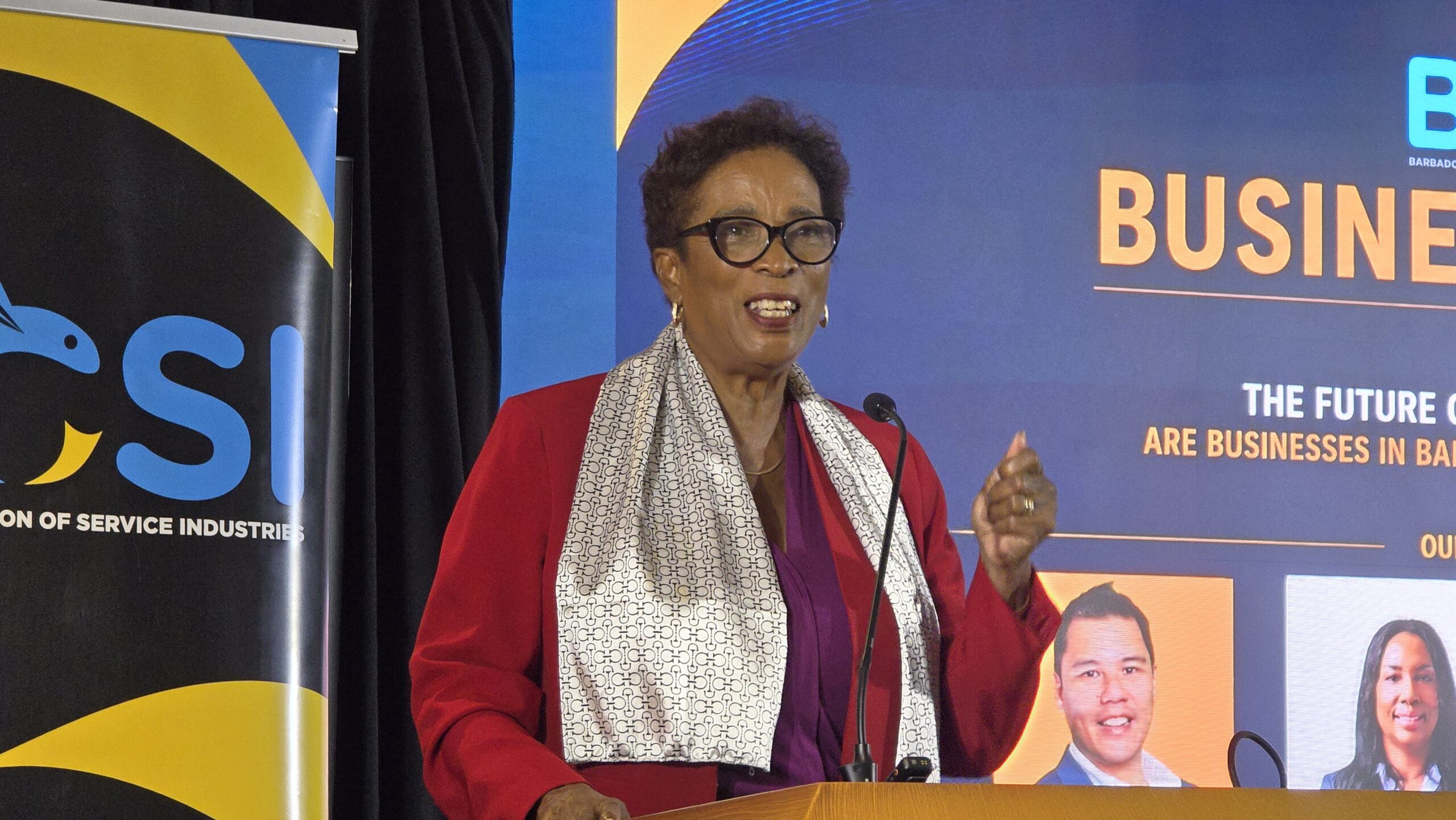
As artificial intelligence and digital innovation reshape global industries and labor markets around the world, small island developing states face a critical choice: invest in foundational digital capabilities to compete, or risk being left behind by the rapidly accelerating digital transition. Barbados’ Minister of Training and Tertiary Education, Sandra Husbands, has laid out an urgent call to action for the Caribbean nation, emphasizing that closing widespread digital skills gaps is non-negotiable to capitalize on the unique advantages the digital economy can offer to small island economies.
分类: business
-

Normal course of business
A high-profile currency seizure at one of Trinidad and Tobago’s busiest international airports has drawn the involvement of multiple regional and U.S. law enforcement agencies, after local customs officials intercepted $2 million in U.S. currency bound for Miami. In an exclusive statement to local outlet the Express, NCB Merchant Bank (Trinidad and Tobago) Ltd. has formally claimed ownership of the seized funds, maintaining the transaction was a routine, fully compliant part of its regular commercial operations.\n\nThe interception unfolded on June 25 at Piarco International Airport, where customs and excise inspectors flagged the cash, stowed inside a plain white crocus bag, during pre-shipment checks. The currency was scheduled to be routed to Miami via a stopover in Jamaica, but regulators raised concerns about gaps in the accompanying shipping documentation. Following the interception, the funds were transferred to the Central Bank of Trinidad and Tobago for secure holding while official investigations proceed. As of the latest reporting, the cash remains in the central bank’s custody, with no clearance for shipment granted yet.\n\nIn an email response to the Express’ questions Thursday evening, NCB Merchant Bank chief executive Marli A. Creese laid out the bank’s official position on the incident. “The cash referred to belongs solely to the bank,” Creese confirmed, emphasizing that the courier shipment followed all standard internal protocols and aligned with every applicable domestic and international law. “All usual and required protocols were adhered to,” he added, addressing questions about whether the bank had followed its own internal compliance procedures for large currency shipments.\n\nCreese also confirmed that the bank has been in direct contact with investigating authorities and is committed to full cooperation throughout the probe. The Customs and Excise Division reached out to the bank requesting additional verification and supporting documentation related to the shipment, he said, and the institution has already fulfilled all information requests. Addressing early reports that customs identified major documentation deficiencies, Creese clarified that the situation only amounted to a routine request for supplementary information, which the bank has already resolved.\n\nTrinidad and Tobago’s Finance Minister Davendranath Tancoo confirmed Thursday that the investigation is ongoing, with multiple security and financial regulatory agencies working in parallel to resolve the case. “This matter is now engaging the attention of several relevant security and financial agencies. Obviously, it would be inappropriate to comment at this time. Suffice it to say that a thorough investigation is being pursued involving all parties to this transaction,” Tancoo told the Express. Multiple sources also confirm that U.S. law enforcement and financial authorities are assisting with the probe, a standard step for large currency shipments bound for the U.S.\n\nThe Express submitted additional follow-up questions to both NCB Merchant Bank and Central Bank Governor Larry Howai on Thursday, but neither party issued an immediate additional comment. Investigations are expected to continue in the coming days as authorities work to confirm all regulatory requirements for the large currency export were met, before a final decision on releasing the funds is made.
-

Sunrise Airways Launches Antigua-Barbados Route With Introductory Fares From US$129
Caribbean-based regional carrier Sunrise Airways has announced the launch of a brand-new direct air connection linking Antigua and Barbados, marking a key expansion of its route network across the Eastern Caribbean. To encourage early bookings and build momentum for the service, the airline has rolled out attractive introductory one-way fares that start as low as US$129, opening up more affordable travel options for both leisure and business travelers between the two popular island nations.
The new route is designed to address long-standing gaps in regional connectivity, making it easier for tourists to combine multiple Caribbean destinations into a single trip, while also streamlining business travel for cross-island commerce and trade. Industry analysts note that enhanced air links between Antigua and Barbados will not only benefit the two countries’ tourism sectors — a core economic driver for both island economies — but also strengthen people-to-people ties, support small and medium-sized enterprises, and boost regional integration efforts.
Sunrise Airways, which has built a reputation for focusing on underserved regional routes across the Caribbean, says the launch of the Antigua-Barbados service aligns with its long-term growth strategy to connect more island communities with reliable, reasonably priced air travel. The airline has not yet released detailed scheduling information, but early reports indicate the service will operate multiple weekly rotations to accommodate varying travel demands. Travel industry stakeholders have welcomed the move, noting that increased competition and expanded route options will ultimately give consumers more choice and push for more accessible air travel pricing across the region.
-
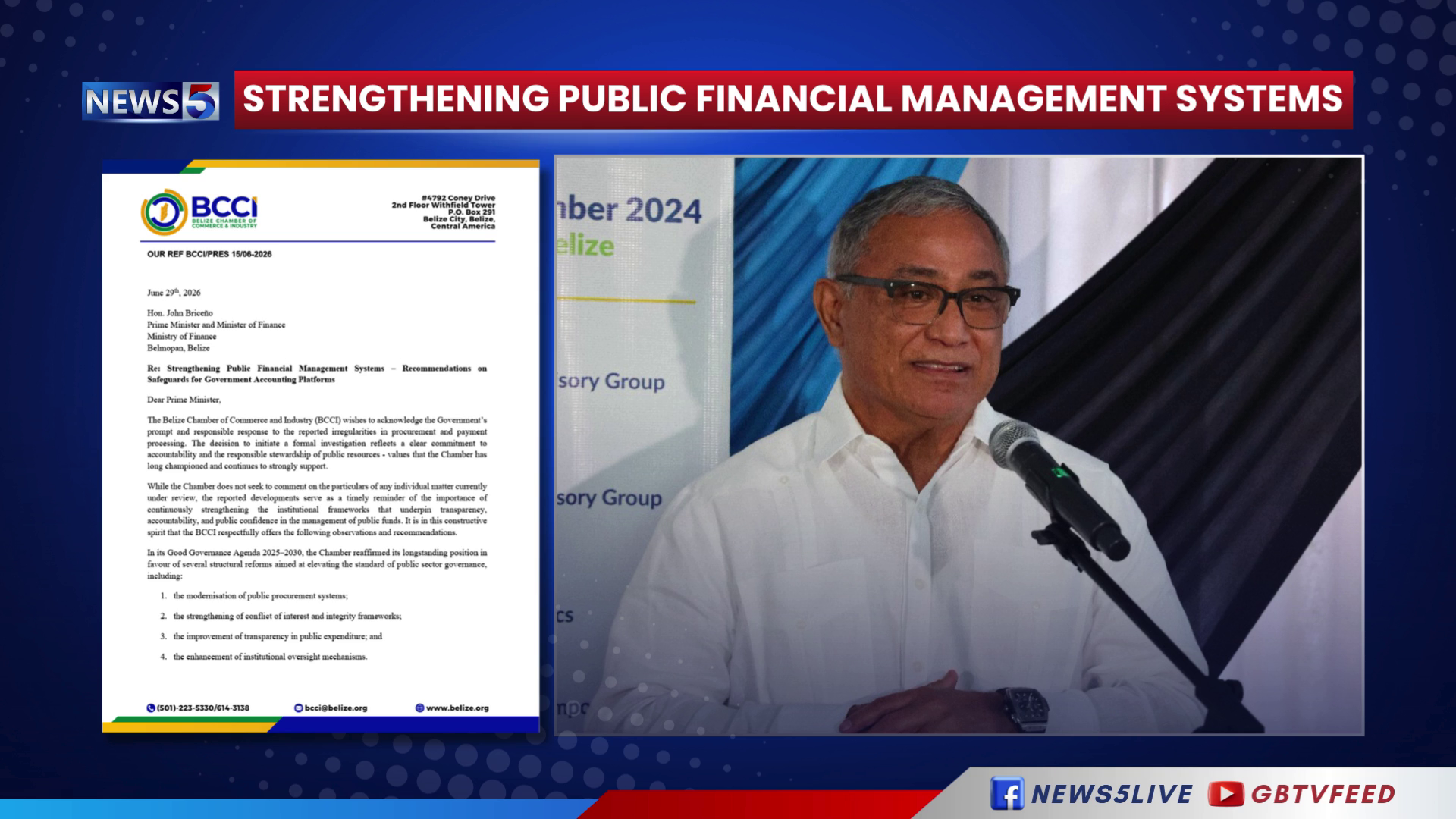
Chamber to PM: Fix the System, Not Just the Scandal
The ongoing Smart Stream procurement and payment irregularities scandal in Belize has sparked a widespread call for systemic public financial reform from the nation’s leading business advocacy group, the Belize Chamber of Commerce and Industry (B.C.C.I.). In an official letter addressed to Prime Minister John Briceño released on July 3, 2026, the chamber voiced its support for the government’s ongoing investigation into the scandal, but pushed back against the idea that resolving the controversy alone is enough to address longstanding risks to public funds.
The B.C.C.I. argues that Belize’s current reactive approach to public financial mismanagement – waiting for scandals to emerge before taking action – is unsustainable. Instead, the organization is calling for proactive safeguards to be embedded into public financial systems before any public funds are allocated or disbursed, to prevent misuse before it occurs.
A top priority for the chamber is an urgent upgrade to the country’s Smart Stream accounting platform, the digital system at the center of the current scandal. The B.C.C.I. has outlined a clear set of technical improvements, including built-in automatic fraud alert systems, duplicate payment detection tools, more rigorous invoice verification protocols, and stricter access controls that limit which public officials can approve and process payment transactions. The chamber notes that these upgrades would enable real-time flagging of suspicious activity, closing the regulatory and technical gaps that have allowed public money to be misappropriated in the past.
Beyond technical changes to the accounting platform, the B.C.C.I. is also advocating for broader governance reforms. These include strengthening external and internal audit processes, accelerating the public release of completed audit reports, and enforcing tangible consequences for public entities and officials that ignore audit reform recommendations. Crucially, the organization emphasizes that many of these changes do not need to be delayed until the current Smart Stream investigation concludes; work can begin immediately to strengthen public financial safeguards.
In its statement, the B.C.C.I. framed the reform push as a foundational step for stronger governance in Belize. Accountability for public funds should not be an afterthought addressed only after a scandal breaks, the group argues. Sustainable good governance relies on three core pillars: robust, secure financial systems, strong independent institutions, and a public sector culture where every taxpayer dollar is fully traceable from allocation to expenditure.
-

Landmark CCJ Decision Strengthens Belize’s Financial Services Rules
On July 3, 2026, the Caribbean Court of Justice (CCJ) delivered a historic precedent-setting judgment that clears the path for Belize to strengthen its financial services regulatory framework, resolving a high-stakes legal challenge that questioned the compatibility of the nation’s rules with CARICOM trade agreements.
The dispute originated when prominent Belizean businessman Anwar Barrow, alongside seven domestic companies, launched a legal challenge against requirements that mandate certain companies with cross-border links to use locally based registered agents to handle official documentation and filings. The claimants argued that the regulation placed unjustified additional costs and administrative burdens on firms whose shareholders or directors held ties to other CARICOM member states, claiming the rule violated the regional trade bloc’s competition and free movement provisions.
This case marked a milestone in CCJ history as the first ever referral matter to come before the regional court. In the ruling delivered by CCJ President Justice Winston Anderson, the court sided firmly with Belize’s Financial Services Commission (FSC) and the national Attorney General, rejecting the claimants’ challenge on interpretative grounds.
Justice Anderson clarified the scope of the Revised Treaty of Chaguaramas (RTC), the foundational agreement governing CARICOM. He explained that Article 177 of the treaty is explicitly designed to target anti-competitive business practices undertaken by private enterprises, not regulatory policies enacted by national governments. “The court held that Article 117 is concerned with the conduct of enterprises, not regulatory measures of the state,” Anderson stated in the court’s official reading of the judgment. “Applying this interpretation, the court concluded that the requirements imposed in the instant matter are regulatory matters enacted by the state and do not arise from the business conduct of an enterprise.” While the court acknowledged that state regulations that distort regional competition may be reviewed under other provisions of the RTC, Anderson noted that the current referral did not request interpretive guidance on those clauses, leaving the core original rule intact.
Legal teams for all parties brought senior regional counsel to the case: the FSC was represented by Senior Counsels Eamon Courtenay and Pricilla Banner, with Samantha Matute and Alea Gomez acting for the Attorney General’s office. The claimants were represented by Senior Counsel Godfrey Smith, alongside Hector Guerra and Edgar Lord.
This ruling carries substantial long-term implications for Belize’s financial services sector, one of the key pillars of the nation’s economy. By upholding the local registered agent requirement, the judgment reinforces Belize’s ability to enforce robust regulatory standards for international and foreign-linked firms operating within its jurisdiction, supporting efforts to maintain transparency and compliance in the country’s fast-growing financial services industry. This text is adapted from a transcript of an original televised evening news report.
-

National Tourism Day : A passionate appeal from Minister Stéphanie Smith
On July 3, 2026, Haiti’s Ministry of Tourism gathered a broad cross-section of stakeholders at Port-au-Prince’s Oasis Hotel to celebrate National Tourism Day, centered on the unifying theme “Heritage, Investment, and Territorial Recovery.” The high-level event brought together top government officials, private sector leaders, members of the diplomatic corps, international development partners, and representatives from across Haiti’s fractured tourism industry to chart a path forward for an sector that holds enormous untapped potential for the Caribbean nation.
Attendees included Prime Minister Alix Didier Fils-Aimé and six cabinet ministers spanning the tourism, diaspora, public works, trade, planning, and culture portfolios, reflecting the government’s framing of tourism as a whole-of-economy priority. The day’s discussions centered on positioning the sector as a core engine of inclusive economic growth, job creation, and post-crisis territorial recovery for Haiti.
In his keynote address to the assembly, Prime Minister Fils-Aimé underscored tourism’s unique cross-cutting strategic value to Haiti’s economy. He stressed that meaningful revitalization of the sector depends on close, sustained collaboration between public agencies, local municipal governments, domestic private businesses, and global partners. He reaffirmed the national government’s pledge to build a policy and security environment that encourages renewed investment, noting that a thriving tourism sector would deliver widespread benefits across all segments of the Haitian economy.
The Prime Minister also publicly recognized the remarkable resilience of Haiti’s private tourism sector, which has continued to allocate capital to new projects even amid ongoing economic and security challenges. Most recently, Haiti has seen progress on a private $20 million tourist complex development that signals growing confidence in the sector’s long-term prospects. Beyond economic commitments, Fils-Aimé reiterated the government’s core priorities: restoring widespread security across the country, advancing the national electoral process, and strengthening democratic state institutions. He closed his remarks by extending an invitation to international partners, friends of Haiti, and Haitians living in the diaspora to join the sector’s revival by rediscovering the nation’s unique cultural, historical, and natural treasures.
Tourism Minister Stéphanie Smith delivered a passionate, urgent appeal for global and local audiences to re-examine Haiti as a travel destination, highlighting the extraordinary diversity and richness of the country’s heritage that remains largely underpromoted. Smith outlined three clear strategic priorities guiding her ministry’s new policy agenda: elevating and preserving Haiti’s unique national heritage, rebuilding investor confidence to stimulate new capital inflows to the sector, and revitalizing regional tourism ecosystems across the country. The framework is rooted in an inclusive development model that centers local community participation and ensures regional communities capture shared benefits from tourism growth.
Smith called on all stakeholders – domestic citizens, the Haitian diaspora, the private sector, and international partners – to align efforts to rebuild Haiti into a competitive, welcoming, and sustainable travel destination for future generations. Echoing Smith’s call, Minister of Diaspora Kathia Verdier emphasized the outsized strategic role that Haitians living abroad can play in promoting Haiti as a credible tourist destination, reaffirming her ministry’s commitment to supporting sustainable, inclusive tourism development projects.
As part of the day’s celebrations, organizers presented public awards to three institutions that have made notable contributions to raising Haiti’s global profile in recent years: the Haitian Football Federation (FHF), the Haitian Tourism Association (ATH), and domestic carrier Sunrise Airways. By the close of the event, Smith reaffirmed her ministry’s commitment to partnering with every stakeholder group to roll out an ambitious national tourism policy that advances the core goals of heritage preservation, investment promotion, sustainable territorial development, and the repositioning of Haiti as a one-of-a-kind global travel destination.
-

BEL to Test New Rate System with PUC
Belize Electricity Limited (BEL), the country’s primary power utility, will move forward with a pilot trial of its proposed dynamic electricity pricing framework after the nation’s Public Utilities Commission (PUC) rejected its full request for automatic monthly rate adjustments. In a July 1 Initial Decision ruling on BEL’s 2026-2027 annual tariff review, the PUC confirmed that current residential and commercial electricity rates will remain frozen for the coming 12 months, a move that brings immediate stability to household energy costs across the country.
The decision comes as BEL faces mounting financial pressure driven by volatile imported power costs. In 2025, the utility recorded a net loss exceeding $23 million, with energy procurement costs eating up 76% of its total annual revenue. BEL Executive Chairman Lynn Young revealed that the company faced repeated supply threats last year from Mexico’s state power utility Comisión Federal de Electricidad (CFE), which at one point warned it would cut off cross-border power supplies over missed payments. To address both its own financial strain and protect consumers from sudden large rate hikes, BEL submitted two key requests to the PUC: to hold base tariffs steady for the coming year, and to approve the new Cost of Power Adjustment Tariff (COPA), a mechanism that would allow automatic monthly rate changes tied directly to fluctuating wholesale energy costs.
While regulators granted the first request to freeze base rates, they opted to test COPA through a tightly monitored regulatory sandbox rather than approve full implementation immediately. Under the proposed framework, BEL will calculate monthly adjustments based on a rolling six-month average of wholesale power costs, compared to the baseline cost already built into current tariffs. Any rate increase or decrease per kilowatt-hour will be capped at 1.5 cents, and no additional goods and services tax will be applied to adjustment charges. BEL executives emphasize that the system is designed to avoid the sharp, unpredictable rate hikes that occur when adjustments are delayed for a year or more, and that any reduction in wholesale costs will be passed directly to consumers.
“When there is a decrease in the cost of power, meaning that we pay our power suppliers less than what the PUC approves for the cost of power, that savings would then also be passed on to our customers,” explained BEL General Manager Dawn Sampson-Nunez. “So key thing there is making sure that increases in cost of power is passed on in a way that customers could manage the variations. There’s no sharp fluctuations.”
The pilot trial comes as Belize works to address long-term energy insecurity tied to its reliance on imported power. Two utility-scale solar projects are currently under development, set to add 95 megawatts of new clean generation capacity to the national grid. The country is also procuring two 40-megawatt energy storage systems to provide backup power during supply disruptions and emergency outages. In the short term, BEL is also in talks with independent power producers including BABCO and Belcogen Santander to expand domestic generation capacity and reduce dependence on imported energy.
Details of the sandbox trial’s scope are still being finalized between BEL and the PUC, but the utility will submit monthly performance reports to regulators for the first six months of the trial, with oversight to ensure consumer protections are maintained and the framework operates transparently.
-
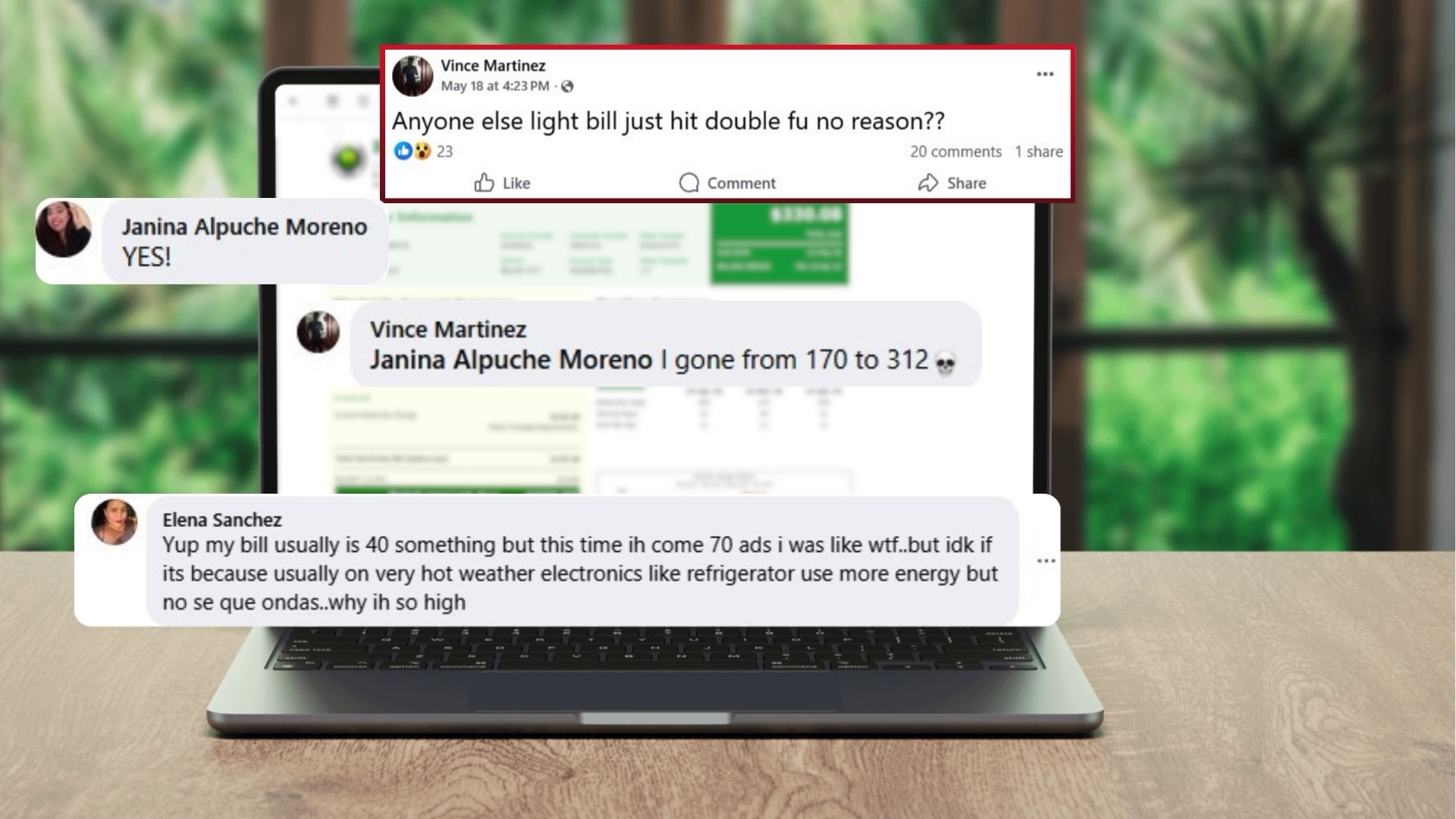
BEL Says Heat Is Driving Higher Light Bills
As summer 2026 settles over Belize, thousands of residential electricity customers have taken to social media and consumer forums to express outrage over unexpectedly steep utility bills, with many reporting charges that have doubled or even tripled compared to previous years. The spike has sparked widespread suspicion of faulty new smart meter infrastructure, but national utility provider Belize Electricity Limited (BEL) is pushing back against those claims, identifying record-breaking seasonal heat as the primary driver of increased costs.
In an interview addressing mounting consumer complaints, BEL Executive Chairman Lynn Young explained that prolonged higher temperatures force common household cooling and food storage appliances to operate far more intensively than during cooler periods. Refrigerators, ceiling fans, and air conditioning units all require additional electricity to maintain consistent performance when outdoor temperatures climb, driving up overall household energy consumption directly.
Young added that secondary factors often amplify the perceived jump in costs for many customers, most notably a GST pricing threshold that triggers full value-added tax on an entire bill once total usage crosses the 100-dollar mark. For example, a customer that typically pays 95 dollars pre-summer will see not just a 10-dollar increase from higher energy use when their consumption climbs to 105 dollars, but also a 12.5 percent GST applied to the full 105-dollar total, adding an extra charge that pushes the total bill even higher.
Additional variables can create misleading billing fluctuations as well, Young noted. When meter readers are unable to access a property’s meter due to locked gates, overgrown vegetation, or other barriers, BEL issues an estimated bill based on recent historical usage. If estimates are calculated during the cool months of February, March, or April, the gap between estimated use and actual high-consumption summer use will create a sharp jump when an actual meter reading is finally completed, resulting in a sticker shock for customers. Variations in billing period length, from the 28 days of February to 31-day May and extended cycles caused by scheduling delays, can also alter total monthly charges independent of changes in usage.
The rollout of new smart meters across Belize has drawn particular criticism from customers, who note that the sharp increase in bills coincided directly with the installation of the new metering technology. But Young rejected the claim that smart meters are overreporting consumption, noting that every customer complaint brought to BEL’s attention has been fully investigated, and no evidence of faulty or inaccurate meters has been found to date. Young even shared that his own personal household bill has risen between 60 and 70 percent this year, a change he attributes directly to increased air conditioning use during the hot weather. All smart meters deployed by BEL undergo rigorous accuracy testing before installation, Young confirmed, and the company has retained test documentation to verify their performance.
According to Young, this annual pattern of summer billing complaints is predictable: between 80 and 90 percent of all annual high bill inquiries are received during the hot summer months, driven almost entirely by increased energy demand for cooling. BEL anticipates that as temperatures drop in the second half of the year, average household energy use and corresponding monthly bills will decline correspondingly. The company encourages customers with ongoing concerns about their bills to contact BEL directly to schedule a meter inspection and review their individual usage patterns.
-

Court Asked to Settle BEL Severance Dispute
A long-running disagreement over unpaid severance pay for former staff at Belize Electricity Limited (BEL) is set to be resolved through the national court system, following a landmark regional ruling that has sent ripples through all pension-backed firms across Belize.
The dispute emerged after the Caribbean Court of Justice (CCJ) issued a defining ruling in a separate case involving Belize Telemedia Limited (BTL), which stated that severance pay must be provided in addition to pension benefits if a pension plan’s governing documents do not explicitly state that the plan already covers severance obligations. This judgment opened the door for former BEL employees to reactivate their claims for extra severance pay, with many staging public pickets to press their demands.
However, BEL leadership maintains that its pension plan is structured differently from BTL’s. In comments on the ongoing conflict, BEL Executive Chairman Lynn Young — himself a former employee of the firm — acknowledged the frustration of the claimants, many of whom are personal friends. He expressed sympathy for the financial hardships some former workers face, noting that the company would be willing to provide support if it were legally and financially responsible to do so.
Young emphasized that BEL’s pension plan was specifically founded using the company’s already-calculated severance obligations to former employees. According to Young, the company’s official pension deed explicitly states that the plan covers severance commitments, meaning paying additional severance on top of existing pension benefits would be financially reckless, not only for BEL but for the broader industry. The CCJ’s ruling, he argued, is specific to the BTL case, and the unique contractual terms of each company’s pension plan must be considered independently. The ruling also has potential implications for all major Belizean institutions with pension plans, including Social Security, the Central Bank of Belize, and Belize Water Services Limited, making clarity on the legal interpretation critical.
To resolve the ambiguity and confirm that its existing framework meets legal requirements, BEL has initiated court proceedings to seek formal clarification. Young confirmed that the company has completed drafting the required legal documentation, which will be formally filed with the court in the near future. The court’s final ruling will not only settle the dispute for BEL but will also set a binding precedent for how severance and pension obligations are interpreted across the country’s private and public sector pension plans.
-

Severance Paid to Over 75 Percent of Former BTL Workers
Nearly two years after restructuring shook up Belize’s telecommunications sector, a long-running labor dispute over severance pay for former employees of national telecom incumbent Belize Telecommunications Limited (BTL) has moved toward resolution, with Digi — the company that acquired BTL’s core operations — confirming that more than three-quarters of affected workers have already received their owed compensation.
For months, the Belize Communication Workers for Justice (BCWJ), the union representing former BTL staff, organized public protests and held firm negotiations to secure the severance payments that workers claimed were wrongfully withheld after the company’s ownership transition. Meanwhile, a parallel dispute over severance for former employees of Belize Electricity Limited (BEL) remains unresolved, with those workers continuing public demonstrations to demand their own owed payments.
In a recent media briefing, Digi Chief Executive Officer Ivan Tesucum explained that the company has taken a low-key approach to resolving severance claims, processing payments on a rolling basis for any former worker who visits the company’s office to finalize their claim. Unlike the high-profile standoff that dominated headlines earlier in the year, tensions around the severance issue have cooled significantly in recent weeks, Tesucum said.
This de-escalation has allowed Digi to redirect its organizational focus back to its core long-term priorities: expanding service access, driving sustainable growth, and leading Belize’s ongoing digital transformation, he added. “My focus is ensuring that Digi continues to grow, that we continue with our mandate to ensure that we transform our country and continue to lead in digital transformation,” Tesucum told reporters.
When asked to confirm how many former workers had already collected and accepted their severance packages, Tesucum confirmed that the share of completed claims is currently above 75%. “And so the checks are ready. It’s a matter of them coming to collect it really. And so that, that’s where we’re at,” he said.
This report is adapted from a transcript of a broadcast evening newscast, with original commentary preserved in context.