分类: business

  • Nieuwe vliegverbinding tussen Guyana en Suriname van start

    Nieuwe vliegverbinding tussen Guyana en Suriname van start

    Starting May 1, cross-border travelers and business operators between Suriname and Guyana have gained a new efficient travel option, following the launch of a direct scheduled charter air connection between the two capital cities Paramaribo and Georgetown by regional aviation service provider MidasSur Aviation Charter Service.

    Operating in partnership with Georgetown-based Jags Aviation, the new service runs three round-trip charter flights per week, scheduled every Monday, Wednesday, and Friday. Per the route layout, outbound flights depart from Guyana’s Eugene F. Correia International Airport (OGL) and arrive directly at Eduard Alexander Gummels Airport (EAX), conveniently located closer to central Paramaribo than the country’s larger international airport.

    Project organizers note that the direct connection fills a gap in fast regional travel, especially for business owners and leisure travelers who want quick access to downtown Paramaribo. By cutting out layovers and eliminating the longer overland trip from larger, more distant international airports, the new route substantially reduces total travel time for passengers. Early departure times are also tailored to align with the growing demand for seamless, practical travel between the neighboring South American nations.

    Headquartered on Cadmiumstraat in Paramaribo, MidasSur maintains two sales outlets: one on Goudenregenstraat in Zorg en Hoop, Suriname, and a second branch on Jackson Street in Guyana. Jags Aviation, MidasSur’s cooperation partner, is a subsidiary of the BK Group of Companies, led by Executive Chairman Officer Brian Tiwarie, with its base of operations in Georgetown.

  • Olieprijzen dalen licht na nieuw Iraans voorstel voor onderhandeling

    Olieprijzen dalen licht na nieuw Iraans voorstel voor onderhandeling

    Global crude oil prices edged lower on Friday, after Iran submitted a new proposal for diplomatic talks with the United States via Pakistani mediators, but market benchmarks remained on track to lock in strong weekly gains as geopolitical tensions in the strategically critical Strait of Hormuz keep supply risks elevated.

    Brent crude futures for July delivery fell 26 cents, or 0.2%, to settle at $110.14 per barrel on Friday. U.S. West Texas Intermediate (WTI) crude futures for the same contract period dropped a sharper 1.7%, or $1.83, to reach $103.24 per barrel. Even with this weekly pullback, Brent is set to notch a 4.2% gain across the full trading week, while WTI is on pace for an even larger 9.2% weekly increase. On Thursday, Brent’s June contract hit an intraday peak of $126.41 per barrel, the highest price recorded since March 2022, before pulling back from the multi-year high.

    The new negotiation proposal, confirmed by Iran’s state-run news agency IRNA, was delivered to Pakistani intermediaries on Thursday in an effort to restart stalled diplomatic talks between Tehran and Washington. The breakthrough in diplomatic outreach triggered a small pullback in crude prices, as investors bet reduced geopolitical risk could ease supply disruptions. However, broader market uncertainty has kept prices supported, with the situation in the Strait of Hormuz remaining extremely volatile.

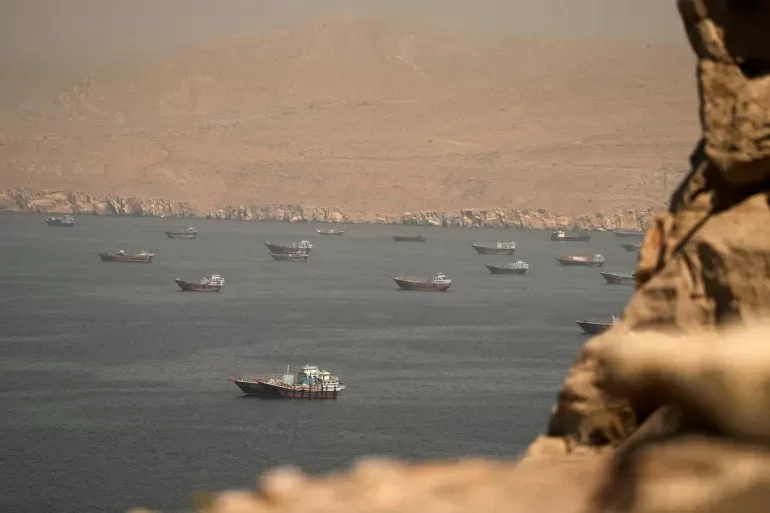
    Tensions in the key waterway began escalating after joint U.S.-Israeli strikes on Iran in late February, which prompted Iran to restrict passage through the strait and led the U.S. Navy to block Iranian oil exports. Around 20% of the world’s daily oil and liquefied natural gas supplies pass through the strait, making any disruption a major shock to global energy markets. While a ceasefire has been in place since April 8, the security situation remains precarious, with neither side backing down from their positions.

    Senior regional officials have amplified concerns over the stalemate this week. A top United Arab Emirates official publicly stated deep distrust of Iran on Friday, warning that Tehran cannot be trusted to uphold unilateral agreements around free passage through the strait, reflecting widespread mutual suspicion across regional and global powers. Just a day earlier, a senior commander with Iran’s Islamic Revolutionary Guard Corps threatened “long and painful strikes” against U.S. military positions in the region if Washington resumes offensive attacks on Iran, a comment that sent prices spiking higher during Thursday’s trading session before the later pullback.

    Adding to market volatility, an unnamed U.S. official confirmed that President Donald Trump received a briefing on Thursday outlining plans for potential new military operations against Iran. The proposed actions are intended to increase pressure on Tehran to speed up diplomatic negotiations and bring the ongoing conflict to a close, according to the official.

    Ole Hansen, a senior market analyst at Danish investment bank Saxo Bank, noted that the sharp swing in prices on Thursday highlights the extreme volatility roiling global energy markets right now. “Thursday’s sharp reversal shows a market that is cautiously climbing higher, but can pull back quickly whenever any hint of positive diplomatic news emerges,” Hansen explained. “This has created exceptionally challenging trading conditions for market participants.”

  • YEA calls for expansion in technical assistance to strengthen MSME recovery and economic resilience

    YEA calls for expansion in technical assistance to strengthen MSME recovery and economic resilience

    KINGSTON, Jamaica — As micro, small, and medium-sized enterprises (MSMEs) across Jamaica continue to grapple with overlapping economic and climate shocks, the head of the country’s Young Entrepreneurs Association (YEA) is pushing for targeted, accelerated expansion of technical support for these businesses, framing the move as the missing critical piece of the government’s broader national economic recovery and expansion agenda.

    Cordell Williams, president of the YEA, laid out the organization’s position in a recent public statement, noting that while Jamaica has already established a solid foundational framework to support business recovery following the devastation of Hurricane Melissa, the nation must go further to close readiness gaps that leave many MSMEs locked out of existing opportunities.

    Right now, businesses across the island are still picking up operations after Hurricane Melissa, all while absorbing spiking operational costs tied to the ongoing global oil crisis and facing growing frequency of climate-related disruptions that threaten stability. Williams explained that the Jamaican government has already done critical work to lay the groundwork for MSME growth, rolling out financing options, post-disaster recovery grants, and targeted opportunity creation programs for small businesses. But technical assistance, she argues, is the necessary layer that turns these foundational investments into tangible, widespread gains.

    The YEA publicly recognized the government’s ongoing commitment to MSME recovery and expansion. Current initiatives include post-disaster recovery financing and direct grant support, as well as expanded access to low-interest capital through state-backed institutions like the Development Bank of Jamaica and the EXIM Bank of Jamaica. Williams described these existing programs as both impactful and essential, saying they clearly demonstrate the government’s dedication to helping MSMEs move from recovery to long-term growth.

    Even with these achievements, however, Williams highlighted a persistent gap: while access to opportunities such as financing, public procurement contracts, and international export markets is expanding, a large share of MSMEs still lack the capacity to fully participate in these spaces.

    “Too often, we set a table of opportunity for small businesses, but too many are unable to take a seat and benefit,” Williams explained. “This is not a failure of willingness from business owners—it is a failure of readiness, rooted in unaddressed gaps in capacity and support.”

    Common barriers that MSMEs face, she noted, include the prohibitive cost of developing formal business plans, compiling required financial documentation, and preparing audited financial statements—all requirements to access existing government support and financing options. Many small business operators simply do not have the upfront capital to cover these costs, leaving them locked out even when support is officially available.

    Williams stressed that technical assistance should not be viewed as an optional add-on to government policy. Instead, it should be framed as a core strategic enabler, as well as a critical tool for both risk management and change management in today’s unstable economic and climate environment.

    “Technical assistance is far more than a peripheral support mechanism—it is the backbone that makes all other MSME policies work,” she said.

    Looking back at past outcomes, Williams noted that targeted technical assistance has repeatedly delivered measurable results: it has boosted MSME readiness to access loans and financing, encouraged small business formalization by helping owners complete registration requirements to participate in public programs, and even supported the growth of Jamaica’s local business services sector.

    Against the backdrop of repeated global economic shocks and growing climate disruptions, Williams argued that the role of technical assistance is even more critical today than in years past.

    Most MSMEs operate with very limited internal capacity and stretched teams, she explained. Owners do not have the spare time or in-house expertise to tackle the work of upgrading operations, meeting compliance requirements, or restructuring for resilience on their own. Technical assistance fills this gap by giving small businesses access to external specialized expertise, allowing them to outsource critical functions, meet program requirements, and keep moving forward with growth.

    Building on hard lessons learned through the COVID-19 pandemic, Williams emphasized that intentional investment in MSME resilience is now a national priority. As part of broader national goals for economic resilience and long-term sustainability, MSMEs need support to crisis-proof their operations. This includes help to re-evaluate outdated business models, diversify revenue streams and target new markets, adopt digital tools to streamline processes, and strengthen overall financial management practices—all changes that technical assistance can help facilitate.

  • ‘Bookless bookstore’: audio-only book shop opens in New York

    ‘Bookless bookstore’: audio-only book shop opens in New York

    In a bold reimagining of what a bookstore can be in the digital age, audiobook industry leader Audible has opened what it claims is the world’s first “bookless bookstore” in New York City’s Manhattan Lower East Side, launching a one-month pop-up experience as audiobooks continue their explosive growth across the United States.\n\nUnlike traditional brick-and-mortar bookshops, this space—branded the Audible Story House—features no printed page stacks, no dog-eared paperbacks, and no quiet rustle of turning pages. Instead, the Amazon-owned subsidiary has transformed the venue into a physical hub dedicated exclusively to the immersive world of audio storytelling. During a pre-opening press preview this Thursday, Audible CEO Bob Carrigan described the concept as an unconventional, slightly wild project that demanded significant creative vision to bring to fruition.\n\n“Our goal with this month-long pop-up is to translate the audiobook experience into a tangible, social environment where visitors can browse content and connect with fellow storytelling fans,” Carrigan explained of the venture.\n\nThe timing of the launch aligns with staggering industry growth tracked by the Audio Publishers Association (APA), which reported that total U.S. audiobook sales hit $2.22 billion in 2024—nearly double the total recorded just five years earlier. This steep upward trend reflects a broader consumer shift toward on-the-go, immersive digital content that has cemented audiobooks as a major player in the publishing market.\n\nInside the Story House, shelves are stocked not with bound books, but with “story tiles” — compact audiobook-enabled tablets that visitors can insert into dedicated players to listen to short content excerpts through headphones. Once a listener finds a title they enjoy, they can access the full work directly through the Audible mobile app. As the dominant platform in the global audiobook space, Audible operates a flexible business model that includes paid monthly subscriptions, individual title purchases, and complimentary access to select works for all Amazon account holders.\n\nThe venue also includes unique features designed for different listening preferences: a dedicated speaker-equipped room for group, headphone-free listening sessions, and a custom “Listening Bar” staffed by trained “Story Tenders.” Per Audible’s official press materials, these guides work one-on-one with visitors to curate audiobook recommendations that match each guest’s personal tastes and interests.\n\nBeyond showcasing audiobooks as a medium, the project also taps into the growing consumer demand for in-person offline experiences and community building in an increasingly digital world. “Audible Story House draws on the warm nostalgia and communal spirit of traditional book culture, while updating that experience entirely for today’s audio-first era,” the company statement noted.\n

  • Jamaica’s spend on imports far outpaces export earnings in 2025, says STATIN

    Jamaica’s spend on imports far outpaces export earnings in 2025, says STATIN

    KINGSTON, Jamaica — Fresh trade data published by Jamaica’s official statistics agency has painted a stark picture of the country’s widening merchandise trade imbalance for the full calendar year 2025, revealing export earnings that fell far short of the value of goods brought into the country.

    Released Friday by the Statistical Institute of Jamaica, widely known as STATIN, the agency’s latest International Merchandise Trade briefing laid out the full scope of the 2025 trade position: Jamaica’s total import spending reached US$7.52 billion, while total export revenue hit just US$1.65 billion — a gap that leaves the island nation with one of its most lopsided trade balances in recent years.

    When broken down, the data shows that for every dollar Jamaica spent importing goods in 2025, just 22 cents was generated through export sales. That marks a noticeable drop from 2024, when the ratio stood at 26 cents of export earnings for every dollar of imports, also called the export-to-import coverage ratio.

    A closer look at year-over-year changes shows the imbalance is growing: total 2025 exports fell 13.4% compared to the US$1.91 billion recorded in 2024. STATIN attributes most of this decline to a steep 20.4% drop in the export value of crude materials excluding energy products.

    On the import side, meanwhile, the total value of goods brought into Jamaica rose 3.2% year-over-year, climbing from US$7.29 billion in 2024 to the 2025 total. According to STATIN’s analysis, this uptick was driven by higher incoming shipments of two key categories: raw materials and intermediate goods, which rose 10.5%, and consumer goods, which saw a 6.2% annual increase.

    The report also outlined Jamaica’s top trade relationships for 2025. The United States, China, Brazil, Japan, and Trinidad & Tobago remained the island’s five largest sources of imported goods. Combined, Jamaica spent US$4.68 billion on imports from these five markets in 2025, a 5% increase from the US$4.45 billion spent on imports from the same group in 2024.

    For exports, the top five destination markets in 2025 were the United States, the Russian Federation, Iceland, Canada, and the Netherlands. However, total export revenue from these key markets dropped sharply by 20% year-over-year, falling to US$1.43 billion in 2025.

  • US airlines step up as Spirit winds down

    US airlines step up as Spirit winds down

    On an early Saturday morning in Washington D.C., budget carrier Spirit Airlines—famous for its signature bright yellow aircraft—announced an immediate end to all global operations, ending last-ditch negotiations with creditors and the White House that failed to secure a financial lifeline for the struggling airline.

    The sudden collapse came on the heels of a dramatic spike in jet fuel prices triggered by regional tensions in the Middle East. In a formal statement, Spirit confirmed all flights were canceled effective immediately, that customer service operations would cease, and that the company had begun the process of winding down its entire business. The low-cost carrier emphasized that it would honor its commitment to issuing refunds to passengers with unused tickets.

    Founded in 1992 as one of the first budget airlines in the United States, Spirit had carried 28 million domestic and international passengers between February 2025 and January 2026, according to federal transportation data. But the company had teetered on the edge of insolvency for years, entering bankruptcy protection first in November 2024 and again in August 2025. As recently as late February, leadership announced a tentative debt restructuring agreement that raised hopes it would exit bankruptcy by early summer.

    Those hopes quickly unraveled just days later, when military conflict between the U.S.-Israel coalition and Iran led to the closure of the Strait of Hormuz, a critical global chokepoint for oil shipments. The disruption sent jet fuel prices skyrocketing, worsening Spirit’s already precarious financial position. Last-minute talks between company representatives, major creditors, and the Trump administration broke down in the overnight hours before the shutdown announcement, after creditors rejected the terms of a proposed government-backed bailout that would have given the White House an ownership stake in the reorganized company.

    In the wake of the shutdown announcement, major U.S. air carriers including American Airlines, Delta Air Lines, United Airlines, and JetBlue Airways moved quickly to launch emergency assistance for thousands of passengers who woke Saturday to find their booked Spirit flights had been canceled. The competing carriers introduced deeply discounted “rescue fares” for stranded travelers, and announced plans to add extra flights or swap in larger aircraft on routes where Spirit held a large market share.

    Beyond supporting stranded passengers, major airlines also moved quickly to offer employment to Spirit’s roughly 7,500 workers, who were left jobless by the sudden shutdown. Union leaders representing Spirit pilots and ground staff harshly criticized the collapse of the rescue deal, noting that the brunt of the fallout would fall on frontline workers and their local communities, not corporate boardrooms.

    “ The pain of this decision will not be felt in boardrooms. It will be felt by pilots, flight attendants, mechanics, dispatchers, and ground crews, and by the families and communities that depend on them,” the Air Line Pilots Association said in a statement responding to the shutdown.

    U.S. Transportation Secretary Sean Duffy defended the Trump administration’s handling of the crisis during a Saturday press conference at Newark Liberty International Airport, insisting that President Trump had pushed aggressively to find a path to keep Spirit operating. Duffy pinned ultimate responsibility for the collapse on creditors, who refused to accept the administration’s bailout terms, and added that the federal government did not have unallocated funds available for a half-billion dollar industry bailout. He also blamed the prior Biden administration for blocking a proposed merger between Spirit and JetBlue in March 2024, a move Duffy said left Spirit weakened and unable to absorb subsequent market shocks.

    For many passengers, the shutdown has already upended long-planned travel. Sixty-year-old Florida resident Ramon, who had been scheduled to fly to Honduras this week to visit family, told AFP he and his son saw early reports of Spirit’s financial trouble but declined an earlier refund offer because replacement tickets on other carriers cost $1,000 per passenger, far more than they could afford. The pair now plans to wait for their Spirit refund before rebooking travel for early June.

    Industry analysts say Spirit’s shutdown will have long-lasting impacts on U.S. air travel. Bradley Akubuiro, a crisis management expert at Bully Pulpit International, noted that while the sudden spike in fuel prices was the immediate trigger for Spirit’s collapse, the carrier had been in a fragile financial position for years. More importantly, Akubuiro said, the loss of Spirit removes one of the most powerful sources of downward pressure on airfares across the U.S. market, a shift that could lead to higher average ticket prices for all travelers in coming months.

  • Jags Aviation expands to Suriname, eyes Brazil

    Jags Aviation expands to Suriname, eyes Brazil

    On May 1, 2026, Guyana-based domestic carrier Jags Aviation marked a major milestone in its regional expansion strategy, launching scheduled charter services between Guyana and Suriname while advancing plans to connect to northern Brazil through high-level diplomatic discussions.

    Operated under Jags Aviation’s MidasSur Aviation Charter Service brand, the new cross-border route will run three weekly flights between Eugene F. Correia International Airport (OGL) outside Georgetown, Guyana’s capital, and Eduard Alexander Gummels Airport (EAX) in Paramaribo, Suriname’s capital. Flights are scheduled for every Monday, Wednesday, and Friday. A key advantage highlighted by MidasSur is that EAX’s central location puts travelers within closer reach of Paramaribo’s city center compared to alternative airports, cutting post-arrival travel time for both business and leisure passengers.

    The expansion push does not stop at Suriname. Just three days before the Suriname route launched, a senior delegation from BK Group — the parent conglomerate of Jags Aviation, led by Executive Chairman Brian Tiwarie — held a strategic meeting with Brazil’s Ambassador to Guyana Maria Cristina de Castro Martins, along with the embassy’s Minister Counsellor and Commercial Attache. The meeting was coordinated by the World Trade Centre Georgetown (WTCG), with WTCG Executive Director Wesley Kirton also in attendance. The delegation included senior BK Group representatives Miguel Benjamin, Andre Budhan, Reagan Richards, and Roberto Pele.

    During the courtesy and strategy call, the two sides outlined a series of planned collaborative business projects between Brazil’s private sector and BK Group. At the top of the agenda was Jags Aviation’s proposal to launch the first direct air connection between the two countries, with an initial route linking Guyana to Boa Vista, the capital of Brazil’s northern Roraima state. Brazilian embassy officials expressed a welcoming stance toward the initiative and committed to coordinating with relevant Brazilian government agencies to move the approval and launch process forward.

    Following the talks, Tiwarie extended an open invitation to the Brazilian embassy delegation to tour Jags Aviation’s operational hub at Eugene F. Correia International Airport in Ogle. In a reciprocal gesture, Ambassador Martins offered to facilitate an industry visit for BK Group representatives to Embraer, Brazil’s world-renowned commercial and military aircraft manufacturing giant, opening the door to potential future equipment partnerships for the growing airline.

    The dual moves mark a significant step forward for regional air connectivity in the Guiana Shield, a fast-growing economic zone that has seen a surge in cross-border trade and investment in recent years, particularly following Guyana’s massive oil discoveries that have drawn increased regional and global business activity.

  • Layou woman with vast experience in business, law heads Invest SVG

    Layou woman with vast experience in business, law heads Invest SVG

    St. Vincent and the Grenadines’ national investment promotion body Invest SVG has announced a landmark leadership transition, naming homegrown global finance expert Anna C. Young as its eighth executive director. Young’s appointment marks the start of a transformative new chapter for the agency, expanding its core mission far beyond traditional foreign direct investment outreach to incorporate three key new priorities: boosting local export and trade growth, unlocking capital from the country’s global diaspora, and strengthening the nation’s profile as a top-tier destination for international financial services investment.

    A native of Layou, St. Vincent and the Grenadines, Young’s professional roots stretch back to local media and public service early in her career. She got her start in the workforce as a news reporter at NBC Radio, collaborating with some of the nation’s most prominent media figures, including industry veterans Chester Connell, Nichole Hadaway, and the late Glen Jackson and Nina Maloney. From 1992 to 1995, she also served as an information cadet at the Government Information Service, the public communications body now reorganized as the Agency for Public Information.

    To build specialized expertise for her career, Young migrated to the United States to pursue advanced higher education, going on to accumulate an impressive academic and professional profile across multiple continents. She holds a Bachelor of Science in finance from Alabama A&M University in the U.S., and a Master of Science in project analysis, finance and investments from the University of York in the United Kingdom. She later completed legal studies at UWE Bristol Law School, and was admitted to the Bar of England and Wales by one of the UK’s most prestigious professional Inns of Court, Gray’s Inn. Young also holds accreditation as a civil and commercial mediator from the leading global alternative dispute resolution body ADR Group.

    Over more than 20 years working internationally, Young has built a distinguished track record in finance and corporate strategy across top global financial institutions. She held a key leadership role as Assistant Vice President of Finance at Bank of America Merrill Lynch, where she worked with a specialized team focused on addressing and reducing regulatory risks stemming from federal policy mandates. Prior to that, she held multiple progressive roles at American Express, including Senior Investment Manager, Pricing and Marketing Capabilities Manager, and Senior Financial Analyst, leading cross-functional revenue growth projects and supporting C-suite strategic decision-making. Early in her global career, she worked as an investment analyst at Lehman Brothers, supporting senior banking teams with core financial analysis and due diligence.

    A graduate of St. Vincent Girls’ High School, Young says her connection to her home country has remained central to her professional and personal identity throughout her years abroad. “I am proud to be a Vincentian,” she shared in comments following her appointment. “My passion for excellence blossomed at an early age, being a product of the St. Vincent Girls’ High School before pursuing other endeavours in my education and career.”

    Reflecting on her return to take up the new role, she added: “after living abroad for so many years and gaining most of my professional experience overseas, nothing brings me greater joy than returning home to share my knowledge with my Vincentian people. There is so much potential for growth, and with the amazing team at Invest SVG, we are uniquely poised for greatness. I am humbled to serve my country.”

    Young succeeds Glen Beache, a former tourism minister whose tenure with the agency concluded in December 2024.

  • Petrobras stopt olie-export naar VS in eerste kwartaal

    Petrobras stopt olie-export naar VS in eerste kwartaal

    A dramatic shift in global crude oil trade flows has taken shape in the first three months of 2026, as Brazil’s state-owned energy giant Petrobras has completely halted all crude oil and product exports to the United States. This sudden disruption is a direct consequence of the sweeping market changes sparked by the ongoing conflict in Iran, which has upended traditional supply chains and shifted demand patterns across the globe.

    The most notable realignment of trade routes has left China as Petrobras’ overwhelmingly dominant export market. During the first quarter of 2026, China absorbed roughly 62% of all crude oil exported by the Brazilian energy major, cementing its position as the company’s core trading partner. This marks a sharp jump from the first quarter of 2025, when China accounted for just 33% of Petrobras’ total exports. A key driver behind this surge in purchases was the prolonged closure of the Strait of Hormuz, a critical global chokepain for oil shipments that connects the Persian Gulf to international markets. In March alone, Chinese buyers snapped up record volumes of Brazilian crude to offset lost supply from Middle Eastern exporters.

    India has stepped into the role of Petrobras’ second-largest customer, taking roughly 15% of the company’s total exports in the first quarter, up marginally from 14% in the same period a year earlier. Petrobras has publicly framed India as a “strategic market”, highlighting the South Asian nation’s status as the world’s second-largest importer of seaborne crude oil, a key position that creates long-term growth opportunities for Brazilian exports.

    This dramatic expansion of exports to China and India has come at the expense of other key regional markets. The rest of Asia saw its share of Petrobras exports plummet from 28% in Q1 2025 to just 8% in the first three months of this year. Alongside the full halt to US exports – which previously held a 3% share of Petrobras shipments – exports to Europe also fell sharply, dropping from 19% a year earlier to just 8% in the most recent quarter.

    Against this shifting trade landscape, Petrobras has ramped up domestic production significantly. The company’s total domestic oil output climbed roughly 16% year-over-year to hit 2.58 million barrels per day in Q1 2026. Total combined sales of oil, natural gas, and refined products also rose around 12% from a year earlier, reaching 3.22 million barrels per day over the period.

    Global oil markets have remained highly volatile in recent weeks, driven entirely by growing supply uncertainty stemming from the US-Iran conflict. At the opening of trading on Thursday, US West Texas Intermediate (WTI) crude climbed 41 cents, or 0.43%, to hit $105.50 per barrel, after hitting an intraday peak of $110.93 earlier in the session – the highest price recorded since April 7. By market close, however, WTI had pulled back to settle at $105.07 per barrel, a drop of $1.81, or 1.69%, from the previous session.

    Despite the day’s volatile price swings, both WTI and global benchmark Brent crude are on track to notch their fourth consecutive monthly gain. This sustained upward trend reflects widespread market concern that the ongoing conflict in Iran could disrupt global oil supplies for an extended period, keeping upward pressure on prices through the coming months.

  • Grenada advances Canadian tourism market strategy through high-impact Toronto mission

    Grenada advances Canadian tourism market strategy through high-impact Toronto mission

    The Grenada Tourism Authority (GTA) has successfully wrapped up a week-long strategic market development mission in Toronto, Canada, marking a major step forward in expanding the Caribbean destination’s footprint in one of its most valuable international source markets. The trip centered on coordinated engagement with travel industry stakeholders, media outlets and airline partners, designed to drive long-term visitor growth and strengthen Grenada’s reputation as a premium leisure getawasy.

    Led by GTA CEO Stacey Liburd, the delegation included Sekou Stroude, GTA’s Director of Sales for Canada, and Marketing Executive Melinda Telesford. The core priorities of the mission were deepening existing strategic industry partnerships, unlocking new opportunities for expanded air connectivity, and solidifying Grenada’s standing in Canada’s fast-growing luxury and experiential travel segments.

    One of the most significant outcomes of the mission was productive strategic talks with Canadian carrier WestJet. The two sides explored extending the airline’s existing seasonal direct service to Grenada, currently running from December to April, to an expanded November-to-May schedule. A longer operating window would drastically improve travel accessibility for Canadian visitors looking to plan trips outside the traditional winter peak. Discussions with WestJet Vacations also made progress on expanding the range of pre-packaged Grenada travel offerings, which will boost the destination’s visibility and increase booking conversion rates across the Canadian market.

    Liburd noted that the Toronto mission was part of GTA’s deliberate, targeted strategy to reinforce Grenada’s market position in Canada. “Through strategic airline discussions, trade engagement and media outreach, we are expanding awareness while creating clear pathways for increased visitation and sustained growth,” she said during the trip.

    The GTA delegation also took part in Virtuoso On Tour Toronto 2026, an industry event connecting luxury travel suppliers with top global advisors, an opportunity that further elevated Grenada’s luxury travel profile. During the event, the delegation held one-on-one consultations with more than 80 elite travel advisors, gaining direct access to professionals who cater to high-value international travelers. GTA also sponsored an industry dinner for event attendees, which included a detailed destination presentation by Liburd, immersive curated experiences highlighting Grenada’s unique culture and natural attractions, and a prize giveaway sponsored by three of Grenada’s top luxury resorts: Calabash Grenada, Six Senses La Sagesse and Silversands Grenada.

    To expand consumer awareness, the GTA carried out a targeted media outreach program that connected the delegation with 20 leading Canadian travel journalists and social media influencers. The engagement already yielded immediate coverage, including a feature in major Canadian travel industry publication Travelweek, with additional national consumer coverage expected in coming months. Liburd also made a live appearance on CHCH Morning Live, a popular Ontario morning television show, extending Grenada’s reach to millions of general consumer viewers across the province.

    Stroude emphasized that the wide-ranging engagements across trade, media and airline partners confirm that underlying demand for Grenada travel in the Canadian market remains strong. “The relationships strengthened during this mission position us to drive both immediate bookings and long-term market growth, particularly within the luxury and experience-driven segments,” he explained.

    In addition to industry and media events, the mission included an exclusive dinner for top travel advisors from leading Canadian agencies such as Flight Centre, U Travel and Maritime Travel. The delegation also held strategic partnership talks with Sandals Resorts to coordinate upcoming joint marketing and promotional activities across Canada.

    GTA’s work with its in-market representation partner VOX International also allowed the delegation to review performance of ongoing promotional campaigns, confirming that current initiatives have already delivered strong engagement and conversion metrics, laying a solid foundation for future growth.

    The mission concluded with a diplomatic engagement at the Grenada Consulate in Toronto, an event that aligned GTA’s tourism promotion goals with the country’s foreign service objectives as Grenada continues to expand its global profile and attract more international visitors.