分类: business

  • New Invest SVG head urges BVI diaspora to ‘build with us’

    New Invest SVG head urges BVI diaspora to ‘build with us’

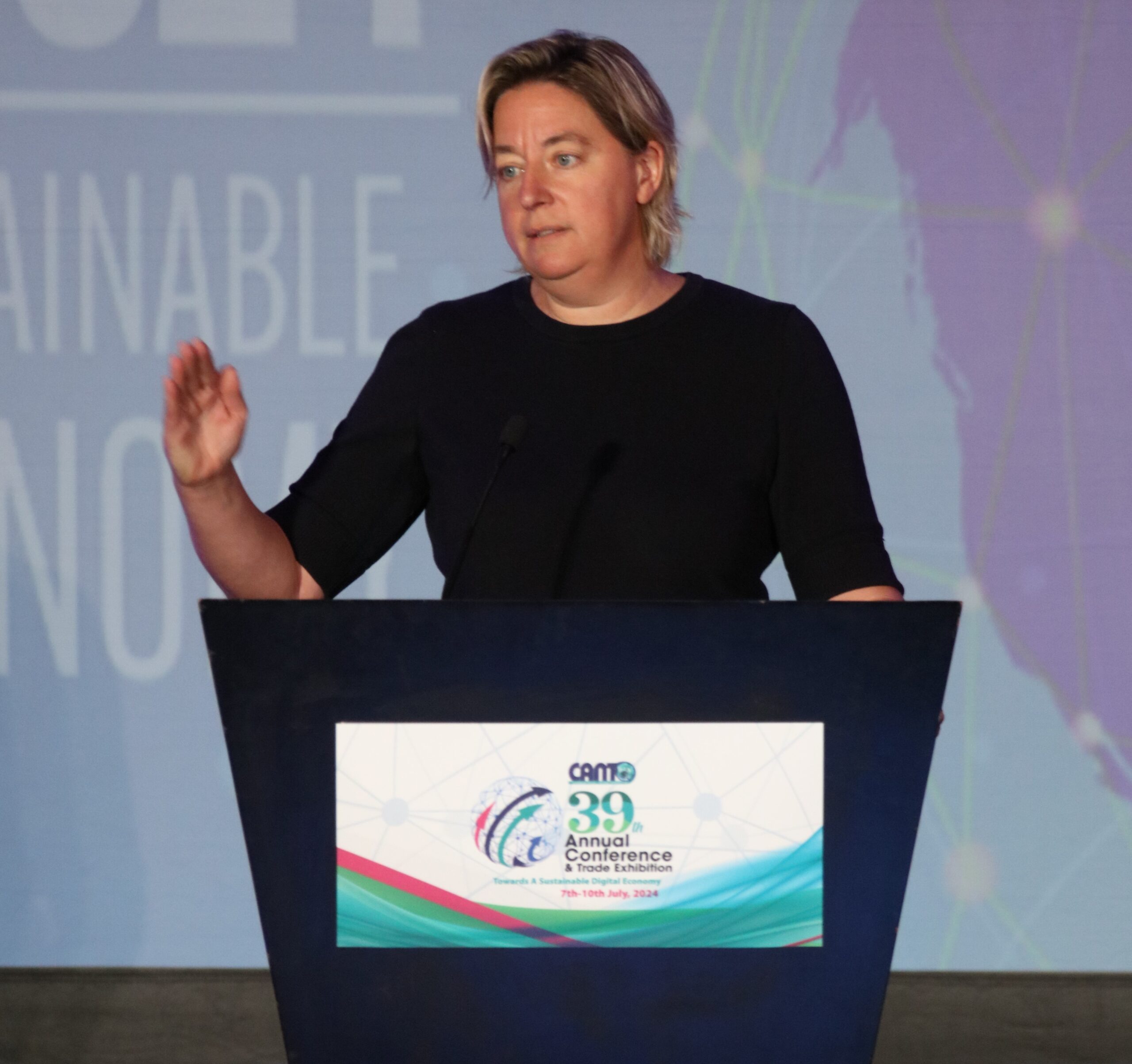
    Fresh off her appointment and 36 years living outside St. Vincent and the Grenadines (SVG), Anna Young, the newly sworn-in Executive Director of Invest SVG, has delivered a landmark call to unity and collective action to the large Vincentian diaspora community in the British Virgin Islands (BVI), urging an end to outdated divisions between domestic and overseas nationals and positioning diaspora contribution as a core strategic pillar of the country’s economic transformation.

    Young, who officially began her role just one day after returning to SVG, used her first major public address as agency head to frame her own homecoming as living proof that diaspora members can successfully reintegrate and contribute meaningfully to national development — a need the country says is increasingly urgent amid shifting global economic conditions. The speech capped off the latest stop of a national investment outreach forum that has already stopped in London, bringing the conversation to the BVI, where an estimated 20% of the population traces its roots to SVG.

    At the core of Young’s message was a rejection of the long-held distinction between Vincentians who reside at home and those who have built lives overseas. “Whether you left our home by choice or by necessity to pursue a better future, you never stopped being Vincentian,” she emphasized, arguing that identity, not current geographic location, defines national belonging. “Vincy by birth, Vincy by descent, Vincy by identity, first generation, second generation, third generation, Vincy by choice. Home is where the heart is, and we are one people,” she told the gathered audience on May 2, 2026.

    Young stressed that this outreach is far more than a sentimental call to return home; it is a deliberate invitation for the global Vincentian community to become structural partners in building the country’s economy. “We are not just asking you to come back — we are asking you to build with us,” she said, noting that contribution extends far beyond high-net-worth investment. “Whatever your profession, from caregivers to nurses, tradespeople to C-suite professionals, your skills, experience and connections matter. Investment is not just about capital. It is human, it is intellectual, it is relational — and we need all of it to move SVG forward.”

    She highlighted early progress from the BVI leg of the forum, noting that local BVI merchants have already expressed interest in stocking products made by Vincentian producers. “That is not just trade. That is increased visibility, growing confidence, and new market opportunities for our entrepreneurs back home. It is a perfect example of what we can achieve when we connect our people across borders,” Young explained.

    Outlining the government’s clear economic roadmap, Young identified four interconnected priority pillars that will drive SVG’s transformation over the coming years: tourism, the green economy, the blue economy, and creative industries. She framed each sector as accessible, growing opportunity areas for diaspora engagement. Tourism, the long-standing cornerstone of the SVG economy, is expanding beyond traditional offerings into high-value niche segments including eco-tourism, boutique experiences, and heritage tourism. The green economy spans renewable energy development, climate-smart agriculture, sustainable construction, and environmental innovation, while the blue economy leverages SVG’s abundant marine assets, covering fisheries, coastal development, marine transport, and emerging ocean-based initiatives. Finally, the creative industries position SVG’s unique cultural identity as an exportable asset, encompassing music, film, digital content, fashion, and visual arts.

    To remove barriers for diaspora investors, Young detailed a comprehensive restructuring of Invest SVG itself, reorienting the agency around four core mandates: export and trade development, foreign direct investment attraction, financial services growth, and intentional diaspora investment mobilization. She positioned the reworked agency as an active, hands-on facilitator rather than a passive bureaucratic body, promising end-to-end support for every investor.

    “We are not asking you to navigate the system alone. We walk with you every step of the way,” Young said, outlining the full scope of support Invest SVG will provide, from initial business registration and project structuring to accessing government incentives, coordinating permits, liaising across ministries, and providing ongoing aftercare once a project launches. Acknowledging that past investment processes have not always been seamless, Young also announced ongoing legislative reforms to the nation’s Investment Act and Tourism Aid Act, designed to turn Invest SVG into a true one-stop shop for investors, with improved transparency, stronger investor protections, and more streamlined coordination across government agencies. The ultimate goal, she said, is to deliver “clarity, predictability and confidence” for all investors.

    SVG already offers a robust package of incentives for qualifying projects, including duty-free concessions on approved imports, corporate tax holidays, targeted sector-based tax deductions and exemptions, facilitated work permits and entry for key personnel, access to land for strategic projects, and ongoing post-launch support. These incentives are structured to make viable local projects more competitive and sustainable, Young noted, adding “You can succeed in St. Vincent.”

    To further support incoming investors, Invest SVG is also building a vetted national ecosystem of pre-qualified service providers, covering construction and project management, sustainable design, architecture, engineering, legal and investment advisory, real estate acquisition, and hospitality operations. “Investment doesn’t succeed in isolation — it succeeds in a strong ecosystem. When you come to SVG, you won’t have to build that ecosystem from scratch; we already have the expert partners you need to hit the ground running,” Young explained.

    Closing her address, Young emphasized that diaspora investment is not a secondary supplementary source of capital for SVG — it is a core strategic priority, particularly amid today’s shifting global economic landscape. “Capital is more selective than ever, competition for investment is fierce, and resilience is the defining requirement for small open economies like ours,” she said. “In this context, diaspora investment is strategic, because you bring more than capital — you bring confidence, credibility, and existing global connections that no outside investor can match.”

    Young rejected the idea that overseas Vincentians must choose between their current adopted homes and their connection to SVG, extending an open invitation for dual belonging: “St. Vincent and the Grenadines is not divided between home and abroad. It is one nation, one people, one identity, working together. Welcome home, come home, invest, build, and let us rise together.”

  • SUMMIT PROPERTY HEADS TO AUCTION

    SUMMIT PROPERTY HEADS TO AUCTION

    Nearly four years after Jamaica-based Novamed Properties Limited purchased the iconic former Knutsford Court Hotel in New Kingston with ambitious plans to redevelop it into an integrated health, business and innovation campus, the high-value central commercial property has been listed for public auction under mortgage default powers.

    The upcoming auction, scheduled for 11:00 a.m. on Wednesday, June 3, 2026, covers the dual-parcel property located at 11 Ruthven Road and 16 Chelsea Avenue, Kingston 10, a prime spot in New Kingston’s corporate and commercial core, according to public auction notice reviewed by Jamaica Observer.

    The listing marks a dramatic reversal of fortune for one of the district’s most recognizable commercial properties. When Novamed first acquired the site from prominent Jamaican hotelier Kevin Hendrickson, the total transaction, including acquisition costs, closing fees and projected renovation works, was valued at more than US$40 million. Official transfer documents filed with Jamaica’s National Land Agency, reviewed by Business Observer, show the property was formally transferred to Novamed in January 2023 for a base purchase price of US$23.5 million. Public title records also reflect a US$14.99 million vendor mortgage held by Knutsford Court Hotel Limited, the selling entity controlled by Hendrickson.

    Industry insiders close to the transaction confirmed the entire purchase was structured as a vendor mortgage, a non-traditional financing arrangement where the seller acts as the lender rather than a commercial bank. Under this agreement, the seller allows the buyer to repay a portion of the purchase price over an agreed timeline, with the underlying property held as collateral for the loan. This structure leaves the seller, in this case Hendrickson through his selling entity, with a secured financial stake in the property even after full ownership is transferred to the buyer.

    As of press time, neither party has issued a public statement on the upcoming auction. Novamed told Business Observer it requires additional time to prepare a comment and has not followed through on a commitment to speak with the outlet, while Hendrickson declined to comment, noting he would need to first consult with his legal team before making any statement.

    The property itself is a substantial commercial asset that has already been partially converted from its original hotel use to a multi-block business centre. According to the auction listing, the site spans a total 3.84 acres (15,539.80 square metres) of prime land, with 102,225 square feet (9,496.93 square metres) of total built space across three main three-storey office blocks and a separate two-storey restaurant and lounge building. Currently, the 175 original air-conditioned hotel rooms have been repurposed for office use, alongside an existing restaurant and bar, 10,000 square feet of flexible meeting and banquet space, a courtyard, swimming pool, and 110 dedicated parking spots.

    Located in the heart of New Kingston, the property offers prime frontage on Ruthven Road with rear access from Chelsea Avenue, placing it within walking distance of major arterial roads Holborn Road and Dominica Drive. It is also a short distance from key local amenities including foreign embassies, diplomatic high commissions, major financial institutions, shopping centres and government public institutions.

    Novamed first announced its acquisition of the Knutsford Court Hotel in 2022 through Novamed Properties, a special-purpose vehicle created specifically to acquire and operate real estate assets focused on healthcare, wellness, lifestyle and commercial use. At the time, the firm laid out bold plans to rebrand the property as the Summit Campus, converting the four-acre site into a cutting-edge smart business and lifestyle village focused on innovation, technology, health and wellness. The new development was designed to complement Novamed’s recently acquired Medical Associates Hospital, forming a fully integrated health and commercial hub in central Kingston. For Hendrickson, the sale allowed him to redirect capital and focus to his ongoing redevelopment of the former Wyndham Hotel on Knutsford Boulevard, where he already owns two other prominent New Kingston hotels: the Courtleigh Hotel and Suites and the Jamaica Pegasus hotel.

    Plans for the ambitious redevelopment hit a major regulatory snag earlier this year, however. Regulatory filings reviewed by Business Observer show that in April 2026, Jamaica’s National Environment and Planning Agency rejected two key applications from Novamed: one for an environmental permit and one for planning permission for the proposed construction of new office and commercial complexes, including a shopping centre larger than 5,000 square metres, as well as a formal change of use for the property from a resort designation to commercial office.

    The agency cited two core reasons for the refusal: the proposed development failed to adequately plan for sufficient parking capacity to accommodate the new commercial use, and Novamed failed to meet minimum application requirements, including the submission of a required community survey and updated land use map for the environmental permit application. It remains unclear whether the rejected applications were part of a revised master plan for the site, or if the regulatory setback contributed to the circumstances that led to the property being listed for auction.

    Photographs of the property taken in 2026 show the partially converted Summit campus, including the marked Chelsea Avenue entrance to the site.

  • Hambani lifts First Rock ahead of $700-m test

    Hambani lifts First Rock ahead of $700-m test

    Jamaica-based real estate firm FIRST Rock Real Estate Investment Limited has announced a critical breakthrough at its flagship Hambani Estates luxury development, with cumulative sales now covering all outstanding project costs and enabling structured debt repayment – a positive development that comes as the company navigates a $700-million bond maturing this month and ongoing delays to its audited annual financial results.

    According to Mayberry Investments Limited, the financial firm that structured the project’s post-receivership refinancing, seven of the development’s 12 planned luxury townhouses in Kingston 6, St Andrew, have achieved practical completion and are already under sales contract. Proceeds from these transactions, alongside pre-completion sales, are sufficient to cover every projected cost associated with delivering the full Hambani Estates project. This update was publicly released on April 30, the exact same day First Rock confirmed a second extension to the publication timeline for its 2025 audited financial statements. After missing an initial March 1 deadline, the company now targets release of the completed reports by May 15.

    The Hambani Estates project, a 12-unit luxury townhouse development targeted at high-net-worth buyers and real estate investors in Liguanea, has endured a turbulent recent history. In early 2025, Sagicor Bank Jamaica placed the development into receivership after First Rock defaulted on project repayment obligations, triggered by widespread construction delays and weaker-than-projected initial sales. After the receivership appointment, Mayberry Investments stepped in to arrange a new corporate note refinancing package, a restructuring that has now positioned the project to begin phased early repayments to noteholders thanks to the stronger-than-expected sales performance.

    First Rock was able to regain full control of the Hambani Estates development in September 2025, after paying off the outstanding Sagicor Bank facility using a new $15-million US dollar note that carries a 14% annual interest rate and is scheduled to mature in March 2027.

    In a statement accompanying the project update, Mayberry Investments Chief Executive Officer Patrick Bataille noted that both the pace of construction progress and the strength of buyer demand at Hambani Estates have outperformed all post-restructuring projections. Mayberry also confirmed that unit values have risen sharply since the project launched: initial asking prices sat around $1.8 million per unit, and current pricing now sits at roughly $2.3 million. Additional price hikes are projected as more units reach completion and hit the market.

    Public filings for First Rock covering the nine-month period ending September 2025 lay out the company’s current financial position. Total liabilities increased to $40.5 million US dollars, up from $31.5 million at the close of 2024, a jump that the company attributes to increased borrowing to complete the project debt refinancing. As of the end of September, the firm held $5.36 million in cash and cash equivalents. For the nine-month period, First Rock reported a net profit of $1.04 million, with a $31,000 net profit recorded in the third quarter alone.

  • Brokers hike commission rates on equity trades

    Brokers hike commission rates on equity trades

    Against a backdrop of strong profit growth across Jamaica’s securities brokerage sector, three top local investment firms have moved to raise equity trading commissions and adjust a range of service fees, passing higher operational and regulatory costs to retail and institutional investors.

    The most recent adjustment comes from Barita Investments Limited (BIL), which notified clients of a new fee structure taking effect on June 1. The change covers not just equity trading commissions, but also cheque processing fees, outgoing real-time gross settlement (RTGS) transfer charges, and credit facility fees. Under the new rules, a flat 2% commission will apply to all local equity trades, with a minimum $550 charge for any transaction below $27,500. For trades exceeding $1 million, commission rates can be negotiated between 1% and 2%, a departure from BIL’s previous structure that charged just 0.75% for all transactions executed through JtraderPro, the Jamaica Stock Exchange’s (JSE) digital electronic trading portal.

    In a client notification email, BIL explained the fee updates are designed to ensure its services align with current industry benchmarks, support its expanding suite of financial solutions, and accurately reflect the value the firm delivers to clients.

    Months earlier, Jamaica Money Market Brokers Limited, operating as JMMB Investments, rolled out its own broad fee adjustments on April 17. While the firm cut the GOJ/BOJ bid placement fee from 0.146% to 0.10% (keeping the $5,175 minimum fee intact), it raised charges for RTGS transfers, cheque services, and return/recall transfers. For equity traders using JMMB’s digital Moneyline platform, the published commission rate rose from 0.50% to 0.70%, translating to an actual effective rate increase from 0.435% to 0.609%. Clients requiring assisted trades outside the digital platform saw their commission jump from 1.50% to 2.00%.

    JMMB Securities Limited (JMMBSL), the group’s brokerage arm, earned second runner-up honors from the JSE Best Practice Committee in December 2025 for its 2024 revenue and market activity. JMMB Group’s 2025 annual report ranks JMMBSL first in total number of trades, second in trading volume, and sixth in trading value for 2024. The fee hike comes as the JSE’s Main Market and Junior Market posted $60.58 billion and $6.36 billion in total traded value respectively for 2025, creating an opportunity for brokers to boost top-line revenue through higher commission rates.

    JMMB noted in its client communication that regular fee reviews are standard industry practice, conducted to balance the firm’s operational needs with client requirements. The latest adjustments, it said, align with the firm’s guiding principle of fair fee application, its core values, and its commitment to acting in clients’ best interests.

    The third major adjustment came from VM Wealth Management Limited, which implemented changes effective March 1, mirroring Barita’s move to eliminate discounted digital trading rates. Previously, VM Wealth charged 0.75% for trades executed on JtraderPro, and 1.5% to 2.00% for in-branch assisted trades. Under the new structure, all equity transactions carry a 2.50% trading fee, with an additional $1,500 charge for transaction requests submitted outside VM Wealth’s digital client portal.

    VM Wealth told clients the fee adjustments will allow the firm to continue investing in upgraded digital infrastructure, expanded service channels, and specialized client support teams. The firm emphasized its commitment to delivering efficient, secure, high-quality services to help clients meet their long-term financial goals.

    For years, Jamaican brokers have offered discounted commission rates for digital self-service trades, which require less hands-on staff interaction than assisted transactions. This strategy was designed to incentivize more frequent online trading, ultimately driving higher total revenue through increased transaction volume. Today’s fee adjustments mark a clear strategic shift, driven in large part by brokers’ need to prepare for the upcoming “twin peaks” regulatory framework and other upcoming regulatory changes impacting parent financial groups.

    The adjustments come at a time of robust overall performance for Jamaica’s securities sector. Unaudited data from the Financial Services Commission (FSC) shows total sector revenue grew 17% year-over-year to $87.77 billion for the 2025 calendar year ending December. The FSC attributes this revenue growth to expanded non-interest income, primarily driven by strong profits from debt securities trading. Total sector expenses fell 5% to $72.51 billion, pushing combined pre-tax profit (PBT) for the 19 reporting primary securities dealers to $15.26 billion.

    The FSC noted that the double-digit jump in pre-tax profit stems from concurrent growth in operating revenue and a decline in operating costs. For comparison, the 2024 pre-tax profit figure was restated from an original $0.87 billion gain to a $1.54 billion pre-tax loss, though no explanation has been provided for the revision.

    Despite the strong profit performance, the sector saw a 1% contraction in total assets to $973.43 billion, though total equity and capital improved 2% to $147.96 billion. The aggregate capital adequacy ratio for the 19 reporting firms rose from 20.41% to 22.49% — double the 10% statutory minimum required by regulators.

    Total broker funds under management (FUM) grew 10% year-over-year to a record $1.83 trillion, with collective investment schemes (including unit trusts and mutual funds) rising 9% to $416.47 billion from $383.11 billion in 2024. While FUM is at an all-time high, year-over-year growth has slowed in recent years: FUM stood at $1.72 trillion in December 2022 and $1.59 trillion in December 2021, meaning growth has moderated even as total values hit new records. Equity holdings within managed funds are also growing at a slower pace than in previous periods.

    The overall picture shows that even as Jamaica’s banking and securities sectors deliver rising earnings, consumers and investors are facing higher fees for a growing range of services — even as those services continue to shift to lower-cost digital delivery models.

  • RA Williams targets growth from expanded eyecare portfolio

    RA Williams targets growth from expanded eyecare portfolio

    Jamaican pharmaceutical distributor RA Williams Distributors Limited has unveiled a strategic expansion of its ophthalmic product line, positioning the company’s eyecare segment as a key new driver of long-term revenue growth. The move builds on a 14-year distribution partnership with Aristopharma Limited, and adds three new dry eye and ocular surface treatments — Drylief, Neotear, and Hypomer Gel — to the company’s existing portfolio. The expansion is designed to widen local patient access to advanced specialized ocular care, while cementing RA Williams’ footprint in the high-value, prescriber-led eyecare market.

    In an interview with Jamaica Observer and Business Observer this week, RA Williams CEO Audley Reid emphasized that the latest portfolio addition aligns with the firm’s core mission: to deliver quality pharmaceutical solutions that connect global medical innovation to Jamaica’s local healthcare needs. “Fourteen years ago, we entered the eyecare market with Aristobet-N, and our mission remains the same,” Reid explained. “As a pharmacist-led organisation, this expansion into ocular health is not just a product launch; it is a strategic move to capture high-value market share in a segment with strong patient retention and consistent demand.”

    The new range of Aristopharma ocular lubricants directly addresses fast-rising local demand for dry eye and ocular surface therapies, a trend fueled in large part by soaring daily screen time and the growing prevalence of computer vision syndrome. By offering tiered treatment options that cater to everything from mild eye irritation to chronic dry eye conditions, the new products give local clinicians greater flexibility to tailor care to individual patient needs.

    Against a backdrop of recent industry headwinds, including hurricane-related supply disruptions and broad macroeconomic challenges that weighed on the firm’s performance in prior quarters, Reid noted that the timing of the ophthalmic expansion is well-calendar to deliver steady incremental revenue growth over the next 18 to 24 months, supported by the category’s consistent, non-cyclical demand. “By diversifying our portfolio into the ‘wellness and lifestyle’ space, we aim to capture a broader share of consumer spending while insulating revenue against fluctuations in any single sector,” he said.

    The eyecare expansion is the latest step in RA Williams’ broader push to diversify beyond traditional pharmaceuticals into fast-growing wellness and preventive care segments. The firm already notched a notable financial turnaround recently: for the first quarter ending January 31, 2026, RA Williams reported a net profit of JMD $33.5 million, double the profit recorded in the same period a year prior, on total revenues of JMD $541.9 million, reversing losses reported in the previous quarter.

    Earlier this year, the company entered a new partnership with Jamaican dermatologist Dr Romario Thomas to distribute his clinical-grade skincare brand Absolut Skin, and has ramped up efforts to place both new and existing wellness products in the country’s largest retail chains. Reid confirmed that Absolut Skin is in the final onboarding stage for MegaMart, one of Jamaica’s leading big-box retail chains, with products set to hit shelves by the end of the week. “This move complements our existing presence in the pharmacy network as we push to bring clinical-grade skincare to a wider supermarket demographic,” Reid said.

    Established wellness lines from RA Williams have already seen growing traction across alternative retail channels. The brand’s popular Sir Henry Turmeric Immunity Shots have gained a loyal consumer base across warehouse clubs, convenience stores, and gas station networks across the island. “Our retail push has been allowing us to tap into the growing ‘on-the-go’ wellness trend across multiple networks,” Reid added.

    Moving forward, RA Williams will continue to pursue a dual-track growth strategy that balances its core traditional pharmaceutical business with its expanding wellness portfolio. Management will prioritize filling unmet gaps in chronic disease care, while also scaling promising local Jamaican brands with national distribution potential. Reid highlighted that supporting local innovation is a core pillar of the firm’s long-term growth plan.

    “Lines like Sir Henry and Absolut Skin are world-class Jamaican brands, and we see ourselves as the bridge bringing them to a wider national audience,” Reid said. “Whether it is a life-saving medication in a pharmacy or a wellness shot in a supermarket, we are ensuring that R A Williams is present wherever the Jamaican consumer prioritises their health. By combining specialised medical treatments with high-velocity wellness products, we are building a diversified portfolio that is resilient, accessible and uniquely Jamaican.”

  • World Bank, IICA launch AgriConnect initiative in Jamaica

    World Bank, IICA launch AgriConnect initiative in Jamaica

    KINGSTON, JAMAICA – Two leading global development institutions, the World Bank Group (WBG) and the Inter-American Institute for Cooperation on Agriculture (IICA), have officially launched the landmark AgriConnect initiative in Jamaica, kicking off a global effort to expand rural digital access, boost digital inclusion, and integrate small-scale family farmers into formal local and global value chains.

    At its core, the transformative program sets an ambitious target: by 2030, it will deliver targeted support to as many as 300 million smallholder producers worldwide, guiding the shift from low-yield subsistence farming models to scalable, commercially viable agricultural enterprises. Jamaica’s role as an early implementation site marks a key milestone in the WBG’s broader global strategy to drive inclusive, sustainable transformation of the international agrifood sector.

    Speaking at the official launch event, Jamaica’s Minister of Agriculture Floyd Green framed AgriConnect as a transformative opportunity for the island nation. Green emphasized that the initiative’s core philosophy, which combines institutional partnership with on-the-ground farmer support, aligns perfectly with Jamaica’s ongoing efforts to build a more resilient, technologically advanced, and inclusive agricultural sector that works for all producers.

    The launch drew senior leadership from both partnering institutions, including Lilia Burunciuc, the World Bank’s Country Director for the Caribbean, and Kent Coipel, IICA’s Jamaica-based representative. Both leaders reaffirmed the longstanding collaborative alliance between the inter-American hemispheric body and the World Bank, underlining their shared commitment to strengthening agricultural productivity and resilience across the Caribbean region. Additional senior attendees included Benoît Bosquet, the World Bank’s Director of Sustainable Development for Latin America and the Caribbean, and Diego Arias, Practice Manager for Agriculture and Food for the same region.

    Coipel, speaking on behalf of IICA, highlighted the institute’s decades-long track record of supporting small and medium-sized agricultural producers across the Caribbean, with a longstanding focus on building producer capacity, delivering export readiness training, and forging sustainable connections between farmers and formal markets. “Strengthening the organizational capacity of rural communities is a fundamental pillar of IICA’s technical cooperation work,” Coipel stated at the event.

    The launch was followed by a series of working sessions that brought together key stakeholders across the agricultural ecosystem. Derrick Deslandes, President of Jamaica’s College of Agriculture, Science and Education (CASE), and Jacqueline Sharp, director of a family-owned coffee enterprise focused on local marketing and international export, led discussions on actionable pathways to expand smallholder market access and streamline integration across national food value chains.

    A separate breakout exchange centered on strategies to expand small producers’ access to cutting-edge agricultural technologies, and explored new frontiers of scientific and digital innovation for Jamaica’s agricultural sector, generating actionable takeaways for local implementation. Participants in that session included World Bank agricultural specialist Winston Daes; Aura Cifuentes, Latin America and Caribbean Director at development non-profit Co-Develop; and Arturo Ramírez, Technical Director of Isratech Jamaica Limited, a firm that delivers sustainable agricultural solutions focused on water management and renewable energy alternatives to fossil fuels.

    Across the Americas, IICA is one of many core institutional partners backing the WBG’s AgriConnect vision. The initiative also brings together multilateral financial institutions, private sector actors, philanthropic foundations, and global knowledge partners to align resources around shared goals for smallholder empowerment.

    On a global scale, AgriConnect benefits from an estimated annual financing envelope of US$9 billion, with the additional potential to mobilize up to US$5 billion in supplementary private and public investments. These resources will be used to strengthen innovation systems, expand accessible agricultural financing, and build supportive service ecosystems tailored to the needs of small-scale producers.

    Per project organizers, AgriConnect was developed in response to findings from a World Bank-convened expert panel, which identified the agriculture and agribusiness sector as one of the five global industries with the greatest potential to absorb the large number of young people entering the global workforce in the coming decade.

  • Three-year PIOJ/Honey Bun study to focus on MSME growth

    Three-year PIOJ/Honey Bun study to focus on MSME growth

    KINGSTON, Jamaica — A new collaborative effort between Jamaica’s top planning agency and a local private foundation is set to unlock growth potential for small community-based businesses across the island, launching a three-year pilot study designed to strengthen Jamaica’s entire micro, small and medium enterprise (MSME) ecosystem.

    The Planning Institute of Jamaica (PIOJ) and the Honey Bun Foundation formalized their partnership with a signed memorandum of understanding (MOU) on April 30, marking the official start of the public-private partnership (PPP) focused on targeted support for under-resourced community enterprises. In an official statement released Wednesday, PIOJ outlined the core scope of the ambitious new project.

    Over the course of the pilot, the partnership will track the growth and development of 50 nano, micro, small and medium enterprises selected through the government’s Community Renewal Programme (CRP). All selected businesses have been identified as requiring customized support to scale their operations, connect to critical industry resources, and build a competitive edge within Jamaica’s fast-evolving MSME landscape.

    Beyond direct support to the 50 pilot enterprises, the initiative will also conduct a comprehensive mapping of Jamaica’s national entrepreneurial ecosystem. This landscape analysis is designed to give business owners clearer guidance at every stage of their company’s development, cutting through bureaucratic and logistical friction to accelerate sustainable growth.

    All monitoring, data analysis and ecosystem mapping will be carried out using The GAPP App, the Honey Bun Foundation’s proprietary business diagnostic platform. Currently, the application helps small and nano enterprises identify operational gaps in their workflows and connect owners to tailored support services. For this pilot project, the tool will be updated with new functionality to pinpoint where each participating business falls within the standard business life cycle.

    Dr. Wayne Henry, Director General of the PIOJ, explained that understanding a business’s position in its life cycle is a foundational step for delivering targeted, effective support. “It is recognised that if we are to provide targeted support to these community businesses, understanding the stages in the business life cycle is necessary and significant, as it allows for proactive risk management, optimised funding strategies and effective strategic planning,” Henry said.

    He emphasized that the cross-sector collaboration aligns with core missions of both organizations: building an enabling, accessible business environment that empowers MSME owners to unlock their full potential. “This collaboration between the PIOJ and the Honey Bun Foundation is vital and is being executed within the context of both entities’ defined roles to create an enabling business environment that will empower the MSME sector and position it to continue contributing to the growth of the Jamaican economy,” Henry added.

    Michelle Chong, founder of the Honey Bun Foundation, echoed the sentiment, highlighting that strategic public-private collaboration is a key driver of inclusive national development. “Through strategic partnerships, innovation and a strong community focus, we can create sustainable pathways for entrepreneurs to thrive,” Chong said. “This initiative is about equipping businesses with the tools, guidance and opportunities they need to grow, compete and contribute meaningfully to Jamaica’s economic future.”

  • Caribbean women lead the way in business and legacy building at Vision to Velocity 2026

    Caribbean women lead the way in business and legacy building at Vision to Velocity 2026

    Against the backdrop of annual Female Founders Month and Mother’s Month celebrations, the 2026 Vision to Velocity conference has emerged as a landmark gathering centered on amplifying the rising influence of Caribbean women entrepreneurs, who are reshaping industries and building lasting legacies across the region.

    Held to address persistent gaps in accessible, practical support for local business builders, the conference drew more than 100 established entrepreneurs, industry professionals and early-career emerging leaders from across the Caribbean. Unlike many conventional business events that lean heavily on abstract theory, the gathering was designed as a hands-on immersive experience, with deep dives into high-impact topics critical to small and growing ventures: strategic public relations, targeted marketing, intentional brand building, sustainable monetization and adaptive self-leadership. Throughout the multi-day event, women founders took center stage, sharing real-world insights into how they are advancing innovation and expanding economic opportunity across Caribbean markets.

    Organizers noted in an official press release that the conference was crafted specifically to respond to widespread challenges facing today’s Caribbean entrepreneurs: chronic professional burnout, persistent market uncertainty, and the spread of harmful misinformation about business scaling. Rather than offering generic advice, every session was built from the on-the-ground lived experiences of Caribbean business leaders who are currently growing and expanding their own ventures in the region, providing attendees with a grounded, supportive space to gain strategic clarity and actionable direction.

    Attendees left the conference with clear next steps, encouraged to re-evaluate their existing business strategies, boost their brand visibility in both local and global markets, and adopt more intentional approaches to leadership. Multiple participants reported leaving with a renewed sense of confidence and a refined, actionable roadmap to scale their operations beyond national borders into international markets.

    Shelly-Ann Aqui Solomon, founder of the Vision to Velocity conference, framed the event’s mission in terms of long-term impact rather than short-term gains. “This is about leadership and legacy,” she explained. “As Caribbean women, as mothers, as founders, we are shaping more than businesses; we are shaping the future. When we step into that fully, everything changes.”

    One of the most celebrated moments of the gathering was the formal recognition of graduating entrepreneurs from the Positioned to Propel Success Academy, the conference’s flagship development program. Over the course of the program, these participants completed structured skill-building training that equipped them with the core leadership and strategic tools needed to grow sustainable businesses.

    Beyond supporting established founders, the conference placed intentional focus on nurturing the next generation of Caribbean women leaders through its Next Generation Initiative. The program invited young women between the ages of 17 and 25 to participate in high-level business discussions, connect with experienced mentors, and gain first-hand experience in professional leadership environments. Aligned with the theme of Mother’s Month, the initiative highlighted the critical role of intergenerational guidance, intentional support, and intentional pathway-building to prepare future female leaders to thrive in the Caribbean business ecosystem.

    Organizers also extended public recognition to event sponsors, whose financial and in-kind support made it possible to expand access to the conference and advance the visibility and growth of entrepreneurs across the region.

    Closing out the official press release, organizers emphasized the transformative leadership of Caribbean women entrepreneurs: “Caribbean women are not waiting for opportunity, they are leading, building, and creating legacy for generations to come.”

  • NGC denies sponsorship of Air Supply concert

    NGC denies sponsorship of Air Supply concert

    A state-owned energy firm in Trinidad and Tobago is pushing back against widespread false online claims that it financially backed the recent Air Supply 50th anniversary concert held at Port of Spain’s iconic Queen’s Park Oval. The National Gas Company of Trinidad and Tobago Ltd (NGC) issued an official public statement on Wednesday clarifying its lack of involvement in the high-profile soft rock show, which took place on May 2 and drew a crowd that included Prime Minister Kamla Persad-Bissessar.

    The misunderstanding, NGC explains, traces back to a long-expired commercial partnership with the venue’s operator, the Queen’s Park Cricket Club (QPCC). For more than 12 years, NGC maintained an agreement with QPCC that saw the energy company fund the purchase and installation of a large digital replay screen at the cricket ground. In exchange for this investment, NGC secured long-term branding rights on the screen and access to a private corporate box for the venue’s events. This existing signage is what concert attendees spotted in event photos and videos, leading many to incorrectly assume the firm sponsored the Air Supply performance.

    Crucially, NGC confirmed that this 12-year arrangement was formally terminated by the company back in September 2025, months before the concert was held. The energy firm noted that the expired agreement has no connection whatsoever to any independent events hosted at the Queen’s Park Oval after the termination date. Currently, NGC is in the process of coordinating the full removal of its branded signage and graphics from the venue to prevent similar misinformation from spreading in the future.

    In its statement, the company expressed clear concern over the circulation of this misleading content across major social media platforms. It strongly rejected all narratives linking NGC to the concert, whether the false claims stemmed from innocent misinterpretation of visible branding or intentional misrepresentation of the firm’s activities.

    “Our brand and our reputation are among our most critical assets, and they cannot be misrepresented to the public,” the company emphasized in the release. NGC closed its statement by reaffirming its long-standing commitment to transparency, corporate accountability, and responsible business practices across all of its partnerships and public engagements, urging the public to disregard any untrue claims of its involvement in the May 2 concert.

  • VACANCY: Assistant Maintenance Manager

    VACANCY: Assistant Maintenance Manager

    A leading multinational manufacturing organization with established operations across the United Kingdom has announced an opening for the position of Assistant Maintenance Manager at its Midlands production facility. This full-time, permanent role offers an attractive compensation package ranging from £45,000 to £52,000 annually, depending on the successful candidate’s level of experience and professional qualifications.

    The core mandate of this position is to support the Head of Maintenance in overseeing all upkeep operations for the facility’s extensive production lines, industrial equipment, and on-site infrastructure. Key responsibilities include coordinating scheduled preventive maintenance programs, troubleshooting unplanned equipment breakdowns to minimize production downtime, managing a team of on-site maintenance technicians, and ensuring full compliance with UK health and safety regulations across all maintenance activities.

    Ideal candidates will hold a nationally recognized qualification in mechanical or electrical engineering, have a minimum of three years of experience working in a maintenance role within a fast-paced manufacturing environment, and demonstrate strong leadership and problem-solving capabilities. Experience with computerized maintenance management systems (CMMS) is listed as a highly desirable qualification for interested applicants.

    The company highlights that it is committed to investing in employee professional development, offering clear pathways for career progression within the organization’s broader maintenance and operations division. Applications are being accepted through the company’s official careers portal, with a closing deadline set for four weeks from the date of this vacancy announcement.