分类: business

  • Officials cheer JetBlue’s added Boston-Saint Lucia flight

    Officials cheer JetBlue’s added Boston-Saint Lucia flight

    Saint Lucia’s tourism sector receives significant connectivity boost as JetBlue announces the introduction of a second weekly nonstop flight from Boston to the Caribbean destination. The new service, scheduled to commence on February 15, 2026, will operate every Saturday at 11:40 AM through April 25, effectively doubling air access from the Massachusetts region.

    Tourism authorities have identified insufficient airlift capacity as a critical constraint amid growing visitor numbers. Louis Lewis, CEO of the Saint Lucia Tourism Authority, emphasized that this expansion provides travelers from Boston and surrounding areas with twice the opportunities to experience the island during the peak winter season. The development addresses mounting concerns about meeting escalating demand while combating shortages in both flight availability and accommodation.

    The airline’s decision follows successful negotiations during last year’s strategic roadshow initiative, where tourism officials presented destination performance metrics to major carriers including JetBlue, Delta, and American Airlines. According to Business Intelligence Manager Javan Lewis, the expansion directly correlates with strong yield indicators and demonstrated demand from the Boston catchment area.

    Marketing efforts have played a pivotal role in driving this growth. Dexter Percil, Head of Global Marketing, attributed the successful early implementation of the “Come to Your Senses” campaign to accelerated booking patterns observed between September and December. The promotional strategy emphasizes Saint Lucia’s dual appeal as a romance destination and soft adventure hub, with enhanced wellness tourism promotions planned as new resort properties become operational.

    While celebrating improved air connectivity, officials acknowledge that hotel capacity remains an ongoing challenge. The anticipated opening of new properties, including LifeCo by A’ila, is expected to gradually alleviate accommodation constraints and support the island’s sustainable tourism development.

  • New agro-producing facility may be coming to Dominica, says PM SKerrit

    New agro-producing facility may be coming to Dominica, says PM SKerrit

    The Dominican government has unveiled ambitious plans to construct a state-funded agro-processing facility specifically designed to support local beekeepers and pepper sauce producers. Prime Minister Roosevelt Skerrit made the significant announcement during a recent stakeholder engagement session, highlighting the administration’s commitment to addressing critical infrastructure challenges within the agricultural processing sector.

    Prime Minister Skerrit identified several persistent obstacles facing small-scale agro-processors, emphasizing that access to appropriate infrastructure remains a fundamental constraint. “The requirements for proper processing, bottling, storage, quality testing, and standards compliance demand facilities that individual small producers cannot reasonably develop independently,” Skerrit explained during his address.

    In a groundbreaking commitment, the government revealed plans to fully finance and equip a modern processing center that will serve the specialized needs of both honey and pepper sauce producers. The facility will provide comprehensive services including production space, bottling capabilities, packaging solutions, and quality assurance infrastructure.

    “We are prepared to invest substantial resources into establishing a national production facility that will be available to producers at no cost,” Skerrit declared, underscoring the government’s willingness to shoulder the entire financial burden of the project. This initiative represents a significant intervention in Dominica’s agricultural value chain development, potentially transforming the economic prospects for small-scale agro-processors across the nation.

    The proposed facility aims to enhance product quality, improve market competitiveness, and increase export potential for Dominican honey and pepper sauce products. By centralizing processing operations, the government expects to achieve economies of scale while maintaining stringent quality standards that meet international market requirements.

  • GPH eyes luxury disruption with Antigua leading the charge

    GPH eyes luxury disruption with Antigua leading the charge

    Global Ports Holding (GPH), the world’s largest independent cruise port operator, is executing a multifaceted global expansion strategy under the leadership of Chairman and CEO Mehmet Kutman. The company’s ambitious vision encompasses geographic growth, luxury service innovation, and community-focused development.

    Caribbean Expansion: Establishing Home Porting Hubs
    GPH’s Caribbean strategy centers on developing major home porting facilities, with Antigua serving as the flagship transformation. Since acquiring the port in 2019, the company has revolutionized operations from zero home porting passengers to an anticipated 60,000-70,000 passengers this year. Kutman projects this will reach 250,000 within three years following the November completion of a dedicated home port terminal.

    The expansion extends beyond Antigua to St. Lucia, where construction is underway for completion by late 2024, and Puerto Rico, which already accommodates cruise vessels. This Caribbean network primarily targets European passengers, leveraging strong air connectivity particularly between Antigua and the United Kingdom.

    European Infrastructure Milestone
    In the Canary Islands, GPH is achieving a significant infrastructure milestone with Las Palmas set to become Europe’s largest single cruise terminal at 16,000 square meters. The facility will handle an estimated 1.5-1.7 million passengers annually with 50% home porting capacity. The development emphasizes environmental sustainability through solar panels, recycled materials, and eco-conscious construction methods.

    Latin American Frontier
    GPH is strategically targeting Latin America as the next growth frontier, with Colombia identified as the primary focus in Central America. The company’s carefully calibrated approach views Mexico’s ports as ‘very, very relevant,’ while Brazil, Honduras, and emerging markets represent promising new territories where innovative port management can transform local economies and passenger experiences.

    Luxury Market Innovation
    Recognizing the luxury cruise segment’s projected growth to 15-25 million passengers by 2028, Kutman is personally leading development of a white glove concierge service targeting ultra-high-end passengers. He notes that despite ships’ luxury amenities, passengers paying $15,000-30,000 for seven-day cruises currently receive inadequate port services.

    Community Integration Philosophy
    Central to GPH’s operational ethos is community integration. The company invests significantly in local scholarships, social programs, and training, preferentially working with local businesses over international chains. GPH maintains a globally diverse yet locally rooted workforce, drawing talent from 18-20 nationalities while prioritizing local leadership and limiting expatriate experts to initial transition periods.

    Technological Solutions
    Kutman’s technological vision focuses on intelligent solutions that enhance passenger experience while managing overtourism challenges. The company employs sophisticated software for real-time vessel tracking and AI-driven crowd management systems that include innovative approaches like replacing traditional tour group flags with discreet earphones to reduce visual pollution in destinations.

    Strategic Acquisition Approach
    GPH’s expansion strategy remains selective rather than ubiquitous. The Mediterranean represents their stronghold with 35-40% of cruise passengers, while Caribbean expansion continues with potential for two or three strategic acquisitions. The Far East and Mexican Riviera emerge as next strategic priorities, with Kutman emphasizing that the company’s success is measured by tangible community improvements rather than mere portfolio growth.

    Kutman’s investment philosophy is straightforward: ‘If we don’t bring value to the destination, there’s no need for us to be there.’ This reflects his worldview that successful port operations must balance operational efficiency, technological innovation, and genuine commitment to both passenger experience and local communities, creating symbiotic relationships where ‘their benefit is our benefit.’


  • Thousands of Trademarks, Almost No Patents: IP Filings Across CARICOM

    Thousands of Trademarks, Almost No Patents: IP Filings Across CARICOM

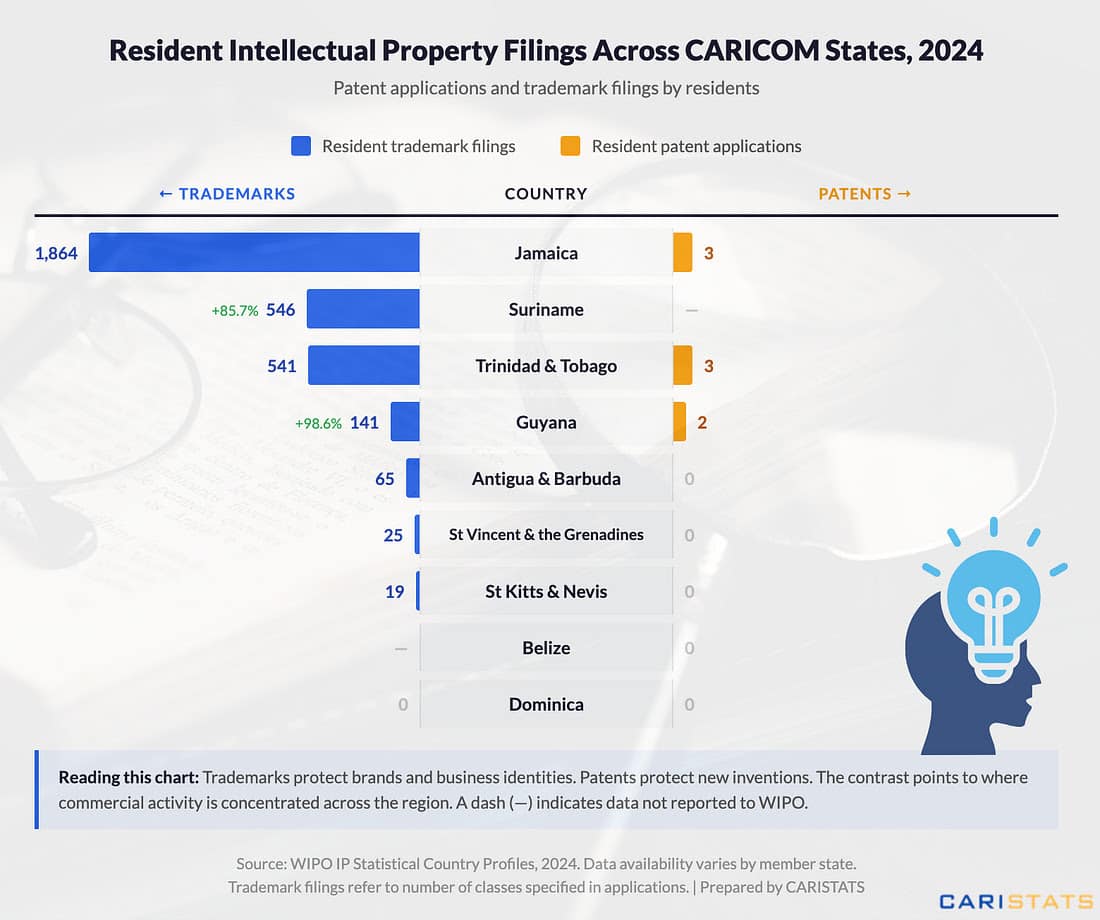
    A stark intellectual property (IP) imbalance is emerging across the Caribbean Community (CARICOM), revealing a regional economic strategy heavily skewed towards branding over foundational innovation. Recent analyses of regional IP filings indicate a marketplace bustling with trademark applications for goods and services, yet one that is critically deficient in the patents that signal technological advancement and homegrown research.

    Statistical data paints a concerning picture: while thousands of trademarks are registered annually by both local entrepreneurs and international corporations seeking market presence, the number of patents filed by CARICOM nationals remains exceptionally low. This trend suggests that the region’s economic players are prioritizing immediate commercial identity and consumer market protection over long-term investments in research and development (R&D) and complex technological invention.

    Experts point to multiple structural factors driving this disparity. The process of securing a patent is notoriously more arduous, expensive, and time-consuming than registering a trademark, posing a significant barrier for individual inventors and small and medium-sized enterprises (SMEs) within CARICOM member states. Furthermore, a comparative lack of robust national and regional infrastructure for scientific R&D, coupled with brain drain in STEM fields, creates an environment where groundbreaking inventions are less likely to originate.

    The implications of this IP dichotomy are profound for the future economic resilience of the Caribbean. A heavy reliance on trademarks indicates an economy focused on commerce and distribution, potentially leaving it vulnerable as a net consumer—rather than a producer—of high-value, patented technology. This pattern could hinder sustainable development, limit competitiveness in global knowledge-based industries, and perpetuate dependency on foreign innovation and imports.

    To counter this trend, policy analysts are urging CARICOM governments and regional bodies to implement decisive measures. Proposed solutions include enhancing financial and technical support for local inventors, reforming patent registration procedures to reduce bureaucratic hurdles, and forging stronger collaborations between academia and industry to stimulate a culture of homegrown technological creation and protectable invention.

  • Former CEO says BTL Unlikely to Justify $80M Dollar Acquisition

    Former CEO says BTL Unlikely to Justify $80M Dollar Acquisition

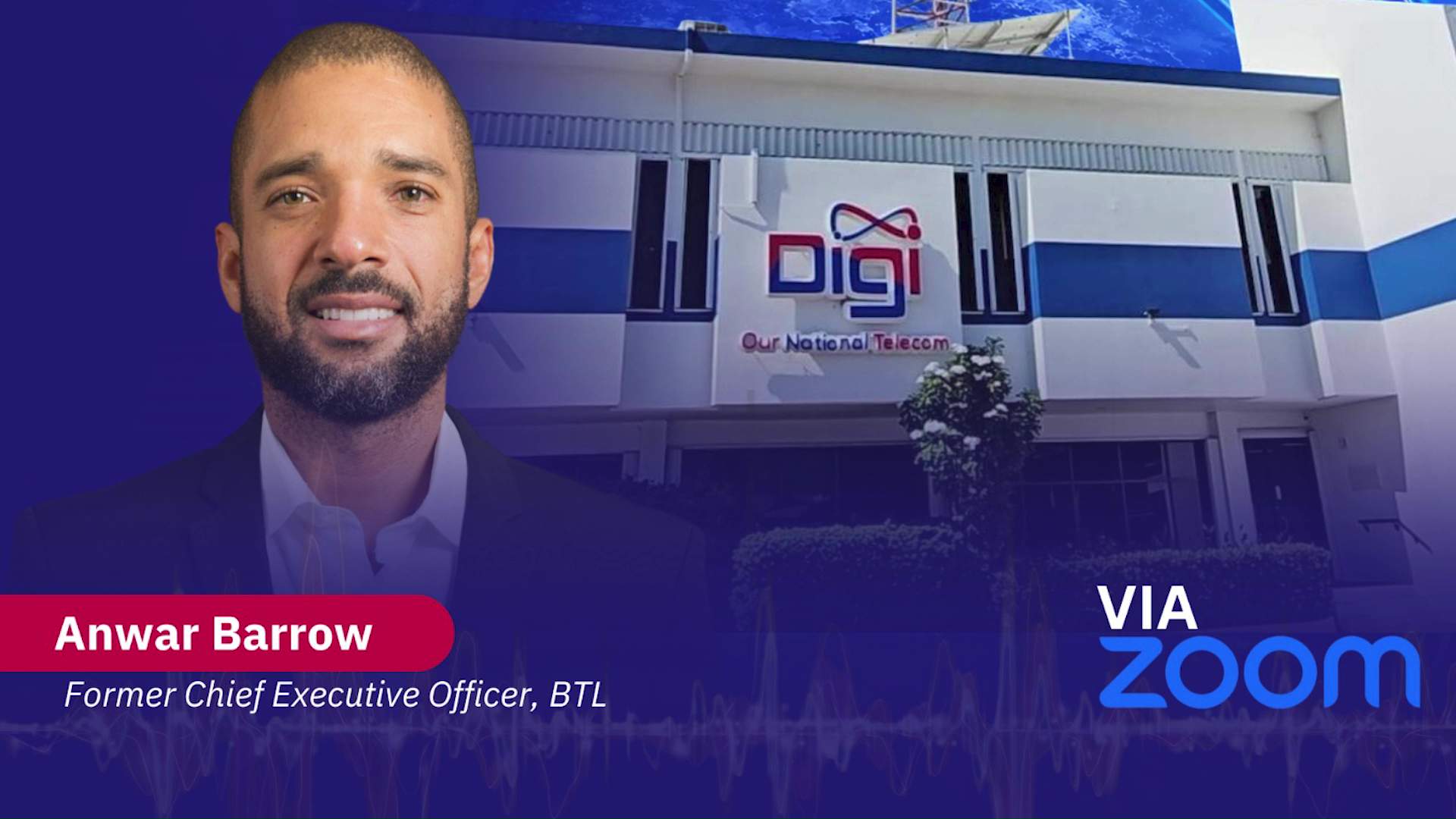
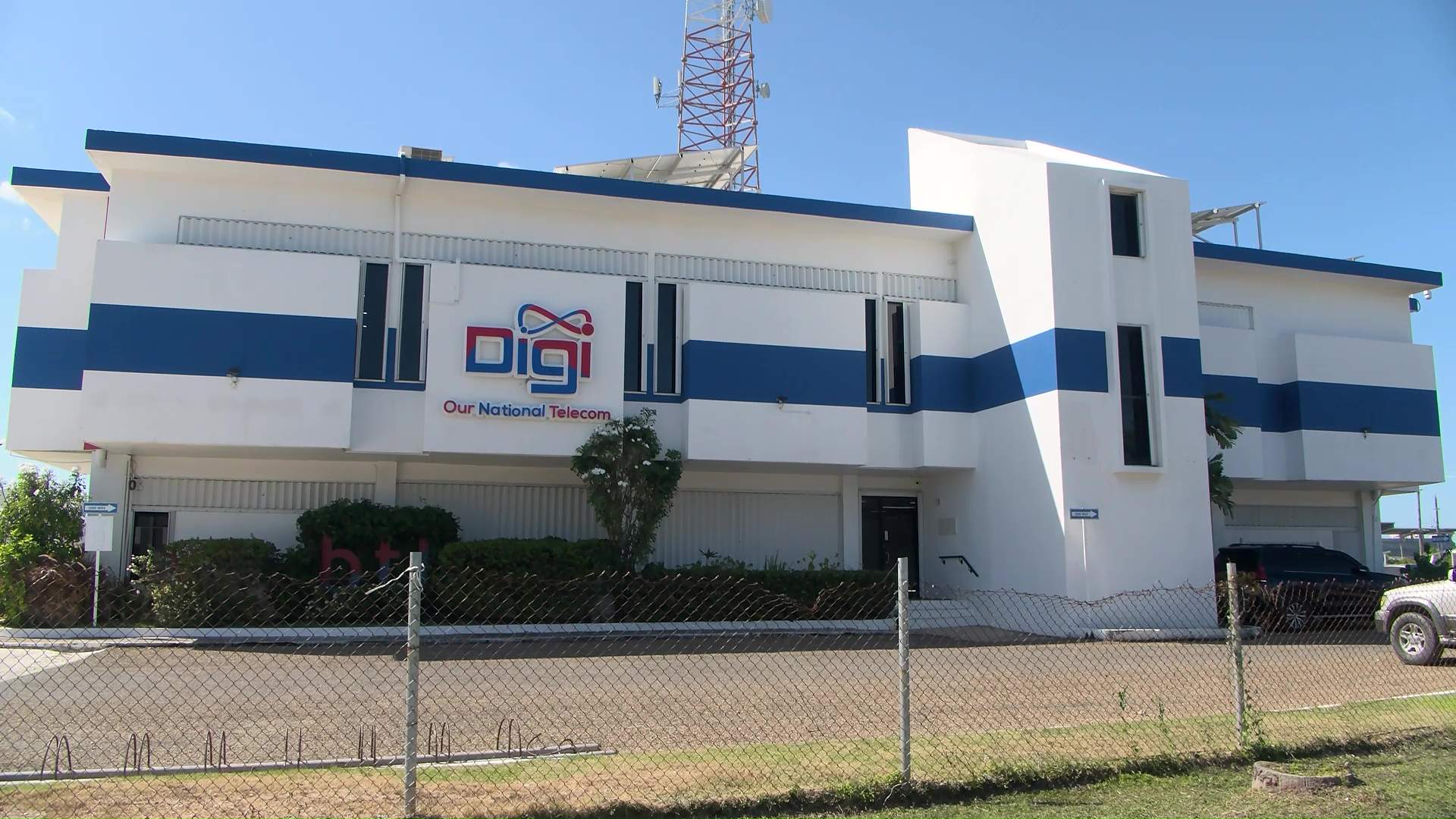
    BELIZE CITY – A controversial $80 million acquisition proposal by Belize Telemedia Limited (BTL) to purchase Speednet has ignited national debate, with former CEO Anwar Barrow casting doubt on the likelihood of financial transparency surrounding the deal.

    Speaking at a Civic Fellowship Academy panel on Wednesday, Barrow delivered a sobering assessment of the public’s ability to obtain detailed financial justification for the massive telecommunications merger. The former executive suggested that Belizean citizens should not expect comprehensive disclosure of the financial rationale behind the acquisition, despite the government’s majority ownership stake in BTL and the involvement of Social Security funds.

    ‘The fundamental question isn’t purely financial,’ Barrow stated. ‘It revolves around whether this consolidation will ultimately benefit the market and consumers.’ He acknowledged public concerns about reduced choice in the telecommunications sector, noting that the merger would effectively shrink the market from two major providers to a single dominant entity.

    Barrow elaborated on the legal limitations facing taxpayers seeking financial transparency, explaining that while the government owns substantial shares in BTL, the pathway to disclosure remains ‘indirect.’ He further addressed potential financial risks, indicating no automatic mechanism would require government intervention should the acquisition fail to deliver expected returns.

    The emerging controversy transcends typical business negotiations, evolving into a broader examination of corporate governance, public accountability, and the ethical responsibilities of government-backed enterprises when executing major financial transactions affecting national infrastructure.

  • BTL Acquisition Challenged on Law and Logic

    BTL Acquisition Challenged on Law and Logic

    A proposed $80 million acquisition by Belize Telecommunications Limited (BTL) to purchase Speednet is facing mounting legal and financial challenges from prominent figures. Former BTL CEO Anwar Barrow has declared that Belizeans should not anticipate a transparent financial justification for the substantial deal. Simultaneously, attorney Darrell Bradley is raising fundamental legal objections, asserting the transaction may violate the Belize Telecommunications Act by bypassing mandatory regulatory procedures.

    The controversy centers on significant concerns over regulatory oversight and public transparency. Bradley emphasizes that any legitimate merger must be initiated through a formal application to the Public Utilities Commission (PUC), a process designed to include public commentary as required by law. He criticizes the current trajectory, noting that the deal came to light through media and trade union inquiries rather than through proper, regulator-led channels. This approach, he argues, sidesteps essential democratic safeguards.

    Further compounding the issue are profound concerns about potential conflicts of interest in Belize’s compact business landscape. Bradley questions the absence of an independent valuation of Speednet, the mechanisms to ensure an arm’s-length transaction, and the overall representation of the Belizean public’s interest in a deal involving powerful domestic players. The escalating debate now places a critical question at the forefront: in this multi-million dollar negotiation, who is truly advocating for the citizens of Belize?

  • Behind the Placards: Rain‑Soaked Protest for Severance

    Behind the Placards: Rain‑Soaked Protest for Severance

    BELIZE CITY — Under torrential rain and mounting frustration, former Belize Telemedia Limited employees have resumed picketing operations, demanding severance payments they assert are rightfully earned after decades of dedicated service. Despite vocal endorsements from Prime Minister Johnny Briceño and Labor Minister Kareem Musa, members of the Belize Communication Workers for Justice collective declare that political rhetoric has proven insufficient—now requiring concrete action.

    The protest assembly predominantly comprises elderly former employees, many confronting significant health challenges, who remain steadfast in their demand for compensation. Their unified message resonates clearly through the downpour: immediate payment of outstanding severance packages.

    Emily Turner, lead organizer for Belize Communication Workers for Justice, articulated the group’s skepticism toward governmental assurances. “Unless BTL demonstrates tangible action, the Prime Minister’s statements remain merely verbal expressions,” Turner stated. “The board operating under his authority disregards his directives, opting instead to postpone deliberations until subsequent meetings. Our continued presence here underscores that words without implementation yield no results.”

    The human narrative behind the protest banners reveals profound personal struggles. Leticia Reyes, a twenty-six-year BTL veteran who provided essential Spanish-language emergency services, now battles severe health complications including multiple strokes and cardiac conditions. “My medical needs are urgent,” Reyes explained. “Previous requests for assistance from BTL received no response. This severance represents survival funding for my impending heart surgery.”

    Patricia Bradley, seventeen-year BTL veteran, described how her post-retirement restaurant venture collapsed during COVID-19 lockdowns. Now working as a caregiver, Bradley emphasized: “We sacrificed family events, holidays, and personal safety during hurricanes. Our youth and dedication built this company—now we require compensation to rebuild our lives.”

    Gregory Bennett, an eleven-year test officer who witnessed BTL’s technological evolution, expressed outrage over the company’s priorities: “They plan to invest $80 million in acquisitions while ignoring former employees. My severance would enable educational advancement and vehicle purchase at sixty years old.”

    The collective has vowed to maintain continuous protest presence until full severance disbursement occurs, maintaining that delayed justice effectively constitutes denied justice for Belize’s telecommunications pioneers.

  • BTL Severance Fight Escalates with Senator’s Support

    BTL Severance Fight Escalates with Senator’s Support

    The protracted struggle for severance pay by former Belize Telecommunications Limited (BTL) employees has intensified dramatically this week as demonstrators braved torrential rain during renewed street protests. Their persistent campaign for compensation, which they assert has been unjustly withheld for years, has successfully captured national attention and now resonates within parliamentary chambers.

    Adding substantial political weight to their cause, Union Senator Glenfield Dennison has publicly aligned himself with the workers’ demands. In a powerful personal testament, Senator Dennison revealed his deep familial connections to the telecommunications company, disclosing that his father served as a linesman for BTL—a physically demanding, modestly compensated position that nonetheless supported their family’s education and livelihood.

    “My father’s dedication to his work at BTL provided the foundation for our family’s future,” Senator Dennison recounted during an emotional address. “His relentless work ethic—early mornings, late evenings—instilled in me the profound value of labor dignity. To be recognized by his former colleagues as the product of one of their own is profoundly heartfelt.”

    When questioned about his advocacy role, the senator characterized his involvement as “the pride of a son” able to advance not just his father’s cause but that of all affected workers. His message to BTL’s board members was unequivocal: cease creating obstacles to payment.

    Senator Dennison referenced the Caribbean Court of Justice’s (CCJ) clear ruling that BTL had erred in its historical failure to provide severance payments. He urged the company to acknowledge this judicial determination, recognize the constitutional and statutory rights of employees, and prioritize the “social justice element” affirmed by the region’s highest court. His final directive was emphatic: “Simply find the money and pay these people.”

  • Belize’s Farming Future Gets a Boost with New Agri-Processing Hub

    Belize’s Farming Future Gets a Boost with New Agri-Processing Hub

    Belize’s agricultural sector stands on the brink of a significant transformation following the establishment of a groundbreaking partnership between its Ministry of Agriculture and Taiwan. This four-year, multimillion-dollar collaboration centers on the creation of an advanced food processing and incubation facility designed to elevate local farming practices and economic outcomes.

    The strategic initiative, valued at $5 million USD, features substantial financial backing from Taiwan, which contributed approximately 90% ($4.5 million) of the total project cost, with Belize’s government providing the remaining $500,000. The facility will be established at Central Farm in the Cayo District, serving as a centralized hub for converting raw agricultural produce into value-added products.

    Minister of Agriculture, Food Security and New Growth Industries Rodwell Ferguson revealed that the project emerged from two years of diplomatic discussions between the nations. “They made contact with us and said they were successful in making sure that we get this facility,” Ferguson stated, emphasizing the significance of Taiwan’s technological contribution alongside its financial investment.

    The processing center will implement advanced agricultural innovation techniques developed through Taiwan’s decades of expertise in agro-processing. While farmers in the Cayo district are expected to benefit most directly due to proximity, Minister Ferguson confirmed that transportation systems will be established to move produce from across the country to the facility.

    Infrastructure preparation and equipment installation are scheduled for completion within the next two to three months, after which the center will begin operations. The project represents a strategic move toward strengthening Belize’s agricultural value chain, enhancing farmer livelihoods, and propelling the nation’s agri-industry into its next developmental phase through technological transfer and economic diversification.

  • GY$2 billion for possible rebuilding of Stabroek Market, Bourda Green

    GY$2 billion for possible rebuilding of Stabroek Market, Bourda Green

    The Guyanese government has unveiled ambitious plans to revitalize the capital city’s historic landmarks through a massive GY$2 billion (US$9.6 million) urban renewal initiative. Local Government Minister Priya Manickchand announced to the National Assembly’s Committee of Supply on Thursday that the comprehensive facelift will potentially include either restoration or complete reconstruction of Stabroek Market—the largest public market in the English-speaking Caribbean—along with enhancements to Bourda Green.

    Minister Manickchand emphasized the cultural significance of Stabroek Market, describing it as “iconic to Georgetown and to Guyana,” while clarifying that the project involves careful consideration rather than simple demolition. “It’s not just a pull down and build project,” she stated during budget deliberations for the GY$1.558 trillion national budget for 2026.

    The market modernization initiative comes as the government continues roof repairs through a GY$107.7 million contract awarded in October 2025, with 60% of those repairs already completed. An additional GY$74 million has been allocated to complete remaining repairs before major renovation works commence.

    The minister outlined new quality standards for public markets, emphasizing the need for improved sanitation facilities, enhanced weather protection, and better organized vending spaces to meet modern commercial requirements.

    Beyond the market project, the urban renewal program includes GY$30 million for rehabilitating the former residence of late national poet Martin Carter on Lamaha Street, Queenstown, following consultations with the property owner. Additional funds have been designated for designing and constructing green spaces in several Ruimveldt areas of southern Georgetown, signaling a comprehensive approach to urban beautification and functional public infrastructure development.