
New official data released by the Dominican Republic’s National Statistics Office (ONE) reveals a mixed picture for the country’s formal business sector in 2024, pairing a small year-over-year drop in total employment with notable growth in average monthly wages across the industry. Findings from the 2025 National Survey of Economic Activity (ENAE), published this cycle, show that the total number of workers employed in the formal sector reached 881,265 in 2024. That marks a 1.1% decline from the 2023 total of 891,144 registered formal employees. Against this pullback in total headcount, the survey confirms broad-based wage growth across all major formal industry segments, with the national average monthly formal sector salary climbing to RD$34,318.81 in 2024, up from RD$31,213.11 recorded in 2023. The data also sheds light on persistent wage disparities across different industries, a trend that has held steady for multiple reporting cycles. Mining and quarrying retained its position as the highest-paying sector in the Dominican Republic’s formal economy, with average monthly earnings rising to RD$76,136.48 in 2024, up from RD$72,596.78 the previous year. Taking the second spot in the ranking of highest-paying industries is the electricity supply sector, where average monthly salaries grew from RD$65,644.66 in 2023 to RD$68,863.20 in 2024. Seven additional formal sectors outpaced the 2024 national average wage: information and communications, construction, transportation and storage, trade, manufacturing, and water supply. At the opposite end of the wage spectrum, accommodation and food services remained the lowest-paying segment of the country’s formal economy, even as the sector recorded solid year-over-year wage growth. Average monthly pay in accommodation and food services rose from RD$20,421.38 in 2023 to RD$23,193.42 in 2024. Beyond industry-level trends, the 2025 ENAE survey confirmed that company size remains a key predictor of average pay levels for Dominican formal sector workers. Contrary to common assumptions that large multinational or domestic enterprise offer the highest compensation, the survey found that medium-sized firms — defined here as businesses with 100 to 249 employees — delivered the highest average salaries in 2024. Average monthly pay at this size of company rose from RD$36,799.92 in 2023 to RD$40,330.30 in 2024, a gain that outstripped the average compensation recorded at larger Dominican firms. The ONE’s latest release provides policymakers, business leaders, and labor advocates with the most up-to-date granular data on formal labor market trends in the Dominican Republic, offering critical context for discussions of economic growth, wage policy, and labor market regulation heading into 2025.
分类: business
-

Central American and Dominican business leaders revive regional economic agenda
In a landmark gathering hosted in the Dominican Republic’s capital of Santo Domingo, top business leaders from across Central America, Panama, and the Dominican Republic have formally committed to revitalizing a collaborative regional strategy centered on deepening economic integration, drawing new foreign and domestic investment, and closely tracking evolving trade ties with the United States.
The agreement was finalized during the latest Ordinary Assembly of Presidents of the Federation of Private Entities of Central America, Panama, and the Dominican Republic, better known by its acronym Fedepricap. This year’s session was convened by the National Council of Private Enterprise (CONEP), the Dominican private sector governing body that currently holds Fedepricap’s rotating regional presidency.
Celso Juan Marranzini, who leads both CONEP and serves as Fedepricap’s Pro Tempore President, outlined the federation’s renewed mission in remarks to attendees. He emphasized that the organization seeks to reclaim its central role as a coordinated advocacy and action platform for addressing the most pressing shared challenges facing the region. These priority issues span far beyond basic trade coordination: they include targeted investment promotion, overhauled education and workforce development frameworks, preparation for the rise of artificial intelligence, broad technological transformation across industries, establishing consistent legal certainty for businesses, strengthening regional public institutions, and protecting foundational democratic systems and free enterprise principles.
In additional business conducted during the assembly, leaders formally reaffirmed their welcome for renewed participation from Panama’s private sector delegation, restoring full representation to the grouping. Attendees also passed a resolution expressing unified solidarity with Nicaragua’s business community, which has faced growing government restrictions that undermine freedom of enterprise and disrupt the normal operations of independent business organizations across the country.
Originally established to align private sector priorities across the region, Fedepricap unites the most influential private industry associations from eight regional economies to advance pro-growth policies that boost competitiveness, expand investment opportunities, increase sustainable employment, and shore up democratic stability across Central America and the Caribbean. With this new agreement, the organization moves forward from a period of stalled coordination to refocus on shared priorities that benefit businesses and workers across the entire region.
-

Corporate accelerators in LATAM and the Caribbean are missing P&L
Across Latin America and the Caribbean, a persistent misalignment in how corporate accelerator programs are structured is undermining the region’s already limited innovation capacity. Too many of these initiatives are framed and funded as corporate responsibility outreach, when they should be governed as long-term patient capital portfolios designed to deliver strategic, operational, and tangible financial value for the parent company. This mismatch creates hollow programs that generate positive press and support founders but fail to move the needle on corporate innovation – a critical flaw in a region that invests just 0.56% of total GDP in research and development, with only Brazil crossing the 1% threshold. With scarce capital allocated to innovation, there is no room for unfocused programs built without a clear economic thesis.
How a company structures its accelerator budget directly shapes the outcomes it will deliver. If the budget sits within a corporate responsibility department, success will inevitably be measured in non-economic terms: number of founders supported, jobs created, industry goodwill, and positive media coverage. There is nothing inherently wrong with corporate responsibility supporting entrepreneurship; many companies legitimately view lifting up emerging founders, underserved communities, or nascent industries as part of their core social mandate. But this approach is not equivalent to building a strategic corporate accelerator that advances the parent company’s innovation goals. The critical mistake occurs when programs funded with no expectation of economic return are marketed and framed as core components of a company’s innovation strategy.
Budgets carry implicit mandates, and how a program is funded defines what it is allowed to become. When accelerators are treated as corporate sponsorships, they produce sponsorship-level outcomes. When they are positioned as long-term investments in future corporate capability, the entire design of the program shifts to prioritize that value creation.
Adopting a profit and loss (P&L) logic for an accelerator does not require every cohort of startups to turn an immediate profit within a 12-week program, nor does it mean abandoning promising projects that fail to deliver quarterly returns. True innovation requires patient capital, and value builds gradually across multiple program cycles. The first accelerator cohort may deliver promising pilot projects but no scalable, commercially viable startups. A second cycle can refine the company’s selection criteria, improve internal governance for working with external founders, and strengthen alignment with business unit needs. After several cycles of disciplined iteration, the company builds a far more valuable asset: a curated portfolio of technologies, commercial partnerships, intellectual property (IP), and equity positions directly tied to its long-term strategic goals. One cycle can identify promising startups, but multiple disciplined cycles build enduring corporate assets.
For corporate accelerators, the core P&L question is not whether the current cohort made money immediately. It is what long-term economic value the entire portfolio is designed to create. That value can emerge from a range of sources: reduced internal operating costs, new revenue streams, proprietary technology, licensing income, exportable IP, equity appreciation, acquisition targets, or solutions to long-standing internal problems that conventional procurement has failed to fix.
A common structural flaw across many programs is the sequence of execution: most start with a general call for startup applications, then retroactively search for internal corporate problems that these startups might solve. This sequence needs to be reversed. Successful programs start with a clear, predefined corporate objective, then build the accelerator around that goal. For example, a retailer planning aggressive national expansion may need better inventory tracking, optimized logistics, data-driven site selection, or deeper customer intelligence. A regional bank may need new tools to evaluate creditworthy customers who lack traditional credit scoring. A tourism group may require solutions for workforce mobility, lower energy costs, or sustainable destination management. These specific corporate objectives should define the accelerator’s investment thesis. Only after the thesis is set should the corporation determine how much capital to allocate, which internal business units will lead pilot projects, and what rights the company will retain if a solution proves successful. The biggest gap in most accelerator programs is not recruiting enough startup applicants – there are always thousands of founders eager to participate. The gap is a cohesive architecture that connects corporate strategy, patient capital allocation, pilot governance, IP rights, external financing, and clear scaling decision-making.
A illustrative model developed by Successment demonstrates how a modest, multi-cycle accelerator can deliver multiple forms of value simultaneously. Across three accelerator cycles investing in 15 total pilots, the model projects a $1.05 million total investment over three years. Two of the solutions are deployed internally, generating $1.5 million in cost savings or new revenue within five years. One portfolio company achieves a $20 million exit, with the parent company retaining a 3% equity stake that delivers $600,000 in proceeds. This brings the total projected gross value to more than $2.1 million over seven years, a 2.0x return on investment, with additional upside from licensing, exportable IP, acquisition value, and external financing not included in the base calculation. This conversion rate (2 out of 15 pilots delivering meaningful value, or 13%) is entirely conservative: BMW reports that 14% of startups that completed joint projects through its Startup Garage program eventually became established suppliers or service providers for the company. The 3% equity stake used in the model is also below the 5% common equity position typically taken by leading accelerator network Techstars before accounting for additional convertible investments. The point of the model is not to guarantee every $1.05 million accelerator will deliver exactly $2.1 million in returns. It is to prove that corporations can model expected returns before launching a program, allowing leadership to define how much value should come from internal deployment, how much from portfolio equity, and what upside to expect from IP, licensing, or acquisitions. This is a far more useful measure of success than simply counting the number of startup applications received.
This disciplined approach is not exclusive to Silicon Valley or European multinational corporations. Mexican baked goods giant Grupo Bimbo offers a proven regional example of this model in action. The company launched Bimbo Ventures to collaborate with and invest in startups focused on food products, food technology, supply chain optimization, and commercial operations. In its first Eleva accelerator cohort, the program received more than 2,000 applications, selected nine ventures, invested in four, and acquired the formula, patent, and full rights to a product developed by one participant. This already represents a far more sophisticated value structure than generic “support for entrepreneurship.” Today, the platform delivers concrete corporate value across multiple categories: co-developed products sold under Grupo Bimbo brands, innovative new food formulations, and an artificial intelligence platform that streamlined supplier document processing. The lesson is not that every regional corporation needs to match Grupo Bimbo’s budget or scale. It is that a single accelerator can deliver multiple forms of value – equity holdings, acquired IP, new commercial products, and internal operating improvements – but this diversified portfolio is only possible when the program starts with clear corporate priorities, rather than a generic open call for innovation.
Large established programs prove that this value can compound over time. BMW’s example, while from a large global corporation, holds lessons for smaller Latin American and Caribbean firms because its discipline around conversion tracking, not its scale, is the key takeaway. BMW does not measure success solely by the 4,700 startups it evaluates; it tracks how many complete joint projects and how many eventually join the company’s supplier network, a metric tied directly to economic value. Telefónica’s Wayra accelerator offers a regional example of tangible financial results: the company reported that by 2025, Wayra had invested more than €245 million and worked with over 400 startups that generated more than €1.06 billion in revenue for Telefónica. While that top-line revenue is not pure profit, it clearly demonstrates that corporate acceleration can deliver measurable commercial value. Accelerators do not have to choose between solving internal corporate problems and holding profitable equity positions. Depending on the core thesis, a program can operate as a venture client, a direct investor, a venture builder, or any combination of the three. What matters is that the structure is intentional and aligned with the company’s goals.
Corporations also do not have to carry all early-stage risk on their own balance sheets. A properly structured accelerator with a clear investment thesis can attract external capital from multilateral institutions, development agencies, and specialized impact funds that prioritize vehicles focused on financial inclusion, climate resilience, digital transformation, export development, and productivity growth. For example, the Inter-American Development Bank Group’s Multilateral Investment Fund approved a $5 million equity investment and $750,000 in technical cooperation to help NXTP Labs expand its accelerator model across Latin America, a structure designed to support between 200 and 250 early-stage startups. Not every corporate program will qualify for this type of external support, but programs with a credible thesis, clear governance, robust measurement systems, and a defined portfolio strategy are far more likely to secure grants, guarantees, technical assistance, or blended finance mechanisms that reduce early-stage risk. A traditional demo day cannot attract serious long-term capital on its own, but a well-designed investment architecture can.
The hidden cause of failure for many corporate accelerators is not the quality of the participating founders. It is the lack of clear internal ownership of the program as a full investment system. Typically, corporate responsibility owns the external communications and visibility, the innovation team manages the startup cohort, operations teams receive the pilot output, procurement controls contracting, legal negotiates IP terms, and the finance department only asks about returns after the fact. Every department touches the accelerator, but no single stakeholder owns the full economic outcome of the portfolio. This institutional gap undermines results from day one. A high-impact corporate accelerator requires a clear, linear operational sequence: define corporate objective, build the investment thesis, allocate patient capital, curate the portfolio, conduct paid validation of solutions, secure commercial and IP rights, then scale or exit the position. This is not a public relations plan; it is a core corporate operating model.
Latin America and the Caribbean do not need more ceremonial accelerator launches that generate buzz around demo day then deliver no long-term value. The region needs corporations that can turn their own strategic challenges into investable theses, and those theses into portfolios whose value compounds over time. Corporate accelerators can absolutely deliver on public goals: strengthening local industries, supporting emerging founders, and creating broad public value. But if an accelerator is expected to drive innovation for the parent company that funds it, it cannot survive on goodwill alone. It needs patient capital, clear internal ownership, and a commitment to P&L discipline.
-

National Assets raises RD$57.3 million in second public auction of 2026
In Santo Domingo, the General Directorate of National Assets of the Dominican Republic has successfully concluded its second public auction of 2026, generating total revenue of RD$57.3 million through the sale of hundreds of seized and unclaimed government-held assets.
The event, which took place at the auditorium of the Higher Education Police Institute (IPES), drew dozens of active bidders eager to acquire a range of practical and industrial assets up for grabs. Across the auction block, 123 individual asset cases and 61 distinct lots were sold, including transferable passenger and commercial vehicles, vehicle bodies, functional and disassembled motorcycles for parts, general office furniture, and bulk scrap metal.
According to Nelson Gómez, head of the directorate’s Auction Department, all items put up for bidding originated from multiple public institutions across the country. Prior to the sale, the assets were stored at two dedicated National Assets facilities: one located along the Mella Highway, and a second at the Merca Santo Domingo commercial complex.
To participate in the bidding process, all prospective buyers were required to pay a non-refundable RD$2,000 registration fee to secure their eligibility. After the close of bidding, winning bidders are given five full business days to complete full payment via certified check made out directly to the Dominican National Treasury. Once payment is confirmed, buyers receive an additional five business days to arrange transport and remove their purchased items from the designated storage warehouses.
Deputy Director General José Moya Mejía led the proceedings in an official capacity, standing in for Director General Rafael Burgos Gómez. To uphold the integrity of the public sale, senior officials confirmed that the entire auction followed strict pre-issued public notice requirements, and was overseen by a multi-stakeholder oversight team. This group included a licensed public auctioneer, a legal notary public, and official representatives from three key government bodies: the Fair Prices Commission, the Ministry of Public Works, and the Office of the Comptroller General. This multi-agency supervision was implemented to guarantee full transparency and strict adherence to all established public auction regulations set out by Dominican law.
-

Japan en VS bevestigen zeldzame gezamenlijke interventie om yen te steunen
In an unprecedented step that has sent ripples through global financial markets, Japan and the United States have confirmed a rare coordinated currency intervention aimed at reversing the Japanese yen’s steep slide to a four-decade low and stabilizing the beleaguered Japanese currency. Japanese officials have signaled they are fully prepared to take additional coordinated action if market volatility returns, underscoring the seriousness of their commitment to curbing excessive yen weakness.
The joint intervention was formally announced by Japan’s Ministry of Finance shortly after U.S. President Donald Trump stated Sunday that Washington was backing Japan’s efforts to shore up the yen, framing the move as both an act of diplomatic friendship and a measure to support global economic stability. “Japan is dealing with a weakening yen and reached out for some support, and we always stand ready to help our ally Japan,” Trump said in his public comments.
Market reactions to the announcement were immediate and dramatic. The yen jumped 1.4% against the U.S. dollar to hit nearly 155.20 yen per dollar, its highest level in three months. This gain followed a cumulative 3.8% appreciation in the currency across previous trading sessions. The yen also notched significant gains against other major global currencies, including the euro and British pound.
The yen’s sharp upward rally put substantial downward pressure on the U.S. dollar across global markets. During early Asian trading hours, the euro climbed to a six-week high of 1.1559 against the dollar, while the British pound held steady near a two-week peak of 1.3476 against the greenback.
However, the sudden appreciation of the yen also triggered immediate negative repercussions for Japanese equities. Tokyo’s benchmark Nikkei Index swung sharply downward after hitting a one-week high earlier in the trading session, as a stronger yen erodes the international competitiveness of Japan’s key export sector.
Market analysts interpret the joint intervention as a clear signal from both governments that they are determined to prevent the yen’s decline and the volatility in Japanese government bonds from triggering broader instability across global financial markets. The intervention comes as rising yields on U.S. Treasury bonds have already placed mounting strain on currency and equity markets worldwide.
Japan has been grappling with persistent yen weakness for months, a trend that has pushed up import costs, fueled broader domestic inflation, squeezed household budgets, and eroded public support for Japanese Prime Minister Sanae Takaichi’s administration.
According to Japan’s Ministry of Finance, the intervention, carried out jointly with the U.S. Treasury Department on Friday, was launched to counter “excessive volatility and disorderly movements in the yen exchange rate that have unfolded over recent months.” Officials stressed that they “remain on high alert, maintain close communication with our U.S. counterparts, and will not hesitate to undertake additional coordinated intervention measures” if necessary.
This joint currency intervention marks the first coordinated action between the two countries since 2011, when they partnered to weaken the yen in the wake of the devastating Great East Japan Earthquake that disrupted the country’s economy.
Data from the Bank of Japan estimates that Japanese authorities sold up to $58.97 billion worth of U.S. dollars to purchase yen during pre-coordinated intervention activity in New York markets on Thursday, one day ahead of the official public confirmation of the joint action.
U.S. Treasury Secretary Scott Bessent also confirmed the joint intervention, noting that Washington “will not hesitate to participate in further joint actions” if needed. Bessent expressed support for Japan’s efforts to correct the yen’s undervaluation and pushed the Bank of Japan to move forward with upcoming interest rate hikes.
On Friday, the Bank of Japan issued its clearest indication to date that it plans to implement an early interest rate increase, even as it kept its existing monetary policy unchanged for the time being.
In a sign of broader regional coordination to address currency weakness, South Korea also took steps to support its own currency, the won, by intervening in foreign exchange markets on Thursday.
Previous solo interventions by Japan to buy yen in April and May only produced temporary short-term gains for the currency. Even the Bank of Japan’s June interest rate hike, which brought rates to 1% — the highest level in 31 years — failed to deliver sustained support for the yen.
-

Stop losing margins on the move
For companies across nearly every industry, commercial vehicles rank among the most critical and high-cost assets supporting daily operations. From making last-mile product deliveries and conducting on-site client service calls to shuttling staff, patrolling properties, and accessing remote work sites, these vehicles keep businesses running – yet many business owners lack clear insight into how their assets are actually being used. Without specialized monitoring tools, basic questions that directly impact profitability and risk, such as a vehicle’s current location, whether it arrived at a destination on schedule, why fuel costs are creeping upward, or what truly unfolded during a roadside accident, often go unanswered. This gap in visibility is where modern vehicle tracking systems and advanced dash camera technology deliver transformative value.
A common misconception among small and mid-sized business owners is that these telematics solutions are only accessible to large companies with massive fleets of dozens of vehicles. But technological advancements and market competition have reshaped this landscape dramatically: today’s tracking and camera systems are more affordable, simpler to install, and designed to work just as effectively for businesses operating only one or two work vehicles as they do for large fleet operations.
Contrary to the popular assumption that vehicle tracking only serves to display a vehicle’s location on a digital map, contemporary systems generate a wide range of actionable data that drives bottom-line improvements. These platforms let business leaders monitor real-time vehicle location, the exact routes drivers take, instances of unsafe speeding, periods of excessive idling, precise arrival and departure times at destinations, and any unauthorized off-hours use of company vehicles.
Fuel consistently ranks as one of the largest ongoing operating expenses for vehicle-dependent businesses, and even small inefficiencies can accumulate into major cost overruns over months. Unnecessary idling, poorly planned routes, and unauthorized personal use of company vehicles all create hidden costs that often go undetected without tracking data. Vehicle tracking pinpoints these wasteful habits, giving management the insights needed to implement corrective changes that boost operational efficiency. For most businesses, the fuel and labor savings generated by the system offset the initial investment far faster than expected.
Beyond cost reduction, tracking technology also delivers measurable improvements to customer service. Modern consumers and clients expect timely updates and accurate arrival estimates when waiting for service or deliveries. With real-time tracking data, operational teams do not have to guess the location of a technician or delivery driver – they can access accurate location data instantly, share precise updates with customers, and respond faster when unexpected delays arise. This not only boosts overall customer satisfaction but also helps frontline teams work more efficiently.
A key feature of many modern tracking systems is geo-fencing, which lets business owners create custom virtual boundaries around specific locations or approved routes. The system automatically sends an alert if a vehicle enters or exits a designated zone, making it easy to ensure drivers stick to approved routes, arrive on schedule at client sites, and do not use company vehicles for unapproved personal trips. For business owners managing multiple vehicles, this extra layer of visibility is an invaluable management tool.
While vehicle tracking answers questions of where a vehicle has been and where it is now, dash cameras answer the critical question of what actually occurred on the road. Today’s dash camera systems are far more advanced than the basic, grainy recording devices many business owners remember from just a few years ago. Modern solutions offer a range of capabilities, including forward-facing road cameras, driver-facing cameras for monitoring cabin behavior, full interior vehicle monitoring, cloud-based storage for instant video retrieval, event-triggered automatic recording when an incident is detected, and AI-powered safety alerts for high-risk behavior. This combination of features creates an extra layer of protection for both the business and its drivers.
One of the top reasons organizations invest in dash cameras is to protect themselves and their drivers in the event of an accident. After a collision, conflicting accounts of what happened are common, and without objective evidence, businesses can get dragged into lengthy, costly legal disputes with other drivers, insurance providers, and third parties. Dash camera footage provides an unbiased, unambiguous record of events, and in most cases, just a few seconds of clear video can resolve disputes quickly, reduce overall business liability, and shield innocent drivers from false blame and claims.
Dash cameras also help encourage safer driving habits across an organization. When drivers know their behavior on the road can be reviewed, they are far more likely to comply with company driving policies and follow safe road practices. Most businesses that implement dash camera systems report immediate reductions in speeding, distracted driving, and other high-risk behaviors. This translates to fewer accidents, less costly vehicle damage, lower ongoing maintenance expenses, and a safer work environment for all staff.
The combined benefits of vehicle tracking and dash camera systems extend far beyond basic security and accident protection. When deployed effectively, these tools help businesses cut unnecessary fuel costs, increase driver accountability, reduce unauthorized vehicle use, shorten and minimize accident-related disputes, and boost overall operational efficiency. For most businesses, the single greatest advantage is also the most fundamental: the visibility to identify problems that were previously hidden. As the old management adage goes, you cannot improve what you cannot measure – and these tools give business owners full clarity into one of their largest asset classes.
For any business that relies on vehicles to operate, it is worth asking a few key questions to evaluate whether monitoring technology can deliver value: Do you know exactly where all your work vehicles are during operating hours? Could you prove what happened if one of your vehicles is involved in an accident? Are hidden unnecessary fuel costs eating into your profit margins? Can you identify unsafe driving habits before they lead to a serious accident? Are you getting the maximum possible return from your fleet investment?
Amalgamated Security Services (Grenada) Ltd. (ASSL Grenada) is offering businesses the chance to test the latest vehicle tracking, geo-fencing, driver behavior monitoring, and dash camera technology with a no-obligation in-vehicle demonstration. The ASSL team can install a demonstration unit directly on a business’s vehicle, walk management through all core features, and show how the technology performs in real-world operating conditions. The company is currently offering a free Fleet Assessment, on-site visit, and live demonstration with no cost, no obligation, and no sales pressure for interested businesses.
To schedule your free Fleet Assessment and vehicle demonstration, contact Amalgamated Security Services (Grenada) Ltd. today at 435-ASSL (2775) or email [email protected] to learn more about how greater fleet visibility can cut your operating costs, improve driver accountability, and protect your business from unnecessary risk.
-

Exxon verdient investering in Guyana eerder dan verwacht terug
Energy giant ExxonMobil has hit a critical financial milestone years ahead of schedule in its massive oil and gas operations offshore Guyana, announcing Friday during its second-quarter earnings release that it has fully recouped more than $55 billion in exploration, development and operating costs for the Stabroek Block concession.
The accelerated payback is not only a landmark achievement for ExxonMobil and its project partners, but also a transformative turning point for the South American nation of Guyana. Going forward, a far larger share of future revenue from the project will flow directly as free cash flow to all stakeholders, rather than being diverted to recover initial capital outlays.
ExxonMobil executives attributed the faster-than-expected payback to a confluence of favorable factors: faster project delivery than original forecasts, lower-than-budgeted development costs, industry-leading operational performance, and sustained higher global oil prices than initial base projections.
“We have fully recovered the $55 billion in investment along with all associated operating costs,” stated Neil Hansen, ExxonMobil’s senior vice president and chief financial officer.
Under the terms of Guyana’s Production Sharing Agreement (PSA) governing the Stabroek Block, the ExxonMobil-led consortium is allowed to recover eligible exploration, development and operating costs from up to 75% of monthly oil output, a structure commonly referred to as “cost oil”. Once all eligible costs are recovered, remaining production — called “profit oil” — is split equally between the Government of Guyana and the consortium, after a 2% royalty deduction.
When development of the Stabroek Block first launched following major oil discoveries in the late 2010s, ExxonMobil projected full payback of initial investment would not occur until later this decade. But a combination of operational and market factors drastically compressed that timeline.
Darren Woods, ExxonMobil’s chairman and chief executive officer, explained that the company has delivered floating production storage and offloading (FPSO) vessels faster and at lower capital costs than originally planned, while consistent production levels have repeatedly outperformed expectations.
“Production units came online faster than we originally expected, at lower cost, and we’ve run those facilities above the base investment level,” Woods said. “On top of that, market prices have been higher than our base assumption. All of that means more cash comes in faster.”
Hansen added that even without the boost from higher-than-forecast oil prices, strong project delivery and operational performance alone would have cut roughly two years off the original payback timeline. He highlighted that the project’s FPSOs operate at more than 98% reliability, average production runs roughly 100,000 barrels per day above original base investment projections, and project execution stands as a benchmark for the global energy industry.
While the $55 billion in historical initial investment has now been fully recovered, Hansen clarified that cost recovery will not end entirely. New capital expenditures and operating costs for future project expansions — including additional FPSOs and field development projects — will still be added to the project’s “cost bank” and remain eligible for recovery under the PSA.
However, with the massive initial outlay already recouped and production already scaled to significant levels, the cost bank is extremely unlikely to return to the high levels seen in the project’s early development phase. “The reality is that we are still making new investments,” Hansen said. “As those investments and operating costs come in, they still go into the cost bank… but there is far less investment to recover now.”
This shift means a much larger share of all future revenue from the Stabroek Block will convert to free cash flow, rather than being used to pay down past capital investment. “We expect… now that we have fully recovered that significant initial investment, a larger share of our revenue will go to free cash flow instead of cost and investment recovery,” Hansen noted.
Asked whether investors should view this milestone as a definitive turning point for cash flow generation from the Guyana project, Hansen gave an unambiguous answer, according to Fueled Newsroom Guyana: “That is a very reasonable way to look at it. This is absolutely a turning point to free cash flow.”
While ExxonMobil’s share of production volume will dip slightly under the PSA structure once full cost recovery is complete, Hansen emphasized that the company prioritizes value over production volume. “For us, this is about value, not volume,” he said. “Even with a slight decline in allocated volume, our focus is on the value we have created for ourselves and for the Government of Guyana.”
-

Finance : Banking stress tests in Haiti (report)
The Central Bank of Haiti (BRH)’s Research Directorate in Economics and Finance has released a groundbreaking new working paper that applies advanced analytical methods to assess the long-term stability of Haiti’s banking system, filling a critical gap in localized financial risk research for the Caribbean nation.
Authored by economists Jean Marie Cayemitte and Jean Sobocoeur Chrispin, the paper — titled *Banking System Stability and Stress Tests in Haiti : A Bayesian and Quantile Approach to Systemic Risks* — introduces a customized framework for measuring how the country’s banks hold up against the unique array of shocks that have shaped Haiti’s economy over the past two and a half decades. Drawing on comprehensive historical data spanning from 2000 to 2024, the researchers tested the system against five persistent, high-impact challenges that regularly threaten Haitian financial stability: sustained high inflation, sudden exchange rate fluctuations, broad economic contraction, prolonged political instability, and natural disasters that often cripple national infrastructure.
The study’s core findings strike a cautious balance: while Haiti’s banking system has demonstrated enough inherent strength to absorb moderate individual shocks without systemic collapse, it remains significantly vulnerable when multiple vulnerabilities overlap. Combined macroeconomic instability, paired with longstanding institutional gaps, creates outsized risk of widespread banking distress that policy makers have historically struggled to prepare for.
Building on these results, the research team outlines clear, actionable recommendations for regulators. They emphasize that regular, rigorous stress testing — rather than periodic, ad-hoc assessments — is non-negotiable for tracking emerging risks. They also call for evidence-based regulatory oversight that is tailored to the specific dynamics of Haiti’s economy, rather than adopting one-size-fits-all frameworks designed for more stable economies. Finally, the authors argue that regulators must require financial institutions to maintain dynamic prudential capital buffers that adjust to changing economic conditions, growing during expansionary phases to build resilience for inevitable downturns.
As the opening quote of the paper notes: “Financial stability depends on our ability to understand risks, anticipate shocks, and continuously adapt our monitoring tools.” This research answers two long-unresolved questions for Haitian financial policy: how to accurately measure banking system resilience amid recurring crises, and how to anticipate the impact of political upheaval, inflation surges, and sharp currency devaluation on the sector. The 34-page paper, published in French, is available for free public download via the HaitiLibre website, bringing transparent, open-access research to policy makers, banking stakeholders, and researchers across the region.
-

Economy : The BRH is preparing the payment system of tomorrow
Haiti’s central bank, the Banque de la République d’Haïti (BRH), is advancing a sweeping modernization initiative for the country’s national payment infrastructure, aiming to deliver a more efficient, accessible and secure transaction ecosystem for all Haitian financial consumers. As the bank charts the future of digital finance in the Caribbean nation, it is currently building a fully integrated National Payment Platform that will reshape how payments and money transfers are processed across the country.
The core innovation of this upcoming platform is its unified interconnected framework, which will link every financial institution formally authorized by the BRH, spanning retail banks, microfinance organizations, and licensed electronic payment service providers. Prior to this development, transaction barriers between customers of separate institutions often created delays and complications for cross-institutional transfers. Once the new system launches, users across connected providers will be able to complete payments and peer-to-peer money transfers instantly, regardless of which institution holds their account.
Beyond improving immediate transaction experiences, the platform is intentionally engineered to accommodate future advancements in financial technology, with all development aligned with Haiti’s existing financial regulatory laws to ensure compliance and systemic stability.
Alongside announcing the platform development, the BRH issued two critical public advisories to protect Haitian consumers. First, the bank reminded the public that all financial service users should verify an institution’s BRH authorization before opening an account or conducting any transactions. A regularly updated directory of all authorized institutions is available for public viewing on the BRH’s official website at www.brh.ht. Second, the BRH clarified that as of the announcement date, it has not granted operating authorization to any entity to offer cryptocurrency or stablecoin services or execute crypto-related transactions within Haiti’s regulatory jurisdiction.
-
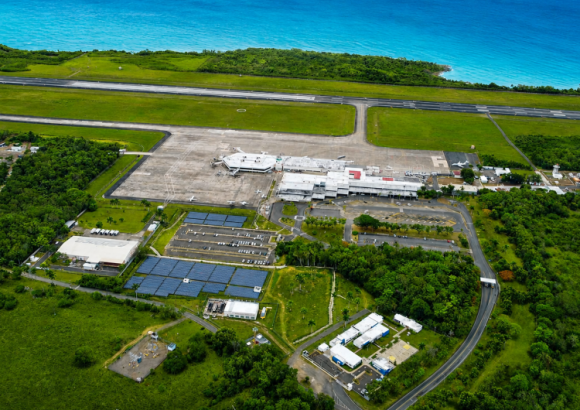
Aerodom announces new international routes and more flights for Puerto Plata
One of the Dominican Republic’s most popular coastal tourism hubs, Puerto Plata, is set to welcome more international visitors this year as Gregorio Luperón International Airport (POP) advances an expansion of its global flight network, adding new routes to Canada and boosting regular service to Panama.
Aerodom, the airport operator that forms part of the global Vinci Airports network, has confirmed a permanent capacity increase from one of Latin America’s leading carriers: Copa Airlines. Starting immediately, the airline will ramp up its weekly service between Panama City’s Tocumen International Airport and Puerto Plata from three flights to four. The expanded schedule will create more flexible connection options for travelers traveling to and from dozens of destinations across Central and South America, leveraging Copa Airlines’ strategic hub in Panama to cut down on layover times and expand access to Puerto Plata’s renowned beaches and tourist attractions.
For the upcoming 2024-2025 Northern Hemisphere winter travel season, two major Canadian carriers will roll out new direct seasonal services to the Dominican destination, both launching on December 15. Air Transat will introduce a new weekly flight connecting POP to London, Ontario, a growing market for leisure travel to the Caribbean. Meanwhile, WestJet will launch a weekly seasonal route from Winnipeg, extending direct access to Puerto Plata for travelers in the Canadian prairies who previously faced longer connecting itineraries.
Beyond expanding its route network, Gregorio Luperón International Airport has also cemented its reputation for delivering high-quality passenger experience. The airport has been recognized four times by the Airports Council International (ACI) with the globally respected Airport Service Quality (ASQ) Award, including a 2025 honor as the best airport in Latin America and the Caribbean in the under 2 million annual passengers category. This award, which is based on direct feedback from passengers across metrics including check-in experience, terminal cleanliness, and staff service, underscores the airport’s ongoing commitment to meeting the needs of growing visitor numbers while maintaining service standards.