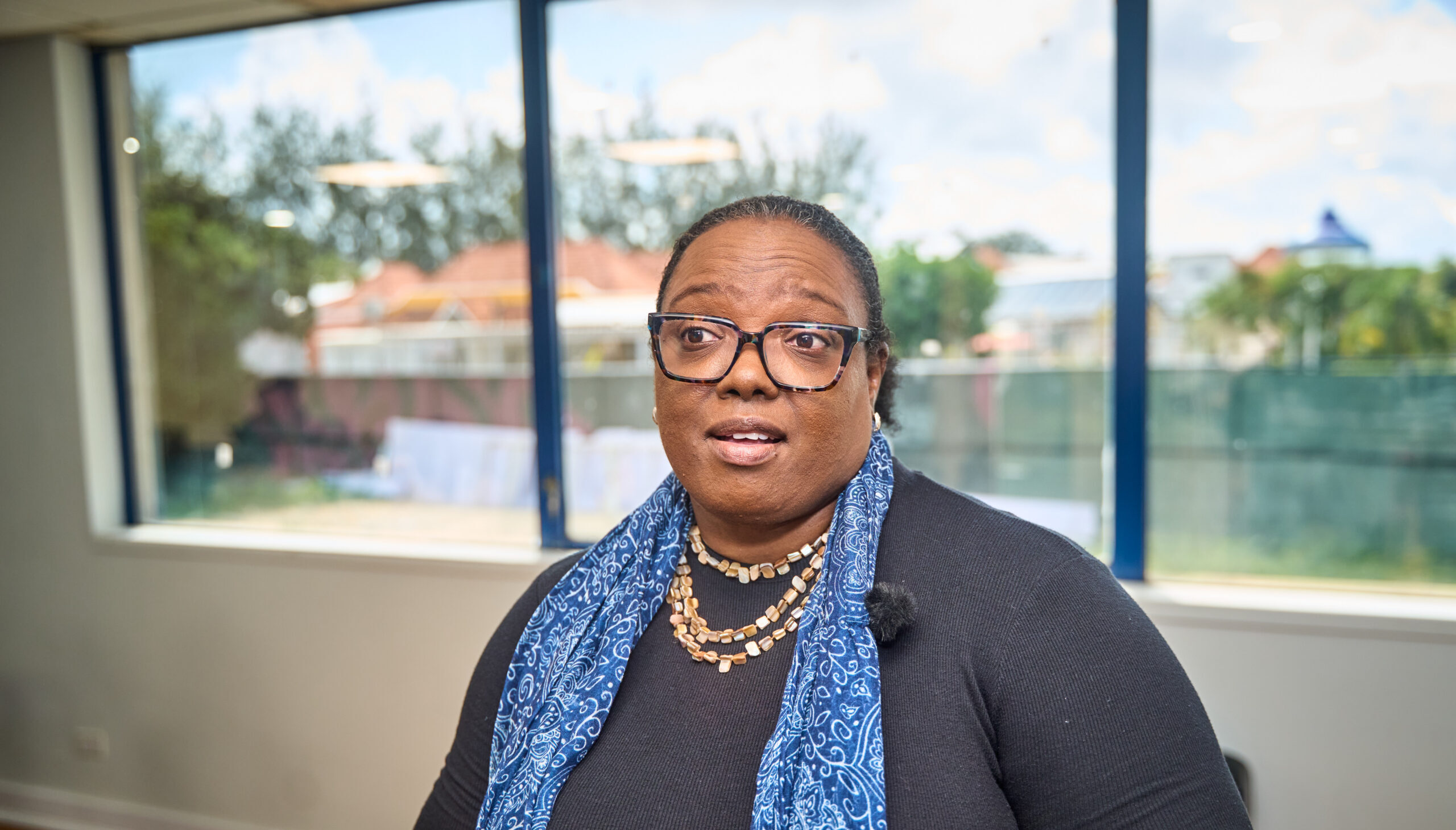
After nearly two decades in Jamaican politics and a decades-long legacy as a globally recognized beauty icon, Lisa Hanna is making a new splash in the global beauty industry with the launch of her own luxury skincare brand, crafted to reframe common cultural narratives around growing older. Named Lisa Hanna Beauty, the brand’s debut collection features seven carefully formulated core products tailored to address common age-related skin concerns: a Hydra Dew Elixir, Advanced Balance Cleanser, targeted Fade Balm for hyperpigmentation and dark spots, a dual-action refining and hydrating serum, a rich Moisture Crème, and a multi-use shimmering oil formulated for both face and body. As first reported by Caribbean National Weekly, every product in the line is infused with the brand’s proprietary quantum ReCP technology, a cutting-edge active blend of lipids, stabilized vitamin C, and matrikin peptides. The proprietary formulation is engineered to support the skin’s natural regeneration process, while boosting long-lasting hydration and improving overall skin texture and tone. In comments published by *Women’s Wear Daily (WWD)*, Hanna shared the refreshing perspective that drives her new brand, pushing back against the popular beauty industry narrative that frames aging as a flaw to be reversed. “People generally want to erase the evidence of [aging] — you’re told to fight, to correct, to reverse,” Hanna explained. “I believe you’re not less with time, you’re more. I wanted to build a product that understands and can communicate with your skin at a deeper level.” Priced at accessible luxury points ranging from $50 USD to $130 USD per product, the entire Lisa Hanna Beauty collection is currently available exclusively at The Spa by Equinox Hotels, with potential for wider retail expansion in the coming months. Hanna’s transition from public service to beauty entrepreneurship comes as no surprise to industry observers. The Jamaica native first rose to international fame when she claimed the Miss World title in 1993 at just 18 years old, before pivoting to a career in public service that saw her serve 18 years in the Jamaican Parliament, stepping down from political office earlier this year in 2025. Beyond her political and now professional beauty work, Hanna remains active in philanthropy through the Lisa Hanna Foundation, which runs community initiatives focused on expanding access to education, improving mental health support, and expanding affordable housing access for communities across Jamaica.
分类: business
-

Systeemonderhoud Finabank uitgelopen; diensten pas dinsdag volledig hersteld
A planned system upgrade at Suriname-based Finabank has hit an unexpected delay, pushing the full restoration of most banking services much later than initially projected, the financial institution announced on Monday, 13 April. What was originally scheduled as a three-day maintenance window running from 10 April to 12 April, part of a broader initiative to improve the bank’s digital and core service infrastructure, will now keep most key services offline until 8:00 a.m. local time on Tuesday 14 April. The extended downtime has left large swathes of the bank’s core offerings limited or completely unavailable for account holders through the end of Monday.
In a public statement, Finabank confirmed that customers will be unable to access a wide range of routine banking services until service restoration is complete. This includes all withdrawals and deposits via ATMs, point-of-sale (POS) debit payments using local-issued Finabank bank cards, and all online and mobile banking transactions for both domestic and international transfers. The outage has already created tangible disruptions for retail shoppers as well: at local merchants that rely exclusively on Finabank’s POS terminals, standard pin-based debit payments are currently impossible, forcing customers to seek alternative payment methods.
Not all of the bank’s card services are affected by the outage, however. Credit card transactions using Finabank-issued Visa and Mastercard products remain fully operational, both for in-person POS purchases and online payments.
For customers needing in-person assistance, Finabank’s physical branch locations will remain open on Monday 13 April for limited, priority services. Account holders can still visit branches to submit product and service applications, make cash deposits, address urgent banking matters, access general customer support, and retrieve or add items to safe deposit boxes held at the branch.
Finabank has publicly acknowledged the inconvenience that the extended maintenance window creates for its customer base, and has urged account holders to adjust their upcoming financial plans to account for the current service disruptions. The bank has not shared additional details on what caused the maintenance work to run longer than initially forecast, but reaffirmed that the work is intended to deliver long-term improvements to its overall service reliability for customers once completed.
-

St. Kitts and Nevis tenders major solar-storage project
The Caribbean nation of St. Kitts and Nevis is taking a major step forward in expanding its renewable energy capacity, as the country’s state-owned St. Kitts Electricity Company (SKELEC) has formally launched a competitive tender process for the island’s first utility-scale solar and battery storage development.
Named the Basseterre Valley project, the proposed facility will be built in the valley that sits just southeast of St. Kitts and Nevis’ national capital, Basseterre. The project is planned to pair 50 megawatts of solar photovoltaic generation capacity with 30.5 megawatts/30.5 megawatt-hours of battery energy storage, creating an integrated renewable power facility that can deliver consistent electricity to the island’s grid.
Under the current first phase of the tender process, SKELEC is inviting all interested developers, investors, and contractors to register for access to the official request for proposals (RFP) documentation through the utility’s dedicated online bidding portal. The process is open to both international project developers and locally-based stakeholders, who are all encouraged to participate. As of the latest public update, the utility has not yet released a public deadline for the completion of registration.
As the only public utility responsible for power generation, transmission, and distribution across the island of St. Kitts, SKELEC is wholly owned by the government of St. Kitts and Nevis. Clement Williams, the utility’s general manager, emphasized that the new Basseterre Valley project will deliver long-term strategic benefits to the Caribbean nation: it will strengthen the country’s national energy security and cut its longstanding dependence on costly imported fossil fuels for power generation.
Current data from the International Renewable Energy Agency (IRENA) shows that as of the end of last year, the entire country of St. Kitts and Nevis held just 5 megawatts of cumulative installed solar capacity, a figure that remained unchanged from the year prior. If completed as planned, the 50 MW project will represent a dramatic 10-fold expansion of the country’s total solar generation capacity, marking a pivotal turning point in its transition to clean energy.
-

César Iglesias achieves historic sales growth in first quarter
Santo Domingo, Dominican Republic – Leading Dominican consumer goods conglomerate César Iglesias has kicked off 2026 with a landmark performance, posting all-time record sales in the first quarter of the year alongside expanded profit margins and enhanced operational efficiency. The strong results stand as a testament to the firm’s robust strategic execution, even as the broader global consumer goods sector navigates widespread economic and supply chain challenges.
Across its entire diversified product portfolio, the company recorded broad-based growth that lifted its top and bottom lines. Core staple brands – including El Gallo cooking oil, Trigo de Oro wheat flour, and Domino paper goods – delivered consistent double-digit sales expansion, while two of its major standalone brands, Mazeite and Hispano, posted particularly significant double-digit growth. Additional upward momentum came from fast-growing lines including El Rey cereals and Kinsú instant soups.
The conglomerate’s longstanding strategic distribution partnership with global consumer goods giant Unilever also contributed to the quarter’s strong performance. Popular Unilever brands distributed by César Iglesias, including personal care lines Dove, Rexona, Pond’s, and hair care brand Sedal, saw steady consumer demand that reinforced the value of the firm’s diversified brand mix and collaborative strategic relationships.
Beyond core domestic retail sales, two other key segments drove the quarter’s outperformance: wholesale and business-to-business (B2B) channels, and expanding international operations. International sales now account for more than 15% of the company’s total annual revenue, marking a steady upward trend in global market penetration for the Dominican firm. During the first quarter, César Iglesias also expanded its footprint by adding seven new brands to its portfolio and extended its reach into the hospitality sector, a move that positions the company to capitalize on the Dominican Republic’s fast-growing tourism industry.
With more than 100 years of operation in the Dominican Republic, company leadership framed the 2026 strong start as an outcome of three longstanding core priorities: maintaining the trust of domestic consumers, prioritizing profitability across all portfolio lines, and upholding disciplined operational execution. In a statement accompanying the quarterly results, the firm reaffirmed its long-term commitment to driving inclusive economic development across the Dominican Republic.
-

Samaná Bayport to handle three cruise ships simultaneously
The Dominican Republic is set to elevate its position as a top Caribbean cruise destination with the development of the new Samaná Bayport, a transformative infrastructure project announced by Jean Luis Rodríguez, executive director of the Dominican Port Authority (Apordom). Designed to address growing regional demand for cruise tourism, the facility will deliver unmatched capacity for the area, with ability to accommodate three large cruise vessels at the same time.
At the core of the terminal’s design is an innovative SeaWalk floating pier, engineered to host massive ships carrying as many as 5,000 passengers. This cutting-edge infrastructure places Samaná Bayport among a small group of select Caribbean destinations that have adopted this advanced pier technology. The remaining two docking spots will support anchored vessels via tender services, expanding the port’s ability to handle surging visitor volumes during peak travel seasons.
Backed by a total investment of $22 million U.S. dollars, the project prioritizes environmental stewardship from its inception, integrating industry-leading sustainable design features. Key environmental components include a on-site wastewater treatment system and targeted conservation measures tailored to protect the sensitive marine ecosystem of Samaná Bay, aligning the development with global standards for responsible tourism.
The economic benefits of the project are already materializing for local communities. Rodríguez confirmed that construction phase has created roughly 150 direct employment positions and another 500 indirect jobs across local supply chains and support services. Once fully operational, the port is projected to generate 100 permanent direct jobs and 600 ongoing indirect roles, anchoring long-term employment for the region.
Economic projections forecast that the port will contribute approximately $10 million U.S. dollars in annual revenue directly from cruise operations, with an additional $9 million in annual revenue generated through spin-off tourism-related services across the local economy. Beyond direct revenue and job creation, the development is strategically positioned to diversify Samaná’s tourism offerings, opening new market opportunities for local small businesses, independent artisans, and regional service providers. By balancing expanded tourism capacity with rigorous environmental protection, Samaná Bayport is set to become a model for sustainable, inclusive tourism growth in the Caribbean.
-

First Order Brands acquires Domino’s Pizza business in Jamaica
In a landmark deal reshaping Jamaica’s quick service restaurant sector, Kingston-based First Order Brands Limited has completed the acquisition of all assets belonging to Convenient Brands Ltd. The transaction positions First Order Brands as the new official master franchisee for Domino’s Pizza across Jamaica, taking ownership of the country’s largest pizza restaurant network.
Domino’s has built a decades-long presence in the Jamaican market, with over 30 years of operation serving local consumers. Today, the chain boasts 18 store locations across the island and employs more than 200 local team members, making it a major player in the country’s fast food landscape.
First Order Brands is helmed by Chief Executive Officer Sean Scott, a seasoned industry leader with deep roots in Jamaica’s quick service restaurant space. Scott previously led operations for both Domino’s and Wendy’s Jamaican franchises between 2011 and 2018, bringing hands-on operational expertise and intimate knowledge of local consumer preferences to the new role. Nicholas Scott will serve as chairman of the newly positioned franchise operator.
Speaking on the acquisition, Scott shared his enthusiasm for the brand’s future in Jamaica: “We are privileged to be the steward of this iconic brand and excited to build on Domino’s long track record as the number one pizza brand in Jamaica.” Industry observers note the deal brings a familiar, experienced leadership team back to the Domino’s Jamaica operation, setting the stage for potential growth and expansion of the chain’s footprint in the coming years.
-

Government of St. Kitts and Nevis Announces Discounted VAT Rate Days (DVRD) for 2026
BASSETERRE, Saint Kitts – On April 10, 2026, the Government of the Federation of Saint Kitts and Nevis officially announced the full annual schedule for its widely anticipated 2026 Discounted Value Added Tax (DVRD) Rate Days, a popular policy initiative built on the success of previous years that aims to inject momentum into the local economy and deliver tangible financial relief to the nation’s citizens and residents.
The program has scheduled three separate discounted shopping windows across 2026, aligned with major seasonal holidays and annual household events, with specific eligibility rules for vehicle purchases. The first DVRD event will coincide with the Easter holiday, taking place on Friday, April 17, 2026. The second, timed to support families preparing for the new academic year, is scheduled for the summer back-to-school season on Friday, August 28 and Saturday, August 29, 2026. For both the Easter and summer events, motor vehicles are explicitly excluded from the reduced VAT rate. The third event, set for the year-end holiday shopping season, will run on Friday, December 11 and Saturday, December 19, 2026, and for this seasonal period, vehicle purchases will be included in the discounted VAT scheme.
Officials from the government note that this targeted policy fills a critical need amid ongoing global economic headwinds. Persistent global inflation, lingering cross-border supply chain disruptions, and economic volatility driven by geopolitical tensions have put increased financial pressure on households and small business retailers alike across the globe, and Saint Kitts and Nevis is no exception. The DVRD program is designed to address dual challenges: it eases the cost burden on local families by lowering prices for everyday essentials, back-to-school supplies, and holiday purchases, while simultaneously driving higher foot traffic and consumer spending to support local retailers during their most important seasonal sales windows. Beyond immediate savings, the initiative also encourages increased circulation of capital within the federation’s domestic economy, strengthening overall economic resilience.
To ensure the program runs smoothly for both shoppers and retailers, the government has issued a formal reminder to all participating local businesses: retailers must update their point-of-sale systems ahead of each scheduled DVRD event, and maintain clear, transparent communication of the discounted VAT terms to customers throughout the duration of each promotion.
Residents and visitors seeking additional details, updated guidelines, or clarification on eligible purchases can access the full DVRD resource page via the official Inland Revenue Department website at www.sknird.com, or reach out to the department directly for personalized assistance.
In its official statement, the Government of Saint Kitts and Nevis reaffirmed its ongoing commitment to implementing targeted, people-centered economic policies that support working families, strengthen local businesses, and build long-term economic stability across the federation. This press release was originally distributed via the Prime Minister’s Office and published in full by local news outlet SKNVibes.com, which notes it does not edit for spelling or grammatical errors in received press materials, and the views expressed do not necessarily reflect those of the outlet or its partners.
-

Caribisch gebied groeit uit elkaar, regio met twee gezichten
The Caribbean region is undergoing a rapid economic transformation that is splitting it into two increasingly distinct blocs, new analysis shows. While energy-rich nations such as Guyana and Suriname are poised for strong expansion driven by global investment in oil and gas, the majority of small island economies that rely heavily on tourism continue to lag far behind. This growing gap is now at risk of becoming a permanent, structural divide that reshapes the region’s economic future.
Recent economic assessments confirm that the Caribbean can no longer be treated as a single, uniform economic entity. One subset of countries is reaping massive rewards from surging foreign investment in upstream oil and gas production, while the other is stuck with vulnerable, narrow economic models overwhelmingly dependent on international tourism and imported goods. This divergent trajectory has created a stark new economic dividing line across the region.
Guyana stands as the most prominent example of this new economic reality. Buoyed by large-scale offshore oil discoveries and rapidly expanding production, the South American Caribbean nation has become one of the fastest-growing economies on the planet. Neighboring Suriname is at an earlier stage of the same energy-driven development trajectory, with high expectations for significant future oil revenue that could lift its economic output.
On the opposite side of the divide sit dozens of small Caribbean island nations that count tourism as their primary source of foreign exchange and employment. Although international tourism has recovered to some degree after the collapse caused by the COVID-19 pandemic, growth remains fragile and vulnerable to external headwinds. Factors including elevated global airfare prices, persistent worldwide inflation, and heightened geopolitical uncertainty have put a firm cap on the pace of recovery.
The outcome of these divergent trends is a clear split: a small handful of resource-rich states enjoying accelerating economic expansion, and a larger group of small island states struggling to build and sustain consistent economic momentum.
Tourism-dependent economies face a stacked set of long-term structural challenges that make breakout growth difficult to achieve. Their narrow economic bases leave them extremely sensitive to external shocks, ranging from spiking global energy prices and rising import costs to sudden shifts in international tourist demand. Compounding these challenges, climate-related risks are becoming an increasingly heavy burden. Intense hurricanes and extreme weather events not only cause catastrophic damage to critical tourism infrastructure but also erode traveler confidence in visiting vulnerable islands, creating repeated setbacks for local economies. This toxic combination of challenges makes it extremely difficult for most of these island nations to build the foundation for long-term, sustainable growth.
Today, overall regional economic growth is increasingly driven by the energy and natural resources sector. Without the outsized contribution of Guyana’s oil-fueled expansion, aggregate regional growth figures would be far lower, highlighting just how unbalanced the Caribbean’s current economic momentum has become, concentrated in just a handful of countries.
For Suriname, the emerging energy boom offers major transformative opportunities, but it also carries significant downside risks. While projected oil revenues will likely strengthen the country’s overall economic position, they also leave it heavily exposed to volatile swings in global crude prices, creating long-term fiscal and growth uncertainty.
The widening economic gap has forced Caribbean governments to confront a fundamental policy choice. Will nations continue to rely on traditional, low-resilience sectors such as mass tourism, or will they pursue aggressive economic diversification to cultivate new industries and sources of growth? Without targeted structural reforms, analysts warn, the existing divide will deepen further. This is not just an economic issue: a growing gap could also fuel rising social and political tensions across the region.
What is unfolding across the Caribbean today is nothing less than a structural shift in the region’s economic dynamics. The region is moving toward a new model where natural resource extraction and energy production set the pace of growth, while traditional tourism-led sectors continue to face mounting pressure. The core question facing the region today is no longer whether this two-speed divide exists, but how deep the split will ultimately become — and which economies will successfully adapt to this new Caribbean economic reality.
-

What does flood insurance really cover? A guide to protecting your assets.
As extreme weather events grow more frequent across the globe, homeowners and vehicle owners face increasing urgency to understand the fine print of their insurance policies to safeguard their valuable assets. Leading insurance provider Mapfre has recently broken down common misconceptions around flood and water damage coverage, highlighting critical gaps that many policyholders only discover after disaster strikes.
For residential and commercial multi-risk property policies, Mapfre’s Technical Director of General and Property Insurance Yesenia Vásquez confirmed that flood protection is included as a standard feature in most contracts. However, the company warns of a common cost-cutting choice that leaves many property owners unprotected: customers can opt to voluntarily remove flood coverage from their policy to reduce their annual premium. While this choice lowers immediate costs, Vásquez emphasized that it can lead to devastating financial losses when extreme flooding occurs.
Mapfre also draws a clear technical distinction between flooding and other forms of water damage that are not covered by standard flood policies. For insurance purposes, flooding is officially defined as water originating outside a property that inundates and penetrates the building, damaging both the structural core (including walls and flooring) and personal or commercial contents such as furniture and equipment. In contrast, Vásquez noted that water damage resulting from internal issues like clogged pipe leaks, failing roof seals, or general poor maintenance does not qualify as flooding, and these claims will be denied under standard flood coverage. These types of damage are considered the responsibility of the property owner, who is expected to complete routine upkeep to prevent avoidable failures.
When it comes to personal and commercial vehicles, the rules around water damage coverage differ significantly from property policies. Francisco Pérez Cuevas, Mapfre’s Technical Director of Auto Insurance, explained that water and flood damage is never included as an automatic feature of basic auto insurance policies. Instead, drivers must add this coverage as a separate add-on to their existing contract to be protected.
Pérez Cuevas also pushed back against the widespread marketing term “full coverage insurance”, noting that this phrase is more of a promotional tool than a technically accurate description of a policy. “Many consumers assume that a ‘full coverage’ policy protects them against every possible risk, but that simply is not the case,” he explained. “It is essential that every policy holder review their specific coverage line-by-line, and explicitly ask their insurance provider whether their contract includes water and flood damage for their vehicle.”
To help property and vehicle owners avoid costly surprises when filing a claim, Mapfre experts have outlined three core checks every insured person should complete before disaster strikes:
First, always distinguish between flooding and routine leaks. Insurance is designed to cover extraordinary, external natural events, not damage that results from a property owner’s failure to complete routine maintenance on internal systems like pipes and roofs.
Second, verify that both the physical structure of your property and all personal or commercial contents inside are explicitly included in your flood coverage. Flooding can damage everything from a building’s foundation to household appliances, and gaps in coverage can leave major costs uncovered.
Third, never assume coverage based on the marketing name of your policy. Always ask your insurance advisor to provide a full written breakdown of all excluded risks, so there is no confusion when you need to file a claim.
At its core, effective asset protection against rising extreme weather relies on more than just paying insurance premiums. It requires a clear understanding of exactly what your policy covers, and where exclusions apply. The difference between recovering your property after a flood and suffering a total financial loss often comes down to reviewing the details of your insurance contract before a disaster occurs.
-

Time for the stick, not just carrot?
As Jamaica pushes forward with plans to build a truly sustainable construction and real estate sector, industry leaders are calling for a balanced policy framework that combines voluntary incentives with clear, enforceable regulations to overcome cost barriers holding back widespread green building adoption.
Speaking at a recent Green Sustainability Panel Discussion hosted by the Realtors Association of Jamaica (RAJ), Richard Mullings, president of the Incorporated Masterbuilders Association of Jamaica (IMAJ), argued that current incentive-based policies are insufficient to drive change. Because sustainable construction often requires higher upfront costs that developers struggle to pass on to homebuyers in a competitive market, most firms avoid adopting green requirements voluntarily.
Mullings pointed to existing mandatory water harvesting rules as a clear example of unenforced sustainability standards. He noted that most municipal building approvals already require every new residential development to include a water collection tank, yet nearly all developers ignore the requirement with no consequences. Without uniform, enforced rules, any developer that voluntarily adds the extra upfront cost will immediately price themselves out of the market, especially for affordable, lower-cost housing developments.
“We operate in a profit-driven free market, and developers have no choice but to prioritize their bottom line,” Mullings said, addressing his comments directly to Gregory Bennett, deputy CEO of the Spatial Planning Division at Jamaica’s National Environment and Planning Agency (NEPA). “Since most sustainability measures deliver widespread public and societal benefits, shouldn’t we pair the current carrot of incentives with a regulatory stick to push the entire industry toward sustainable practices? Could we use public systems, tax policy, and strict enforcement to shift market demand toward green building?” he asked.
In response to Mullings’ proposals, Bennett confirmed that Jamaican policymakers are already advancing new frameworks to encourage more businesses to adopt sustainable construction best practices at the ministerial level. He agreed with Mullings that effective change ultimately depends on robust monitoring, enforcement, and compliance, all while balancing the upfront cost challenges facing developers and homebuyers.
Bennett added that a growing segment of the private sector is already embracing green building voluntarily, with many developers integrating sustainable features into their projects without waiting for regulatory mandates. Still, he acknowledged that large-scale systemic behavior change will take time. The Jamaican government is currently mainstreaming sustainability across the sector, working to embed the value of green building into the long-term thinking of both developers and homeowners, and policy work to advance a national green business strategy is already at an advanced stage, he said.
Latoya Williams, assistant vice-president of lending solutions and business services at Victoria Mutual Building Society (VMBS), echoed Mullings’ concerns about upfront cost barriers, noting that the global built environment accounts for 37% of all energy-related carbon emissions, making the transition to green building a critical priority for Jamaica’s climate goals.
“Our end goal is not just meeting sustainability targets — it’s building better, more resilient, future-ready homes for all Jamaicans,” Williams said. “Through incremental changes across every project and every industry decision, we can collectively build a far more sustainable Jamaican built environment. Most importantly, we have a chance to make this transition inclusive, practical, and accessible to Jamaicans across all income levels.”
She emphasized that the transition cannot succeed if different parts of the industry work in isolation. Key challenges still to address include higher upfront costs for sustainable solutions, gaps in public and industry awareness, limited access to effective incentives, and uneven technical capacity across the sector. “This requires collaboration across the entire ecosystem — developers, realtors, financial institutions, and policymakers all have a critical role to play to move the industry forward,” Williams added.
To build industry capacity for the transition, RAJ will launch a new two-day Green Designation training course for Jamaican realtors starting in June, equipping them with the skills they need to promote sustainable properties to clients.
Heather Pinnock, a moderating associate for the panel and co-founder of the upcoming Jamaica Green Building Council, described realtors as the critical “sustainability link in every transaction” between developers and homebuyers.
“Green infrastructure cuts long-term utility costs for homeowners, improves living comfort, and increasingly commands premium prices for both sales and rentals,” Pinnock said. “We don’t need to convince clients of the ethical principle of sustainability — we just need to show them the numbers. A well-designed sustainable property is simply a better long-term investment, and our job is to make that case confidently with solid data.”
While environmental compliance is already a formal part of the development approval process in Jamaica, it has not yet been systematically embedded into property sales transactions, Pinnock explained. That gap is a major opportunity for realtors to drive change: when realtors consistently ask the right questions about a property’s environmental status, energy systems, flood risk, and planning compliance, they raise sustainability standards across the entire market. Every property listing, every offer, every negotiation is a chance to advance the industry’s sustainability agenda, she added.