Fresh data published by the Eastern Caribbean Central Bank has revealed an unusual energy pricing trend across the Eastern Caribbean Currency Union (ECCU) for July 2026, with Antigua and Barbuda emerging as the bloc’s most affordable market for road fuels. Per imperial gallon, Antigua and Barbuda’s retail price for gasoline landed at EC$14.50, while diesel retailed for EC$14.25. Both figures sit far below the ECCU’s regional averages for the same month, which clocked in at EC$17.66 for gasoline and EC$18.16 for diesel.
Beyond transportation fuels, Antigua and Barbuda also secured a top spot for affordable cooking gas across the bloc. The island nation recorded the ECCU’s second-lowest cooking gas rates, with a standard 20-pound cylinder retailing for EC$32 and a 100-pound cylinder priced at EC$155. Only neighboring St. Kitts and Nevis achieved lower cooking gas prices for consumers across the currency union.
The ECCU as a whole saw a small but uniform downward shift in fuel prices compared to the previous month. Official statistics confirm that average prices for both gasoline and diesel across all member states declined by 1.2% between June 2026 and July 2026, marking a minor relief for regional households and transport operators grappling with energy costs.
分类: business
-
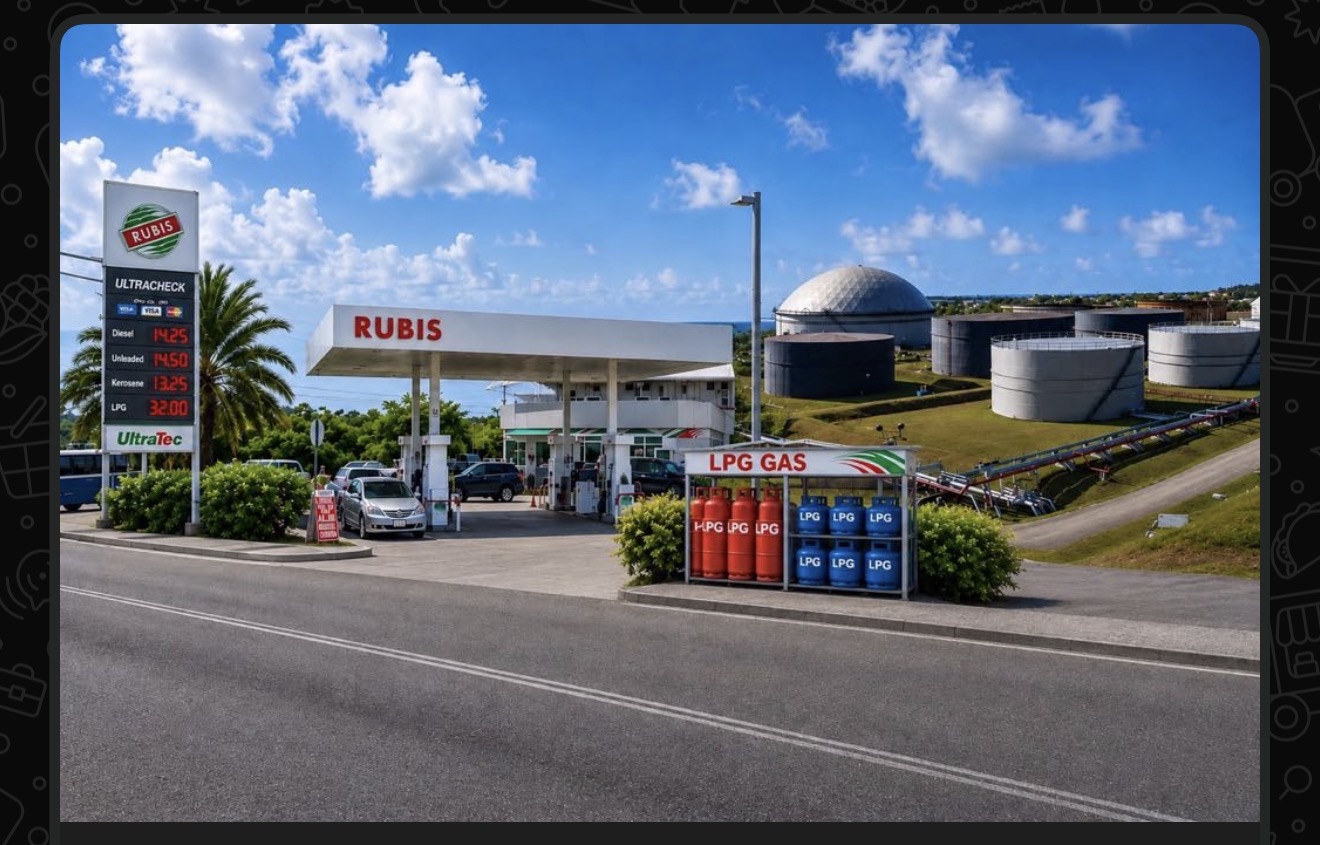
Antigua and Barbuda Records Lowest Gas and Diesel Prices in ECCU for July
-

While GST-Free Lasted One Day, Belizeans Crossed the Border by the Thousands
As Belize launched its first annual one-day GST-free shopping event for back-to-school supplies this August, border data reveals a surprising trend: thousands of local residents opted to cross the western border into Guatemala to take advantage of cheaper retail options south of the boundary.
The mass cross-border shopping excursion unfolded over the weekend of August 15 and 16, coinciding with Belize’s inaugural tax-free promotion. Lawrence Thompson, Director of Border Management and Immigration, confirmed that the western checkpoint at Melchor de Mencos saw a dramatic surge in passenger travel, with a total of 4,900 passenger movements recorded across the two days. Of that total, roughly 1,760 travelers listed shopping excursions as their primary purpose of travel, accounting for 35% of all traffic at the western border that weekend – a share far higher than typical non-essential travel volumes.
In contrast to the western border’s shopping rush, the northern Corozal border checkpoint saw no comparable spike in excursion-focused travel. Thompson noted that while 5,800 total passenger movements passed through Corozal over the same weekend, with higher volumes recorded on Saturday the 15th, nearly all travel fit normal patterns, with no visible uptick in cross-border shopping trips. He added that during peak back-to-school season in August and the year-end Christmas shopping period, combined passenger traffic across both border checkpoints regularly exceeds 10,000 total movements, making the western surge this year an notable deviation from baseline trends.
Meanwhile, Belize Tax Services reported that the domestic GST-free event ran without major disruptions or complaints. Deputy Director Vilma Broaster stated that the agency received only a handful of feedback submissions, most centered on claims that local retailers had raised base prices on eligible goods ahead of the tax exemption. Broaster clarified that the tax agency does not have regulatory authority over base retail pricing, and confirmed that no reports were filed of consumers still being charged GST on officially tax-exempt school supplies. She also noted that the tax break only applies to purchases from businesses that are formally registered for GST in Belize.
For consumers who missed the first tax-free shopping day, a second and final GST-free Saturday is scheduled for August 29. This event will extend tax exemptions to both back-to-school supplies and laptop computers, with specific rules already published for eligible electronics purchases.
-
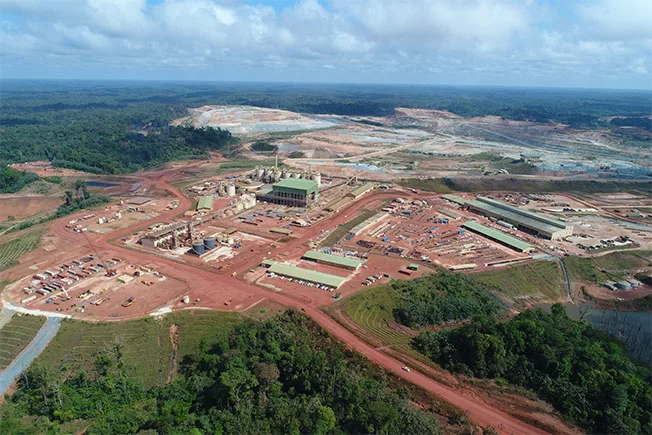
Merian-goudmijn: US$ 127 miljoen aan belastingen en royalty’s in 2025
Newmont Suriname has announced that the total economic contribution of its Merian gold mine to the Surinamese economy reached approximately $634 million in 2025, marking a 17% increase compared to 2024 figures. The company released the updated data on Monday, clarifying that the total contribution does not solely consist of revenue directed to the Surinamese government, with more than half of the sum allocated to local and external supply chain partners.
Breaking down the $634 million total, the largest single line item is $345 million in payments to suppliers and contracted service providers, followed by $78 million in employee salaries. Combined income and payroll taxes paid by the operation amount to $79 million, with an additional $48 million in royalties directed to the state, bringing total government tax and royalty revenue to $127 million. Newmont has not yet provided a separate breakdown of how much of the $79 million tax figure is attributable to corporate income tax versus payroll withholding.
As a 25% co-owner of the Merian mine, alongside Newmont’s 75% controlling stake, the state-owned energy firm Staatsolie received $84 million in net profit share for 2025. This dividend payment is separate from taxes and royalties paid to the government, bringing the total of state-linked earnings from the project to $211 million, though not all of this sum enters the national government’s general treasury.
According to Newmont’s disclosure, 75% of the total economic value generated by Merian mining operations remained within Suriname’s domestic economy in 2025. A total of 308 Surinamese suppliers and contractors were part of the mine’s supply chain last year, though the company did not specify what share of the $345 million in supply chain payments went to these domestic businesses. The mine directly employs approximately 1,277 workers, and Newmont says it continues to invest in upskilling and professional development for its local workforce.
The release of Merian’s 2025 economic data comes as the Surinamese government undertakes a broad regulatory overhaul of the country’s gold mining sector. President Jennifer Simons has ordered a temporary pause on issuing new gold mining concessions and processing existing concession extension requests, as the administration works to build a clearer picture of current sector conditions and strengthen regulatory oversight and transparency across the industry.
Beyond maximizing economic returns, the regulatory review is centered on protecting residential and traditional territories of Indigenous and Tribal communities, safeguarding ecologically sensitive natural areas, and mitigating the environmental harm caused by unregulated gold extraction. In response to these policy priorities, Newmont says its Merian operations adhere to the principle of Free, Prior and Informed Consent (FPIC) when engaging with Indigenous and Tribal communities, with a commitment to open dialogue, full transparency, and inclusive participation in local decision-making processes.
Newmont has also outlined a dedicated strategy to support formalization of Suriname’s artisanal and small-scale mining sector, focused on delivering technical assistance, building local regulatory capacity, developing alternative livelihood options for small-scale miners, and reducing mercury use in artisanal extraction. The company says it is exploring pathways to bring more unregulated small-scale operations into formal compliance with existing national mining laws.
Currently, the Merian gold mine is projected to remain in operation until 2040, with Newmont reporting that it is actively exploring additional reserve expansion opportunities that could extend the mine’s operational lifespan beyond the current timeline.
-

Grenada partners with Ernst & Young for Public Sector Entities conference
Grenada’s Ministry of Finance has announced a landmark partnership that names global professional services firm Ernst & Young Limited (EY) as the Exclusive Executive Sponsor for the opening day of the island nation’s 3rd Annual Public Sector Entities Directors Conference. The two-day event is scheduled to run September 23–24, 2026 at the Grenada Trade Centre, with sponsorship of Day One representing a shared commitment between the government and EY to elevate corporate governance, leadership standards, public accountability, and long-term institutional performance across Grenada’s state-backed entities.
Now established as the country’s leading gathering for public sector governance leaders, the annual conference draws sitting and aspiring directors, chief executive officers, and corporate secretaries from across the nation’s public institutional landscape. After the successful launch of the forum in 2024 and expanded engagement at the 2025 iteration, the 2026 conference is projected to welcome roughly 215 attendees representing 40 of Grenada’s statutory bodies and state-owned enterprises.
The opening day of the 2026 conference, set for Wednesday September 23, will kick off at 5:30 p.m. with an official opening and recognition ceremony hosted at the Grenada Trade Centre Annex. A cocktail reception will follow the formal proceedings, and continuing a tradition from past conferences, Grenada Prime Minister the Honourable Dickon Mitchell will deliver the evening’s keynote address.
Ricard Duncan, OBE, an advisor with Grenada’s Ministry of Finance, highlighted the alignment between the government’s public sector reform goals and EY’s global expertise. “We are delighted to welcome EY as our Exclusive Executive Sponsor for the Opening Ceremony of the 2026 Conference,” Duncan said. “EY is widely recognized for its leading work in governance frameworks, leadership development, risk management, and organizational excellence. Their partnership reflects a shared vision of building stronger, more effective public institutions that deliver lasting value to the people of Grenada.”
Barry Eligon, Managing Director for Government and Public Sector at EY, echoed that shared commitment to advancing Grenada’s public sector capacity. “EY is proud to partner with the Government of Grenada in supporting this important national initiative,” Eligon noted. “Strong governance and effective leadership are fundamental to resilient institutions and sustainable long-term economic development. We are pleased to contribute to a forum that promotes excellence, innovation, accountability, and cross-sector collaboration across Grenada’s public sector ecosystem.”
Beyond the opening ceremony and keynote address, the full conference program will feature a lineup of distinguished regional and international speakers, alongside interactive panel discussions, real-world case studies, and hands-on practical sessions focused on the most pressing modern governance challenges facing public sector entities today. Both the Government of Grenada and EY have stated they are preparing to welcome attendees to what is expected to be another landmark event, one dedicated to advancing governance excellence and boosting the overall effectiveness of Grenada’s public institutions for the benefit of all citizens.
This announcement was released by the Ministry of Finance of Grenada. NOW Grenada holds no responsibility for the content and opinions shared by contributing parties, and provides a formal channel for reporting any content violations related to contributor submissions.
-
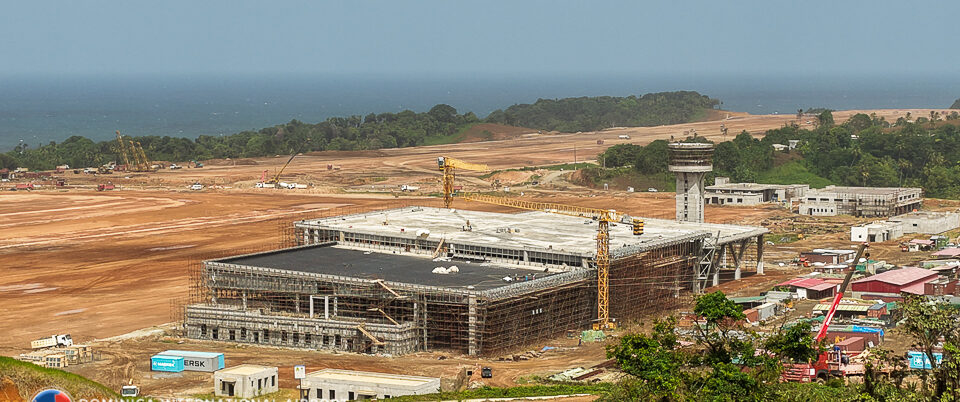
Dominica international airport terminal takes shape as construction continues towards completion
Dominica’s transformational international airport passenger terminal project is logging consistent construction progress, as work crews push forward across multiple work zones to build what will become the Caribbean island nation’s first modern global air travel gateway.
As of mid-August 2026, visible progress is evident across all key sections of the terminal, with the core structure steadily taking shape after months of on-site work. Project officials confirmed that a full slate of concurrent construction activities are currently underway, ranging from structural steel erection and masonry work to large-scale concrete pouring operations. Beyond core structural work, crews are also progressing on critical building infrastructure, including roofing installation, waterproofing treatments, fireproofing systems, and the integration of specialized lightning protection infrastructure designed to safeguard the facility.
The ongoing construction marks the latest milestone in the development of the airport’s passenger amenities, which are being engineered to deliver a contemporary, comfortable travel experience for both visitors entering Dominica and local residents departing the island. In addition to structural and safety system installation, preliminary work on interior fit-outs and passenger-facing facilities is also getting underway across portions of the terminal.
MMC Development Ltd., the primary contractor leading the billion-dollar project, notes that the entire airport has been designed and built to withstand the growing climate hazards facing small island developing states, including stronger tropical cyclones, rising sea levels, and extreme weather events amplified by climate change. To meet these resilience goals, the project integrates industry-leading sustainable construction techniques and cutting-edge engineering technology.
The firm has outlined an ambitious vision: to deliver the most advanced, high-quality airport in the entire Eastern Caribbean region. MMC Development also confirmed that the project holds notable economic significance for Dominica: it is the largest single construction contract ever awarded in the country’s history, and currently stands as the biggest ongoing contracted development project across the entire Eastern Caribbean.
Government and project authorities have reaffirmed their commitment to hitting the official completion deadline of September 2027, when the new airport will open to commercial passenger traffic and transform Dominica’s tourism and trade connectivity.
-
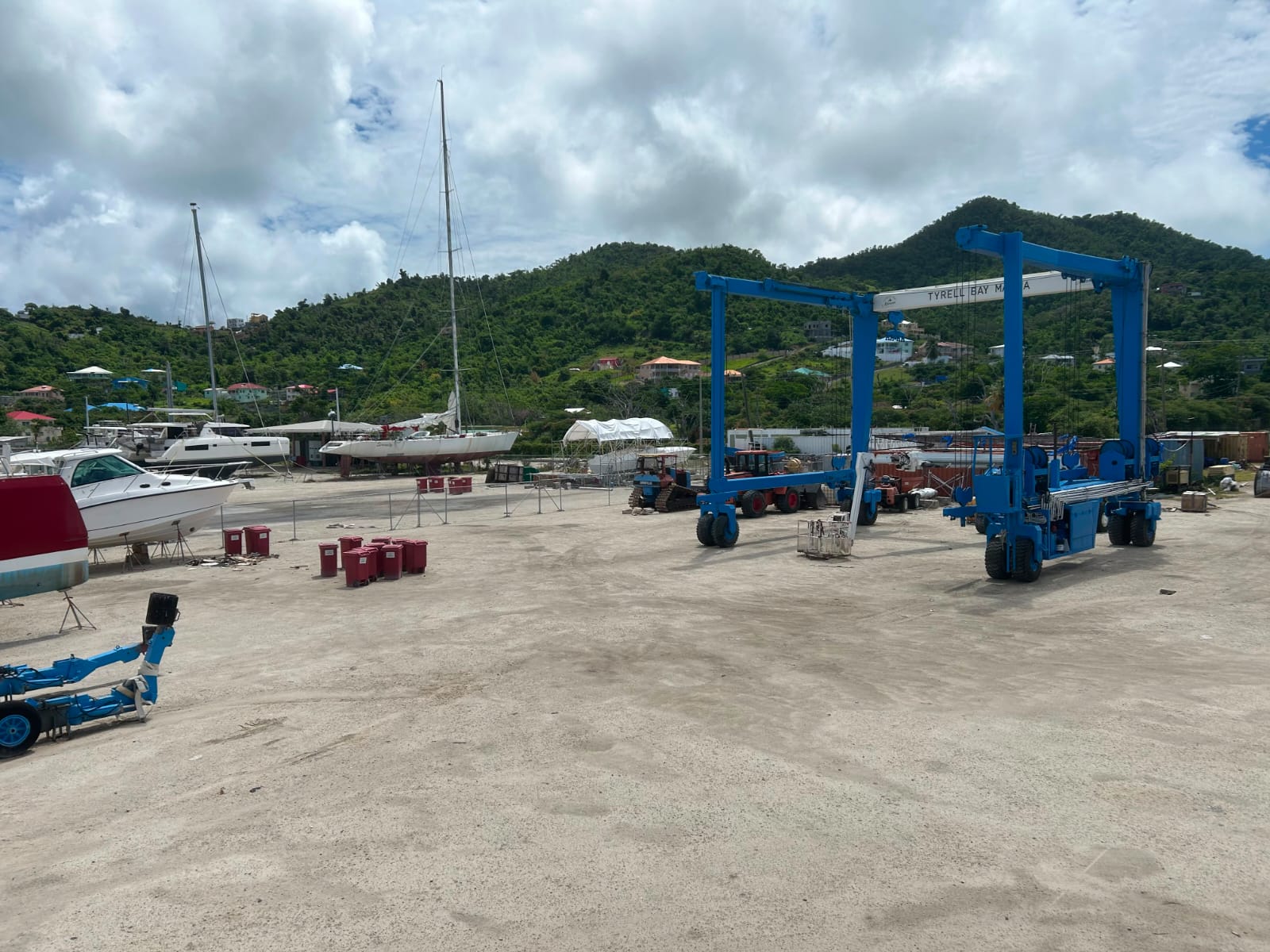
Tyrell Bay Marina addresses fence dispute and impact on boat owners
A long-running land dispute in Carriacou, Grenada, has escalated into a public standoff that is disrupting marine operations and harming local livelihoods, with operators of Tyrell Bay Marina calling for urgent action to restore blocked access to their boatyard. The conflict traces its origins back to 2013, when the Grenadian government approved a lease for roughly 7 acres of adjacent mangrove land to Carriacou Devcor Ltd (CDC), the developer behind the Tyrell Bay Marina project, to support the facility’s planned expansion. That approval quickly sparked a legal challenge from the heirs of Samuel Corion, who argue the parcel was originally granted to Corion in 1914 and remains part of his family’s estate. In January 2023, the Judicial Committee of the Privy Council — the region’s highest appellate body — handed down a ruling that settled the core ownership question, confirming the disputed land belongs to the Estate of Samuel Corion. However, the separate legal question of who holds the right to current possession and ongoing use of the property remains unresolved and is still working its way through local courts. The dispute boiled over in late April this year, when an unauthorized fence was erected across a key section of the marina’s boatyard. The barrier cuts off critical access between the area where vessels are stored on land, the marina’s travel lift, and its public slipway. In a break from its prior policy of staying quiet while legal proceedings move forward, Tyrell Bay Marina’s management issued a detailed public statement this week, noting they had avoided public comment out of respect for the ongoing judicial process. They emphasized their public appeal is not an attempt to try the case in the media, but rather a necessary step to address growing harm to area residents, visitors, and local businesses. Most notably, management says, the fence was installed without giving any advance notice to affected boat owners, leaving them no window to retrieve or relaunch their vessels before the access route was cut off. As of this statement, dozens of customer vessels remain stranded on dry land at the facility — a particularly devastating outcome for several owners who live aboard their boats full-time. The situation has already created widespread hardship for those affected: boat owners face prolonged uncertainty, unexpected additional costs, lost income from charter or commercial operations, and growing anxiety over the safety and security of their property. Beyond direct impacts to boat owners, the blocked access has also cut off route access for emergency services, commercial vehicles, and the marina’s daily essential operations. Despite the disruption, Tyrell Bay Marina confirmed its core travel lift infrastructure remains fully operational, and staff are ready and able to relaunch all stranded vessels as soon as the blocked route to the slipway is cleared and operations can resume without further interference. Since the fence was erected, both affected boat owners and marina management have made multiple repeated attempts to negotiate a temporary solution for restoring access. Boat owners submitted formal requests for access on May 1, May 3, May 14, and again filed a formal petition on July 24. The marina itself submitted a formal request for temporary, limited access on June 17. To date, however, the party responsible for constructing the fence has not responded to any of these outreach efforts, and no temporary agreement has been reached. The ripple effects of the impasse now extend far beyond the marina’s own operations and stranded boat owners. Tyrell Bay Marina is a central hub for Carriacou’s coastal marine economy, which supports a broad network of local workers and small businesses, including marina employees, independent contractors, marine mechanics, electricians, welders, painters, local taxi operators, guesthouse and hotel accommodation providers, waterfront restaurants, retail shops, and dozens of other micro-enterprises that rely on visitor and local vessel traffic to generate income. When vessels cannot be hauled or launched, work is either delayed entirely or lost completely; many visiting yachting visitors, who are a core economic driver for the island, have already altered their travel plans to avoid the area, cutting off a key stream of circulating income across the entire local economy. The stakes are even higher right now, as the entire island is still in the process of post-hurricane recovery and rebuilding following the passage of Hurricane Beryl earlier this year. In its statement, Tyrell Bay Marina again reaffirmed its long-standing commitment to abiding by local laws and fully respecting the ongoing judicial process. The organization says it will continue to engage with the courts, cooperate with all relevant government authorities, maintain full, transparent communication with its affected customers, and work toward a peaceful, legally sound resolution to the entire dispute. Its immediate call to action is for all involved parties and responsible authorities to center the well-being of the people and businesses currently harmed by the blockade, and prioritize the immediate restoration of safe, uninterrupted access through the boatyard to allow stranded vessels to launch. The marina added that it remains fully prepared to collaborate on all reasonable timing and practical adjustments required to restore access, all while ensuring no party’s existing legal claims are compromised by any temporary agreement. This report originally appeared in NOW Grenada, which notes it is not responsible for contributor opinions or third-party content, and invites users to report abusive content via official platform channels.
-

Asonahores: Airbnb listings now outnumber hotel rooms in Santo Domingo
In a recent televised interview on Color Visión’s *Hoy Mismo* program, Juan Bancalari, head of the Dominican Hotel and Tourism Association (Asonahores), outlined a shifting landscape for the country’s tourism sector, highlighted by a surprising boom in unregulated short-term accommodation and broad-based growth across non-traditional tourist hubs.
Bancalari revealed that short-term rental platforms led by Airbnb have expanded far faster than industry analysts predicted in the Dominican capital, Santo Domingo. Today, the number of active Airbnb listings in the city surpasses the total count of available rooms offered by traditional brick-and-mortar hotels. This dramatic growth has created a new dynamic for the country’s hospitality sector, prompting Asonahores to outline a clear, collaborative position on the emerging segment: the trade group does not oppose the rise of short-term rentals, but it is calling for formal government regulation to level the playing field and protect consumers. Bancalari emphasized that regulation is necessary to enforce consistent safety protocols, maintain minimum quality standards for accommodation, and ensure all short-term rental operators meet full tax compliance obligations, closing gaps that currently give unregulated platforms an unfair advantage over licensed hotels.
Beyond the conversation about short-term rentals, Bancalari underscored the increasingly critical role tourism plays in driving the Dominican Republic’s national economy, noting the industry is expanding well beyond its historic core in the country’s eastern coastal resort regions. He highlighted three emerging tourism destinations that are already delivering significant economic returns, with more growth on the horizon.
First, the northern province of Puerto Plata has emerged as a major cruise tourism hub, welcoming nearly 2 million cruise ship passengers each year. Visitors to the province spend an average of more than $100 per person during their stops, injecting an estimated $200 million into local businesses and supporting thousands of local jobs across retail, food service, and transportation. He also pointed to the fast-growing resort region of Miches, where approximately 3,000 new hotel rooms are currently under construction as major hospitality investors bet on the area’s future growth. Finally, the coastal destination of Samaná is on track to welcome up to 1 million annual visitors by 2030, as infrastructure investments and marketing efforts draw more international travelers to the area.
This combination of disruptive growth in short-term accommodation and geographic expansion of the broader tourism sector signals a period of rapid transformation for the Dominican Republic’s most economically important industries, with policymakers now facing pressure to update regulatory frameworks to match the changing market.
-

I LOVE DR: Dominican premium spirits launch at Las Américas Airport
A bold new premium spirit brand rooted in Dominican culture and local flavors, I LOVE DR, has marked its official entry into the travel retail sector with a launch event at Las Américas International Airport (AILA) in Santo Domingo. The collection is now available across the travel retail network operated by global travel retail leaders Avolta and its local subsidiary Dufry Dominicana.
Developed and manufactured entirely in the Dominican Republic by homegrown firm Ziantix Group, the I LOVE DR line features four distinct spirit varieties, each crafted to highlight iconic local ingredients: Peanut, Coconut, Cherry, and Mango. Most notably, the brand’s Peanut expression claims the title of the world’s first blue peanut liqueur, a one-of-a-kind innovation that sets the collection apart from other artisanal spirits on the global market.
The public launch was timed to coincide with celebrations of Dominican Restoration Day, held under the overarching theme “I LOVE DR celebrates Dominican identity with you.” The launch event showcased Dominican cultural heritage, featuring live performances of traditional folk music, cultural displays, and complimentary tasting sessions that let attendees sample all four varieties of the new spirit collection.
Under the partnership between the two companies, Ziantix Group owns full development and production responsibilities for the spirit line, while Avolta and Dufry Dominicana hold exclusive rights to distribute and market I LOVE DR across all Dominican travel retail channels. That means travelers can find the collection at Avolta and Dufry locations at all major airports and seaports across the Dominican Republic, giving international and domestic visitors easy access to a premium, locally made product that encapsulates Dominican national identity.
Julio Astacio, chief executive officer of Ziantix Group, emphasized that the core mission of the brand extends far beyond selling spirits. The collection was intentionally created to serve as a cultural ambassador, carrying Dominican identity to consumers across borders. “I LOVE DR was born so that Dominican culture can travel,” Astacio explained, adding that the entire collection acts as a tangible, flavorful representation of the country’s rich culinary traditions, cultural heritage, and national pride.
-

The Dominican Republic is becoming legible to foreign capital. Are its startups?
When assessing the Dominican Republic’s evolving standing in global investment and innovation ecosystems, one concept stands out above the rest: legibility. Global capital naturally gravitates toward markets it can clearly understand. Investors demand transparency around core metrics including regulatory frameworks, tax incentives, physical and digital infrastructure, skilled talent pools, risk profiles, market access routes, and institutional stability. For multinational corporations weighing new operational locations, standardized, comparable data is non-negotiable to separate credible operating environments from unfulfilled potential.
For decades, the Dominican Republic struggled to boost its national legibility for international stakeholders. Today, that narrative is shifting rapidly. Preliminary data released by ProDominicana, the country’s investment and export promotion agency, shows foreign direct investment (FDI) inflows reached $3.28 billion in the first half of 2026, marking a 7.7% year-over-year increase. Notably, roughly two-thirds of this inflow consists of new capital commitments, rather than reinvestment of existing earnings, signaling growing outside confidence in the market.
Beyond rising FDI totals, the Dominican Republic is also becoming far more strategic about the types of investment it pursues. Earlier this year, the Ministry of Industry, Commerce and MSMEs (MICM) unveiled a 20-year national strategy spanning 2026 to 2036 focused on attracting high-value technology investment in priority sectors including semiconductor manufacturing, software development, health technology, and specialized business services. These moves represent clear progress: the country is now framing its investment proposition in the clear, sophisticated language that global institutional investors expect.
Yet as the Dominican Republic solves the first challenge of making itself visible as an investment destination, a second, far less discussed challenge has emerged. Once a multinational corporation establishes a local presence, can it easily identify and vet capable Dominican suppliers to integrate into its global supply chains?
This question goes far beyond the simple existence of local producers. The core barrier is that foreign procurement teams, unfamiliar with the domestic market, struggle to quickly identify which Dominican firms meet the strict requirements of modern multinational supply chains: verified capacity, industry certifications, proven operational experience, financial stability, and consistent quality control. In short, while the Dominican Republic as an investment destination is growing more legible by the day, large swathes of its domestic productive base remain opaque to incoming foreign investors.
## The Second Half of the FDI Development Equation
FDI delivers widely acknowledged economic benefits: job creation, capital injections, technology transfer, infrastructure upgrades, expanded export volumes, and new domestic demand. But the long-term development impact of FDI depends far less on the initial investment announcement than on what happens after capital arrives.
A multinational can turn a profit operating in the Dominican Republic while continuing to import nearly all of its production inputs and specialized services from overseas suppliers. Alternatively, it can gradually integrate domestic firms into its supply chain, transferring critical assets to the local economy: global quality standards, operational knowledge, process discipline, and commercial credibility that open doors to other international opportunities.
These two paths produce drastically different long-term development outcomes. A Dominican firm that meets the rigorous requirements of a multinational buyer gains far more than a single new client. It earns trusted industry references, refines its operational processes, adopts global standards, and builds the experience needed to win contracts with other large buyers and compete in cross-border markets.
This is the core logic of productive linkages between foreign investors and domestic firms, and the Dominican government has already recognized the strategic value of these connections. For example, the National Council of Export Free Zones operates a dedicated Productive Linkages Division, which maps the input and service purchasing needs of free zone-based multinationals, identifies potential local suppliers, supports domestic firms to upgrade their standards to meet global requirements, and facilitates direct business connections between local companies and foreign buyers.
Similarly, recent flagship investment initiatives led by MICM in partnership with global firms like DP World have explicitly tied new capital inflows to the goal of integrating Dominican micro, small, and medium enterprises (MSMEs) into international commerce and expanding these productive linkages. Top-down institutional commitment to this goal already exists. The harder, unmet challenge is translating that policy intention into a scalable, accessible commercial system that works for both foreign buyers and domestic suppliers.
## The Dominican FDI Legibility Gap
The central barrier to deeper supplier integration is not necessarily a lack of capable Dominican suppliers. In most cases, capable firms exist, but they are simply too difficult for unacquainted foreign buyers to identify and verify. A senior global procurement executive needs clear, verifiable information: which suppliers can meet their specific needs, what production capacity they hold, what quality standards they adhere to, and what proof they have of past successful performance. When this information is fragmented across disparate platforms or impossible to independently verify, even highly competent local companies become commercially invisible to foreign buyers.
This disconnect can be formalized as the *Dominican FDI Legibility Gap*, which contrasts what foreign investors can now clearly see about the country against what remains hidden to most buyers:
| What foreign investors clearly see about the Dominican Republic | What foreign buyers still struggle to identify about Dominican suppliers |
| —————————————————————- | ————————————————————————- |
| Transparent national investment incentives | Verified company production and service capabilities |
| Clearly defined priority investment sectors | Documented production and service capacity |
| Invested in modern transportation and digital infrastructure | Up-to-date industry certifications and global quality standards |
| Growing pool of skilled technical and professional talent | Proven track record of relevant multinational contract experience |
| Mature, well-regulated free zone ecosystem | Pre-vetted procurement readiness for global supply chains |
| Improved national and international logistics connectivity | Verified financial and operational stability and maturity |
| Clear 10-year national investment growth strategy | Documented ability to meet specific multinational purchasing requirements |This is why supplier legibility should be treated as a core piece of national economic infrastructure, on par with roads, ports, and broadband internet. The challenge cannot be solved by simply publishing another generic directory with thousands of company names: a name and contact detail alone do not amount to actionable commercial intelligence.
What matters is framing supplier information in the specific language that global procurement teams actually use: technical capabilities, third-party verified certifications, production output, past client contracts, export experience, geographic service coverage, regulatory compliance, and documented readiness to meet specific purchasing timelines and quality requirements. The more clear and comparable this information is, the lower the transaction cost of finding and qualifying a local supplier, and the higher the chance that domestic firms win multinational contracts.
## From National Visibility to Commercial Readiness
There are three distinct layers of legibility that determine a country’s ability to maximize the development benefit of FDI:
1. **Country legibility**: Can global investors easily understand why the Dominican Republic is a strong location to deploy capital? The country has made significant, measurable progress on this front in recent years, reflected in its rising FDI inflows and strategic sector planning.
2. **Supplier legibility**: Once investors establish local operations, can they easily identify which Dominican firms have the capability to meet their purchasing needs? This remains a largely unaddressed gap.
3. **Commercial legibility**: Can both foreign buyers and local suppliers clearly navigate the path from capability verification to qualification, contracting, and long-term repeat business? This systemic clarity is still lacking in the Dominican market.
The Dominican Republic has secured meaningful gains on the first layer of legibility. The next major economic multiplier for the country will depend almost entirely on progress with the second and third layers.
This means the country should continue tracking total FDI inflows as a core economic metric, but it must also more consistently measure how that FDI impacts and integrates the domestic business base. Key questions for policymakers should include: How much of the input and service demand from foreign firms is met by local suppliers? How many Dominican firms successfully qualify as multinational suppliers each year? How many use these new relationships to upgrade their standards, expand production capacity, or win additional multinational contracts? How many eventually use these credentials to launch their own export activities?
These questions shift the policy conversation from just attracting investment to *converting* investment into broad-based domestic growth.
## Making Opportunity Visible for Domestic Firms
The most important impact of a new FDI announcement rarely appears in the headline announcing the project. It emerges years later, when a Dominican firm that once only served the local market wins its first multinational contract, uses that relationship to refine its operations, secures additional major clients, and eventually builds the capability to compete in global markets on its own.
This is how foreign capital ultimately reproduces sustainable capability within the domestic economy. The Dominican Republic has made impressive strides in learning how to make itself legible to the world’s top investors. The next critical competitive challenge is ensuring that the country’s domestic companies are equally legible to the new opportunities that this incoming investment brings.
The true test of successful FDI attraction is not only whether capital flows into the country. It is whether Dominican businesses can clearly see a path to enter the global value chains that arrive alongside that capital.
-
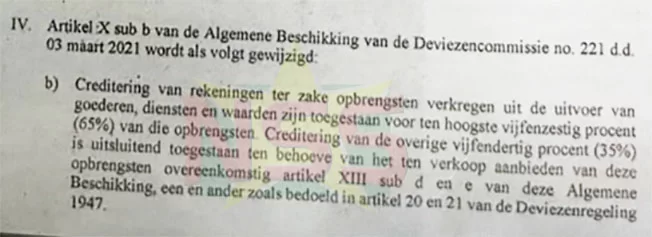
Nieuwe retentieregeling: 35% goudexportopbrengsten rechtstreeks naar CBvS
Suriname has rolled out a revised framework of foreign exchange regulations that comes into force on August 17, 2026, introducing updated mandatory retention requirements for all export earnings, with a specific differentiated rule for gold exporters. Issued as General Decree No. 228 by the country’s Foreign Exchange Commission, the new policy replaces three prior regulatory documents dating back to 2022 and 2023, and amends select provisions of a 2021 decree. The policy update was finalized after formal consultation between the Foreign Exchange Commission, the President of Suriname, the Minister of Finance and Planning, and the Governor of the Central Bank of Suriname (CBvS).
Under the new regulatory scheme, all export sectors face a mandatory 35% retention requirement for foreign currency export earnings, but the process of selling the required currency differs for gold exporters compared to other export categories. Gold exporters are mandated to offer 35% of their total foreign currency export earnings directly to the Central Bank of Suriname. The CBvS will purchase the foreign currency at the bank’s published weighted average exchange rate, with the transaction required to be processed through the local commercial foreign exchange bank where export earnings were first repatriated to Suriname.
For all other export sectors covering goods, services and other valuable commodities, the 35% mandatory retention rule still applies, but the required foreign currency is sold instead to local commercial foreign exchange banks that maintain correspondent relationships with the overseas financial institutions through which export earnings were repatriated. Across all export categories, exporters retain full access to the remaining 65% of their foreign currency earnings, which may be credited directly to their operating accounts for use at their discretion.
The Foreign Exchange Commission framed the policy adjustment as a key step in strengthening the organization and oversight of Suriname’s foreign exchange transactions. A core stated goal of the new regulation is to ensure that all export earnings, including those from gold exports, are fully repatriated back to Suriname in foreign currency, boosting the country’s overall foreign exchange reserves.
To enforce compliance, the new rules require all exporters to submit monthly written documentation proving they have met their retention obligations. These compliance reports must be filed with the Foreign Exchange Commission no later than 14 days after the end of each reporting month. Exporters that fail to meet their mandatory obligations face penalties including the revocation of existing export licenses, including permits for cross-border goods movement. The Central Bank of Suriname also retains the authority to issue additional supplementary implementation guidelines to clarify the application of the new regulation.