分类: business

  • Business Baddie offering support for female entrepreneurs

    Business Baddie offering support for female entrepreneurs

    A transformative entrepreneurial movement is gaining momentum in Barbados, offering a structured antidote to the isolation many women face in business. Business Baddie, a pioneering support network founded by attorney and former educator Kerrilyn Walters, provides female entrepreneurs with the practical tools and community accountability needed to transform ideas into successful enterprises.

    Established in 2021 as a modest consulting initiative, the organization has evolved into a structured membership group that deliberately maintains an intimate size—currently approximately 13 members—to ensure meaningful engagement and personalized support. Walters, who serves as Chief Business Baddie Officer, conceived the idea drawing from her previous experience running a baking business before entering the legal profession.

    The program’s core methodology centers on hands-on, practical workshops conducted monthly, covering essential business skills including marketing strategy, content creation, financial planning, budgeting, and operational scheduling. Unlike conventional seminars where participants passively receive information, Business Baddie sessions require active implementation—members literally plan their content calendars or develop marketing strategies during workshops.

    A distinctive feature of the program is its accountability partnership system, where members are paired and rotated quarterly to maintain fresh perspectives and consistent motivation. This structure ensures participants remain committed to their stated business objectives despite life’s inevitable distractions.

    The community extends beyond formal workshops through active WhatsApp communication, creating a continuous support network where members receive prompt responses to queries and challenges. This approach has demonstrated tangible results, with one member successfully transitioning from a home-based operation to establishing a standalone salon.

    While currently maintaining its boutique size, the organization welcomes women across all age groups and business development stages—from those seriously contemplating entrepreneurship to established business owners seeking growth. The group is preparing to launch its third cohort in 2026, with new initiatives to be announced at their upcoming members’ dinner at Radisson Aquatica Resort on December 14.

    Business Baddie primarily operates through its Instagram platform @businessbaddiebb, maintaining an accessible digital presence while fostering genuine, substantive connections that address the critical support gap in female entrepreneurship.


  • Saint Lucian director sees opportunity – and risk – in Netflix’s big move

    Saint Lucian director sees opportunity – and risk – in Netflix’s big move

    The entertainment industry stands at a pivotal juncture as Netflix’s ambitious pursuit of Warner Bros. Discovery threatens to reshape Hollywood’s competitive landscape. This potential acquisition, potentially the most significant in film industry history, would place iconic franchises including Game of Thrones, DC Comics, Harry Potter, and HBO’s prestigious content library under Netflix’s dominion, positioning the streaming service as an unprecedented entertainment omnipotent.

    Amidst this corporate maneuvering, independent filmmakers express both optimism and apprehension. Elijah Anatole, Saint Lucian filmmaker and founder of Artlas Studios, currently negotiating with Netflix for his project ‘Heartfall,’ provides unique perspective on the implications for global indie cinema.

    The acquisition faces substantial hurdles, including Paramount’s competing $108 billion hostile takeover bid and potential antitrust scrutiny from the Justice Department. Political considerations further complicate matters, with former President Trump’s connections to Paramount ownership potentially influencing outcomes.

    Anatole recognizes potential benefits: ‘Netflix already provides independent filmmakers access previously unimaginable through traditional studios. This merger could revolutionize content development, ownership, and global distribution paradigms.’ He cites Netflix’s promotion of African cinema as evidence of their commitment to diverse global voices.

    However, significant concerns regarding market monopoly persist. ‘The danger lies in Netflix gaining excessive market control, potentially leading to increased subscription prices and unfavorable terms for independent creators,’ Anatole cautions. ‘When alternatives disappear, acceptance becomes mandatory.’

    Contrary to hopes for enhanced development programs, Anatole believes streaming giants prioritize finished products over creator development: ‘They seek content that drives subscriptions, not philanthropic initiatives.’ The merger would intensify competition as Netflix gains Warner Bros.’ extensive content library, forcing independents to elevate their production standards.

    Looking forward five years, Anatole predicts Netflix will dominate global entertainment while fundamentally transforming content consumption. ‘Traditional movie theaters may become obsolete as advanced home viewing technologies like VR goggles replace flat screens. COVID-19 permanently altered viewing habits, with few films achieving billion-dollar box office returns recently.’

    Despite challenges, Anatole remains hopeful the merger could stimulate creative opportunities while motivating filmmakers to enhance their craft. As a personal aspiration, he expresses desire for Netflix to revive Zack Snyder’s DC universe alongside James Gunn’s interpretation.

    Independent filmmakers like Anatole are actively shaping cinema’s future rather than observing passively. His upcoming film ‘OMYRA’ has already secured selection for the 2026 Chandler Film Festival, demonstrating indie resilience amid industry consolidation.

  • Contract met Lazard opgezegd; nog US$ 3 miljoen schuld

    Contract met Lazard opgezegd; nog US$ 3 miljoen schuld

    The Surinamese government has addressed its outstanding financial obligations to international financial advisory firm Lazard, revealing a debt exceeding $4 million accumulated under previous administration contracts. Finance and Planning Minister Adelien Wijnerman disclosed these details during a Friday press conference, confirming partial payment of $1 million with the remaining $3 million balance scheduled for settlement in the coming period.

    The debt originated from contracts initially renewed in 2023, covering advisory services related to Suriname’s debt restructuring program, particularly the resolution of the so-called final bond round. According to Minister Wijnerman, Lazard submitted invoices for services rendered between 2021 through October 2025 that remained unpaid by the former government.

    In a significant policy shift, the current administration has terminated Lazard’s contract for any new transactions associated with ongoing negotiations with bondholders. “We have formally canceled the contract and notified Lazard via official correspondence. This matter has been conclusively resolved,” Wijnerman stated, emphasizing the government’s commitment to fiscal responsibility.

    The settlement process demonstrates the new government’s approach to handling inherited financial commitments while restructuring its international financial advisory relationships. The minister’s transparency regarding the outstanding debt and its partial settlement reflects the administration’s efforts to maintain Suriname’s financial credibility despite challenges inherited from previous governance arrangements.

  • Progress on Green Hydrogen Production Plant in Colombia

    Progress on Green Hydrogen Production Plant in Colombia

    Colombian President Gustavo Petro has announced a groundbreaking green hydrogen initiative following his inspection of the Cartagena Refinery construction site. The project, leveraging newly inaugurated solar infrastructure, is projected to yield an annual production of 800 tons of green hydrogen starting April next year.

    President Petro emphasized the strategic significance of green hydrogen as a versatile energy carrier that can be transported through existing natural gas pipelines. “This development opens pathways for advanced phase exports of clean energy to global markets including Europe, the United States, and China through ammonia shipping,” he stated. The president further highlighted the dual benefit of producing green urea for domestic agriculture, enhancing both energy security and agricultural productivity.

    The announcement comes amid recognition of state-owned energy company Ecopetrol’s progressive strides in Colombia’s energy transition. However, President Petro identified a significant regulatory barrier: current legislation prohibits Ecopetrol from electricity generation for public distribution. Despite energy transition being a government priority, amending this restriction falls entirely under Congressional authority.

    “Ecopetrol must pursue legislative reform to enable commercial electricity generation,” Petro asserted, underscoring the need for regulatory modernization to align with national energy objectives.

    The green hydrogen facility, operating at five megawatts capacity, will produce premium-quality hydrogen for hydrotreating processes at the Cartagena refinery. This integration is projected to reduce carbon dioxide emissions by approximately 7,700 tons annually while simultaneously diminishing the carbon footprint of refined fuels. The project represents a crucial step toward enhancing Colombia’s energy independence and establishing the country as a participant in the global clean energy market.

  • Panama establishes foreign trade facilitation plan

    Panama establishes foreign trade facilitation plan

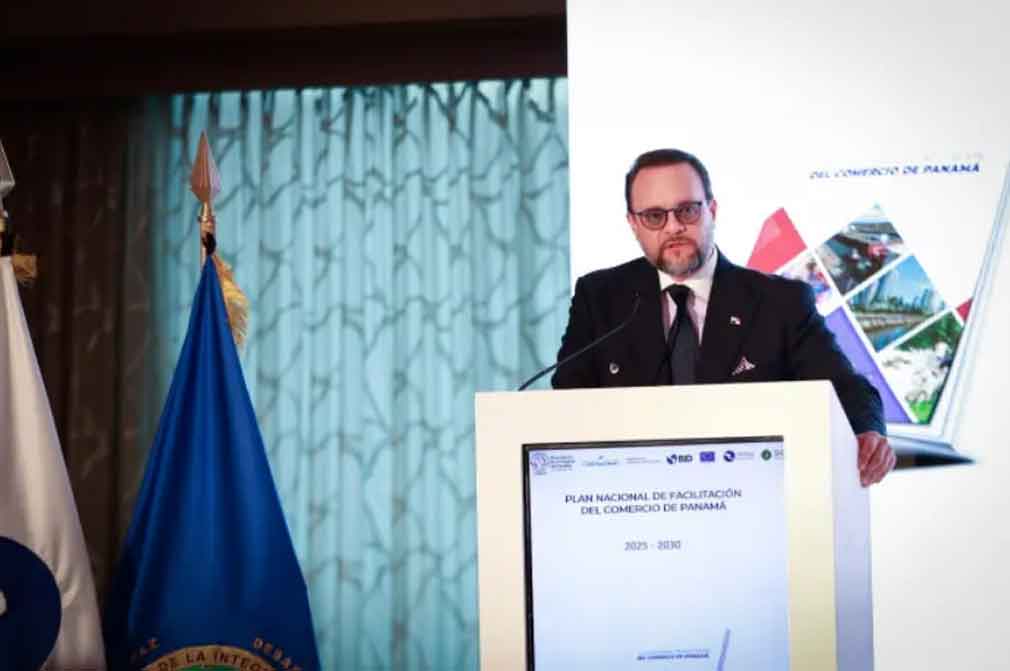
    In a strategic move to enhance Panama’s role in global commerce, Commerce and Industry Minister Julio Molto has announced the formation of a National Committee dedicated to overseeing the country’s international trade integration program. This newly established body will serve as a central coordinating mechanism, bringing together all relevant governmental entities and fostering collaboration with private sector stakeholders.

    Minister Molto emphasized that this coordinated approach will enable Panama’s Executive branch to function as a unified team, significantly strengthening the nation’s position within international trade networks. The initiative represents a key component of Panama’s broader economic strategy, which aims to establish the country as both a reliable and efficient hub for regional and global commerce.

    The comprehensive program is designed to generate substantial opportunities for Panamanian businesses while simultaneously providing a significant boost to the national economy. By streamlining coordination between public and private sectors, Panama seeks to optimize its logistical advantages and geographic positioning to maximize trade benefits and economic growth.

  • Nearly 12 000 receive reverse tax credits worth $16.2m – Straughn

    Nearly 12 000 receive reverse tax credits worth $16.2m – Straughn

    The Barbados government has successfully delivered $18.8 million in reverse tax credits to nearly 14,000 low-income citizens this week, providing crucial financial support ahead of Christmas celebrations. Finance Minister Ryan Straughn announced to Parliament on Friday that the Barbados Revenue Authority (BRA) distributed $16.2 million through banking institutions to 11,941 recipients, while an additional $2.6 million was issued via physical checks to 1,994 individuals whose banking information remained unregistered.

    The initiative represents a cornerstone of the government’s cost-of-living relief measures, offering a $1,300 cash rebate specifically targeted at employed Barbadians earning $25,000 or less annually. Eligibility requirements include minimum employment thresholds, National Insurance contributions, and having paid less than $500 in income tax for the current fiscal year.

    Minister Straughn connected the disbursement to broader economic modernization efforts, highlighting how the current mixed payment system—combining electronic transfers and physical checks—demonstrates the necessity of implementing digital financial infrastructure. The government is actively developing a national real-time payment system that would future credits, refunds, and benefits through digital wallets via the BIMpay platform.

    ‘Especially the person with cheques, because you got to wait for the postman to deliver, and then you got to find your way to a physical location in order to be able to access that money,’ Straughn noted, emphasizing the practical challenges of traditional payment methods.

    The finance minister confirmed that key government agencies including the Treasury Department, BRA, and National Insurance and Social Security Service are being equipped to process electronic payments more efficiently. This transition aims to accelerate various disbursements including welfare payments and court-ordered maintenance allocations.

    Straughn directly linked faster payment processing to enhanced economic vitality, stating that increased velocity of money circulation would stimulate consumption patterns and support broader economic growth. The timing of this financial injection coincides with peak holiday spending periods, potentially amplifying its positive impact on both household finances and national economic indicators.

  • Antigua and Barbuda To Export Bottled Sparkling Water, Paper

    Antigua and Barbuda To Export Bottled Sparkling Water, Paper

    The government of Antigua and Barbuda has announced an ambitious manufacturing initiative centered on establishing a sparkling water bottling facility primarily targeting international markets. Trade Minister EP Chet Greene revealed this plan during the parliamentary debate on the 2026 national budget, positioning it as a strategic move to bolster export capabilities and reduce import dependency.

    The innovative facility will utilize glass bottles for packaging and represents one of four manufacturing enterprises scheduled for launch in 2026. Minister Greene emphasized the plant’s export-oriented design, clarifying that the operation will focus specifically on sparkling water production for foreign markets.

    This initiative forms part of a comprehensive economic strategy addressing multiple objectives: strengthening export capacity, promoting import substitution, alleviating pressure on foreign exchange reserves, and creating employment opportunities. Beyond the water bottling plant, the government plans to establish two paper-based manufacturing operations with significant export potential and a beer production facility aimed at expanding domestic beverage manufacturing.

    Minister Greene articulated the government’s deliberate shift from an import-dependent economic model toward greater industrial diversification. The manufacturing drive connects to broader economic resilience goals, including job creation, supply chain stabilization, and foreign exchange generation through locally produced goods.

    While specific export destinations remain undisclosed, Greene indicated alignment with Antigua and Barbuda’s expanding diplomatic and trade relationships, positioning local manufacturers to access external markets effectively. These projects constitute integral components of the government’s formal trade and industrial policy agenda for the upcoming fiscal year.

  • Arjoon: Moody’s outlook shift a warning signal, not a downgrade

    Arjoon: Moody’s outlook shift a warning signal, not a downgrade

    Economists are urging Trinidad and Tobago’s government to conduct a rigorous assessment of the nation’s economic standing following Moody’s recent revision of the country’s financial outlook from stable to negative. While credit ratings remain unchanged, this development signals heightened scrutiny from international agencies.

    Dr. Vaalmikki Arjoon, a prominent UWI economist, contextualized the decision within global energy market cycles. “Our ratings trajectory consistently correlates with energy performance,” he explained. “They strengthen during periods of elevated production and pricing that boost export earnings and fiscal revenues, while weakening when production declines or prices drop.”

    The core concern centers on dramatically shrinking foreign exchange reserves, which have plummeted from approximately US$11 billion in early 2015 to roughly US$4.6 billion by October this year. This deterioration stems primarily from a sustained decline in natural gas output, which has fallen from over 4 billion standard cubic feet per day (bscf/d) in January 2015 to approximately 2.7 bscf/d currently.

    Arjoon identified multiple contributing factors: “Seven consecutive years without exploration block awards (2015–2022), combined with fiscal rigidity, policy uncertainty, investor caution, protracted commercial negotiations, and aging infrastructure have severely weakened the pipeline for new gas projects.”

    With energy commodities constituting 80% of export earnings, sustained production declines directly translate to reduced export receipts, diminished forex inflows, and declining reserves—the fundamental factors underpinning the negative outlook.

    Former finance minister Mariano Browne characterized Moody’s report as predictable, highlighting additional pressures from unresolved wage demands that will further strain foreign exchange resources. “The absence of any realistic market-based approach to solving the forex crisis has led to rapidly declining reserves,” Browne stated.

    Both experts acknowledge governmental efforts to prioritize smaller, lower-cost gas fields with shorter development timelines. Major projects including Manatee, Ginger, and Coconut are anticipated to deliver first gas from 2027 onward, potentially improving forex inflows and strengthening reserves medium-term.

    Moody’s report specifically noted liquid forex reserves have fallen 24% over the past year to $3.2 billion as of August 2025—below previous projections of stabilization at approximately $4 billion. This intensifies forex shortages and reduces coverage for upcoming external debt payments.

    The rating agency emphasized that while new hydrocarbon projects should eventually bolster reserves, this remains unlikely before 2027. The negative outlook reflects concerns that the government’s newly announced measures—enhancing Eximbank’s focus on key exporters, advancing transfer pricing legislation, strengthening financial crime enforcement, and intensifying economic diversification efforts—may prove insufficient to arrest the decline before new energy projects commence operations.

    Arjoon suggested that the government’s proposed blueprint could drive further diversification and attract foreign direct investment (FDI), generating new forex earnings. However, he emphasized that lasting rating improvement will require continued structural adjustment: “Expanding non-energy export capacity and attracting FDI that generates sustainable foreign-exchange earnings are essential.”

    Browne criticized recent administrative changes—including board replacements at commercial banks and the dismissal of Exim bank’s Navin Dookeran—as insufficient to address fundamental structural issues assessed by rating agencies. “There are policy gaps and weak measures that don’t address the fundamental issues,” he observed. “They merely give the appearance of effort without addressing the basics: without adequate revenue, you must cut expenditure; without sufficient forex earnings, you must address pricing.”

  • Manning, Dhanpaul not surprised by Moody’s outlook

    Manning, Dhanpaul not surprised by Moody’s outlook

    Trinidad and Tobago’s economic stability has come under international scrutiny as Moody’s Investors Service revised the country’s credit outlook from stable to negative. The decision has sparked intense political debate between government officials and opposition figures regarding the management of the nation’s foreign exchange reserves.

    Opposition Parliamentarian Brian Manning revealed concerning statistics, noting that Trinidad and Tobago’s foreign exchange coverage has significantly decreased from 8.3 months to 5.4 months. Manning accused the current administration of depleting US$600 million from foreign reserves without providing adequate explanation for the expenditure. He further alleged that an additional US$400 million had been withdrawn from the Heritage and Stabilisation Fund under similar circumstances of financial opacity.

    The former finance ministry official expressed grave concerns about Finance Minister Davendranath Tancoo’s economic stewardship, stating, “The economy has been in free fall ever since this clueless Minister of Finance has taken charge.” Manning warned that the Moody’s outlook revision likely precedes an impending credit rating downgrade and potential currency devaluation.

    Opposition Senator Vishnu Dhanpaul addressed previous accusations of being unpatriotic for his economic warnings, asserting his commitment to the nation’s wellbeing. When questioned about appropriate government response measures, Dhanpaul ironically suggested, “The Minister will fix it,” indicating skepticism about the administration’s capability to address the situation.

    Finance Minister Tancoo responded to the rating adjustment with measured optimism, emphasizing the government’s confidence in its macroeconomic strategies. In an official ministry statement, Tancoo highlighted that Moody’s analysis employed a narrow definition of foreign exchange reserves that excluded significant assets including the Heritage and Stabilisation Fund.

    The Minister characterized the outlook revision as premature, arguing that rating agencies should have allowed more time for recently implemented policies to demonstrate effectiveness. These policies include a comprehensive agenda aimed at economic revitalization, sustainable fiscal management, and foreign reserve stabilization.

    Despite the negative outlook, Tancoo welcomed Moody’s decision to maintain Trinidad and Tobago’s Ba2 credit rating, citing the nation’s substantial fiscal buffers equivalent to 45% of GDP and anticipated positive developments in oil and gas production by 2027.

  • Getting the LIVE FEED

    Getting the LIVE FEED

    Leroy Smith, a 26-year-old Jamaican entrepreneur and founder of Live Feed Jamaica, has become an indispensable presence at social gatherings across the Caribbean. His photography company has developed a distinctive reputation for capturing the essence of events through premium quality imagery, unique collages, and compelling graphics that celebrate Caribbean culture.

    A Kingston College alumnus and graduate of the Caribbean School of Media and Communication at The University of the West Indies, Smith holds a Bachelor of Arts degree in Journalism with a minor in International Relations. His educational background informs his professional approach to visual storytelling, combining technical excellence with cultural insight.

    Smith’s photographic philosophy extends beyond technical considerations of composition and lighting. He emphasizes the importance of capturing emotionally resonant moments that ensure lasting memorability. This approach involves complementary visuals and audio elements that collectively create impactful narratives.

    Operating with a team of 12 contractors, Live Feed Jamaica has expanded its operations beyond Jamaican borders to Trinidad and Tobago, St Vincent, Turks and Caicos Islands, and Grenada. The company has provided coverage for major regional events including Trinidad Carnival Road March, Brunch and Soca in Grenada, Igloo, and Sunnation TT.

    Corporate clients including Heineken, CPJ, and Sunshine Snacks have engaged Live Feed Jamaica’s services, recognizing the company’s ability to deliver professional event documentation. Smith’s vision positions the company as the premier photography partner for global showcases, with ambitions to dominate Caribbean event coverage and establish major partnerships with Carnival bands and corporate sponsors throughout the region.