分类: business

  • Nicholas Barnard elected Chamber of Commerce President

    Nicholas Barnard elected Chamber of Commerce President

    The Saint Lucia Chamber of Commerce, Industry and Agriculture has undergone a significant leadership transition with the election of Nicholas Barnard as its new President. Mr. Barnard, who serves as Managing Director of St. Lucia Linen Services Ltd, assumes the role previously held by Ross Gardner of Carasco & Son, who concluded his two-term tenure without seeking re-election.

    This leadership change marks a strategic shift for the premier business advocacy organization, which plays a crucial role in representing private sector interests, facilitating networking opportunities, and influencing economic policy formulation in Saint Lucia. Barnard, having previously served as Vice President under Gardner’s administration, brings continuity and fresh perspective to the position.

    The newly constituted Board of Directors features a diverse representation of Saint Lucia’s business leadership: Eldris Mauricette of Tropical Shipping as First Vice President, Jason King of St. Lucia Distillers Group as Second Vice President, and Ross Gardner as Immediate Past President. The board further comprises nine distinguished directors from various sectors including shipping, retail, insurance, technology, and manufacturing.

    The Chamber’s new leadership team is poised to strengthen collaboration with government entities and other stakeholders to foster a business environment characterized by safety, fairness, and operational effectiveness. The board is scheduled to convene its inaugural meeting on Thursday to establish strategic priorities and operational frameworks for the coming term.


  • ABHTA Concludes 2025 Training Series with Successful Supervisory and Maintenance Courses

    ABHTA Concludes 2025 Training Series with Successful Supervisory and Maintenance Courses

    The Antigua & Barbuda Hotels and Tourism Association (ABHTA) has successfully concluded its 2025 Professional Learning Series with two comprehensive training programs that have significantly enhanced sector-wide capabilities. The initiative featured a 6-Week Supervisory Management Leadership Development Course and an 8-Week Maintenance Course focusing on Electrics & Basic Maintenance, delivering substantial professional advancement for participants across the tourism and hospitality industry.

    The virtual Supervisory Management Leadership Development Course, expertly facilitated by veteran tourism and hospitality trainer Ms. Shirlene Nibbs with over three decades of industry experience, provided six weeks of immersive instruction. The curriculum addressed critical leadership domains including effective communication strategies, workplace relationship management, performance evaluation techniques, and essential supervisory competencies. Participant Zorah Beazer, Claims Manager at State Insurance Company Limited, reported transformative learning outcomes: “This experience provided invaluable perspectives on workplace challenges and significantly enhanced my problem-solving capabilities. Ms. Nibbs’ exceptional facilitation encouraged multidimensional thinking through both expert guidance and peer exchange.”

    Ms. Nibbs reflected on the program’s exceptional outcomes: “This year’s record participation demonstrated remarkable engagement and dedication. Participants exhibited sustained motivation throughout the six-week journey, culminating in creative final presentations that evidenced substantial behavioral and professional development. The administrative excellence of Ms. Anthea Watkins and her support team was instrumental in achieving these results.”

    Concurrently, the 8-Week Maintenance Course: Electrics & Basic Maintenance conducted at the Sandals Merrick Fray Training & Development Centre provided hands-on technical education under the guidance of Mr. Kim Burdon, an aircraft maintenance engineer with 35 years of cross-industry expertise. The comprehensive curriculum covered fundamental electricity principles, motor theory, control systems wiring, refrigeration fundamentals, and practical troubleshooting methodologies.

    Donald Bennett, Maintenance Technician at Curtain Bluff Antigua, attested to the program’s effectiveness: “The course delivered exceptionally informative content highly relevant to my technical role. Mr. Burdon’s hands-on teaching methodology and encouragement to advance our skills created engaging and clear learning experiences that warrant future advanced training.”

    Mr. Burdon expressed his teaching philosophy: “Maintenance represents a fascinating multidisciplinary field. These past months have been immensely rewarding through knowledge sharing with dedicated professionals. I remain committed to knowledge transmission across diverse maintenance specializations before that expertise is lost to time.”

    The ABHTA extended gratitude to all facilitators, Sandals Grande Antigua management and staff, particularly Carlene Spencer for maintenance course support, and all participating members and properties. The Association reaffirmed its commitment to expanding professional development opportunities in the coming year, with training inquiries directed to 462-0374 or 4928.

    As the collective voice of Antigua & Barbuda’s hospitality sector, the ABHTA continues to advance industry standards through education, advocacy, and promotional initiatives that enhance visitation and economic benefits while serving member interests across hotels, restaurants, airlines, and tourism-related enterprises.

  • Electricity Rate To Increase In 2026

    Electricity Rate To Increase In 2026

    The Public Utilities Commission (PUC) of Belize has unveiled its preliminary ruling recommending an upward adjustment to electricity tariffs as part of modifications to the Belize Electricity Limited (BEL) Annual Review Proceeding for 2025. This development signals increased energy costs for consumers beginning next year.

    In an official communiqué, the regulatory body confirmed it has finalized draft amendments compliant with the Electricity (Tariffs, Fees and Charges) Byelaws. While BEL sought approval for a $0.0555 per kilowatt-hour augmentation to the Mean Electricity Rate (MER), the Commission has counter-proposed a moderated increase of $0.0337 per kilowatt-hour. This adjusted rate would establish a new MER benchmark of $0.4427 per kilowatt-hour if formally ratified.

    The PUC clarified that the proposed tariff revision aims to alleviate BEL’s financial constraints while enabling cost recovery for sustainable service provision. Regulatory authorities emphasized implementing consumer protection measures, particularly for socially vulnerable and residential customers beneath the GST threshold. The rate restructuring methodology will distribute increases strategically to mitigate household bill impacts.

    Prime Minister John Briceño addressed the contentious issue during recent House of Representatives proceedings, justifying the necessity of utility rate elevations amid escalating operational expenditures and regional market dynamics. The Prime Minister highlighted that BEL has maintained rate stability since the current administration took office in 2020, despite confronting COVID-19 economic disruptions, inflationary pressures, and unprecedented heat waves that drove imported electricity costs to $1 per kilowatt-hour from Mexican suppliers during 2024’s supply crises.

    Briceño detailed BEL’s collaborative efforts with major commercial consumers, particularly tourism establishments in San Pedro, to activate private generators during grid instability episodes. This cooperative approach involved compensatory arrangements for higher self-generation costs when imported electricity prices surpassed retail rates.

    While acknowledging public apprehension regarding cost-of-living increases, the Prime Minister contextualized Belize’s electricity pricing as comparatively lower than regional Caribbean counterparts. He emphasized the unsustainability of BEL’s current practice of selling electricity beneath procurement costs, drawing analogies to commercial viability requirements in other sectors. The administration contends that after five years of rate suppression, this adjustment becomes inevitable to prevent eventual taxpayer-funded bailouts of the utility provider.

  • PMAC vestigt hoofdkantoor in Suriname

    PMAC vestigt hoofdkantoor in Suriname

    Paramaribo has officially been designated as the new headquarters location for the Port Management Association of the Caribbean (PMAC), marking a significant strategic shift in regional maritime governance. The Suriname Port Management Company (SPMC) confirmed the establishment of the regional port organization’s secretariat in the Surinamese capital, elevating the nation’s status within Caribbean maritime affairs.

    PMAC represents 27 Caribbean ports and maintains an extensive international network of 42 associate members specializing in port-related services, technological innovation, and professional training programs. The formal transfer of administrative operations occurred in November during an official delegation visit to Paramaribo.

    SPMC, which has held PMAC membership since 2010, was selected for this prestigious role due to its demonstrated active engagement, commitment to enhancing transnational diversity within the organization, and ongoing developments within Suriname’s port and maritime sectors. The appointment of Mrs. Mary-Ann Abdoelkariem as Executive Secretary further influenced the decision-making process.

    This strategic placement provides Suriname with substantial influence over regional port policy formulation and direct access to expertise in port modernization, digital transformation, operational efficiency, and specialized training. The presence of PMAC’s headquarters significantly enhances capacity-building opportunities and strengthens Suriname’s international visibility as an emerging maritime hub.

    PMAC has already commenced operations from its new Surinamese base, recently organizing a ‘Risk and Incident Management in a Port Environment’ training program through the Suriname Port Training Institute, which attracted twelve port professionals from across the region.

    The secretariat is now operational at NV Havenbeheer Suriname on Havenlaan Zuid. PMAC encourages Surinamese maritime sector businesses and organizations to establish contact and leverage regional collaboration and training opportunities available through the association.

  • Russia’s claims against Euroclear exceed 225.7 billion

    Russia’s claims against Euroclear exceed 225.7 billion

    In a significant escalation of financial tensions stemming from the Ukraine conflict, Russia’s Central Bank has initiated legal proceedings against Euroclear, one of the world’s largest financial clearinghouses. The lawsuit, filed with the Moscow Arbitration Court last Friday, alleges that the Belgium-based institution has caused substantial financial damage to the Russian regulator by blocking access to its funds and securities.

    The legal action represents a direct response to the European Commission’s ongoing considerations regarding mechanisms that would enable the direct or indirect utilization of Russian sovereign assets without obtaining proper consent. According to court documents, the Central Bank is seeking comprehensive compensation for multiple categories of losses, including the full value of frozen funds, blocked securities, and significant revenue that would have been generated from these assets.

    This development follows the coordinated decision by the European Union and G7 nations in February 2022 to freeze approximately €300 billion in Russian assets following Moscow’s military operations in Ukraine. Notably, about two-thirds of these frozen assets (€200 billion) are maintained within the European Union, with the majority held in Euroclear accounts.

    The Russian Foreign Ministry has characterized these asset freezes as outright ‘theft,’ emphasizing that the EU’s measures target not merely private investor holdings but specifically Russia’s sovereign wealth. This legal confrontation underscores the increasingly complex intersection of international finance, geopolitical conflict, and sovereign asset protection in the contemporary global economy.

  • Over 44k passengers arrive in St Kitts aboard 22 cruise ships this week – Associates Times

    Over 44k passengers arrive in St Kitts aboard 22 cruise ships this week – Associates Times

    The Caribbean island of St. Kitts witnessed an extraordinary influx of tourism activity during the week of December 7-13, 2025, with 44,307 passengers arriving aboard 22 cruise ships at Port Zante. This substantial maritime traffic demonstrates the island’s growing prominence as a premier Caribbean destination during the peak winter season.

    The week commenced on Sunday, December 7th, with three vessels—Azamara Onward, Norwegian Gem, and Norwegian Getaway—delivering 6,832 visitors. Monday saw an even larger arrival with Ariva, AIDAmar, and Silver Ray bringing 7,893 passengers. The flow continued throughout the week with Celebrity Ascent and Marella Discovery 2 (4,892 passengers) on Tuesday, followed by four ships including Marella Explorer 2 and Celebrity Apex (11,023 passengers) on Wednesday.

    Thursday marked a five-ship day with Celebrity Beyond, Seaborne Ovation, Marella Discovery, Emerald Azzurra, and Star Flyer carrying 5,585 visitors. Friday concluded the heavy traffic with Coral Princess and Wind Surf bringing 2,251 passengers. The week culminated on Saturday with Costa Fascinosa (3,215 passengers from Guadeloupe) and Grand Princess (2,616 passengers from Tortola) docking simultaneously.

    The economic impact was substantial as the majority of passengers disembarked to explore the island’s attractions. Local businesses including taxi drivers, tour operators, craft vendors, restaurateurs, and jewelry merchants experienced significant patronage. Visitors dispersed across the island with many heading to Frigate Bay and Southeast Peninsula beaches, while others explored Basseterre’s historical landmarks including The Berkley Memorial, St. George’s Anglican Church, and Independence Square.

    Tourism activities diversified with passengers engaging in organized excursions to Brimstone Hill Fortress National Park, Romney Manor, and Batik at Black Rocks. Adventure seekers ventured to Mount Liamuiga for hiking trails, while others enjoyed snorkeling, sailing excursions to Nevis, golfing, and casino entertainment. The St. Kitts Scenic Railway provided panoramic views of the island’s landscape, further enhancing visitor experiences.

  • OPINION: From Community Pride to Career Advantage: Why Behaviour Now Matters More Than Ever

    OPINION: From Community Pride to Career Advantage: Why Behaviour Now Matters More Than Ever

    A profound transformation is reshaping global recruitment and admissions practices, marking a significant departure from traditional evaluation methods. Where organizations once prioritized technical proficiency through the 40/60 rule—40% behavioral assessment versus 60% technical competence—a new paradigm has emerged. The contemporary 60/40 model now reverses these priorities, placing greater emphasis on behavioral attributes while technical abilities assume secondary importance.

    This strategic shift is grounded in empirical evidence demonstrating that technical expertise alone fails to guarantee effective performance, employee retention, or team cohesion. Hiring managers increasingly recognize that most organizational objectives are achieved through collaboration, communication, and trust. Research consistently indicates that interpersonal skills, adaptability, and accountability serve as stronger predictors of long-term success than job-specific technical capabilities.

    The service economy further amplifies this transition, where employee behavior directly influences brand reputation and customer loyalty. A single negative interaction can undermine years of technical excellence, demonstrating that poor behavior impacts not only workplace morale but also revenue generation.

    Consequently, organizations now prioritize emotional intelligence (EQ) over traditional intelligence quotient (IQ) metrics. A global talent survey reveals that over 90% of hiring professionals consider behavioral skills equally or more important than technical competencies during recruitment decisions. Employers recognize that while technical skills can be rapidly acquired, behavioral traits including integrity, empathy, resilience, and professionalism require sustained developmental investment.

    This behavioral emphasis extends beyond corporate recruitment into educational admissions. Universities and tertiary institutions increasingly evaluate applicants based on community engagement, volunteerism, leadership demonstrated, and civic participation alongside academic performance. Personal statements and reference letters now assess character, values, and social contributions with equal weight to academic achievements.

    Empirical studies on graduate employability confirm this trend, showing that students with robust communication skills, teamwork experience, and civic involvement transition more successfully into the workforce. Community involvement has evolved from merely commendable to strategically valuable, with acts of kindness and positive social behavior now serving as indicators of employability and leadership potential.

    The fundamental message is clear: who you are and how you behave now matter as much as what you know. As the 60/40 behavioral-first model continues to dominate hiring and admissions decisions, individuals investing in behavioral development will be better positioned for success in the evolving global workforce.

  • Guyana to train its own pilots- Pres Ali; globally-recognised aviation cadet scheme targets youths

    Guyana to train its own pilots- Pres Ali; globally-recognised aviation cadet scheme targets youths

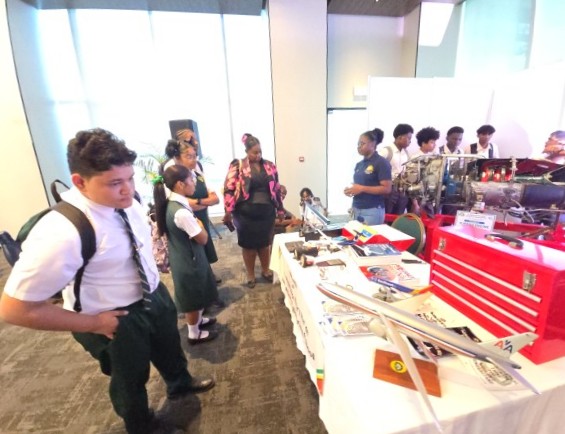
    In a strategic move to develop domestic aviation capabilities, Guyana has announced plans to establish a premier aviation training institution that will certify local professionals across multiple aerospace disciplines. President Irfaan Ali confirmed the initiative, emphasizing that this will enable aspiring Guyanese pilots to “earn their wings right here in Guyana” rather than overseas, where training currently costs approximately US$140,000 per pilot.

    The groundbreaking effort is being advanced through the Guyana’s Next Generation of Aviation Professionals Programme, a collaborative partnership between the Guyana Civil Aviation Authority (GCAA), the United Kingdom’s International Air Cadets organization, Air Cadets of Guyana, and the University of Guyana. This program represents one of the first implementations of i.ACT’s fully integrated NGAP+ framework, aligning with the International Civil Aviation Organization’s (ICAO) global standards.

    Under the newly signed memorandum of understanding, the NGAP+ partnership supports Guyana’s ambitious goal of training 1,500 internationally qualified aviation personnel by the end of 2028. The program will create a comprehensive pathway for participants aged 16 and above, offering internationally benchmarked aviation education, technical training, and industry-focused life skills. A pre-vocational “Air Cadets” track will also engage youth aged 12-16, introducing them to aerospace careers early.

    Malcolm Evans, CEO of i.ACT, described the program as “a transformational pipeline from classroom and community air cadet activities right through to internationally recognised qualifications.” He noted that “Guyana is sending a clear signal that aviation is a strategic national economic asset and that investing in young people” is a priority.

    The initiative addresses both economic and developmental objectives, with President Ali noting that “our government’s economic philosophy is built on the principle of inclusive development” as Guyana’s domestic aviation network continues to expand. Captain Gerry Gouveia Jr., Head of Air Cadets Guyana, highlighted the program’s accessibility aspects, noting that it provides alternative pathways into aviation beyond traditional expensive routes or military service.

    The University of Guyana has committed space, expertise, and technical support to the program, which will roll out over an initial three-year period as a adaptable national framework. The curriculum will eventually expand across disciplines including airport operations, air navigation services, airline operations, safety management, and emerging aerospace technologies.

  • ExxonMobil hires new ground transportation provider; CEO promises high quality service

    ExxonMobil hires new ground transportation provider; CEO promises high quality service

    In a significant development within Guyana’s energy sector logistics, locally-owned Scoop Inc has been appointed as the exclusive ground transportation provider for ExxonMobil Guyana. Chief Executive Officer Edmond Braithwaite confirmed the contract award on Sunday, highlighting the company’s commitment to international service standards and substantial local investment.

    The transportation company, which represents a fully Guyanese-owned enterprise, has already deployed US$2 million in capital investments and created approximately 200 jobs. With anticipated expansion into additional oil and gas sector contracts, Braithwaite projects investment growth to US$5 million and workforce expansion to nearly 400 employees.

    This contractual shift follows the termination of previous provider Cyril’s Transportation Service, whose owner was involved in a December 2024 incident involving the discharge of a licensed firearm that disabled the vehicle assigned to ExxonMobil Guyana President Alistair Routledge.

    Scoop Inc emphasizes rigorous safety protocols, including international-standard defensive driving training, random substance testing for alcohol and narcotics, and comprehensive GPS monitoring of all vehicles. The company’s fleet features emergency preparedness equipment and premium amenities including complimentary beverages from local producer Banks DIH.

    Braithwaite brings four decades of U.S. business experience to the venture, which was initiated following encouragement from family members within Guyana’s transportation industry. The launch event garnered support from Prime Minister Mark Phillips, who noted that Scoop Inc’s emergence reflects broader technological advancements and infrastructure development within Guyana’s transportation landscape.

    In a related business development, Braithwaite confirmed his leadership role at ERES Guyana Inc, a property management firm connected to U.S.-based Energy Real Estate Solutions, which counts ExxonMobil among its major clients.

  • Guyana: een economie die explodeert, terwijl dagelijks leven onbetaalbaar wordt

    Guyana: een economie die explodeert, terwijl dagelijks leven onbetaalbaar wordt

    Guyana presents a study in economic contrasts as it undergoes one of the world’s most rapid transformations. While massive infrastructure projects reshape the coastal landscape around Georgetown and Demerara, the population grapples with living costs disproportionately high compared to local incomes. This divergence between macroeconomic indicators and daily reality defines South America’s fastest-growing economy.

    Since commencing oil production in late 2019, Guyana has achieved extraordinary economic expansion. GDP surged over 60% in 2022, followed by 20-30% annual growth in 2023 and 2024, with projections of 12-15% growth for 2025. The offshore Stabroek Block operations, led by ExxonMobil with Chevron and CNOOC, now exceed 600,000 barrels daily, driving unprecedented government revenues and foreign reserves.

    Despite these indicators, daily life reveals a different story. Senior journalist Denis Chabrol of Demerara Waves describes Guyana as effectively dollarized, with prices for imported goods mirroring US levels while average monthly incomes range between $500-600. Georgetown residents require approximately $750 monthly for basic survival excluding transportation, creating significant financial pressure.

    The monetary system exacerbates these challenges. The Bank of Guyana maintains an artificial exchange rate stability around GYD 208-215 per USD, masking a structural dollar shortage. Strict currency controls force businesses and citizens through lengthy dollar acquisition processes, fostering a parallel market where dollars trade 10-20% above official rates. These additional costs ultimately transfer to consumers.

    Wage growth remains constrained, particularly in non-oil sectors including education, healthcare, retail, and government services. This deliberate policy to avoid inflation acceleration has diminished purchasing power as fixed costs for housing, food, and transportation escalate dramatically. Street interviews near Stabroek Market reveal food prices increasing 60-100% over five years, with rents approaching Caribbean and US levels.

    Additional complications arise from migration patterns. The oil boom has attracted workers from Venezuela and Cuba, primarily filling construction, hospitality, and domestic service roles. While some positions remain unfilled by locals, the increased demand for housing and services further drives inflation in urban centers.

    Environmental challenges accompany economic growth, with waste accumulation along waterways and streets indicating inadequate waste management systems struggling to match urbanization pace.

    Guyana now stands at a historical crossroads. Without reforms in currency policy, wage development, and social investment, the nation risks falling prey to the ‘resource curse’ – where impressive economic growth coincides with decreasing affordability of daily life. For neighboring Suriname, anticipating its own oil industry emergence by 2028, Guyana’s experience serves as both mirror and warning about managing natural resource wealth for sustainable, inclusive development.