分类: business

  • Getting the LIVE FEED

    Getting the LIVE FEED

    Leroy Smith, a 26-year-old Jamaican entrepreneur and founder of Live Feed Jamaica, has become an indispensable presence at social gatherings across the Caribbean. His photography company has developed a distinctive reputation for capturing the essence of events through premium quality imagery, unique collages, and compelling graphics that celebrate Caribbean culture.

    A Kingston College alumnus and graduate of the Caribbean School of Media and Communication at The University of the West Indies, Smith holds a Bachelor of Arts degree in Journalism with a minor in International Relations. His educational background informs his professional approach to visual storytelling, combining technical excellence with cultural insight.

    Smith’s photographic philosophy extends beyond technical considerations of composition and lighting. He emphasizes the importance of capturing emotionally resonant moments that ensure lasting memorability. This approach involves complementary visuals and audio elements that collectively create impactful narratives.

    Operating with a team of 12 contractors, Live Feed Jamaica has expanded its operations beyond Jamaican borders to Trinidad and Tobago, St Vincent, Turks and Caicos Islands, and Grenada. The company has provided coverage for major regional events including Trinidad Carnival Road March, Brunch and Soca in Grenada, Igloo, and Sunnation TT.

    Corporate clients including Heineken, CPJ, and Sunshine Snacks have engaged Live Feed Jamaica’s services, recognizing the company’s ability to deliver professional event documentation. Smith’s vision positions the company as the premier photography partner for global showcases, with ambitions to dominate Caribbean event coverage and establish major partnerships with Carnival bands and corporate sponsors throughout the region.


  • Jamaica watching reported planned US shift on cannabis, says Seiveright

    Jamaica watching reported planned US shift on cannabis, says Seiveright

    Jamaica’s regulated cannabis industry is maintaining a vigilant watch on potential landmark policy shifts in the United States, where President Donald Trump may issue an executive order to reclassify marijuana from Schedule I to Schedule III under federal controlled substances laws. This anticipated move follows an extensive multi-year review by US health and justice authorities that concluded with a recommendation for rescheduling.

    The potential reclassification would represent a seismic shift in international drug policy, moving cannabis from its current classification alongside heroin—deemed to have no accepted medical use and high abuse potential—to Schedule III, which acknowledges medical applications and reduced abuse risk. Jamaican State Minister Delano Seiveright of the Ministry of Industry, Investment and Commerce characterized the possible US action as “one of the most consequential developments in global cannabis policy in decades.”

    Minister Seiveright emphasized that while Jamaica approaches these developments with caution pending formal US confirmation, the implications for the Caribbean nation’s strictly regulated medical cannabis program could be transformative. The current US federal prohibition has created significant banking challenges for Jamaican licensed operators, with international financial institutions maintaining conservative approaches due to cannabis’s Schedule I status.

    “The Schedule I classification has fed a very conservative approach among international banks and has contributed to serious correspondent banking challenges for otherwise fully compliant, licensed operators in Jamaica and beyond,” Seiveright explained. He noted that rescheduling to Schedule III would significantly lower the federal risk profile, potentially easing restrictions that prevent Caribbean banks from maintaining stable correspondent banking relationships.

    The international context remains complex, as cannabis retains its Schedule I status under the UN’s 1961 Single Convention on Narcotic Drugs, despite its removal from Schedule IV in 2020. A US policy shift could accelerate global policy alignment, given America’s influential financial and regulatory systems.

    Jamaica’s cannabis program, administered by the Cannabis Licensing Authority since 2015, focuses exclusively on medical, therapeutic and scientific purposes. Minister Seiveright underscored that a more rational global environment would strengthen Jamaica’s ability to attract credible investors, deepen research partnerships, and expand value-added exports while maintaining high public health and security standards.

    However, officials caution that rescheduling would not equate to federal legalization, with many restrictions likely remaining. The Jamaican government continues monitoring developments and stands ready to assess implications for its regulatory framework and banking arrangements once official US clarity emerges.

  • Cargo Operations Are Expanding At The VC Bird International Airport

    Cargo Operations Are Expanding At The VC Bird International Airport

    Antigua and Barbuda is strategically enhancing its aviation infrastructure to establish itself as a premier regional cargo hub, with significant developments underway at VC Bird International Airport. Tourism and Civil Aviation Minister Charles ‘Max’ Fernandez has announced a multi-faceted approach that includes the introduction of new cargo operations and comprehensive feasibility studies for dedicated freight facilities.

    The expansion initiative gained momentum with the commencement of operations by 7 Air’s new cargo aircraft, which is locally managed and handled by a team of young Antiguan entrepreneurs. Minister Fernandez particularly commended these emerging professionals for their visionary approach to transforming the nation’s aviation landscape and their commitment to regional logistics development.

    This strategic move toward multiple cargo operators represents a calculated shift from the previous single-operator model, which government officials identified as potentially limiting market flexibility and competitive pricing. The introduction of additional capacity enables more dynamic market conditions, potentially leading to improved service quality and more competitive freight rates for regional businesses.

    Concurrently, a formal feasibility study is being conducted in partnership with Sassy World Cargo, represented by prominent Antiguan businessman Elliot Page. This comprehensive assessment aims to design purpose-built cargo infrastructure capable of accommodating projected volume increases while optimizing operational efficiency. The proposed facility would serve as a cornerstone for attracting international logistics partners and strengthening Antigua’s position within global supply chains.

    These cargo-specific developments complement broader airport modernization efforts, including runway rehabilitation and operational enhancements outlined in the revised master plan. The integrated approach demonstrates the government’s commitment to creating a balanced aviation ecosystem that supports both passenger travel and freight logistics, positioning the nation for sustainable economic growth through diversified aviation revenue streams.

  • Stop paying in gold, declare all to reach national target- Miners Assoc

    Stop paying in gold, declare all to reach national target- Miners Assoc

    In a significant move to bolster national gold reserves, the Guyana Gold and Diamond Miners Association (GGDMA) has issued a stern directive to mining operators, demanding an immediate cessation of using raw gold as currency for transactions and worker compensation. The call to action emerged from the association’s Annual General Meeting held Friday, where Ronaldo Alphonso was re-elected as President.

    The GGDMA’s position received strong governmental backing as the Ministry of Natural Resources concurrently released a statement reinforcing that all mining sector employees must be compensated exclusively through lawful financial channels in accordance with labor regulations. “Paying workers in gold undermines transparency, weakens declaration accuracy, and exposes workers to exploitation and unsafe practices,” the ministry emphasized, announcing plans to intensify compliance inspections with penalties for violations.

    Central to this initiative is the national target of 500,000 ounces of gold for 2025. Current declarations to the Guyana Gold Board stand at approximately 420,000 ounces, with projections suggesting a year-end total between 450,000 and 475,000 ounces—falling short of the ambitious goal. This compares to 434,067 ounces declared in 2024 and 432,113 ounces in 2023.

    The crackdown extends to eliminating the practice known as the “Blai box,” which both entities deem illegal. Miners are instructed to conduct sales exclusively through the Guyana Gold Board or authorized licensed dealers to ensure accurate national production data and fair trade practices.

    In a related development, the GGDMA membership unanimously supported stronger measures against gold smuggling, including potential blacklisting of members engaged in such activities. Alphonso committed to enhanced collaboration with government authorities to eradicate illegal gold trading operations and unlicensed buyers.

  • Minimum wage hike lags behind cost of living – CTUSAB

    Minimum wage hike lags behind cost of living – CTUSAB

    Barbados’s leading labor organization has issued a strong critique of the government’s proposed minimum wage adjustment, declaring the planned 2% increase insufficient to address the nation’s escalating cost of living. The Congress of Trade Unions and Staff Associations of Barbados (CTUSAB) contends that the January adjustment fails to reflect both economic realities and previous government assurances.

    CTUSAB General Secretary Dennis De Peiza emphasized that wage determinations must directly correlate with documented increases in essential expenses including food prices, healthcare, utilities, transportation, and general business operations. The union leader pointed to the government’s own reports of robust fiscal performance—including seventeen consecutive quarters of economic growth and substantial surpluses—as justification for expecting a more meaningful wage enhancement for vulnerable workers.

    The scheduled adjustment would elevate the national minimum wage from $10.50 to $10.71 per hour, while security guards would see their industry-specific rate increase from $11.43 to $11.66. This follows a significant June 2025 increase that raised rates from $8.50 and $9.25 respectively.

    In defense of the policy, Labour Minister Colin Jordan characterized the increase as a carefully calibrated compromise designed to balance worker support with business sustainability. Minister Jordan outlined the government’s commitment to methodical, evidence-based wage reform, noting that the Minimum Wage Board has commenced analysis of the previous increase’s economic impact and is developing a structured indexation framework informed by international models.

    While acknowledging the government’s fulfillment of its promise to implement an increase, CTUSAB maintains that the modest adjustment contradicts the administration’s proclaimed economic achievements. The union body continues to advocate for wage rates that enable vulnerable workers to achieve a decent standard of living, reinforcing its position that both national and sectoral minimum wages require more substantial elevation to match Barbados’s economic trajectory.

  • Staatsolie brengt petroleumkennis Suriname samen in nieuwe GeoAtlas

    Staatsolie brengt petroleumkennis Suriname samen in nieuwe GeoAtlas

    Suriname’s state-owned energy company Staatsolie has unveiled a comprehensive geological publication that consolidates decades of petroleum research into a single authoritative reference. The GeoAtlas of Suriname represents a monumental achievement in documenting the nation’s oil and gas potential, offering stakeholders an integrated overview of the country’s petroleum geology.

    During a ceremonial presentation on Friday, President Jennifer Simons received the first printed copy of the groundbreaking publication. In a symbolic gesture, the president then presented an edition to Sirahmpersad Eduard ‘Eddie’ Jharap, the founding director and visionary behind Staatsolie, to whom the atlas is dedicated.

    The GeoAtlas stands as a tribute to Jharap’s pioneering work as both geologist and industry architect. Under his leadership from Staatsolie’s establishment on December 13, 1980, until his retirement in 2005, the company evolved from an ambitious concept into an integrated national oil enterprise with international partnerships. His guiding philosophy of ‘Confidence in One’s Own Abilities’ continues to shape the company’s operational ethos.

    This comprehensive geological compilation resulted from the collaborative efforts of multiple generations of earth scientists inspired by Jharap’s vision. The research team synthesized over a century of exploration data to create detailed descriptions of Suriname’s subsurface structures and their development. The publication presents cutting-edge insights into the presence and potential of both onshore and offshore oil and gas reserves.

    According to Staatsolie officials, the GeoAtlas delivers both scientific significance and practical utility. Investors gain access to a clear, integrated perspective on Suriname’s petroleum geology within a single document, while the accessible language makes it suitable for broader audiences interested in the nation’s natural resources.

    The digital version of the GeoAtlas of Suriname is now available free of charge through Staatsolie’s official website, democratizing access to this valuable geological knowledge.

  • Belize Unemployment Falls to 1.9 Percent; 35% classified as ‘Informally Employed’

    Belize Unemployment Falls to 1.9 Percent; 35% classified as ‘Informally Employed’

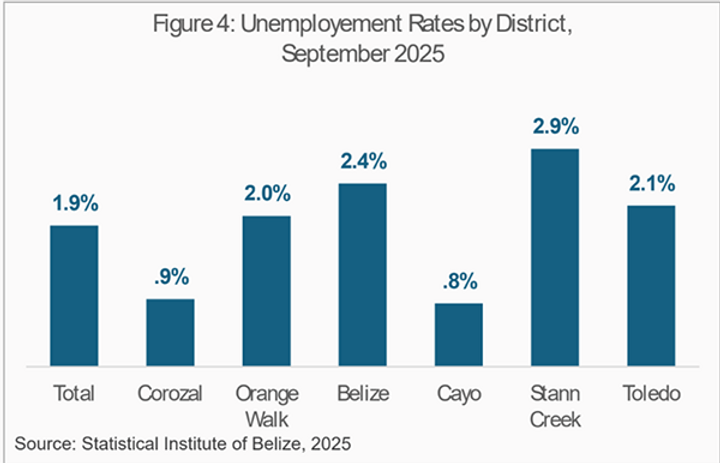
    Belize’s official unemployment rate plummeted to a historic low of 1.9% in September 2025, yet this superficially robust figure masks significant structural vulnerabilities within the nation’s labor market. According to preliminary data from the national Labour Force Survey, merely 3,421 individuals were classified as unemployed—a figure that dips below the standard economic threshold for ‘full employment,’ typically ranging from 3% to 5%. While this suggests near-total workforce absorption, economists caution that the headline number obscures deeper complexities.

    The survey reveals that from a total employed population of 178,442, a substantial proportion—64,129 workers or 35.9%—operate within the informal economy. These workers, largely concentrated in wholesale/retail trade and community/personal services, typically function without formal registration or social security protections. This prevalence of informal employment indicates widespread limitations in income security and job stability, despite their statistical classification as employed.

    Further complicating the picture is underemployment, which affects 2,465 persons or 1.4% of the workforce. Although statistically modest, these individuals work fewer than 35 hours weekly despite availability for additional work and earn significantly below the national average income. Their situation highlights a segment of the labor force that remains economically constrained despite being technically employed.

    Labor force participation rates, standing at 58.1%, also play a crucial role in interpreting the unemployment metric. With over 130,000 Belizeans outside the workforce due to household responsibilities, education, or other factors—and thus excluded from unemployment calculations—the reported rate fails to capture the full spectrum of labor market engagement. Significant gender disparities in participation further nuance this dynamic.

    Collectively, Belize’s labor market indicators paint a multifaceted economic portrait. The record-low unemployment rate, while historically notable, coexists with substantial informal employment, persistent underemployment, and moderate participation rates. These factors necessitate careful monitoring to accurately assess both the quantity and quality of employment opportunities in Belize’s evolving economy.

  • ‘Disappearing Workers’ Coming Back? Labour Force Edges Toward Pre-2024 Levels

    ‘Disappearing Workers’ Coming Back? Labour Force Edges Toward Pre-2024 Levels

    Recent Labor Force Survey data reveals a significant economic recovery underway in 2025, marking a substantial improvement from the dramatic contraction experienced the previous year. The latest figures demonstrate that workforce numbers are gradually returning to pre-decline levels, suggesting the 2024 reduction may have been transitional rather than permanent.

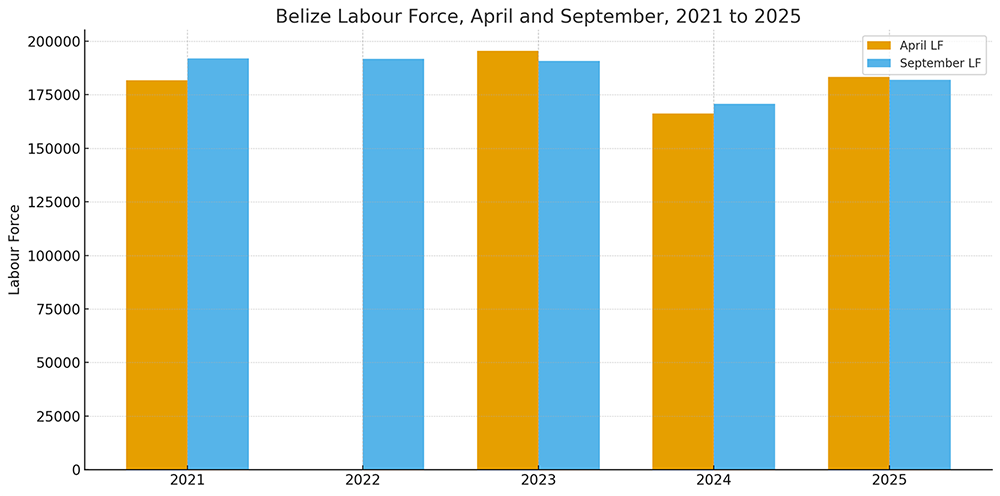
    In September 2024, the labor force experienced one of its most severe contractions on record, plummeting to 166,206 individuals after maintaining stable numbers between 190,000-195,000 for several preceding years. This sharp decline prompted serious concerns among economists and policymakers about fundamental structural changes in the labor market.

    The 2025 data, however, presents a markedly different picture. April’s figures climbed to 183,368 employed persons, followed by a September count of 181,863—both measurements representing significant improvements over 2024’s lows and moving closer to historical norms. This upward trajectory indicates that the factors driving last year’s decline may have been temporary disruptions rather than permanent alterations to workforce dynamics.

    Simultaneously, the unemployment rate has continued its positive trend, dropping to 1.9% in September 2025 with only 3,421 individuals classified as unemployed. This figure sits below September 2024’s 2.1% rate and remains consistent with economic conditions typically associated with full employment.

    The broader employment landscape reveals additional insights: approximately 64,129 workers (35.9% of all employed persons) operate within the informal economy, while underemployment affects 2,465 individuals who work fewer than 35 weekly hours but desire additional work opportunities.

    Beyond the active workforce, more than 130,000 persons remained outside the labor force in September 2025, primarily due to household responsibilities, educational commitments, or other circumstances preventing active job seeking. These demographic factors continue to influence both participation rates and unemployment measurements.

    While current labor force totals haven’t yet reached the peak levels observed between 2021-2023, the measurable recovery from 2024’s lows represents a positive development. Economists emphasize that continued monitoring will be essential to determine whether this upward movement signifies a sustained return to historical norms or reflects shorter-term adjustments in workforce participation patterns.

  • Simons: schuldherschikking noodzakelijk om financiële stabiliteit te waarborgen

    Simons: schuldherschikking noodzakelijk om financiële stabiliteit te waarborgen

    Surinamese President Jennifer Simons has announced a critical debt restructuring agreement that prevents the nation from facing unsustainable foreign debt obligations within the coming years. The breakthrough came following intensive negotiations with major creditors including Staatsolie, TotalEnergies, and Bank of America.

    During a presidential palace press conference on Friday, Simons emphasized that restructuring foreign debt was not merely a policy choice but an absolute necessity. Without intervention, Suriname would have faced crippling interest payments starting in 2027 that would have severely pressured both the national budget and exchange rate stability. The country faced approximately $150 million in interest payments alone for debt servicing.

    The successfully negotiated arrangement postpones loan repayments until after 2028, providing immediate relief for foreign currency reserves and preventing excessive pressure on the exchange rate. This strategic move forms part of a broader government initiative to avoid prematurely committing future revenues to debt obligations.

    In a significant parallel development, the government has fully settled the Value Recovery Instrument (VRI) debt, ensuring that oil royalties will be entirely available for Suriname’s use from 2028 onward. President Simons stressed that these funds must be allocated toward structurally strengthening national finances rather than new consumptive expenditures.

    Simultaneously, authorities are engaged in discussions with China to restructure existing debt arrangements, aiming to align payment obligations with the country’s actual financial capacity.

    Beyond debt management, the administration is implementing comprehensive tax system reforms. Noting that Suriname generates comparatively lower tax revenues than regional counterparts, the government has initiated the reform and autonomization of the tax authority. This overhaul aims to achieve more efficient revenue collection, broaden the tax base, and reduce structural deficits.

    President Simons articulated the inseparable connection between debt restructuring and tax reform, noting that together these measures should establish greater financial stability, restore confidence, and create foundations for sustainable economic development. She acknowledged that the full impact of these restructuring efforts will only become apparent in coming years as the effectiveness of new agreements in creating sustainable payment obligations and additional budgetary space becomes evident.

  • GOB Pushes to Renew Sugar Industry Tax Breaks Amid Opposition Criticism

    GOB Pushes to Renew Sugar Industry Tax Breaks Amid Opposition Criticism

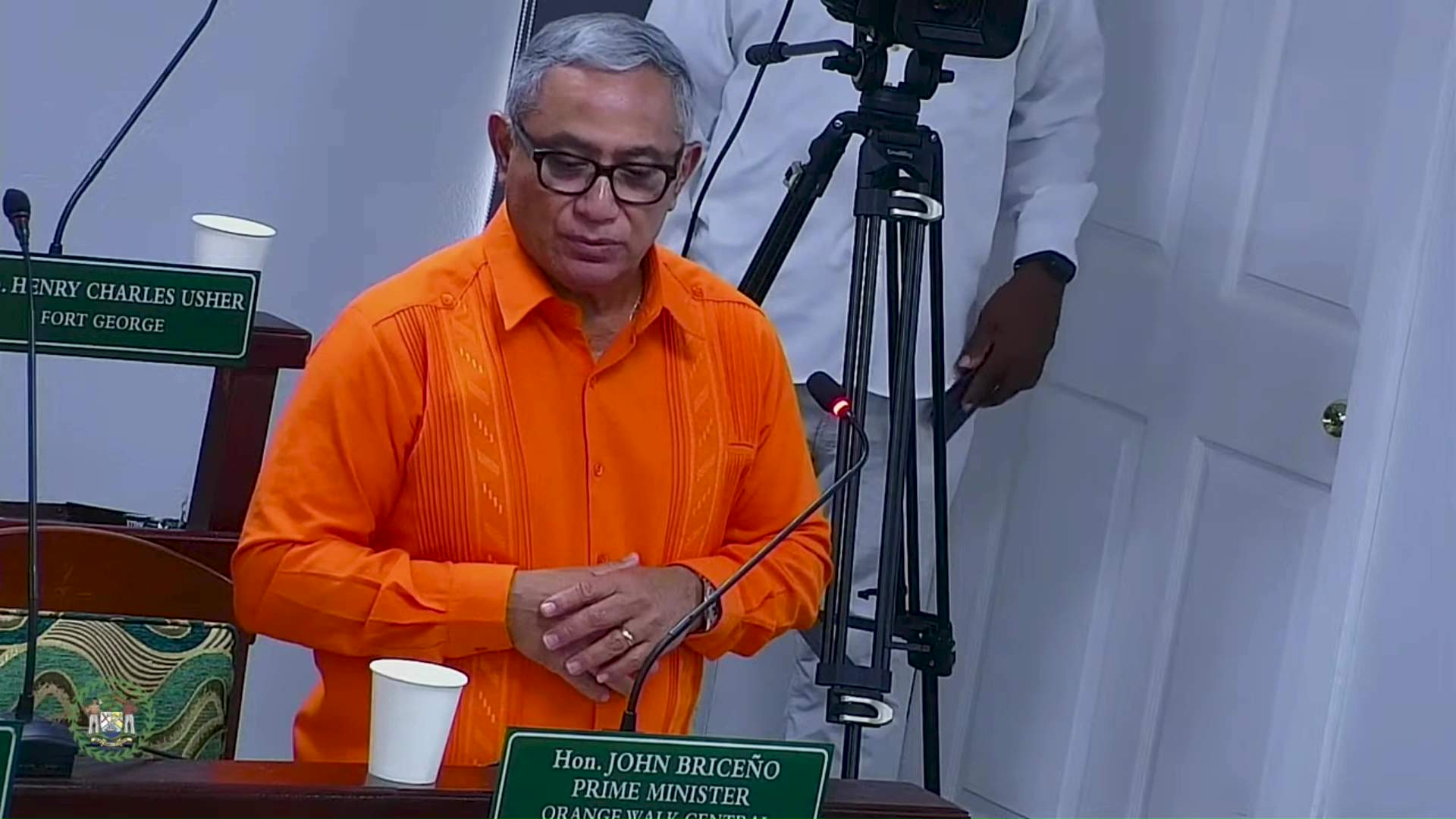
    The Belizean government, led by Prime Minister John Briceño, is advancing legislation to prolong substantial tax incentives for ASR/BSI and its BELCOGEN energy facility for an additional two-year period. These tax concessions, originally established in 2012 under prior leadership, provide the corporation with exemptions from business levies and import duties.

    Prime Minister Briceño has characterized the sugar sector as confronting severe operational challenges, prompting his administration to advocate for the renewal of these financial incentives. Following a presentation by BSI executives to the Cabinet, Briceño emphasized the industry’s critical situation, citing insufficient sugarcane yields, escalating operational expenses, and the pressing requirement for continued modernization investments in both milling and energy generation infrastructure.

    Conversely, Opposition Leader Tracy Panton has raised substantive concerns regarding the fiscal responsibility of extending these tax holidays. While acknowledging the sugar industry’s vital economic role, particularly in northern employment and agricultural sustainability, Panton questioned whether this approach demonstrates balanced policymaking and equitable treatment for all stakeholders. She highlighted the particular irony that despite these substantial tax exemptions, Belizean consumers face potential energy cost increases of nearly fourteen percent currently under consideration by the Public Utilities Commission.

    The emerging debate encapsulates broader tensions between industrial support mechanisms and responsible fiscal governance, with significant implications for Belize’s agricultural economy and energy affordability.