分类: business

  • Nieuwe vliegroute versterkt band met Dominicaanse Republiek

    Nieuwe vliegroute versterkt band met Dominicaanse Republiek

    On Thursday, a landmark new direct air connection entered service between the Dominican Republic’s capital Santo Domingo and Suriname’s capital Paramaribo, marking the first commercial flight of Dominican carrier Sky High Dominicana on the route. The new link is designed to deepen bilateral collaboration between the two Caribbean nations, and the inaugural flight received a celebratory water salute greeting upon its arrival at Suriname’s Johan Adolf Pengel International Airport.

    Multiple high-ranking officials traveled on the debut flight, including Suriname’s Minister of Foreign Affairs Melvin Bouva, Minister of Transport, Communication and Tourism Raymond Landveld, and Dominican ambassador to Suriname Ernesto Torres Pereyra.

    For Bouva, the new air route represents far more than improved travel access between the two countries. He framed the connection as a critical milestone in strengthening the economic and diplomatic ties that bind the Dominican Republic and Suriname. The route is projected to drive measurable growth across three key sectors: tourism, bilateral trade, and cross-border foreign direct investment.

    The minister further noted that bilateral cooperation between the two nations has recently evolved into a formal strategic partnership. Better regional connectivity, he emphasized, addresses a long-standing bottleneck that has held back integration across the Caribbean, where transportation infrastructure and direct links have long been a persistent barrier to growth.

    Both nations have high hopes that the new direct connection will stimulate increased mutual exchange of people, goods and services, while creating new opportunities to deepen collaboration across the broader Caribbean region.

  • Arajet transports nearly half a million passengers in first quarter

    Arajet transports nearly half a million passengers in first quarter

    Santo Domingo – The Dominican Republic’s homegrown ultra-low-cost carrier Arajet has solidified its standing as a fast-growing player in the Caribbean aviation sector, after official data from the country’s Civil Aviation Board (JAC) confirmed a historic surge in passenger volumes through the first three months of 2026.

    Between January and March, the airline carried a total of 496,218 passengers, counting both direct and connecting itineraries. The winter travel period delivered robust demand, with January posting the highest passenger numbers of the quarter, followed closely by March as strong travel trends held steady into the start of the spring season.

    This performance marks a major milestone for the young carrier, pushing it up the ranks to become the fourth-largest airline operating in the Dominican Republic by passenger volume. It currently trails only three major U.S. carriers: JetBlue, American Airlines, and Delta Air Lines, in that order.

    In a statement following the release of JAC’s data, Arajet CEO Víctor Pacheco outlined the company’s ambitious long-term goals for 2026 and beyond. Pacheco confirmed that the airline is on track to hit its annual target of moving more than 2 million total passengers by the end of the calendar year, while working to elevate the Dominican Republic’s status as a central connectivity hub for the entire Caribbean and Latin American region.

    Route data from the airline shows that New York remains the most popular destination for Arajet passengers, followed closely by Buenos Aires, Miami, Medellín, and Bogotá to round out the top five busiest routes. By volume, 25% of all Arajet passengers in the first quarter traveled to or from the United States, a trend that industry analysts attribute in large part to the bilateral open skies agreement between the two nations, which has expanded route access and lowered fares for travelers. Colombia and Argentina round out the carrier’s three largest international markets after the U.S.

    Looking ahead, Arajet confirmed that it will press forward with planned network expansion, adding new routes across the Americas to drive increased tourist arrivals, support cross-border trade, and boost air connectivity for Dominican residents and international visitors alike.

  • AERODOM begins runway upgrade at Las Américas Airport

    AERODOM begins runway upgrade at Las Américas Airport

    Santo Domingo – A major infrastructure upgrade is officially underway at one of the Dominican Republic’s busiest air transit hubs, as airport operator AERODOM, a member of the global VINCI Airports network, has launched comprehensive rehabilitation works for Runway 17-35 at Las Américas International Airport (AILA). The overarching goal of the multi-month project is to elevate both aviation safety standards and the airport’s overall operational efficiency.

    The scope of the renovation covers a series of critical upgrades, starting with pavement milling across the runway’s central section, targeted structural repairs to address wear and tear, and the installation of a brand-new asphalt overlay to restore the runway’s structural integrity. Additional complementary upgrades include a full overhaul of the runway’s drainage systems and the replacement of outdated navigational markings to meet current international aviation standards.

    With a total investment of approximately $20 million, the project is scheduled for completion between April and August 2026. Notably, airport planners have designed the construction timeline to avoid interruptions to regular commercial and passenger flight operations. During the rehabilitation works, a pre-existing taxiway will be reconfigured to serve as a temporary alternate runway, allowing AILA to maintain its full flight schedule without disruption to travelers or airlines.

    To mark the official launch of the initiative, senior representatives from the Dominican Republic’s civil aviation authority, alongside AERODOM executives and lead construction contractors, completed a joint technical inspection of the worksite to confirm that all pre-construction safety and preparation protocols have been met.

    Industry and government officials project that the completed rehabilitation will extend the operational lifespan of Runway 17-35 by a minimum of 15 years. This upgrade is just one component of a far broader, long-term modernization strategy for Las Américas International Airport, which also includes the development of a new passenger terminal designed to accommodate up to four million additional travelers annually. When fully completed, the full modernization plan is expected to significantly strengthen the Dominican Republic’s regional and global air connectivity, supporting continued growth in the country’s key tourism and trade sectors.

  • Brandstofcrisis legt grotere druk; overheid blijft afwachtend

    Brandstofcrisis legt grotere druk; overheid blijft afwachtend

    Global aviation markets are facing unprecedented upward pressure on operating costs, driven by a sharp rally in jet fuel prices that is forcing carriers across the world to implement fare increases and new fuel surcharges. This trend is now hitting South America’s small Caribbean nation of Suriname, where local airlines have moved to pass higher energy costs directly to consumers.

    Effective April 17, 2026, regional carrier Gum Air introduced a $25 one-way fuel surcharge for its Paramaribo-Georgetown route, with return flights carrying a $50 surcharge. The airline also added a 10% fuel surcharge to all air cargo shipments on the route. Surinam Airways, the country’s flag carrier, rolled out a similar surcharge policy for all passenger tickets back on March 25, becoming the first major Surinamese airline to adjust pricing in response to the fuel crisis.

    Airlines argue these extra charges are an unavoidable necessity: without passing through rising jet fuel expenses, daily operations would become financially unsustainable, and carriers would be unable to maintain service levels for customers. Even so, the new pricing structure has pushed up travel costs for both leisure and business passengers, adding new strain to Suriname’s tourism sector – one of the most critical contributors to national employment and GDP across the country.

    While most nations across Latin America and the Caribbean have rolled out targeted policy interventions to mitigate the fallout of the global fuel crisis, the Surinamese government has so far taken a hands-off, wait-and-see approach. As of mid-April, no formal regulatory framework or support policy has been announced to address soaring jet fuel costs or cushion the blow for consumers and key economic sectors.

    Rooted in heightened geopolitical tensions between the United States and Iran, the ongoing global jet fuel crisis has sent energy costs soaring across the Americas, putting widespread economic pressure on both net energy importers and exporters. Governments across the region have responded with a diverse range of policy measures to contain the impact. Mexico, for example, has ramped up domestic crude oil production and tapped into its national strategic petroleum reserves, while also introducing new subsidies for public transit to keep household transportation costs low. Brazil has doubled down on its longstanding biofuel strategy, expanding incentives for ethanol production and use to cut the country’s reliance on imported fossil fuels.

    Argentina has opted for direct price caps on fuel to stem rising inflation and prevent widespread social unrest, while also investing in renewable energy infrastructure to shore up long-term energy security. Colombia and Peru have both activated strategic reserves and rolled out targeted fuel subsidies for low-income and vulnerable population groups.

    For small island nations across the Caribbean, which are almost entirely dependent on imported fossil fuels, urgent emergency measures have been put in place. Trinidad and Tobago has increased domestic oil and fuel exports while maintaining government-funded fuel subsidies for residential households. Jamaica has implemented temporary cuts to fuel taxes and accelerated incentives for electric vehicle adoption and expanded public transit access. Regional bodies have also stepped up collaboration on collective fuel purchasing initiatives, designed to lower procurement costs for smaller markets through bulk buying agreements.

    Beyond short-term emergency interventions, a growing number of countries in the region are investing in the development of sustainable aviation fuel (SAF) and exploring new technological innovations to cut the aviation sector’s long-term reliance on fossil jet fuel. Initiatives to optimize flight routes for lower fuel consumption and improve overall aviation logistics are also being accelerated, with the dual goal of cutting fuel use and stabilizing long-term operating costs for carriers.

  • Every Mile Costs More as Bus Operators Say ‘Enough is Enough’

    Every Mile Costs More as Bus Operators Say ‘Enough is Enough’

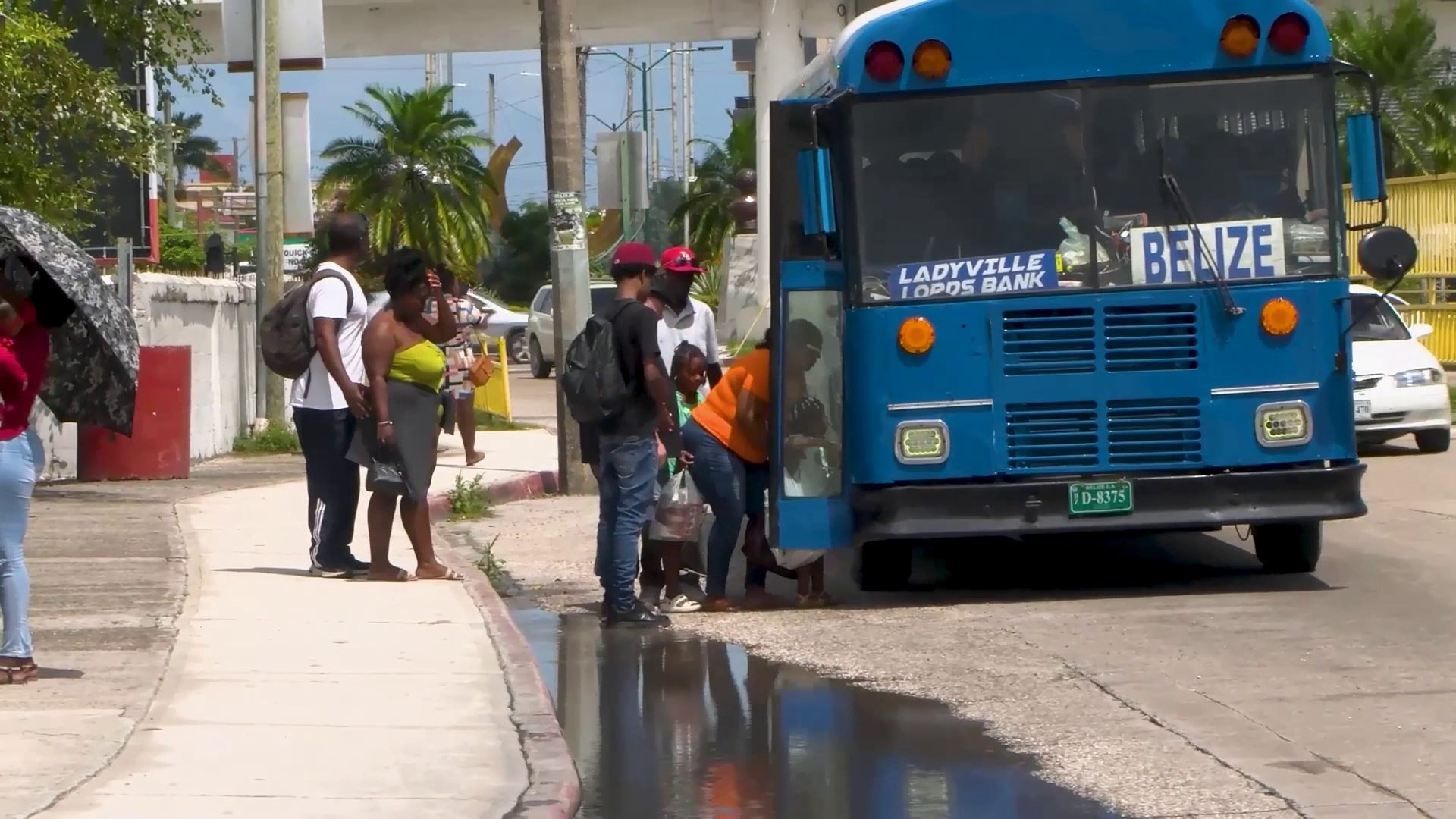
    A looming transportation crisis is building across Belize, as the nation’s bus operators have formally announced they will suspend all service starting Monday unless the national government intervenes to address crippling cost increases from soaring diesel prices. The impending shutdown comes after months of failed negotiations and growing financial strain that has pushed even small, family-run operations to the edge of collapse, threatening to leave thousands of daily commuters stranded across the country.

    The crisis traces back to a nearly 20% jump in global diesel prices at the end of March, which translated to an extra $2.50 per gallon at the pump for operators. For many companies, that increase pushed daily operating costs far beyond revenue, turning every mile driven into a net loss. Leaders of the Belize Bus Association say operators have absorbed these extra costs for as long as they can, and patience has now run out.

    “For a very long time, our members have pressured us to take action, but I held out for diplomacy and negotiations with the ministry of transport,” explained Phillip Jones, president of the Belize Bus Association. “That approach has gotten us nowhere, so we have reached this breaking point. The reality is we are running on fumes presently, and we simply cannot sustain these losses any longer.”

    Operators have put forward three potential solutions to ease the strain: temporary fuel tax relief, government subsidies to offset higher fuel costs, or approval for a modest adjustment to passenger fares. To date, all three proposals have been rejected by government officials, who have only urged operators to “wait and see” how global fuel markets evolve. But for small and independent operators already operating on razor-thin margins, waiting is no longer an option.

    News Five’s deep dive into the financials of two independent family-run bus operations lays bare the unsustainable math operators now face. Michael Frazer, owner of LIMTD Bus Service, runs one route between Orange Walk and Belize City, and a second cross-border route to Chetumal, Mexico. He says a single round trip on the Orange Walk–Belize City route now costs $350 in diesel alone – that is before accounting for driver wages, vehicle parts, licensing fees, insurance, and regular maintenance.

    “In peak season, when the bus is completely full with teachers, students, farmers, working people and shoppers, we bring in roughly $550 in total revenue from that round trip,” Frazer explained. “Of that, $350 goes straight to fuel, leaving just $200 to cover every other cost. We survive only because this is a family business: I drive one bus myself, my son drives the other, my wife handles ticketing and on-board help. We even do all our own maintenance and cleaning to cut costs. Most independent operators rely on affordable secondhand parts from the Mennonite community just to keep repair bills down. After 18 years in this business, I can’t cut costs any further.”

    Jaquelline Bonell, owner of D & J Guinea Grass Trans Service, tells an identical story. Her company serves hundreds of rural villagers running routes between Guinea Grass, Belize City, a local technical secondary school, and Orange Walk Town. On her core Guinea Grass–Belize City route, fuel costs alone hit $325 per round trip, while revenue often falls short of covering that cost, especially on return trips where passenger volumes are low.

    “Everything is getting more expensive: coolant for the engine, cleaning supplies, social security contributions for employees, income tax, parts. We are a family operation too – I work full time without drawing a salary, my son worked last week and didn’t get paid, I handle all my own administrative work to avoid hiring extra help,” Bonilla said. “We have kept running even while losing money because hundreds of local people depend on us to get to work, school and town for services. But we have hit our limit. All we are asking for is a little help, a small fare increase to cover our extra fuel costs. We don’t expect to get everything we want, just some relief.”

    Operators stress they are not seeking to disrupt daily life for commuters, but they have no other option after repeated requests for government intervention have gone unanswered. “We aren’t trying to create havoc, but we aren’t backing down. We’ve asked for help too many times with nothing to show for it,” Frazer said. Unless government acts to provide some form of relief before Monday, operators across the country will pull their buses off the road, leaving thousands of Belizeans without access to their primary form of public transportation. This report was compiled by Paul Lopez for News Five.

  • Transport Minister Meets Bus Operators Over Fare Dispute

    Transport Minister Meets Bus Operators Over Fare Dispute

    As a nationwide shutdown of bus services loomed just days away, Belize’s government moved quickly to de-escalate tensions between transport officials and independent bus operators locked in a bitter fare dispute. On April 16, 2026, Transport Minister Dr. Louis Zabaneh held urgent talks with leadership of the Belize Bus Association (BBA) in Belize City, just days after the group warned service would halt entirely on the coming Monday if no intervention was made to address their core demand.

    Independent operators currently charge a regulated rate of 14 cents per mile, but the BBA is pushing to raise that figure to 19 cents per mile — the same rate already charged by state-owned National Bus Company (NBC). BBA President Phillip Jones emphasized that the requested adjustment is not a push for inflated profits, but a bid for a level competitive playing field. Speaking ahead of the meeting, Jones laid bare the financial struggles facing small, independent operators, noting that many have gone weeks without drawing a salary, and he himself could not recall the last time he took home pay. “We are not asking for a lot,” Jones explained. “We simply want all operators, NBC and independents alike, to charge the same price. This is a matter of fairness, not greed.”

    Jones added that operators see a strike as an absolute last resort, noting that both bus operators and Belizean commuters want to avoid a shutdown. “This is the last thing we want to do to the public, but we have reached a point where we have to stand our ground,” he said. If no deal was reached by Monday, Jones warned the shutdown would bring what he dubbed “busgeddon” — a total halt to all public bus transit across the country that would disrupt travel for thousands of commuters.

    Despite the urgent calls for a fare adjustment, Minister Zabaneh quickly shut down the prospect of a rate increase, saying the option remains completely off the table. Ahead of the meeting, he clarified that he cannot recommend a fare hike to the Cabinet, noting that Belizean commuters are already facing widespread cost-of-living pressures. The core purpose of creating the NBC, he reminded, was to improve operational efficiency to avoid passing cost increases onto riders.

    Instead of a fare adjustment, Zabaneh presented an alternative proposal: if independent operators do not wish to work under the NBC umbrella, they can follow the NBC model and form their own unified bus company in northern Belize, a restructuring that the government says would unlock operational efficiencies and improve their financial footing. The minister also noted that the early meeting was granted at the BBA’s request, and that a full review of the dispute will be presented to Prime Minister, who was out of the country during the talks, by Friday afternoon for full Cabinet consideration.

    In a last-minute development that averted immediate chaos, late on the day of the meeting Jones confirmed to local news outlet News Five that the planned Monday shutdown has been tentatively called off, with operators holding off on action to await a formal response from the Belizean Cabinet. It remains unclear whether the government’s alternative proposal will be enough to satisfy operators and avoid a shutdown down the line, leaving both commuters and industry stakeholders waiting on the Cabinet’s final decision in the coming days.

  • Belastingdienst digitaliseert aangifte: gratis hulp via SAS-HUBA

    Belastingdienst digitaliseert aangifte: gratis hulp via SAS-HUBA

    The Dutch Tax Administration (Belastingdienst) has officially opened the application window for its new online SAS-HUBA initiative, offering taxpayers free, dedicated guidance for digital income tax submissions through May 15, 2026. The launch of the Self-Assessment System – Hulp Bij Aangifte (SAS-HUBA) marks a key milestone in the tax authority’s ongoing shift to fully digital public services, streamlining what has long been a cumbersome, in-person process for millions of filers.

    Running from April 13 through May 15 2026, the program provides no-cost assistance to taxpayers completing both provisional and final income tax returns for the 2025 tax year. Prior to the digital transition, filers were required to complete submissions via in-person visits at physical tax office locations. Now, the entire process can be managed remotely online, a change designed to make filing faster, simpler, and far more transparent for all users.

    Target groups for the SAS-HUBA support program include small business owners, self-employed workers, and wage earners claiming itemized deductions, all of which often face more complex filing requirements than standard filers. All guidance through the initiative is delivered entirely online at no cost to participants.

    To access the platform and its support resources, users are required to complete pre-registration before starting their filing process. Tax officials have also issued preparatory guidance: all filers are advised to double-check personal and financial information before submission, while business owners are specifically reminded to have a fully itemized breakdown of annual income and expenses ready to reference during filing.

    The digitalization of income tax filing is just one component of a broader, agency-wide modernization effort underway at the Dutch Tax Administration, which also includes ongoing work to restructure and reform the national tax system as a whole. April remains a critical month for tax compliance deadlines: provisional 2025 returns must be submitted no later than April 15, while the deadline for final returns is April 30. Beyond the online SAS-HUBA platform, the tax authority confirms that additional support remains available to taxpayers both through its digital channels and at in-person office locations across the country.

  • Double Standards Alleged in BTL Severance

    Double Standards Alleged in BTL Severance

    A new controversy over unequal treatment in severance compensation has erupted at Belize Telemedia Limited (BTL), reigniting long-simmering public anger over unfair labor practices that prioritize corporate leadership over rank-and-file workers. The dispute comes on the heels of recent public outrage over extremely generous exit packages awarded to senior executives at the Belize Electricity Limited (BEL), and has now shifted focus to systemic inequities across Belize’s major telecommunications provider.

    Former frontline BTL employees say they have been systematically denied the severance benefits they legally earned after decades of service to the company. In a surprising turn that has deepened accusations of hypocrisy, a former chief executive officer of BTL recently filed a claim for his own severance payout – a move that worker advocates say directly contradicts the company’s reasoning for rejecting ordinary workers’ claims.

    The Belize Communication Workers for Justice, the group representing the affected employees, has condemned the practice as a clear example of a broken system that consistently favors top-tier corporate leaders while forcing everyday workers to fight for compensation they are owed. Emily Turner, an organizer for the advocacy group, laid out the contradiction in comments shared with reporters.

    Turner explained that during a publicly advertised severance open day held by BTL last Saturday, the company’s former CEO arrived in person to submit his severance claim. What makes this act particularly striking, Turner argues, is that BTL has repeatedly rejected severance claims from ordinary workers by citing a one-time payment issued to staff back in 1995. Company officials have claimed that 1995 payment disqualifies current claims from rank-and-file employees. But that same 1995 payment was also issued to the former CEO when he held the top leadership position at the firm, raising obvious questions about why his claim is being considered while ordinary workers’ claims are thrown out.

    “When we take this case to court, all of these inconsistencies will be brought to light,” Turner said. “The company will be required to turn over all employment and payment records for our members, so we can verify that every worker receives the full and correct compensation they are owed.” The case is expected to proceed through Belize’s judicial system in the coming months, as workers push for transparency and equal treatment under company severance policies.

  • EMPRO businesswomen drive economic growth and job creation in Dominican Republic

    EMPRO businesswomen drive economic growth and job creation in Dominican Republic

    Six months after its completion, an independent assessment has confirmed that the Empresarias Progresando (EMPRO) initiative, a women-focused business development program run by INCAE Business School in the Dominican Republic, has driven remarkable, measurable growth for female-led small and medium enterprises across the country.

    The highly competitive program selected just 49 participants out of more than 500 total applicants. Its structured curriculum combines multi-phase targeted business training with a full week of immersive in-person instruction hosted at INCAE’s campus in Costa Rica, equipping participating entrepreneurs with the skills, networks, and strategies needed to scale their operations. Early impact data collected after six months shows these investments have translated to extraordinary improvements across four core pillars of business success: revenue growth, job creation, digital transformation, and expanded access to capital.

    Economic outcomes for participants far outpace baseline expectations for typical small business development programs. Average monthly sales for participating women-owned businesses nearly tripled compared to pre-program levels, while total employment across the cohort jumped by 80 percent. In total, the program has supported the creation of approximately 450 new full and part-time jobs across the Dominican Republic, expanding local livelihoods beyond the 49 participating entrepreneurs themselves. Beyond revenue and headcount gains, 82 percent of program graduates launched new business opportunities, most through the development of original products and services that opened untapped customer markets.

    A key focus of the EMPRO initiative is closing gaps in digital and financial inclusion for women entrepreneurs, and results in these areas are equally compelling. At the start of the program, 22 percent of participants did not integrate any digital tools into their daily business operations; by the program’s conclusion, every entrepreneur had adopted digital tools for tasks ranging from sales tracking to customer outreach, positioning their businesses for long-term competitiveness in an increasingly digital economy. On the financing side, 69 percent of participants secured new capital to scale their operations, with nearly half of those loans coming through traditional banking channels, most from program partner Banco BHD. A large majority of participants also overhauled their internal financial management practices, a shift that program organizers say signals stronger operational capacity and sustainable long-term growth potential for the cohort.

    The EMPRO program is a collaborative public-private initiative, backed by funding and strategic support from three partner organizations: the Mastercard Center for Inclusive Growth, the PriceSmart Foundation, and Banco BHD. Program leaders say the strong results of the six-month evaluation make a clear case for scaling targeted investments in female entrepreneurship as a core driver of national economic competitiveness and inclusive, sustainable development across emerging markets.

  • Abinader inaugurates Renacer Plant, Caribbean’s first food-grade recycled PET facility

    Abinader inaugurates Renacer Plant, Caribbean’s first food-grade recycled PET facility

    SAN PEDRO DE MACORÍS — Dominican Republic President Luis Abinader has formally opened the Renacer Plant, a ground-breaking industrial facility that claims the title of the first food-grade recycled PET resin production plant in the entire Caribbean region.

    Nested within the Quisqueya Free Zone in San Pedro de Macorís, the landmark project is the product of a strategic partnership between two local firms, Diesco and Invema. Designed to convert millions of post-consumer plastic bottles into food-safe reusable raw material, the launch marks a transformative leap forward for the Dominican Republic’s transition to a circular economy.

    Backed by a total investment of more than 3 billion Dominican pesos, the facility boasts an annual processing capacity of over 124 million plastic bottles. Beyond its industrial output, the plant is projected to create more than 500 direct job positions and support up to 5,000 indirect employment opportunities across the country’s recycling and supply chains.

    Government officials have outlined multiple economic and environmental benefits tied to the initiative. By strengthening the entire domestic recycling value chain, the plant cuts the Dominican Republic’s reliance on imported virgin PET resin, while unlocking new export opportunities for the high-quality recycled output it produces. Environmental gains are equally significant: the facility will prevent thousands of tons of carbon dioxide emissions annually by keeping plastic waste out of landfills and ecosystems, and reducing the carbon footprint associated with producing new plastic.

    Both public officials and private sector leaders point to the Renacer Plant as a powerful testament to rising investor confidence in the Dominican Republic’s economic and regulatory landscape. The project also stands as a model of successful public-private collaboration, blending government support for sustainable industrial development with private sector innovation and investment.

    In addition to its core industrial and economic impacts, the facility is designed to drive long-term community development in the San Pedro de Macorís region. It will host vocational training programs for local workers, operate an on-site medical dispensary for community use, and open an educational recycling museum to raise public awareness about circular economy practices. These complementary initiatives are expected to cement San Pedro de Macorís’ position as a regional hub for sustainable industrial innovation across the Caribbean.