分类: business

  • Tancoo: Businesses can find ways to absorb  gas hike

    Tancoo: Businesses can find ways to absorb gas hike

    Trinidad and Tobago’s Finance Minister Davendranath Tancoo has characterized the impending 76% natural gas price increase for light industrial customers as a strategic opportunity for business optimization rather than merely a cost burden. The controversial adjustment, scheduled to take effect at month’s end, will elevate rates from US$3 to US$5.30 per MMBtu for state-owned NGC’s commercial clients.

    During a January 25 press briefing at the United National Congress headquarters in Chaguanas, Minister Tancoo addressed concerns raised by the TT Manufacturers’ Association regarding potential nationwide economic repercussions. Rather than viewing the hike as purely inflationary, the minister framed it as a catalyst for operational improvements within the business sector.

    “This situation presents a challenge for enterprises, including TTMA members, to critically examine their operational capabilities,” Tancoo stated. “There exists now a compelling incentive to enhance efficiencies and streamline processes to prevent passing additional costs to consumers.”

    The minister defended NGC’s pricing strategy as a necessary correction after years of substantial government subsidies. He revealed that light industrial users had been receiving natural gas at rates “substantially lower” than those paid by heavy industrial sectors and far below actual extraction costs.

    “While logically any input cost increase affects final product pricing, we’re establishing a more realistic price range,” Tancoo explained. “The adjustment specifically aims to align light industrial rates closer to both industrial customer prices and actual production expenses.”

    Tancoo emphasized that even with the implemented increase, Trinidad and Tobago’s manufacturers would maintain a competitive advantage within the Caribbean region regarding energy costs. The minister acknowledged inevitable objections but stressed the long-term necessity of moving away from subsidized pricing models toward market-reflective rates that accurately represent the value of the national resource.


  • Energy Chamber chair promises review of STOW, governance

    Energy Chamber chair promises review of STOW, governance

    In a significant address at the 2026 TT Energy Conference held at Hyatt Regency on January 26, Energy Chamber chairperson Mala Baliraj announced comprehensive reviews of both the controversial Safe To Work (STOW) program and the organization’s governance framework. Baliraj committed to substantive changes following mounting criticism from both members and government officials.

    “We have committed to reflect, review and make changes as needed,” Baliraj stated during her opening remarks, acknowledging the STOW program had effectively created barriers for certain companies rather than enhancing safety standards as intended. She noted this concern had been consistently raised by membership and echoed in previous chamber addresses throughout 2025.

    The chairperson emphasized the chamber’s dedication to collaborative engagement with all stakeholders, particularly government entities. “Our intention is always to work towards a collaborative approach with all of our stakeholders,” she explained. “We hope to be able to reposition and create a space for open and structured engagement with the government that supports the best outcomes for the sector.”

    Regarding governance reforms, Baliraj highlighted the diverse composition of the chamber’s approximately 400 members, which range from global corporations to micro enterprises. She stressed the necessity of maintaining a transparent governance framework that prevents dominance by any particular interest group while reflecting the membership’s breadth.

    These announcements follow intense government criticism of the chamber’s operations. Prime Minister Kamla Persad-Bissessar recently declared plans to boycott the conference, while Energy Minister Roodal Moonilal opted to attend the India Energy Conference instead. Minister Moonilal had previously condemned the STOW program at a January 22 post-Cabinet media conference, alleging the chamber was “holding businesses to ransom by having a monopoly on who can conduct business in the energy sector using health and safety as a strangling tool.”

    The TT Energy Conference continues through January 28, with these proposed reforms expected to dominate discussions among energy sector stakeholders.

  • Jamaica exits FITUR 2026 with accelerated recovery and new investment momentum

    Jamaica exits FITUR 2026 with accelerated recovery and new investment momentum

    MADRID, Spain — Jamaica has emerged from FITUR 2026 with significant advancements in its tourism sector reconstruction, marking a strategic shift from mere recovery to purposeful rebuilding. During the three-day international tourism fair, the Jamaican Ministry of Tourism secured critical partnerships, accelerated reopening timelines, and gained international recognition for its resilience leadership.

    Tourism Minister Edmund Bartlett announced Jamaica’s proactive approach to infrastructure development, stating: “We are inviting investment from CAF (Development Bank of Latin America) and private-sector partners to accelerate resilient infrastructure and a reimagined tourism product. Resilience now forms the foundation of investor confidence and community protection.”

    Key negotiations with major hotel chains Grupo Piñero and Hyatt addressed the economic impact of approximately 1,000 closed rooms in Montego Bay. Practical solutions were outlined, including skilled labor mobilization, improved import logistics, and administrative measures. Both parties agreed to prioritize earlier reopening schedules where feasible, with follow-up visits planned to confirm property-specific timelines and expansion plans.

    The most significant development occurred on the final day when UN Tourism designated Jamaica as the world’s official tourism resilience hub. This global endorsement recognizes Jamaica’s leadership in crisis preparedness and recovery management. Minister Bartlett presented the country’s recovery case, highlighting national stability and the disciplined response to Hurricane Melissa, which left 1.5 million people without basic necessities for nearly 60 days.

    Jamaica’s resilience leadership extends to the establishment of February 17 as Global Tourism Resilience Day, with observances planned next month in Nairobi, Kenya.

    Separate negotiations with Bahía Príncipe yielded a phased reopening strategy targeting 50% of room capacity (approximately 650 rooms) by May, with full restoration expected by November. Jamaica advocated for earlier openings where possible, emphasizing employment and economic benefits.

    Simultaneously, Jamaica strengthened airlift and marketing coordination with TUI, focusing on digital marketing strategies and emerging platforms. Tourism Director Donovan White emphasized: “Recovery requires both demand and supply—inventory must return, but confidence must return faster. We’ve strengthened partnerships to keep Jamaica visible and bookable as rooms come back online.”

  • St John’s cruise terminal ‘to boost jobs and local business’

    St John’s cruise terminal ‘to boost jobs and local business’

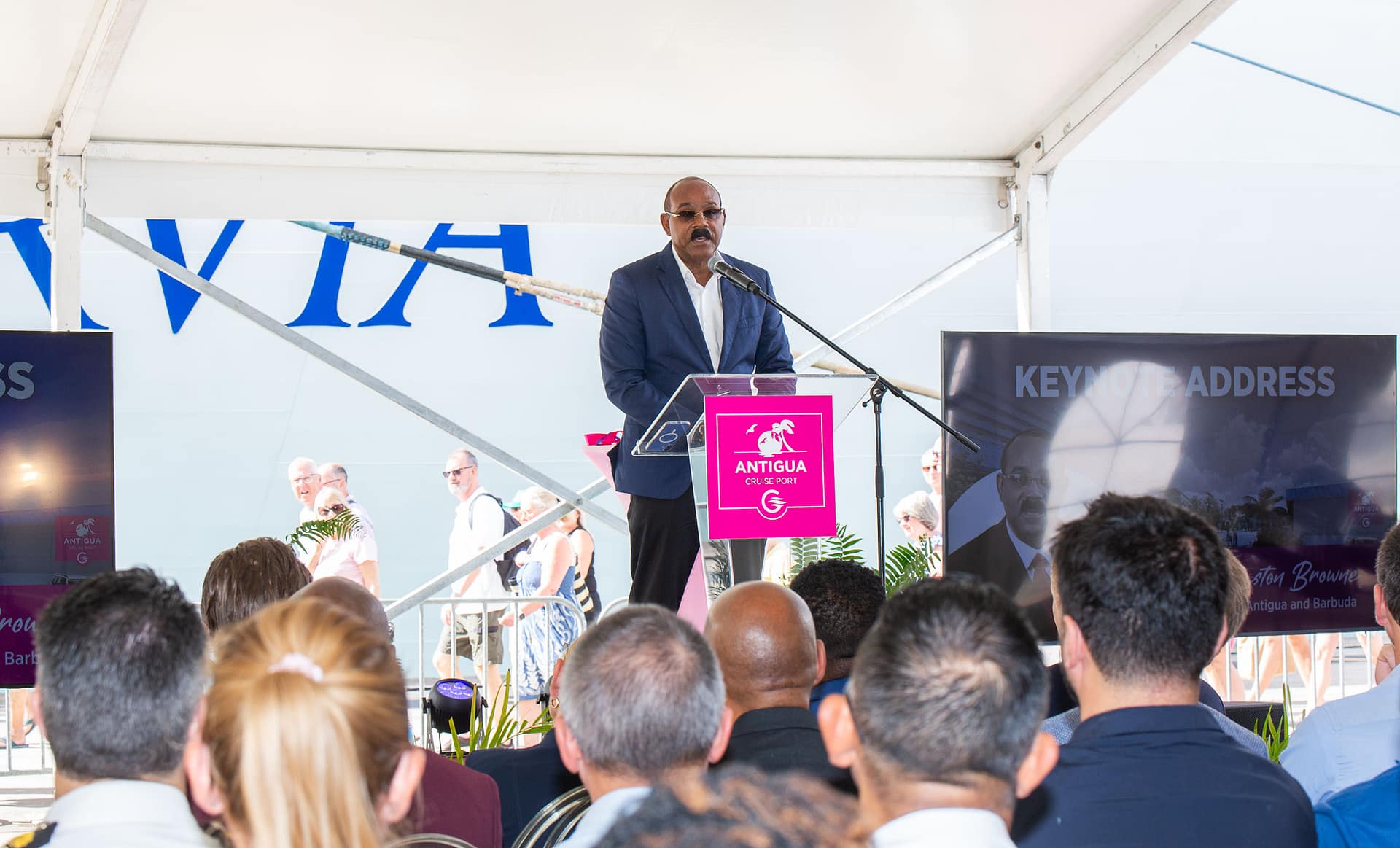
    Antigua’s tourism infrastructure is undergoing a significant transformation with the development of a new purpose-built cruise terminal, marking a pivotal shift from temporary operations to a permanent economic catalyst. This 10,000-square-foot facility, now operational, represents the initial phase of a comprehensive upland development project scheduled for full completion by July 2026.

    The terminal’s activation has already generated approximately 70 local jobs, with employment figures projected to more than double upon the project’s culmination. This growth is intrinsically linked to the planned integration of retail outlets, diverse dining facilities, and a premium day club featuring a pool. Antigua Cruise Ports General Manager Gasper George emphasized the development’s core mission: to systematically integrate local entrepreneurs into the cruise tourism ecosystem. The company has formally issued a call for Antiguan business owners to submit commercial proposals for operating stores within the complex.

    This $60 million investment, spearheaded by Global Ports Holding in partnership with the Antiguan government since 2019, is already demonstrating substantial returns. Cruise tourism metrics have surged dramatically, with the nation anticipating nearly one million passenger arrivals this year—almost double the pre-partnership figures. Government officials assert that this strategic expansion is designed to ensure that the sector’s growth directly translates into tangible improvements in living standards for citizens, creating a sustainable economic model that benefits the local community.

    The development replaces the interim market tent that previously housed homeporting operations when services commenced in 2022, signaling a new era of professionalism and capacity for the island’s cruise industry.

  • Nevis Premier: jurisdiction targets top-tier status with compliance-first gaming framework | AGB

    Nevis Premier: jurisdiction targets top-tier status with compliance-first gaming framework | AGB

    The Caribbean island of Nevis has unveiled a comprehensive online gaming regulatory framework, strategically designed not as a short-term revenue generator but as a foundational pillar for long-term economic resilience. Premier Mark Brantley, in an exclusive interview with Asia Gaming Brief at ICE 2026 in Barcelona, articulated a vision to position Nevis as a top-tier, compliance-focused jurisdiction in the global gaming industry.

    The initiative was catalyzed by the economic vulnerabilities exposed during the COVID-19 pandemic. With its heavy reliance on tourism severely disrupted by border closures and hotel shutdowns, the Nevis Island Administration recognized an urgent need to diversify its economic base. Leveraging its four-decade-long reputation as a regulated international financial services center, gaming emerged as a natural and strategic extension.

    Premier Brantley emphasized that the jurisdiction’s established regulatory principles—including rigorous anti-money laundering protocols, extensive due diligence, and a compliance-first licensing philosophy honed in financial services—are being directly applied to the new online gaming regime. This existing infrastructure has kept Nevis in good standing with international bodies like the Financial Action Task Force (FATF), providing a credible foundation for its gaming ambitions.

    The economic strategy extends beyond mere licensing fees. The government is actively courting a complete digital ecosystem, inviting not only operators but also payments processors, technology vendors, AI specialists, and other ancillary service providers to establish a physical and operational presence on the island. Brantley highlighted Nevis’s robust internet infrastructure, accessible local banking for licensed entities, and high quality of life as key advantages to attract international digital businesses and professionals.

    Acknowledging that top-tier status is a long-term goal, Brantley outlined a measured capacity-building approach. The Nevis Online Gaming Authority will serve as the central regulatory body, employing a multi-layered application review process involving both the regulator and the Ministry of Finance. Licenses are granted annually, with renewal contingent upon demonstrated ongoing compliance and reputable conduct, a model designed to mitigate the risk of bad actors.

    The Premier was unequivocal about prioritizing quality over quantity, stating that only ‘reputable entities need apply.’ The success of the framework will be judged by the caliber of its licensees and the sustainable growth of a reputable industry, even if it means turning away applicants that do not meet its stringent standards. With the framework now operational, companies are encouraged to engage with the regulator to assess the opportunities Nevis offers.

  • Cap Cana: A well-established tourist destination that contributes to Dominican tourism

    Cap Cana: A well-established tourist destination that contributes to Dominican tourism

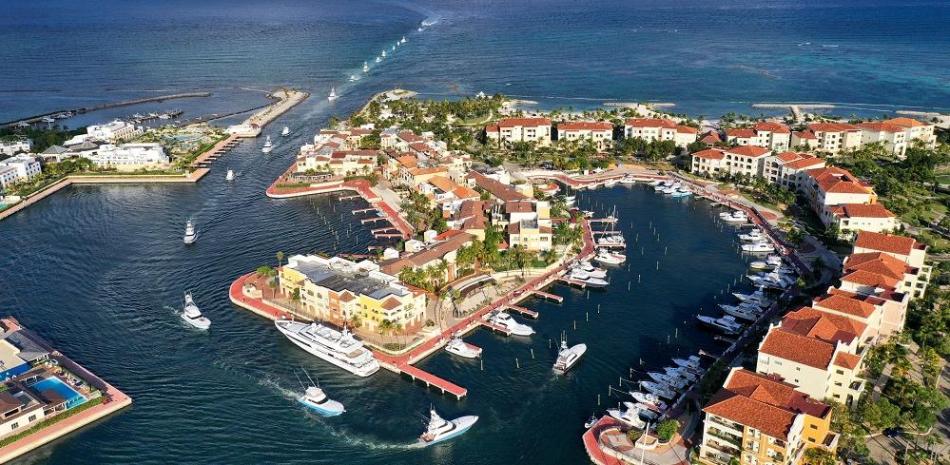
    The Dominican Republic’s premier luxury development, Cap Cana, is transforming into a groundbreaking smart city model while simultaneously driving the nation’s economic and tourism growth. This private destination city has evolved beyond its initial concept to become a sustainable, technologically advanced urban center that represents a significant milestone in the country’s development trajectory.

    Over its 23-year history, Cap Cana has attracted substantial investment totaling $4.758 billion, averaging approximately $213 million annually. The development’s infrastructure, valued at over $1.2 billion, now supports the largest luxury real estate cluster in the Caribbean nation. This massive investment has positioned the Dominican Republic as both the region’s largest economy and most developed tourist destination, with visitor numbers increasing significantly due to expanded tourism offerings over the past five years.

    The project’s impact extends beyond economic metrics, generating more than 20,000 direct and indirect jobs while substantially contributing to social well-being in the surrounding area. Cap Cana has established itself as an integrated community where residents and visitors can live, work, and enjoy premium leisure and recreational facilities.

    As a diversified tourism, real estate, and hospitality destination, Cap Cana embodies the country’s advancements in sustainable development. The city’s structured growth strategy emphasizes technological integration alongside environmental consciousness, positioning it as an emerging global benchmark for modern luxury tourism and smart city innovation. This development represents a new paradigm for urban planning in the Caribbean, combining cutting-edge technology with sustainable practices to create a model for future destination cities worldwide.

  • For every new vehicle brought from the US, five Chinese units entered the Dominican Republic in 2025.

    For every new vehicle brought from the US, five Chinese units entered the Dominican Republic in 2025.

    Santo Domingo – The automotive landscape in the Dominican Republic has undergone a dramatic transformation, with Chinese vehicles emerging as the dominant force in the new car market. According to data from the United Automotive Industry Group (Guía-RD), China supplied 14,556 new vehicles to the Dominican market in 2025, dwarfing the United States’ contribution of merely 2,944 units. This establishes a remarkable ratio of five Chinese vehicles for every American car entering the country.

    The ascendancy of Chinese automakers is attributed to a dual strategy of competitive pricing and sophisticated design. Modern, attractive vehicle designs coupled with increasingly affordable prices have positioned Chinese brands as the preferred choice for Dominican consumers. The average Free On Board (FOB) value for new vehicles declined to $22,228, making new car ownership more accessible compared to used alternatives. This price advantage has been crucial in shifting consumer preference toward new vehicles from authorized dealerships, which offer manufacturer warranties and eliminate the uncertainties associated with pre-owned vehicles.

    Despite tariff exemptions for American vehicles under the DR-CAFTA free trade agreement, the U.S. maintains leadership only in the used vehicle segment, importing 32,700 units compared to China’s 505. Dominican consumers increasingly view Chinese vehicles as a secure investment with guaranteed dealership support.

    Market dynamics have been further influenced by broader economic conditions. A 4% reduction in overall vehicle imports during 2025 enabled importers to balance supply with diminished demand. The Dominican Central Bank’s restrictive monetary policy, which pushed interest rates on consumer loans to 19.4% annually, reduced purchasing power and compelled consumers to reconsider spending patterns.

    In response to these market shifts, importers have diversified their offerings to include hybrid and super-hybrid vehicles, which saw import growth of 54.7% in the previous year. These models provide enhanced fuel efficiency and superior warranties, adding significant value to the new car market amidst evolving consumer preferences and economic challenges.

  • Antigua Cruise Port opens new terminal as cruise arrivals climb

    Antigua Cruise Port opens new terminal as cruise arrivals climb

    The Caribbean tourism sector witnesses a significant milestone as Antigua Cruise Port officially inaugurates its cutting-edge terminal facility. This strategic development arrives amid a substantial upward trajectory in cruise passenger arrivals to the Eastern Caribbean destination. The newly operational infrastructure represents a pivotal enhancement to the island’s tourism capabilities, designed to streamline passenger processing and elevate the overall visitor experience.

    Port authorities confirm the modern terminal features expanded disembarkation areas, digitalized customs processing, and contemporary retail spaces showcasing local artisans. The project forms part of a comprehensive public-private partnership initiative aimed at positioning Antigua and Barbuda as a premier cruise hub within the competitive Caribbean market. Industry analysts note the timing coincides with regional recovery patterns showing cruise tourism volumes approaching pre-pandemic levels with notable growth in premium-class vessels.

    Tourism officials emphasize the development directly addresses practical operational demands while creating substantial economic opportunities for local businesses. The enhanced facility enables simultaneous docking of larger cruise ships while reducing turnaround times, thereby increasing potential passenger capacity. Early operational data indicates passenger throughput efficiency has improved by approximately 40% compared to previous arrangements.

    Market response appears positive with several major cruise lines adjusting itineraries to include extended stays at Antigua’s improved port facilities. The development aligns with the island’s broader economic strategy targeting high-value tourism segments through infrastructure modernization and service excellence.

  • Ecuador: Warns of “silent dismantling” of state-owned oil company

    Ecuador: Warns of “silent dismantling” of state-owned oil company

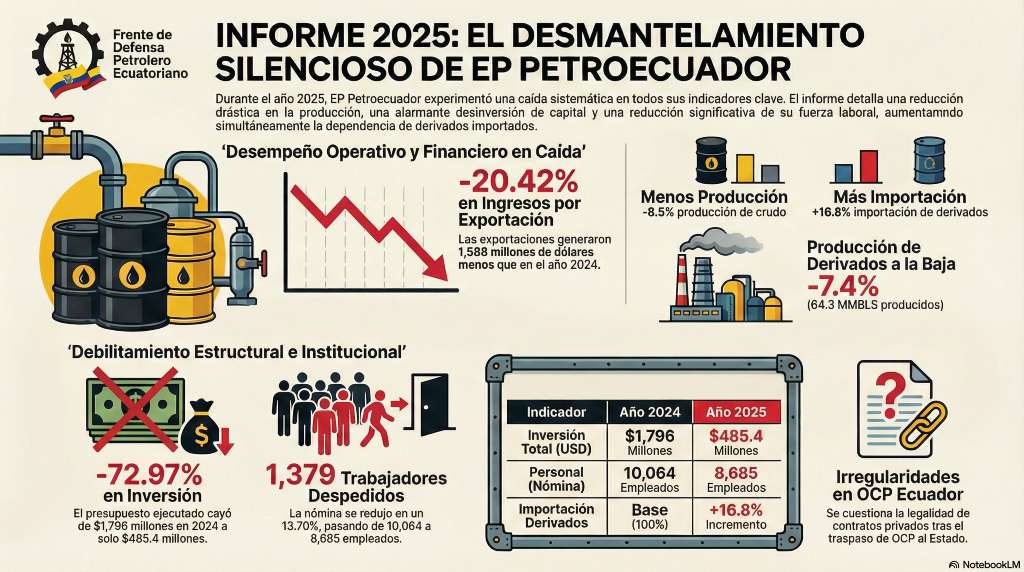
    Ecuador’s oil industry is confronting a severe downturn, with official data revealing a significant 8.5% annual decline in crude production for 2025. Total output amounted to 127.4 million barrels, averaging just 349,167 barrels per day. This production slump has been compounded by a parallel decrease in domestic refining capacity, forcing the nation to dramatically increase its reliance on imported fuels. Imports surged by 16.8% year-on-year to 74.3 million barrels, a dependency that analysts warn undermines national energy security and places strain on the economy. The situation is further exacerbated by a drastic 72.97% contraction in public sector investment, with budget execution plummeting to $485.4 million compared to the previous year. The human cost of this crisis has also been severe, with 1,379 workers dismissed, constituting a 13.7% reduction in the industry’s workforce. Adding to these operational and financial concerns, serious legal questions have been raised regarding contracts signed by OCP Ecuador S.A., the state-managed entity overseeing the Heavy Crude Oil Pipeline since its transfer to public ownership on December 1, 2024. Industry groups are now issuing urgent calls for heightened scrutiny from both authorities and the public into the management of the country’s vital energy resources, cautioning that the current trajectory threatens to inflict irreversible damage upon the national oil industry.

  • Jamaica remains among lower-paying markets in 2025

    Jamaica remains among lower-paying markets in 2025

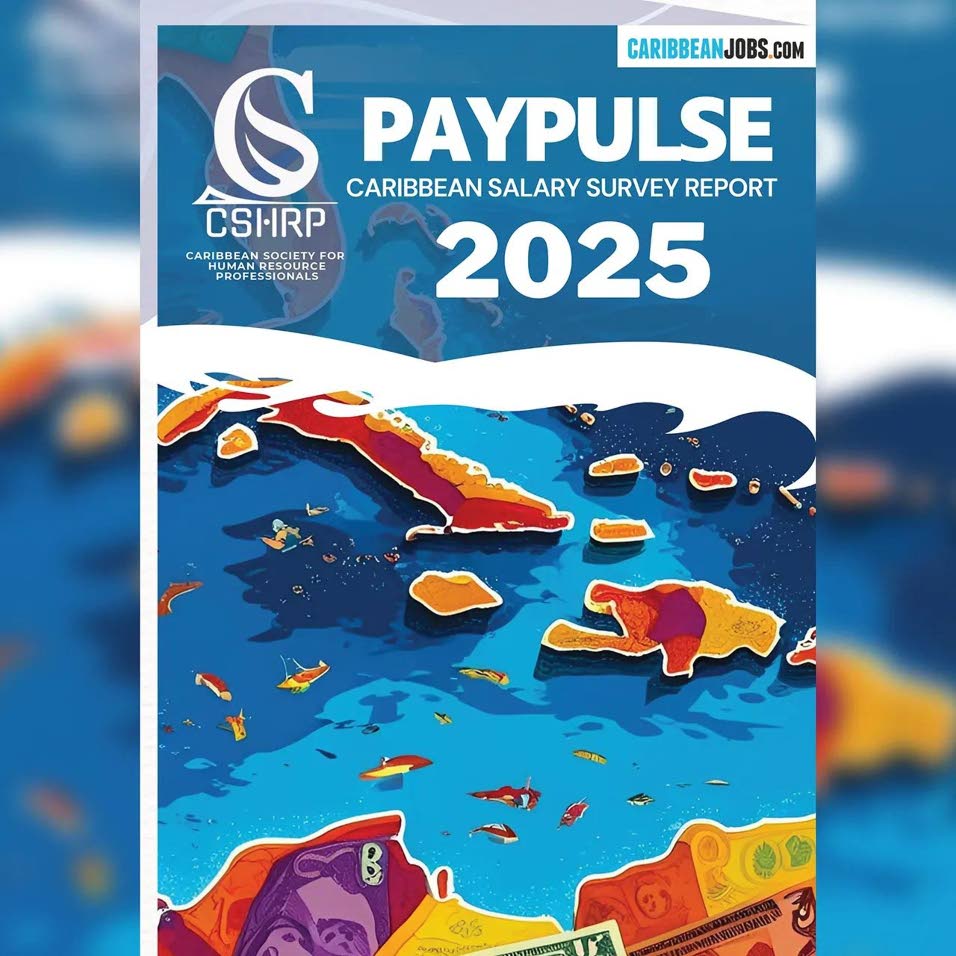
    For the second consecutive year, Jamaica has been positioned among the Caribbean’s lowest-paying markets for entry-level positions, according to the comprehensive PayPulse 2025 Survey released by the Caribbean Society for HR Professionals (CSHRP). The island nation now finds itself in a comparable salary bracket with Belize and St. Vincent and the Grenadines, while regional leaders The Bahamas, St. Kitts and Nevis, and Barbados continue to dominate compensation benchmarks for executive and specialized roles.

    This sustained positioning represents a notable reversal from Jamaica’s 2023 performance when it ranked as the region’s third-highest paying country. The extensive survey, now in its fourth edition with enhanced data analytics and expanded coverage, examined compensation trends across 137 distinct job roles within 34 industries throughout 20 Caribbean nations.

    The research reveals a persistent regional disparity: executive positions including CEOs, CFOs, and general managers command premium salaries across all markets, while entry-level and support roles such as groundskeepers, bartenders, and receptionists remain consistently at the lower end of the pay scale. The report notes varying degrees of salary growth for key positions including accountants, auditors, and HR managers, attributing these differences to evolving market dynamics, inflationary pressures, and cost of living variations across the region.

    Sector analysis identified human resources, banking, financial services, insurance, and hospitality/tourism as the most lucrative industries. Conversely, education, childcare, retail, wholesale, and certain public sector positions were highlighted as fields requiring significant salary reform.

    A groundbreaking addition to the 2025 survey is the inaugural Affordability Index, which measures average monthly salaries against fundamental living costs including housing, food, utilities, and transportation. Belize emerged with the highest affordability score at 233.99%, followed by Guyana (138.63%) and Grenada (136.56%). Jamaica, along with The Bahamas and Antigua and Barbuda, registered within the moderately affordable range. Alarmingly, eight nations including Trinidad and Tobago, Barbados, and St. Lucia scored below 100%, indicating that average salaries in these countries fail to cover basic living expenses.

    Vaughn McDonald, Deputy Chairman of CSHRP, emphasized the critical importance of reliable compensation data amid ongoing challenges of economic volatility, digital transformation, and the persistent threat of brain drain. The survey, compiling data from approximately 206 companies, aims to provide organizations with strategic insights for informed salary structuring while empowering both employers and employees to make decisions that could reshape the Caribbean’s labor landscape.