分类: business

  • Pig farmers to launch ‘Sousie’ following ‘strong’ Christmas output

    Pig farmers to launch ‘Sousie’ following ‘strong’ Christmas output

    Barbados’ pig farming sector is capitalizing on strong Christmas season performance to launch a new locally-developed brand called Sousie, despite persistent concerns about meeting national demand and competing with imported pork products. Henderson Williams, President of both the Barbados Agricultural Society (BAS) and the Barbados Pig Farmers’ Association, confirmed the development while reporting sustained industry performance throughout 2024.

    The strategic move toward branded, value-added products represents a significant shift in the industry’s approach to market challenges. While production statistics for 2025 remain unavailable, Williams noted that farmers have maintained positive momentum built over previous years. The sector has witnessed remarkable growth, with producer membership more than doubling in 2024 as farmers intensified efforts to counter imported pork and expand domestic market share.

    Industry expansion has been fueled by multiple factors including government loans facilitated through BAS, innovative product development, and an influx of younger farmers entering the sector. Official data reveals substantial production increases, with pig slaughter numbers rising from 30,975 in 2023 to an additional 1,257 animals in 2024.

    The Sousie brand initiative marks a critical evolution in the industry’s strategy, moving beyond primary production into processed goods including burgers and pork sausages. This value-added approach complements what Williams describes as ‘solid production levels’ while addressing the fundamental challenge of stimulating consumer demand for local products.

    Collaboration with Barbados’ hospitality industry has formed another key component of the sector’s growth strategy, alongside the introduction of refreshed branding for both fresh and processed pork products. Despite ongoing competition from cheaper imports, industry indicators suggest rising output and renewed market interest in Barbadian pork products.

  • Chief Executive Officer of the Grenada Tourism Authority to serve as moderator for senior-level aviation and tourism discussion panel at CTO Air Connectivity Summit

    Chief Executive Officer of the Grenada Tourism Authority to serve as moderator for senior-level aviation and tourism discussion panel at CTO Air Connectivity Summit

    Stacey Liburd, Chief Executive Officer of the Grenada Tourism Authority, has been selected to moderate a pivotal leadership discussion at the Caribbean Tourism Organization’s 2026 Air Connectivity Summit in Bermuda. The one-day gathering, scheduled for later this month, will convene tourism ministers, airline executives, airport authorities, and regional policymakers under the theme “Integrating Aviation and Regional Tourism Development.”

    Liburd will facilitate the strategic panel “From Runway to Resort: Connecting Aviation & Caribbean Tourism Development,” which will examine the critical intersection of air transport planning and tourism strategy formulation. The dialogue will feature prominent representatives from aviation, infrastructure development, and private hospitality sectors, addressing practical solutions for route expansion, airport modernization, digital identity implementation, and visitor flow optimization.

    “Air connectivity transcends mere aviation concerns—it represents the cornerstone of tourism development, economic resilience, and regional competitiveness,” Liburd emphasized. “The synergistic alignment between aviation strategy and tourism planning will ultimately dictate our capacity to grow, diversify, and sustain Caribbean visitor economies.”

    Grenada’s prominent participation reflects the nation’s committed engagement in regional airlift negotiations and its evidence-based approach to enhancing connectivity. Recent initiatives include strengthening international air service partnerships and deploying targeted marketing campaigns to improve route performance and increase visitor expenditure.

    The summit constitutes a key component of CTO’s comprehensive Reimagine Plan and the ongoing work of its Airlift Committee, which focuses on improving intra-regional connectivity, long-haul access, and sustainable aviation practices across member states. Liburd’s dual role as moderator and Airlift Committee member positions Grenada at the forefront of discussions that will shape the future of Caribbean air access and tourism integration.

  • Jumby Bay Island, Hermitage Bay and Curtain Bluff Ranked Among Caribbean’s Best by U.S. News & World Report

    Jumby Bay Island, Hermitage Bay and Curtain Bluff Ranked Among Caribbean’s Best by U.S. News & World Report

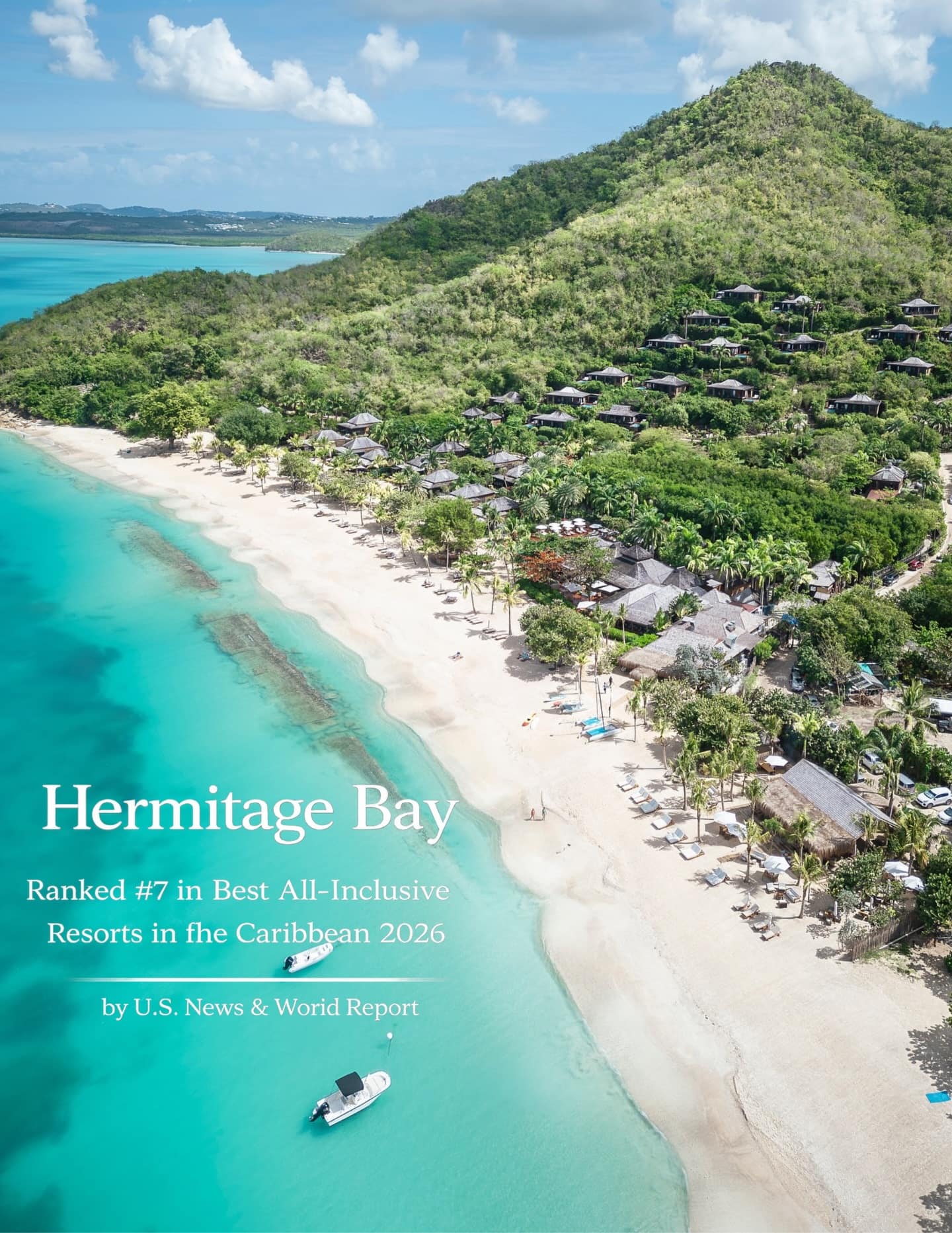
    Antigua and Barbuda’s tourism sector has achieved remarkable recognition with three of its luxury resorts securing top positions in U.S. News & World Report’s prestigious Caribbean rankings. The newly released evaluation places Jumby Bay Island at an impressive fifth position, followed by Hermitage Bay at seventh, and Curtain Bluff claiming the twelfth spot among the region’s premier all-inclusive properties.

    The comprehensive assessment examined 214 hospitality establishments across the Caribbean basin, with Antiguan properties demonstrating exceptional performance in the competitive landscape. The Antigua Barbuda Hotels and Tourism Association (ABHTA) has hailed this achievement as testament to the nation’s growing prominence as a premium tourism destination.

    Industry analysts note that these rankings significantly enhance the twin-island nation’s competitive positioning within the luxury travel market. The recognition comes as Caribbean tourism experiences robust recovery post-pandemic, with high-end all-inclusive properties leading sector growth.

    ABHTA representatives emphasized that these accolades reflect the dedication of local hospitality professionals and their commitment to delivering unparalleled guest experiences. The association further highlighted how such international recognition contributes to destination branding and market visibility.

    With tourism constituting approximately 60% of Antigua and Barbuda’s GDP, these rankings assume substantial economic importance. The continued excellence of luxury resorts reinforces the nation’s strategic focus on high-value tourism as a cornerstone of economic development and sustainable growth.

  • Flow Announces First Winner in “Riddim & Rewards” Promotion

    Flow Announces First Winner in “Riddim & Rewards” Promotion

    Telecommunications provider Flow has announced Annalie Thomas as the inaugural victor in its recently launched Riddim & Rewards promotional campaign. Thomas was awarded a $500 cash prize after subscribing to the company’s Always On prepaid plan, positioning her as the first recipient in a series of scheduled weekly disbursements.

    The ongoing customer incentive program enables participants to gain entry into the prize drawing through activation of any Always On Prepaid plan option, available in 3-Day, 7-Day, or 30-Day service durations. The promotional structure guarantees weekly $500 awards to randomly selected subscribers while simultaneously building toward a culminating $1,000 grand prize drawing, which remains unclaimed as the campaign progresses.

    This marketing initiative represents Flow’s strategic effort to enhance customer engagement and brand loyalty within the competitive telecommunications market. By offering monetary incentives alongside service plans, the company effectively creates value-added propositions for both new and existing subscribers. The campaign’s multi-tiered prize distribution system maintains ongoing consumer interest throughout its duration, providing continuous opportunities for participant rewards.

  • Three banks ready for full National Payments System platform

    Three banks ready for full National Payments System platform

    Guyana has taken a significant step toward modernizing its financial infrastructure with three major commercial banks preparing to connect to the comprehensive National Payments System (NPS) platform. The system, developed by UK-based Aperta Payment Solutions, promises to revolutionize financial transactions for both individuals and businesses across the South American nation.

    President Irfaan Ali announced the milestone during his keynote address at the 2026 Guyana Energy Conference, revealing that two commercial banks have already received approval for full integration into the digital platform. “We have completed the process of building out a national payment platform and two local banks are ready to go completely on a digital platform,” President Ali stated, highlighting the system’s capacity to enable digital wallets, payment systems, and transfer mechanisms.

    The participating institutions include international players Scotia Bank, India-headquartered Bank of Baroda, and Republic Bank (based in Trinidad and Tobago), alongside locally-owned Citizens Bank, Guyana Bank for Trade and Industry, and Demerara Bank.

    Beyond the payments infrastructure, the government unveiled complementary initiatives to bolster Guyana’s digital economy. These include forming a specialized team of digital experts to transform innovative concepts into viable business proposals, followed by managerial support to ensure sustainable enterprise development.

    The administration further plans to establish a Guyana Development Bank designed to facilitate increased lending through traditional financial institutions. President Ali noted that negotiations have already secured interest-free, collateral-free resources from commercial banks, with efforts underway to unlock additional low-cost financing with minimal collateral requirements.

    Concurrently, work continues on developing a junior stock exchange to enhance corporate transparency and fully integrate emerging companies into the formal financial ecosystem, representing a comprehensive modernization of Guyana’s economic framework.

  • BTL to Meet Former Workers Over Long‑Overdue Severance

    BTL to Meet Former Workers Over Long‑Overdue Severance

    In a significant development for labor rights in Belize, Belize Telemedia Limited (BTL) has scheduled a crucial meeting with former employees to address long-outstanding severance payments that have remained unpaid for decades. The company formally communicated its intention to engage with the Belize Communications Workers for Justice (BCWJ) in a letter confirming today’s meeting to finalize compensation arrangements.

    This breakthrough follows a landmark Caribbean Court of Justice ruling that explicitly affirmed the workers’ entitlement to severance benefits, irrespective of their pension status. Despite this legal victory, actual disbursement of funds had remained stagnant until now.

    The protracted dispute has impacted more than 175 former BTL staff members, many of whom dedicated over twenty years of service to the telecommunications company. News 5 has documented extensive demonstrations outside BTL’s headquarters, where affected former employees have voiced their struggles with financial instability and declining health conditions directly attributed to the prolonged wait for compensation.

    The BCWJ has consistently characterized the delays as stemming from ‘bogus excuses and a lack of goodwill’ on the company’s part. Tensions escalated notably when BTL publicly announced its intention to acquire SpeedNet for $80 million, a move that the workers’ union criticized as demonstrating misplaced priorities that favored corporate expansion over fulfilling obligations to longtime employees.

    In a notable concession, BTL has committed to processing claims that would typically fall outside the standard six-year statute of limitations. The BCWJ emphasizes that while this commitment represents progress, former employees require a definitive timeline specifying when each individual will finally receive their compensation check.

  • Agostini gets green light for Massy Ja acquisition

    Agostini gets green light for Massy Ja acquisition

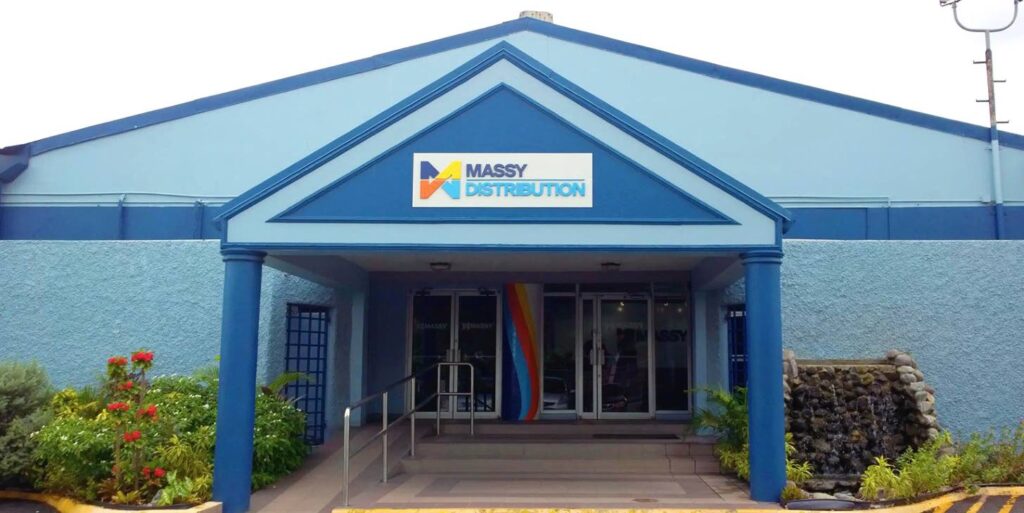
    Trinidad-based conglomerate Agostini Limited has obtained crucial regulatory clearance from Jamaica’s Fair Trading Commission (FTC), removing the final obstacle to its acquisition of Massy Distribution (Jamaica) Limited. The landmark transaction, initially announced in February 2025, had been suspended due to antitrust concerns regarding potential market dominance in insulin distribution.

    The regulatory breakthrough came after Agostini agreed to divest one of three insulin brands distributed in Jamaica, addressing the FTC’s concerns about pharmaceutical market concentration. This concession prevents the formation of a monopoly in the critical diabetes medication sector while allowing the broader acquisition to proceed.

    Barry Davis, Chief Executive Officer of Agostini, emphasized the strategic importance of the Jamaican market, stating: “Jamaica remains a pivotal market for our long-term growth strategy. Our collaborative resolution with the FTC demonstrates our unwavering commitment to regulatory compliance and ethical business practices across all operating territories.”

    The acquisition will be executed through Acado Limited, a joint venture equally owned by Agostini and Barbados-based Goddard Enterprises Limited. Post-acquisition, Massy Distribution’s pharmaceutical operations will integrate into Aventa Jamaica (formerly Health Brands Limited), while consumer divisions will fall under Acado’s management.

    This expansion significantly enhances Agostini’s footprint in Jamaica’s pharmaceutical and consumer distribution sectors, building upon its existing presence established through the August 2023 acquisition of Aventa Jamaica. The consolidation reflects broader regional trends in distribution market integration.

    For Massy Holdings Limited, the divestment represents continued strategic refocusing on core energy operations. Following the transaction, Massy’s Jamaican presence will concentrate exclusively on gas distribution through Massy Gas Products (Jamaica) Limited and IGL Limited, which maintain dominant positions in both bulk and packaged LPG markets.

    Financial disclosures reveal Massy Distribution Jamaica generated TT$352.44 million in revenue for fiscal year ending September 2025, representing a 5% year-over-year decline, with net profits of TT$24.29 million. Recent quarterly performance showed further softening, attributed to Hurricane Melissa’s impact and operational stabilization efforts within gas businesses.

    Despite Jamaican segment challenges, Massy’s consolidated performance improved with overall revenue increasing 6% to TT$4.39 billion and net profit from continuing operations rising 9% to TT$221.14 million.

    The FTC’s conditional approval underscores increased regulatory vigilance regarding pharmaceutical distribution, particularly for essential medicines. The insulin divestment requirement establishes a precedent for intervention in healthcare market consolidation that could compromise competitive dynamics.

    Market reactions showed Massy’s shares closing at $72.51 on the Jamaica Stock Exchange, reflecting a 5% decline year-to-date, while Trinidad trading saw shares at TT$3.55, down 4% for the period. The group has declared a TT$0.0354 dividend payable March 27 to shareholders of record February 27.

    With regulatory barriers resolved, Agostini emerges as a strengthened competitor in Jamaica’s distribution landscape, while Massy advances its strategic pivot toward energy and industrial specialization across the Caribbean region.

  • Radio Jamaica losses widen to $502m as advertising weakness exposes structural strain

    Radio Jamaica losses widen to $502m as advertising weakness exposes structural strain

    Jamaica’s premier media conglomerate, Radio Jamaica Limited (RJR), confronts a deepening financial crisis as its nine-month deficit ballooned to $502 million. This alarming figure, markedly wider than the $329 million loss recorded during the comparable period last year, signals intense strain on the advertising-dependent enterprise, compelling a comprehensive corporate overhaul.

    The company’s revenue stream suffered a severe contraction, plummeting by $489 million—a 12.1 percent annual decline—by December. The final quarter proved especially devastating, with revenues crashing 28.8 percent. While management had previously flagged a 10 percent revenue shortfall by mid-year, Hurricane Melissa’s disruptive impact in the December quarter exacerbated these weaknesses, causing advertisers to abruptly suspend expenditures. This accelerated a pre-existing downward trend, transforming what may have been cyclical softness into evident structural fragility.

    Despite implementing cost-cutting measures that slashed expenses by approximately $376 million, the sheer magnitude of falling revenues completely negated these savings. Operating leverage consequently turned adversarial. The quarter ending December alone generated a staggering after-tax loss of $242 million, dwarfing the $58.8 million deficit from the year before.

    A glimmer of operational discipline emerged as net cash utilized in operations decreased to $161.8 million from $250.7 million. However, this apparent stabilization was artificially propped up by $500 million in new borrowing. These loans bolstered period-end cash reserves to $270 million but simultaneously escalated long-term debt to approximately $856 million, effectively exchanging liquidity for heightened financial leverage amid persistent negative earnings.

    In response, RJR has pivoted from incremental austerity to radical structural transformation. The group is streamlining its corporate framework by consolidating 13 principal entities into three, centralizing governance, and merging support functions. Management is also advancing a joint printing initiative and evaluating property rationalization strategies to fundamentally simplify and reduce its cost structure. These decisive actions underscore a recognition that margin recovery cannot hinge solely on a rebound in advertising revenue.

    The restructuring agenda enjoys solid backing from dominant shareholders. The top ten investors collectively control 61.48% of the company, with directors Joseph M. Matalon and Peter Melhado each holding 15.59% and Douglas Orane maintaining a 14.19% stake.

    For the market, the pivotal inquiry now transcends RJR’s capacity for further cost reduction. It centers on whether the company can stabilize its revenue foundation in an evolving media landscape where advertising budgets are increasingly fragmented across digital and global platforms. Without achieving this stabilization, operational efficiencies may merely decelerate losses rather than engineer a genuine financial turnaround. These results indicate that RJR’s future resilience will equally depend on strategic balance-sheet management and its ability to maintain audience relevance.

  • United completes first phase of Jamaica offshore survey; advances de-risking of seven-billion-barrel prospect

    United completes first phase of Jamaica offshore survey; advances de-risking of seven-billion-barrel prospect

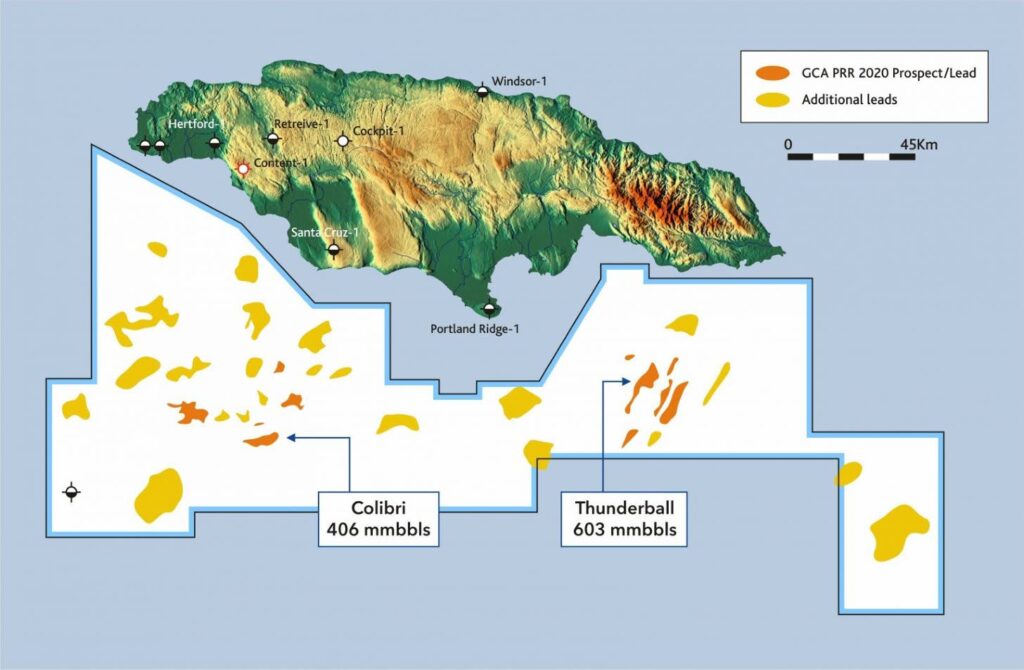
    United Oil & Gas has achieved a pivotal technical milestone in its Jamaican offshore exploration campaign, announcing the successful completion of Stage 1 of its Surface Geochemical Exploration Programme on the Walton-Morant Licence. This initial phase, which involved an extensive multi-beam echosounder seabed survey, has yielded high-quality bathymetric data across 1,189 kilometers of prioritized offshore territory. The comprehensive seabed mapping operation provides critical intelligence for guiding subsequent exploration activities. The dataset will now inform optimal positioning for Stage 2 heat-flow measurements and Stage 3 targeted piston core sampling, which entails extracting seabed sediment samples for detailed laboratory analysis. Chief Executive Brian Larkin characterized the completion as establishing “a robust foundation” for forthcoming offshore operations, emphasizing that the quality of acquired data enables scientifically informed selection for subsequent technical phases. The survey vessel R/V Gyre has already returned to Kingston for equipment reconfiguration before resuming its offshore mission. This geochemical program represents a systematic approach to gathering independent, basin-scale evidence of active hydrocarbon systems within the block. The company has previously referenced an estimated resource potential exceeding seven billion barrels within the licence area. While not altering headline resource estimates, successful program completion could materially enhance the project’s geological probability of success from approximately 20% to 33%, substantially de-risking the exploration asset. The acquired data will directly support ongoing technical evaluations and farm-out discussions. The campaign has garnered public endorsement from Daryl Vaz, Jamaica’s Minister of Science, Energy, and Transport, who visited the survey vessel earlier this month. United reported smooth regulatory coordination and stakeholder engagement throughout the complex mobilization process, which required months of permitting and logistical preparation. The company will provide further updates upon concluding offshore operations.

  • JN TARGETS 80 PER CENT LOSS CUT AS NEGATIVE OUTLOOK RAISES STAKES

    JN TARGETS 80 PER CENT LOSS CUT AS NEGATIVE OUTLOOK RAISES STAKES

    Jamaica National Group has unveiled an ambitious recovery strategy targeting an 80% reduction in consolidated losses by March 2026, signaling its most significant financial improvement since a prolonged restructuring period. This bold initiative comes as the group’s losses have already narrowed substantially from approximately $4 billion at their peak to $2.5 billion in FY2025, with current performance indicators showing further improvement.

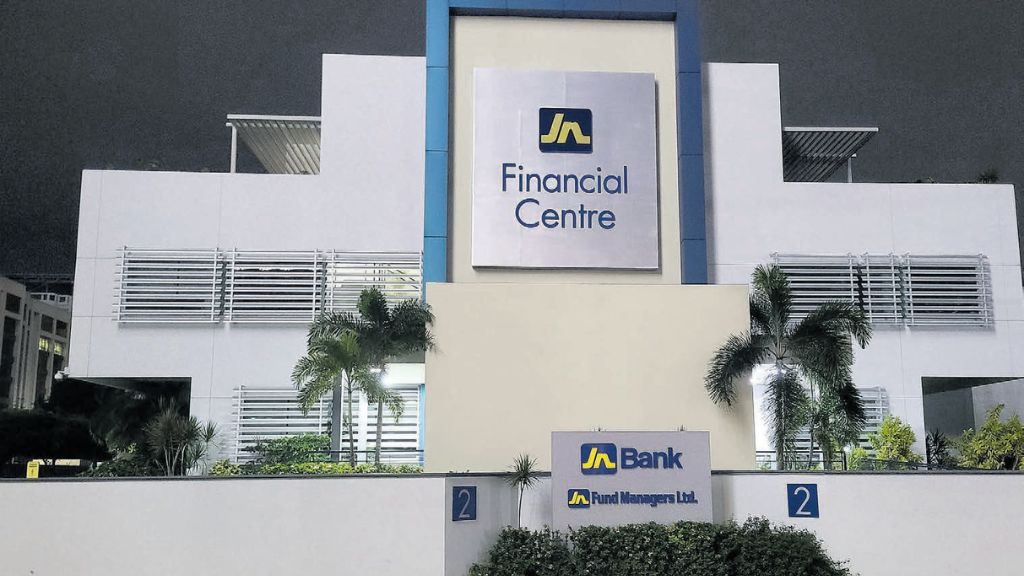
    The financial resurgence is primarily driven by JN Bank, the group’s flagship subsidiary, which reported unaudited pre-tax profits of $1.2 billion for the nine months ending December 2025—more than double the $582 million recorded for the entire previous fiscal year. This performance, if maintained, could fundamentally transform the group’s consolidated financial position.

    However, the recovery faces external scrutiny. Credit rating agency CariCRIS recently maintained JN’s ratings but shifted its outlook from stable to negative, expressing concerns over persistent losses. CEO Earl Jarrett acknowledged this development at the annual general meeting, indicating that the next review cycle will critically assess whether the stabilization measures prove sustainable.

    The group’s current position follows two years of strategic contraction, including asset sales and balance sheet restructuring. JN liquidated investments in JN General Insurance and JN Fund Managers while reducing its stake in JN Bank UK, thereby concentrating capital on core operations: banking, remittance services, life insurance, and digital platforms.

    Customer deposits, which declined during the most challenging phase, have begun recovering. JN Bank reported 5% deposit growth in 2025, with its net loan book expanding by 2%. Momentum accelerated in the current financial year, with the net loan book growing 7% to $165.10 billion and deposits increasing 5% to $220.37 billion over a six-month period.

    The restructuring extends beyond financial metrics to operational transformation. JN Bank will permanently close its Sovereign on the Boulevard and Half-Way Tree Transport Centre branches by March 31, 2026, consolidating accounts into its central Half-Way-Tree branch. This move reflects sustained migration toward digital channels, including ONE JN Passport onboarding, JN Bank LIVE online banking, JAMDEX-enabled JN Pay Wallet, and upgraded Smart ATMs.

    Over the past five years, JN has invested more than $3 billion in technology infrastructure. Project Rubicon, the group’s data-driven loan adjudication platform, has reduced unsecured loan approval times by approximately half and is being extended to mortgage processing.

    Despite progress, material risks persist. Asset quality pressures continue across the financial sector, hurricane-related disruptions have affected operations, and reliance on expensive repo funding continues to pressure margins. The mutual ownership model further heightens stakes by directly linking earnings stability to member confidence.

    After 151 years of operation, Jamaica National’s current pivot from expansionary diversification toward disciplined focus, capital preservation, and digital scaling represents one of its most consequential strategic resets. While an 80% loss reduction would mark a decisive inflection point, the negative outlook from CariCRIS emphasizes that sustained profitability—not merely narrower losses—will be required to confirm a genuine turnaround.