分类: business

  • Warner Bros. resuming talks with Paramount on its buyout offer

    Warner Bros. resuming talks with Paramount on its buyout offer

    NEW YORK — In a significant development within the media consolidation landscape, Warner Bros. Discovery (WBD) has officially resumed negotiations with Paramount Skydance concerning its acquisition proposal. The media conglomerate has established a strict deadline of February 23rd for Paramount Skydance to present its ultimate and most competitive offer. This move intensifies the bidding war for WBD’s assets, which has captivated the industry since late last year.

    A corporate statement from WBD clarified that while these discussions are proceeding, the company’s board maintains a preference for the existing merger proposition from streaming giant Netflix. To that end, a special meeting for shareholders has been convened for March 20th to deliberate and vote on the Netflix agreement.

    The contest pits two fundamentally different acquisition strategies against one another. Paramount Skydance is pursuing a complete takeover of Warner Bros. Discovery for an estimated $108 billion. In contrast, Netflix’s arrangement, valued at approximately $83 billion, is a more targeted acquisition focused solely on WBD’s streaming services and studio operations. A critical element of the Netflix proposal is that it would not include WBD’s linear television networks, such as CNN and Discovery. These broadcast assets would instead be spun off into a new, independent publicly traded entity to be named Global Networks.

    A point of contention has been Paramount Skydance’s accusation that the WBD board has not been sufficiently transparent, failing to provide shareholders with the comprehensive details necessary to make a fair comparison between the two competing bids. The newly opened talks are intended to address these perceived deficiencies and clarify specific terms within Paramount Skydance’s merger agreement, which has been revised twice since its initial submission.


  • GDB participates in ECCB meeting with ECCU development banks

    GDB participates in ECCB meeting with ECCU development banks

    In a significant move to bolster regional economic cooperation, development banks across the Eastern Caribbean Currency Union (ECCU) have initiated a transformative collaboration framework following a high-level consultative forum hosted by the Eastern Caribbean Central Bank (ECCB). The two-day gathering, convened in St Kitts and Nevis on January 29-30, 2026, assembled senior executives from development financial institutions to address pressing regional challenges and accelerate climate-resilient economic growth.

    Royston Cumberbatch, General Manager of the Grenada Development Bank (GDB), represented his institution at the strategic meetings that focused on mobilizing concessional funding and enhancing sustainable development finance mechanisms. The forum served as a catalytic platform for knowledge exchange, best practice sharing, and strategic alignment across critical sectors including agricultural development, climate adaptation, infrastructure modernization, economic diversification, and financial inclusion initiatives.

    A pivotal moment emerged when Dr. David Lowe, Managing Director of the Development Bank of Jamaica (DBJ), presented his institution’s innovative wholesale lending model. This approach, which channels funding through commercial financial institutions to reach end-borrowers, has yielded remarkable results including minimal non-performing loan ratios and enhanced institutional sustainability. Conference participants engaged in detailed analysis of how this framework could inform structural reforms within Eastern Caribbean development banks, particularly regarding balance sheet strengthening, risk management enhancement, and development impact amplification.

    Dr. Lowe emphasized the critical balance between financial performance and measurable socio-economic outcomes, urging development banks to prioritize both institutional sustainability and tangible community impact. In response to these discussions, participants unanimously agreed to pursue a formal Memorandum of Understanding between Jamaican and Eastern Caribbean development institutions. This forthcoming agreement will establish mechanisms for technical cooperation, knowledge transfer, and capacity building, with formalization anticipated within coming months.

    The GDB delegation presented updates on their digital transformation program, climate finance initiatives, and strategic plans to expand affordable credit access and technical support for micro, small, and medium-sized enterprises (MSMEs) and homeowners. These initiatives align closely with Grenada’s national development priorities and regional sustainable development objectives.

    Cumberbatch reflected on the forum’s significance, stating: ‘This collaborative engagement reinforced the imperative of regional cooperation among development banks as we work collectively to expand financial access, strengthen climate resilience, and support inclusive economic growth. The insights gained will directly inform GDB’s strategic priorities as we enhance our developmental impact both nationally and regionally.’

    The Grenada Development Bank has reaffirmed its commitment to fostering partnerships that unlock development financing, strengthen institutional capabilities, and promote sustainable prosperity throughout the Eastern Caribbean region.

  • VS geeft Trinidad en Tobago licenties voor olie- en gasactiviteiten met Venezuela

    VS geeft Trinidad en Tobago licenties voor olie- en gasactiviteiten met Venezuela

    The United States has issued two General Licenses to Trinidad and Tobago, enabling the Caribbean nation to legally conduct specific oil and gas activities in Venezuela and within their shared maritime border region. This development marks a significant shift in hemispheric energy cooperation following previous sanction-related disruptions.

    Prime Minister Kamla Persad-Bissessar announced the licenses via social media, characterizing them as a crucial advancement for regional energy security. She emphasized that this U.S. authorization not only strengthens diplomatic ties with Washington but also positions Trinidad and Tobago as a “reliable energy hub” in the Caribbean basin.

    “We remain optimistic about enhancing our role in regional energy markets, supporting domestic industry, securing employment opportunities, and contributing to stable supply chains that benefit the broader region,” the Prime Minister stated. She further committed that all activities would adhere to applicable legal and regulatory frameworks with strong emphasis on transparency and governance.

    The licenses contain specific financial provisions requiring all payments from oil and gas ventures—including taxes or royalties to Venezuela’s government, state oil company PdVSA, or its entities—to be deposited into special accounts designated by the U.S. Department of the Treasury. The regulations explicitly exclude commercially unreasonable payments, debt swaps, or transactions involving gold or digital currencies.

    This authorization follows broader U.S. sanctions easing that has enabled major energy corporations including Shell, BP, Chevron, Eni, and Repsol to consider or expand operations in Venezuela. The move reverses the April 2025 revocation of previous licenses that had suspended development of the Dragon and Cocuina-Manakin gas fields, projects with substantial economic implications for Trinidad and Tobago.

    Energy analysts view the development as both an opportunity for regional energy security and a challenge due to Venezuela’s complex geopolitical landscape. Persistent sanctions, political volatility, and international tensions continue to influence the operating environment. While the new licenses potentially pave the way for future investments and collaborations, experts caution that strict adherence to international regulations and ongoing diplomatic coordination will be essential for long-term success.

  • More land for small-scale gold miners

    More land for small-scale gold miners

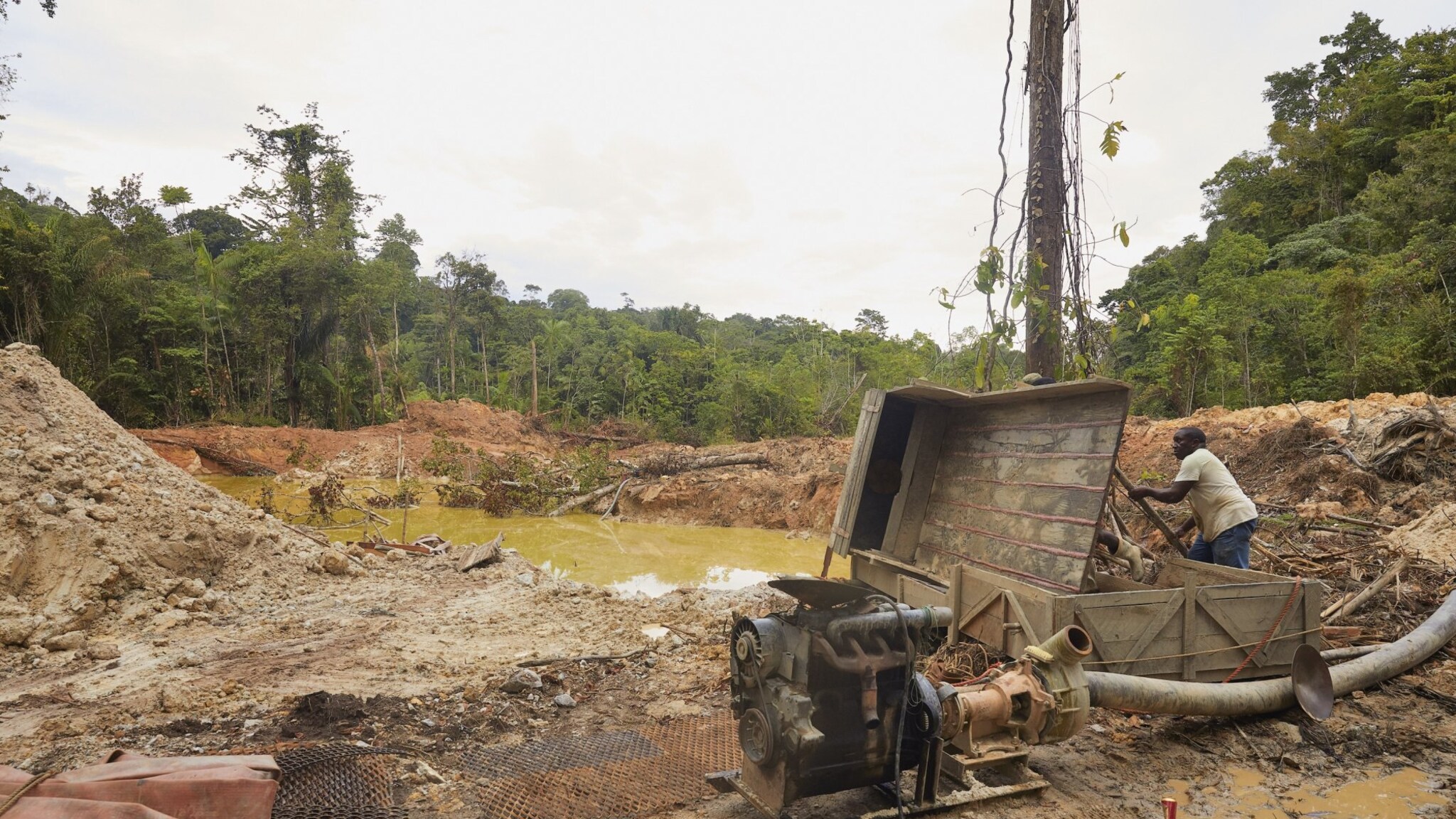
    The Guyanese government has unveiled a substantial expansion of land access for small-scale gold miners, marking a significant shift in the nation’s mining policy. The Ministry of Natural Resources announced that within the next two to three months, it will distribute at least 225 parcels of mining land across various regions, with each allocation increasing from 27 to 50 acres per miner.

    This strategic initiative, dubbed the ‘Troy-like’ allocation model, builds upon the successful framework previously implemented in the Issano 14 Mile area following Troy Resources’ closure. The program allows beneficiaries to relinquish exhausted parcels and apply for new 50-acre allocations, creating a sustainable cycle of mining opportunities.

    The government is complementing these measures with advanced geological surveying through U.S.-based company Global Venturing, whose aerial surveys are nearing completion. This data-driven approach aims to reduce prospecting costs, minimize environmental impact, and enhance operational efficiency across the mining sector.

    Simultaneously, authorities are intensifying enforcement against illegal mining operations. Joint exercises between the Guyana Geology and Mines Commission and police forces have resulted in the seizure of over 400 pieces of equipment and nearly 100 prosecutions since enforcement operations intensified in recent months.

    The Guyana Gold Board will further support miners through the introduction of mobile purchasing units to serve remote operations, while maintaining the legal requirement that all gold must be sold to the Board or licensed buyers.

    This comprehensive approach balances expanded access with strengthened regulation, aiming to build a transparent and sustainable mining sector while recognizing small and medium-scale miners as the backbone of Guyana’s gold industry.

  • Unscheduled cruise call MS Ambience brings over 1,300 passengers to St Kitts   – WIC News

    Unscheduled cruise call MS Ambience brings over 1,300 passengers to St Kitts   – WIC News

    In an unexpected tourism windfall, the luxury cruise vessel MS Ambience made an unscheduled docking at Port Zante, St Kitts on Sunday, February 15, 2026, delivering 1,340 passengers to the Caribbean island nation. The surprise visit, orchestrated by UK-based Ambassador Cruise Line, provided substantial economic stimulation to local businesses during the peak cruise season.

    The unforeseen arrival resulted from revised travel advisories concerning Cuba. Originally scheduled to visit Havana during its 40-night ‘Jewels of the Caribbean Sea’ itinerary, the MS Ambience redirected to alternative ports following updated guidance from the UK Foreign, Commonwealth & Development Office recommending against non-essential travel to Cuba. This diversion brought both Guadeloupe and St Kitts onto the ship’s revised route.

    Simultaneously, the Renaissance—Ambassador Cruise Line’s sister vessel—maintained its scheduled visit to St Kitts with 1,108 passengers aboard. The concurrent presence of both ships created an unprecedented scenario with over 2,400 visitors descending upon Port Zante within a single day. This dual arrival generated exceptional commercial activity across the tourism ecosystem, benefiting tour operators, transportation services, retail establishments, and culinary venues.

    Local tourism authorities extended a warm welcome to the disembarking passengers, who enthusiastically explored the island’s diverse attractions and cultural offerings. The spontaneous influx of visitors underscores St Kitts and Nevis’ growing prominence within the competitive Caribbean cruise market and demonstrates the destination’s capacity to accommodate unexpected tourism opportunities.

    Industry analyst Melissa Mayntz of Cruisehive noted that itinerary adjustments of this nature reflect the cruise industry’s adaptability to evolving travel advisories while maintaining passenger experience quality. The successful integration of these unscheduled visits highlights the robust infrastructure and operational readiness of St Kitts’ tourism sector.

  • LVV start traject om export van sopropo naar EU te hervatten

    LVV start traject om export van sopropo naar EU te hervatten

    The Surinamese Ministry of Agriculture, Animal Husbandry and Fisheries (LVV) has initiated a comprehensive strategy to restore bitter melon (sopropo) exports to the European Union market after a multi-year suspension due to insect contamination issues.

    Agriculture Minister Mike Noersalim confirmed to media outlets that authorities are developing a detailed documentation package for EU submission to facilitate export resumption. The action plan has already been shared and discussed with vegetable exporters, whose input Minister Noersalim described as ‘essential’ to the process.

    The ministerial approach recognizes that agricultural exports involving air freight require cross-governmental coordination. The Ministries of Transport, Communications and Tourism (TCT) and Justice and Police are key participants in addressing both phytosanitary concerns and logistical challenges.

    Following recent consultations with exporters, Minister Noersalim committed to engaging with relevant ministerial counterparts within two weeks. These discussions will address not only sanitary issues but also organizational aspects affecting export efficiency. ‘Suriname’s success as an exporting nation depends on all actors involved in this process,’ Noersalim emphasized.

    The National Plant Protection Organization (NPPO) presented data on export-related notifications received by Suriname, leading to proposed operational improvements for the coming period.

    LVV’s policy focuses on accelerated agricultural sector development and expanded export capabilities. Additionally, the ministry aims to promote increased processing of locally produced raw materials, with the Directorate of Agricultural Research, Marketing and Processing playing a pivotal role.

    The government plans to maintain regular consultations with vegetable exporters, seeking both problem identification and immediate solutions where possible. Noersalim characterized the effort as a collaborative process requiring close cooperation among all stakeholders.

    ‘This is a process that demands new thinking patterns. We will not avoid the challenges surrounding vegetable exports,’ the minister asserted, indicating a determined approach to market reentry.

  • Finance : Towards the Modernization of the Financial Market

    Finance : Towards the Modernization of the Financial Market

    The Bank of the Republic of Haiti (BRH) has launched a comprehensive training program to accelerate the modernization of the nation’s financial infrastructure. From February 11-13, 2026, the central bank conducted specialized sessions designed to enhance technical capabilities within the banking sector regarding the Central Securities Depository (CSD) system.

    The intensive training curriculum focused on practical application of the CSD platform, covering critical areas including access administration protocols, user profile management, and securities account operations. Participants received hands-on instruction in both primary and over-the-counter market transactions, with practical exercises ensuring thorough comprehension of the system’s capabilities.

    This initiative represents a strategic effort by Haiti’s monetary authority to create a more robust, transparent, and efficient financial market ecosystem. The CSD system enables secure management of financial instruments while reducing operational risks associated with traditional securities handling.

    The BRH has announced additional training sessions scheduled for upcoming weeks, extending the educational program to include non-bank financial institutions. This phased approach demonstrates the central bank’s commitment to comprehensive market transformation through technological adoption and workforce development.

    This capacity-building endeavor aligns with broader regional trends toward financial digitalization and positions Haiti’s financial sector for improved integration with global markets while enhancing domestic market stability.

  • Guyana to distribute mining lands to small scale gold miners

    Guyana to distribute mining lands to small scale gold miners

    The Guyanese government has announced a substantial expansion of mining land access for local small-scale gold miners, with a major distribution initiative scheduled within the next quarter. Through its Ministry of Natural Resources, the administration revealed plans to allocate approximately 225 parcels of land across multiple regions, with each miner receiving an increased allocation of 50 acres—a significant upgrade from the previous standard of 27 acres.

    This new ‘Troy-like’ allocation model, inspired by the successful framework implemented in the Issano 14 Mile area following Troy Resources’ departure, allows miners to relinquish exhausted parcels and apply for new 50-acre tracts. The program currently supports nearly 100 small miners in regions seven and eight, demonstrating the model’s viability.

    Complementing the land distribution, the government has partnered with U.S.-based Global Venturing to conduct comprehensive aerial surveys across mining districts. These nearly completed surveys will generate high-quality geological data to inform smarter land allocations, reducing prospecting costs and environmental impact while boosting sector efficiency.

    The Guyana Gold Board (GGB) will enhance market access through mobile purchasing units for remote miners, while maintaining the legal requirement that all gold must be sold to GGB or licensed buyers.

    Concurrently, authorities have intensified enforcement against illegal mining, seizing over 400 pieces of equipment and prosecuting nearly 100 individuals through joint operations between the Guyana Geology and Mines Commission and police forces. The ministry emphasized a zero-tolerance policy toward non-compliance, aiming to protect industry integrity and ensure fair returns for the nation while supporting small and medium-scale miners as the backbone of Guyana’s gold industry.

  • Consumer prices fall 0.8 per cent in January as food costs decline

    Consumer prices fall 0.8 per cent in January as food costs decline

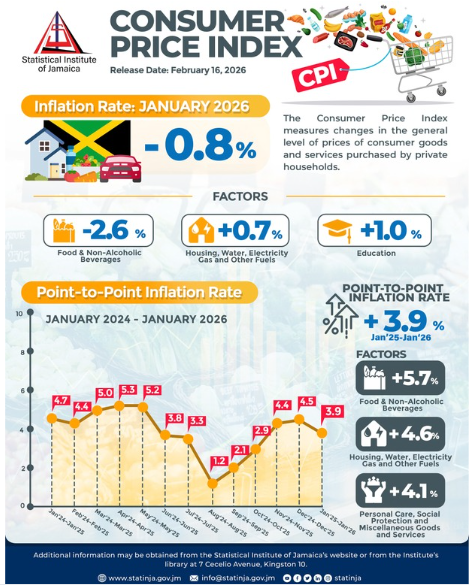
    KINGSTON, Jamaica — Jamaica experienced a notable deflationary trend in January 2025, with official statistics revealing a 0.8% contraction in consumer prices primarily driven by a substantial downturn in food costs. The Statistical Institute of Jamaica (STATIN) reported this unexpected price decline while noting that annual inflation metrics remained comfortably within the central bank’s target parameters.

    The comprehensive Consumer Price Index (CPI) reduction stemmed largely from a significant 2.6% plunge in the Food and Non-Alcoholic Beverages sector. This downward trajectory was particularly evident in fresh produce categories, where vegetables, tubers, plantains, cooking bananas, and pulses collectively plummeted by 9.9%. The dramatic price correction reflects enhanced domestic agricultural output and improved supply chain dynamics. Additionally, ready-made food products witnessed an 8.4% price contraction, with notable decreases observed across multiple staple items including cabbage, carrot, cucumber, escallion, sweet pepper, and tomato.

    Counteracting these deflationary pressures, the Housing, Water, Electricity, Gas and Other Fuels index advanced by 0.7%, primarily due to adjusted water supply and sewage tariffs. The Education sector experienced a 1.0% price increase driven by elevated preparatory school fees.

    Regional analysis confirmed consistent deflation patterns across all geographic divisions. The Greater Kingston Metropolitan Area registered a 0.6% price decline, while Other Urban Centres and Rural Areas recorded decreases of 0.8% and 1.0% respectively.

    The current deflationary episode follows substantial inflationary pressures in preceding months, including a 1.3% increase in December and a 2.4% surge in November, highlighting the volatile nature of food-driven price movements in the Jamaican economy.

    Despite the monthly contraction, annualized metrics reveal persistent inflationary trends across key sectors. Food prices accumulated a 5.7% increase over the twelve-month period, with fish and seafood products soaring by 12.6%. Housing costs advanced 4.6% annually, while personal care and miscellaneous goods rose by 4.1%.

    The point-to-point inflation rate spanning January 2025 to January 2026 stabilized at 3.9%, indicating maintained alignment with monetary policy objectives. The Consumer Price Index continues to serve as the primary gauge for measuring price fluctuations in goods and services acquired by private households across Jamaica.

  • Boost for Catherine Hall

    Boost for Catherine Hall

    MONTEGO BAY, St James — The St James Municipal Corporation has unveiled two transformative economic development projects set to reshape the Catherine Hall area through strategic public-private partnerships. Mayor Richard Vernon announced following last Thursday’s council meeting that these initiatives will simultaneously drive commercial growth and revitalize sports infrastructure in western Jamaica.

    The cornerstone project involves a landmark partnership with Tailwind Jamaica Limited to establish a special economic zone (SEZ) adjacent to the Catherine Hall Sports Complex. The municipal corporation has made a strategic decision to divest land for this development, which represents a significant shift in how the city manages its assets for economic benefit.

    Tailwind Jamaica Limited is committing approximately $3 billion to develop a comprehensive commercial complex featuring 110,000 square feet of integrated warehousing, office, and retail spaces. This substantial investment is projected to create more than 750 permanent jobs, providing a major boost to local employment. Construction is scheduled to commence this year with anticipated completion by next year.

    Mayor Vernon emphasized that this initiative aligns with the corporation’s broader strategy to leverage municipal assets for economic development. “We’re strategically examining lands we can divest to expand commercial space within Montego Bay,” he stated, highlighting the shift from traditional municipal operations toward economic innovation.

    Concurrently, the municipality has finalized lease arrangements for the Catherine Hall Sports Complex, addressing years of infrastructure challenges. The multi-purpose facility, originally gifted to the city, has experienced significant deterioration—particularly its athletic track—and suffered additional damage from Hurricane Melissa. The complex never fully realized its potential for hosting multiple sports disciplines.

    Following approval from the Ministry of Local Government and Community Development, the corporation has negotiated lease terms with a private operator. A formal signing ceremony scheduled for Tuesday will officially transfer management responsibilities to the lessee, ensuring proper maintenance and expanded utilization of the sports facility.

    These dual developments complement the ongoing transformation of the Catherine Hall area, which already includes the construction of a new National Bakery plant. Together, these projects position Catherine Hall as an emerging economic hub while addressing critical infrastructure needs through innovative public-private collaboration.