分类: business

  • New Sportage from Kia

    New Sportage from Kia

    KINGSTON, JAMAICA – Kia Jamaica has officially introduced the comprehensively redesigned 2026 Kia Sportage SUV during a launch event at its Oxford Road showroom on Friday, February 27. The unveiling marks a significant milestone for the brand’s local operations, showcasing a model historically regarded as Kia’s flagship product in the region.

    According to Damien Kerr, General Manager of Oxford Road, the Sportage has consistently been Kia’s most commercially successful model and remains a cornerstone of the company’s strategy in Jamaica. “It’s the model that we here at Kia Jamaica believe will continue to drive volumes here locally,” Kerr stated in an interview with the Jamaica Observer’s Auto magazine.

    The 2026 iteration features a complete aesthetic overhaul, drawing design inspiration from Kia’s contemporary electric vehicle lineup. The exterior introduces a commanding new front fascia with vertically oriented headlights and full LED perimeter lighting, creating a distinctive visual signature particularly noticeable during nighttime driving. Modernized grille designs, along with sculpted front and rear bumpers, contribute to a confident road presence from all angles. The design successfully balances brand identity with fresh, innovative styling cues.

    Kerr expressed strong enthusiasm for the new design, noting, “I think it looks awesome.”

    The vehicle is available in two trim configurations: Executive and X-Line. Interior enhancements include redesigned air vents, upgraded materials, and a redesigned steering wheel. A notable technological upgrade features a new curved binnacle housing both the digital instrument cluster and infotainment touchscreen, with the Executive trim receiving an 8-inch display and the X-Line benefiting from a more expansive 12-inch screen.

    Powertrain options remain consistent with two engine choices: a 2.0-liter petrol engine and a 2.0-liter turbodiesel. All-wheel drive capability is exclusively available on the X-Line trim, which also offers premium features including leather upholstery, heated and ventilated seats, adaptive cruise control, panoramic sunroof, and lane assist functionality.

    Kerr emphasized the model’s strategic importance: “This new facelift is crucial to Kia’s success. The Sportage continues to be a staple model and is extremely important because this is the model that has always driven new technology and direction for Kia.”

    Pricing strategy maintains proximity to previous models while remaining competitive within its segment. Kerr acknowledged evolving market dynamics and confirmed Kia Jamaica’s commitment to product adjustments to maintain consumer appeal. He concluded, “I believe this is the best-looking SUV that Kia has today. The price point across both trims is almost unchanged despite significantly improved features, making the Sportage exceptional value for money.”
  • WAR WATCH: OIL SURGE RATTLES CARIBBEAN OUTLOOK

    WAR WATCH: OIL SURGE RATTLES CARIBBEAN OUTLOOK

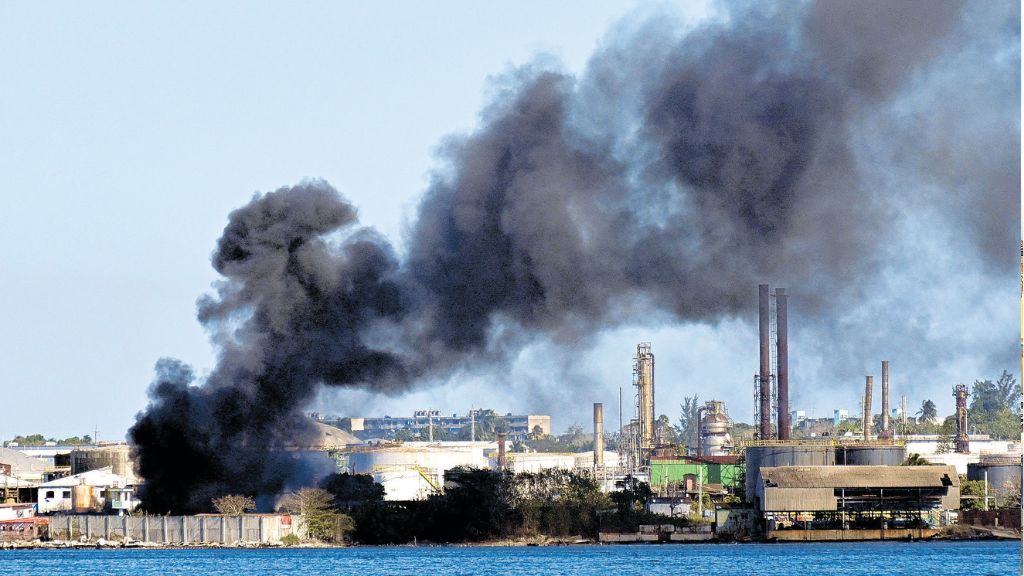
    Escalating geopolitical friction between the United States and Iran is introducing fresh external vulnerabilities for Caribbean economies, with financial authorities cautioning that surging oil prices and global instability could rapidly translate into heightened living expenses and diminished tourism activity.

    Addressing attendees at the Caribbean Development Bank’s (CDB) annual news conference in Barbados, CDB President Daniel Best emphasized how the conflict underscores the persistent exposure of small, import-reliant economies to international disruptions. He identified oil price volatility as the most immediate concern, noting that fluctuations in global energy markets would directly elevate electricity costs, transportation fees, and general business expenditures throughout the region.

    Best referenced prior global shocks—including recent tariff disputes and supply chain interruptions—which initially drove inflationary pressures before eventual market adjustments provided relief. Current data reveals significant crude oil price surges, with Brent crude climbing 4.7% to $85.22 per barrel and US benchmark crude jumping 8.1% to $80.67, reaching levels not seen since August 2024.

    Jason Cotton, Acting Deputy Director of Economics at the CDB, acknowledged that while the conflict’s impact on global energy markets is already evident, determining the precise timeline for Caribbean economic repercussions remains premature. He described the situation as highly volatile with numerous dynamic factors, making specific predictions unwise at this juncture.

    The Middle Eastern tensions emerge during a delicate economic period for the Caribbean. Recent CDB projections indicate regional growth will remain modest in 2026, with economies excluding Guyana expected to expand by merely 1.1% due to slowed tourism, fiscal constraints, and structural vulnerabilities. Guyana’s oil-driven boom—projected at over 20% growth—is anticipated to lift overall regional expansion to approximately 6.2%.

    In response to these challenges, Caribbean leaders are intensifying efforts to enhance energy security and accelerate renewable energy transitions. Best reported growing regional commitment to addressing long-standing energy vulnerabilities through innovative projects. Notable initiatives include the Dominica Geothermal Project, expected to supply 60% of the nation’s electricity needs, and a similar geothermal exploration in Nevis with potential surplus energy for export to neighboring islands.

    The CDB is also pioneering innovative financing mechanisms to support these transitions without exacerbating existing debt burdens. The Nevis geothermal initiative employs a contingent recoverable grant structure that converts to a loan only if the resource proves viable—a model that enables exploration without immediate debt accumulation.

    Meanwhile, Caribbean governments are implementing precautionary measures, with Jamaica issuing updated travel advisories urging citizens to avoid the Middle East and maintain contact with authorities. Currently, 178 Jamaicans are registered across the region, primarily in UAE, Kuwait, and Qatar.

    As the conflict continues to unsettle global markets—particularly through concerns about potential disruptions to oil shipping through the Strait of Hormuz—Caribbean officials remain vigilant about possible economic spillovers that could undermine the region’s fragile recovery.

  • NWU wins bargaining rights at Kingston Wharves

    NWU wins bargaining rights at Kingston Wharves

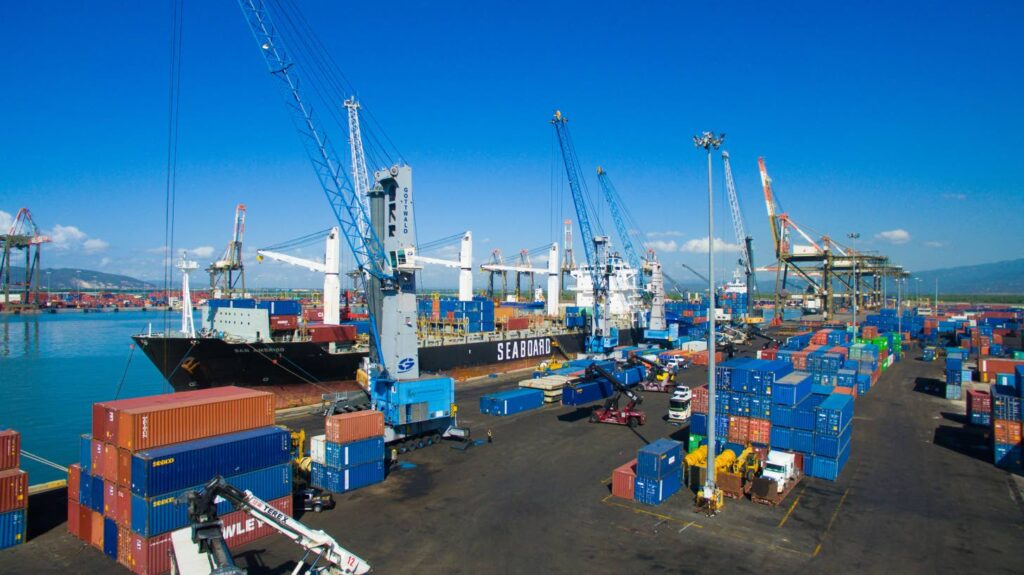
    KINGSTON, Jamaica — In a significant development for labor relations in Jamaica’s maritime sector, the National Workers’ Union (NWU) has successfully obtained formal bargaining authority for approximately 350 workers at Kingston Wharves. The workers, employed by Newport Stevedoring Services Limited (NSSL), encompass three critical operational categories: car drivers, stevedores, and stacker operators.

    This newly established representation has culminated in the negotiation and signing of a comprehensive three-year Heads of Agreement between the NWU and NSSL. The pact guarantees substantial financial improvements for the workforce, stipulating a structured wage increase of six percent in the first year, followed by 6.5 percent increments in both the second and third years of the contract term.

    Beyond the salary enhancements, the landmark agreement introduces a suite of previously unavailable benefits, marking a substantial upgrade in the workers’ compensation and welfare packages. These newly secured entitlements include enrollment in a pension fund, comprehensive group life insurance, health insurance coverage, a dedicated lunch subsidy, and a regular laundry allowance.

    The NWU, in an official statement, expressed profound gratitude to the workers for their trust and confidence in the union’s representation. The organization emphasized its solemn commitment to this mandate and reaffirmed its unwavering dedication to advocating diligently for the rights and welfare of all workers within its purview, signaling ongoing efforts to improve labor standards across industries.

  • Over 600 Albany employees to share in $2m golf course lot sale

    Over 600 Albany employees to share in $2m golf course lot sale

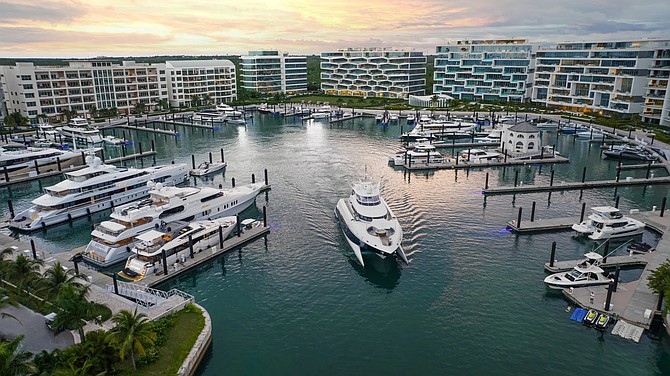
    Albany, the luxury resort community on New Providence, has announced an extraordinary employee reward initiative following the successful sale of a golf course lot. More than 600 staff members will collectively receive a $2 million distribution from the property transaction.

    The resort revealed that 254 employees who have maintained continuous service since 2021 will receive approximately $4,500 each, while the total distribution will benefit 636 team members across the organization. This substantial financial recognition stems from Albany’s commitment to sharing success with those who contribute to it.

    Managing Partner Christopher Anand made the announcement during the Employee Appreciation Event in January 2026, detailing how proceeds from ‘The Albany Lot’ sale would be allocated directly to staff. The distribution represents part of Albany’s broader strategic approach to employee investment, which includes implementing a comprehensive pension program for all workers.

    ‘Albany recognized that people remain committed when they were invested in the outcome,’ the resort stated, explaining the philosophy behind this substantial financial gesture. Company leadership emphasized that supporting team members has always been a organizational priority, viewing success as a collective achievement rather than an individual accomplishment.

    The luxury resort, known for its high-end residential properties and private golf course within a master-planned development, markets exclusive real estate while maintaining a strong focus on staff welfare. This latest initiative demonstrates Albany’s innovative approach to employee retention and appreciation through direct financial participation in the resort’s assets and achievements.

  • Cordell Williams receives Global Award for entrepreneurial leadership

    Cordell Williams receives Global Award for entrepreneurial leadership

    KINGSTON, Jamaica—Cordell Williams, President of the Youth Entrepreneurs Association of Jamaica (YEA), has been distinguished with a Global Award for Entrepreneurial Leadership by the Pan African Leadership Institute (PALI) in Accra, Ghana. The accolade celebrates her dedicated efforts in championing entrepreneurship and enhancing economic synergy between the Caribbean and African nations.

    In her additional capacity as Caribbean Ambassador for PALI, Williams has played a pivotal role in engaging micro, small, and medium-sized enterprises (MSMEs) throughout Jamaica and the broader Caribbean. Her leadership has been crucial in connecting entrepreneurial talent with prestigious leadership scholarships, specialized training initiatives, and strategic business development programs offered by the institute.

    Williams’ recent diplomatic mission to Accra included high-level consultations with investors, business associations, and entrepreneurial networks. These discussions were strategically aimed at forging partnerships to boost investment channels, enhance financing avenues, and unlock new trade prospects for MSMEs in Jamaica and the Caribbean region.

    This initiative represents a continuous commitment to constructing robust economic links between Africa and the Caribbean via entrepreneurial ventures and collaboration within the private sector. Several memoranda of understanding (MOUs) are anticipated to emerge from these dialogues, focusing on improving financial accessibility, promoting cross-border investments, and creating trade opportunities for MSMEs. These efforts are also geared toward reinforcing economic connections within the African diaspora.

    Williams emphasized that these endeavors are part of a broader, dynamic campaign to leverage entrepreneurship as a fundamental mechanism for advancing economic cooperation between Africa and the Caribbean.

    Since the inception of their collaboration in 2020, the YEA-PALI partnership has successfully enabled a bidirectional flow of knowledge and expertise among entrepreneurial leaders from both regions. This exchange has allowed Caribbean business innovators to collaborate with African peers, while mutually benefiting from shared insights on enterprise development and entrepreneurial growth.

  • All eyes on the Middle East

    All eyes on the Middle East

    Jamaica’s Finance Minister Fayval Williams has declared the government stands ready to implement economic support measures should global oil prices surge uncontrollably due to escalating Middle East hostilities. The warning comes as geopolitical tensions trigger significant volatility in energy markets following military strikes between the United States, Israel, and Iran.

    Addressing Parliament’s Standing Finance Committee during deliberations on the 2026-2027 Expenditure Estimates, Minister Williams emphasized the administration’s vigilant monitoring of oil market developments. “We would begin to be very concerned about the impact, depending on how long the war continues,” Williams stated, acknowledging that Jamaica would experience immediate effects through rising fuel costs.

    The minister’s comments came in response to questioning from Opposition Finance Spokesman Julian Robinson regarding contingency planning for potential inflationary pressures. Robinson highlighted the dual economic impact of rising oil prices—potentially worsening Jamaica’s balance of payments while simultaneously increasing tax revenues through higher fuel costs.

    Global oil markets have experienced dramatic shifts since February 28, 2026, when U.S. and Israeli forces launched aerial strikes against Iranian nuclear facilities. Subsequent retaliatory actions by Iran, including missile attacks on U.S. bases and oil infrastructure across Gulf states, have pushed Brent crude prices from $64 to $74 per barrel—a 16 percent weekly increase. Market analysts warn prices could exceed $100 per barrel if the conflict persists, particularly given Iran’s effective closure of the Strait of Hormuz, a critical transit channel for 20 percent of global oil and gas shipments.

    Minister Williams confirmed any government intervention would require cabinet deliberation, stating assistance would be contingent on both the duration of the conflict and its ultimate impact on Jamaican consumers. “We expect consumers in the near term to manage their budgets accordingly,” Williams noted, while acknowledging that prolonged instability might necessitate official support mechanisms.

    Separately, the minister revealed more positive economic news from the Planning Institute of Jamaica (PIOJ), indicating that Hurricane Melissa’s damage to Jamaica’s GDP in late 2025 was less severe than initially projected. Revised estimates show losses of $12.2 billion (57 percent of 2024 GDP), improved from earlier calculations of $8.75 billion (41 percent of GDP). This data emerged after the February 12 budget tabling, meaning current expenditure estimates already incorporate hurricane recovery contexts alongside emerging geopolitical challenges.

    Williams reaffirmed the government’s commitment to energy security, highlighting state-owned refinery Petrojam’s critical role in maintaining supply stability as Jamaica explores diversified energy sources amid global uncertainty.

  • Manufacturers warn expanded environmental levy could hurt competitiveness

    Manufacturers warn expanded environmental levy could hurt competitiveness

    KINGSTON, Jamaica—Jamaica’s manufacturing sector faces a significant competitive disadvantage following the government’s decision to expand the Environmental Protection Levy to cover 100% of manufacturers’ sales value. The Jamaica Manufacturers and Exporters Association (JMEA) has issued a stark warning that this fiscal measure, introduced as part of the 2026/27 budget package, could inadvertently strengthen imported goods while undermining domestic production.

    The policy shift, projected to generate approximately $3.6 billion in additional revenue for hurricane recovery efforts, eliminates previous adjustments that partially mitigated the levy’s disproportionate impact on local manufacturers. Previously applied to 75% of manufacturers’ sales—reflecting typical import markups—the expanded levy now subjects local producers to full taxation on their final sales value, while imports continue to be taxed based on pre-markup port entry values.

    JMEA President Kathryn Silvera emphasized that this constitutes more than a technical adjustment, fundamentally altering the competitive landscape. “At a time when Jamaica needs to strengthen domestic production and expand exports,” Silvera stated, “policies that penalize manufacturers move the economy in the wrong direction.”

    Industry analysis indicates the increased levy will elevate production costs, compress profit margins, and diminish export competitiveness, potentially triggering higher consumer prices. The manufacturing sector plays a vital role in Jamaica’s economy through value-added exports, employment generation, and extensive linkages with agriculture, logistics, and service sectors.

    The concerns emerge as the government seeks to mobilize $29.6 billion through various tax measures to address Hurricane Melissa’s devastating impact, which caused approximately US$8.8 billion in losses equivalent to 41% of GDP. While acknowledging fiscal necessities, the JMEA maintains that tax design critically influences economic outcomes.

    Silvera argued that short-term revenue gains might come at the expense of long-term economic vitality: “Increasing the Environmental Levy on manufacturers may raise revenue in the short term, but it risks weakening the very sector that generates jobs, exports and economic growth.”

    The association advocates for policy reconsideration, recommending maintained levy discounts for manufacturers, export exemptions or deferrals, and careful calibration of environmental taxes to avoid unintended damage to productive sectors. “Jamaica cannot build a resilient economy by taxing the industries that create wealth,” Silvera concluded, urging growth strategies that support rather than hinder production, investment, and export competitiveness.

  • Geneva George becomes first woman to earn prestigious credentials as International Airport Professional

    Geneva George becomes first woman to earn prestigious credentials as International Airport Professional

    The global aviation industry has witnessed a groundbreaking achievement with Geneva George becoming the inaugural female recipient of the esteemed International Airport Professional (IAP) designation. This certification, governed by the Airports Council International (ACI) and the International Civil Aviation Organization (ICAO), represents the highest standard of excellence in airport management worldwide.

    Ms. George’s accomplishment shatters longstanding gender barriers in aviation leadership, demonstrating exceptional expertise across all critical airport operational domains. The rigorous IAP certification process evaluates competencies in airport safety protocols, strategic terminal management, airside operations, commercial development, and regulatory compliance within international frameworks.

    This milestone occurs amid industry-wide initiatives to promote gender diversity in aviation leadership roles where women remain significantly underrepresented. Aviation authorities globally have praised this achievement as both a personal triumph for Ms. George and a symbolic victory for gender parity in transportation infrastructure management.

    The certification equips professionals with advanced skills to address contemporary aviation challenges including sustainable airport development, digital transformation, and crisis management. Industry analysts note that diverse leadership perspectives become increasingly valuable as airports evolve into complex, multi-functional transportation hubs requiring innovative management approaches.

  • Construction of Cabo Rojo Airport advances on schedule

    Construction of Cabo Rojo Airport advances on schedule

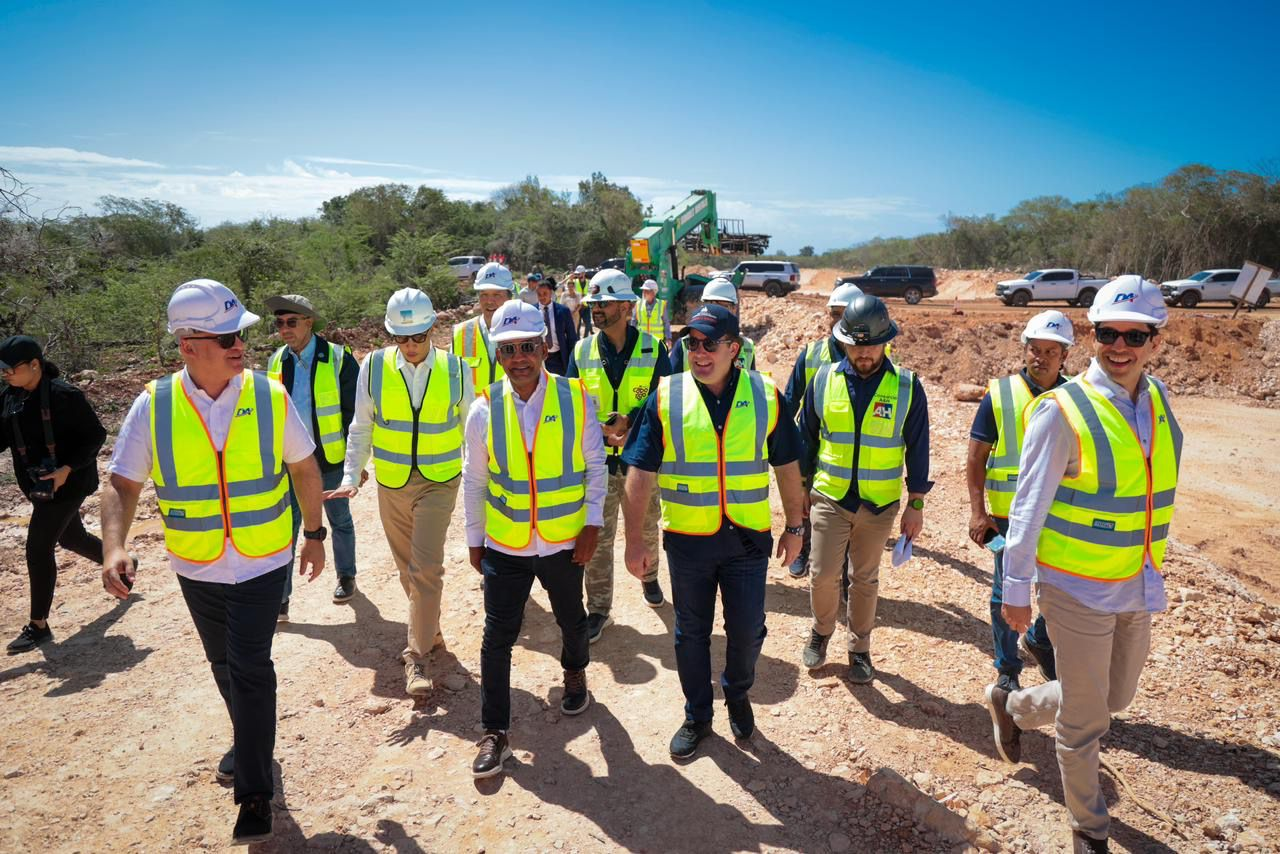
    PEDERNALES, Dominican Republic – Infrastructure development in the Dominican Republic’s southern region is accelerating as the Cabo Rojo International Airport project advances according to its established timeline. José Ignacio Paliza, Minister of the Presidency, confirmed the progress during an extensive site inspection in the Tres Charcos community of Oviedo, Pedernales.

    The critical paving phase for the airport’s runway is now underway, with completion anticipated by September 2024. This milestone represents a significant step forward in the government’s comprehensive strategy to transform the southern region into a premier tourism destination.

    The inspection brought together key stakeholders and technical experts overseeing the project, including Sigmund Freund, Executive Director of the Pro Pedernales Trust; Víctor Pichardo, Director of the Airport Department; Igor Rodríguez of the Dominican Institute of Civil Aviation; and Alfonso Rodríguez of the Dominican Electricity Transmission Company.

    Officials conducted a thorough review of multiple infrastructure components, examining progress on taxiways, advanced drainage systems, road access networks, and electrical installations. Additionally, authorities confirmed that the control tower structure is projected to reach completion by December, with procurement processes for essential operational equipment already in motion.

    The Cabo Rojo International Airport serves as the centerpiece of a broader tourism development initiative designed to stimulate economic growth, create employment opportunities, and establish new tourism corridors in the previously underdeveloped southern territories of the Dominican Republic.

  • Arajet unveils 14th aircraft honoring “Salto de Jimenoa”

    Arajet unveils 14th aircraft honoring “Salto de Jimenoa”

    Santo Domingo-based airline Arajet has welcomed its 14th Boeing 737 MAX 8 aircraft into service, marking another milestone in its ongoing expansion strategy. The newly arrived aircraft has been ceremoniously named “Salto de Jimenoa” after one of the Dominican Republic’s most spectacular waterfalls located in Jarabacoa, La Vega province. This naming convention reflects Arajet’s distinctive approach to branding its fleet after the nation’s protected ecological areas and natural reserves, effectively transforming each aircraft into an airborne ambassador for Dominican biodiversity.

    The Salto de Jimenoa waterfall, renowned for its breathtaking beauty and significance in Dominican ecotourism, represents the country’s growing adventure tourism sector. Arajet’s CEO and founder Víctor Pacheco Méndez emphasized that this acquisition significantly enhances the airline’s operational capabilities while reinforcing its commitment to sustainable aviation practices. “Each aircraft that bears the name of our natural heritage serves as a flying testament to our dedication to responsible tourism and environmental stewardship,” Pacheco stated.

    The expansion has garnered support from public officials, with La Vega Senator Rogelio Genao highlighting the vital collaboration between government and private enterprise in promoting sustainable tourism development. Since commencing operations in 2022, Arajet has substantially grown its route network from its Santo Domingo and Punta Cana hubs, simultaneously driving tourism growth, creating employment opportunities, and supporting environmental initiatives including reforestation and conservation programs.

    The airline’s strategic focus on operating a modern, fuel-efficient fleet aligns with its broader objectives of reducing carbon emissions and minimizing operational costs. This approach positions Arajet as both an economic contributor and an environmentally conscious player in the competitive Caribbean aviation market.