
Belize is witnessing a transformative surge in its healthcare sector, fueled by the unprecedented success of its national lottery system. Belize Government Lotteries Ltd. (BGLL) has reported staggering sales of over $108 million in its inaugural year, with projections indicating a rise to $137 million in the current year. This cumulative figure of nearly $245 million in just two years is not only a testament to the lottery’s popularity but also a critical funding source for national projects, particularly healthcare. Through the National Health Insurance (NHI) program, BGLL has already contributed $22 million to expand primary care services across the country. Janel Espat, Managing Director of BGLL, highlighted the lottery’s role in generating revenue, stating, ‘Our first calendar year, our sales were a hundred and eight million dollars. We are hoping, by all indications, that for the second year our sales will be a hundred and thirty-seven million dollars.’ The funds are disbursed to the government, with the Ministry of Finance determining their allocation. Dr. Ramon Figueroa, General Manager of NHI, emphasized the significance of this financial boost, noting that the NHI rollout, which began in 2001, has historically been constrained by funding limitations. The lottery’s contributions have enabled the expansion of primary care to regions like Orange Walk and the Cayo District, despite challenges posed by the latter’s dispersed population. This innovative funding mechanism is paving the way for nationwide healthcare improvements, marking a significant milestone in Belize’s public health journey.
分类: business
-

Antigua Among Top Choices for UK Travellers Seeking Mental Health Breaks
In a groundbreaking move to align with the growing emphasis on mental health, Thomas Cook has introduced ‘The Package Holiday Prescription,’ a curated collection of long-haul escapes designed to help travelers rejuvenate and enhance their wellbeing. This initiative, unveiled to coincide with World Mental Health Day, reflects a significant shift in consumer behavior, with bookings to destinations like The Bahamas and Antigua and Barbuda skyrocketing by 183% and 196%, respectively, year-on-year.
The launch is backed by findings from ABTA’s Holiday Habits 2025-26 report, which highlights that 80% of people now view holidays as essential for their mental health. Nicholas Smith, Holidays Digital Director at Thomas Cook, noted, ‘We’re witnessing a trend where customers are prioritizing wellbeing, opting for destinations that offer a chance to disconnect and recharge.’
The Package Holiday Prescription features tailored itineraries that encourage travelers to leave technology behind and immerse themselves in mindful activities. From serene boat excursions to unique experiences like swimming with wild pigs at Rose Island in The Bahamas, these trips are crafted to foster relaxation and connection with nature.
Since its relaunch in September 2020 as an online-only travel business under the eSky Group, Thomas Cook has focused on offering ATOL-protected holidays and customizable travel options. Customers can now design their ideal trips, choosing from thousands of hotels, direct flights from major UK airports, and add-ons such as car hire and insurance.
For those interested in exploring these wellbeing-focused escapes, the full collection is available on the dedicated landing page: https://www.thomascook.com/holidays/package-holiday-prescriptions.
-

Update for Clico policyholders: Grenada distribution plan
Policyholders of CLICO International Life Insurance Ltd are being informed of significant developments in the execution of the Distribution Plan, as mandated by the High Court of Grenada. The judicial management team has initiated the distribution process, with letters and supporting documents dispatched to the first two categories of policyholders, totaling 2,354 individuals. These communications, sent via post and email, outline proposed distributions amounting to up to $2.05 million. The final category of policyholders is expected to receive their letters by October 20, 2025. The first category includes claims ranging from EC$50 to $1,000, while the second category covers claims exceeding EC$1,000 but below EC$15,576. The final category encompasses claims surpassing EC$15,576. To enhance transparency, the Judicial Manager has launched a dedicated website for updates on judicial matters. Policyholders are encouraged to visit the official CLICO website for the latest information on claims, payments, and services. Active policyholders or claimants as of November 30, 2014, who have not received their personalized letters by October 31, 2025, are urged to contact the Judicial Manager’s representatives to confirm or update their policy details. Contact options include a hotline, WhatsApp, and email. The Grenada Authority for the Regulation of Financial Institutions (GARFIN) remains actively engaged with the judicial management team to ensure a seamless process. GARFIN emphasizes the importance of timely responses from policyholders and continues to enforce stringent regulatory standards, including solvency requirements, asset adequacy, reinsurance coverage, and sound risk management practices. Denis Felix, Executive Director of GARFIN, reaffirms the institution’s commitment to safeguarding policyholders’ interests and maintaining the integrity of the insurance sector.
-

Scrap dealers’ president awaits licence extension
As Trinidad and Tobago prepares for its national budget presentation on October 13, Allan Ferguson, president of the Trinidad and Tobago Scrap Iron Dealers Association (TTSIDA), has raised concerns over the lack of official communication regarding the extension of licences for scrap dealers. Ferguson highlighted that their licences are set to expire on October 13, and without an extension, all scrap yards will be forced to shut down, effectively halting the entire scrap industry until the government intervenes. Speaking to Newsday via WhatsApp on October 9, Ferguson stressed the critical timing of the issue, noting that the upcoming Divali and Christmas seasons typically generate significant recyclable materials. He expressed hope that government officials would recognize the industry’s importance, both economically and environmentally, and provide the necessary support to ensure its continuity. Ferguson also emphasized that the industry employs thousands of people and plays a vital role in environmental sustainability, urging the government to act swiftly to avoid a shutdown.
-

Dolla and ICWI unveil loan-insurance package for taxi operators
KINGSTON, Jamaica — In a strategic move to support Jamaica’s transportation sector, Dolla Financial Services Limited and the Insurance Company of the West Indies (ICWI) have unveiled a groundbreaking loan and insurance package tailored specifically for taxi operators and public passenger vehicle (PPV) owners. This innovative offering combines Dolla’s One N’ Ready auto loan product with ICWI’s motor insurance, providing a comprehensive solution to address the financial and safety needs of transport operators. The package includes financing options of up to 95% for new vehicles and 70% for pre-owned vehicles, with repayment terms extending up to 36 months. Additionally, fixed and affordable weekly insurance payments ensure manageable costs for operators. The partnership also introduces several value-added benefits, such as free GPS tracking from Amber Connect, a guaranteed 12-hour loan approval process, and direct access to ICWI’s claims and customer support services. With thousands of Jamaicans relying on taxis and PPVs daily, the initiative seeks to enhance the financial stability and safety of operators, many of whom struggle to secure affordable financing and comprehensive insurance. Kenroy Kerr, CEO of Dolla Financial Services, emphasized that the initiative goes beyond mere financial support, offering “protection, peace of mind, and a safer future on the road” for transport operators. Paul Lalor, President of ICWI, highlighted the dual benefits of simplifying compliance and reducing financial burdens while improving road safety. This collaboration aims to create a safer, more convenient experience for Jamaica’s taxi operators while bolstering the reliability of the nation’s public transport system.
-
IMF highlights fragile economic gains amid security and institutional challenges in Haiti
The International Monetary Fund (IMF) has acknowledged Haiti’s progress in its economic program, even as the nation grapples with ongoing security threats and institutional weaknesses that hinder broader growth and social stability. In a virtual mission led by Camilo E. Tovar, the IMF concluded its second review of Haiti’s Staff-Monitored Programme (SMP) on October 8, engaging with key Haitian officials, including Finance Minister Alfred Métellus and Central Bank Governor Ronald Gabriel. The SMP, an informal IMF arrangement, revealed that Haiti has met all quantitative and indicative targets as of June 2025, demonstrating fiscal and monetary discipline in an exceptionally challenging environment.
Fiscal improvements have been cautious yet notable. For the first time in recent memory, Haiti’s budget for fiscal year 2025 achieved broad balance, a significant turnaround after years of chronic deficits that eroded government capacity and increased reliance on external aid. This balance was achieved through enhanced revenue collection, despite weak tax administration, and stringent spending controls amid ongoing insecurity. Social spending surged by approximately 34%, directly aiding vulnerable populations affected by food insecurity, displacement, and poverty. This increase was partly funded by the IMF’s Food Shock Window rapid credit facility, which provides emergency resources during crises.
Haiti’s external position also showed resilience. By July 2025, gross international reserves surpassed US$3.1 billion, covering roughly seven months of imports—a critical buffer for this import-dependent economy. This stability is largely attributed to substantial remittance inflows from the Haitian diaspora, which have grown as migrants send more money home to support families facing escalating insecurity and economic hardship. While these remittances stabilize the exchange rate and maintain domestic liquidity, they also underscore Haiti’s reliance on external income sources due to limited domestic production.
However, the economic outlook remains fraught with challenges. The economy has contracted for seven consecutive years, driven by political turmoil, natural disasters, and widespread gang violence that disrupts trade and investment. Inflation, nearing 32% year-on-year, continues to erode purchasing power for a population largely dependent on limited earnings. The banking sector is also vulnerable, with a nonperforming loan ratio exceeding 13%, highlighting rising credit risks. Despite this, banks maintain capital adequacy ratios above regulatory minimums, indicating some capacity to absorb shocks.
Haiti’s entrenched security crisis remains a significant obstacle. Gang control over neighborhoods and critical infrastructure paralyzes public service delivery and deters investment. The IMF emphasized that these challenges limit fiscal policy space by constraining revenue mobilization and effective budget execution, particularly for critical social and security spending.
Risks to growth are heavily skewed to the downside. The IMF expressed concerns over potential changes in migration and trade policies by major partners, which could sharply reduce exports and remittance flows—key sources of foreign exchange for Haiti. Such disruptions would exacerbate fiscal pressures, deepen humanitarian crises, and potentially trigger social unrest.
Despite these challenges, there is cautious optimism. The United Nations Security Council recently authorized a transition from the Multinational Security Support Mission to a new Gang Suppression Force, supported by regional organizations. Success in this initiative could restore order, rebuild state institutions, and encourage investment for long-term economic development.
The IMF urged Haitian authorities to accelerate governance reforms, enhance transparency, reduce corruption, and strengthen public financial management. Key priorities include modernizing tax and customs administration, rolling out digital tax services, and improving treasury cash management. Maintaining the central bank’s monetary policy credibility is also essential for controlling inflation and preserving macroeconomic stability.
Financial sector reforms remain critical, with calls to intensify bank inspections, integrate risk assessment frameworks, and update accounting standards. Transparency improvements, such as timely publication of audited central bank financial statements, are vital for better policymaking and investor confidence.
While progress under the SMP is encouraging, IMF officials stressed that Haiti’s urgent social and development needs require continued international financial support, preferably in the form of grants to avoid debt sustainability risks. Such support is crucial for fostering inclusive growth and poverty reduction in one of the hemisphere’s most fragile countries.
“This mixed picture of resilience amid adversity reflects Haiti’s complex reality,” the IMF mission stated. “Sustained improvement will require addressing deep-rooted security and institutional challenges alongside economic reforms.”
The Fund pledged ongoing collaboration with Haitian authorities, development partners, and regional organizations under its Fragile and Conflict-Affected States Strategy to support Haiti’s recovery.
-

Caribbean Development Bank head urges MDBs to promote confidence, fairness, and diversity in AI
In a recent address at the 9th Annual Multilateral Development Bank (MDB) Privacy Symposium, Mr. Daniel Best, President of the Caribbean Development Bank (CDB), underscored the critical role of privacy and data governance in achieving equitable and resilient development outcomes across the Caribbean region. Mr. Best emphasized that trust is the cornerstone of effective data sharing, stating, ‘When individuals share their data with us, they are placing their trust in our institutions. That trust must be earned and safeguarded.’
As artificial intelligence (AI) becomes increasingly integrated into development initiatives, Mr. Best reaffirmed the CDB’s commitment to ethical innovation and inclusive growth. The symposium, which serves as a platform for knowledge exchange and collaboration among MDBs’ data privacy teams, comes at a pivotal moment. With digital transformation accelerating across industries and communities, the need for robust privacy frameworks that prioritize transparency, inclusion, and accountability has never been more pressing.
Mr. Best highlighted the CDB’s proactive approach to embedding privacy-by-design principles into its operational processes, from project conception to execution. He also called for enhanced collaboration among MDBs to align standards and share best practices, fostering a unified approach to data governance. ‘Innovation without trust is unsustainable,’ he remarked. ‘At CDB, we are investing in digital infrastructure and data systems that are not only efficient but secure and ethically grounded. Strengthening our internal governance and embedding privacy into our risk management frameworks are essential steps toward resilience.’
In addition to the Privacy Symposium, Mr. Best drew attention to the simultaneous hosting of the 22nd International Accountability Mechanisms Network by the CDB. This initiative underscores the Bank’s leadership in advocating for responsible development founded on principles of trust and transparency.
-
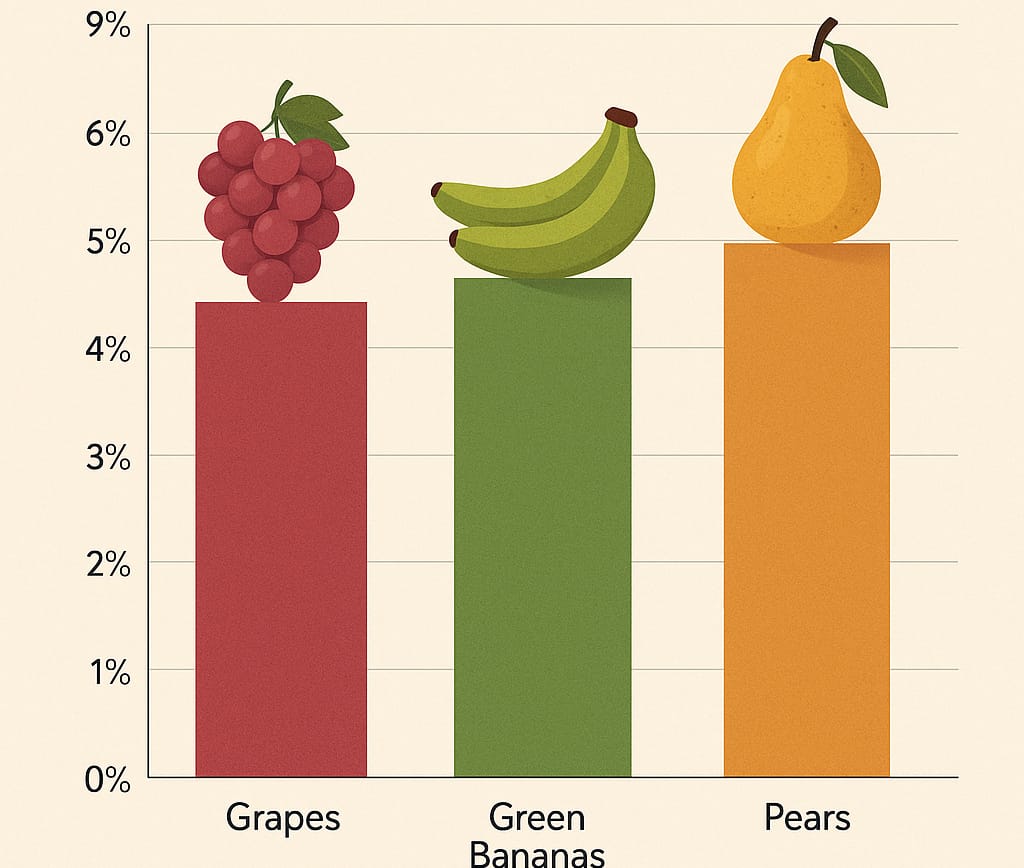
Grapes, Green Bananas and Pears saw major price increases in July, CPI reveals
The latest Consumer Price Index (CPI) report for July 2025, released by the Statistics Division under the Ministry of Finance and Corporate Governance, reveals significant price increases across various categories, particularly in food and beverages. The overall CPI rose by 1.2% year-on-year, with the Food and Non-Alcoholic Beverages index increasing by 1.0%, reversing a 1.0% decline in June. The All Items Less Food and Energy index also saw a 1.3% rise over the same period. The Food index surged by 1.4%, driven by notable increases in the Fruits subcategory (+14.6%), Meats and Meat Products (+4.8%), and Bread and Cereals (+3.3%). Among fruits, Red Seedless Grapes experienced the highest spike at 66.7%, followed by Green Bananas and Pears, both up by 16.2%. Other contributors to the food price hike included Milk, Cheese, and Eggs (+1.9%) and Sugar, Jams, Honey, Chocolate, and Confectionery (+1.1%). On a monthly basis, the CPI for July 2025 increased by 1.4%, with the Food index rising by 1.0%. Key drivers of this monthly increase were Sugars, Jam, Honey, Chocolate, and Confectionery (+3.6%), Milk, Cheese, and Eggs (+3.0%), and Fish and Seafood (+2.4%). The All Items Less Food and Energy index also rose by 1.6%, influenced by significant increases in Recreation and Culture (+6.5%) and Transport Services (+20.4%). The CPI methodology, which measures inflation by tracking price changes of goods and services consumed by households, relies on monthly and quarterly data collection from supermarkets and service providers. For detailed insights, the full CPI report for July 2025 is available on the Statistics Division’s official website.
-

VIDEO: Antiguan wins all expense paid trip to Dominica’s World Creole Music Festival
Antiguan wins all expense paid trip to Dominica’s World Creole Music Festival
-

Major supermarkets reaffirm Bajan-made sugar supply
Two prominent Barbadian supermarket chains, Massy Stores (Barbados) Ltd and Jordans Supermarket, have refuted claims by Minister of Agriculture Indar Weir that excessive sugar imports are harming the local sugar industry. Both retailers confirmed on Thursday that their shelves are stocked exclusively with domestically produced and packaged sugar, emphasizing their commitment to supporting local producers.